
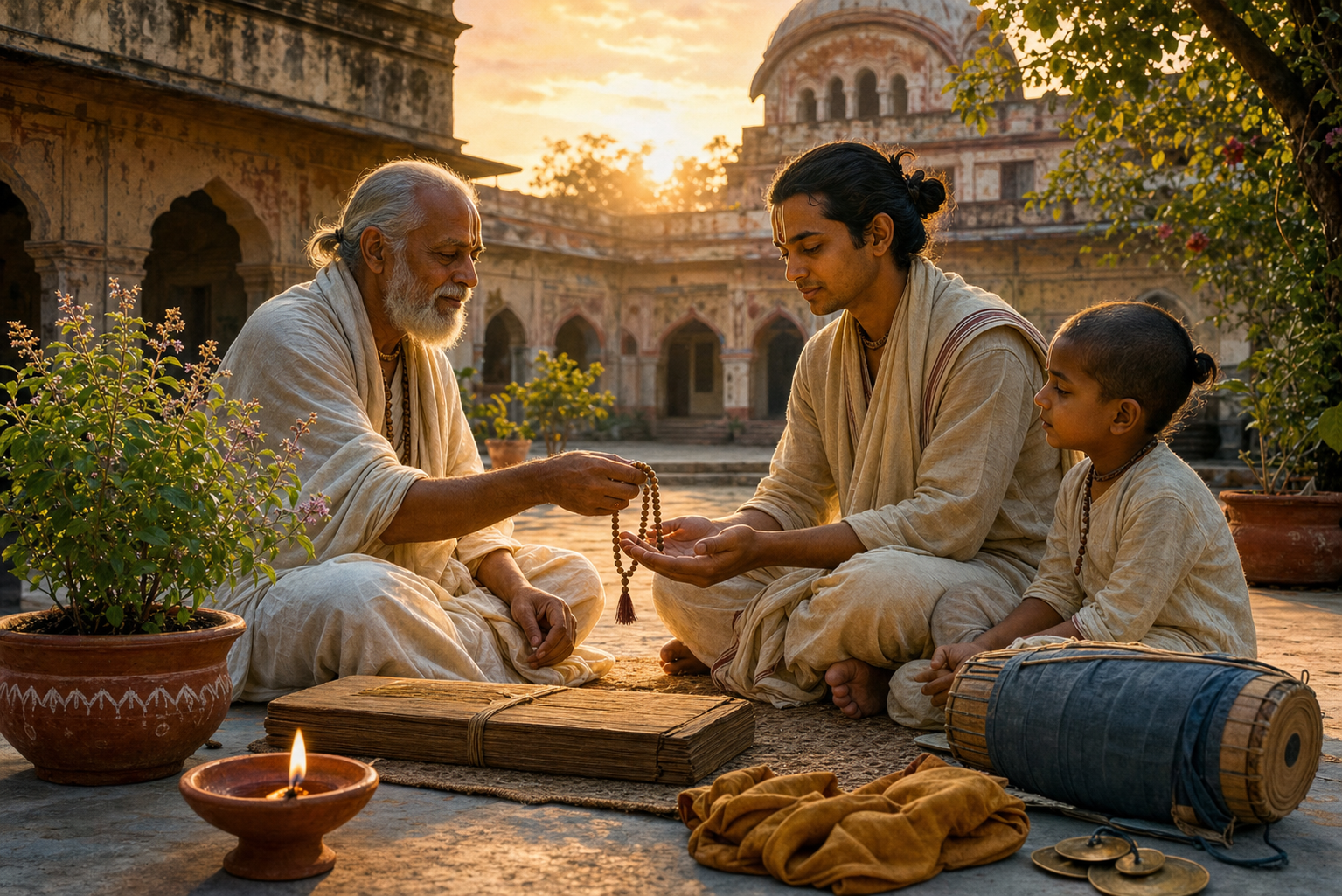
Gaudiya Vaishnava lineage survives neither as a genealogy alone nor as a static collection of texts. In the two supplied accounts, it is renewed when received teaching becomes disciplined practice, personal relationship and a responsibility to transmit what has been learned.
The sources approach that process through different forms of memory. The account of Shyamananda Pandit presents an early devotional biography shaped by sacred narrative, while the article on Tranakarta das’s remembrance of Srila Prabhupada examines modern disciple testimony and digital preservation. Reading them together reveals how lineage operates across centuries without treating two distinct kinds of testimony as interchangeable.
Lineage is more than a sequence of names
Guru-parampara is commonly understood as the transmission of spiritual knowledge through a succession of teachers and disciples. Both articles, however, portray it as more than an authorized chain. It also imposes a discipline: teachings must be heard attentively, embodied in conduct, protected from distortion and passed onward through suitable forms.
The Shyamananda article gives this structure a geographical and relational shape. It reports that the young devotee sought the permission of his family before approaching Sri Hrdaya Caitanya at Ambika Kalna. Hrdaya Caitanya then sent him to Vrindavana to study the writings of the Gosvamis under Srila Jiva Gosvami. The source places him there in association with Srinivasa Acarya and Narottama dasa Thakura, presenting the three as important carriers of Gaudiya teaching into eastern India.
In this portrayal, authority is not self-declared. Shyamananda’s aspiration acquires form through initiation, instruction, study and service. His later influence rests not simply on religious enthusiasm but on having received a theological inheritance under recognized teachers.
The Prabhupada article depicts the same architecture in a modern, international setting. It identifies Srila Prabhupada as the founder-acharya of ISKCON and reports his work translating and commenting on the Bhagavad-Gita, Srimad-Bhagavatam and Caitanya-caritamrita. Yet its central concern is how that textual and institutional achievement entered individual lives. Tranakarta das’s recorded remembrance belongs to an oral archive of disciples describing how a teacher’s principles were encountered as guidance, correction, routine and service.
The two accounts therefore illuminate opposite sides of transmission. Shyamananda is remembered as a disciple prepared to carry a received inheritance forward; Prabhupada is remembered as an acharya whose disciples preserve how that inheritance was made practicable for them.
Service turns received teaching into lived knowledge
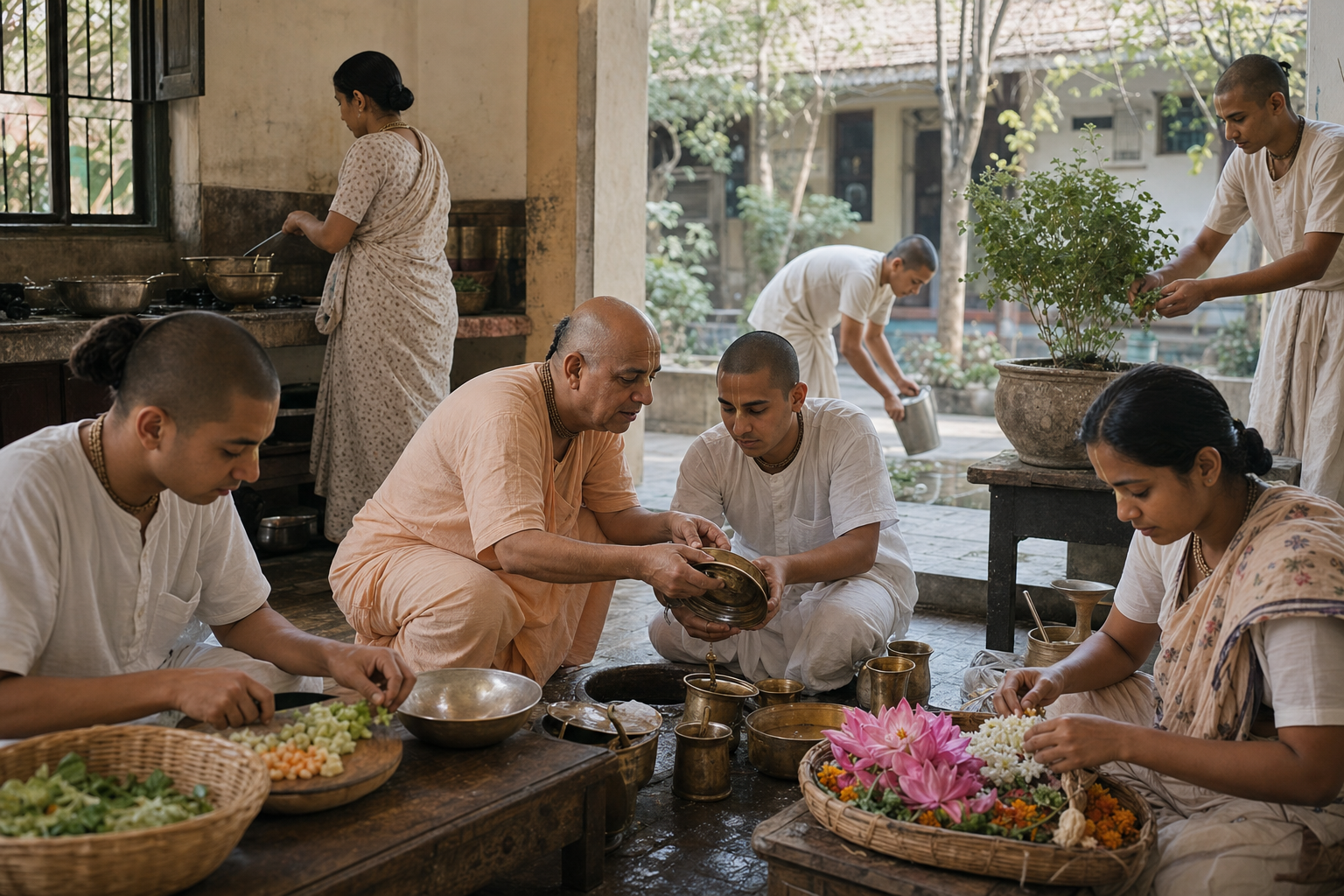
The strongest bridge between the sources is their refusal to separate learning from service. The Shyamananda article reports that, while studying under Jiva Gosvami, the disciple was assigned to sweep the grove of Sevakunja. The work appears ordinary, but the source reads it devotionally as an expression of humility and inner purification.
The article places its celebrated ankle-bracelet narrative within this setting. While sweeping, Shyamananda finds an ornament identified in the story as belonging to Srimati Radharani. He protects it and insists that it be restored to its owner rather than treated as a possession. The account then moves into a sacred encounter involving Visakha and Radharani. As reported devotional narrative, the episode communicates a moral and theological pattern: unobtrusive service, integrity and freedom from possessiveness prepare the servant to receive grace.
The Prabhupada article makes a related point without relying on the same narrative form. It emphasizes that disciple recollections preserve the human scale of spiritual formation: the force of an instruction, the discipline of daily sadhana, the correction of a mistake or an example of steadiness. It argues that such moments can function as practical commentaries on scriptural principles. Compassion becomes visible in conduct, detachment in a decision and responsibility in a demanding instruction.
Across the two accounts, service is consequently not an extracurricular addition to theology. It is the environment in which knowledge is tested and character is shaped. Sacred literature gives devotional life its grammar, while service reveals whether that grammar has entered habit, intention and judgment.
Sacred biography and oral history do different work
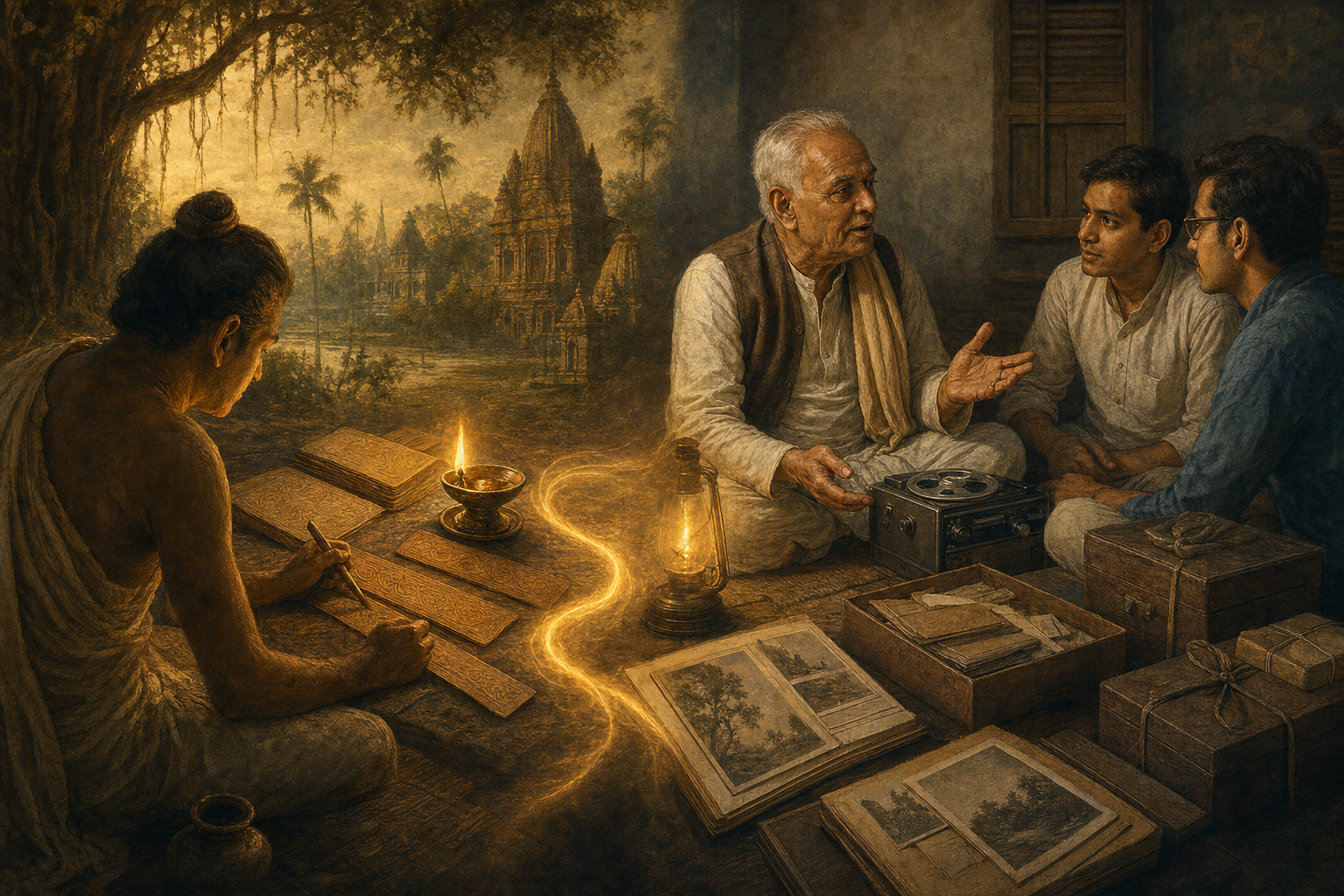
A responsible synthesis must preserve the distinction between the sources’ genres. The Shyamananda account is a devotional biography containing reported dialogue, sacred geography and a revelatory episode involving divine figures. Its purpose is not confined to documenting outward events. It also communicates how the tradition understands humility, guru-seva, Vrindavana and divine grace.
Tranakarta das’s remembrance belongs to a more recent form of testimony: a disciple recalling a teacher encountered within living memory. The Prabhupada article situates that testimony alongside lectures, letters, conversations, translations and other disciple memories preserved through Vanipedia and VanimediaMayapur. Such collections can retain tones, settings and personal impressions that formal institutional histories may omit.
Neither form should be asked to do the other’s job. Sacred biography needs to be read for the devotional world it articulates as well as for the events it reports. Oral testimony offers proximity to a person and period, but memory remains selective and interpretive. Recording a recollection preserves testimony; it does not make every remembered detail independently verified.
This distinction clarifies rather than diminishes devotional memory. It allows readers to ask appropriate questions: what conduct does a narrative commend, what theological relationship does it express, who is remembering, and through what medium has the account been transmitted?
Key takeaways
- Gaudiya lineage is portrayed as a chain of responsibility in which teaching is received, embodied, safeguarded and transmitted.
- Both accounts join scholarship to service: theological learning is expected to form humility, steadiness and devotional judgment.
- Sacred biography and modern disciple recollection preserve different kinds of truth and should be interpreted according to their respective genres.
- Devotional memory remains useful when it directs attention beyond personality toward scripture, sadhana, ethical conduct and service.
Preserving memory without turning it into nostalgia

Both articles resist treating remembrance as an exercise in looking backward. The observance of Shyamananda’s disappearance presents a departed saint as continuing to guide a community through teaching and example. The preservation of Prabhupada’s disciple memories likewise gives later readers access to the atmosphere in which written teachings were explained and practiced.
That continuity depends on careful curation. Attribution should remain visible, sacred narrative should not be disguised as independently verified history, and personal testimony should be placed beside texts and broader records rather than made to replace them. Just as importantly, memorable stories should be connected to the disciplines they illuminate. Otherwise, reverence can become detached from the demanding practices that made the remembered lives significant.
The future of Gaudiya devotional memory will therefore depend not merely on collecting more material, but on preserving context and cultivating readers capable of hearing different voices responsibly. When archives, sacred biographies and daily practice remain in conversation, lineage can continue as formation rather than fading into commemoration alone.
References
- DharmaRenaissance Blog – Powerful Memories of Srila Prabhupada: Tranakarta das on Living Bhakti
- DharmaRenaissance Blog – Shyamananda Pandit’s Sacred Legacy: The Disappearance That Still Inspires Bhakti