
You have limited time, unfamiliar roads, and more sacred places than any itinerary can hold. The real question isn’t how many sites you can reach. It is how to visit a place without reducing it to a photograph, a story recited from memory, or another name checked off a list.
A Gaudiya Vaishnava pilgrimage becomes coherent when your route follows a devotional question. You might go to contemplate lila, understand guru-parampara, renew your sadhana, or serve a living sacred place. Decide which of these you need, and geography begins to function as a teacher.
Two kinds of place belong on the devotional map
Sacred geography is relational. A location matters because divine lila is remembered there, a decisive encounter in a guru’s life occurred there, or a community continues to worship and preserve what it received. The physical setting and the remembered event are therefore encountered together.
Barsana represents the geography of lila. Revered as the abode of Śrīmatī Rādhārāṇī, its hills, paths, shrines, and gathering places draw the pilgrim into the devotional world of Braj. At Sankari Khor, the narrow passage recalls Śrī Krishna playfully stopping the gopis and demanding butter as a tax. The confined path is not incidental scenery. Its shape helps the remembered exchange become spatially intelligible.
Kolkata represents another mode of sacred geography: the geography of guru-parampara, or teaching transmitted through a living lineage. Śrīla Prabhupāda’s birthplace is a place of remembrance, while Ulta Danga marks his meeting with Śrīla Bhaktisiddhānta Sarasvatī Ṭhākura. That meeting matters not merely as a biographical detail but as a turning point through which instruction, discipleship, and later institutional work became connected.
These places ask different things of you. A lila-sthala invites contemplative participation in sacred narrative. A lineage landmark asks you to notice how teachings move through persons, decisions, institutions, and service. Neither mode is higher or more authentic. Together they prevent pilgrimage from becoming either placeless theology or devotion without historical memory.
Choose your route by the question you are carrying
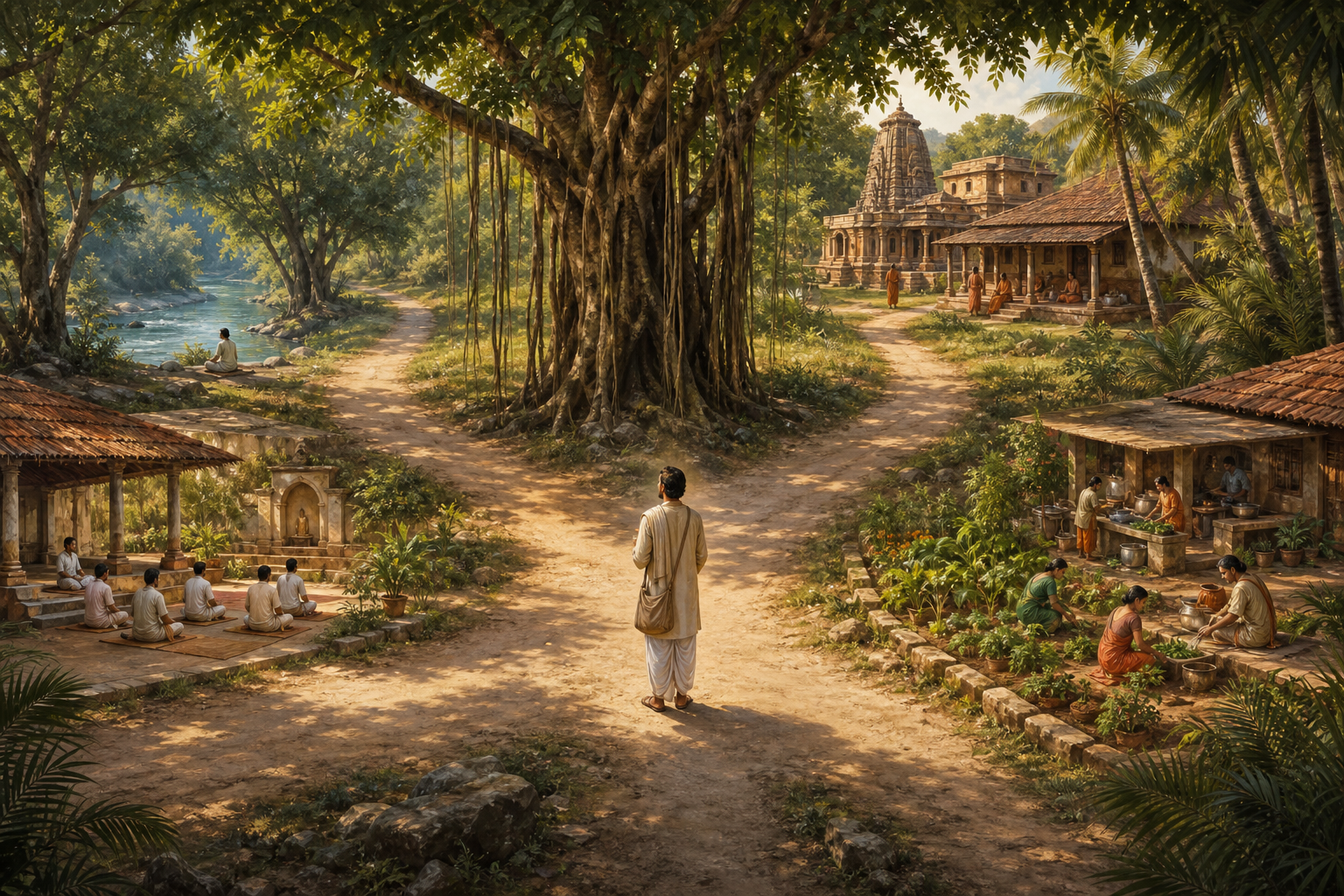
Before choosing stops, complete this sentence: “I am undertaking this pilgrimage to understand…” If the answer is vague, the itinerary will probably become a race. If the answer is precise, you will know what deserves time and what can remain optional.
If you need to contemplate lila
Build the day around parikrama rather than around isolated monuments. Parikrama is circumambulation undertaken with reverent attention; its circular movement keeps the sacred centre, literally or devotionally, as the point of orientation. In Barsana, the path itself joins the shrines, remembered pastimes, local songs, landscape, and pilgrim community into a single practice.
At Sankari Khor, don’t hurry through the constricted terrain merely to say you were there. Notice what the passage requires: reduced speed, awareness of other people, and a willingness to surrender personal control over the pace. Then hold the remembered lila in mind. The useful question is not only “What happened here?” but also “What does this place make me notice about intimacy, play, offering, and divine relationship?”
If you travel during Karttika, allow the season’s lamps, kirtan, simple vows, and shared devotional discipline to give structure to the visit. Choose an observance you can sustain with sincerity. Karttika is not improved by turning another person’s austerity into your performance standard.
If you need to understand guru-parampara
Build your route around decisive relationships rather than the most photogenic buildings. In Kolkata, Śrīla Prabhupāda’s birthplace and Ulta Danga form natural anchors because they illuminate remembrance and transmission. Temples, ashrams, and neighbourhood shrines can then show how chanting, study, and seva continue within the city’s ordinary life.
At each lineage site, write down four things: the person associated with the place, the encounter or practice remembered there, what was transmitted, and how that inheritance is being sustained. This turns a collection of addresses into an intelligible spiritual history.
When time is short, choose the mode that answers your present question. A concentrated Barsana parikrama may serve you better than a hurried attempt to cover every category of site. A focused Kolkata journey may be more useful when you are trying to understand how a teacher received an instruction and carried it beyond its original setting. Completeness is not the same as accumulation.
Give every stop a simple devotional rhythm
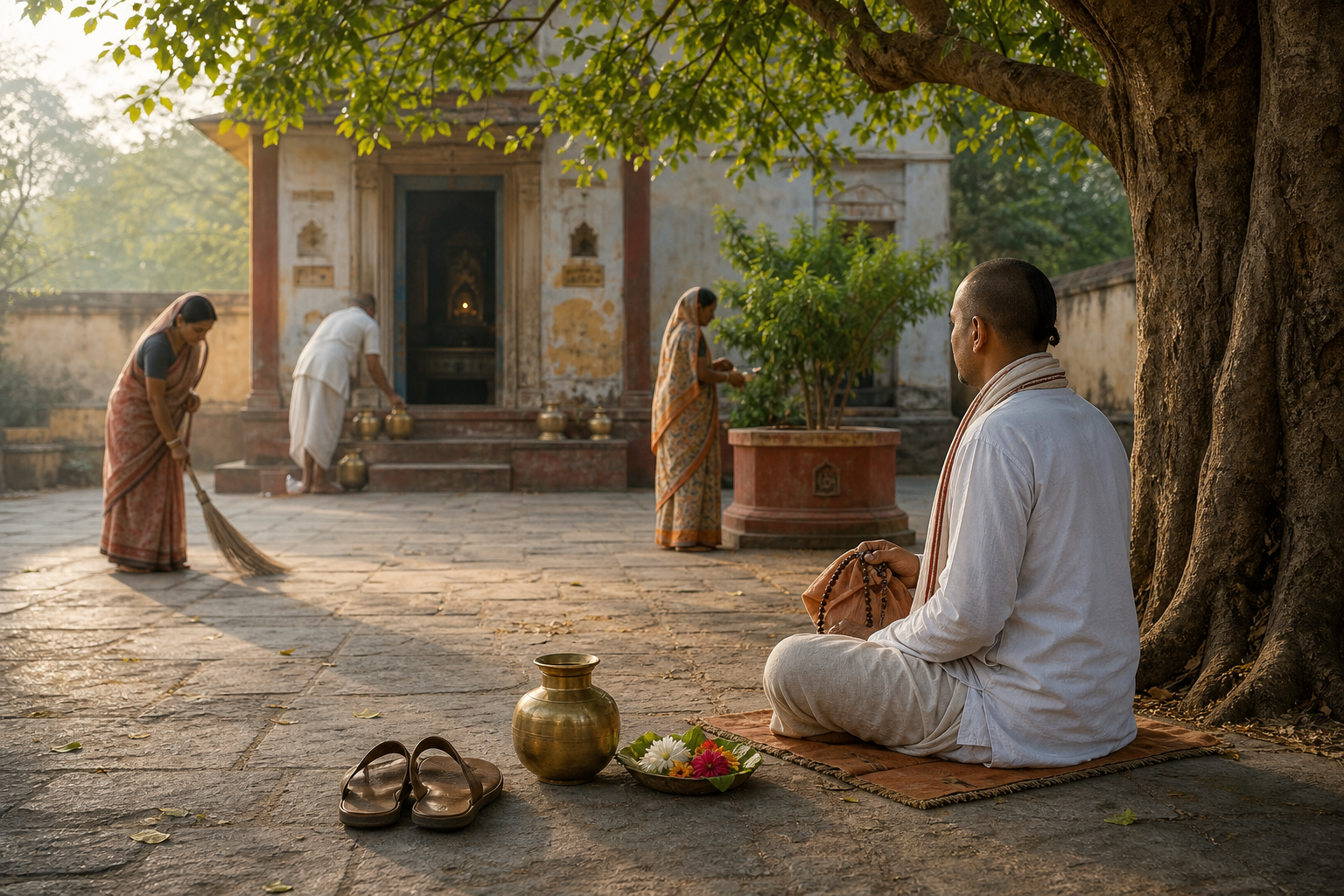
A sacred place does not automatically produce attention. Crowds, phones, transport problems, conversation, and the desire to document everything can occupy the entire visit. A repeatable rhythm protects the pilgrimage from those distractions.
- State your sankalpa before arrival. Write a short intention connected to the site: to understand a lila, honour a guru’s instruction, strengthen japa, or perform seva. Keep it specific enough to remember while walking.
- Learn the essential context before crossing the threshold. Know who or what is remembered and why the location matters. Do this before the group begins moving so that explanation doesn’t drown out encounter.
- Enter without immediately reaching for the phone. First notice the terrain, sounds, worship, movement of local devotees, and condition of the place. Documentation becomes more meaningful after attention has been established.
- Match the practice to the setting. Use soft japa during suitable stretches, join kirtan when it is offered, and make room for silence. Keep your chanting quiet enough to hear local instructions and remain aware of companions, especially on a narrow or crowded path.
- Add study after direct contact. A reading or guided discussion can help you interpret what you have just seen. Remembrance at Śrīla Prabhupāda’s birthplace has included kirtan, reading, and guided reflection, showing how devotion and serious learning can reinforce each other.
- Close with seva and a written response. Follow caretaker directions, avoid creating waste, and assist the group where appropriate. Before leaving, finish the sentence: “This place made visible…” That line will reveal whether you encountered a sacred relationship or merely passed through a location.
This rhythm is deliberately modest. It doesn’t depend on an intense emotion arising at every stop. It asks for disciplined attention, which is more dependable than chasing an experience. If a place feels quiet or ordinary, let that ordinariness show you how sacred memory is carried through repeated worship and care.
Protect the distinction between lila, history, and tourism
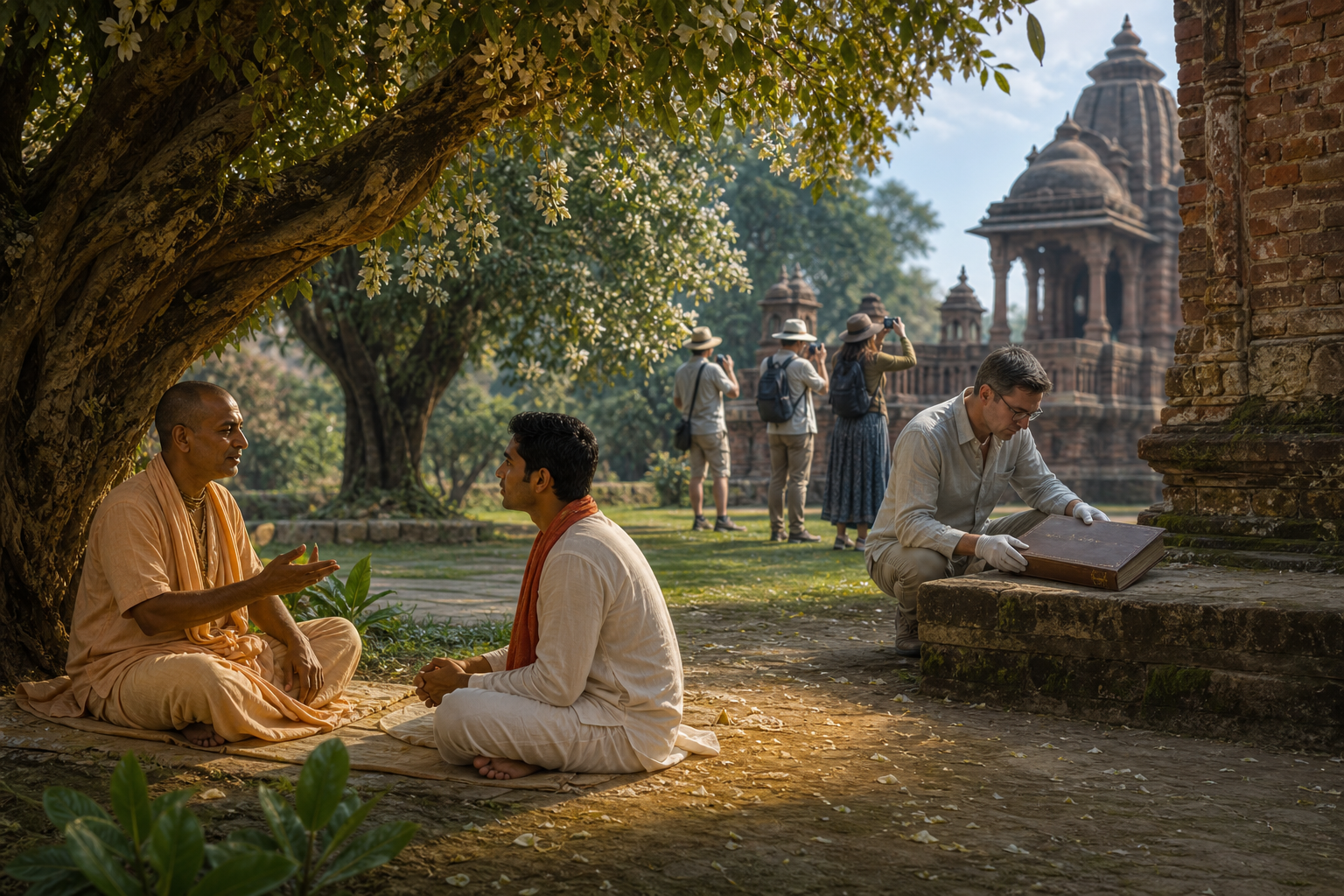
You do not have to describe every sacred place with the same kind of claim. At Sankari Khor, say that Gaudiya tradition remembers Krishna’s playful exchange with the gopis there. At Ulta Danga, identify the meeting between Śrīla Prabhupāda and Śrīla Bhaktisiddhānta Sarasvatī Ṭhākura as a lineage event. Faithful language respects both devotional testimony and historical memory; it does not force one to masquerade as the other.
This distinction also changes how you listen. At a lila-sthala, ask how narrative, song, terrain, ritual, and local memory work together. At a lineage site, ask what instruction was received, what responsibility followed, and what practices or institutions now carry that inheritance. The place becomes clearer when you ask the kind of question it is equipped to answer.
Tourism treats the location as a backdrop and the visitor as the main character. Pilgrimage reverses that order. Local worshippers are not scenery. A narrow sacred passage is not a stage for a prolonged photo session. A shrine is not improved by loud commentary, blocked access, discarded packaging, or material removed as a souvenir. Ask before photographing people, obey restrictions, keep pathways open, and leave the site at least as orderly as you found it.
Preservation is part of the religious act because future worship depends on what present visitors refuse to damage. The continuing care of Gaudiya sites in Kolkata demonstrates how custodianship can support pilgrims, seekers, and serious study. Respect for caretakers is therefore not an administrative inconvenience added to pilgrimage. It is cooperation with the seva that makes pilgrimage possible.
Parikrama also reveals a wider Dharmic family resemblance. Circumambulation appears around Hindu and Jain temples and tirthas, Buddhist stupas, and Sikh sarovars. These practices share reverence for sacred space expressed through disciplined movement, even though their theologies and communities remain distinct. You can honour that kinship without treating every tradition or sacred centre as interchangeable.
Key takeaways for your next pilgrimage
- Begin with a devotional question, not a long list of famous locations.
- Choose a lila landscape such as Barsana when you need contemplative engagement with sacred narrative.
- Choose lineage landmarks in Kolkata when you need to understand instruction, discipleship, remembrance, and transmission.
- Pair movement with a stable rhythm of context, japa or kirtan, attentive observation, study, seva, and reflection.
- Describe lila and lineage history faithfully without collapsing them into the same kind of claim.
- Treat care for worshippers, paths, shrines, and local custodians as part of the pilgrimage itself.
Before adding another stop to your route, write the question you want the place to answer. Choose the landscape or lineage landmark that can answer it, give that place unhurried attention, and complete the visit with a concrete act of care. That is how sacred geography moves from the map into sadhana.
References
- Dandavats — Discover Kolkata’s Sacred Jewels: The Complete, Inspiring Guide to Śrīla Prabhupāda’s Legacy
- Dandavats — Complete Guide to Barsana Parikrama (Karttika 2025): Discover Sankari Khor’s Sacred Path
