
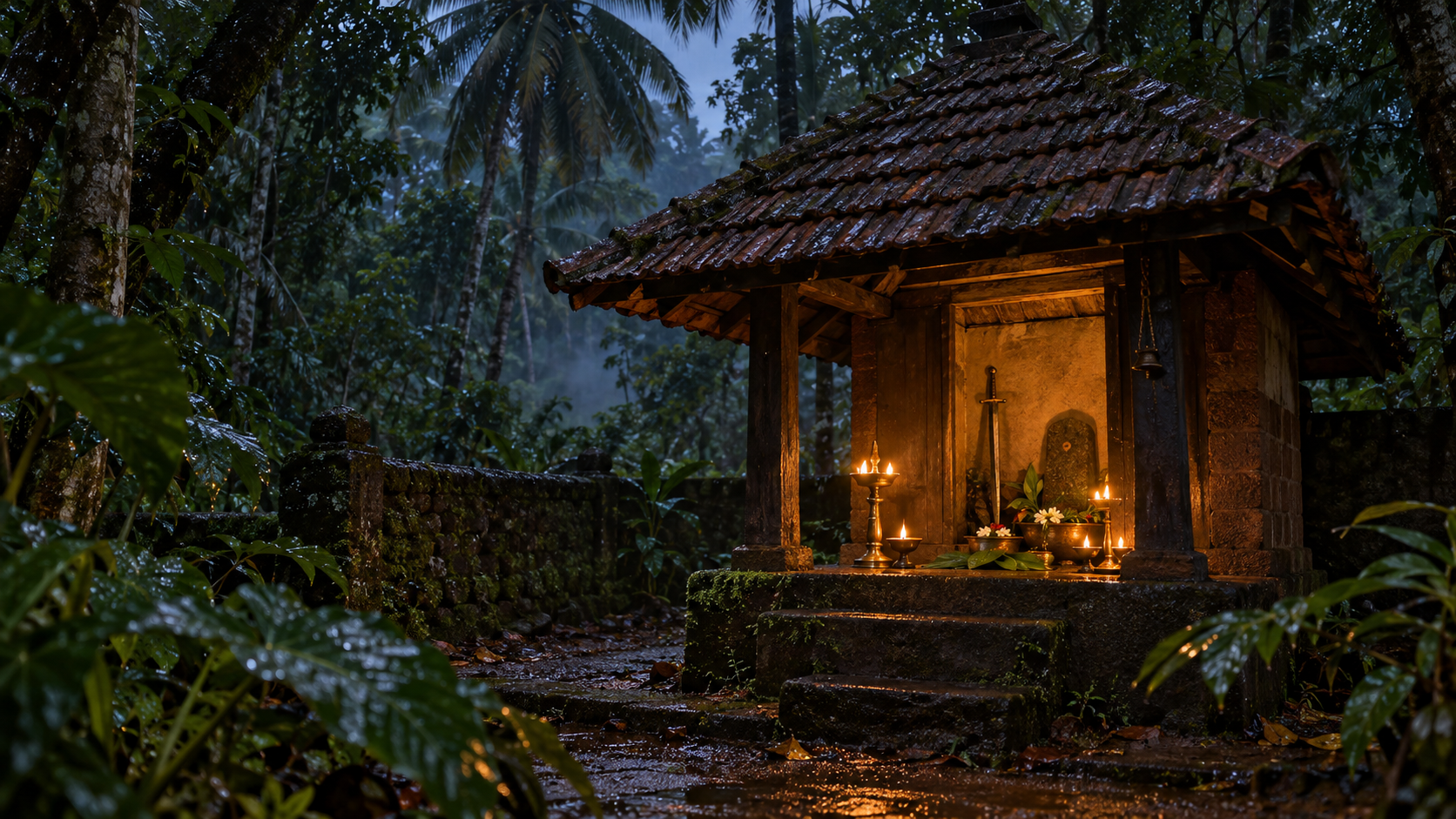
If you have encountered the name Erattu Kalan in a family memory, a local account, or a reference to Malabar worship, your first question may be deceptively simple: is this Shiva, a remembered hero, or a local guardian deity? The most accurate answer is that these categories meet rather than cancel one another.
Erattu Kalan belongs to Eranad’s Shaivite, hero-worship tradition within the folk-Hindu landscape of Malabar. Understanding the deity requires you to keep four elements in view: protective function, Shaivite affiliation, heroic memory, and place. Drop any one of them, and the tradition becomes easier to label but harder to understand.
Identify Erattu Kalan without forcing a pan-Indian label
The word “guardian” tells you what the deity does within the religious world of devotees. It does not, by itself, provide a complete theology, life story, iconography, or ritual manual. “Shaivite” locates the figure in relation to Shiva. “Hero worship” points toward a devotional identity shaped by the memory or religious elevation of a protective hero. Eranad supplies the particular homeland, while Malabar supplies the wider cultural setting.
This is why identifying Erattu Kalan merely as another name for a familiar Puranic form of Shiva is too blunt. The figure is Shaivite without needing to duplicate the mythology, images, or temple conventions through which you may know Shiva elsewhere. A relationship to Shiva is not the same thing as identity with every established form of Shiva.
The opposite mistake is equally serious: treating a regional deity as though “folk” means non-Hindu, marginal, or religiously incomplete. Here, folk tradition names a local layer of Hindu life. It tells you that place, community, protective function, and inherited memory matter to the deity’s identity.
If you are cataloguing Erattu Kalan for a family archive, temple record, cultural project, or educational page, begin with a deliberately narrow description: “Erattu Kalan is a regional Shaivite guardian associated with Eranad in Malabar, rooted in Kerala’s folk-Hindu culture and hero worship.” Do not add a birth story, battle, weapon, consort, festival date, offering, or iconographic detail unless local evidence actually establishes it.
Read the four defining clues together
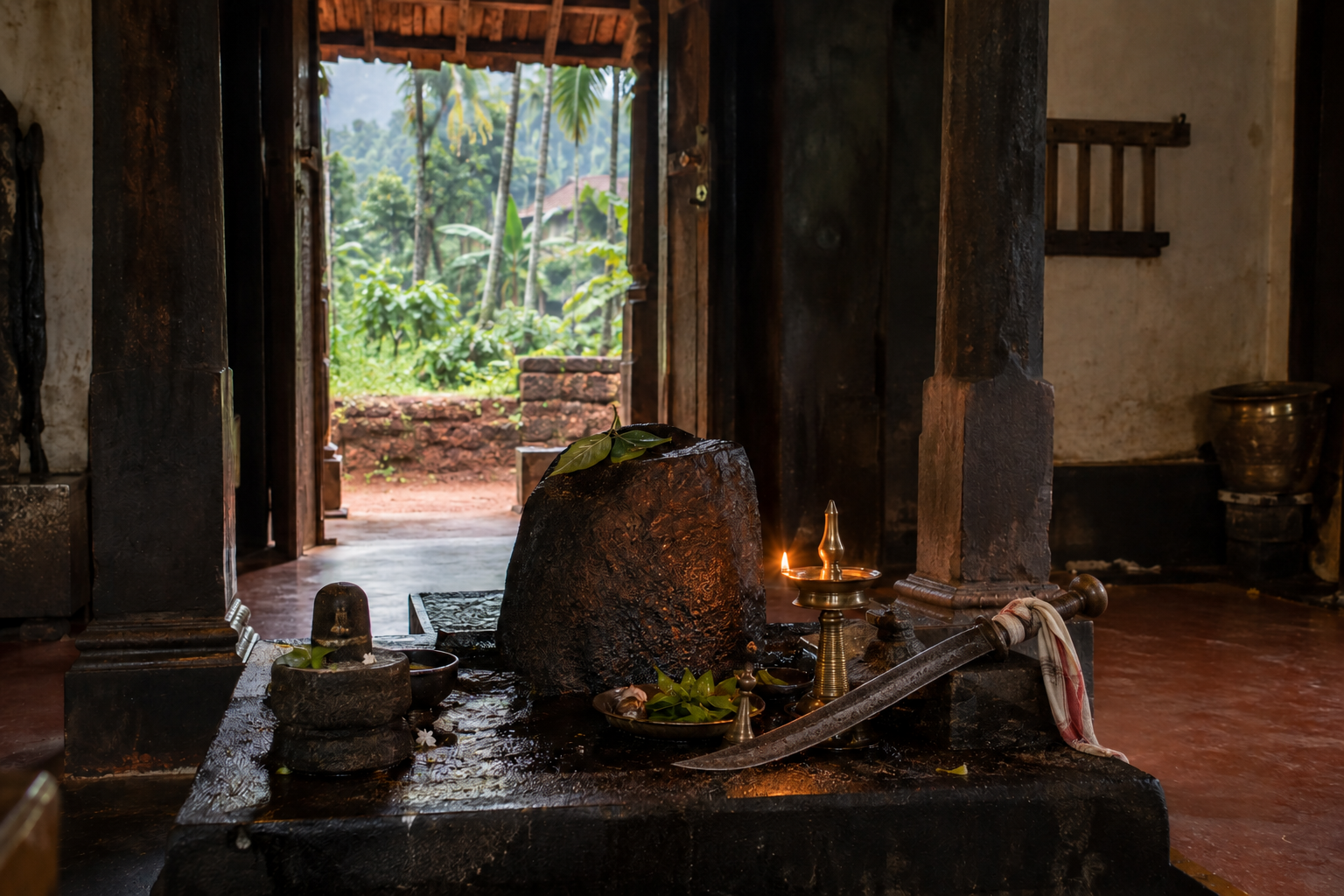
A useful way to avoid both exaggeration and reduction is to separate what each descriptor establishes from what it leaves open.
| Descriptor | What it establishes | What it does not establish |
|---|---|---|
| Guardian deity | Protection is central to the deity’s religious role. | A complete mythology, a standard ritual, or a pan-Indian identity. |
| Shaivite | Erattu Kalan belongs within a religious field oriented toward Shiva. | That the deity must duplicate a familiar Puranic form of Shiva. |
| Hero worship | Heroic memory and divine or sacred guardianship overlap in the tradition. | A particular biography, death narrative, or historical date. |
| Eranad and the forests of Malabar | Landscape and regional belonging are part of the deity’s identity. | That every community in Malabar preserves an identical account or practice. |
These distinctions matter whenever you translate a local tradition for a wider audience. If you translate “Shaivite” as “simply Shiva,” you erase the guardian’s local identity. If you translate “hero worship” as “merely a historical memorial,” you remove its devotional dimension. If you omit Eranad and Malabar, you detach the deity from the geography that makes the tradition intelligible.
The better approach is relational. Describe how the elements fit: a guardian associated with a particular region, understood within a Shaivite horizon, and carrying the imprint of hero worship. That account is precise without pretending that limited information answers every ritual or historical question.
Key takeaways
- Recognise Erattu Kalan as a regional Shaivite guardian rooted in hero worship, not as a generic substitute name for Shiva.
- Keep Eranad as the specific regional anchor and Malabar as the wider cultural landscape.
- Understand “folk-Hindu” as a description of local religious formation, not as a dismissal of the tradition’s Hindu identity.
- Do not infer legends, images, offerings, festivals, or ritual rules from the broad labels alone.
- When local testimony supplies further detail, record who preserves that account and where it is practised.
Approach local worship with disciplined respect
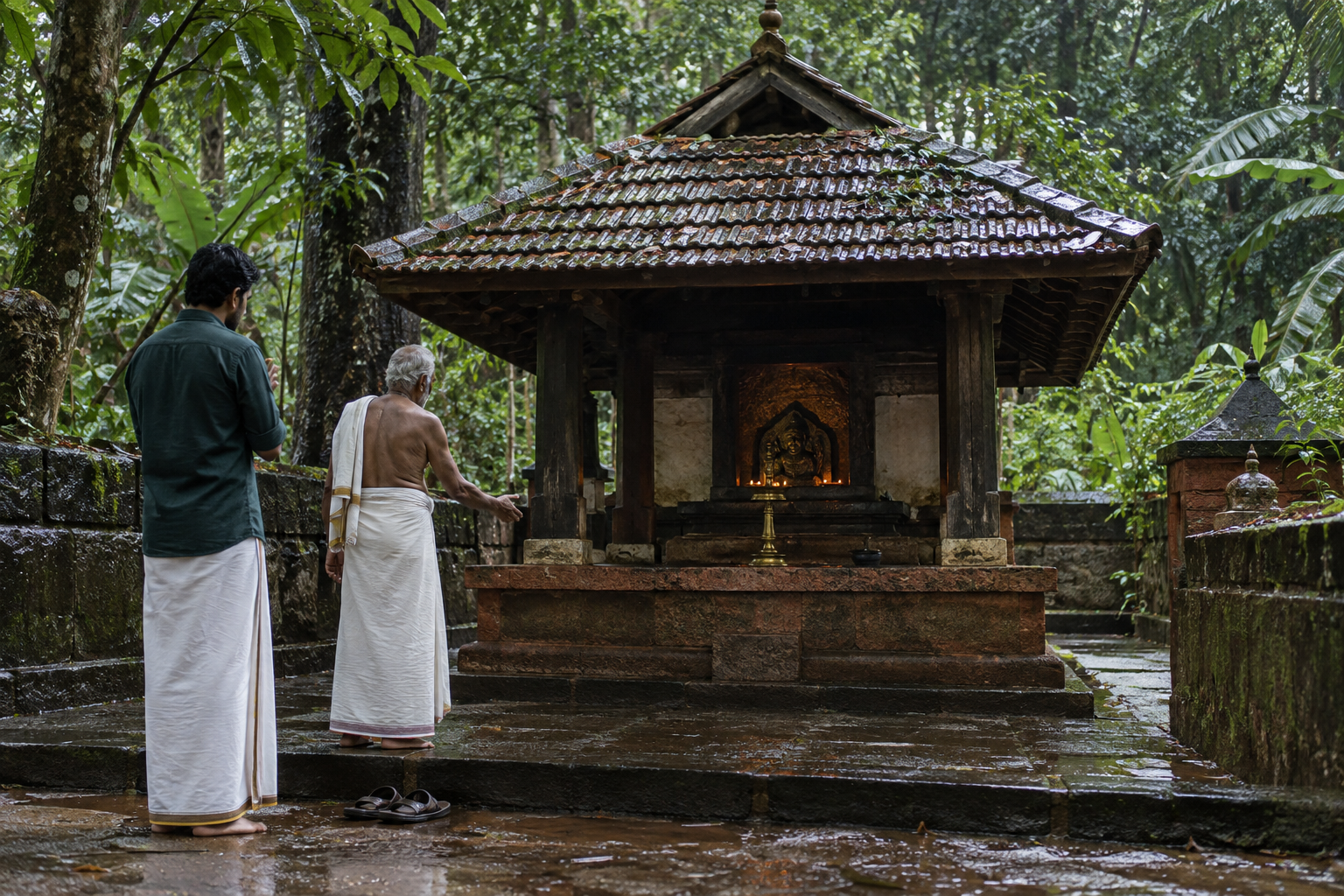
If you visit a shrine, speak with devotees, or document an inherited account, your most important discipline is to observe before you translate. Regional worship can lose its meaning when an outsider immediately replaces local terms with more familiar Sanskritic or pan-Indian categories.
- Ask what name and pronunciation the local community uses. Record variants rather than silently “correcting” them to match an online spelling.
- Ask what guardianship means in that setting. Let local custodians explain the object and scope of protection instead of supplying an answer for them.
- Ask how devotees describe the connection with Shiva. Do not presume that a broad Shaivite affiliation settles every theological question.
- Ask whether a hero narrative is preserved locally. If it is, distinguish the community’s account from your own historical interpretation.
- Separate observation from inference in your notes. “A ritual was performed” is an observation; “this must be equivalent to a ritual at another shrine” is an interpretation that still needs support.
- Request permission before photographing, recording, publishing, or reproducing sacred material. Access to a place does not automatically grant permission to circulate everything found there.
Do not carry ritual instructions from an unrelated Shiva temple into an Erattu Kalan setting. A shared Shaivite frame does not guarantee shared offerings, vows, priestly roles, calendars, or rules of access. When you do not know the local practice, asking the people responsible for the tradition is more accurate and more respectful than improvising.
A simple field record can prevent later confusion. Note the name used locally, the place, the person or community maintaining the worship, the guardian role as locally explained, the Shaivite connection as locally explained, any hero narrative, the practices you personally observed, and the details that remain unverified. That last category is essential. “Unknown” preserves room for learning; a confident guess can become false tradition once it is copied.
Why this guardian tradition matters to Hindu cultural memory
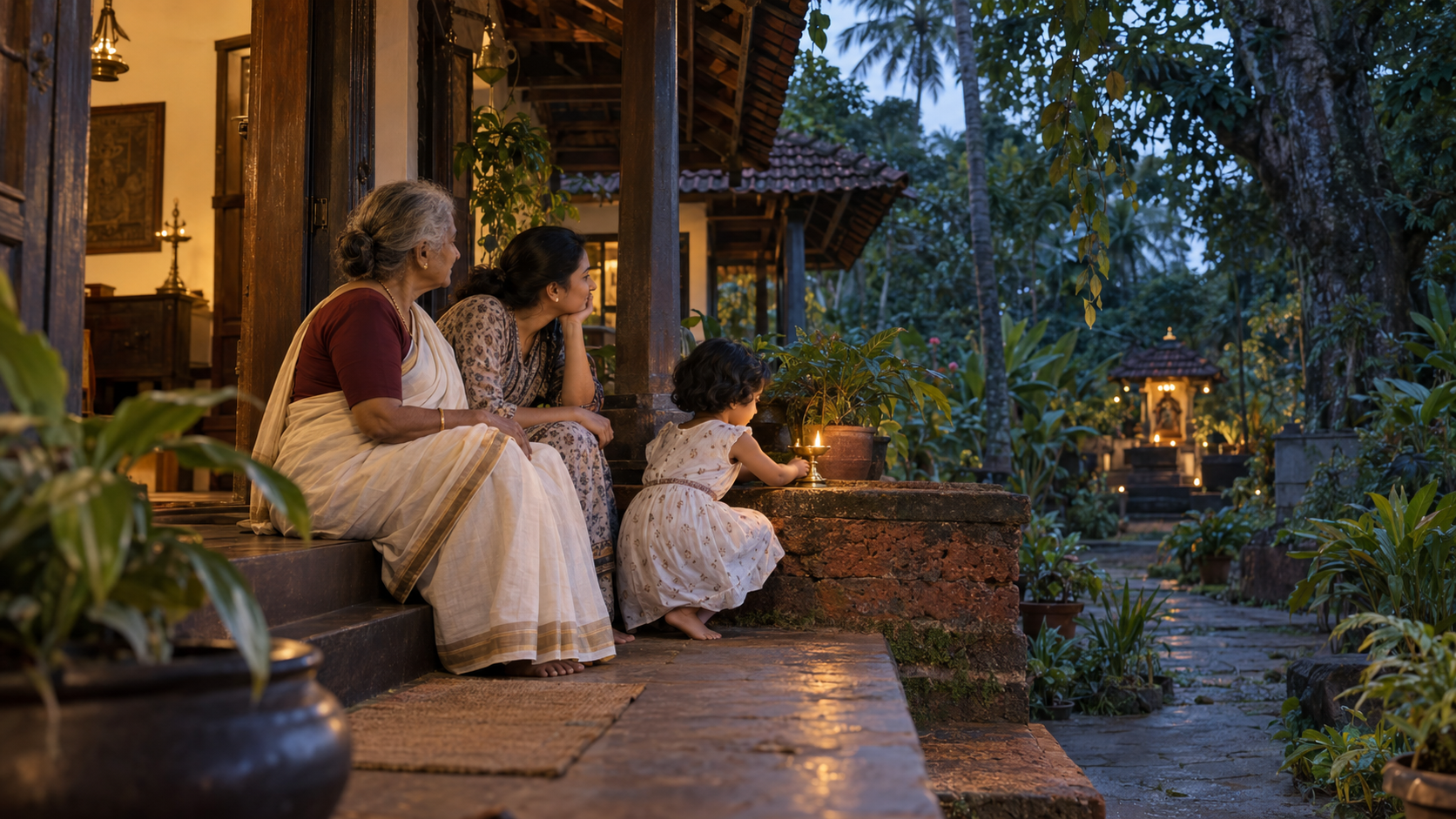
Erattu Kalan helps you see a feature of Hindu civilisation that broad surveys often flatten: religious identity can be carried through relationship rather than uniformity. A deity can be unmistakably regional, rooted in a protective function and heroic memory, while also belonging within a Shaivite sacred world.
That layered identity is not a problem waiting to be resolved into one label. It is the tradition’s structure. The local and the Shaivite, the heroic and the divine, and the landscape and the community all help explain why this guardian is Erattu Kalan rather than an interchangeable figure.
This also changes what preservation should mean. Saving the name alone is not enough. A responsible record must retain the guardian role, the connection with Eranad, the wider Malabar forest setting, the Shaivite orientation, and the hero-worship layer. Remove those relationships and the surviving name may no longer carry the same meaning.
When you next encounter a regional deity, resist the urge to ask only, “Which major god is this really?” Ask instead how protection, place, memory, and a wider Dharmic affiliation meet in that particular form. For Erattu Kalan, begin with the narrow description we can support, then let responsible local testimony supply whatever comes next.
References

Leave a Reply
You must be logged in to post a comment.