
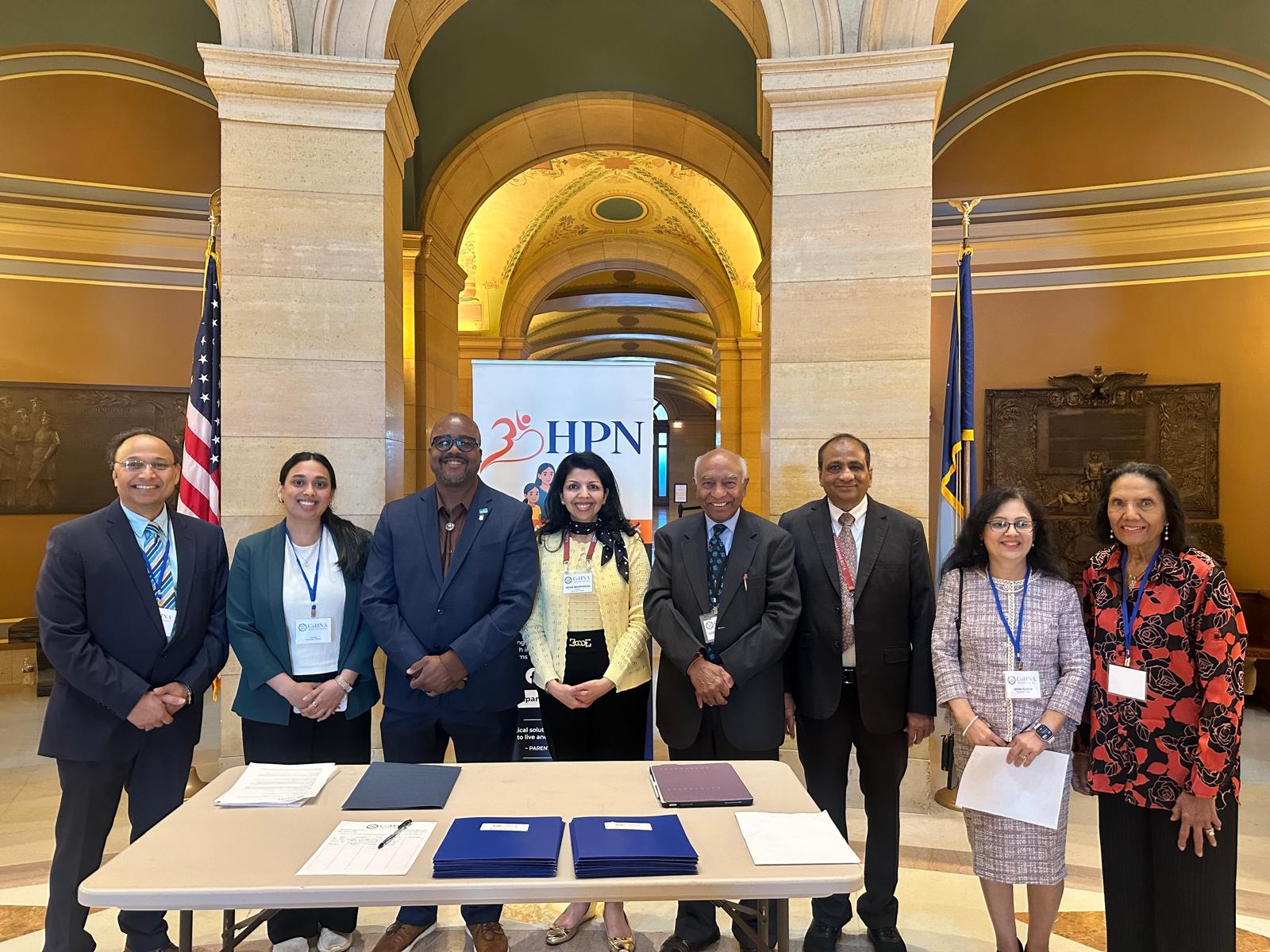
According to the Coalition of Hindus of North America (CoHNA), Minnesota’s inaugural Hindu Advocacy Day brought community members into the State Capitol on April 21, 2026. The gathering placed Hindu identity, religious freedom, temple safety, and civic representation within a direct state-level conversation.
The event matters not simply because it occurred, but because it demonstrates how a community can move from privately held concerns to sustained, informed participation in democratic institutions.
A statehouse gathering becomes a civic milestone
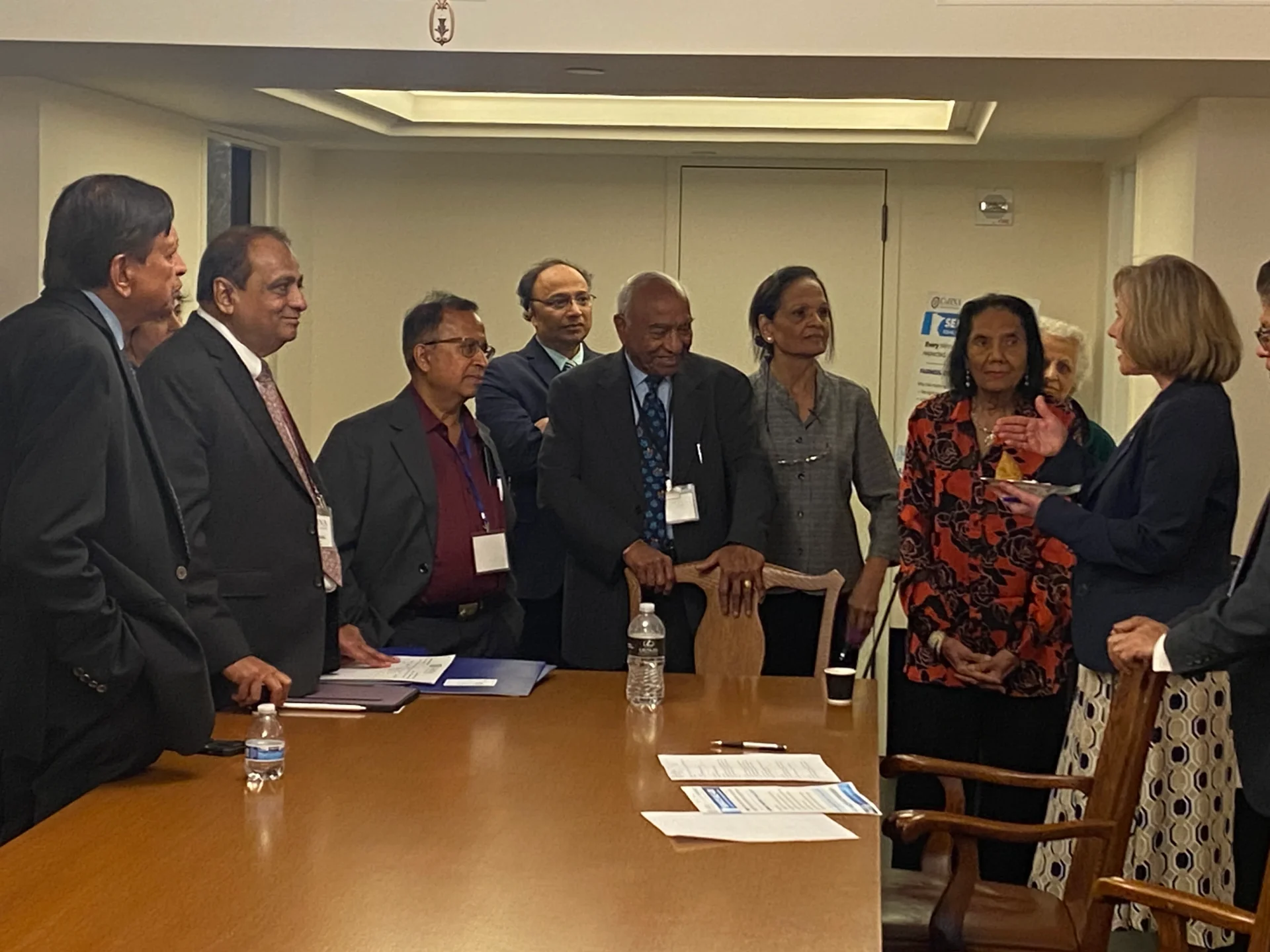
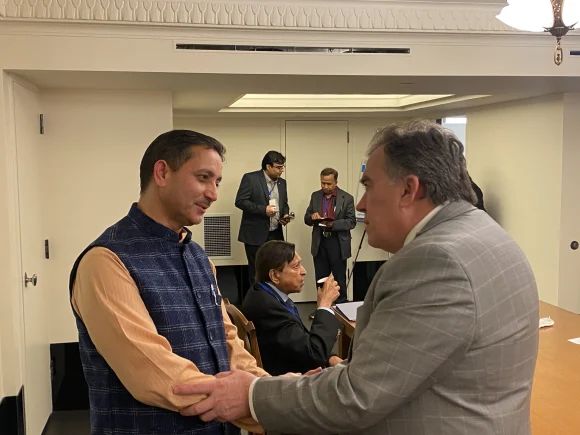
CoHNA reports that community leaders, youth volunteers, and representatives from legislative offices met in the Capitol Rotunda and Governor’s Dining Room in St. Paul. Participants engaged with lawmakers and staff, including Democratic Senator John A. Hoffman and Republican Representative Kristin Robbins. Interest also came from the Council on Asian Pacific Minnesotans, the Governor’s Office, an interfaith representative, and members of the public.
The breadth of participation gave the day a practical purpose. Hindu constituents were not addressing only one party or speaking solely among themselves. They were building relationships across political and institutional lines while explaining concerns in their own voice. CoHNA credited organizations including Gujarati Samaj, the Rajasthan Association of Minnesota, Hindu Milan Mandir, and Geeta Ashram with joining the grassroots effort.
The civil-rights questions at the center
The advocacy day took place in the context of Resolution SF 4115, which CoHNA describes as a Minnesota legislative resolution condemning anti-Hindu hatred, bias, and discrimination. The organization also reported that more than 600 Minnesotans and religious-freedom advocates had signed a community petition supporting it.
The source does not indicate that the resolution creates penalties, establishes a new reporting system, or supplies a legal remedy. Its immediate significance is therefore recognition: it gives elected officials a formal opportunity to acknowledge anti-Hindu prejudice as a public concern. Recognition alone cannot guarantee safety, but it can influence whether institutions know what to identify, document, and address.
CoHNA says exhibits and discussions covered religious discrimination, temple security, Hindu identity, civil rights, accurate representation in anti-bias training, improved incident reporting, diversity initiatives, and interfaith dialogue. The organization also cited FBI data, Rutgers research, and incidents involving individuals and temples across the United States, including Minnesota. Because the source does not present the underlying case counts or methodologies in detail, those references should be understood as the evidence CoHNA brought into its advocacy, rather than as independently assessed findings by this publication.
Key takeaways
- Minnesota’s first Hindu Advocacy Day connected constituents with lawmakers, staff, public bodies, and interfaith participants.
- Resolution SF 4115 provided a focal point for discussing anti-Hindu hate, bias, and discrimination.
- Temple safety, reliable incident reporting, civil-rights awareness, and accurate anti-bias education emerged as linked concerns.
- Youth participation showed how civic confidence can be cultivated through direct experience with the legislative process.
Unity without erasing dharmic distinctions
The event also offers a wider lesson for dharmic civic organization. Hindu society contains many linguistic, regional, philosophical, and devotional communities. Acting together on religious freedom does not require those distinctions to disappear. It requires agreement that every sampradaya and community should be able to worship, assemble, serve, and represent itself without fear or distortion.
A similar principle can support cooperation among Hindu, Buddhist, Jain, and Sikh communities when they encounter shared questions of religious literacy, institutional representation, or protection of sacred spaces. CoHNA did not report that all of these traditions participated in the Minnesota event, so this is a forward-looking civic lesson rather than a claim about attendance. Seen through a constructive Hindutva lens, the strength of the model lies in confident Hindu participation within democracy while making a principled case for equal rights.
Turning one advocacy day into durable representation
CoHNA highlighted the presence of young volunteers, many of whom were engaging directly with the legislative process for the first time. That experience may be the day’s most durable contribution. Communities become harder to overlook when younger members learn how public institutions work, how to communicate a concern precisely, and how to maintain relationships after a scheduled event ends.
The source also connects civic participation with Hindu contributions in public service, education, and seva, or selfless service. That framing is important: advocacy is strongest when it combines cultural confidence with responsibility toward the wider society. The work ahead is to convert visibility into reliable reporting, informed public education, safer institutions, and continuing dialogue with representatives across party lines.
Inspired by this post on CoHNA.
