
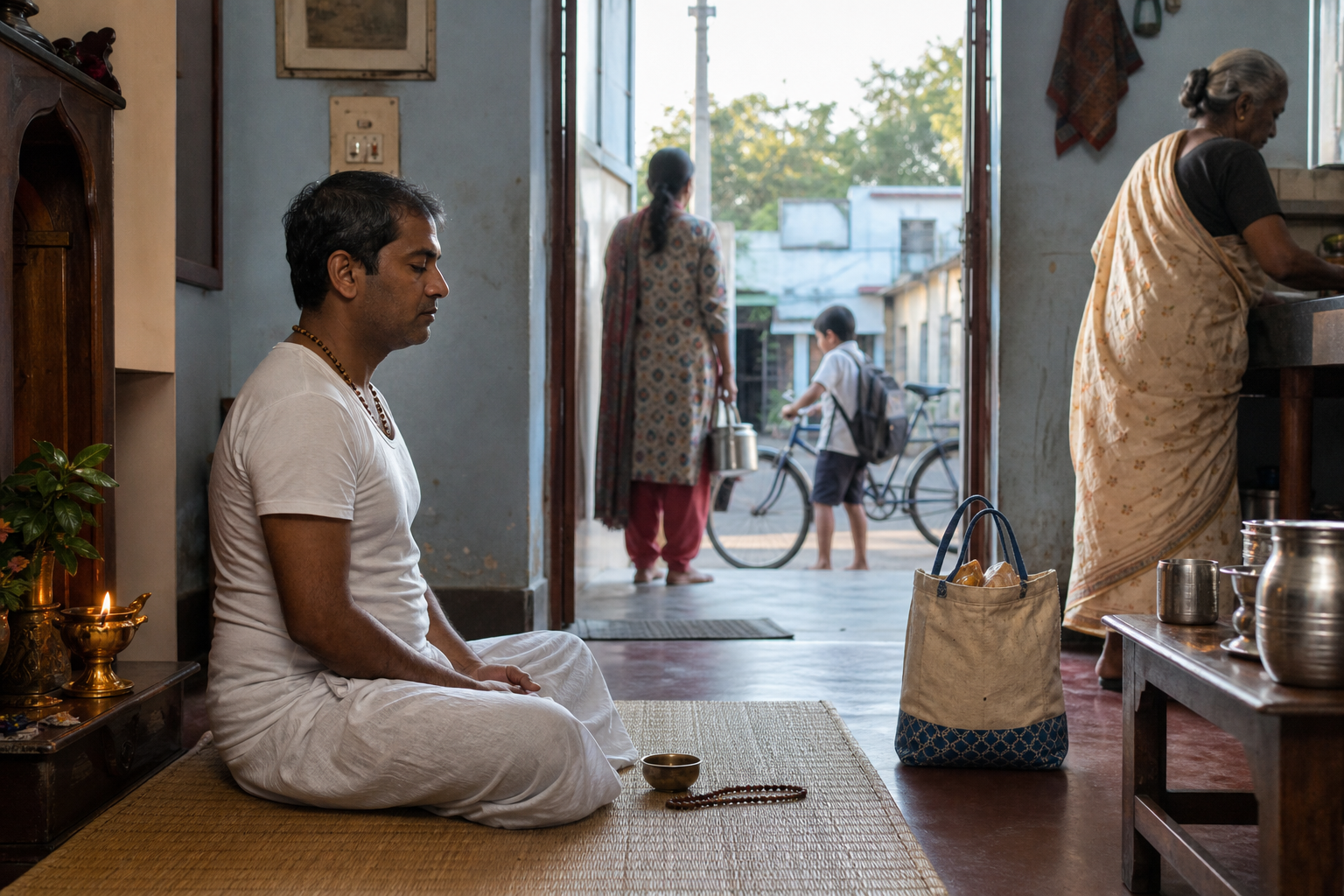
You may know which mantra to recite, how to light the lamp, and where the nearest temple or sacred centre is. Yet devotion can still disappear when work expands, the household becomes noisy, or the mind says it will begin properly tomorrow.
The answer is not a more impressive ritual. You need a rule of devotion that survives an ordinary day: purification that prepares you, remembrance that gathers your attention, and generosity that carries worship into another person’s life. That is how daily sadhana becomes a source of both inner steadiness and social renewal.
Make the practice dependable before making it demanding
In the Tamil Shaiva memory of Arundai Sivachariar, devotion was sustained through regular temple visits, reverent worship, disciplined learning, and ethical conduct. The enduring lesson is not that you must reproduce a thirteenth-century village routine. It is that spiritual life becomes durable when worship, study, sacred place, and conduct reinforce one another.
A devotional wish says, “I will pray when I have enough time.” A devotional rule settles the practical questions in advance. It tells you when to begin, where to sit, what to do, what counts as the minimum, and how to return after an interruption. Once those decisions are made, you no longer renegotiate your commitment every morning.
- Choose a dependable cue. Attach the practice to something that already happens, such as your morning cleansing or the lighting of a lamp at dusk. A clock time may move; a daily transition is easier to recognize.
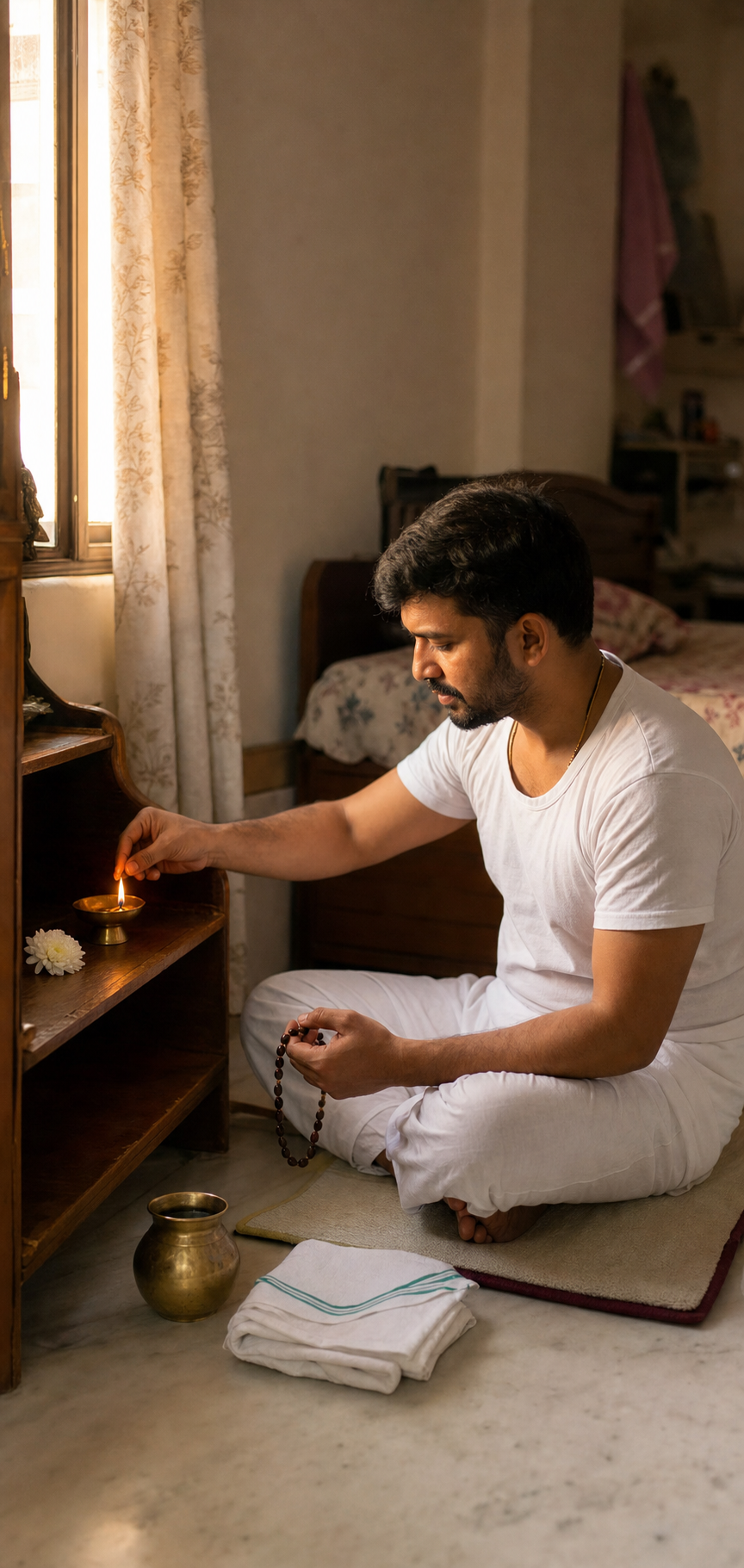
- Keep a designated place. A clean shelf, mat, small home shrine, or quiet chair can become the point at which ordinary activity gives way to attention. Keep the required mala, scripture, or lamp there so that preparation does not become an excuse.
- Define the unchanging core. Select the mantra, simran, prayer, verse, or contemplative practice rooted in your tradition. If your guru, lineage, or community has given you a method, let that method govern the routine.
- Set a minimum you can keep on a difficult day. A ten-minute period of japa or simran, a settled round of repetitions, or 108 conscious breaths are workable forms already used as short devotional touchpoints amid modern demands. Choose the form that belongs naturally in your path; do not collect techniques merely because their numbers look impressive.
- Decide how you will return. If you miss the appointed time, resume at the next normal cue. Do not wait for a new week, design an elaborate penalty, or double the practice so severely that returning feels burdensome.
The minimum is not the ceiling. On spacious days, you may remain longer, study more deeply, sing kirtan, visit a temple, or join congregational worship. Its purpose is to protect continuity when the ideal form is unavailable. A small observance kept sincerely is more useful than an ambitious programme repeatedly abandoned.
Order the day through Ishnaan, Naam, and Daan
Ishnaan, Naam, and Daan give daily devotion a clear movement: prepare the body and intention, remember the Divine or sacred aim, and turn that remembrance into giving. The three terms come into sharp focus in Sikh practice, while their underlying disciplines have recognizable forms across Hindu, Buddhist, Jain, and Sikh life. This does not make their doctrines or rituals interchangeable. It gives you a practical way to see whether devotion is reaching the body, mind, and social world.
- Begin with Ishnaan. Bathe or wash as your circumstances allow, put on clean clothing, straighten the place of prayer, and settle unnecessary sensory agitation. Sikh ishnan before prayer and Hindu practices of snana and shaucha make outer cleanliness part of devotional preparation. Jain and Buddhist disciplines place corresponding weight on purified intention, careful speech, and upright conduct. Do not turn cleanliness into a judgement of another person’s worth. Its purpose here is to make your own approach more attentive.
- Continue with Naam. Recite, listen, or contemplate without rushing to finish. Hindu japa and kirtan, Sikh Naam simran, the Jain Namokar Mantra and samayik, and Buddhist mantra or mindful breathing all train steady remembrance in forms proper to their traditions. Keep the name, object, pronunciation, posture, and meaning appropriate to your own path. Shared discipline does not require a blended ritual.
- Complete the movement with Daan. Before the day absorbs your attention, identify how remembrance will become generosity. Daan may be money, food, time, knowledge, professional skill, mentoring, or sustained listening. The essential shift is from “I felt devotional” to “someone or something beyond my preference received care.”
This order corrects common imbalances. Ishnaan without Naam can remain mere tidiness. Naam without Daan can become a private refuge that leaves habitual selfishness untouched. Daan without remembrance can become reactive, self-promoting, or exhausting. Preparation gives the practice dignity, remembrance gives it direction, and generosity gives it consequence.
On a constrained day, preserve the order while shortening the form. Wash and straighten the sacred space. Recite with full attention for the minimum you established. Then perform or schedule a concrete act of giving. Depth does not always require duration, but it does require that you know what you are doing and why.
Use morning and dusk as resilient devotional anchors
Morning and dusk are useful because each marks a change in responsibility. In the early hours, cleansing and remembrance can establish the quality of attention you want to carry into work, study, and family life. At dusk, lighting a lamp or performing aarti can interrupt the momentum of the day and return the household to sacred orientation.
If possible, place morning remembrance before casual digital input. Complete Ishnaan, sit in your chosen place, and undertake the fixed core of Naam. Before rising, decide what Daan will mean that day. Make it definite: food set aside, a person to call and listen to, a student to help, a task at the temple, or expertise offered without seeking advantage.
At dusk, light the lamp or use the evening form recognized in your home. Then review conduct rather than devotional performance. Where was your speech careless? Did anger govern a response? Was help withheld out of inconvenience? Does anyone need an apology, repayment, clarification, or practical assistance? The review should produce a repair, not a mood of self-condemnation.
Your anchors should follow the real shape of your life. If employment prevents an early-hour observance, attach the practice to the first settled washing and dressing of your day. If you work through dusk, use the transition when you return home. During travel, preserve the core with a clean place, the familiar sacred words, and a planned act of generosity. Adapt the container without casually replacing the practice itself.
| What you notice | Likely design problem | What to change |
|---|---|---|
| The practice keeps moving later | It depends on finding spare time | Attach it to cleansing, dressing, arriving home, or the dusk lamp |
| You avoid beginning | The minimum has become too elaborate | Retain the core mantra or contemplation and remove optional additions from difficult days |
| Recitation feels hurried and dry | Completion has replaced attention | Slow the words, recall their meaning, and stop treating quantity as the only measure |
| Generosity remains an intention | No recipient, task, or occasion has been chosen | Schedule a recurring form of service or decide the day’s act before leaving the prayer place |
| You worship regularly but remain harsh with others | Ritual and conduct are being assessed separately | Add an evening review of speech, repair, non-harm, and attachment |
When the routine breaks, diagnose the design before judging your character. Perhaps the cue was vague, the materials were not ready, or the minimum was unrealistic. Correct that point and return at the next anchor. Abhyasa is strengthened by returning, not by dramatizing the lapse.
Measure devotion by what reaches the family and street
Inner renewal matters, but disciplined devotion is not complete if it never changes how you speak, give, learn, or serve. Temple-centred Shaiva life joined worship with learning, communal participation, service, and shared remembrance. That wider pattern remains relevant wherever a sacred institution risks becoming either a ritual venue without service or a service organization without sacred memory.
Begin with the circles you can actually influence:
- In the household, create shared sacred time without coercion. A lamp, a familiar verse, quiet remembrance, or a simple act of offering can give the family a common centre. Let children and relatives see consistency and kindness rather than a performance audit of who appears sufficiently devout.
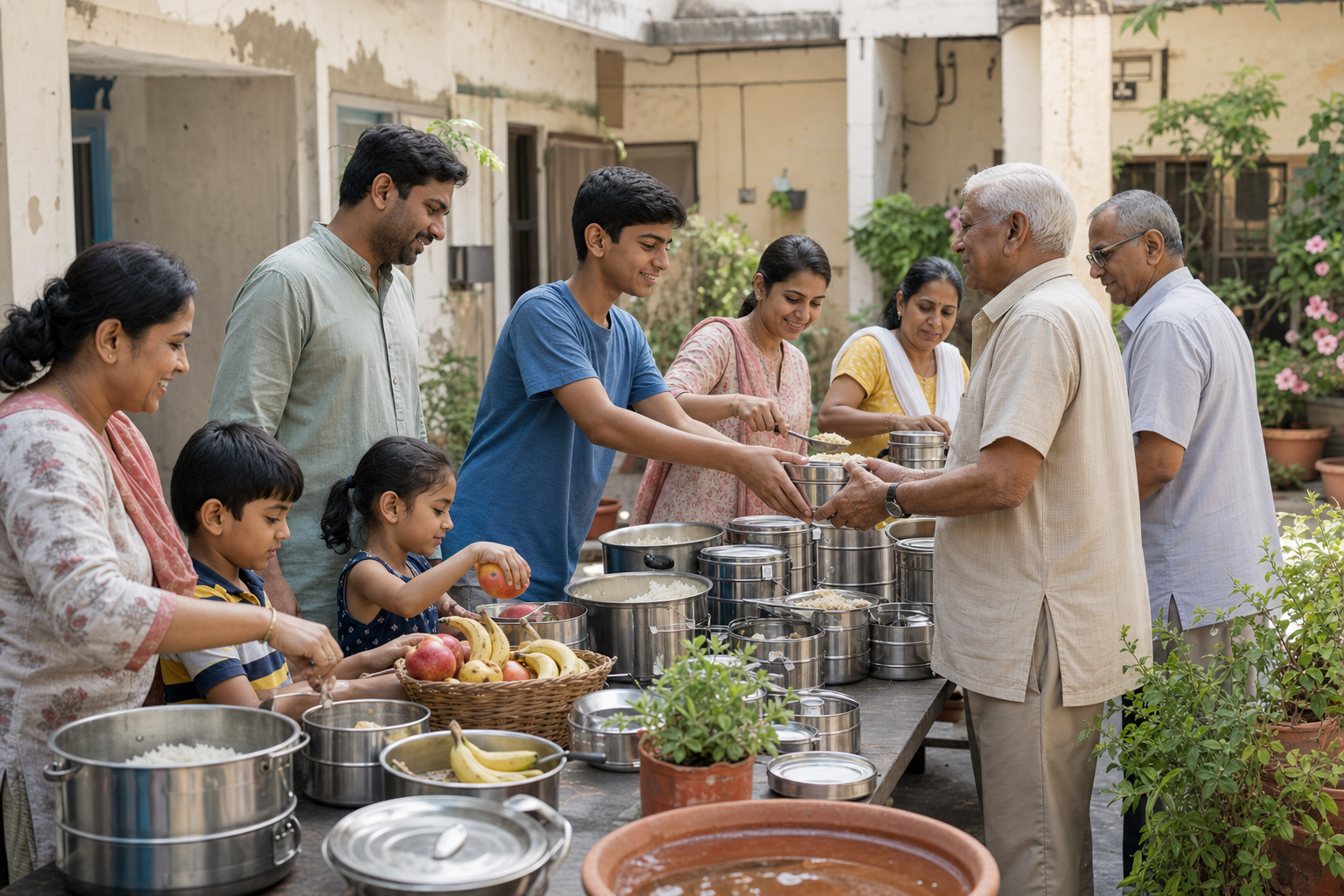
- In the sacred community, accept a dependable responsibility. Help with a community kitchen, mentor a student, donate useful books, support a temple or meditation centre, assist elders, clean a shared space, or contribute professional expertise. Daan includes material gifts as well as time, attention, knowledge, and service, so lack of disposable income need not become an excuse for disengagement.
- In public life, carry the ethical restraints with you. Ahimsa asks you not to make humiliation a habit. Satya requires care before repeating a claim or making a promise. Aparigraha asks whether accumulation is crowding out generosity. These values connect personal discipline with compassion, clarity, responsibility, and community harmony.
Choose recurring service when possible. A dramatic gift can be sincere, but a community also needs people who arrive when expected, teach with patience, prepare food, maintain sacred spaces, share skills, and continue after public attention has moved elsewhere. Reliability is a social form of devotion.
Daan also needs discernment. Give in a way that protects the recipient’s dignity. Do not make another person’s need into evidence of your virtue. Ask whether the help is useful, whether you can sustain the commitment, and whether the institution receiving support combines accountability with genuine service. Humility concerns the manner of giving; it does not require carelessness about consequences.
Dharmic cooperation should preserve real differences. A Hindu need not dilute devotion to an ishta-devata, a Sikh need not detach Naam from the Guru’s path, a Jain need not set aside the disciplines of non-violence and equanimity, and a Buddhist need not translate every contemplative practice into theistic language. The useful common ground is ethical and practical: remembrance, disciplined conduct, generosity, learning, and compassion. Unity in spiritual diversity does not require homogenization.
Use conduct as your examination. Is your speech becoming less impulsive and more truthful? Do you respond with greater care instead of merely reacting? Is generosity now planned rather than occasional? Do you repair harm more readily? Are you more reliable in the family and sacred community? These are harder tests than counting rituals, but they show whether daily remembrance is entering daily life.
Key takeaways
- Build a rule around a stable cue, designated place, lineage-rooted core, realistic minimum, and simple method of returning after a lapse.
- Move through Ishnaan, Naam, and Daan so that purification prepares attention, remembrance directs it, and generosity carries it outward.
- Use morning cleansing and the dusk lamp as anchors, adapting them to your actual responsibilities without abandoning the devotional core.
- Keep traditions distinct even while recognizing shared dharmic virtues. Cooperation does not require a blended theology or improvised ritual.
- Judge the practice by speech, restraint, repair, reliable service, and dignified giving, not only by duration or visible intensity.
At your next devotional hour, settle the rule in practical terms. Choose the cue, prepare the place, name the practice you will keep even on a difficult day, and decide who will benefit from your Daan. Then keep the next appointment. Inner and social renewal begin there: in remembrance made regular and reverence made useful.

References
- DharmaRenaissance Blog – Arundai Sivachariar & Marai Jnanasambandar: Timeless 13th-Century Shaiva Devotion in Tamil Nadu
- DharmaRenaissance Blog – Naam, Daan, Ishnaan: A Transformative Threefold Path to Clarity, Compassion, and Calm
