
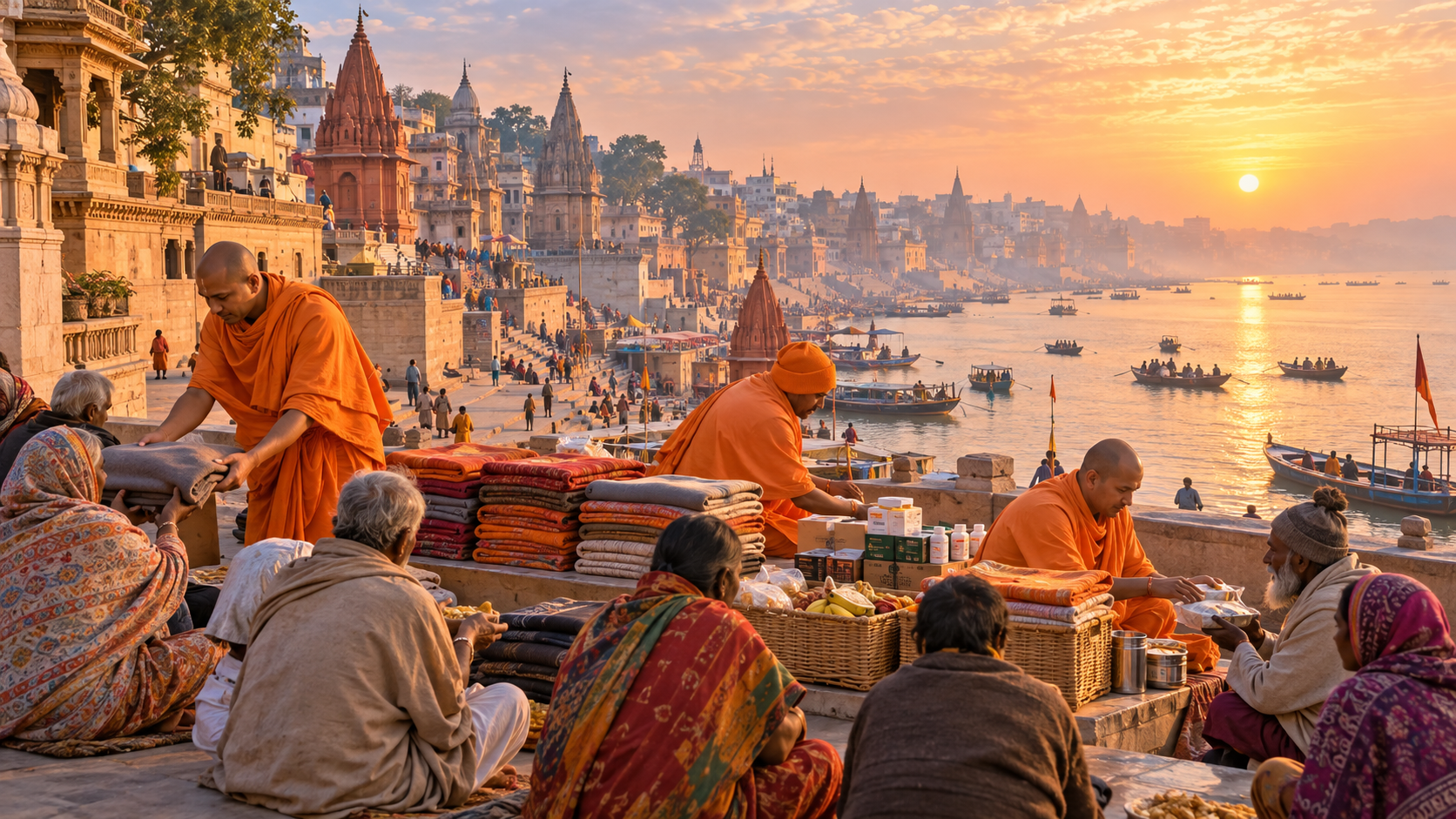
If you encountered the phrase “Varanasi centenary mission” and wondered what actually completed a century, your caution is justified. The important question is not how grand the ceremony was. It is what the centenary commemorates, what mission was placed before the public, and how you can distinguish lasting seva from a one-day celebration.
At the Varanasi observance, Uttar Pradesh Chief Minister Yogi Adityanath honoured Yugacharya Swami Pranavananda Ji Maharaj and highlighted Bharat Sevashram Sangha’s Hindutva, spiritual legacy and welfare mission. Those three elements—Hindu self-understanding, spiritual discipline and service—offer the clearest way to read the occasion.
First, read the centenary claim precisely
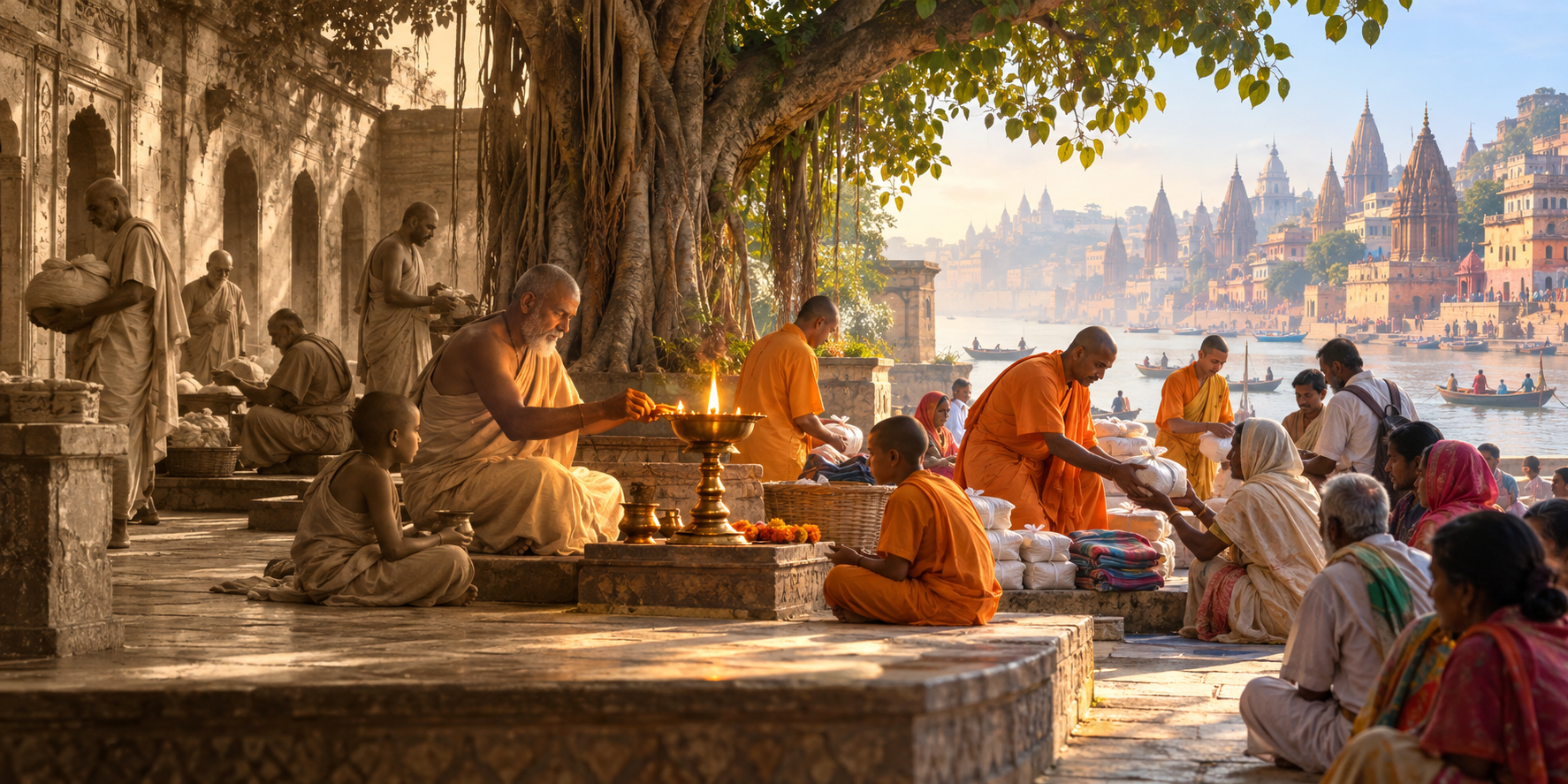
The documented centenary is attached specifically to Bharat Sevashram Sangha’s Durga Puja in Varanasi. It should therefore be described as the Varanasi Durga Puja centenary. That wording does not, by itself, establish that the Sangha as a whole, every Sangha institution in Varanasi, or every welfare programme associated with it began in the same year.
This distinction matters whenever you share the event, write about it or discuss its historical significance. A narrow, accurate statement protects the very heritage you are trying to honour. An inflated statement may travel faster, but it also gives critics an avoidable factual target.
A reliable description would be: “Bharat Sevashram Sangha commemorated the centenary of its Durga Puja tradition in Varanasi, where its spiritual and welfare mission was publicly recognised.” If you need a founding date, a programme chronology or a complete institutional history, verify that separately rather than deriving it from the word “centenary.”
The milestone still carries substantial meaning. A Durga Puja sustained across a century represents intergenerational continuity: teachers transmit a discipline, organisers preserve a sacred calendar, devotees return, and a community repeatedly chooses worship over cultural amnesia. The right response is neither to minimise that continuity nor to make the anniversary prove more than it can.
The mission joins sadhana, Hindu identity and seva
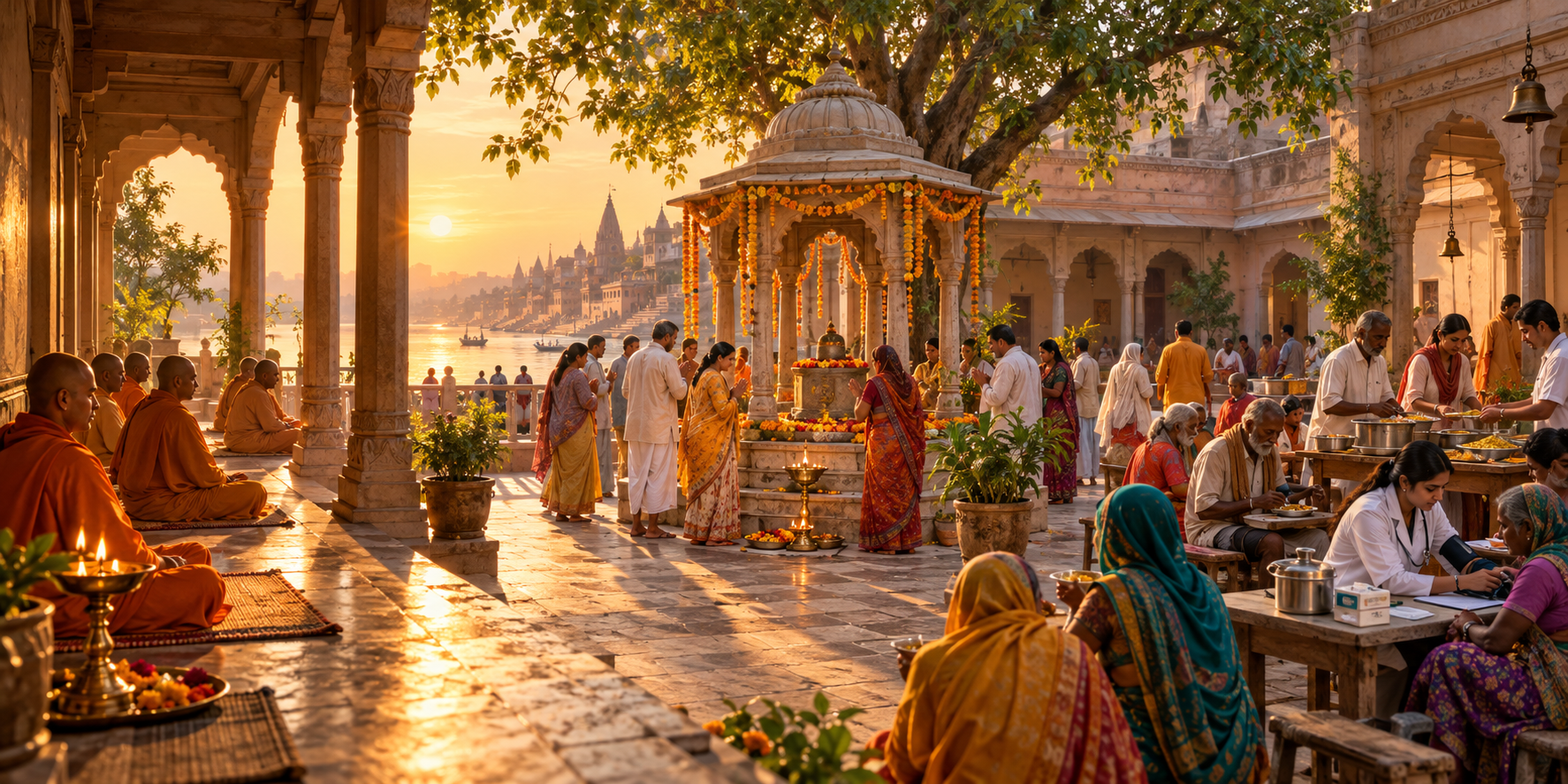
The public framing of the centenary placed three dimensions beside one another. You understand the mission more clearly when you keep them connected rather than selecting only the part that suits your politics or temperament.
- Spiritual legacy: Durga Puja is worship, not merely a cultural performance. Homage to Yugacharya Swami Pranavananda Ji Maharaj locates the institution’s work within a guru-centred spiritual inheritance. The ceremony therefore asks devotees to remember the discipline and purpose behind the organisation, not only its visible events.
- Hindutva: In this setting, the term appears alongside spirituality and welfare. The resulting picture is of Hindu civilizational consciousness expressed through organised responsibility, not a slogan detached from conduct. That is a contextual reading of this commemoration, not a claim that every speaker or school defines Hindutva identically.
- Welfare service: Seva gives outward form to inward conviction. Public praise for a welfare mission creates a practical standard: the institution’s ideals should become accessible help, sustained work and accountable service rather than remain ceremonial language.
Remove any one of these elements and the model becomes incomplete. Spirituality without service can turn inward until the surrounding society no longer feels its presence. Service without a spiritual centre can lose the worldview that called the institution into being. Identity without either discipline or service can harden into performance.
You can use this three-part test when evaluating any Dharmic organisation. Ask whether it transmits a living practice, explains the identity that sustains that practice, and converts both into dependable service. A strong answer must be visible in ordinary months, not only on a festival stage.
Judge the welfare mission by what remains after the festival
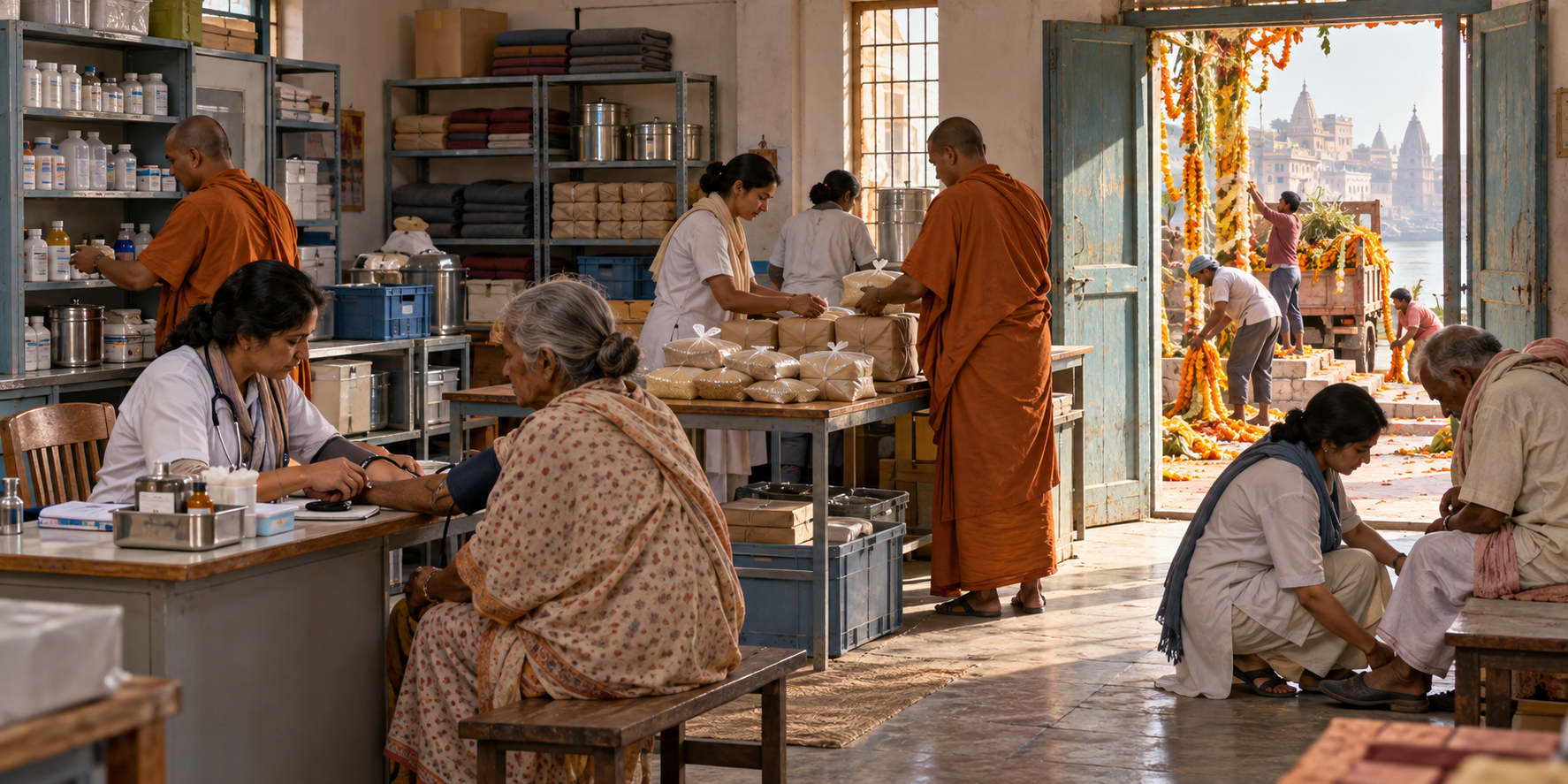
A centenary can generate speeches, photographs and public goodwill. None of those is the same thing as evidence of continuing welfare work. If you are deciding whether to donate, volunteer or commend the mission publicly, move from the broad claim to a specific activity.
- Name the work. Ask which continuing activity in Varanasi currently needs support. Do not settle for the word “service” when you need to know what is delivered.
- Ask who can use it. A useful answer identifies the people served and explains how they reach the programme. Access details matter more than ceremonial descriptions.
- Check the rhythm. Find out whether the activity operates regularly, seasonally or only during special observances. Each model can be legitimate, but your expectations should match the actual schedule.
- Request the present need. Money, materials and volunteer time are not interchangeable. Ask organisers which one is useful now and whether volunteers require particular skills or a fixed commitment.
- Look for follow-through. After contributing, seek a simple account of what was completed. Accountability is not distrust; it helps sincere seva attract steady support and improve over time.
This approach also keeps you from reducing the Sangha to a political endorsement. Yogi Adityanath’s participation and praise are relevant facts, but a chief minister’s words do not relieve devotees of the duty to understand the institution’s work. Public recognition may direct attention toward a mission; sustained Dharma depends on what people do with that attention afterward.
If you attend a future observance, enter first as a participant in worship. Listen for how the organisers describe Swami Pranavananda’s ideal and the Sangha’s current responsibilities. Then ask one concrete question about continuing seva. That sequence respects the sacred occasion while preventing reverence from becoming passive admiration.
Key takeaways for devotees, donors and readers
- The centenary should be identified precisely as the Varanasi Durga Puja centenary; it should not be expanded into an unsupported institutional chronology.
- The mission presented at the observance connects Hindu identity, spiritual inheritance and welfare service. Its meaning is diminished when any one of the three is isolated from the others.
- Public praise is recognition, not proof of every operational claim. Evaluate seva through a named activity, clear access, a known schedule and visible follow-through.
- Your most useful response is specific: learn what continues after Durga Puja, then offer the form of support that the continuing work actually requires.
The centenary deserves more than a congratulatory message. Contact the relevant Sangha organisers and ask: “Which ongoing Varanasi seva activity, if any, most needs volunteers or material support after the Puja?” A concrete answer gives you somewhere honest to begin. If the answer remains general, honour the sacred milestone, but verify the work before making broader claims or commitments.
References

Leave a Reply
You must be logged in to post a comment.