If you have come across ISKCON’s Cow Protection and Agriculture Conference, the useful question is not simply whether its ideals sound right. You need to know what those ideals should change: what to ask before supporting a goshala, what a temple must arrange before keeping cattle, and what a farmer can responsibly adapt.
Cow protection becomes durable when reverence is translated into daily care, agricultural planning, competent work, and financial accountability. A conference can open that conversation. What happens after the presentations determines whether gau-seva becomes a functioning institution or remains an admired intention.
Why cow protection and agriculture must be considered together
The third national gathering organised by the ISKCON GBC Ministry of Cow Protection and Agriculture places cow protection beside sustainable Vedic agriculture and sustainable living. That pairing matters because an animal cannot be protected by sentiment alone. Cattle need feed, water, appropriate shelter, health care, attentive handlers, land or dependable fodder arrangements, and provision for periods when they generate no income.
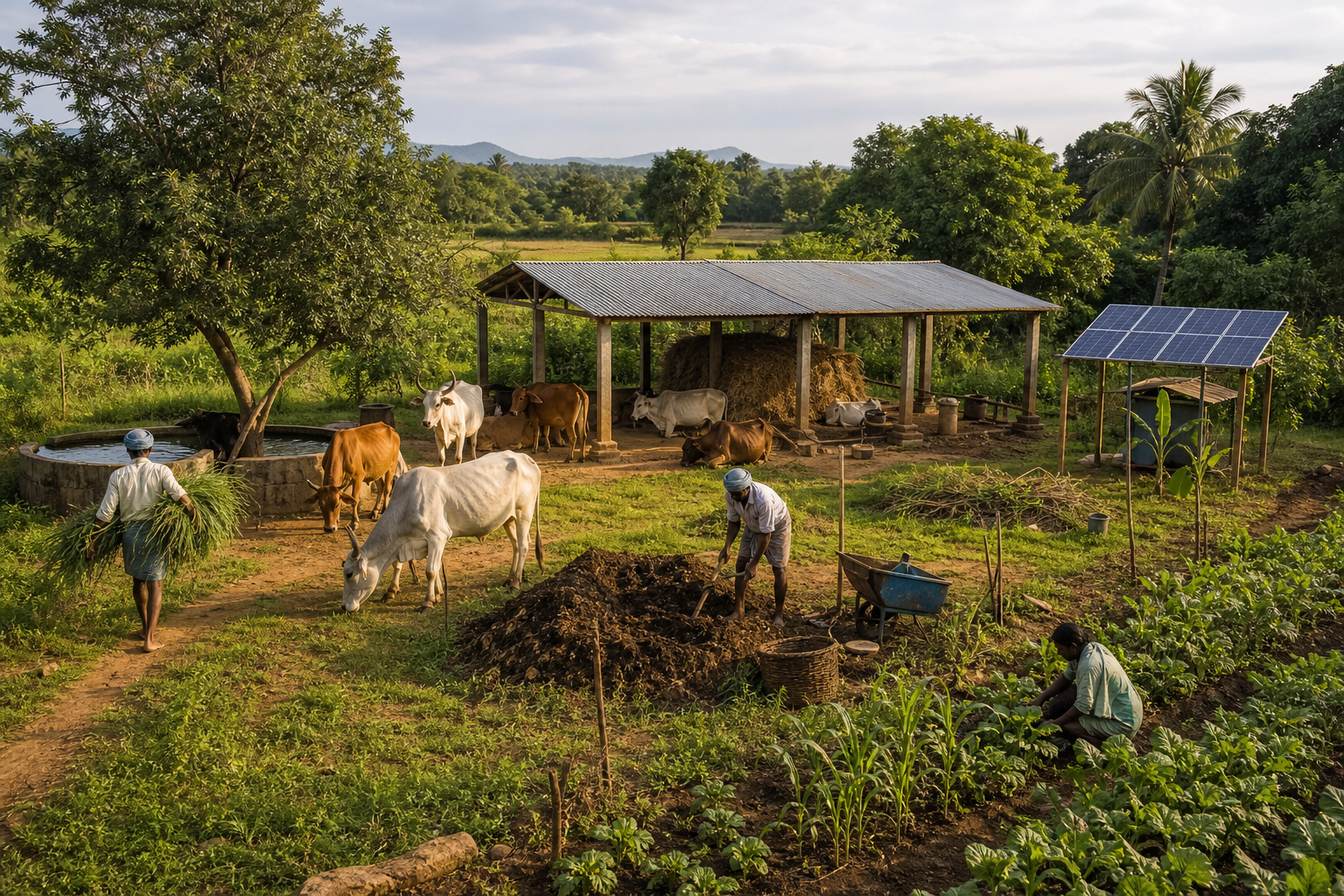
If these duties depend mainly on festival enthusiasm or occasional donations, care becomes vulnerable when attention moves elsewhere. Agriculture offers the possibility of a more integrated arrangement: land can produce food and fodder, cattle can contribute manure and, where welfare, skill, and local conditions permit, draught power, while the community organises labour and uses the farm’s produce.
Integration is not automatic. Keeping cattle beside cultivated land does not by itself create a sustainable farm. Feed may still come from elsewhere, manure may go unused, workers may be overloaded, and recurring expenses may exceed dependable income. When you hear the phrase “Vedic agriculture,” therefore, look for the operating relationship between animals, soil, crops, people, and the temple kitchen. A label cannot substitute for that relationship.
This is the first practical lesson to carry into any conference session: listen for systems, not isolated activities. A new shelter, a cultivation technique, or a devotional programme may be valuable, but each must fit within a whole that can continue through changing seasons and changing levels of public attention.
The whole-life test separates protection from utility
The hardest test of cow protection arrives when an animal is no longer economically convenient. A system built chiefly around milk can appear successful while productive cows cover part of the expense. Its real character becomes visible in its treatment of calves, bulls, ageing cattle, and animals that are ill or permanently unproductive.
For a devotee, this distinction is essential. Protection means accepting responsibility for the animal as a living being, not merely preserving an economically useful phase of its life. Before you donate to, volunteer with, or replicate a project, look for four connected commitments:
- Lifetime care: The project has a stated plan for calves, male cattle, ageing animals, illness, disability, and end-of-life care.
- Feed and land: Herd size is related to actual land, fodder access, water, storage, and seasonal conditions rather than aspiration alone.
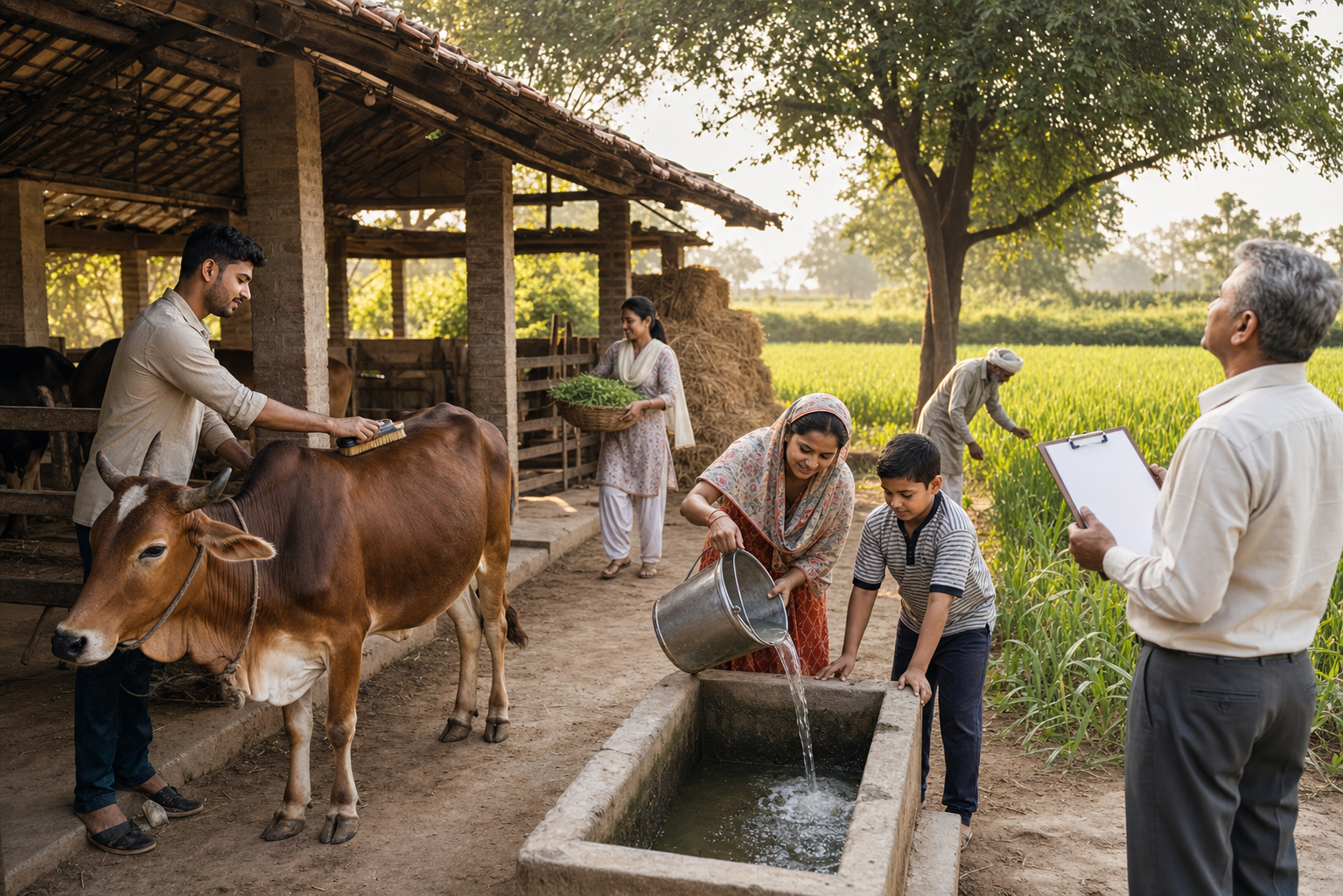
- Responsible people: Daily duties belong to identified, trained caretakers, with arrangements for absences, emergencies, and veterinary needs.
- Recurring finance: Ordinary care is supported by a realistic operating plan, not only by money raised for visible construction or special appeals.
None of these requirements makes gau-seva less spiritual. They reveal whether the spiritual commitment has acquired institutional form. Feeding, cleaning, maintaining records, arranging treatment, growing fodder, and reviewing expenses are not distractions from service. They are the work through which the promise of protection is kept.
How to evaluate a cow-protection proposal before supporting it
A moving presentation can establish moral urgency, but it cannot establish that a particular project is ready. Separate what you hear into principle, practice, and proof. The principle explains why the work matters. The practice explains who will do what. The proof shows that the practice is functioning or that a proposed trial has been responsibly designed.
Use the following questions when assessing a goshala, farm, temple proposal, or fundraising appeal:
<!– wp:list {