
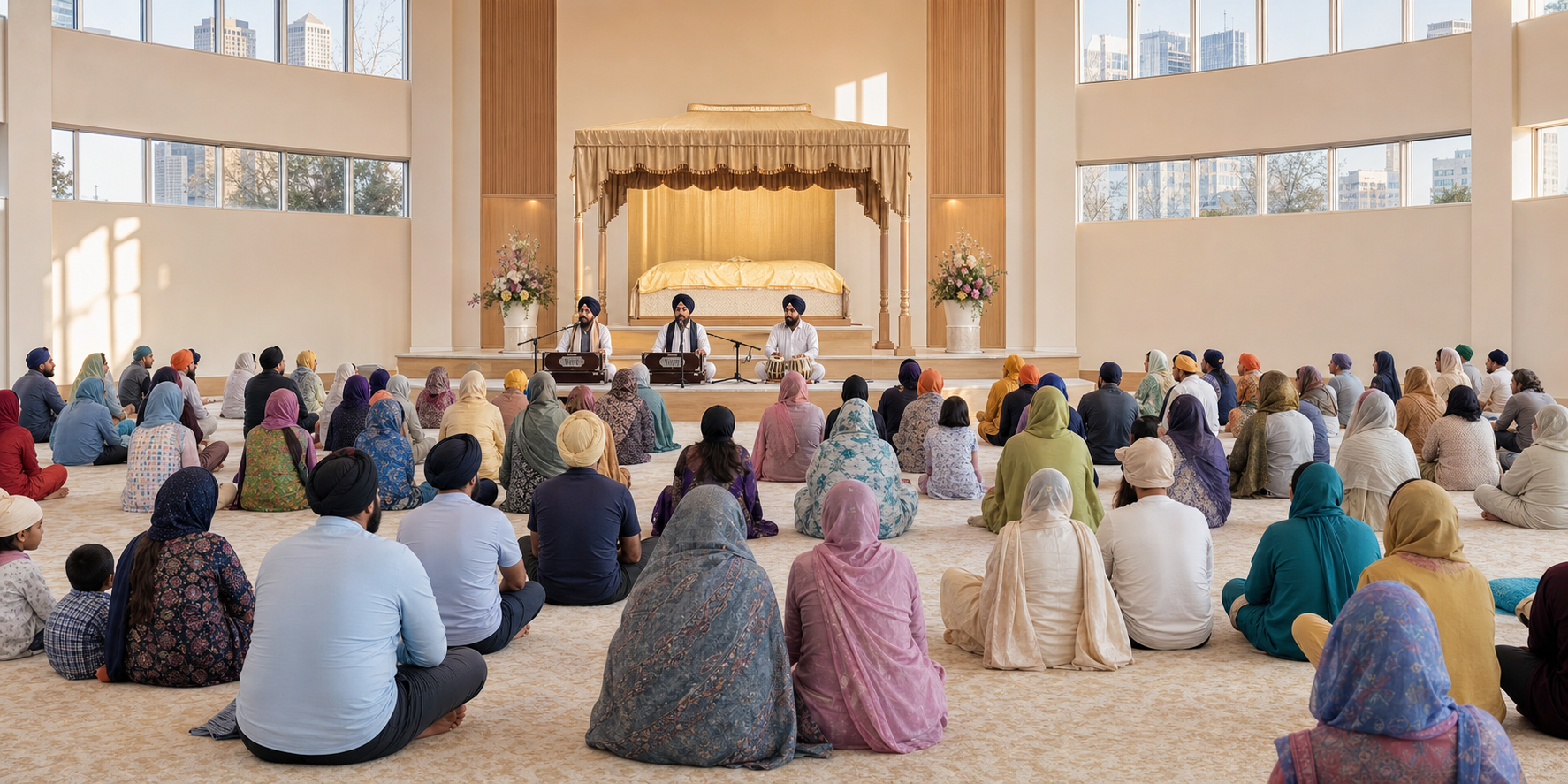
If “Houston’s first Raag Darbar” has reached you without a year, timetable, or explanation, don’t treat it like an ordinary concert listing. You need two things before deciding to attend: verified event details and a clear sense of the sacred form you are entering.
You don’t need training in raag, fluency in Punjabi, or a Sikh background to listen respectfully. You do need to place the shabad, rather than the musician or the milestone, at the center of your attention.
Start with what “Raag Darbar” actually promises
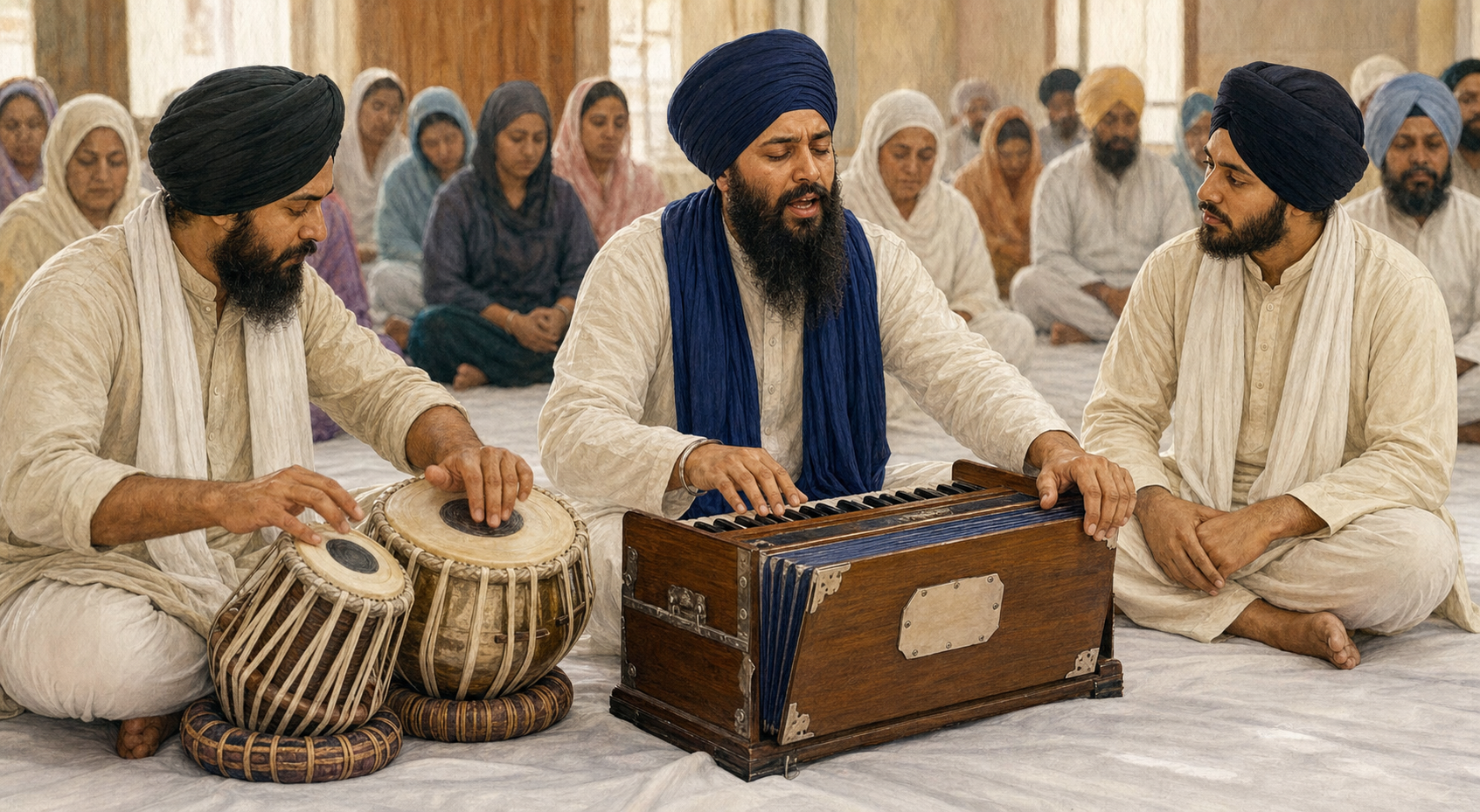
A Raag Darbar is a gathering centered on Gurbani sung within the discipline of raag. In Sikh practice, kirtan is not sacred wording added to a convenient tune. The words are sung scripture, while raag provides an ordered melodic setting through which those words can be contemplated and received.
Raag is also more than a scale or a general mood. It supplies a framework for melodic movement, characteristic phrasing, emphasis, and development. Different musicians may therefore render the same shabad differently without making the raag arbitrary. The discipline leaves room for expression, but expression remains accountable to both bani and raag.
The word darbar changes how you should approach the occasion. This is an assembly in the presence of Guru Granth Sahib, not a competition among performers. Musical mastery matters because it serves the shabad. It is not the final object of attention.
If you come from another Dharmic tradition, your familiarity with sacred sound, disciplined listening, seva, and congregational space will help. But don’t flatten the occasion into a bhajan gathering, a Hindustani classical recital, or a generic meditation concert. Sikh practice has its own scriptural center and congregational grammar. Let the gurdwara teach you how the form is lived.
Separate the Houston milestone from the missing logistics
The gathering was billed as Houston’s first Raag Darbar, at Sugarland Gurdwara from Friday, April 10. That is enough to identify the occasion, but not enough to plan a journey now.
No year, starting time, ending time, street address, performer list, or current registration information accompanies the details available here. “From Friday” may indicate that the program continued beyond one session, but it does not establish a duration. Do not infer one.
Treat “first” as the billing attached to this program. It marks the event’s intended significance, but it is not, by itself, a documented survey proving that no earlier informal or differently named raag gathering occurred anywhere in the Houston area. You can honour the milestone without turning a promotional claim into more history than the record supports.
Before travelling, sharing the listing, or adding it to a community calendar, confirm these details directly with the host:
- Whether the program is current or the page is an archival record.
- The year attached to Friday, April 10.
- The gurdwara’s full official name and street address; “Houston” is not a substitute for a map-ready venue.
- The start time, expected session length, and whether there are several sittings.
- Whether entry, registration, childcare, accessible seating, or a livestream requires prior arrangements.
- Whether langar will be served and whether visitors should bring a head covering.
The year is the decisive check. Month-and-day combinations recur, and an undated event page can circulate long after the gathering has ended. If the host cannot confirm the year and schedule, treat the material as cultural documentation rather than a live invitation.
Enter the gurdwara as a participant in its discipline
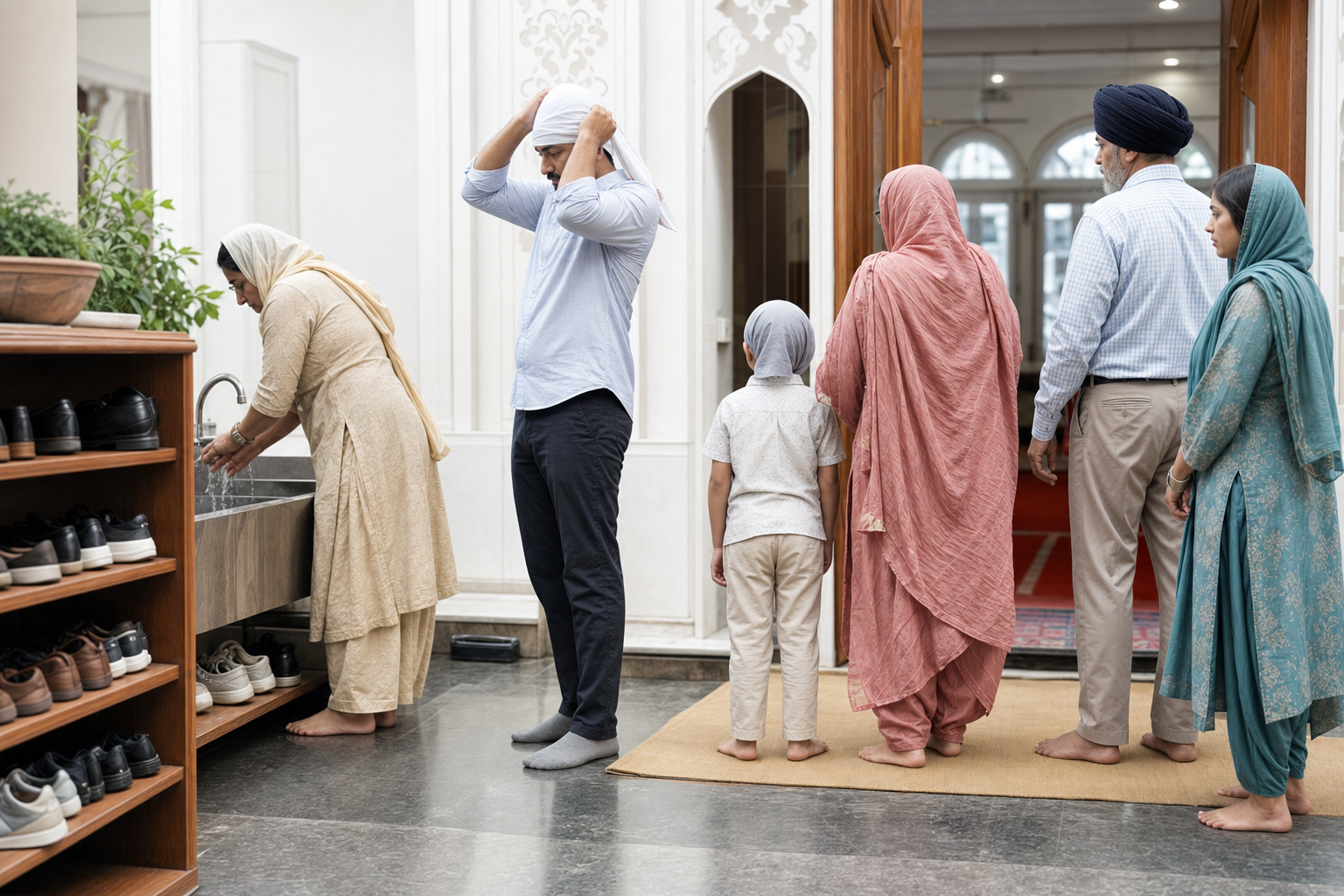
A first visit becomes much easier when you stop asking how to look knowledgeable and start watching how the sangat conducts itself. Arrive early enough to find the shoe area, cover your head, silence your phone, and ask a sevadaar where to sit. Rushing in during a rendition makes every unfamiliar custom feel harder than it is.
- Cover your head and remove your shoes. Use the coverings supplied by the gurdwara if available, or bring a clean scarf or other suitable covering. A casual cap may not fit local expectations, so ask rather than assume.
- Wear clothing suited to floor seating and a sacred space. Modest, comfortable clothing lets you sit without repeatedly adjusting it. If floor seating is difficult, ask about a chair or accessible place instead of risking pain or a fall.
- Follow local directions around Guru Granth Sahib. Members of the sangat may bow on entering. If you are unsure about a devotional gesture, quietly ask a sevadaar. Respect is better expressed honestly than through hurried imitation.
- Sit where you are directed. Seating arrangements vary by gurdwara. Avoid stretching your feet toward Guru Granth Sahib, and move quietly if you must leave.
- Keep photography and recording off until permission is clear. A public religious gathering is not automatically an unrestricted recording space. Flash, shutter sounds, and raised phones also pull attention away from the shabad.
- Don’t assume concert applause. Take your cue from the sangat at transitions. Silence, a congregational response, or the next recitation may be the appropriate continuation.
- Receive langar as seva if it is offered. The Houston notice does not establish that a meal accompanied this program. If langar is available, take only what you can finish, sit where directed, and return utensils through the local system.
Children can attend a sacred music gathering, but preparation matters. Tell them beforehand that shoes come off, heads remain covered, and voices stay low. Choose a place from which you can step out quietly if necessary. This is kinder to the child and less disruptive to the congregation than correcting every movement after the singing has begun.
Listen fruitfully even if the language and raag are new
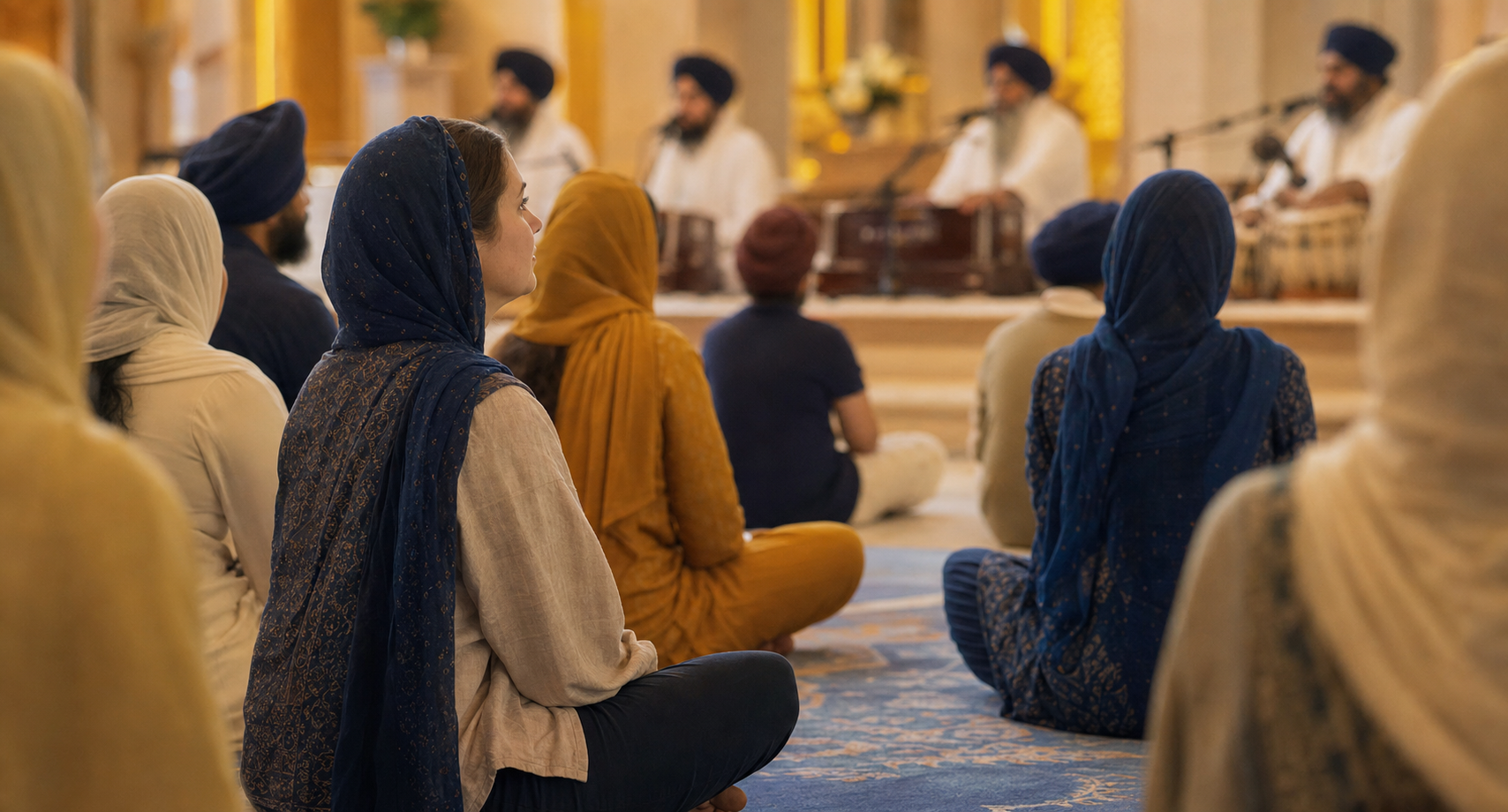
You are not expected to identify the raag by ear on your first visit. Trying to solve the music intellectually can prevent you from hearing what the musical discipline is doing for the bani. Use a simpler sequence.
- Find the shabad. If a program sheet, projected translation, or knowledgeable volunteer identifies the text, follow it. If none is available, listen for the line that returns and notice how repetition changes your attention.
- Name the raag when it is announced. Write the name down rather than guessing its notes or emotional label. You can ask about its structure after the session.
- Notice the relationship between word and melody. Listen for where a phrase rests, where the melodic line expands, and which words receive repeated emphasis. The useful question is not merely “Was that beautiful?” but “What did the musical treatment make easier to hear in the shabad?”
- Keep rhythm in its supporting role. Notice how the pulse sustains attention without allowing the tabla, tempo, or virtuosity to become the whole event in your mind.
- Ask one precise question afterward. Ask which shabad was sung, which raag framed it, or where you can read the text and translation. These questions open a path into the tradition; ranking the performers closes it back into entertainment.
Punjabi fluency would deepen access to the words, but lack of fluency need not reduce you to passive spectatorship. A translation can give you the semantic outline. Repetition, vocal emphasis, melodic return, and the congregation’s attentive presence can then help you notice how meaning is carried through time. Translation supports listening; it does not replace the sung encounter.
If you already know Indian classical music, bring that knowledge lightly. Technical recognition can sharpen the ear, but a Raag Darbar is not an examination in raag identification. If you know little classical music, don’t apologize for it. Patient attention is a more appropriate starting discipline than borrowed terminology.
Key takeaways
- The program was billed as Houston’s first Raag Darbar and associated with Sugarland Gurdwara from Friday, April 10.
- The available date has no year, so verify the event’s status and full schedule before travelling or reposting it as current.
- A Raag Darbar centers Gurbani sung within raag; approach it as scripture-centered kirtan, not a secular concert.
- You don’t need Punjabi fluency or musical training to attend, but you should follow gurdwara protocol and take direction from sevadaars.
- Listen first for the shabad, then for how raag, repetition, pacing, and rhythm serve its words.
- Treat the word “first” as the program’s billing unless fuller historical evidence establishes the claim independently.
If you intend to go, take one concrete step now: send the host the event link and ask for the year, complete timetable, and precise address. Once those details are confirmed, arrive early, sit where you are guided, and let your first question after the darbar concern the bani and its raag. That is how a local milestone becomes an opening into sustained listening.
References
