
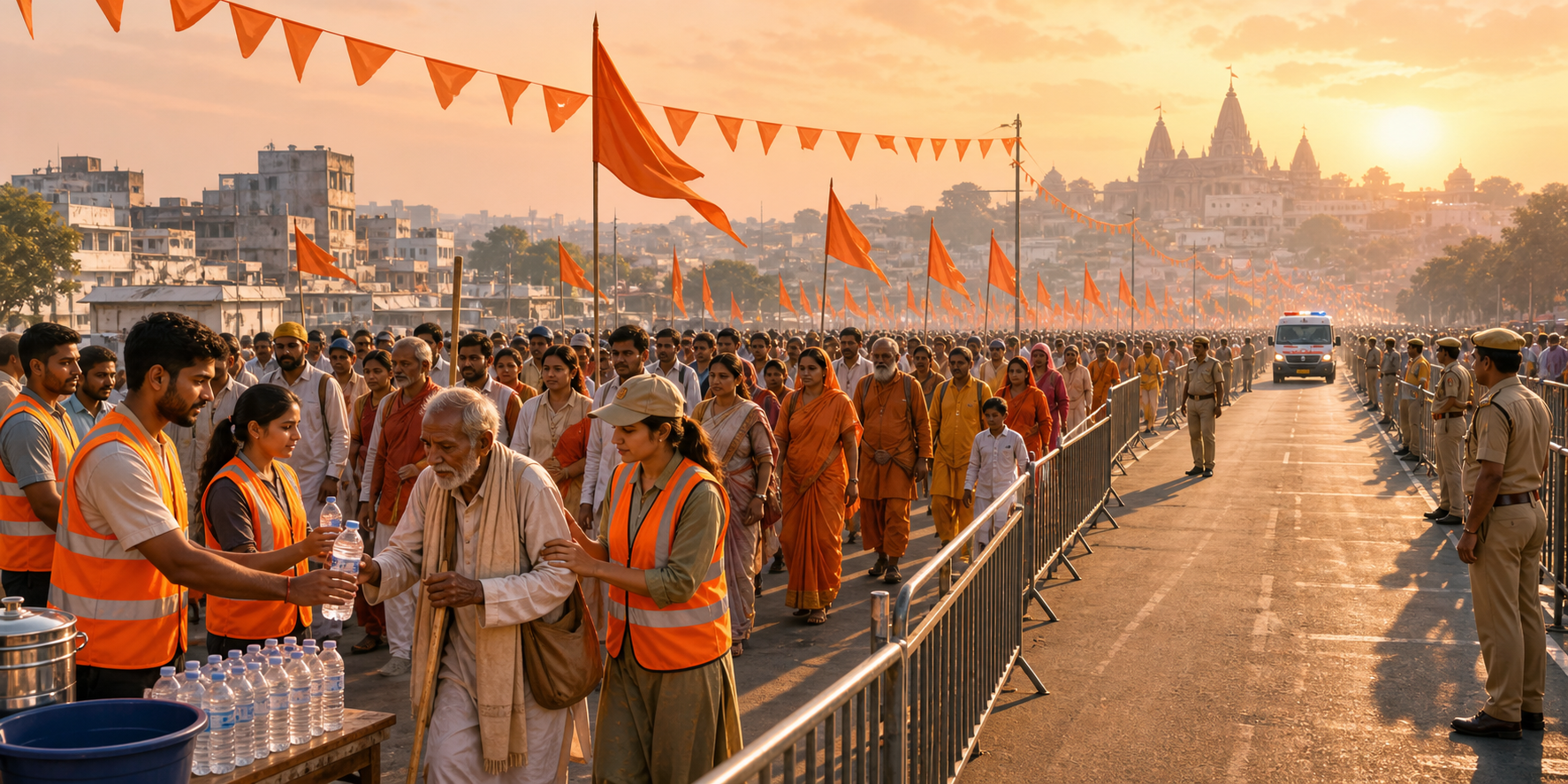
If you are trying to understand the Bageshwar Dham Sanatan Ekta Padyatra, do not stop at the crowd photographs. The useful question is what this public expression of Sanatan unity asks you to believe, practise, and protect after the procession has passed.
The Delhi-Vrindavan march brought pilgrimage, community mobilization, and civic responsibility onto the same road. Its scale made it visible, but its lasting value depends on something less dramatic: whether devotion produces seva, self-discipline, respectful cooperation, and lawful action.
Key takeaways
- The padyatra was planned as a 150-kilometre journey from Delhi to Vrindavan, a destination inseparable from the living heritage of Sri Krishna.
- Organizers and local administrators estimated that more than 3 lakh people joined the opening leg. That is an opening-participation estimate, not a count of people who completed the entire route.
- Its stated understanding of Sanatan unity extended across Hindu, Buddhist, Jain, and Sikh traditions without requiring those traditions to become doctrinally identical.
- Seva, cleanliness, non-violence, compassion, and constitutional dialogue provide better tests of dharmic purpose than slogans or crowd size alone.
- If you join or support a padyatra, verified logistics, public safety, care for other walkers, and respect for local communities are part of the sadhana.
Read the scale correctly before judging the event
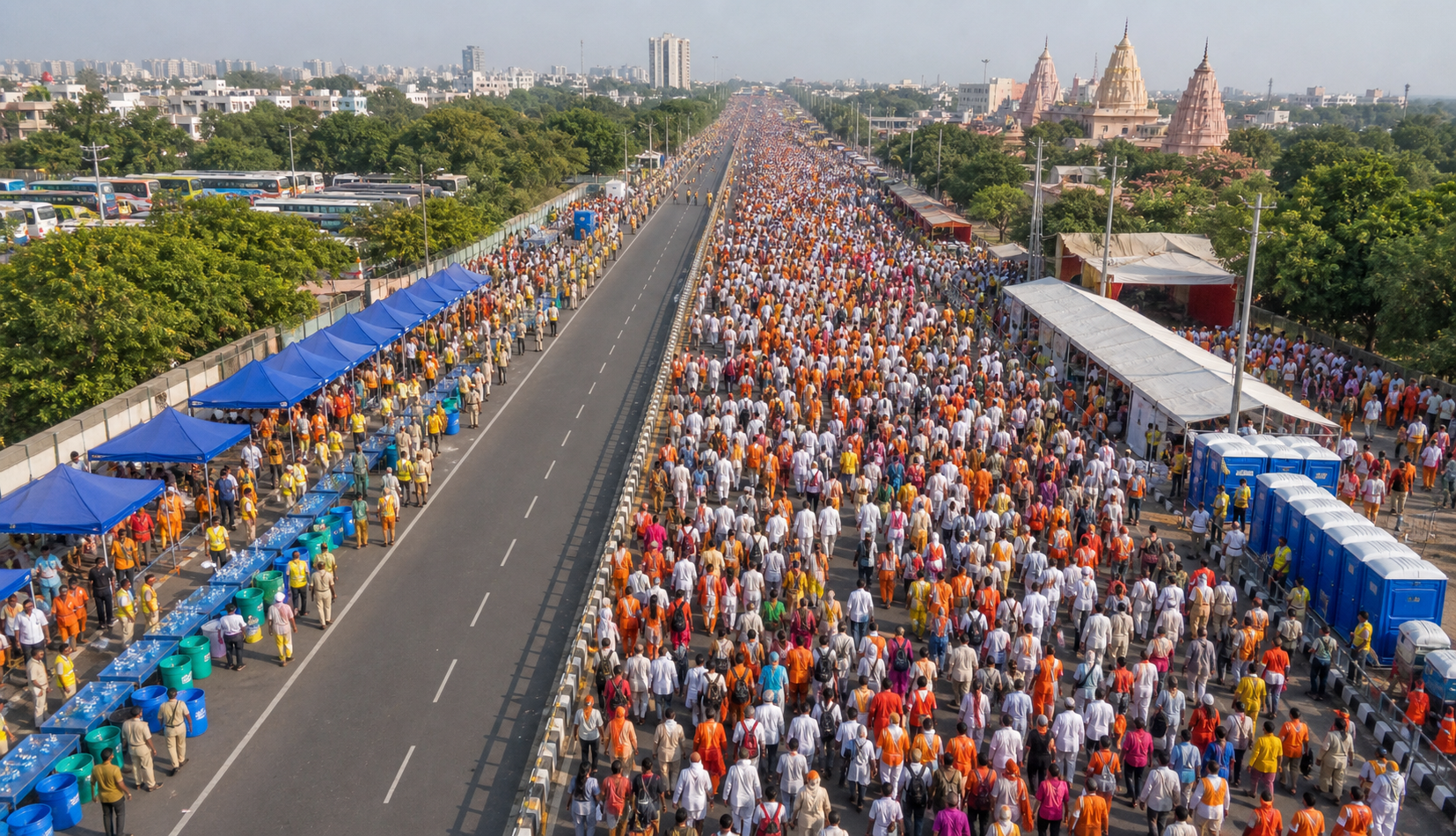
The basic facts are substantial. The padyatra was organized along a 150-kilometre Delhi-Vrindavan route and was associated with Bageshwar Dham and Dhirendra Krishna Shastri. Organizers and local administrators put participation in the opening leg above 3 lakh, or 300,000 people. Families, youth groups, senior citizens, and pilgrims from different regions were among those present.
That figure should be repeated with its qualifier intact. It describes an estimate for the opening leg. It does not establish that more than 3 lakh people walked every kilometre to Vrindavan. Nor does a diverse crowd, by itself, reveal how many participants came from each region, sampradaya, or Dharmic tradition.
This distinction matters because careless exaggeration weakens a genuine achievement. You do not need to turn an impressive opening into an unsupported completion claim. Say what is known: the march drew a very large initial response, involved a broad social mix, and placed Sanatan unity in public view. Leave demographic precision and full-route completion figures unstated unless reliable counts are available.
The route also gives the event a meaning that numbers cannot capture. Vrindavan is not merely an endpoint on a map. As a sacred landscape of Sri Krishna, it makes the journey an act of remembrance expressed through physical effort. Walking together, singing bhajans, sharing meals, resting together, and helping strangers convert an idea of community into repeated conduct.
Sanatan unity does not require religious sameness
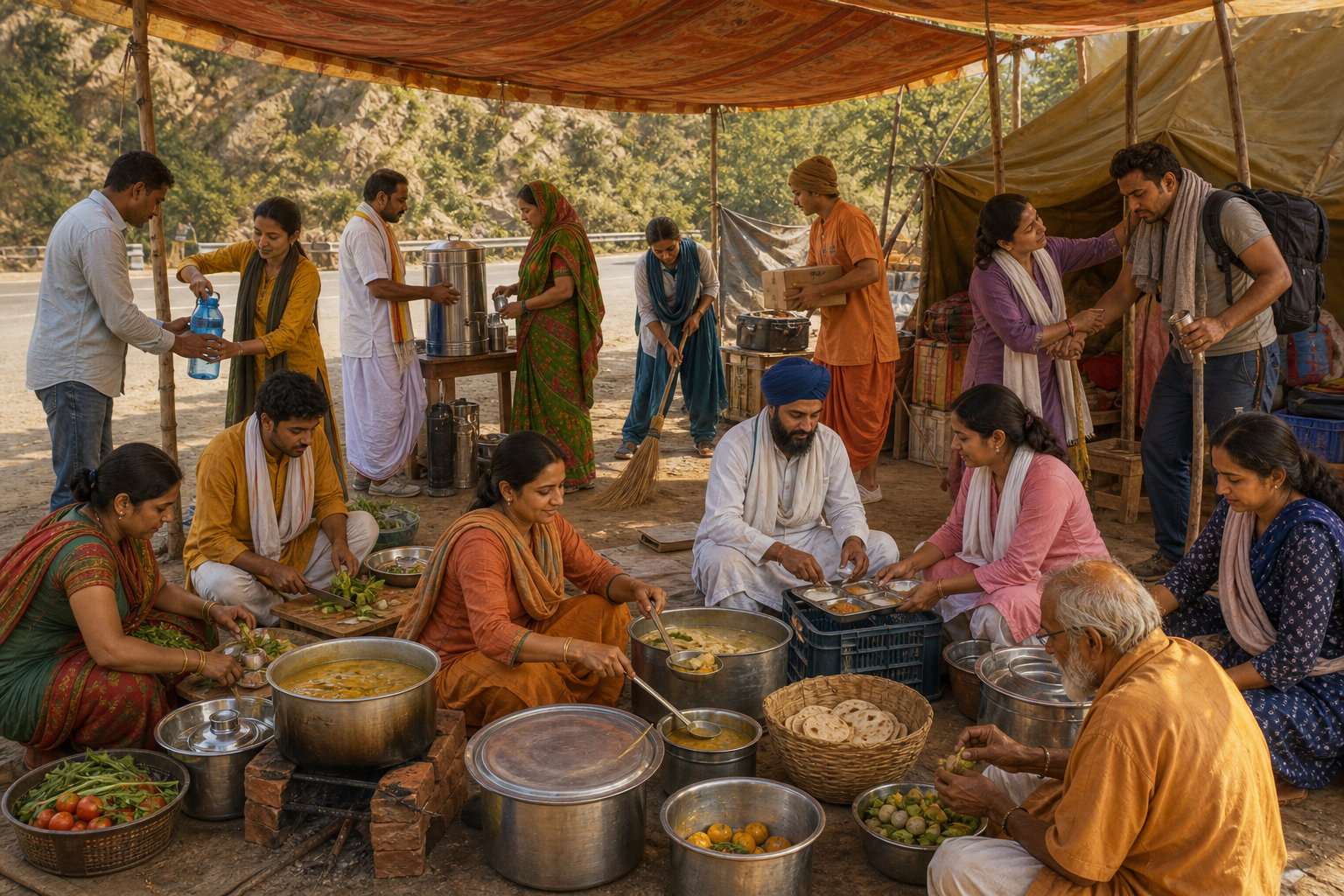
The padyatra’s stated horizon included Hindu, Buddhist, Jain, and Sikh traditions. That aspiration should be understood carefully. These traditions have distinct scriptures, institutions, teachers, philosophies, rituals, and historical experiences. Calling them Dharmic relatives should not become an excuse to erase those distinctions.
Ekta becomes credible when it protects difference while building cooperation around shared duties. Seva does not require agreement on every metaphysical question. Compassion does not require identical worship. Non-violence, care for sacred and cultural inheritance, environmental responsibility, and peaceful coexistence can create common ground without reducing every tradition to a single formula.
If you are speaking about the padyatra in your family, temple, gurdwara, vihara, Jain sangha, or community organization, three habits will keep that unity honest:
<!– wp:list {