
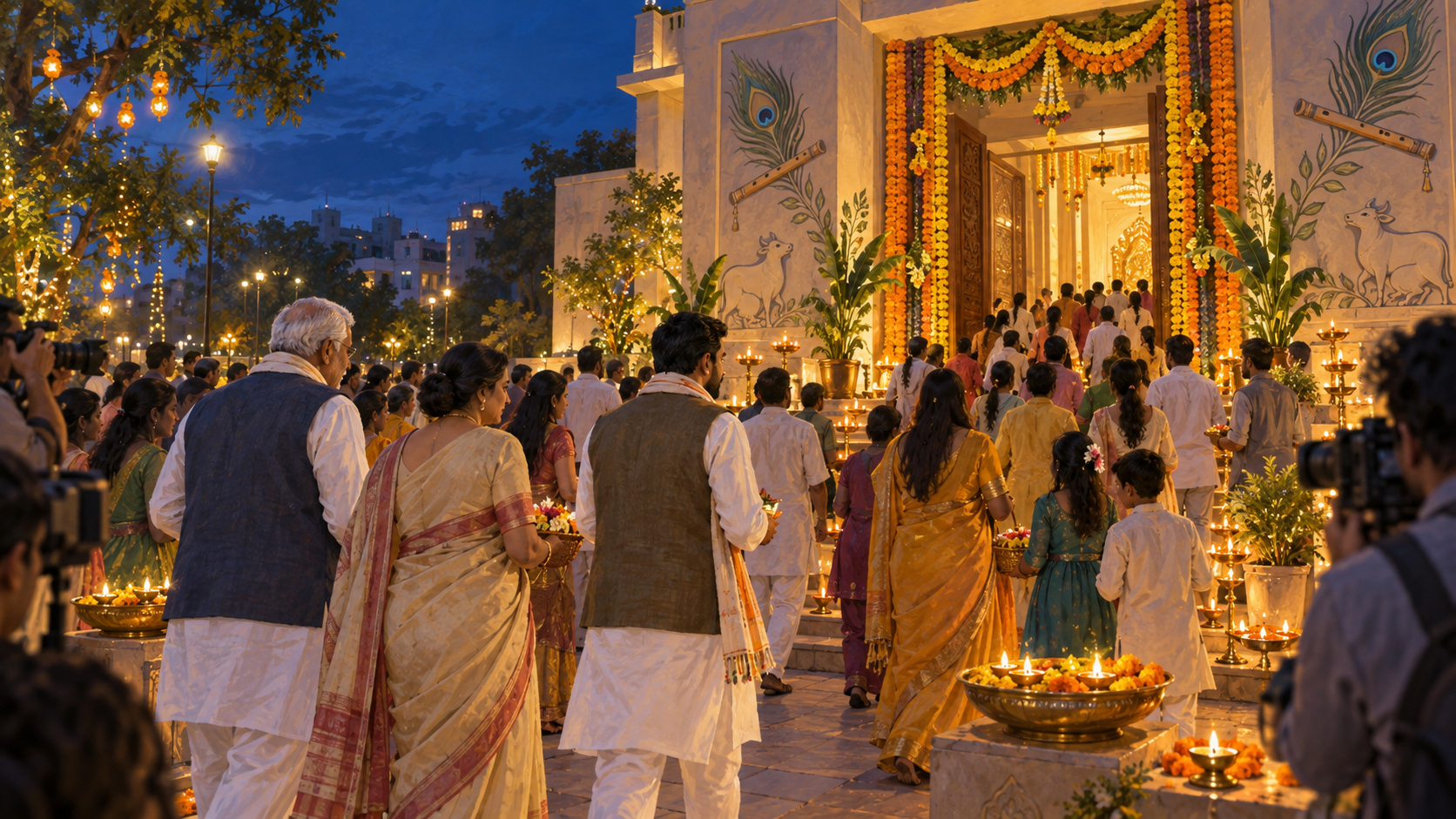
If you saw Delhi’s political leaders visiting ISKCON on Janmashtami and wondered whether the moment represented devotion, cultural recognition, or political theatre, don’t force it into a single category. A temple photograph cannot reveal a leader’s inner motive. It can still tell you something about how Hindu worship is being acknowledged in public life.
The useful question is not simply whether these leaders visited. It is what each person did, which public role each person carried, what was said, and whether respectful symbolism is followed by competent governance. That framework lets you welcome recognition of Dharma without surrendering your judgement to an image.
What the three visits do and do not establish
Three facts form the secure foundation. Delhi Chief Minister Rekha Gupta offered prayers at an ISKCON temple and sought happiness for everyone. The Delhi Assembly Speaker also visited an ISKCON temple and offered prayers. BJP national president Nitin Nabin likewise offered prayers there during Janmashtami.
This establishes visible participation by people associated with three different centres of political life: Delhi’s executive government, its legislature, and a national political party. It does not establish their private motives. Nor does it prove a new policy, a financial commitment, improved temple administration, or a lasting political realignment. Those stronger conclusions require different evidence.
That distinction protects you from two easy mistakes. The first is instant cynicism: declaring every public act of worship false because a politician is present. The second is instant endorsement: treating darshan or prayer as proof that every future decision will serve Dharmic interests. Neither judgement follows from the known facts.
The visits matter at the level of public recognition. Janmashtami celebrates the appearance of Bhagavan Sri Krishna, and ISKCON is an explicitly Krishna-centred devotional institution. Entering that setting and offering prayers is more specific than issuing a generic festival greeting. The leaders placed themselves inside the festival’s devotional grammar rather than treating it merely as seasonal entertainment.
Read the three political roles separately
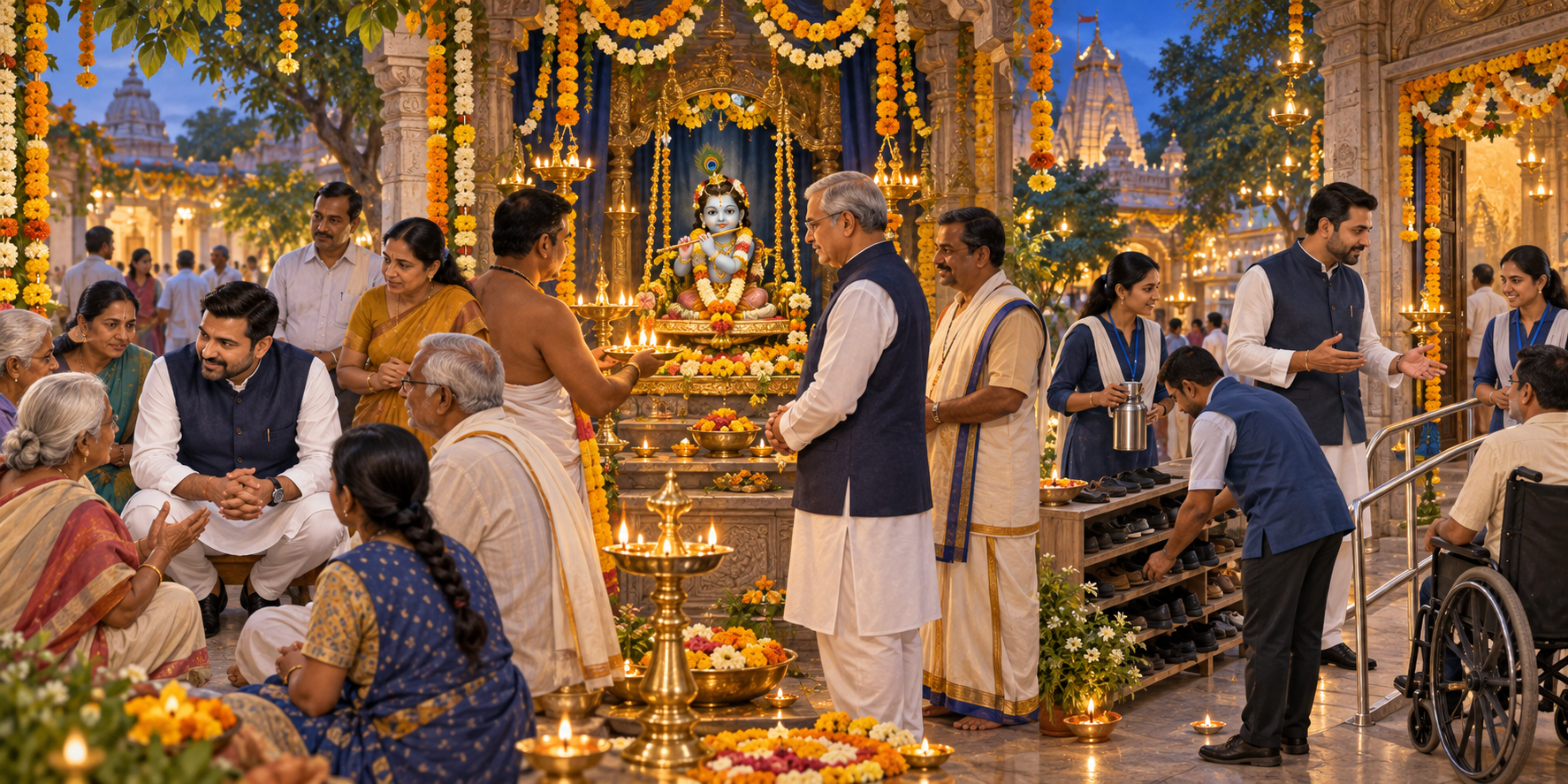
Calling all three visitors simply “politicians” erases an important difference. Each office changes the public meaning of the same ritual act.
- The Chief Minister carries executive responsibility. Her presence can communicate respect for the festival, but citizens are entitled to look beyond the visit toward administration: public safety, access, transport, sanitation, and fair treatment of religious institutions. Her wish for everyone’s happiness uses an inclusive civic vocabulary. It is an appropriate sentiment, not a substitute for delivery.
- The Assembly Speaker represents a legislative institution. A Speaker’s temple visit makes Hindu observance visible within the life of a constitutional office. It should not be converted automatically into a claim about legislation or government policy, because no such action is established by the visit itself.
- A national party president carries a partisan role. Nitin Nabin’s prayer has devotional content, but his office also gives the appearance a political audience. You can recognise both dimensions without pretending to know which one was stronger in his private mind.
This is also the cleanest way to handle the familiar secularism objection. A public leader’s act of worship is not, by itself, proof of state preference or unequal treatment. Religious neutrality should be tested through the use of public power: whether laws are applied fairly, citizens receive equal protection, public resources are handled transparently, and officials respect freedom of worship. It need not require Hindu religious life to become invisible whenever an officeholder enters the room.
For a Dharmic reader, that means cultural confidence and constitutional fairness do not have to compete. You can welcome the unembarrassed acknowledgement of Janmashtami while insisting that every official decision be judged on lawfulness, competence, and equal citizenship.
Use a five-part test for the next temple appearance
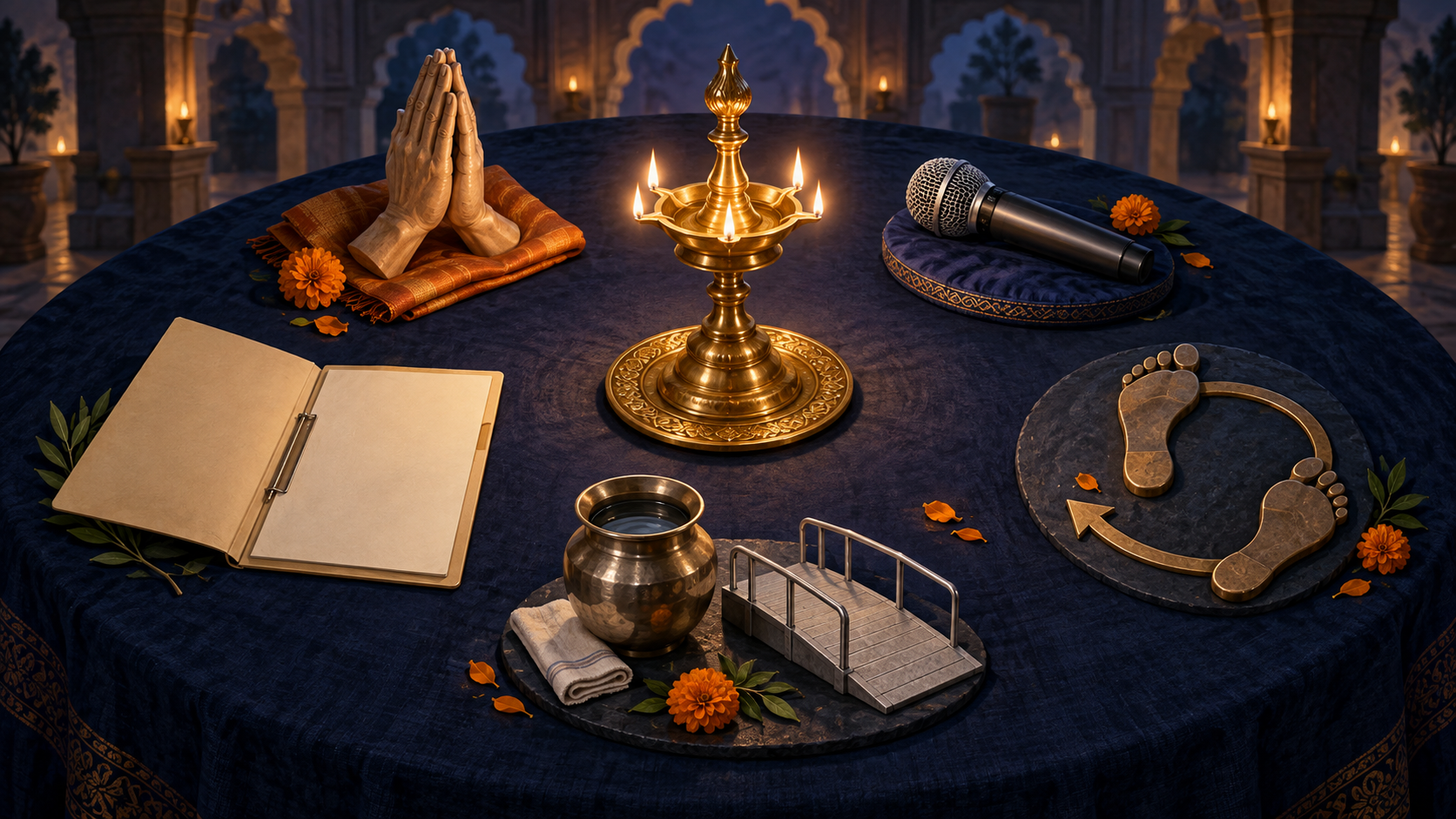
Political images move faster than political accountability. When the next temple photograph reaches your phone, use this sequence before praising or condemning it.
- Record the observable act. Did the leader offer prayers, take darshan, participate in aarti, speak to devotees, announce an administrative measure, or merely pose at the entrance? Use the most precise description you can verify.
- Identify the capacity. A Chief Minister, a legislative presiding officer, and a party president do not bring the same authority. Ask whether the person could actually deliver the outcome being implied.
- Read the words narrowly. A prayer for universal happiness expresses goodwill. It does not create a budget, order an agency to act, or resolve a temple’s civic problem. Credit the sentiment for what it is without inflating it into a promise.
- Look for a concrete next step. If administrators or devotees raise an issue, note whether a responsible office, decision, and timeframe emerge. A commitment becomes assessable only when someone can be held responsible for carrying it out.
- Compare conduct over time. Does respect for Hindu institutions continue after the festival and away from prominent venues? Consistency is more revealing than any attempt to read sincerity from facial expressions or ceremonial gestures.
You can turn this into a one-line civic log: festival and venue; leader and office; observable action; exact commitment, if any; responsible authority; follow-up. If the commitment column remains empty, classify the event as symbolic recognition. If a commitment is made, judge it later by delivery. This simple separation prevents both unfair dismissal and manufactured political credit.
Key takeaways
- Delhi’s Chief Minister, Assembly Speaker, and a national party president each offered visible recognition to Janmashtami worship at ISKCON.
- Their different offices give the visits different civic and political meanings; they should not be treated as interchangeable appearances.
- Prayer establishes participation, not motive. It also does not prove a policy commitment or administrative result.
- Public Hindu observance and fair government are separate tests. A leader can participate in worship while remaining accountable for equal and lawful administration.
- The sound Dharmic response is neither reflexive cynicism nor unconditional applause. Recognise the gesture, preserve the distinction between symbol and delivery, and examine what follows.
Turn cultural recognition into an accountable relationship
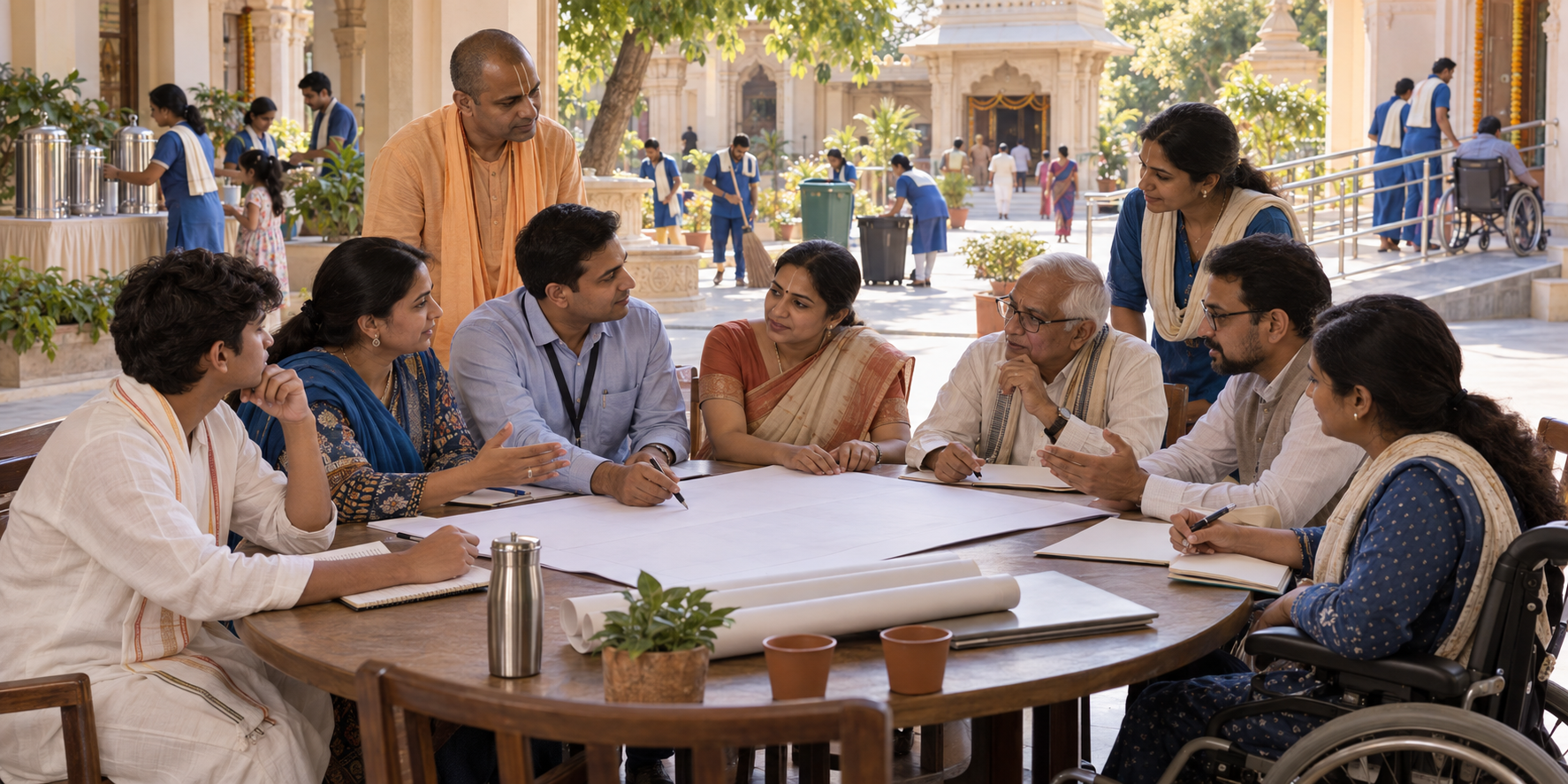
Devotees do not need to choose between hospitality and scrutiny. A political leader who comes for Janmashtami should be received as a guest of sacred space, subject to the same temple discipline that protects the dignity of worship. The deity should remain the centre of the occasion, ordinary darshan should not become secondary to staging, and partisan performance should not overwhelm the festival’s devotional purpose.
Temple administrators and community representatives can also make public engagement more useful. When an officeholder is present, practical concerns should be framed precisely: identify the responsible authority, describe the required administrative action, and ask how progress will be communicated. A vague appeal produces a vague assurance. A defined civic request creates something devotees can track after the cameras leave.
Leaders, for their part, should connect cultural respect with ordinary competence. Festival greetings and prayers acquire substance when worshippers can approach temples safely, religious institutions receive predictable treatment, and public agencies address legitimate operational needs without hostility or favouritism. Those outcomes cannot be inferred from these visits, but they are reasonable standards by which later conduct can be judged.
The next time a temple visit becomes a political argument, ask four questions: What happened? In what official capacity? What was actually promised? What followed? You will then be able to honour a sincere public gesture if it was one, recognise cultural significance without exaggeration, and hold power accountable without belittling Dharma.
References
- Dandavats – Delhi Assembly Speaker visits ISKCON Temple on Janmashtami, offers prayers
- Dandavats – India: BJP National President Nitin Nabin Offer Prayers On Janmashtami Festival At ISKCON Temple In Delhi
- Dandavats – Delhi CM Rekha Gupta offers prayers at ISKCON Temple, seeks happiness for everyone
