
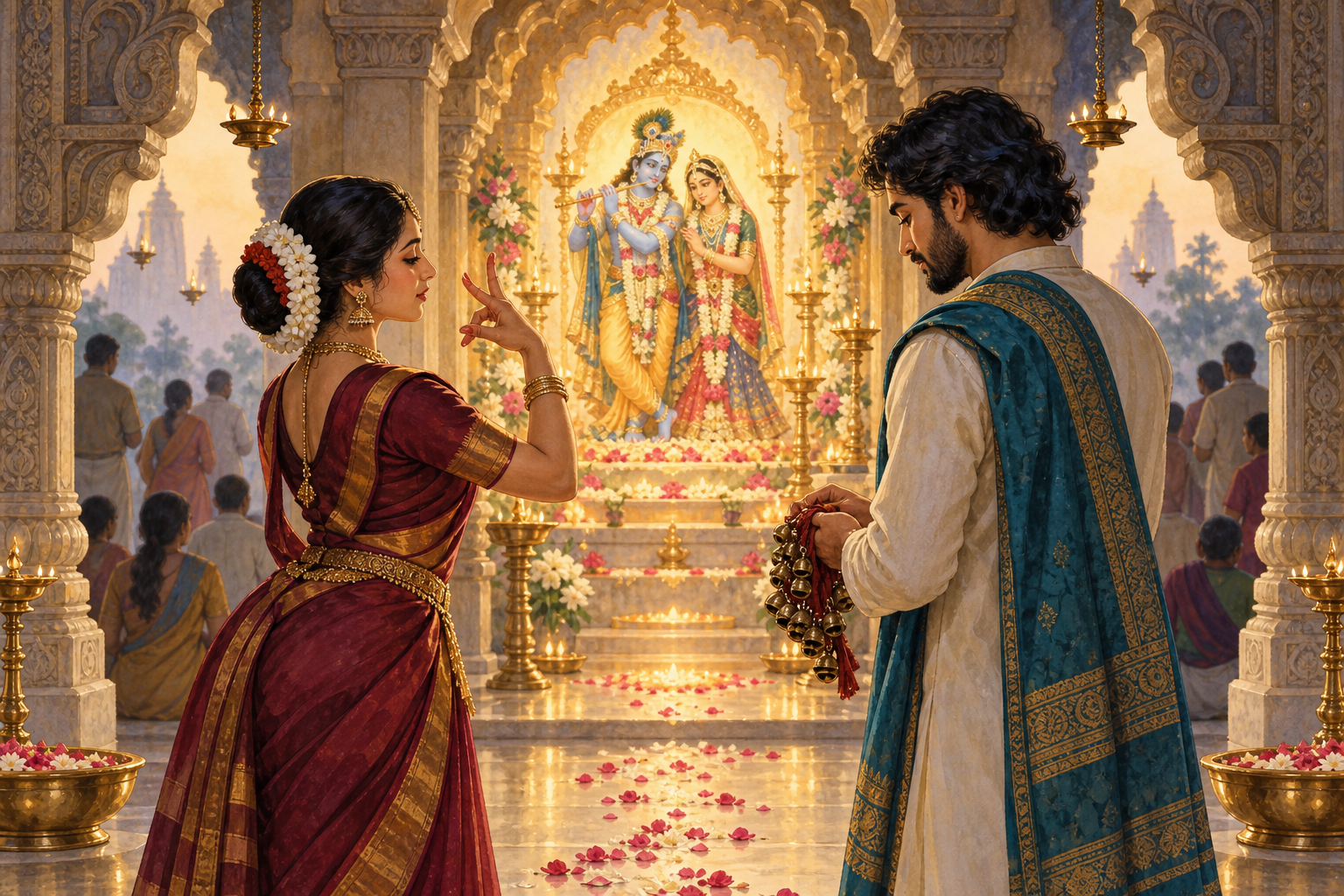
When a celebrated Indian performer speaks warmly about an ISKCON temple, you may wonder what kind of spiritual connection is actually being described. Is it a passing cultural sentiment, a personal experience of bhakti, or a formal relationship with the institution? The distinction matters. A temple encounter can be profound without proving initiation, membership, or an official role.
Hema Malini and Padma Subrahmanyam offer two useful ways to understand such encounters. Hema Malini has recalled spiritual memories associated with her first visit to ISKCON’s New York temple. Padma Subrahmanyam describes a recurring experience of temple darshan that feels like "seeing Bhagawan Krishna in person". One connection lives through memory; the other is renewed through return. Both deserve to be understood without exaggeration.
Begin with the artist’s actual claim
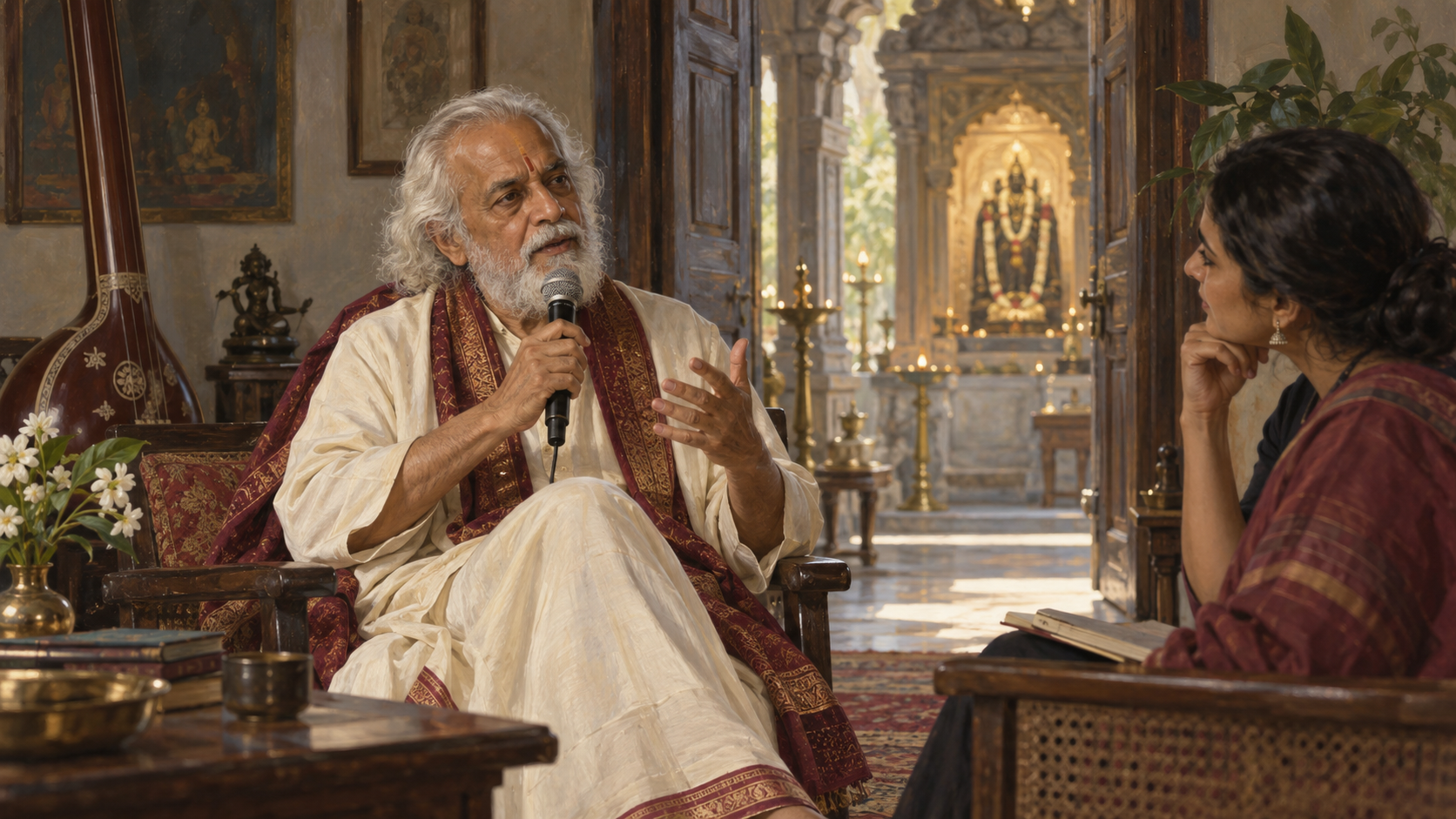
The safest rule is simple: repeat no more than the artist has claimed. Hema Malini’s recollection establishes a spiritually meaningful memory connected with an initial New York temple encounter. Padma Subrahmanyam’s words establish that visiting an ISKCON temple repeatedly evokes an immediate sense of Krishna’s presence for her.
Those are significant statements, but they are also limited ones. A spiritual memory is not automatically evidence of initiation. Affection for a temple does not by itself establish an institutional position. Devotional language does not prove that the speaker endorses every decision, teaching, or public action associated with an organisation.
When you encounter a story about an artist and a spiritual movement, apply three checks:
- What experience was described? Distinguish a temple visit, a devotional performance, a personal practice, and a formal religious commitment.
- What does the wording establish about continuity? A remembered first encounter and a pattern of return are different kinds of connection.
- What remains unstated? Do not infer initiation, membership, discipleship, representation, or endorsement unless reliable evidence establishes it.
This discipline protects both the artist and the tradition. It keeps a sincere expression from being inflated into publicity copy, and it prevents scepticism from dismissing devotion merely because the devotee is famous. If you share these accounts, say precisely that Hema Malini recalled a spiritually important temple memory and that Padma Subrahmanyam described her recurring darshan in intensely personal terms. Do not upgrade either claim into a biography that has not been documented.
Why performing artists may recognise a temple differently
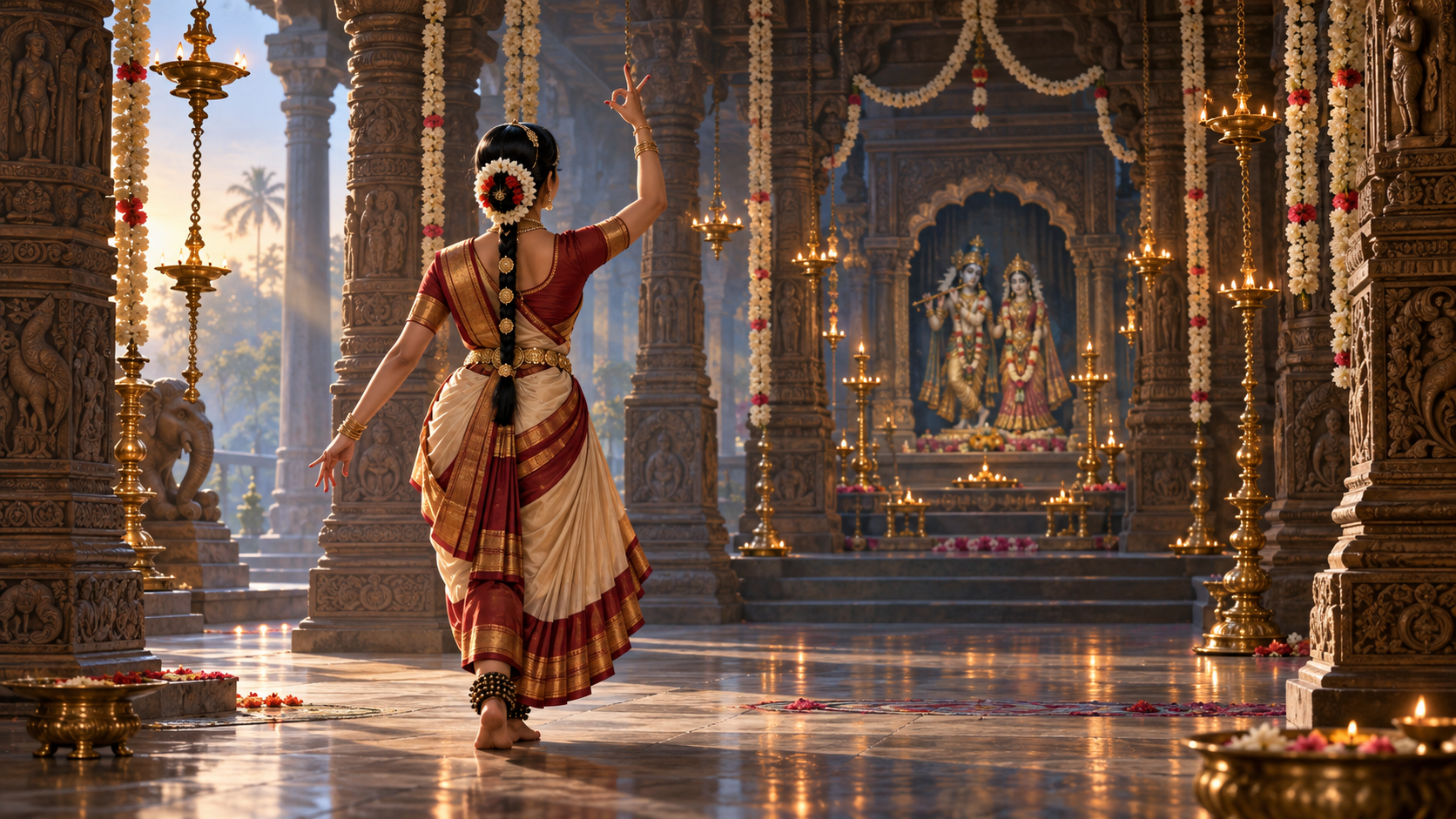
Indian performing traditions train the body and the attention together. Gesture, posture, rhythm, facial expression, repetition, silence, and spatial orientation can all carry meaning. Abhinaya makes an inward state perceptible through disciplined outward form. This does not make artistic performance identical to worship, but it can make a performer especially alert to the relationship between form and presence.
A temple also addresses more than the analytical mind. The form of the deity, the sound of sacred names, ritual movement, lamps, offerings, and the gathered attention of worshippers create an embodied setting. You do not merely receive information about Krishna. You are asked to direct your senses and attention toward Krishna.
The distinction between stage and shrine must remain firm. The murti is not a theatrical prop. Kirtan is not background music. Darshan is not a performance arranged around a famous visitor. Artistic sensitivity may help someone become attentive, but bhakti begins when attention ceases to revolve around the performer and turns toward Bhagavan.
That is why Padma Subrahmanyam’s wording is instructive. She does not merely describe attractive architecture or an emotionally satisfying atmosphere. Her words centre Krishna as the one encountered. They belong to the grammar of darshan: sacred seeing understood as relationship, not detached visual appreciation.
Hema Malini’s New York memory reveals another dimension. A spiritual encounter associated with a temple can remain meaningful after the initial visit and beyond Bharat’s geography. The location matters because it shows how a Dharmic memory can take root in a global city without ceasing to be oriented toward Krishna. A temple abroad is not meaningful merely as a replica of home. It can become a place where inherited culture is encountered again as living devotion.
When judging whether an artist’s statement is substantially devotional, notice its centre of gravity. Does it direct attention toward Bhagavan, worship, remembrance, or transformation? Or does it primarily advertise the visitor’s status? The presence of cameras cannot answer that question by itself. The artist’s actual words and the way the temple encounter is framed are more revealing.
Memory and darshan are distinct spiritual pathways
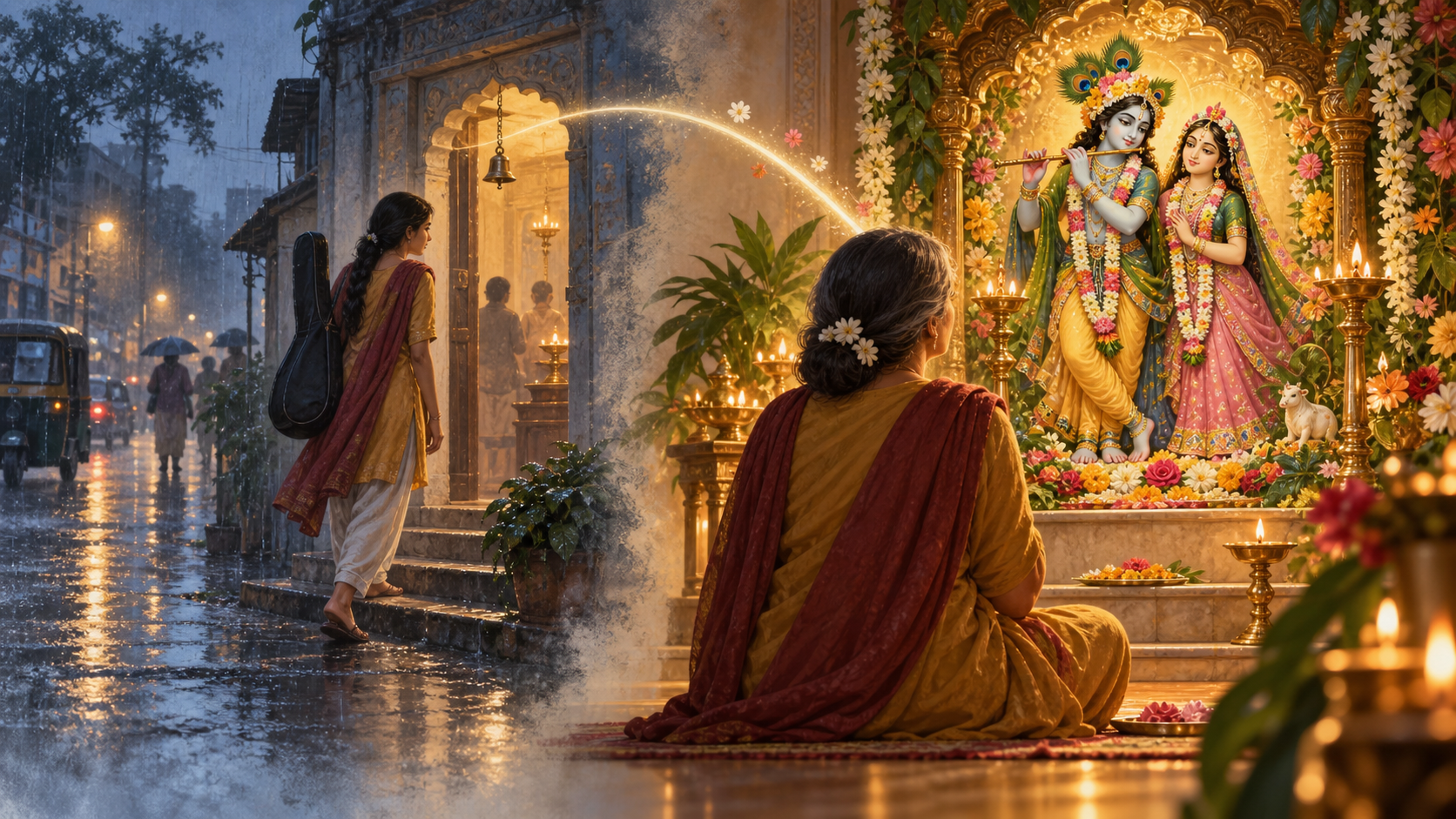
A first encounter can become a durable memory
A remembered temple visit often works as an anchor. The event ends, but a particular form, sound, mood, or act of worship remains available to the mind. Remembrance can then reopen a spiritual question long after the original setting has disappeared.
Hema Malini’s recollection should be read in this register. Its importance is not that a prominent performer once entered a famous institution. Its importance is that the encounter remained spiritual in memory. The temple was not reduced to a tour stop or a professional occasion.
If a temple visit affects you in this way, do not leave the memory vague. Afterward, identify what actually stayed with you:
- What drew your attention away from yourself and toward Krishna?
- Was the lasting element a sacred name, the deity’s form, a ritual action, the congregation, or the stillness of darshan?
- Did the encounter merely move you, or did it give you a practice you are prepared to repeat?
This turns nostalgia into discernment. A powerful memory may open the door to bhakti, but it becomes spiritually formative only when remembrance begins to shape attention and conduct.
Repeated darshan creates a different kind of connection
Padma Subrahmanyam’s language places emphasis on return. Her use of "every time" indicates a recurring quality in the experience, although it does not tell us how frequently she visits. That boundary is worth preserving: the words establish a pattern of perception, not an attendance record.
Return changes your relationship with a temple. On an initial visit, novelty can dominate. With repetition, you begin to recognise the sequence of worship, the disposition expected of a visitor, and the difference between seeking stimulation and offering attention. The temple becomes less an event and more a place of practice.
You should not expect to reproduce another person’s feeling of Krishna’s presence. Devotion is not a performance technique, and emotion cannot be commanded on cue. Go for darshan without demanding intensity. Put away the impulse to document every moment. Learn the local etiquette, participate respectfully in what is open to visitors, and return because steadiness matters even when the emotional register changes.
This also guards against spiritual imitation. Padma Subrahmanyam’s experience can help you understand what temple darshan means to her; it cannot substitute for your own attention, practice, or theological understanding. Her testimony is an invitation to look more carefully, not a script telling you what you must feel.
Use celebrity testimony as a doorway, not an authority
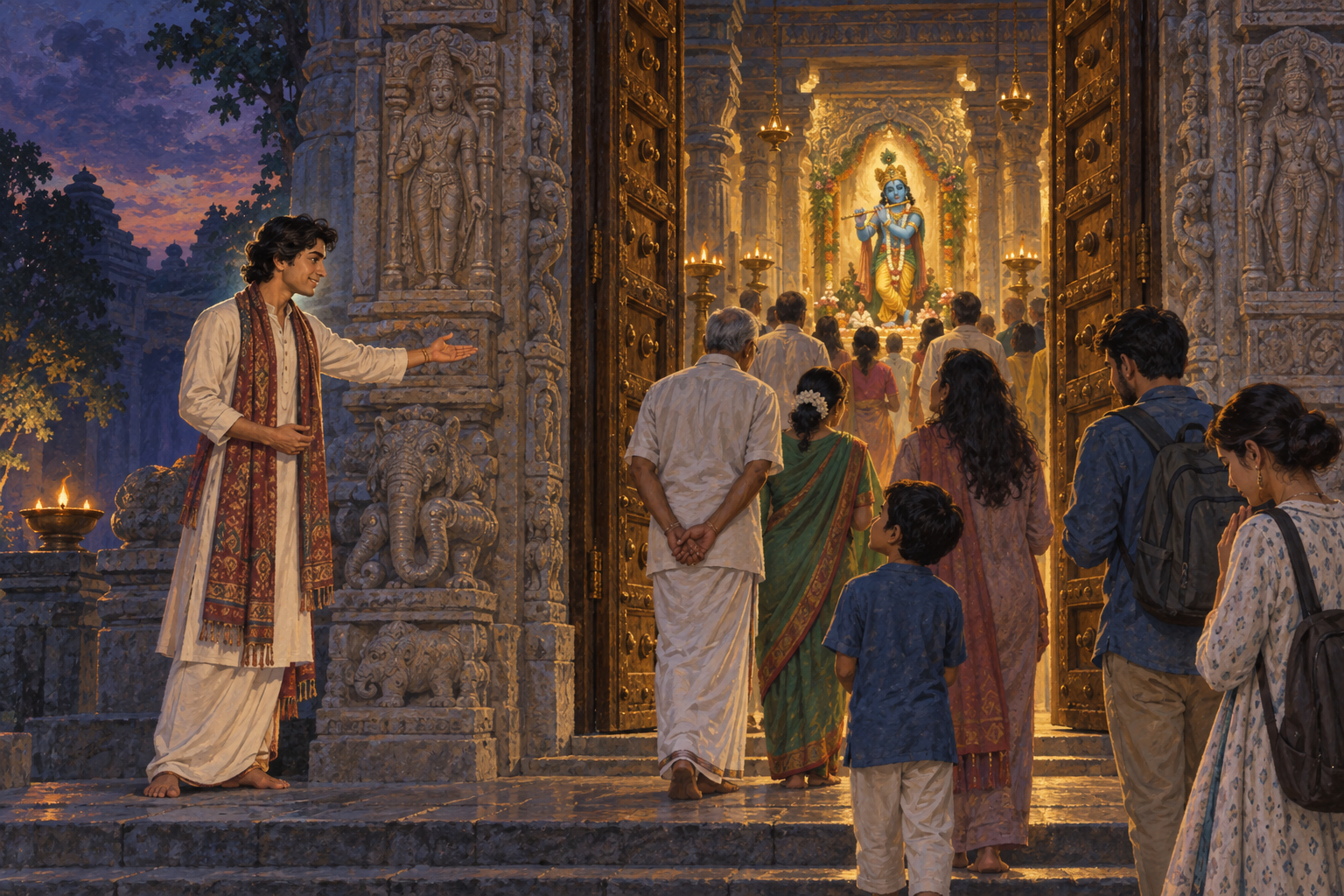
Krishna bhakti does not become valid when a famous performer recognises it. A celebrity cannot confer sacred authority on Bhagavan, a sampradaya, or a temple. What fame can do is carry a personal testimony to people who might otherwise never stop to consider darshan, remembrance, or devotional practice.
The right response is neither celebrity worship nor reflexive dismissal. Treat the artist as a witness to an experience, then examine the experience in its Dharmic setting. Expertise in dance or cinema may sharpen artistic perception; it does not automatically make someone a theologian or institutional spokesperson.
If an artist’s connection with ISKCON has stirred your interest, take the following steps:
- Preserve the exact scope of the testimony. Separate what the artist said from assumptions added by admirers, critics, headlines, or social media captions.
- Keep the artist and the institution distinct. Personal reverence may be genuine even when no formal affiliation has been established.
- Visit as a seeker or respectful guest, not as a fan. Let the deity and the worship remain central. Do not treat the possibility of seeing a public figure as the purpose of entering a temple.
- Ask a practice-based question. Instead of asking only which celebrities attend, ask a knowledgeable devotee what happens during darshan, why Krishna’s names are sung, or how a newcomer can participate respectfully.
- Choose a modest form of follow-through. Return for public worship, listen attentively during kirtan, learn the meaning of a practice you observed, or set aside regular time for remembrance. Do not mistake a strong first impression for an established discipline.
The same standard should guide temples, publishers, and devotees who circulate these accounts. Quote accurately. Do not imply initiation or endorsement through suggestive captions. Keep Bhagavan and the spiritual significance of the encounter in the foreground. Public recognition may bring someone to the threshold, but the threshold must lead toward practice rather than a gallery of famous visitors.
Key takeaways
- Hema Malini’s connection is documented here as a spiritual memory associated with an initial ISKCON temple encounter in New York.
- Padma Subrahmanyam describes recurring temple darshan as an immediate experience of Krishna’s presence.
- Neither statement, by itself, proves initiation, institutional office, or comprehensive endorsement of ISKCON.
- Performing artists may be especially attentive to embodied form, expression, rhythm, and presence, but artistic sensitivity is not the same as bhakti.
- Celebrity testimony is most useful when it directs you toward accurate understanding, respectful darshan, and a repeatable spiritual practice.
On your next ISKCON visit, resist the urge to hunt for a famous face or duplicate someone else’s emotion. Give darshan your full attention. Listen carefully, ask one sincere question about the worship, and notice what remains in your mind after you leave. Then return. Consistency, not proximity to celebrity, will show whether admiration is becoming remembrance and remembrance is becoming bhakti.
References
- Dandavats — Hema Malini recalls spiritual memories from her first visit to ISKCON’s New York temple
- Dandavats — "Every time I come to this ISKCON temple, it’s like seeing Bhagawan Krishna in person": Padma Subrahmanyam
