
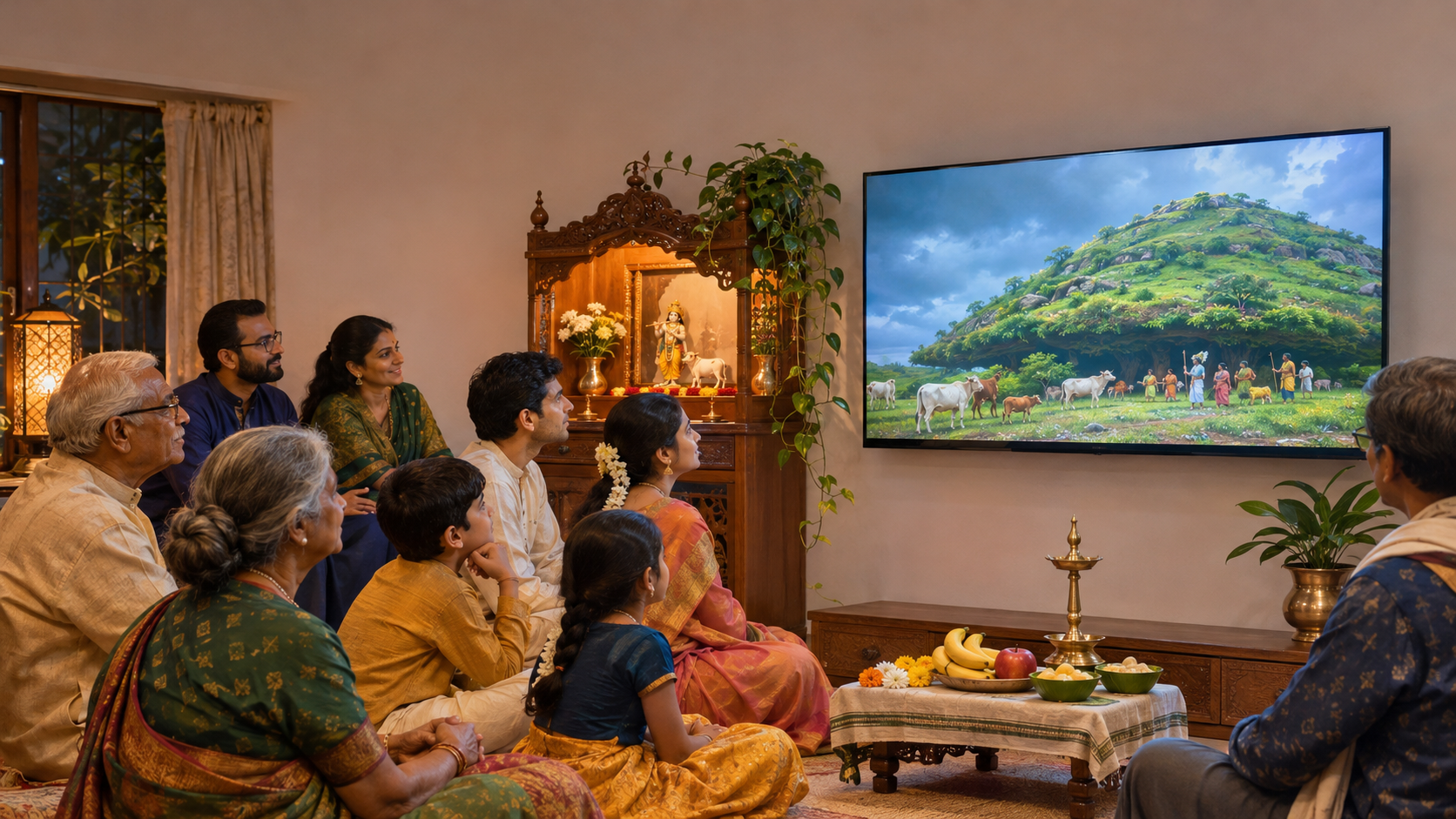
You have found a festival short with a promising title and want to know whether it belongs in your household observance, temple program, or study circle. Begin with what is actually known, preview it when others depend on your judgment, and give the viewing a devotional purpose.
The film can become more than seasonal entertainment. With a simple viewing lens and a deliberate follow-through, you can use it to open a serious conversation about protection, gratitude, humility, and service in the Govardhan lila.
Know what the film is before you describe it

Vraja News is a Govardhan Puja special short film by Radha Krishna Drama Club. That is the precise description you can confidently use when sharing it.
Do not infer a plot, runtime, spoken language, subtitle option, cast, audience rating, or teaching level from the title alone. Likewise, do not announce it as a children’s film, comedy, documentary, or complete retelling until you have watched it. A drama may assume familiarity with the Govardhan narrative, and a title containing the word “News” does not by itself establish how that idea is used.
This distinction matters most when you are choosing material for children, elders, newcomers, or a mixed temple audience. If any of those details will determine whether the film fits your program, verify them before putting it on the schedule.
Watch through the central meaning of Govardhan
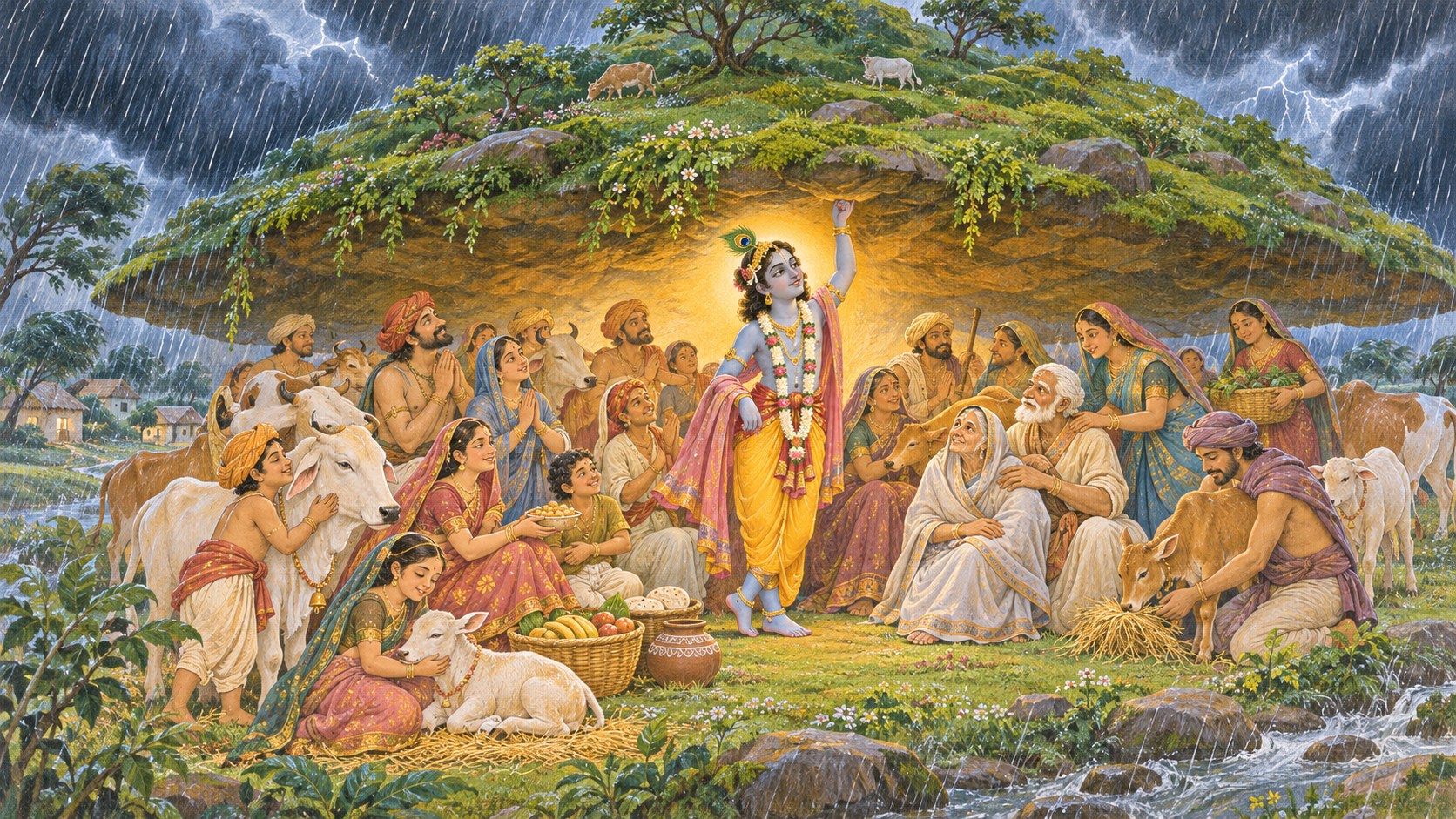
In the familiar Govardhan narrative, Krishna shelters the people and cattle of Vraja beneath Govardhan when destructive rain threatens the community. The scene is remembered not only as an extraordinary display of divine power, but also as an image of refuge: the community gathers, vulnerability is shared, and protection embraces human beings, animals, and the land that sustains them.
Vraja is therefore more than scenery. In Krishna bhakti, it is a sacred landscape defined by relationships: Krishna and his devotees, people and cattle, community and place, worship and everyday duty. Keep those relationships in view instead of watching only for spectacle.
These questions will help you notice what the drama is doing:
- What does the film assume you already know about Krishna, Govardhan, and Vraja?
- When danger or uncertainty appears, is protection presented as dominance, shelter, service, or a combination of them?
- Where do pride, fear, trust, gratitude, and humility enter the story?
- Who is included in the community’s welfare, and who might be easy to overlook?
- If “News” becomes a dramatic device, does that device clarify the lila, invite reflection, or merely modernize its presentation?
You do not need the same answer as every other viewer. The useful test is whether your interpretation can point to something the film actually shows and whether it remains faithful to the devotional center of Govardhan.
Turn the screening into an observance, not a lecture
A short film loses its force when it is buried beneath a long introduction. Give viewers a brief frame, let the drama speak in its own form, and hold the discussion until the end. A suitable opening sentence is: As you watch, notice what Vraja learns about protection, gratitude, and responsibility.
- Before viewing: Recall the core Govardhan episode in a few sentences if newcomers are present. Do not explain scenes you have not yet shown.
- During viewing: Minimize interruptions. Pause only when accessibility, translation, or the needs of the audience make it necessary.
- After viewing: Ask what changed for a character or for the community, then ask what that change demands from a devotee.
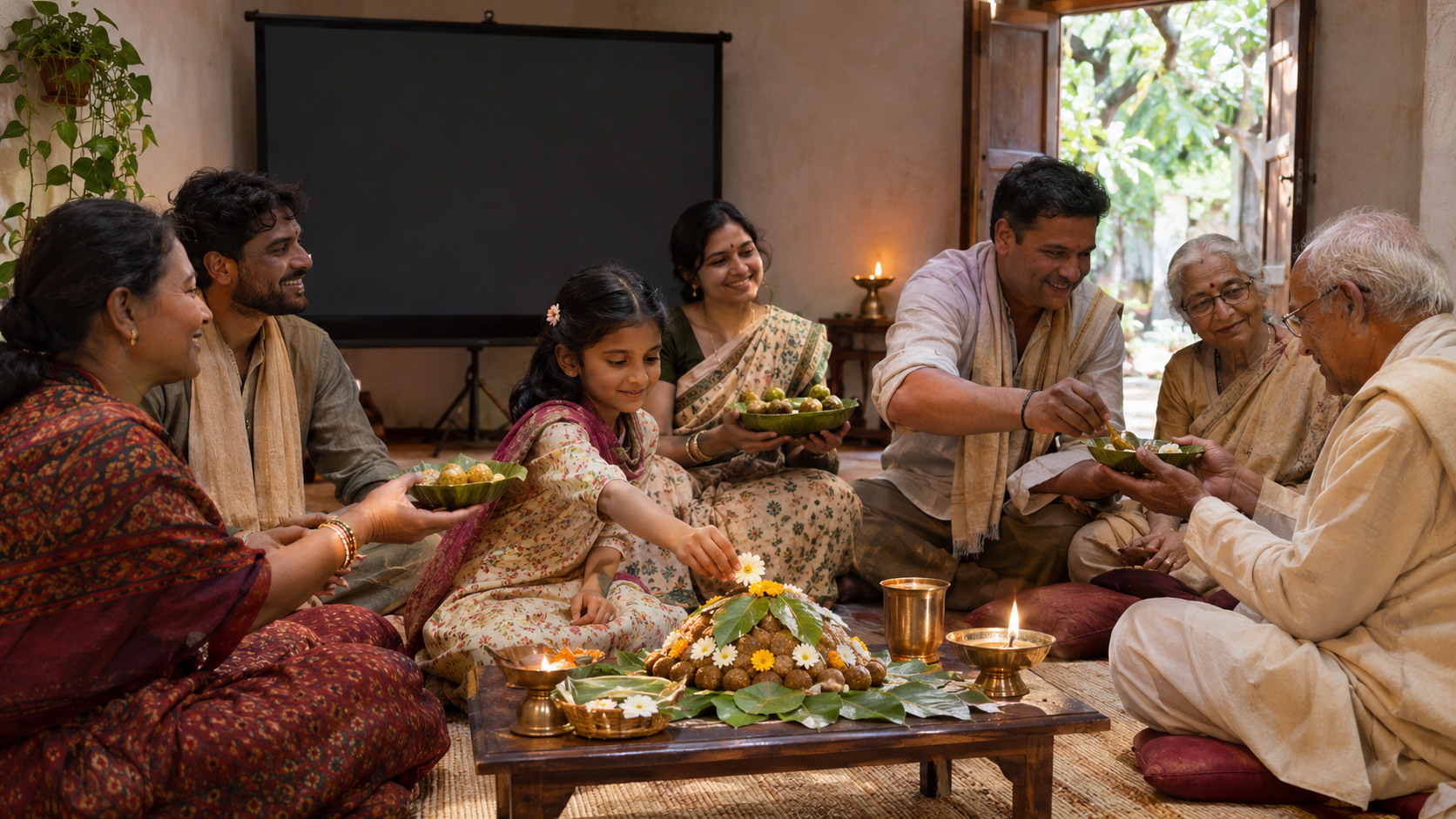
- After discussion: Choose a small act that carries the reflection into practice.
The final step prevents the viewing from becoming passive consumption. Your household or group might help prepare or distribute prasad, thank the people who cooked and cleaned, care for a shared worship space, support responsibly vetted cow care, or attend to a neglected part of the local environment. Choose an action appropriate to your own observance. The point is to connect gratitude with seva while the film is still fresh in mind.
Preview and share it accurately in a group setting
If you are responsible for a temple, classroom, youth group, or public celebration, watch the complete film before showing it. A recommendation from someone else cannot answer the practical questions specific to your audience and venue.
- Confirm the runtime before placing it between fixed parts of the program.
- Check the spoken language and whether usable subtitles are available.
- Consider the tone, references, and visual material in relation to the particular children and adults who will attend.
- Test the actual projection, sound, and internet arrangement in the room rather than assuming they will work.
- Credit Radha Krishna Drama Club by name in the program or introduction.
- For a public screening, ask the uploader or creator whether that use is permitted; online availability does not by itself settle the question.
When you share the link privately or on social media, keep the invitation factual: For Govardhan Puja, we are sharing Vraja News, a special short film by Radha Krishna Drama Club. Watch it as a prompt to reflect on protection, gratitude, humility, and service in the Govardhan lila.
That wording distinguishes confirmed information from your proposed way of engaging with the film. It also avoids promising a particular genre, mood, or audience suitability that you have not verified.
Key takeaways
- Describe Vraja News precisely as a Govardhan Puja special short film by Radha Krishna Drama Club.
- Do not infer its plot, duration, language, subtitles, genre, or intended age group from the title.
- Watch for the Govardhan themes of refuge, shared welfare, gratitude, humility, and responsibility.
- For group use, preview the entire film and verify the practical details before announcing the program.
- Follow the screening with a focused question and a concrete act of seva.
Open the film, preview it if others depend on your judgment, and decide what practical act will follow the viewing. That is how a festival short can become part of sadhana rather than one more item passing through a feed.
References

Leave a Reply
You must be logged in to post a comment.