
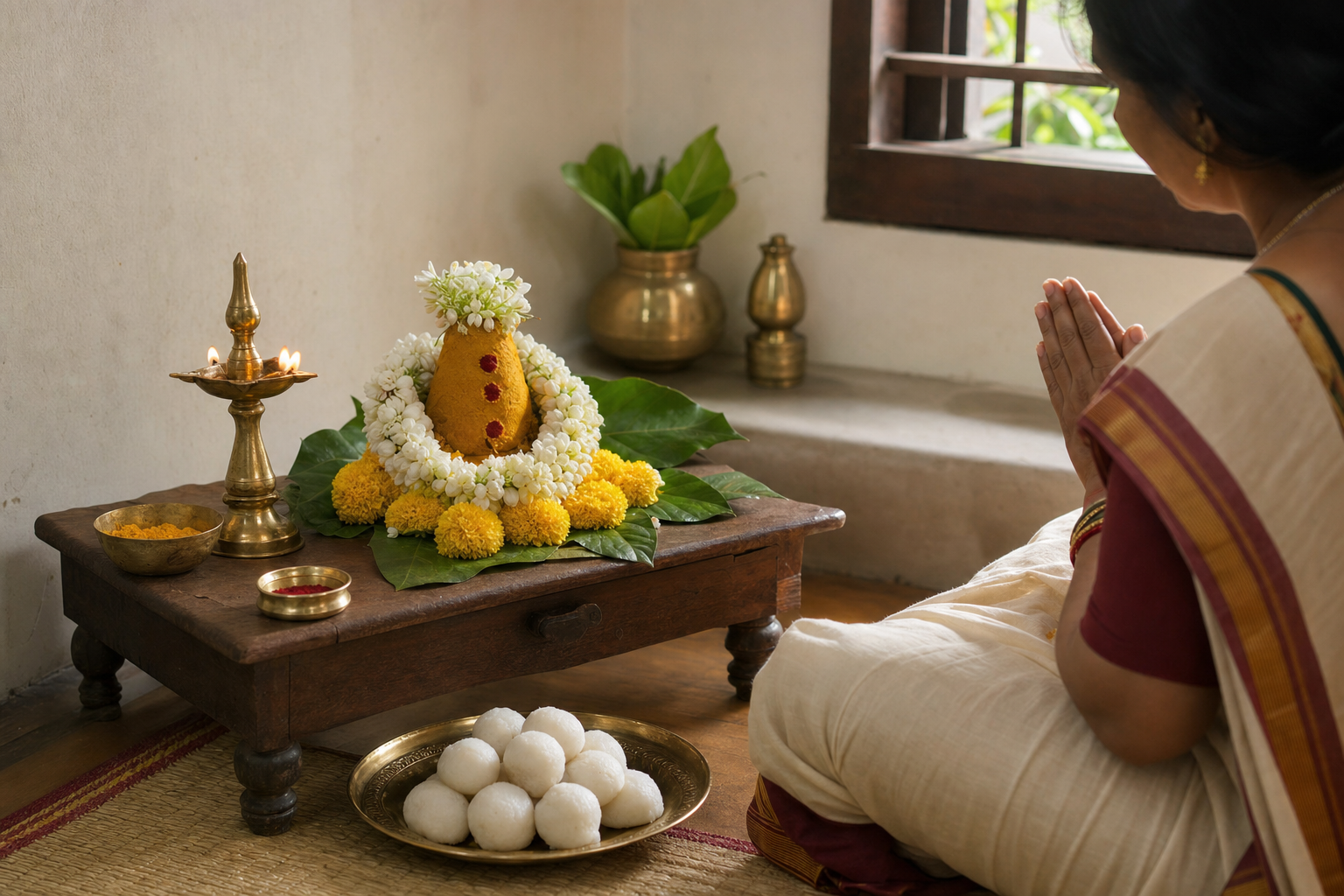
You may know that your family observes Undralla Thaddi but still be unsure about the date, the puja procedure, or which online instructions belong to your own tradition. The safest way forward is to separate the festival’s established core from details that must be learned from your household, community, or priest.
For 2026, mark September 28 on your calendar. Then confirm the local observance time, ask about your family’s practice before buying puja materials, and keep Goddess Gauri at the centre of whatever you do.
Which day is Undralla Thaddi in 2026?
In 2026, Undralla Thaddi falls on September 28. The observance belongs to the third lunar day of Krishna Paksha, the second half of Bhadrapada masam. It is especially associated with Andhra Pradesh within the wider South Indian festival tradition.
The Gregorian date helps you plan, but the lunar day identifies the observance. That distinction matters when calendars appear to disagree. A panchang is calculated for a place and a ritual convention, so do not settle a difference by choosing whichever date is more convenient.
Use this three-part check:
- Enter September 28 as your provisional 2026 date.
- Check a panchang configured for the city where you will perform the worship.
- Ask your family priest, temple, or knowledgeable elder which date and puja time your community will follow.
If two calendars still differ, ask what location and convention each one uses. Keep the answer with your family notes so that the same uncertainty does not return next year.
Keep the established core separate from household custom
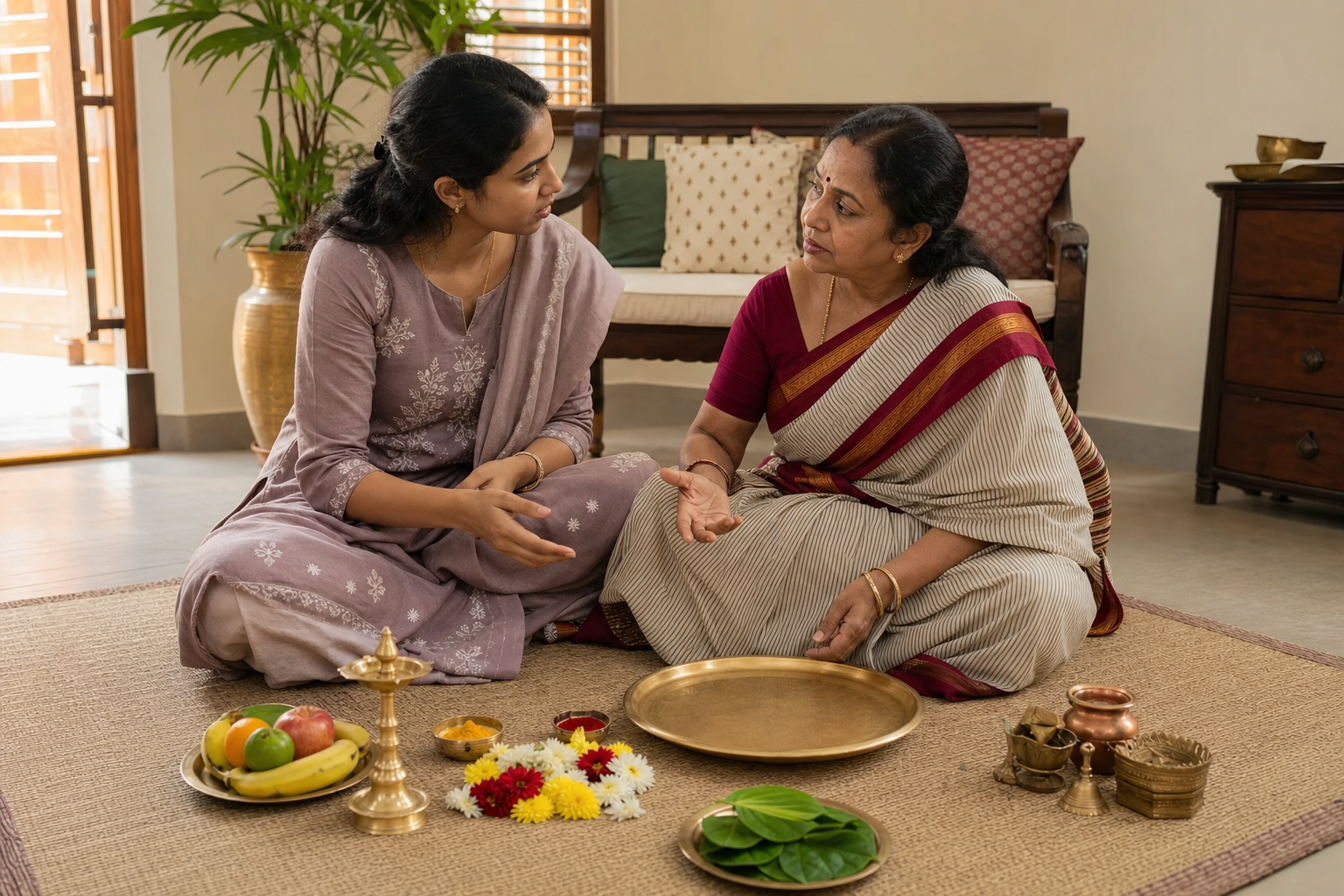
Several points can be stated clearly: the festival is dedicated to Goddess Gauri; it is observed during Bhadrapada masam on the third day of Krishna Paksha; it has a particularly strong association with Andhra Pradesh; and Undralla Thaddi, Vundralla Thaddhe, and Vundralla thadiya are variant renderings of its name.
Those facts do not establish one universal household procedure. They do not, by themselves, tell you who undertakes a vow, whether your family fasts, which preparation is offered, how many items are used, which story is recited, or what sequence your elders consider essential. Treat those as questions, not blanks to be filled with the first checklist found online.
Before the festival, ask an elder these precise questions:
- What name does our family use for the observance, and how is it written in Telugu?
- Who traditionally performs the main worship, and how may other family members participate?
- Does our household observe a vrata or food restriction? If so, when does it begin and end?
- Which offerings are essential, and which are optional additions?
- Is there a family prayer, song, story, or order of worship that should be preserved?
- Which parts came from our family, and which came from a particular temple or local community?
A different English spelling does not automatically indicate a different festival or sect. Record the pronunciation and the Telugu spelling supplied by your family rather than trying to settle the matter through transliteration alone.
A modest Gauri puja when instructions are incomplete
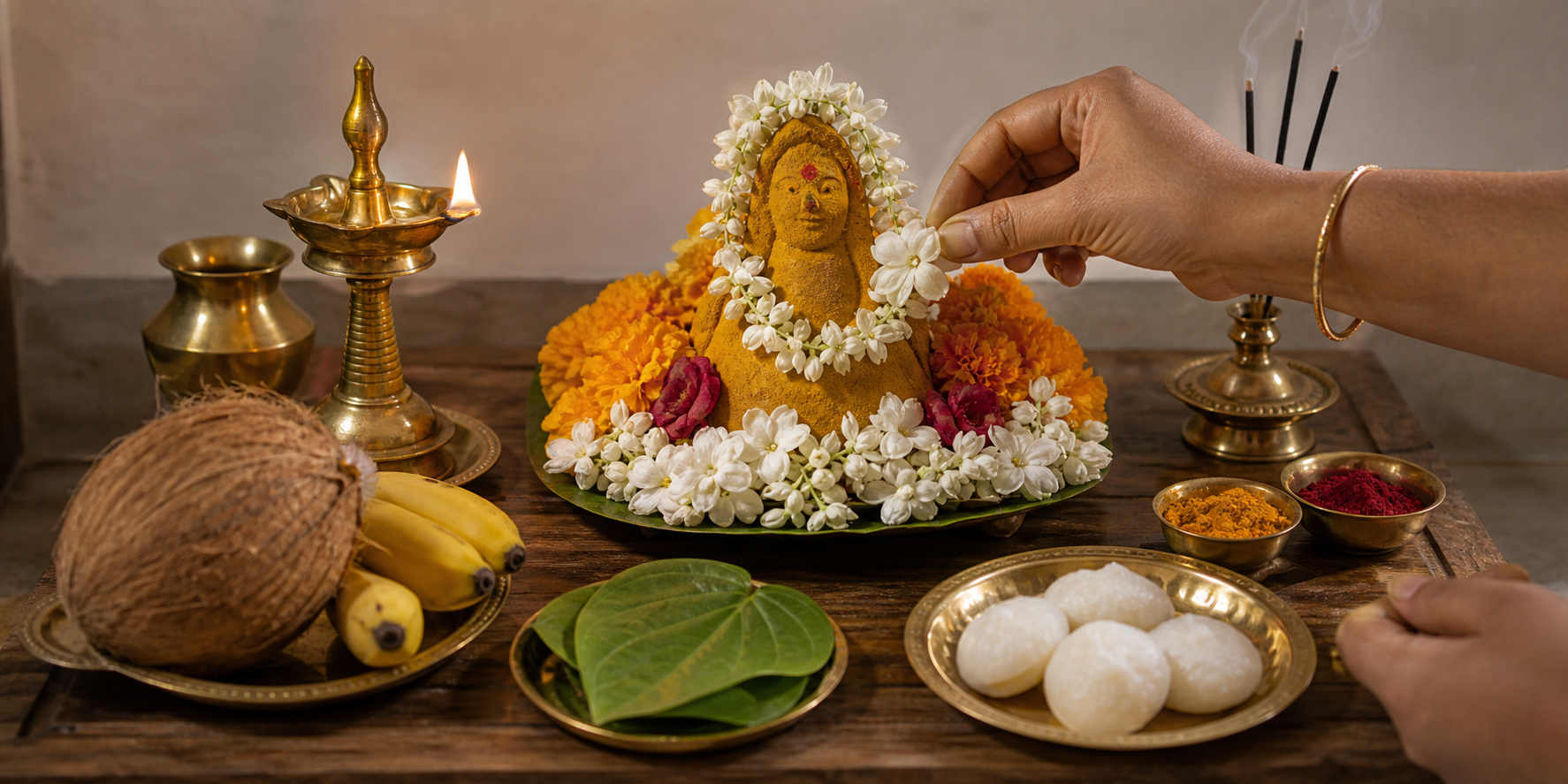
If you cannot recover a complete inherited procedure, you can still offer a simple act of devotion to Gauri. Be honest about what it is: general home worship conducted for Undralla Thaddi, not a claim that every step is the festival’s sole ancient method.
- Confirm the day. Use the local panchang and community guidance before fixing the worship time.
- Prepare a clean place. Use the form or representation of Gauri already accepted in your home. Do not buy a specialised object merely because an unfamiliar checklist calls it compulsory.
- Begin in your household’s usual way. If your family has an established opening prayer, use it. If it does not, offer a brief prayer in words you understand rather than improvising an authoritative-sounding Sanskrit formula.
- Make simple offerings respectfully. Water, flowers, and food appropriate to your household can form a modest offering. If you do not know the festival-specific preparation, do not present a generic substitute as the traditional Undralla Thaddi offering.
- Address Gauri directly. Express gratitude, remember the family members who maintained the observance, and seek the Devi’s grace. Avoid attaching guaranteed claims about marriage, children, health, or wealth merely because such claims appear in forwarded messages.
- Conclude according to ordinary home practice. Receive the offered food as prasada, leave the worship place orderly, and write down what you did while the details are still fresh.
The festival’s name may lead you to assume that any recipe carrying a similar name must be the required offering. Verify the ingredients, form, quantity, and method with someone who knows your family’s observance. Regional foods often preserve local memory, but one household’s recipe should not be turned into a universal rule without evidence.
Apply the same restraint to fasting. Do not invent a severe fast to make the observance seem more devotional. Follow a known household rule, and clarify uncertainties before the day rather than making them up during the puja.
Pass on the tradition without passing on guesses
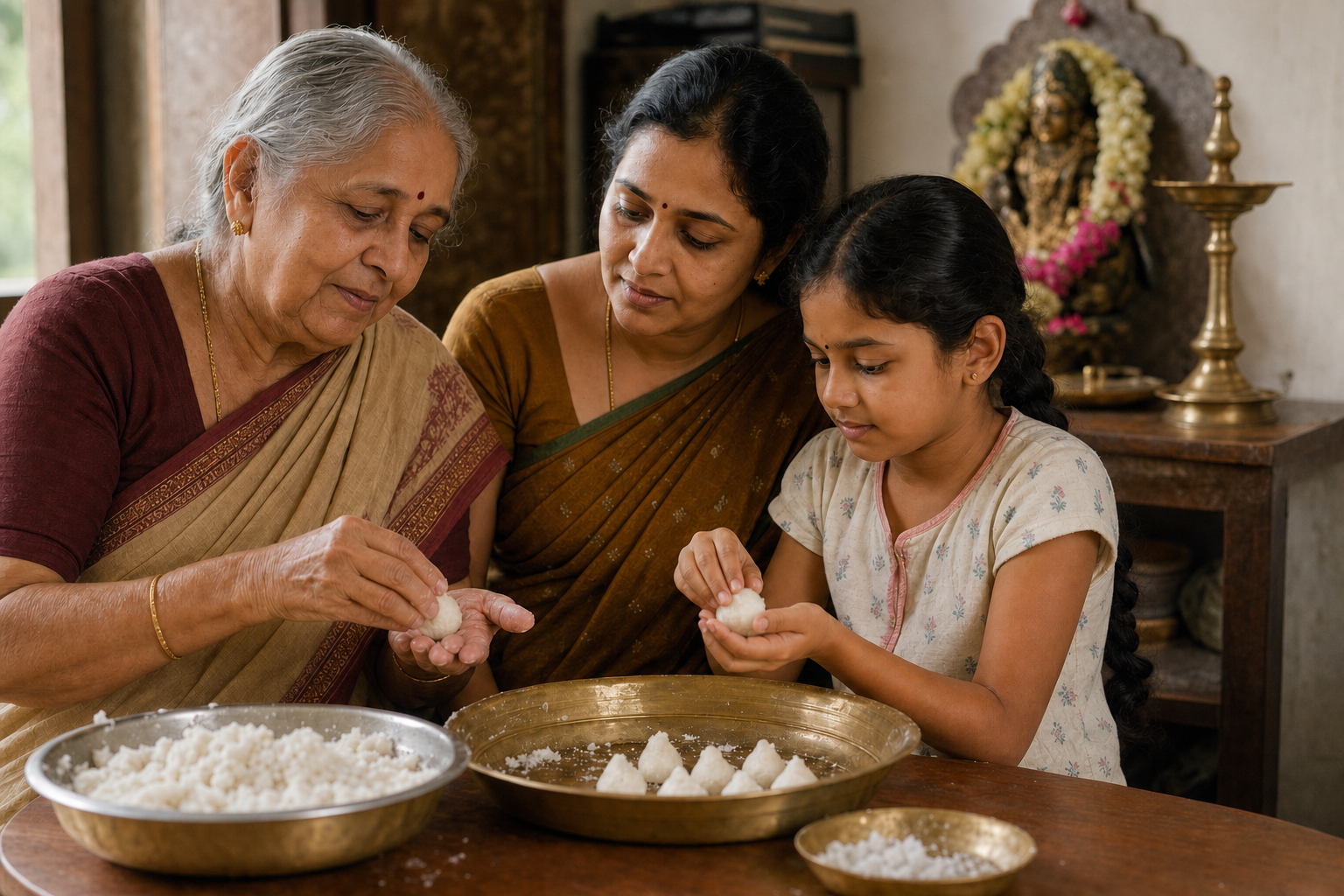
When a child, guest, or family member asks what is being observed, give the clear answer first: Undralla Thaddi is a South Indian observance, especially associated with Andhra Pradesh, dedicated to Goddess Gauri on the third day of Krishna Paksha in Bhadrapada masam. Then identify the household layer plainly: “This is how our family observes it.” That single distinction teaches both reverence and intellectual honesty.
After the puja, create a one-page family record containing:
- The festival’s names, including the spelling and pronunciation your family uses.
- The lunar-day basis and the locally confirmed date used that year.
- The name of the elder, priest, temple, or relative who explained the procedure.
- The preparation sequence, offerings, prayers, stories, and songs actually used.
- A clear distinction between essential family practice and optional decoration.
- Any unresolved question that should be checked before the next observance.
Do not silently “correct” an elder’s version using a generic internet list. If two family accounts differ, record both and ask whether they reflect different branches, villages, or later adaptations. Preservation does not require pretending that living traditions never vary.
Key takeaways
- Undralla Thaddi is observed on September 28 in 2026.
- Its calendar basis is the third day of Krishna Paksha during Bhadrapada masam.
- Goddess Gauri is the devotional centre of the festival.
- Confirm the date and worship time with a location-appropriate panchang and a trusted local authority.
- Verify fasting rules, offerings, recipes, stories, and participant roles through your family tradition.
- If the inherited procedure is unavailable, conduct a modest Gauri puja without presenting your reconstructed sequence as universal custom.
Your next step is practical: put September 28 on the 2026 family calendar, contact the relative or priest who knows the observance, and write down the answers before the festival arrives. One careful conversation now can preserve more than a hastily copied ritual list ever will.
References
