
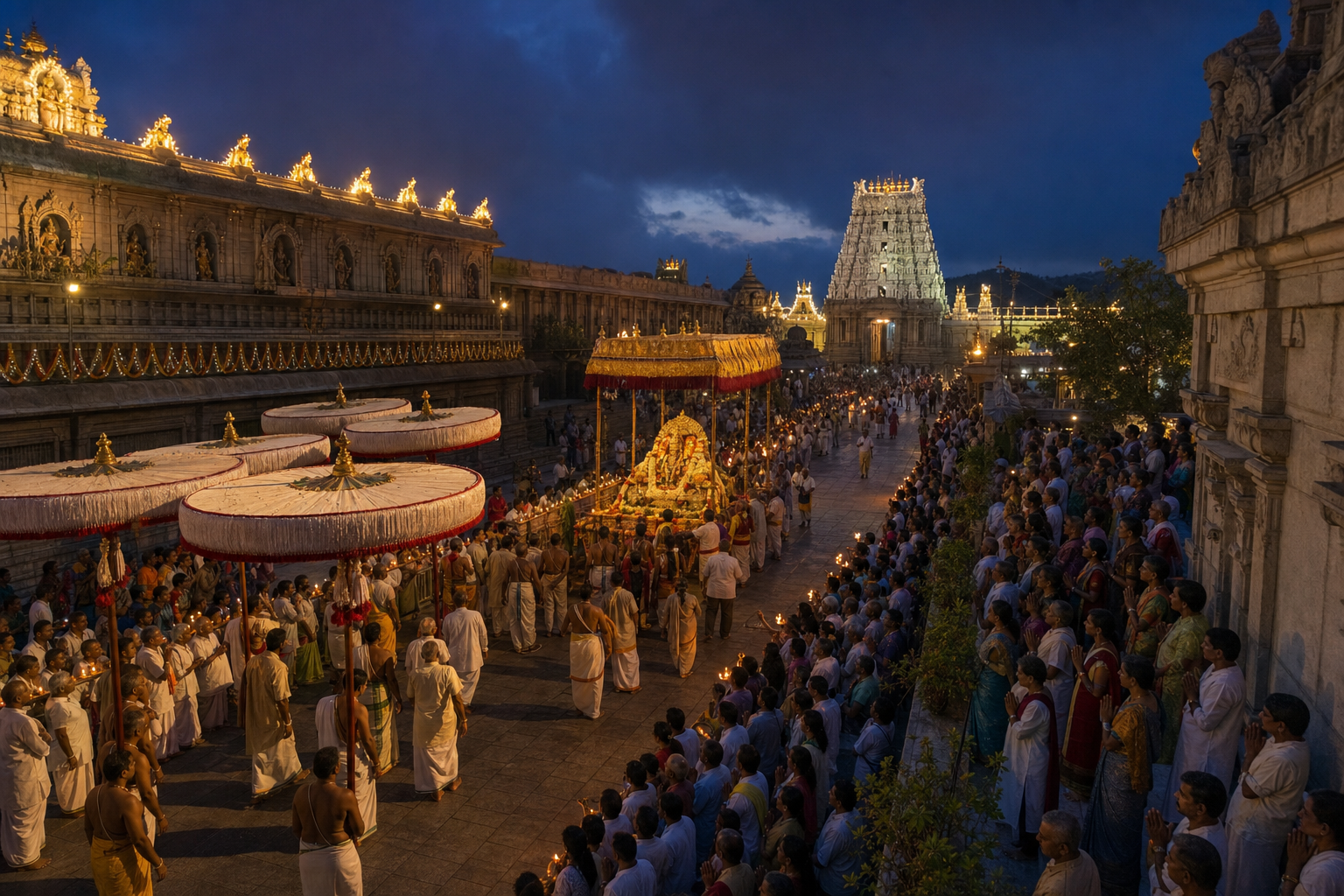
If you are deciding when to visit Tirumala in 2026, settle one point before you reserve anything: there are two distinct Brahmotsavam periods. The annual Salakatla Brahmotsavams are scheduled for September 15–23, followed by the Navarathri Brahmotsavams from October 12–20.
Those dates are enough to choose a festival window, but they are not a substitute for the detailed daily programme. If one particular procession, ritual, darshan arrangement, or evening event matters to you, keep your travel plans flexible until you have checked the official schedule for that date.
The two 2026 festival windows at a glance
| Observance | Scheduled dates | What the dates tell you |
|---|---|---|
| Srivari Salakatla Brahmotsavams | September 15–23, 2026 | This is the nine-day annual Brahmotsavam period. |
| Srivari Navarathri Brahmotsavams | October 12–20, 2026 | This is the separate Navarathri festival period, not an extension of the September dates. |
| Opening ritual | Evening opening sequence | The festivities are due to commence with Ankurarpanam; verify its exact date and time against the detailed programme before arranging your arrival around it. |
The practical distinction is simple. Salakatla is the annual observance scheduled in September. Navarathri Brahmotsavams form a second observance in October. When discussing plans with relatives, travel agents, or other pilgrims, use the complete name rather than saying only “Brahmotsavam.” That small habit prevents September and October arrangements from being mixed together.
Choose the observance before choosing your travel dates

Your first decision is not which hotel or train to book. It is what you are going to Tirumala for. Use the following test:
- If your sankalpa is specifically to attend the annual Salakatla Brahmotsavams, plan within September 15–23.
- If you intend to attend the Navarathri Brahmotsavams, plan within October 12–20.
- If you simply wish to be at Tirumala during a Brahmotsavam period, compare the two windows against your family’s leave, health, mobility, and travel flexibility.
- If a particular vahana procession or ritual is the purpose of your journey, do not choose a day from the date range alone. Match that purpose to the official day-by-day programme when it becomes available.
This distinction matters most for families coordinating from different cities. Write the observance name and full date beside every reservation. “Tirumala, 18 September — Salakatla Brahmotsavams” is much harder to misunderstand than “Brahmotsavam trip.”
Build a pilgrimage plan that can absorb schedule changes
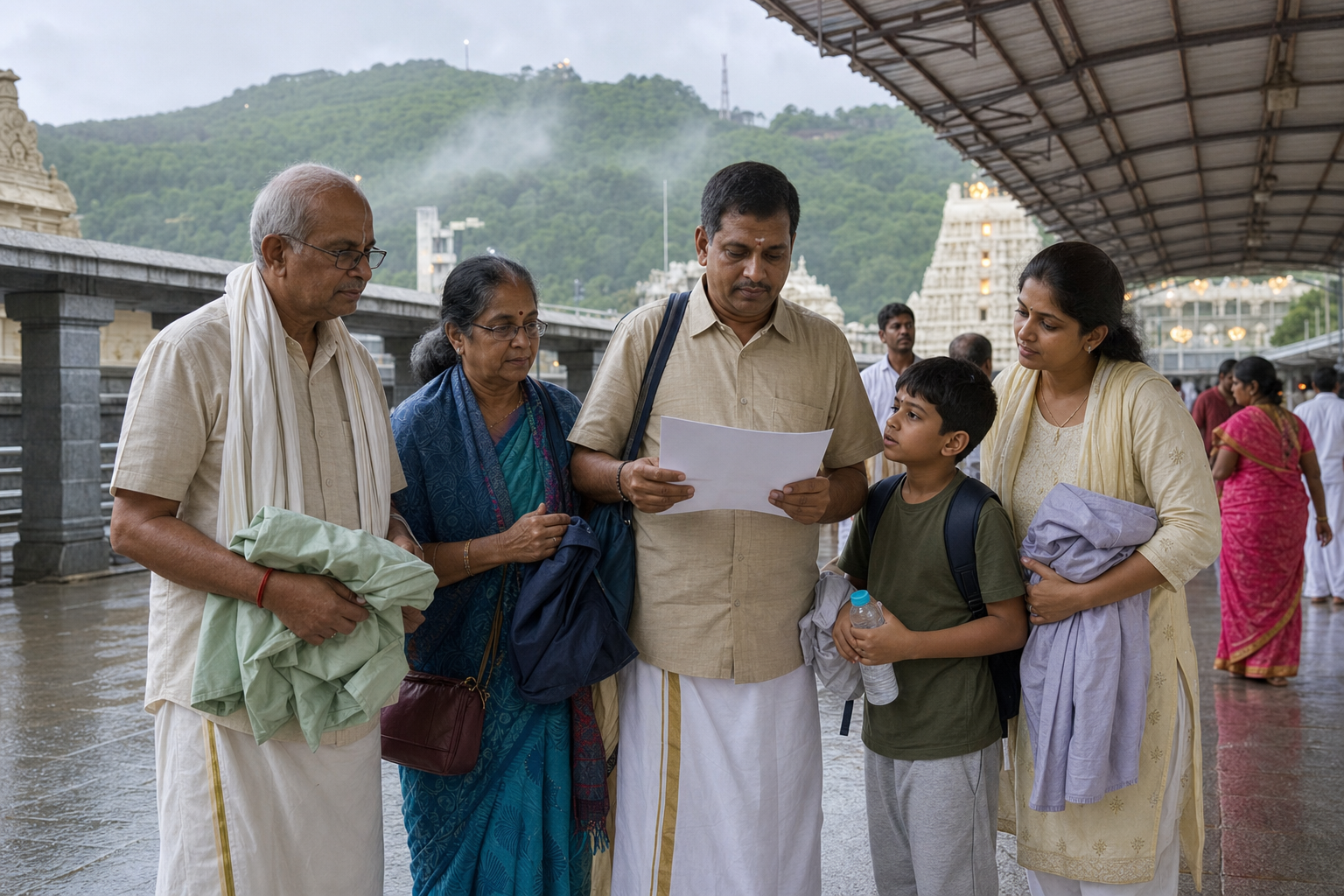
A festival window tells you when to be in Tirumala; it does not yet tell you how every day will unfold. Protect the journey from avoidable disruption by making decisions in this order:
- Put both festival windows in your calendar, including the year, so the September and October observances cannot be confused.
- Select Salakatla or Navarathri according to your devotional purpose and the dates your household can actually manage.
- Identify the one element that matters most to you: presence during the festival, a specific ritual, a procession, or darshan. Your answer determines how much detail you need before booking.
- If a specific event is essential, wait for the day-by-day programme before tying non-changeable travel to one date.
- Where practical, favour reservations that can be changed until the daily schedule and relevant pilgrim instructions have been checked.
- Plan to arrive before the event that matters most rather than scheduling arrival immediately before it. Delayed transport should not erase the central purpose of the pilgrimage.
- Before departure, recheck official information concerning darshan, accommodation, local transport, baggage, and accessibility. Do not assume instructions from an earlier year still apply in 2026.
Be equally careful with forwarded messages. A colourful calendar image can omit the year, combine the two observances, or reproduce an older daily programme. Before your family acts on one, confirm three things: it says 2026, it names either Salakatla or Navarathri, and its date falls inside the correct scheduled window.
Keep the ritual purpose at the centre of the trip
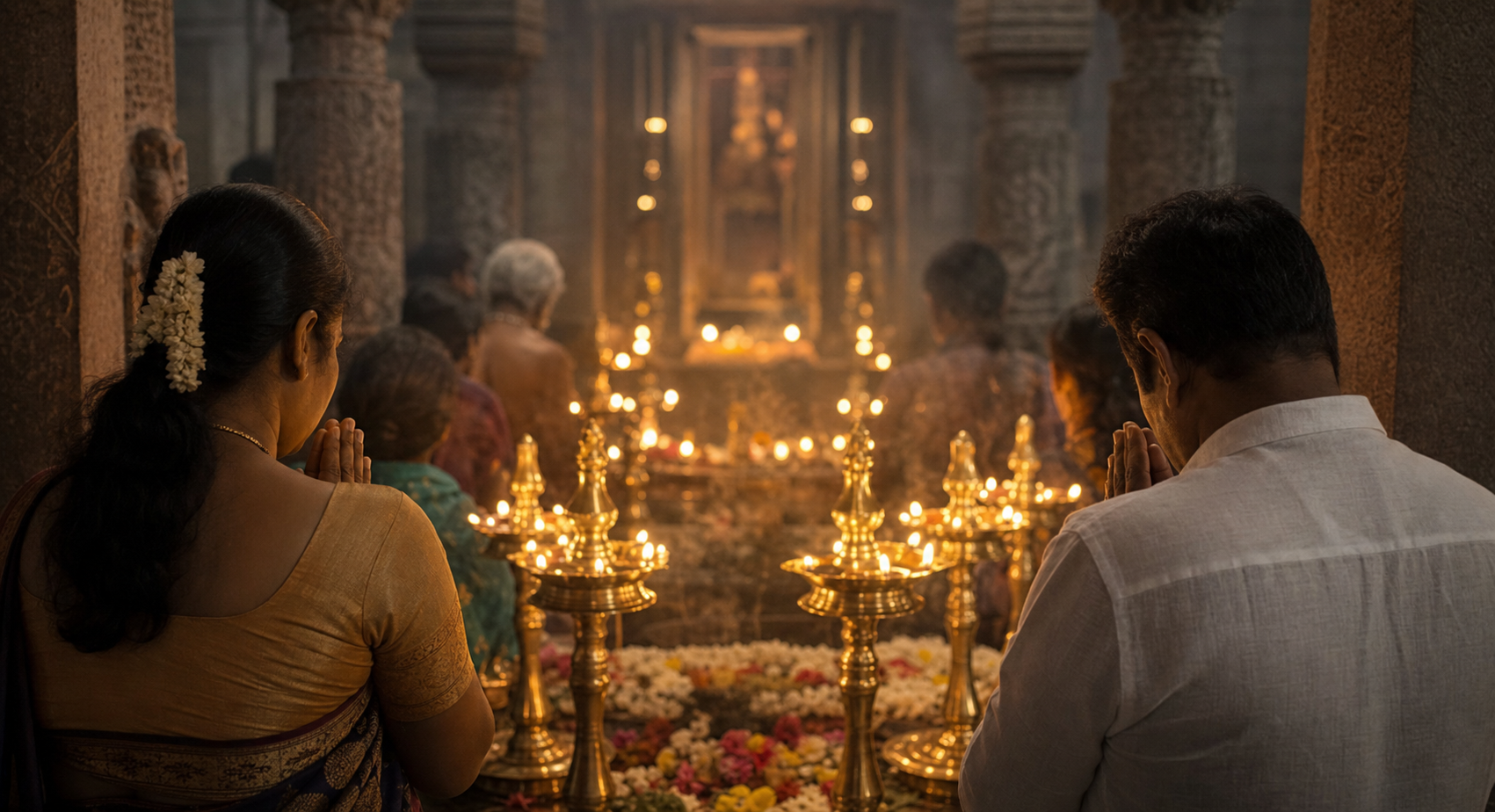
Ankurarpanam is a preparatory rite within the opening of the festival, not merely another sightseeing slot. Its presence reminds you that Brahmotsavam is an ordered act of temple worship. The calendar matters because the ritual sequence matters.
You can prepare for that inwardly as well as logistically. Decide your sankalpa before leaving home. Learn the correct name of the observance you will attend. Leave unnecessary commitments out of the itinerary. If waiting becomes part of the day, use it for Govinda nama-smarana rather than letting an overpacked checklist turn the pilgrimage into a race.
Families travelling with children, older relatives, or anyone with limited mobility should also distinguish between what is spiritually important and what is merely desirable. Choose one verified priority, allow room for rest, and agree in advance on a meeting plan if the group becomes separated. Trying to pursue every possible event can make the people in your care bear the cost of an unrealistic itinerary.
Key takeaways for Tirumala Brahmotsavams 2026
- Salakatla Brahmotsavams are scheduled for September 15–23, 2026.
- Navarathri Brahmotsavams are scheduled separately for October 12–20, 2026.
- Use the full observance name in every family plan and reservation to avoid mixing the two periods.
- The festival opening is associated with Ankurarpanam in the evening, but you should verify its exact placement in the detailed programme.
- Do not infer a particular procession, ritual, or darshan arrangement from the festival window alone.
- Keep costly commitments changeable until the daily programme and applicable pilgrim instructions have been checked.
Mark both windows now, decide which observance matches your sankalpa, and make only the commitments that the available level of detail can support. When the daily programme is issued, you can refine the itinerary without losing sight of why you are going: darshan and service at Srivari’s feet.
References
