
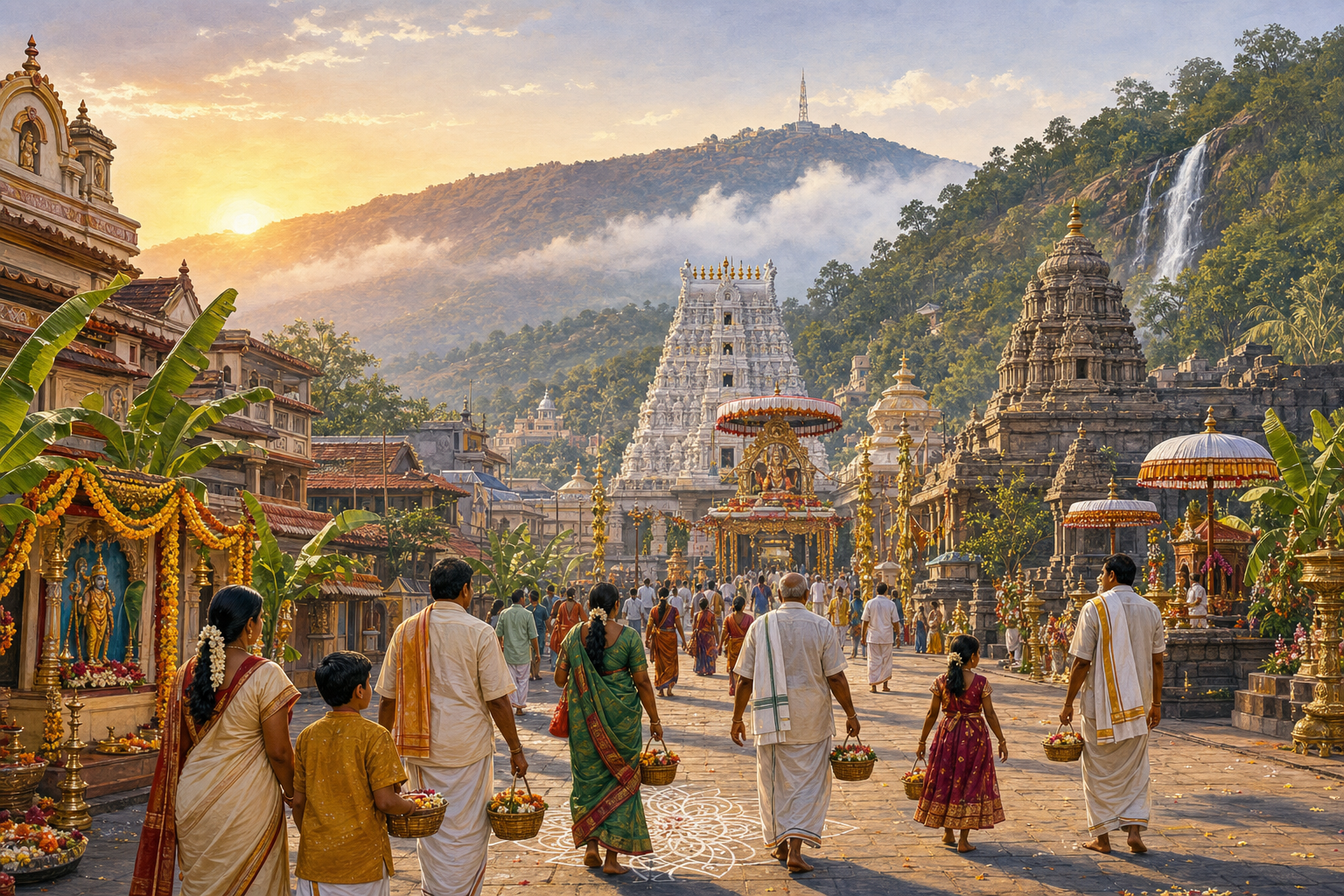
If you are choosing when to visit Tirupati in February 2026, do not treat the month as one continuous festival. Sri Kodandarama Swamy Temple, Sri Kalyana Venkateswara Swamy Temple at Srinivasa Mangapuram, and Sri Kapileswara Swamy Temple each follow a distinct schedule, and the right date depends on whether you seek Rama-bhakti, a Vaishnava Brahmotsavam, a Shaiva procession, or a quieter Abhishekam.
The most eventful window is February 8-16, when the two annual Brahmotsavams overlap. Saturday, February 14 offers the widest choice because Abhishekam is also scheduled at Sri Kodandarama Swamy Temple. That does not mean you can attend every observance: some event-level timings remain subject to TTD announcements, so the sensible plan is to select one priority and keep any second temple provisional.
February festival calendar at a glance
| Date | Temple | Observance | What it means for your visit |
|---|---|---|---|
| February 2 | Sri Kodandarama Swamy Temple, Tirupati | Koopuchandrapeta Utsavam on Magha Pournami | Choose this date for a full-moon observance centered on Sri Sita, Sri Rama, and Sri Lakshmana. |
| February 5, 6:30 AM-11:00 AM | Sri Kalyana Venkateswara Swamy Temple, Srinivasa Mangapuram | Koil Alwar Thirumanjanam | This is a temple-sanctification period. Darshan follows afterward in accordance with the temple and TTD schedule. |
| February 7, 14, 21, and 28 | Sri Kodandarama Swamy Temple, Tirupati | Saturday Abhishekam for Sri Sita, Sri Rama, and Sri Lakshmana | Select one of these Saturdays if ritual bathing and contemplative worship are your main purpose. |
| February 7, evening | Sri Kalyana Venkateswara Swamy Temple, Srinivasa Mangapuram | Ankurarpanam | This is the ceremonial preparation for the Brahmotsavam, not its first full day. |
| February 7 | Sri Kapileswara Swamy Temple, Tirupati | Ankurarpanam | This opening rite precedes the Shaiva Brahmotsavam beginning the next day. |
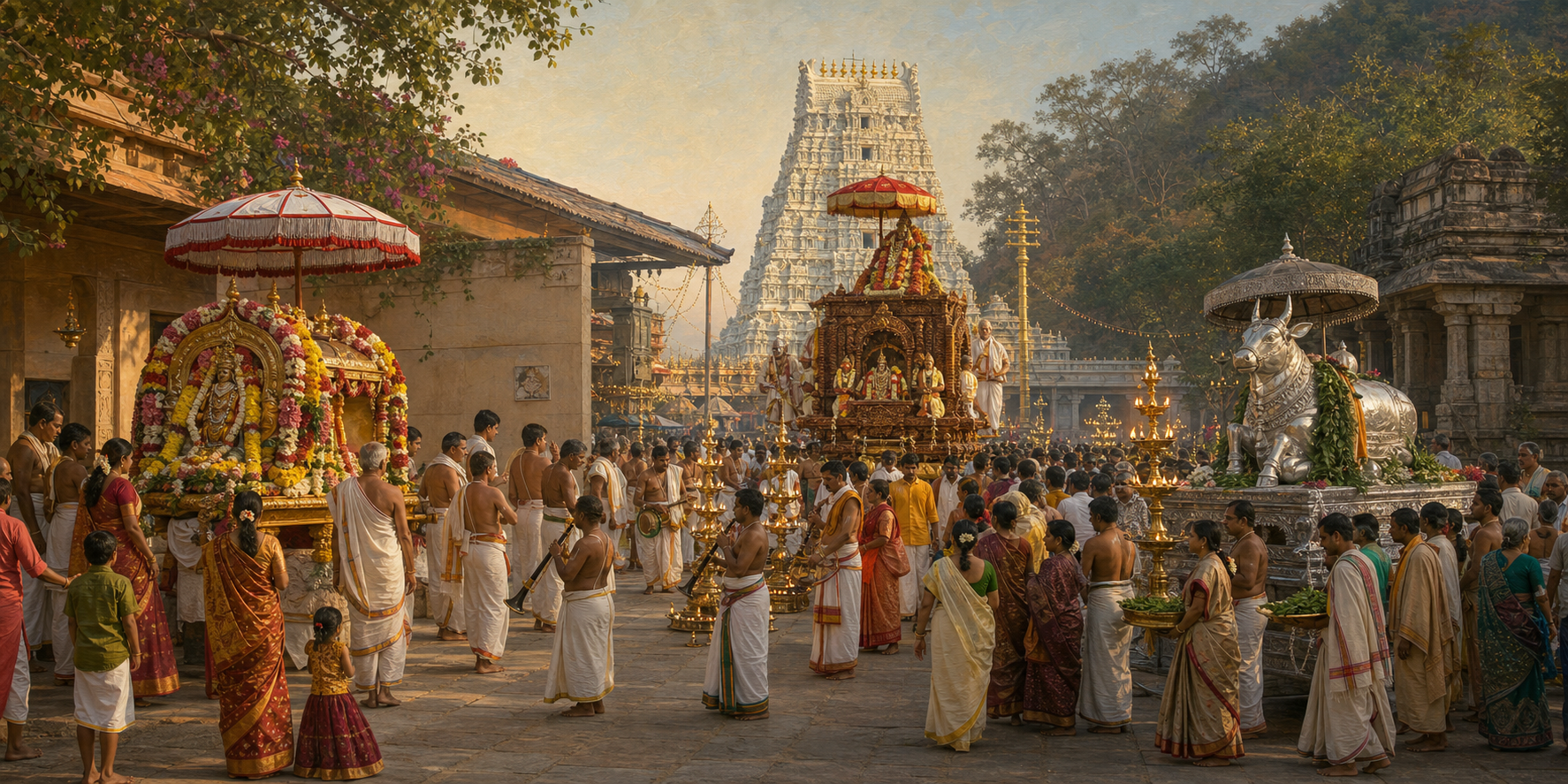
| February 8-16 | Sri Kalyana Venkateswara Swamy Temple, Srinivasa Mangapuram | Annual Brahmotsavam | Use this range for a pilgrimage focused on Kalyana Venkateswara and the festival atmosphere at Srinivasa Mangapuram. |
| February 8-17 | Sri Kapileswara Swamy Temple, Tirupati | Annual Brahmotsavam with daily Vahana Sevas | Choose this range for Shiva-bhakti and processional worship. Precise daily timings are to be announced separately. |
The overlap is easier to understand when you separate ceremonial openings from the festivals themselves. February 7 is Ankurarpanam day at both Brahmotsavam temples; the two Brahmotsavams begin on February 8. Their shared window runs through February 16, after which the Kapileswara celebration continues for one more day.
Sri Kodandarama Swamy Temple follows a different rhythm. Its Magha Pournami Utsavam falls before the Brahmotsavams, while its Saturday Abhishekams run across the month. February 21 and 28 therefore offer Rama-centered observances after both annual festivals have ended.
Choose your date by the darshan you actually want
For Rama-bhakti on Magha Pournami: February 2
Choose February 2 if the full-moon setting matters more to you than the later Brahmotsavam crowds. Magha Pournami is associated with purification, vrata, and collective worship, while the Koopuchandrapeta Utsavam places Sri Rama and his parivara at the center of the day. This is the clearest choice for a devotee whose pilgrimage is specifically oriented toward Sri Sita, Sri Rama, and Sri Lakshmana.
For the widest choice of observances: February 14
February 14 is the only listed date on which all three temple schedules are active: the Saturday Abhishekam takes place at Sri Kodandarama Swamy Temple, and both Brahmotsavams are underway. It is therefore the strongest date for a pilgrim who wants options across Rama, Venkateswara, and Shiva worship.
Options are not the same as a workable three-temple itinerary. Without final event timings, you cannot safely assume that Abhishekam, darshan, and processions will fit around one another. Make one temple your anchor. Add a second only after the official timings show that travel and queues leave a realistic margin.
For Kalyana Venkateswara: February 8-16
Use the February 8-16 festival range if your intention is connected with Kalyana Venkateswara, whose blessings are traditionally associated with auspicious beginnings and family well-being. February 7 evening is appropriate if you specifically value Ankurarpanam and its symbolism of growth and renewal; it should not be mistaken for a substitute for a full Brahmotsavam day.
For Shiva-bhakti and Vahana Sevas: February 8-17
Sri Kapileswara Swamy Temple is the clearest choice if processional worship is essential to your pilgrimage. Vahana Sevas are scheduled on every day of its Brahmotsavam, but the exact daily times are not fixed in the available schedule. Select a date within February 8-17, then confirm which Vahana Seva and time apply before organizing the rest of that day.
Know what each ritual changes about your visit
Koil Alwar Thirumanjanam is a purification window
Koil Alwar Thirumanjanam is a comprehensive sanctification of the temple and its sacred interior spaces. At Srinivasa Mangapuram it is scheduled from 6:30 AM to 11:00 AM on February 5. Do not plan that morning as though it were an ordinary darshan period. Darshan is permitted after the rite according to the applicable temple and TTD arrangements, so wait for the confirmed entry schedule before fixing your arrival time.
Ankurarpanam marks intention, not the full celebration
Ankurarpanam involves the ritual sowing of sacred seeds. Its meaning is preparation, auspicious growth, and the deliberate beginning of the festival cycle. A pilgrim who attends it is witnessing the threshold of Brahmotsavam. A pilgrim seeking the fuller sequence of festival worship should also choose a date from February 8 onward.
Abhishekam and Vahana Seva ask for different plans
Abhishekam is the ceremonial bathing of the murtis with sanctified substances. Its devotional force comes through close attention: mantra, the visible sequence of worship, and a mood of inward purification. If this is your anchor observance, arrive early enough to settle into the temple’s discipline and preserve mindful silence rather than treating it as one stop in a hurried circuit.
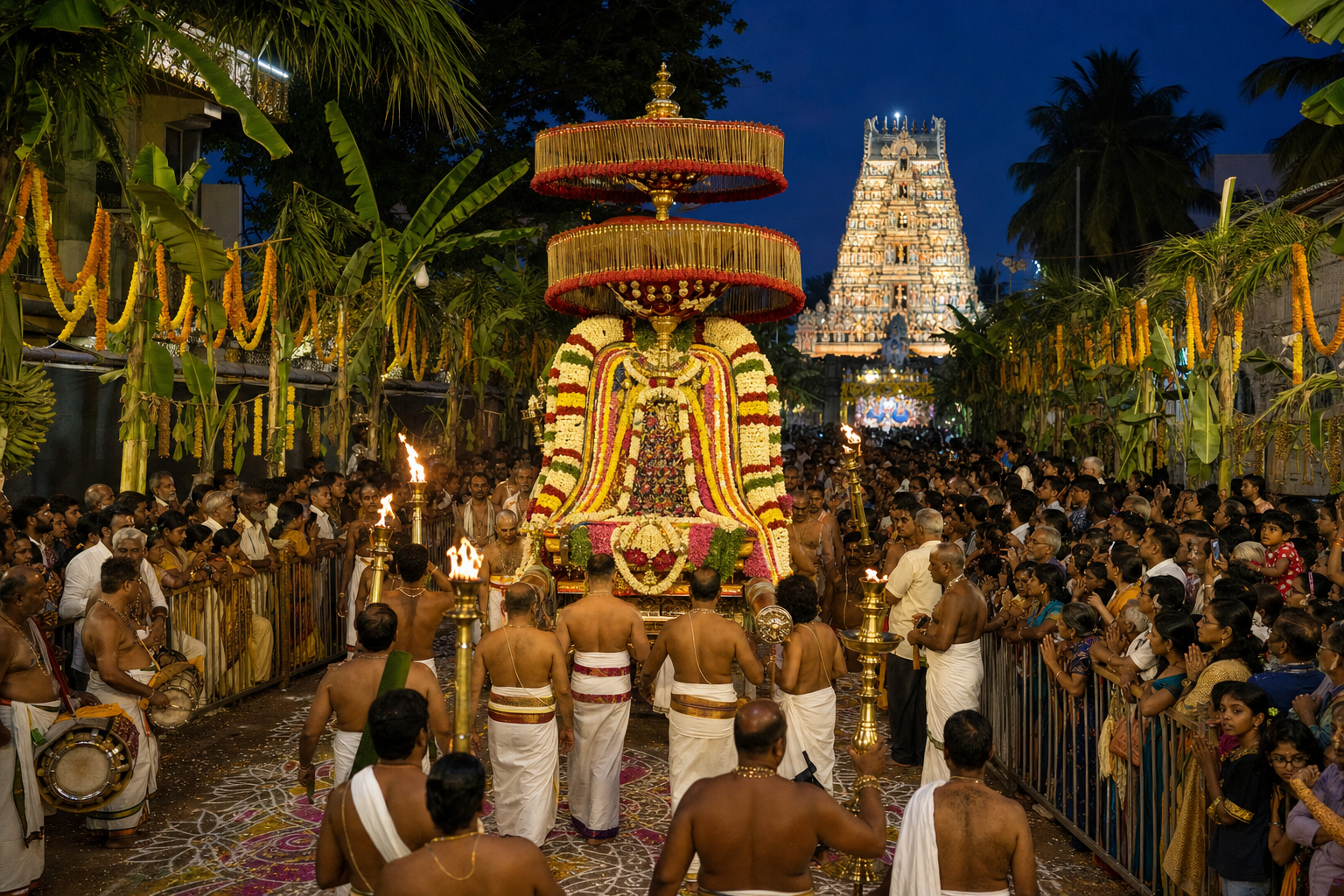
A Vahana Seva is processional. The utsava murti is taken out on a sacred vehicle, accompanied by collective worship, chanting, and temple music. Your planning concern is therefore not only darshan but also the procession’s time, route arrangements, and the larger gathering of devotees. At Kapileswara, arrive well before the announced time instead of trying to enter at the moment the procession is due to begin.
Build a pilgrimage plan that can survive schedule changes
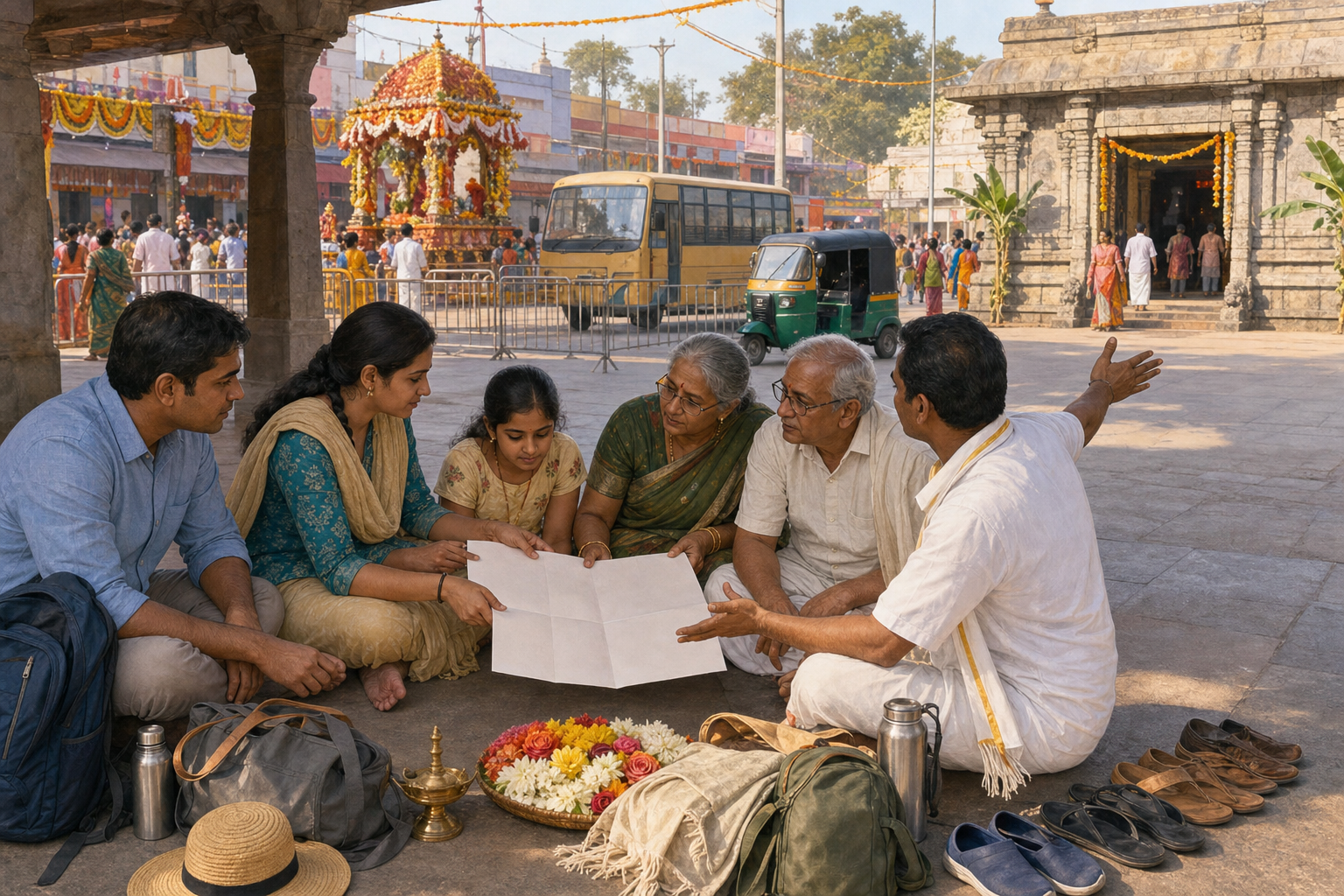
The festival dates are useful anchors, but they do not settle every practical detail. Precise Vahana Seva timings, darshan arrangements, and crowd-management instructions can be issued closer to the observances. A robust plan separates what is confirmed from what still needs verification.
- Choose one non-negotiable observance. Select February 2 for the Magha Pournami Utsavam, a listed Saturday for Kodandarama Abhishekam, February 8-16 for Kalyana Venkateswara Brahmotsavam, or February 8-17 for Kapileswara Brahmotsavam.
- Book around the date, not an unannounced hour. Secure accommodation early for the overlapping February 8-16 window, but avoid making tightly timed local movements depend on a procession hour that has not yet been issued.
- Check TTD information before departure. Verify daily seva times, darshan rules, and crowd advisories through official TTD information channels. Check again locally because an itinerary built from an earlier schedule may miss an administrative update.
- Treat February 5 separately. If visiting Srinivasa Mangapuram that day, account for Koil Alwar Thirumanjanam from 6:30 AM to 11:00 AM and use the subsequently confirmed darshan arrangement.
- Reduce transfers for elders and children. Give the family one principal temple observance for the day. Add another only when confirmed timings leave enough room for queues, travel, rest, and an unhurried darshan.
- Match your conduct to the ritual. Preserve silence and attention during Abhishekam, follow disciplined queue arrangements, and favor eco-conscious offerings. During a Vahana Seva, arrive before the gathering thickens rather than pushing toward the procession at the last moment.
This approach is especially important on February 14. The date offers three active temple schedules, but a disciplined pilgrimage is not measured by how many precincts you enter. One complete observance, attended without haste, is more meaningful than three rushed appearances organized around assumptions.
Quick answers for February 2026 pilgrims
When do the two Brahmotsavams overlap?
Sri Kalyana Venkateswara Swamy Temple and Sri Kapileswara Swamy Temple both hold their Brahmotsavams from February 8 through February 16. Kapileswara continues through February 17.
Which date provides access to all three festival calendars?
Saturday, February 14 has the broadest choice. Both Brahmotsavams are underway, and Abhishekam is scheduled at Sri Kodandarama Swamy Temple. Whether more than one observance is practical depends on the final timings.
Is February 7 a Brahmotsavam day?
February 7 is the Ankurarpanam date for both annual Brahmotsavams; their stated festival ranges begin on February 8. February 7 is also one of the four Saturday Abhishekam dates at Sri Kodandarama Swamy Temple.
Are the Kapileswara Vahana Seva timings confirmed?
The daily occurrence of Vahana Sevas during the February 8-17 Brahmotsavam is scheduled, but the precise day-by-day times are to be issued closer to the festival. Do not build a fixed multi-temple itinerary until those details are available.
Choose your anchor observance first and write any second temple into your plan in pencil. Once TTD issues the applicable timings, remove the combinations that require rushing. That final act of restraint will give you more space for darshan, seva, and the inward attention for which the pilgrimage is being made.
References
- DharmaRenaissance Blog – Tirupati Sri Kodandarama Swamy Temple: Sacred, Soul-Stirring Festivals in February 2026
- DharmaRenaissance Blog – Srinivasa Mangapuram Brahmotsavam 2026: Key Dates and Sacred Rituals at Kalyana Venkateswara
- DharmaRenaissance Blog – Tirupati Kapileshwaraswamy Brahmotsavam 2026: Dates, Ritual Significance, and Devotional Highlights
