
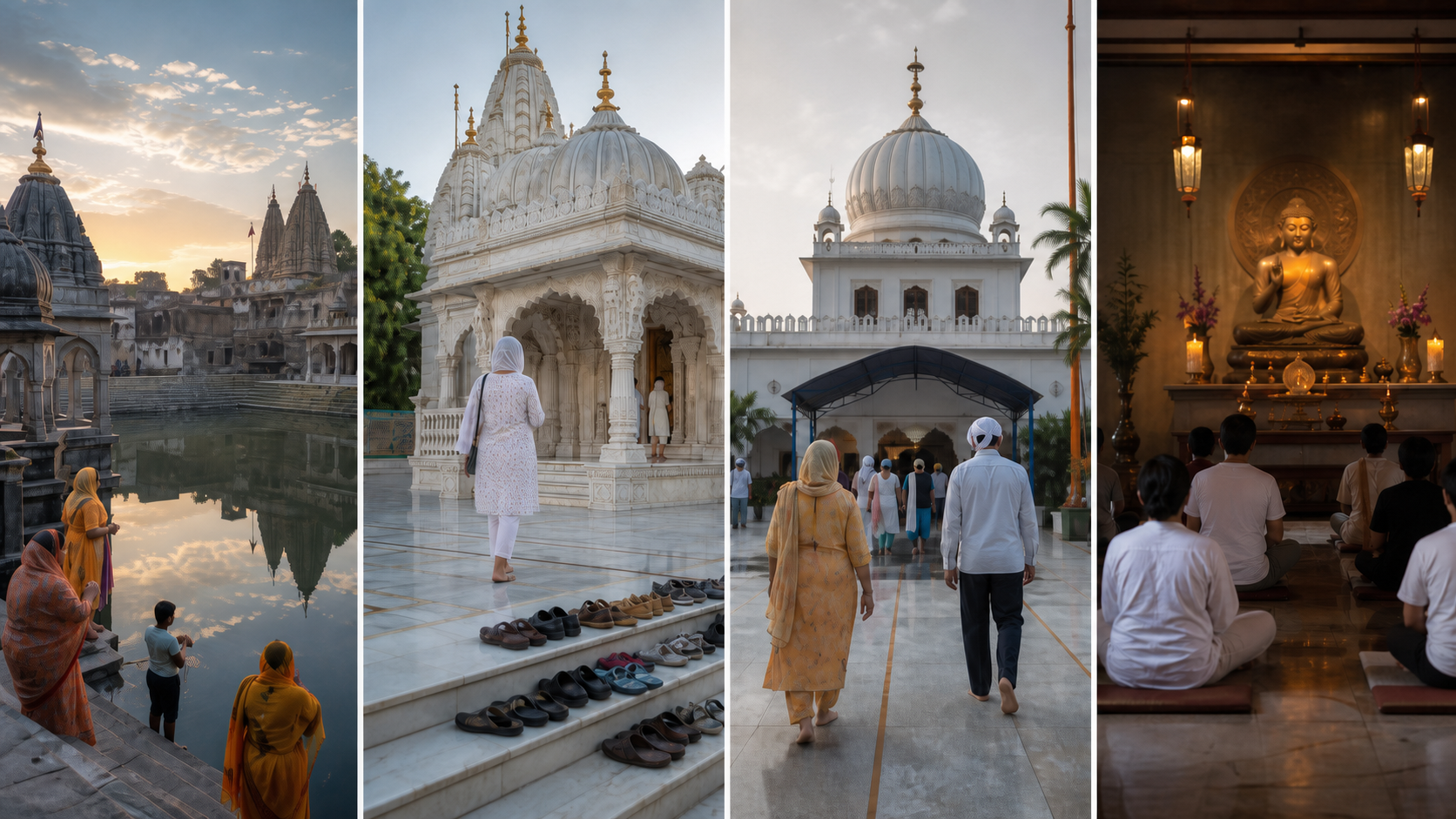
You want to spend a Sunday at Mumbai’s sacred places, but you don’t want darshan, seva, meditation and heritage to collapse into a sightseeing checklist. The difficulty isn’t finding enough places. It is choosing a route that leaves you attentive when you arrive.
A workable pilgrimage has three parts: one early anchor, a core circuit that you can shorten without regret, and one optional conclusion. That structure lets you encounter Hindu, Jain, Sikh and Buddhist traditions on their own terms while preserving the quiet that makes the day worth undertaking.
Decide what a complete pilgrimage means before leaving
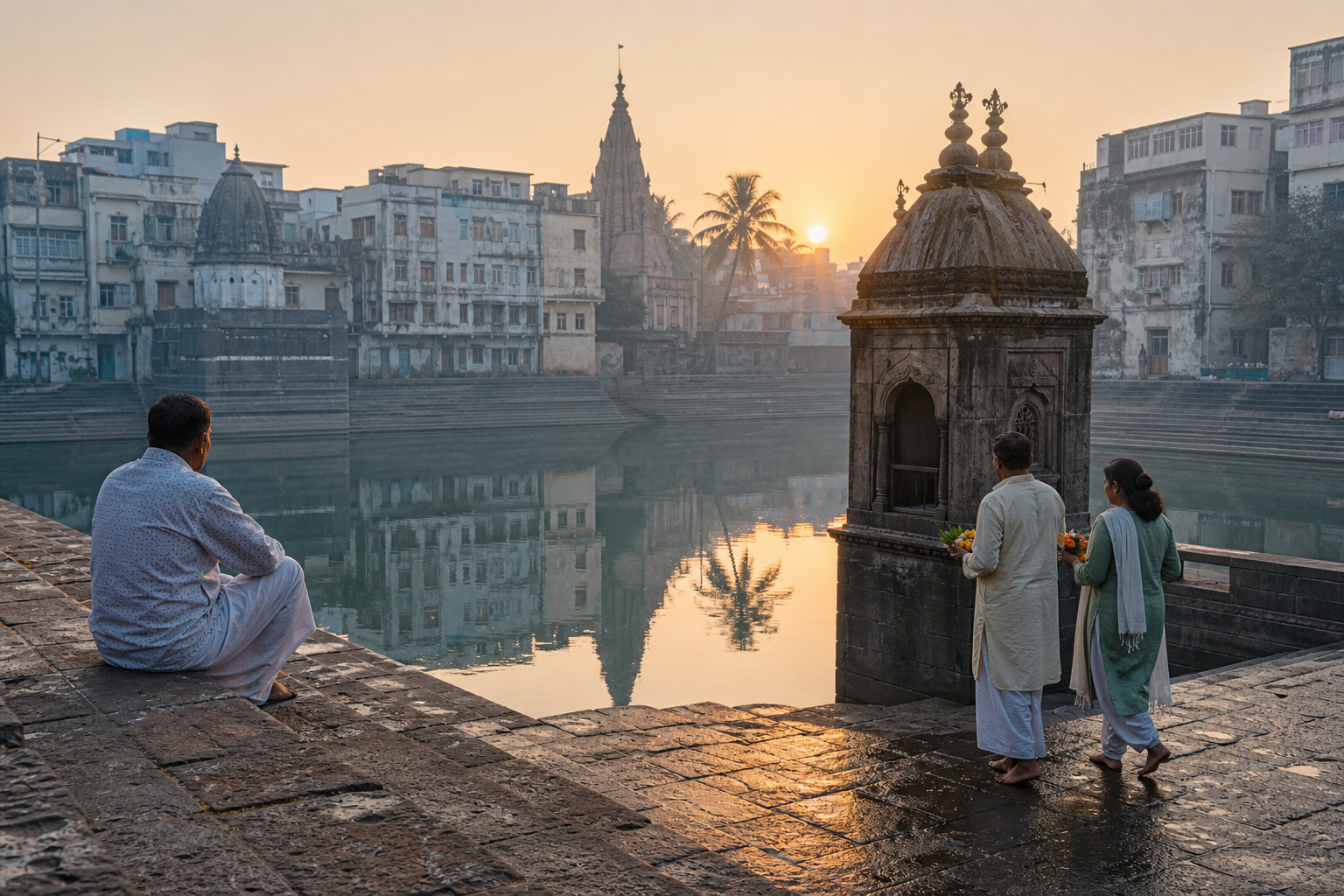
Trying to collect every sacred site in one day is the quickest way to stop being present at any of them. Mumbai’s interfaith landscape is too rich for a completionist approach. Treat the places below as a modular route, not as a compulsory scorecard.
- Choose one non-negotiable opening. Siddhivinayak Temple is the natural anchor if you want to begin with the pre-dawn Kakad Aarti. Verify the current schedule locally before building the rest of the day around it.
- Protect the interfaith core. If your purpose is to encounter the wider dharmic family, retain at least one Jain, one Sikh and one Buddhist practice rather than using all your available time on additional Hindu temples.
- Select the central and southern stops by meaning. Mahalakshmi, Babulnath, Banganga, Mumbadevi and the Jain temple each contribute something different: Shakti worship, Shiva contemplation, sacred geography, civic identity and disciplined non-possession.
- Choose one conclusion. ISKCON Juhu offers a communal Vaishnava finish through kirtan, satsang and prasadam. The Global Vipassana Pagoda in Gorai offers a more contemplative Buddhist conclusion. Don’t make both mandatory.
If your day must be shorter, keep Siddhivinayak, pair the Sikh and Buddhist possibilities in Dadar, visit the Jain temple, and choose one Hindu heritage precinct. If you have greater capacity, add the remaining temples before selecting your final destination. This preserves the interfaith purpose even when time is limited.
Follow a devotional sequence, not a race between pins
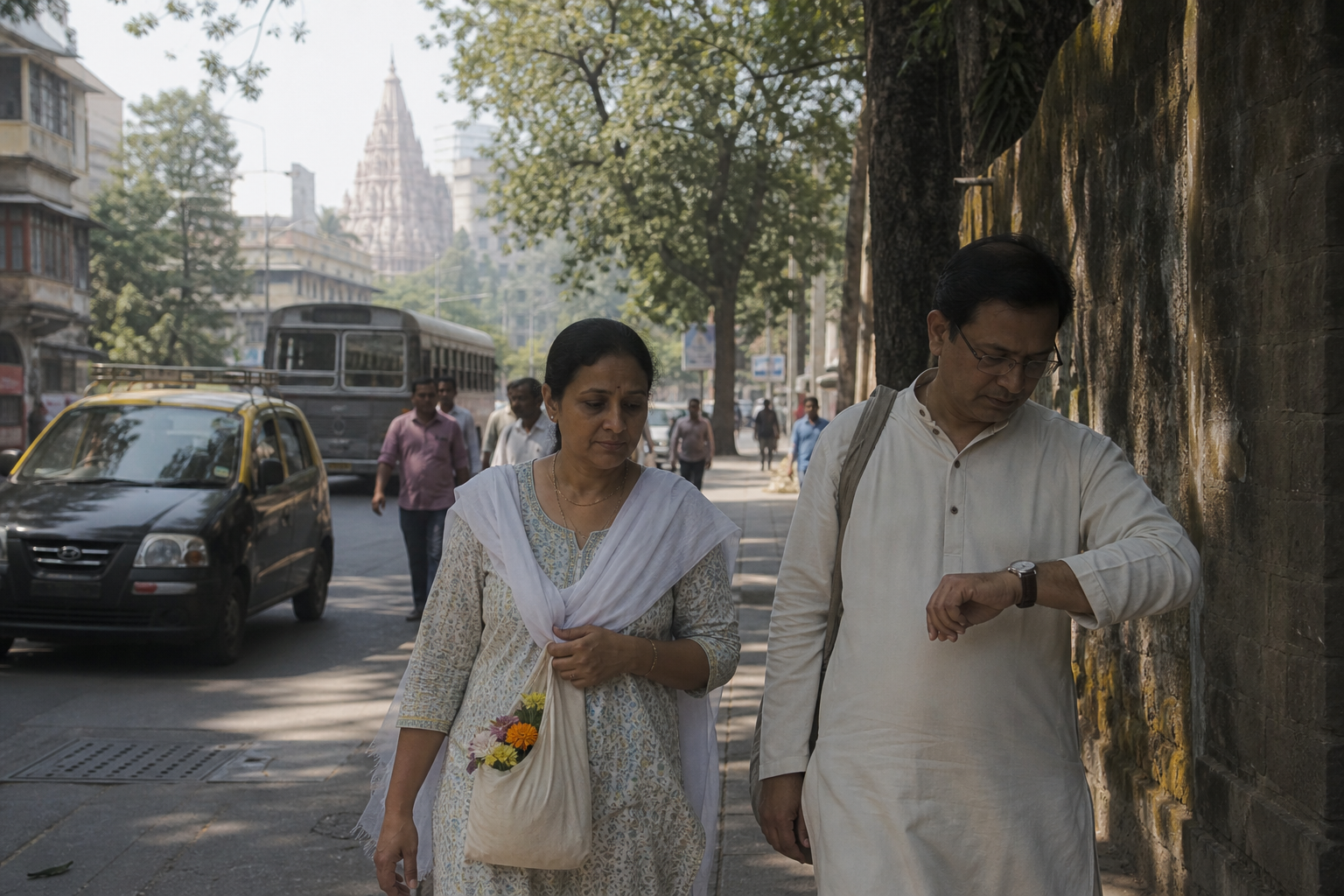
The following planning order gives the day a coherent spiritual arc. It is not a promise that every leg will be the fastest under live travel conditions. Before leaving each place, check the next journey and cut an optional stop if the route begins to feel hurried.
| Phase | Sacred place | Practice or insight | Planning decision |
|---|---|---|---|
| Opening | Siddhivinayak Temple, Prabhadevi | Kakad Aarti and Ganapati darshan | Keep this early and confirm the current aarti schedule |
| Interfaith core | Gurdwara Sri Guru Singh Sabha, Dadar | Kirtan, sangat, seva and langar | Carry a head covering and allow time to participate without rushing |
| Interfaith core | Mahabodhi Society, Dadar | Buddhist meditation and compassion | Pair it with the Dadar gurdwara when Buddhism is essential to your day |
| Temple circuit | Mahalakshmi Temple | Darshan of Mahalakshmi, Mahakali and Mahasaraswati | Expect a lively Sunday atmosphere and protect your patience |
| Temple circuit | Babulnath Temple | Shiva worship and quiet attention before the linga | Account for the ascent before adding another stop |
| Jain encounter | Babu Amichand Panalal Adishwarji Jain Temple | Ahimsa, aparigraha and marble sacred art | Leave leather items behind and enter quietly |
| Heritage pause | Walkeshwar and Banganga | Sacred geography, ritual, ecology and community memory | Walk slowly enough to notice the precinct rather than treating the tank as a photo stop |
| Civic devotion | Mumbadevi Temple, Zaveri Bazaar | Darshan of Mumbai’s presiding deity | Allow attention for both the shrine and the active neighbourhood around it |
| Optional conclusion | ISKCON Juhu | Kirtan, satsang and vegetarian prasadam | Choose this when you want a communal, devotional ending |
| Alternative conclusion | Global Vipassana Pagoda, Gorai | Mindfulness, compassion and sustained contemplation | Reserve it for a day with enough additional time |
At Siddhivinayak Temple in Prabhadevi, the pre-dawn Kakad Aarti establishes the discipline of the day. Arrive early enough that the queue doesn’t force you into agitation before your first darshan. Dress modestly, silence your phone and let the aarti determine your pace. An online memory of a schedule is not sufficient; use the current information displayed by the temple.
Dadar can carry much of the interfaith weight without turning diversity into a slogan. At Gurdwara Sri Guru Singh Sabha, cover your head and sit with the kirtan respectfully. If you join langar, receive it as the practice of equality and shared service that it is, not merely as a convenient meal. The nearby Mahabodhi Society offers a Buddhist setting for meditation. Placing stillness after congregational singing can be especially effective because the contrast helps you notice the distinct discipline of each tradition.
At Mahalakshmi Temple, the presence of Mahalakshmi, Mahakali and Mahasaraswati turns the visit toward gratitude, power and wisdom. The coastal setting can invite reflection, but Sunday activity may be intense. Don’t treat a crowded queue as an interruption to the pilgrimage. Patience is part of your conduct there.
Babulnath shifts the mood toward Shiva. Let the ascent function as a transition rather than another delay to defeat. Inside, give your attention to the Shiva linga and the temple’s iconography before reaching for a camera or thinking about the next vehicle. If anyone in your party has limited mobility, check the available access arrangements before committing to this stop; the ascent should be a conscious decision, not an unwelcome discovery.
At the Babu Amichand Panalal Adishwarji Jain Temple, the change in conduct matters as much as the change in architecture. Its marble craftsmanship deserves attention, but the deeper encounter is with ahimsa and aparigraha: non-violence and non-possessiveness as disciplines rather than decorative ideals. Avoid carrying leather items into the sacred space, maintain quiet, and don’t assume that habits acceptable at a previous temple automatically transfer here.
Walkeshwar and Banganga ask you to look beyond an individual shrine. The ancient tank and surrounding sacred places show ritual, ecology and community life occupying the same urban ground. Pause at the water and observe how worship and neighbourhood life continue beside one another. This is the stop most easily diminished by haste, because its meaning lies in the precinct rather than in a single moment of darshan.
Mumbadevi Temple brings the journey into contact with the city’s historical identity. Zaveri Bazaar is not a silent approach road, and the active streets are part of the encounter. Keep your belongings close, follow the local queue and entry directions, and resist becoming irritated because commerce and devotion share the same neighbourhood. Darshan of Mumbai’s presiding deity belongs within the life of the city rather than apart from it.
Your final choice should match the attention you still possess. At ISKCON Juhu, kirtan, satsang and vegetarian prasadam offer an expressive Vaishnava conclusion grounded in sound, service and community. At the Global Vipassana Pagoda in Gorai, the emphasis turns toward meditation, mindfulness and compassion. Choose the first if you can still enter collective devotion wholeheartedly; choose the second if you have allowed enough time for an unhurried contemplative visit. If neither is realistic, finish quietly at your last core stop rather than converting the evening into transit.
Change your conduct as you cross traditions
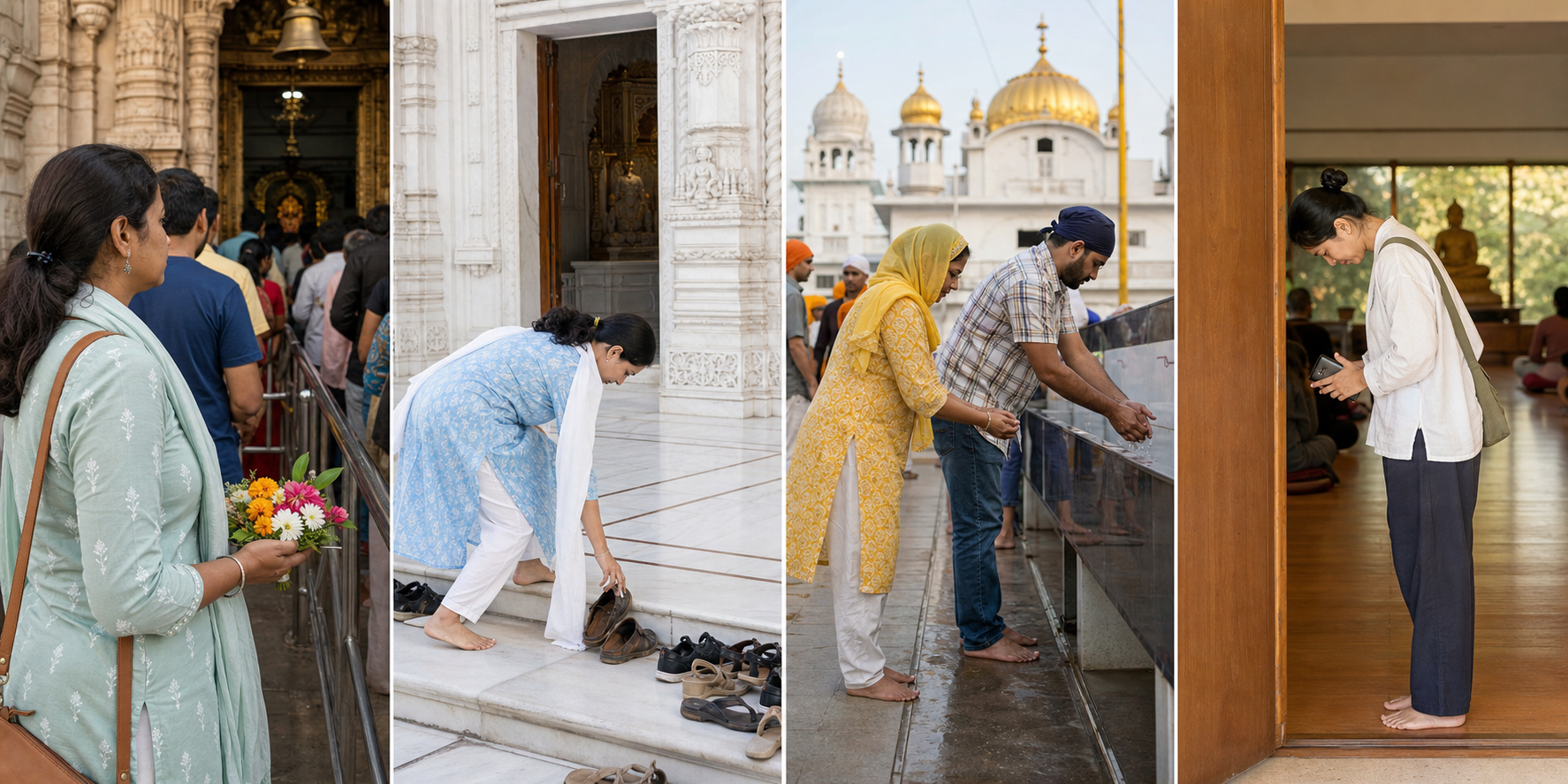
Interfaith respect doesn’t require pretending that every sacred space asks the same thing of you. The values may enter into dialogue, but the forms of reverence remain distinct. Your task is to notice the difference and adjust before crossing each threshold.
- At Hindu temples: observe the darshan queue, keep conversation subdued and don’t block the movement of devotees. Ask locally before offering anything or photographing a ritual.
- At the Jain temple: avoid leather items and maintain particular quiet. Let the principles of ahimsa and aparigraha shape your behaviour, including the amount of space and attention you claim.
- At the gurdwara: cover your head, sit reverently during kirtan and approach langar through the ethic of equality. Follow the congregation’s directions rather than treating the hall as a cultural exhibit.
- At Buddhist spaces: reduce conversation and movement. Meditation is not empty time between more visually dramatic sites; it is the practice you came to encounter.
- At every entrance: follow the displayed rules for footwear, bags, photography and access. When uncertain, ask a caretaker or volunteer before acting.
Modest clothing is the simplest common baseline, but it doesn’t replace site-specific etiquette. A light bag helps because you can comply more easily with entry requirements, and planning around the Jain restriction on leather prevents an awkward decision at the door. Carry a clean head covering for the gurdwara instead of assuming one will be available.
Photography deserves restraint throughout the day. A sacred place may also be architecturally important, but worshippers are not scenery. If permission isn’t clear, keep the phone away. You will remember more of the day if you record fewer transitions and remain present for more of them.
Protect enough time for worship, food and mobility
Build the day around the verified opening ritual, but don’t assign a minute-by-minute deadline to every later stop. Darshan queues, kirtan, langar, prasadam and meditation don’t fit neatly into the same unit of time. A rigid schedule makes you resent the very practices you intended to honour.
Use three tests whenever the route begins to slip: Are you still able to enter quietly? Does the next stop add a tradition or insight that the day doesn’t yet contain? Will reaching it force you to abandon a practice already underway? If the third answer is yes, cut the next optional site.
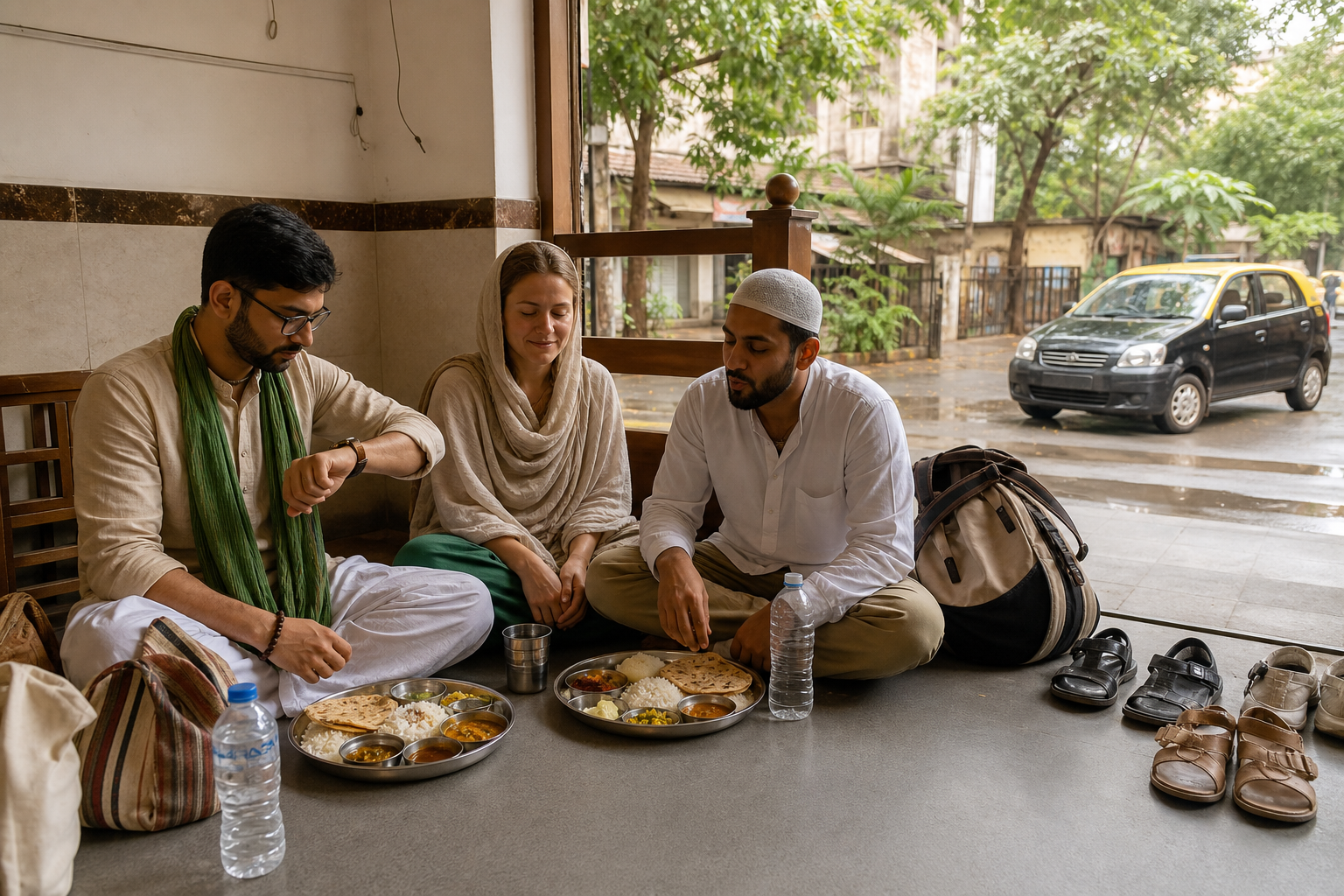
Don’t rely on langar or prasadam as if they were guaranteed restaurant bookings. Participate when the relevant service is taking place and follow local directions. If you have dietary, medical or timing needs, make a separate food plan so that the sacred meal remains an offering rather than a logistical demand.
Mobility should shape your selection before the day begins. Babulnath involves an ascent, while Banganga rewards a slower exploration of a precinct rather than a quick doorway visit. A party that includes children, elders or anyone who tires easily will gain more from a reduced route with genuine pauses than from an ambitious circuit completed in exhaustion.
Key takeaways
- Anchor the day with Siddhivinayak’s Kakad Aarti only after confirming the current schedule at the temple.
- For a genuinely interfaith pilgrimage, protect Jain, Sikh and Buddhist encounters before adding more optional temple stops.
- Use Dadar strategically: the gurdwara and Mahabodhi Society can bring Sikh and Buddhist practice into the core route.
- Carry modest clothing and a head covering, and avoid leather items when visiting the Jain temple.
- Treat ISKCON Juhu and the Global Vipassana Pagoda as alternative conclusions unless you clearly have time and attention for more.
- Cut a stop as soon as travel begins to displace reverence. A shorter pilgrimage can be the more complete one.
Before you set out, write down one opening, the traditions you refuse to omit, and one optional finish. Keep every other stop removable. When you reach the first threshold, put the route away long enough to be fully present; that is where the itinerary becomes a pilgrimage.
References
