
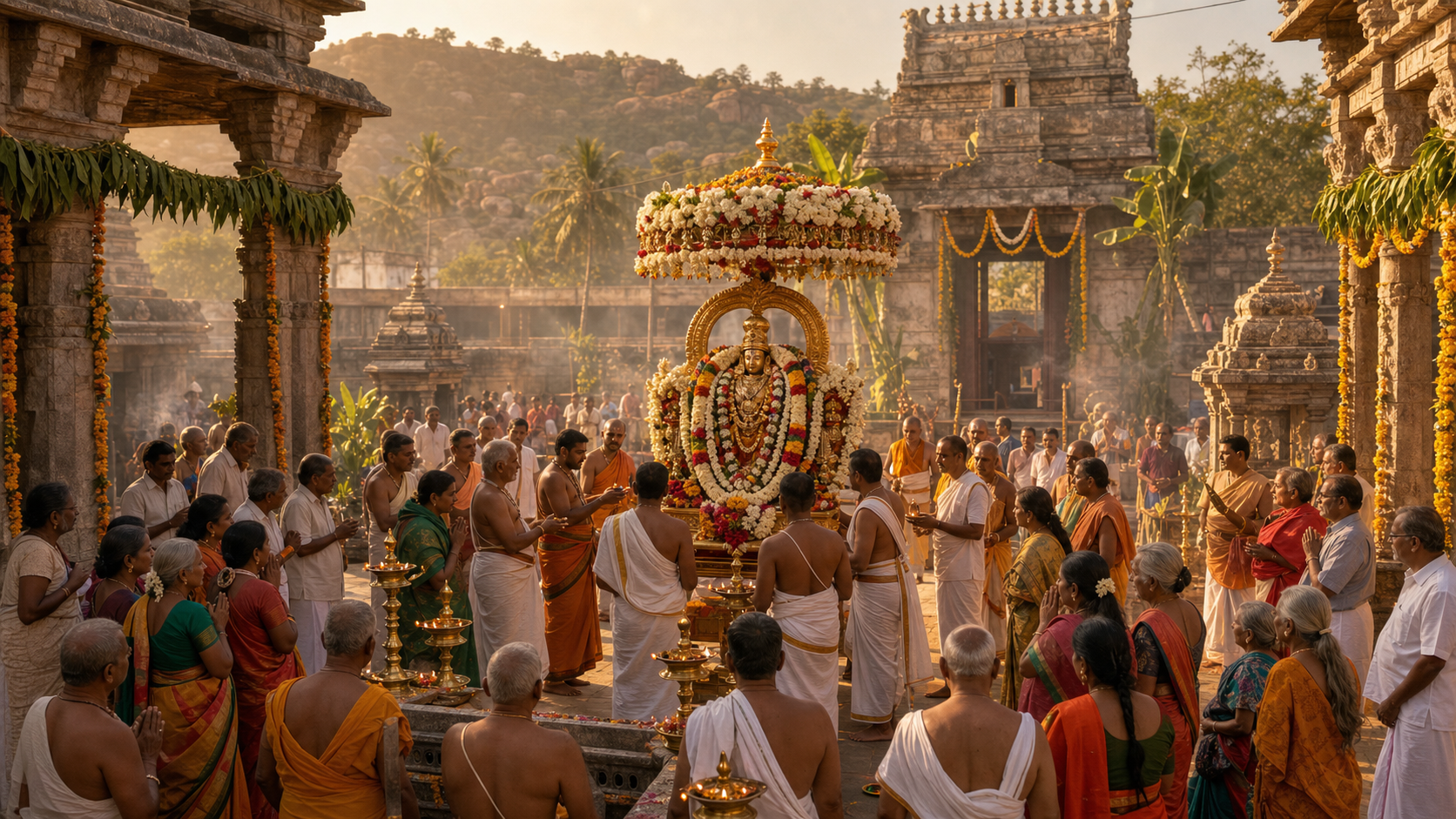
If you are choosing a date for Tarigonda, first decide what you want to witness: the ritual beginning, a vahana procession, the chariot festival, or the concluding purification. For the 2026 observance, Ankurarpanam was scheduled for 23 February, followed by the main Brahmotsavams from 24 February to 5 March at Sri Lakshmi Narasimha Swamy Temple in Gurramkonda mandal, Annamaya district.
One distinction will keep your plans honest: the overall festival window is specific, but a date-by-date vahana roster is not established here. Use the dated window to anchor travel, then verify the exact seva you want through a current temple or TTD notice before setting out.
Key takeaways
- Ankurarpanam on 23 February preceded the main 24 February-5 March 2026 festival window; it was the formal ritual beginning, not merely backstage preparation.
- Do not assign dates to Garuda, Simha, Hanumantha or other vahana sevas from a customary list. Confirm the temple-specific timetable separately.
- Garuda Seva and Rathotsavam require additional crowd and travel buffer, especially when you are accompanying elders or children.
- TTD planned queue lines, barricades, drinking water, first aid, sanitation and volunteer assistance; following the designated flow is part of a safe darshan.
- Tarigonda is reached by road from Gurramkonda and regional centres, with Madanapalle Road as a rail connection and Tirupati as a major onward node.
Read the dates as a ritual sequence, not ten identical days
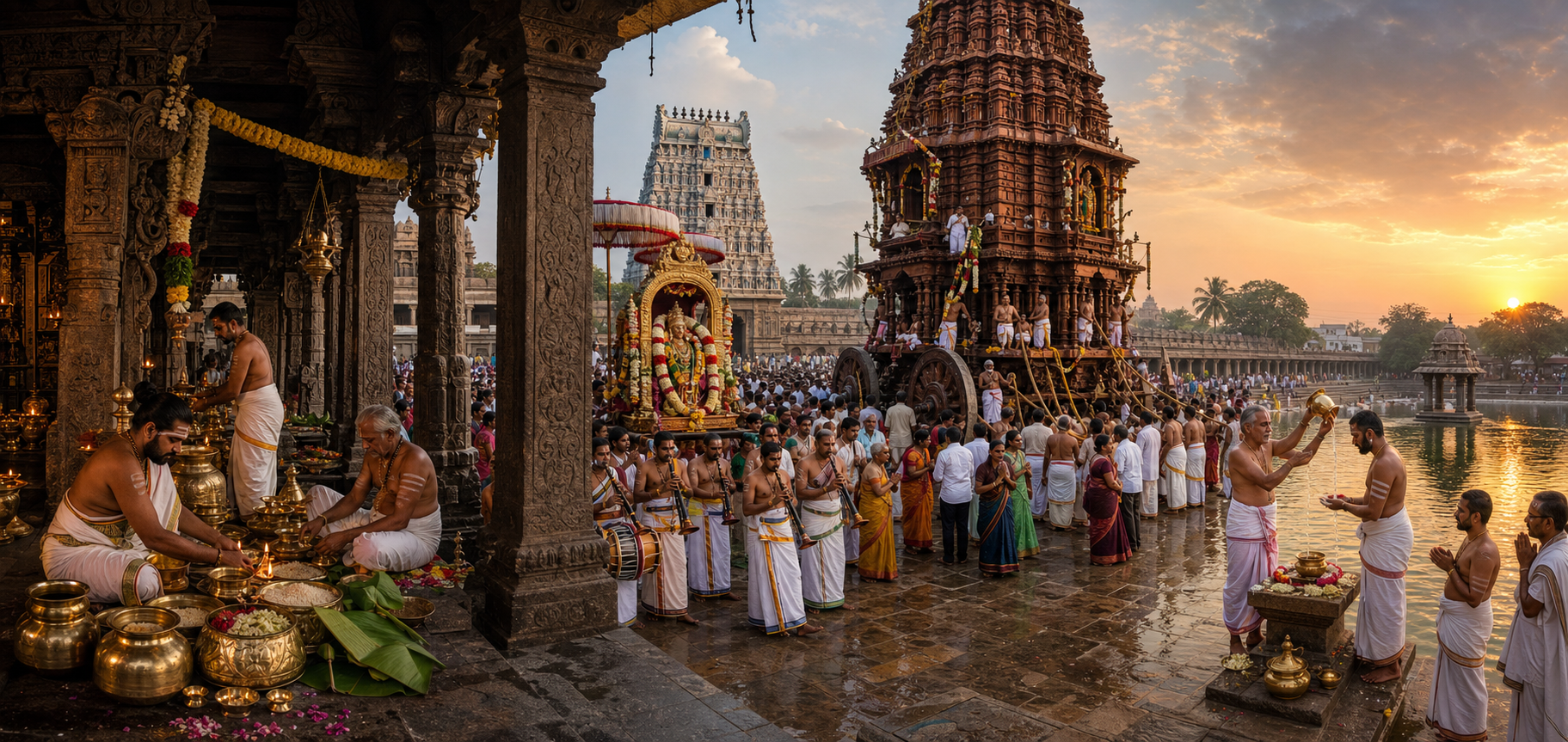
A Brahmotsavam changes the rhythm of a temple. The deity comes beyond the sanctum in processional form, the streets become part of the sacred field, and worship unfolds through invitation, procession, purification and liturgical closure. Choosing a day therefore means choosing a phase of that movement.
| Festival phase | What happens | What it means for your visit |
|---|---|---|
| 23 February | Ankurarpanam consecrates seeds, establishes the festival sankalpa and includes preparation of the yaga-shala and kalashas. | Choose this phase if the formal opening and Agamic discipline matter more to you than a major public procession. |
| 24 February-5 March | The main Brahmotsavam window customarily begins with Dhwajarohanam and continues with morning and evening vahana sevas. | Use this as the fixed travel window, but confirm the exact vahana and time before booking around a named seva. |
| Middle phase | Snapana Tirumanjanam, Veda-parayanam, Divya Prabandha recitation, Harikatha and sankeertanas may deepen the devotional programme. | This phase suits a devotee who wants to attend to abhishekam, sacred recitation and alankara rather than treating the festival only as a procession. |
| Later and concluding phase | Rathotsavam, Chakrasnanam and Dwajavarohanam are customary late-festival highlights. | Choose this phase for the chariot procession or ritual completion, after separately checking their assigned dates. |
Ankurarpanam deserves special attention because it explains how the entire festival is understood. The germinating seed represents auspicious growth, welfare and the cultivation of virtue. The rite activates the sankalpa and marks out a consecrated span of time. If you attend it, watch for the change from ordinary temple rhythm to festival rhythm rather than expecting the visual scale of Garuda Seva or Rathotsavam.
Dhwajarohanam then signals invitation: the ceremonial flag announces the utsava to the divine order as well as the gathered community. Dwajavarohanam performs the opposite movement at the end, returning the temple from extraordinary festival time to its daily cycle. Chakrasnanam completes the sequence through the ceremonial immersion of the Sudarshana Chakra, expressing purification and ritual fulfilment.
Do not automatically add Dhwajasthambha Samprokshanam to the 2026 itinerary. The flagstaff sanctification is observed in some years when specifically scheduled; it is not established as a fixed item for every Brahmotsavam.
Choose your darshan day without guessing the timetable
The most common planning error is to see a list of customary vahanams and turn its order into a daily schedule. At Tarigonda, devotees could typically expect forms such as Sesha, Hamsa, Simha, Hanumantha, Gaja, Surya-prabha, Chandra-prabha and Garuda. That identifies the festival’s processional vocabulary; it does not assign each vehicle to a particular date or hour.
- Write down one devotional priority. Choose Ankurarpanam, a named vahana seva, Rathotsavam, Chakrasnanam or general darshan. A clear priority prevents you from building an overloaded itinerary around every possible event.
- Verify that event separately. Look for a current temple-specific or TTD timetable. Do not infer a date from the position of a vahana in a general list.
- Add a larger buffer for Garuda Seva and Rathotsavam. Garuda Seva is associated with a larger congregation, while the chariot route requires disciplined crowd movement. Avoid a tight onward connection on the same day.
- Choose transport and lodging as one decision. Road access from Gurramkonda may be the practical last leg, while Madanapalle Road and Tirupati can serve as wider transport nodes. If your chosen seva is central to the pilgrimage, staying in a nearby town gives you more flexibility than attempting a finely timed arrival.
- Plan for the needs of your group before entering the queue. Agree on a meeting point, locate drinking-water and first-aid facilities, and keep medicines or essential personal items with the person who needs them. Early arrival, hydration and light, respectful clothing are especially helpful for families, elders and children.
If you have only a short visit, choose one must-see seva and leave the rest of the day open for unhurried darshan. Chasing several processions can turn a pilgrimage into a sequence of queue calculations. One well-chosen event, attended with attention, is usually more meaningful than a timetable built from unverified assumptions.
Understand what Lakshmi Narasimha reveals through the festival
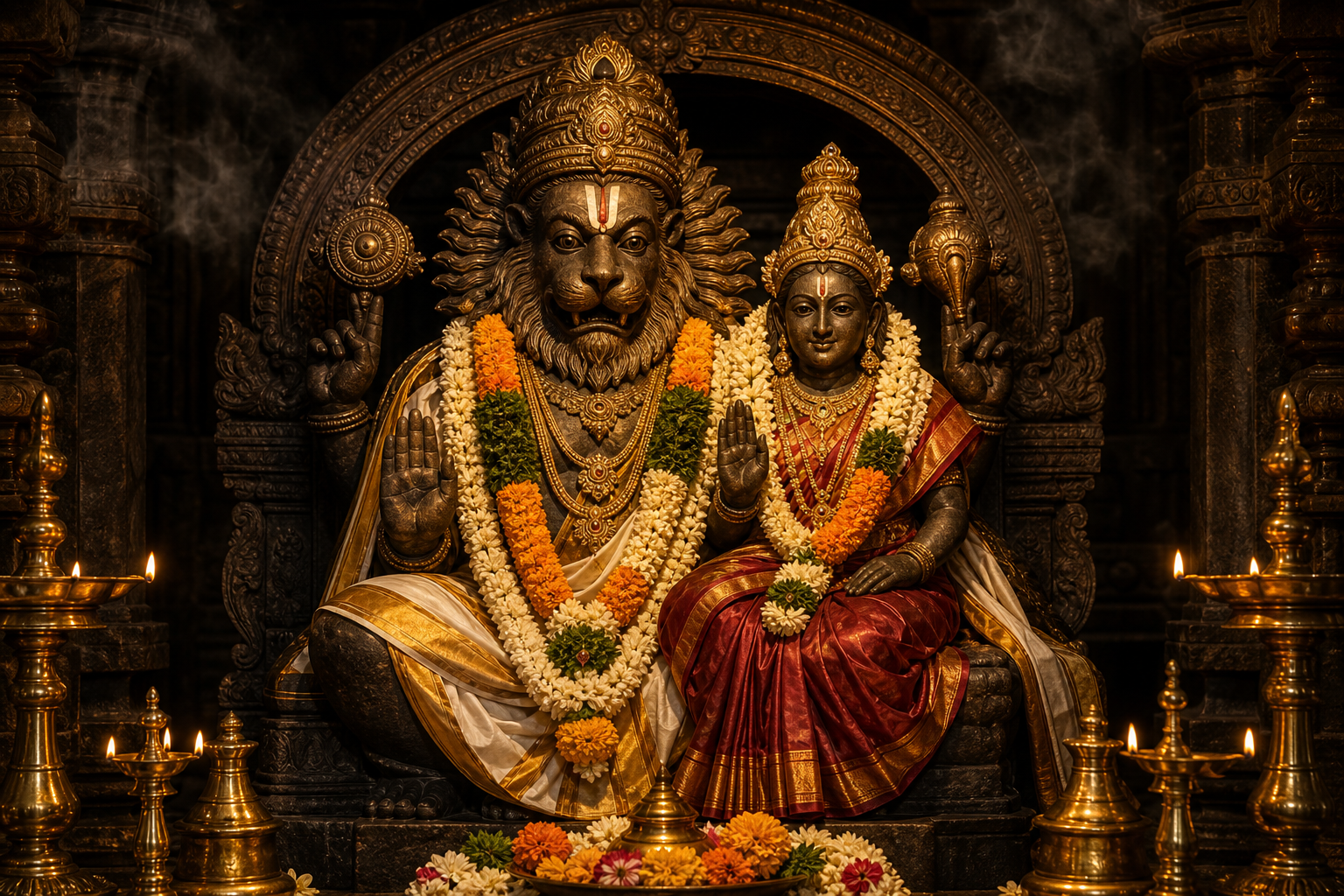
Lakshmi Narasimha should not be read as fierceness alone. Mahalakshmi’s presence tempers Narasimha’s ugra aspect, joining protective force with benevolence. The resulting form offers abhaya, freedom from fear, together with kshema, well-being. This is why the festival can hold intense processional energy without reducing Narasimha to anger or spectacle.
- At Simha Vahanam, notice courage disciplined by compassion. Power is not presented as licence for cruelty; it protects dharma and those who seek refuge.
- At Garuda Seva, notice the central place of Garuda in Vaishnava devotion. The scale of the gathering is part of the event, but queue pressure should not displace the inward purpose of darshan.
- At Snapana Tirumanjanam, attend to saundarya and anugraha: the deity is ceremonially bathed with sanctified water, milk and fragrant substances, revealing divine beauty as a form of grace.
- During Veda-parayanam and Divya Prabandha recitation, listen even if you cannot follow every word. The festival is carried by sacred sound as much as by visible alankara.
- At Rathotsavam, understand the chariot as more than transport. The utsava-murti moves through the community, extending the experienced sacred space beyond the inner temple.
The evening atmosphere can bring these dimensions together: nadaswaram, recitation, lamps, tulasi, camphor, alankara and the movement of the vahana. Rather than trying to photograph every moment, set aside at least one procession in which you simply remain present through the deepa-harati.
Tarigonda also carries the memory of Tarigonda Vengamamba, the poet-devotee whose legacy continues within Telugu Vaishnava bhakti. If you are bringing younger family members, give them this context before entering: they are not visiting an interchangeable festival venue, but a kshetra shaped by ritual, literature and remembered devotion.
Let the arrangements work by treating discipline as seva
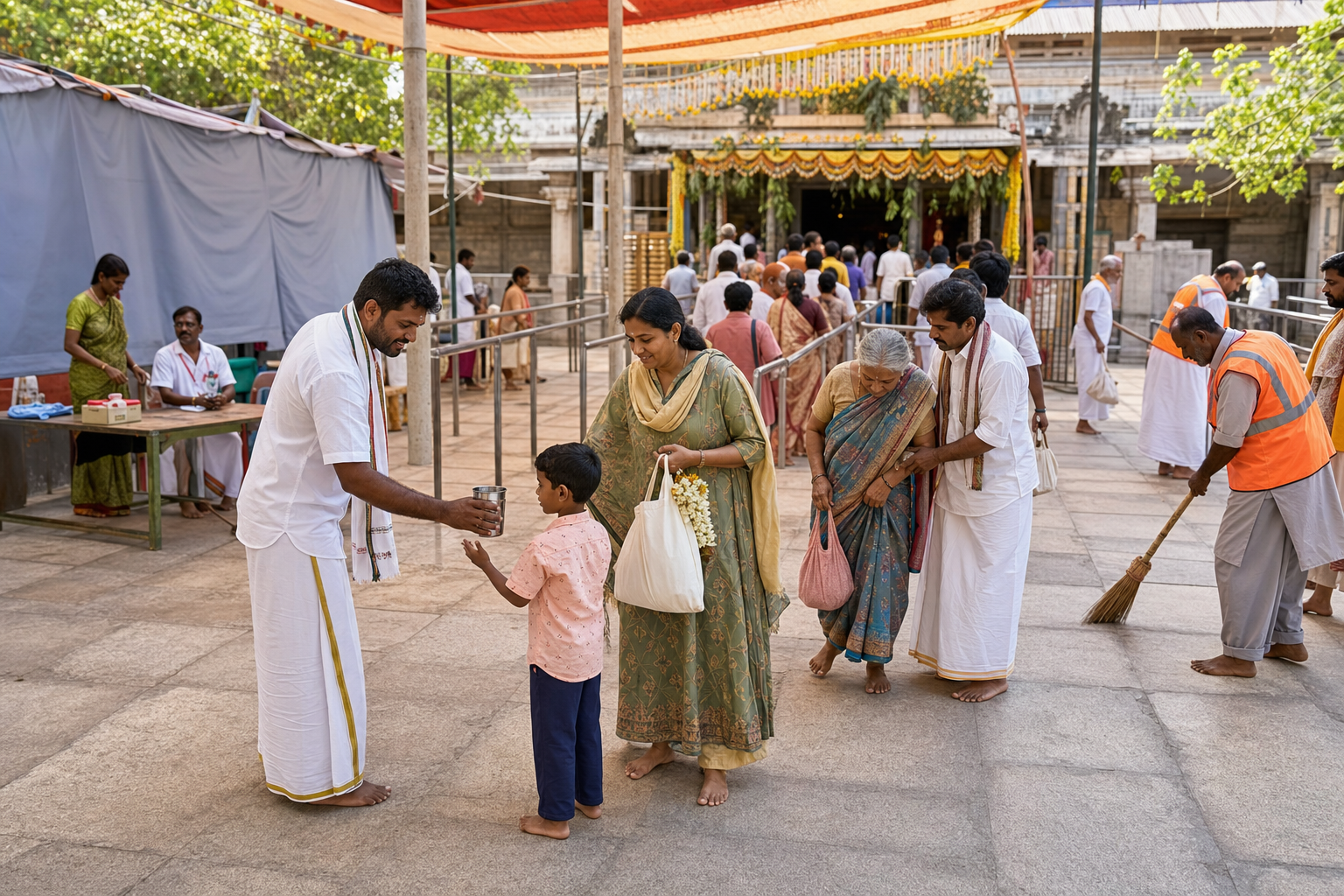
The arrangements associated with the 2026 observance included pandals, rangolis, dedicated queue lines, safety barricades, wayfinding, lighting, public-address systems, drinking water, sanitation, first aid and volunteer support. These measures work only when pilgrims cooperate with them. A barricade beside a vahana route is not an inconvenience to bypass; it protects the route and the people waiting around it.
What responsible participation looks like
- Use the designated entrance and exit even when another route appears shorter.
- Follow volunteers and security personnel around the vahana path and chariot corridor; do not stop in a moving crowd to secure a better view.
- Locate the drinking-water point before a long queue and use the first-aid facility if someone becomes unwell.
- Give elders, children and pilgrims with special needs the physical space that crowd pressure can remove from them.
- Minimise single-use plastic, place waste only in designated facilities and leave the processional street fit for the next group of devotees.
- Keep dana orderly and transparent, and offer practical seva without obstructing temple personnel or the queue.
This conduct is not separate from worship. Seva, dana, satya, shraddha and ahimsa are central ethical threads of the celebration. Hindu, Buddhist, Jain and Sikh traditions articulate them in different theological languages, but each asks whether devotion becomes disciplined conduct toward other beings.
For a clear pilgrimage plan, write down one must-see seva, one acceptable fallback and one commitment to the comfort of the people travelling with you. Confirm the seva instead of guessing it, leave enough time for the queue, and arrive ready to encounter Lakshmi Narasimha as protection governed by compassion.
References
