
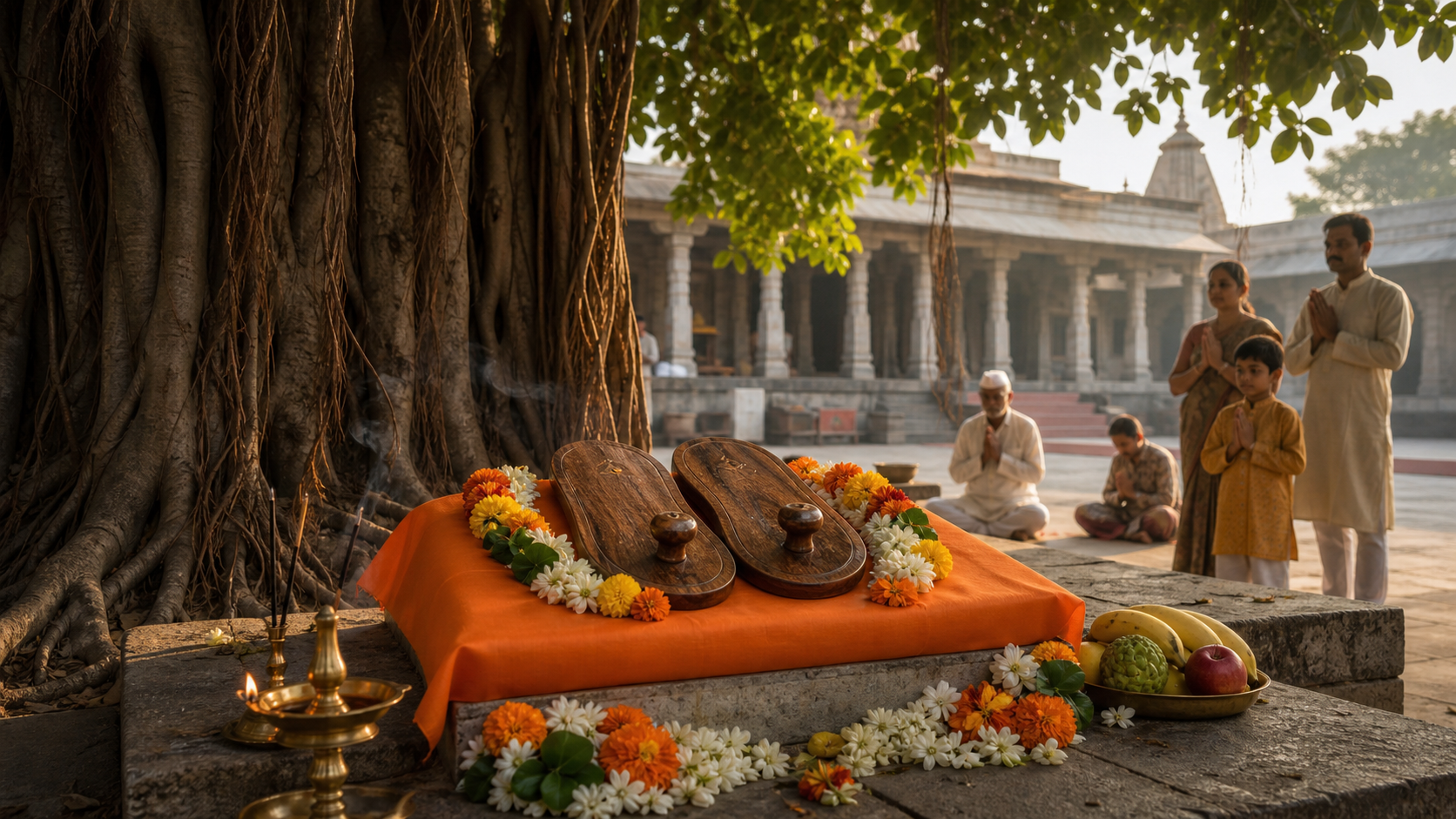
You may know the name Sri Swami Samarth and still wonder what Prakat Din actually asks of you. Is it a birthday celebration, a day of fasting, a pilgrimage to Akkalkot, or an occasion for special puja?
The most useful answer is to treat the day as an ordered movement: remember the guru, simplify your attention, study, serve, and then carry the instruction into ordinary conduct. Akkalkot gives that movement a public form through paduka worship, parayan, kirtan, aarti, and annadana. You can follow the same spiritual logic at home without trying to reproduce a large temple festival.
Why Prakat Din is not simply another birth anniversary
The word prakat points to a sacred appearance or manifestation. It does not frame the occasion as a conventional birthday built around an ordinary biographical timeline. Devotional memory understands Swami Samarth as a presence whose meaning cannot be contained by dates alone, while historical memory places him as a major 19th-century saint whose long residence made Akkalkot a lasting centre of the Datta sampradaya.
This distinction matters because it changes the question you bring to the festival. Instead of concentrating only on when Swami Samarth was born, you ask what became manifest through him: fearless reliance on the guru, ethical steadiness, compassionate service, and guidance suitable for householders as well as renunciants.
Within the Dattatreya Tradition, Swami Samarth is situated in the lineage associated with Shripad Shri Vallabha and Shri Narasimha Saraswati. The connection is not merely a list of revered names. It places Akkalkot within a continuing discipline of guru-bhakti in which wisdom must guide both spiritual practice and worldly duty.
Prakat Din should also be distinguished from Datta Jayanti, observed on the full moon of Margashirsha, and from the commemoration of Swami Samarth’s samadhi. Each occasion has its own place in the devotional calendar. Combining them under a vague label such as Swami Samarth festival erases the particular meaning of sacred appearance, divine lineage, and remembrance after samadhi.
For the 2026 observance, major Akkalkot temples and Datta mathas marked Friday, March 20. That civil date belongs to 2026; it should not be copied automatically into another year. Panchang calculations reconcile the relevant lunar tithi with local sunrise, and the corresponding civil date can vary outside India because of time zones. Before planning a future vrata or circulating a festival notice, check the panchang followed by your temple, matha, or family tradition.
Akkalkot’s ritual language: padukas, parayan, and annadana
The Akkalkot tradition is concrete. It does not leave guru-bhakti as a general feeling. Each major observance gives devotion a form that trains attention and directs it toward service.
- Abhisheka to the padukas honours the feet of the guru and, through them, the path on which the disciple is asked to walk. The ritual becomes more than the pouring of sacred offerings when you connect it to willingness to receive and follow instruction.
- Alankara expresses reverence through careful presentation. Its inner counterpart is the care you bring to speech, work, relationships, and the duties already in front of you.
- Bhajan and kirtan move remembrance from an isolated act into a shared rhythm. Repetition of the divine name allows a gathering of different ages and levels of learning to participate together.
- Parayan gives devotion intellectual and ethical substance. Shri Gurucharitra is commonly read in the wider Datta tradition, alongside compositions dedicated specifically to Swami Samarth. If you cannot undertake a complete reading, choose a manageable portion and read it attentively rather than racing through more pages than you can absorb.
- Aarti gathers the mind after worship, recitation, and singing. It is a fitting point to offer gratitude and renew your sankalpa before returning to daily activity.
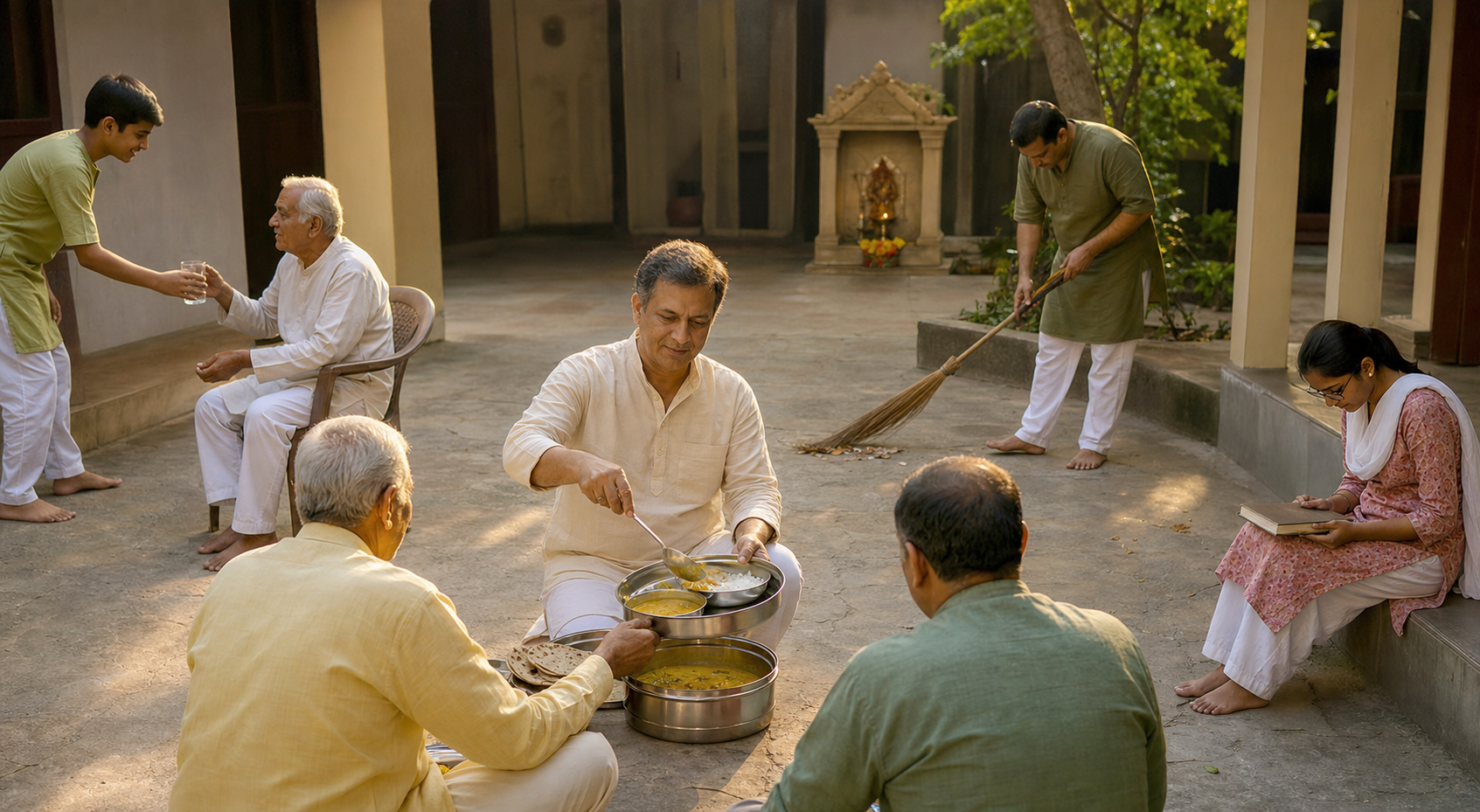
- Annadana prevents the festival from ending at the sanctum. Feeding people makes the service dimension of guru-bhakti visible and gives the whole community a place in the observance.
The theological centre of these practices is guru-tattva. In the Dattatreya understanding, the guru embodies an integrated wisdom of creation, preservation, and transformation. Worship is therefore not meant to encourage passive dependence on a personality. It should help you recognise divine presence more widely and respond with ahimsa, karuna, disciplined duty, and seva.
That gives you a practical way to assess any ritual. After the flowers have been offered and the aarti has ended, ask whether the practice made your speech less harmful, your judgement steadier, and your service more generous. If nothing crosses the threshold from shrine to conduct, the outer form has not yet completed its work.
A home observance built around attention, not display
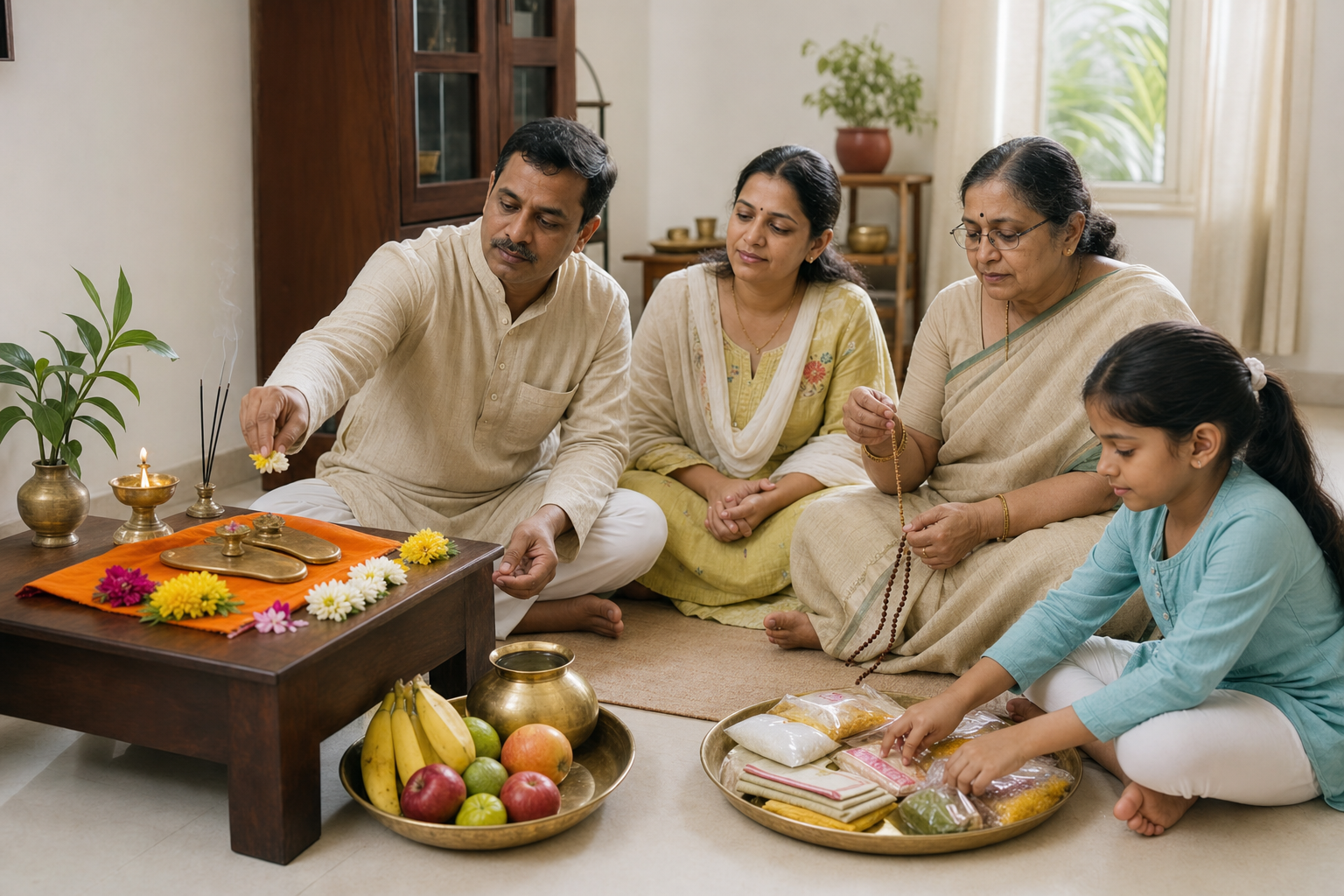
You do not need an elaborate installation to observe Prakat Din meaningfully. If your family has an inherited paddhati, preserve it. Otherwise, the following sequence gives the day a clear shape without turning worship into a test of purchasing, decoration, or endurance.
- Choose your sankalpa before the day begins. Make it specific enough to guide you: remembrance of the guru, restraint in speech, completion of a neglected duty, study, or service. A concrete intention is easier to carry beyond the puja than a general wish for blessings.
- Prepare a clean and modest altar. Place an image or padukas of Swami Samarth, a deepa, water, flowers, and a sattvic naivedya. Use what you can offer respectfully. Scarcity of decorative items does not prevent worship.
- Begin in the morning with snana and sankalpa. Light the deepa, settle the mind, and state the purpose of the observance. If your work or caregiving duties prevent a long morning ritual, keep the opening concise and reserve a protected period later for reading and aarti.
- Select one form of japa. Devotees commonly use Sri Swami Samarth, Om Namo Bhagavate Dattatreyaya, or Digambara Digambara Shripadavallabha Digambara. Consistency matters more than collecting several chants. Use the pronunciation and melody received in your family or devotional community when one is available.
- Give parayan an undistracted place. Read from Shri Gurucharitra or a trusted composition dedicated to Swami Samarth. Keep the phone away, pause at a passage that corrects or challenges you, and identify one instruction to apply that day.
- Keep a vrata of simplicity. Reduce unnecessary media, watch your speech, and eat sattvic food. Fasting is optional, not a measure of devotion. If it conflicts with your health, medical needs, or household responsibilities, eat simply and keep the discipline through japa, study, restraint, and service instead.
- Close with aarti, prasad, and seva. Share prasad with family or neighbours. Support annadana, volunteer at a temple or community kitchen, make an appropriate charitable offering, or care for a tree as an ecological remembrance of Akkalkot’s Vatavruksha.
If the day is crowded with unavoidable duties, keep five elements: light the deepa, recite one chosen mantra, read one meaningful passage, perform one act of service, and conclude with aarti or a quiet offering of gratitude. A small observance held with attention is more coherent than an ambitious programme performed in haste.
Families can also divide participation without dividing the purpose. One person may prepare naivedya, another read aloud, children may offer flowers, and someone else may arrange food or practical help for another household. This lets the festival teach cooperation rather than placing the entire burden on the person who usually manages domestic worship.
Going to Akkalkot: build the day around darshan and service
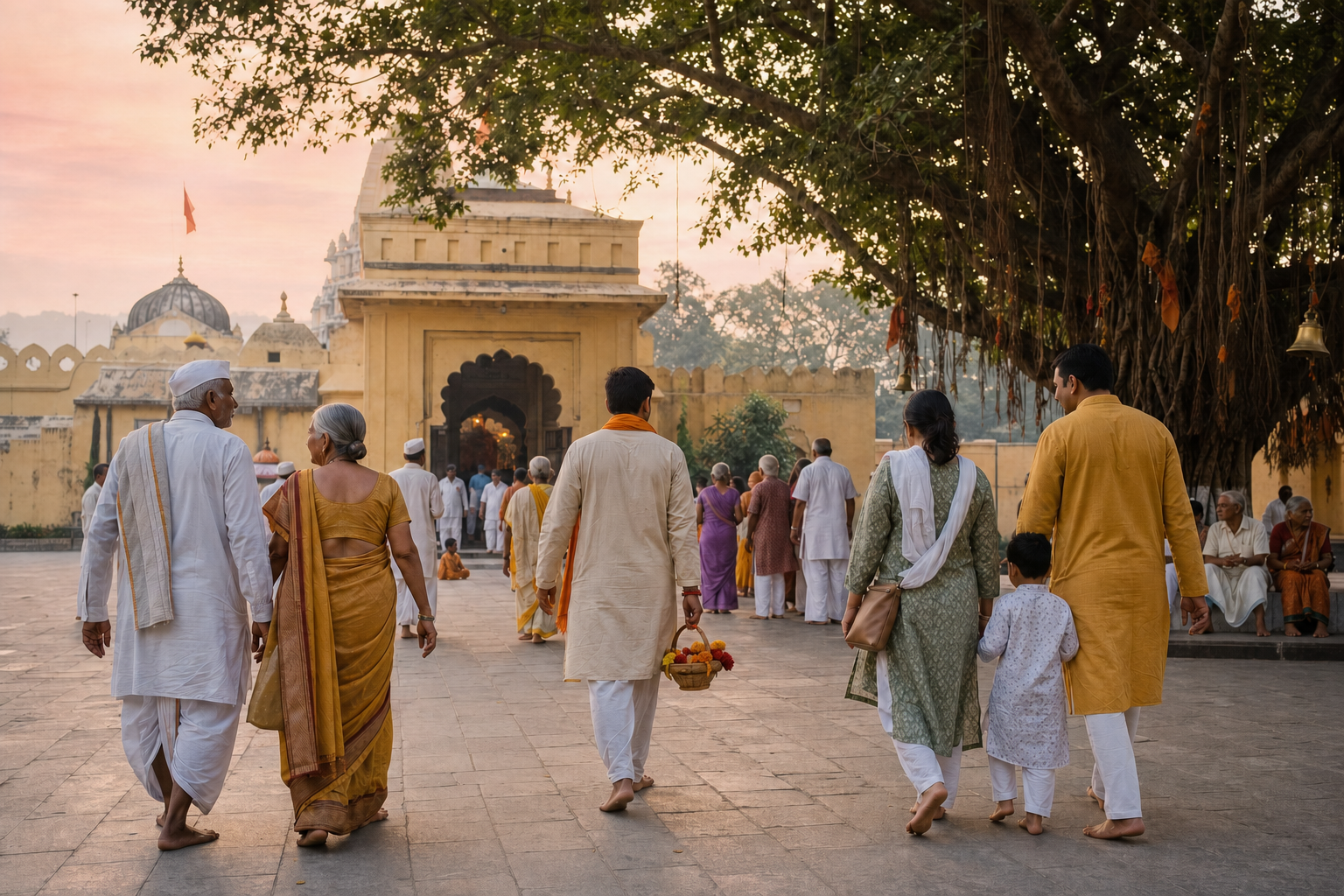
A pilgrimage to Akkalkot needs more preparation during Prakat Din than an ordinary visit. The town is roughly 40 to 45 kilometres from Solapur and is reached by road and rail, while air travellers commonly route through Solapur or Pune. Reaching the town is only the first part of the plan; festival crowds can change how much time darshan, movement, meals, and departure actually require.
The Vatavruksha precinct and Shri Swami Samarth Maharaj Math are principal focal points for darshan. Decide which worship or aarti you most want to attend before fixing your arrival and return. Otherwise, transport convenience can end up determining the spiritual centre of the journey.
- Confirm the festival schedule directly. Special aartis, extended darshan hours, and crowd-management arrangements may differ from an ordinary day. Use current announcements from the local temple or matha rather than relying only on a generic map listing or an old forwarded message.
- Leave a real queue buffer. Do not book a tightly timed departure on the assumption that darshan will take its usual duration. The delay is most likely to affect the end of your visit, when a missed rail or road connection becomes difficult to recover.
- Plan for the people travelling with you. Medication, food, rest, mobility, children, and older relatives should shape the itinerary from the beginning. Darshan gained by exhausting a vulnerable family member contradicts the care the pilgrimage is meant to deepen.
- Keep time for parayan or quiet remembrance. Moving through every visible site can leave no room to receive the atmosphere of the place. One unhurried period of japa or reading may matter more than adding another stop.
- Include service where practical. Participation in annadana or another organised form of seva keeps the pilgrimage from becoming spiritual sightseeing. Follow the arrangements of the institution rather than creating extra work for volunteers during a crowded festival.
Akkalkot’s sacred geography matters because Swami Samarth’s long residence joined teaching to a recognisable place and community. Yet pilgrimage is not complete merely because you stood in that place. Carry home one discipline you can identify clearly: a name to remember, a duty to perform without fear, a habit of speech to correct, or a form of service to continue.
Carry Akkalkot home through steadiness in daily life
Devotees often turn to the name Sri Swami Samarth during uncertainty and describe reassurance or moral clarity. Such testimony belongs to lived devotion. It should not be converted into a mechanical promise that every desired outcome will occur. Its practical force lies in helping you stop, regain equanimity, recognise your duty, and choose an ethical next action.
Historical inquiry and devotional memory need not be forced into the same category. A historian may distinguish events that can be externally verified from hagiographic accounts shaped by faith. A devotee may receive those accounts as expressions of a timeless presence. Prakat Din can hold both forms of attention as long as historical caution is not mocked and devotional meaning is not reduced to a failed attempt at modern biography.
The shared dharmic virtues associated with the day make its discipline wider than sectarian identity. Ahimsa checks the harm caused by your choices. Karuna makes another being’s difficulty morally visible. Seva turns reverence into useful work. Guru-bhakti gives these virtues continuity when emotion is weak or circumstances are difficult.
Key takeaways
- Prakat Din commemorates a sacred appearance, not a conventional birth anniversary.
- March 20 was the civil date for the 2026 observance; another year or location requires the appropriate regional panchang and local temple guidance.
- The characteristic Akkalkot pattern joins paduka abhisheka, alankara, bhajan-kirtan, parayan, aarti, and annadana.
- A practical home observance needs a clear sankalpa, simple offerings, one steady form of japa, attentive reading, a restrained day, and a definite act of seva.
- Fasting is optional. Health, necessary treatment, and household duties should not be sacrificed to make the vrata appear more severe.
- The best test comes afterward: guru remembrance should produce kinder speech, steadier duty, ethical courage, and service that reaches another being.
Choose one continuation before the next Prakat Din arrives: daily remembrance of Sri Swami Samarth, a regular passage of Datta literature, recurring service, or sustained care for a tree. The Akkalkot tradition remains living when the name heard in worship becomes courage, restraint, and generosity in the next decision you make.
References
