
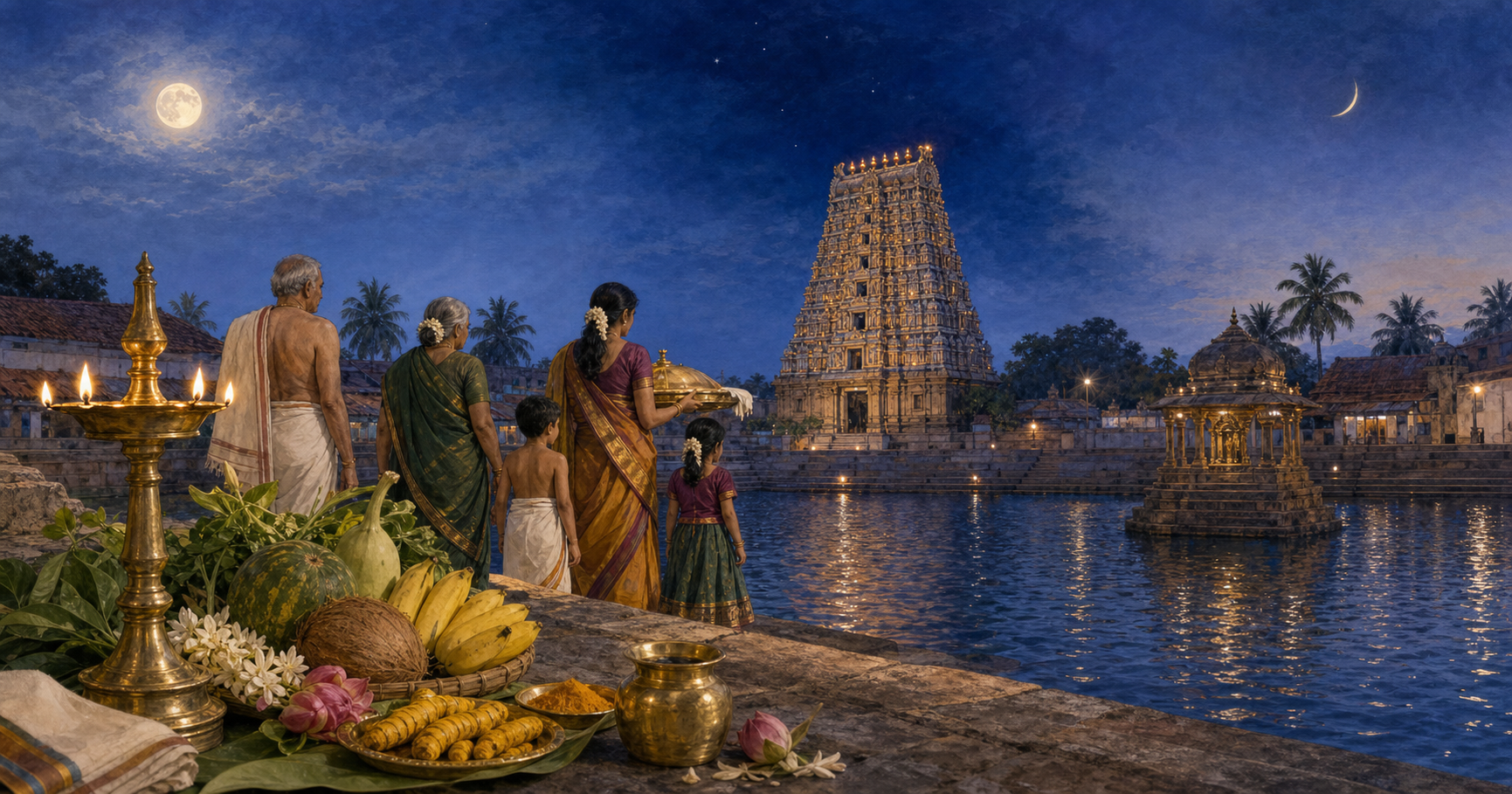
If your family keeps one panchangam while relatives in another South Indian state use a different one, January can become confusing quickly. One person says Paush Purnima, another says Pushya Masam, and a temple notice has already moved on to Magha. You do not have to choose one regional language as the only correct one.
Plan by following three things in order: the tithi, your family’s calendar tradition, and the local temple or panchangam timing. For 2026, the main sequence is clear: Shakambari Purnima on January 3, Pushya Amavasya on January 18, and Magha Masam from January 19 through February 17. That sequence gives you a workable devotional calendar even when the month names differ.
Start with the tithi, not the translated month name
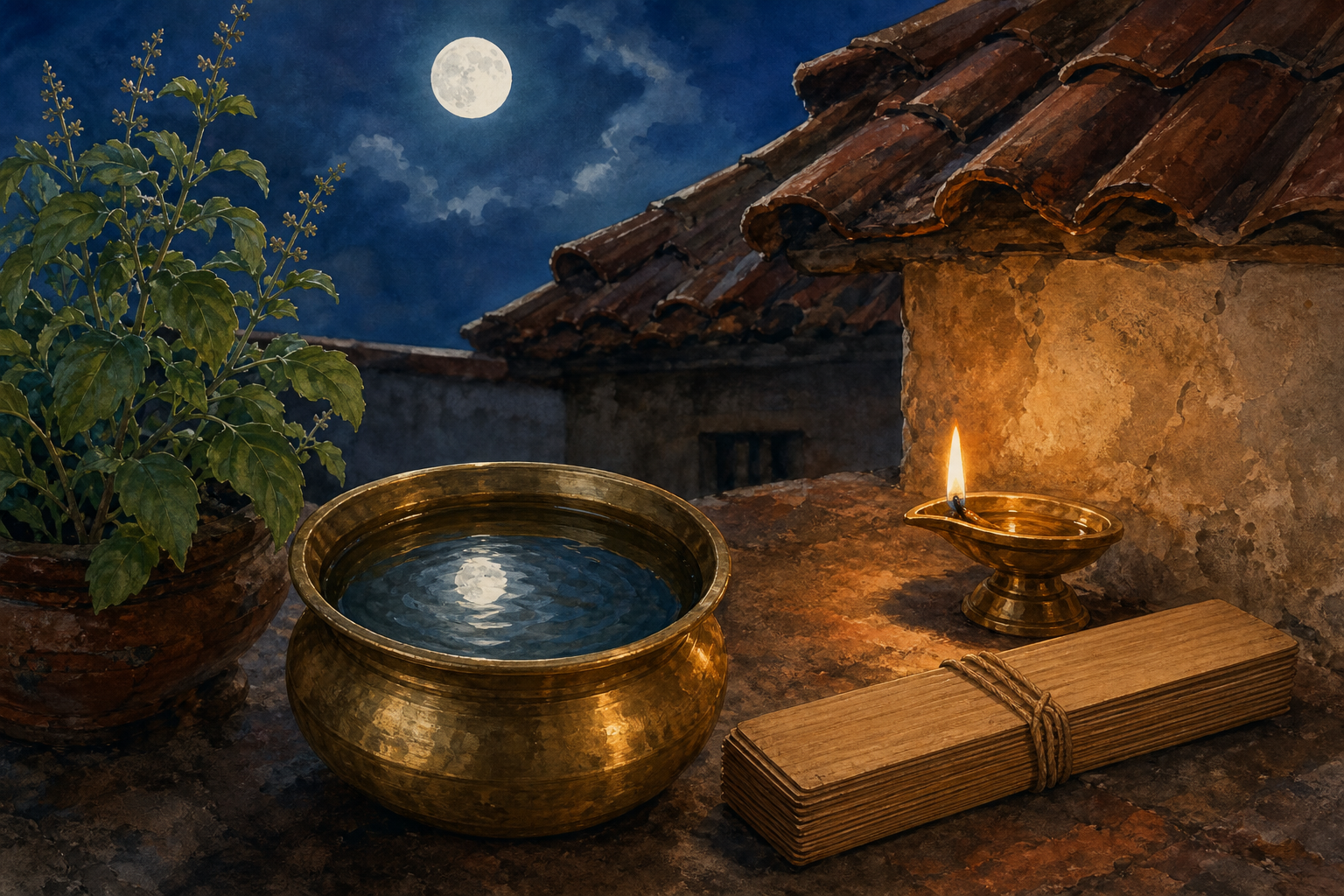
Paush, Poush and Pushya are regional forms you may encounter around the same part of the lunar year. Magha begins at a different boundary depending on whether a calendar ends its month at Amavasya or Purnima. In the Telugu and Kannada reckoning relevant here, the practical boundary is Amavasya: the new month begins after the preceding Amavasya and closes at the next one.
This is why a full-moon observance called Paush Purnima in one setting can appear within a differently named month in another calendar without changing the underlying tithi. Do not translate the month name and then assume the date. Identify the observance first, locate its tithi in your regional panchangam, and only then confirm the civil date.
| 2026 marker | Calendar meaning | What to plan |
|---|---|---|
| January 3 | Paush or Pushya Purnima; Shakambari Purnima | Devi worship, produce offerings, prasada and food charity |
| Mid-January | Pongal and Makara Sankranti form a seasonal festival layer alongside the lunar calendar | Check local temple notices rather than inferring a program from the lunar month alone |
| January 18 | Pushya Amavasya and the close of the preceding lunar month | Ancestor remembrance, daan and, at Chollangi, confluence observances |
| January 19-February 17 | Magha Masa in the Kannada calendar and the corresponding Telugu Magha Masam span | Magha snana, Shiva worship, japa, restraint and charity |
Tithi timings are local and need not begin or end at midnight. If a vrata, tarpan, sankalpa or temple puja depends on a precise window, use a panchangam prepared for your location. A national calendar is useful for orientation; it is not a substitute for the local sunrise, moonrise and tithi boundaries used in ritual decisions.
Tamil Nadu adds another layer because Pongal and Makara Sankranti shape the middle of January while Amavasya, Purnima and other tithis continue on their lunar rhythm. Kanchipuram’s January observances illustrate this intersection: seasonal festivals, lunar markers, daily worship and lineage-centered pujas can all occupy the same civil month. Keep them on one household calendar, but do not force them into a single method of reckoning.
Build your observance around three spiritual anchors
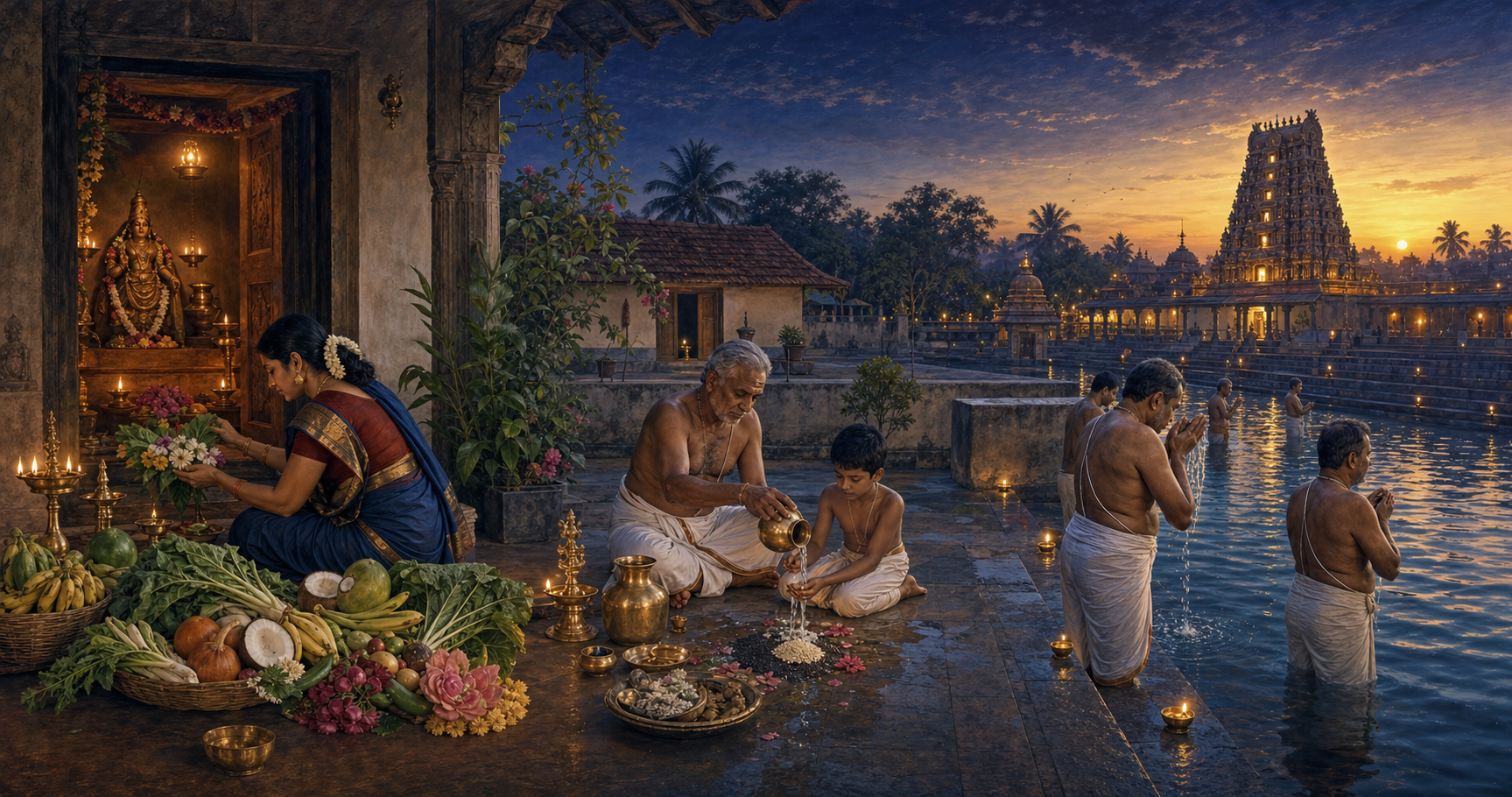
The transition from Paush or Pushya into Magha has a discernible movement. The full moon directs attention toward nourishment. Amavasya turns the mind toward remembrance and release. Magha then asks for sustained discipline. Treating these as three anchors makes the season easier to observe than collecting an unmanageable list of festival names.
January 3: offer nourishment without creating waste
Shakambari Purnima venerates the vegetable-bearing manifestation of Devi, whose forms of abundance include greens, fruits, grains and herbs. The observance is especially prominent in Karnataka, Telangana, Andhra Pradesh, parts of Maharashtra and associated Shakta communities. In many traditions, the full moon also concludes Shakambari Navaratri.
A useful household puja does not require an extravagant display. Choose seasonal produce your family can actually consume. Arrange clean greens, gourds, grains, fruit and water before the deity, add leaves or flowers if that is customary, and offer your usual stotra, mantra or quiet prayer. After puja, distribute the edible offerings as prasada or use them in a sattvic meal. The point is to honor food as grace, not to turn food into disposable decoration.
If your household observes a simple vrat until moonrise, obtain the local moonrise time and follow the form transmitted in your family or sampradaya. If it concludes a longer Navaratri sankalpa, finish that sankalpa deliberately rather than treating the Purnima as an isolated festival. Pairing the worship with anna-dana or support for a community kitchen makes the symbolism concrete: the food offered to Devi should become nourishment for living beings.
January 18: make Amavasya a boundary, not an empty date
Pushya Amavasya closes the lunar month immediately before Magha in the Telugu and Kannada spans used here. It is therefore both an observance and a calendar hinge. Set aside the practices belonging to Amavasya before beginning a new Magha discipline the next day.
In the Godavari delta, Chollangi gives this Amavasya a distinctive geographical expression. The Godavari meets the Bay of Bengal there, and the confluence is associated with tirtha-snana, pitru tarpan, lamps, sacred recitation and daan. If your family performs ancestor rites, follow its inherited procedure or seek direction from a knowledgeable priest. Details such as the sankalpa, names, gotra, substances offered and sequence of tarpan are not improved by improvisation.
You do not have to travel to mark the boundary meaningfully. At home, you can keep the morning quiet, remember departed family members, light a lamp, undertake the recitation familiar to you and give food or another useful form of charity. The essential decision is simple: complete Amavasya remembrance before launching the next month’s vrata.
January 19-February 17: choose a Magha rule you can sustain
Magha Masam is not only a collection of auspicious days. Its characteristic strength comes from repetition: dawn purification, Shiva bhakti, japa, self-restraint and dana carried through the month. A smaller practice kept steadily is more coherent than an ambitious first week followed by abandonment.
- Choose one daily anchor. Bathe in the morning as health and climate permit, light a lamp, and complete a fixed prayer or round of japa before ordinary work takes over.
- Choose one Shiva-centered weekly anchor. Kannada households may keep a Somavara vrata, arrange Rudrabhisheka, recite Shiva mantras or join temple worship. Telugu devotees may include Sri Rudram and other inherited hymns.
- Choose one form of material restraint. Keep meals sattvic, reduce an indulgence, or simplify consumption so that tapas changes an actual habit rather than remaining an idea.
- Choose one recurring act of dana or seva. Food distribution, temple service and direct help to someone in need all prevent private discipline from becoming self-absorption.
- Mark Magha Purnima, Mauni Amavasya and any vrata conclusion only after checking your regional panchangam. Do not copy a date from a calendar that uses a different month boundary.
Magha snana traditionally emphasizes bathing at dawn, including at rivers and other sacred waters. At home, reverence and regularity matter more than attempting a journey you cannot manage safely. The outer act supports inner clarity; it should not become a test of endurance that ignores age, illness, severe weather or unsafe water conditions.
Plan the pilgrimage as carefully as the puja
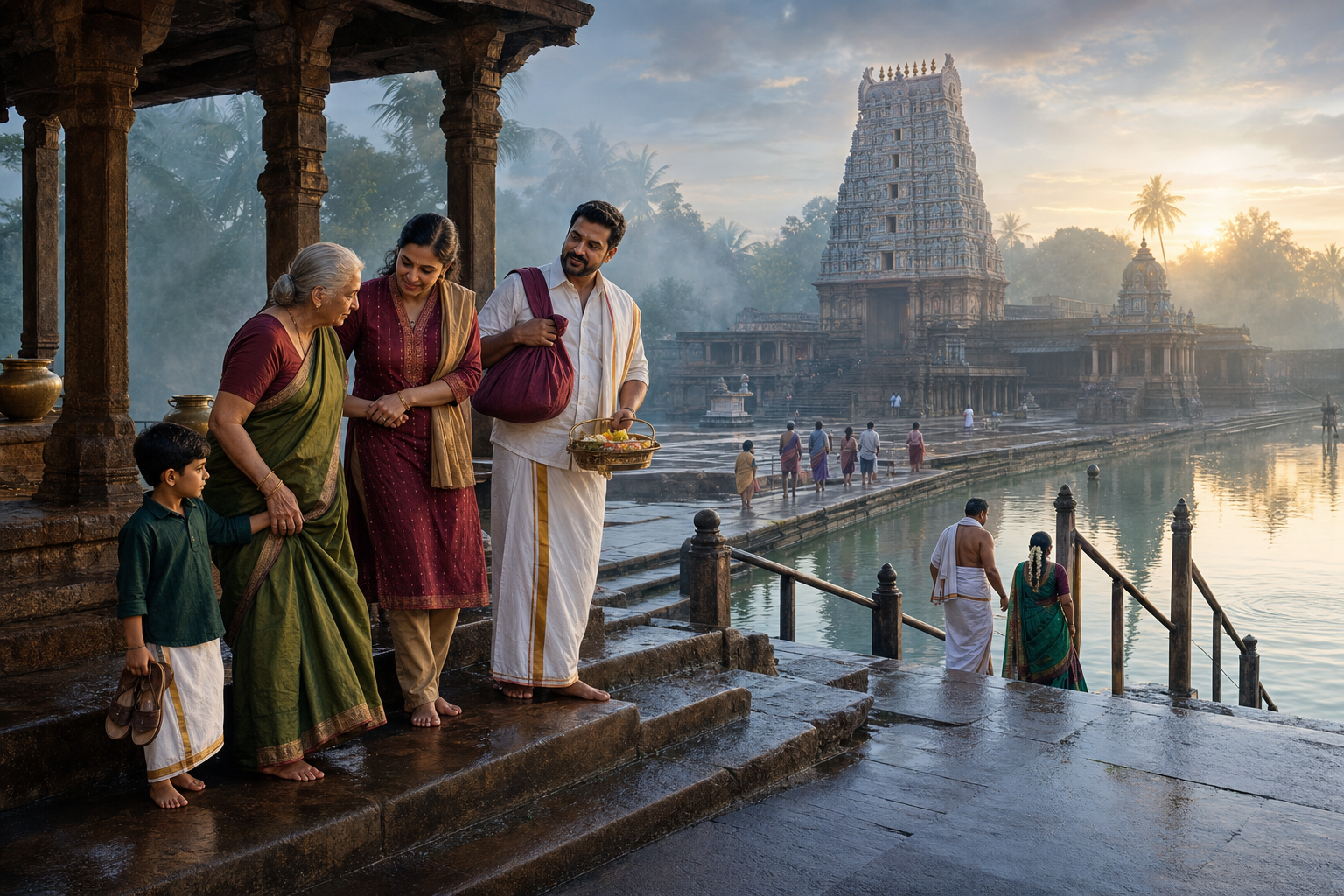
A sacred date tells you why to go. It does not tell you when the tide will turn, how long a queue will take, or whether a special ritual requires registration. Pilgrimage planning therefore needs two confirmations: the religious timing from a local panchangam and the practical conditions from the site or temple.
For Chollangi on January 18, confirm the locally observed Amavasya window, sunrise conditions and tide information before entering the confluence area. Use an established bathing place, heed local safety directions, and do not step into unfamiliar or turbulent water merely to imitate a customary snana. Children, older relatives and anyone with limited mobility should remain where footing and supervision are reliable. Carry offerings in a way that leaves no plastic, cloth, food packaging or ritual debris on the shoreline.
For Kanchipuram, consult current notices from Kanchi Kamakoti Peetham or the temple you intend to visit. January programs can intensify around Amavasya, Purnima and mid-month seasonal celebrations, while the exact vishesha puja schedule is released locally. Allow extra time near festival peaks. Early-morning darshan or evening deepa aradhana may offer a quieter devotional rhythm, but the current temple notice should decide your arrival plan.
Keep a home observance ready as a complete alternative, not a consolation prize. A missed journey need not become a missed tithi. Prepare the lamp, text, offering and charity beforehand so that weather, crowds or travel disruption do not erase the day from your practice.
Carry nourishment, restraint and service through the season
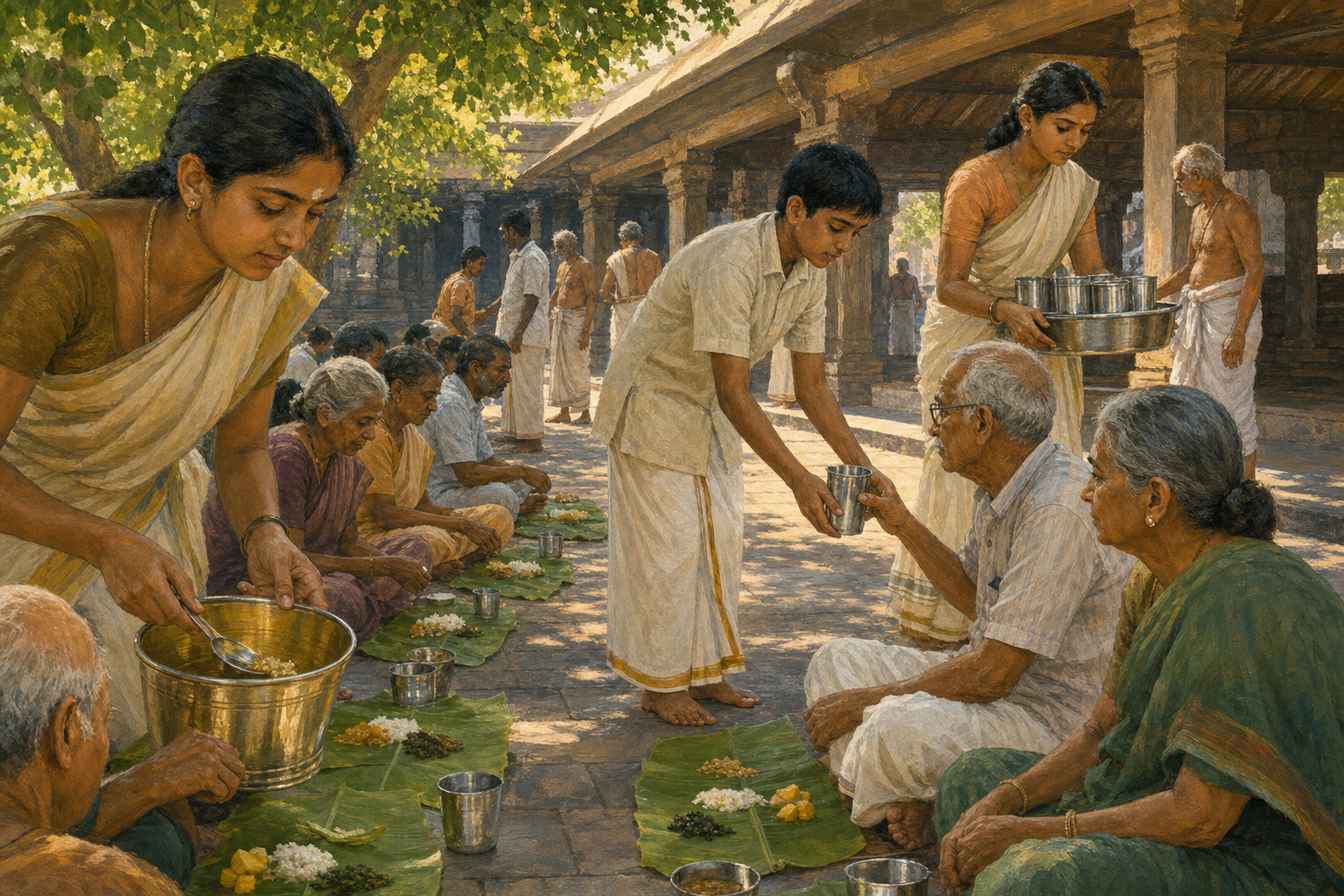
The most coherent thread from Shakambari Purnima into Magha is ethical rather than merely calendrical. Food is received with gratitude, appetite is disciplined, ancestors are remembered, and some part of one’s resources returns to the community. You can make that thread visible through a few concrete choices.
- Buy only as much produce for Shakambari worship as can be cooked, shared or distributed promptly.
- Keep edible offerings clean and separate from non-food decorations so they can become prasada rather than refuse.
- Decide the recipient of your anna-dana before the puja. A vague intention to donate later is easily lost once the festival ends.
- At a river, tank, estuary or beach, take every non-natural item away with you. Ecological care is part of honoring the water, not an optional activity after worship.
- If a food fast is unsafe for you, keep the vrata through prayer, simplicity, silence, japa or seva instead. A discipline that harms the body or conflicts with necessary medical care misses its purpose.
- At the end of Magha, review one habit rather than merely counting completed rituals: what did you consume less carelessly, share more reliably, or practice more steadily?
This ethical thread also provides a respectful meeting ground across dharmic traditions without pretending that their rituals are interchangeable. Hindu and Jain vocabularies of ahimsa and dana, Buddhist emphases on karuna and virtue, and Sikh practices of seva, simran and langar all give disciplined care a public form. Buddhist Magha observances, Jain austerity and Sikh service remain rooted in their own teachings; their shared moral resonance does not erase those distinctions.
In a family or community containing more than one dharmic lineage, keep each tradition’s liturgy intact and cooperate where the practice genuinely converges: preparing a meal, supporting a kitchen, serving elders, cleaning a sacred site or setting aside resources for someone in need. Unity becomes credible when it produces service while leaving room for difference.
Key takeaways for your 2026 calendar
- Use the tithi first, your regional month reckoning second, and the current local panchangam or temple notice for exact timing.
- Mark January 3 for Shakambari Purnima and connect Devi worship with seasonal produce, usable prasada and food sharing.
- Mark January 18 for Pushya Amavasya. Complete ancestor remembrance and Amavasya charity before beginning Magha observances.
- Mark January 19 through February 17 as the Telugu and Kannada Magha span used here.
- Build Magha around one daily practice, one Shiva-centered weekly practice and one recurring act of dana or seva.
- For Chollangi or Kanchipuram, verify physical conditions and current local arrangements in addition to ritual timing.
Open your family panchangam now and mark the three anchors. Beside each date, write one ritual action and one act of service. Then confirm moonrise, tithi windows and temple arrangements locally. That small amount of preparation will let the Paush-to-Magha transition become a sustained sadhana instead of a cluster of dates noticed too late.
References
- DharmaRenaissance Blog – Shakambari Purnima 2026: Sacred Full Moon of Nourishment, Date, Meaning, and Traditions
- DharmaRenaissance Blog – Magha Masa 2026 in the Kannada Calendar: Sacred Dates, Rituals, and Shiva Puja Insights
- DharmaRenaissance Blog – Chollangi Amavasya 2026: Experience the Sacred Godavari-Sea Confluence on Pushya Amavasya
- DharmaRenaissance Blog – Magha Masam 2026 (Telugu Calendar): Auspicious Dates, Shiva Worship, and Sacred Practices
- DharmaRenaissance Blog – Kanchi Kamakoti Peetham January 2026: Inspiring Guide to Vishesha Pujas and Festivals
