

If Sharad Purnima, Kartik Snan, Tulsi Vivah and Bhishma Panchak look like separate entries on your calendar, the difficult part isn’t finding more rituals. It is turning the sequence into a devotional rhythm that your household can actually sustain.
In 2026, Sharad Purnima falls on October 25. The North Indian Kartik Snan cycle begins the next day and continues through November 24. That immediate transition gives you a practical framework: open the month deliberately, keep one modest daily discipline, intensify it on the principal observances, and close what you began.
See one devotional movement, not a pile of festivals

Sharad Purnima is the threshold. In the Kojagari observance, Lakshmi Puja and jagran direct the mind toward wakefulness, receptivity and gratitude. For the October 25 observance in 2026, Nishita Kaala is treated as the preferred period for Lakshmi Pujan, while Pradosh Kaala provides another recognised worship period.
The next morning, the emphasis changes from a festival-night observance to repetition. Kartik asks whether the attention awakened on one sacred night can survive ordinary mornings, workdays and household demands. That is why the month becomes more meaningful when you treat it as a vow with a beginning and an end rather than as a succession of special dates.
A useful way to read the cycle is:
- Sharad Purnima: become attentive and state your intention.
- Kartik: repeat a small discipline until it becomes steady.
- Prabodhini and Tulsi Vivah: renew devotion through an important household and Vaishnava observance.
- Bhishma Panchak: deepen the discipline during the final five days.
- Kartik Purnima: complete the vow consciously rather than merely allowing the dates to run out.
Before Sharad Purnima, write a one-sentence sankalpa. Name the practice, the calendar you are following and the intended closing tithi. A workable sentence is: “From Sharad Purnima through Kartik Purnima, I will maintain this daily act of worship and return to it promptly whenever a day becomes difficult.” Keep the promise concrete enough that you can tell whether you fulfilled it.
Choose your calendar before choosing your vow
The first practical decision is not how much tapas to undertake. It is which panchanga governs your observance. Kartik does not occupy identical civil dates in every regional calendar.
In North Indian Hindi calendars, Kartik Snan in 2026 runs from October 26 through November 24. Gujarati, Marathi, Telugu and Kannada calendars begin their Kartik Snan cycle on November 10 and follow a different regional reckoning. You should not combine the northern starting date with a regional ending date and call the result a universal Kartik month.
Differences of this kind do not automatically mean that one calendar is wrong. Lunar months, tithis and festival conventions are applied through regional and sampradaya-specific systems. A date encountered online is therefore useful only after you know which system it represents.
Resolve the calendar in this order:
- Follow an established family or sampradaya tradition when you have one.
- Use the calendar observed by the temple or acharya with whom you will actually worship.
- Select a panchanga calculated for your location, because a tithi or muhurta cannot safely be transferred between distant places without checking local timing.
- Record both the sacred tithi and the corresponding civil date. The tithi explains what you are observing; the date tells your household when to prepare.
- Resolve Tulsi Vivah before the week arrives. Do not perform it on several dates merely because different traditions appear in one search result.
The last point matters in 2026 because Tulsi Vivah may be observed on Prabodhini Ekadashi, Ksheerabdi or Chilku Dwadashi, or Kartik Purnima. The corresponding planning dates are November 20, November 21 and November 24. These are alternatives rooted in observance traditions, not three compulsory repetitions of the same rite.
Build a daily rule that can survive an ordinary day
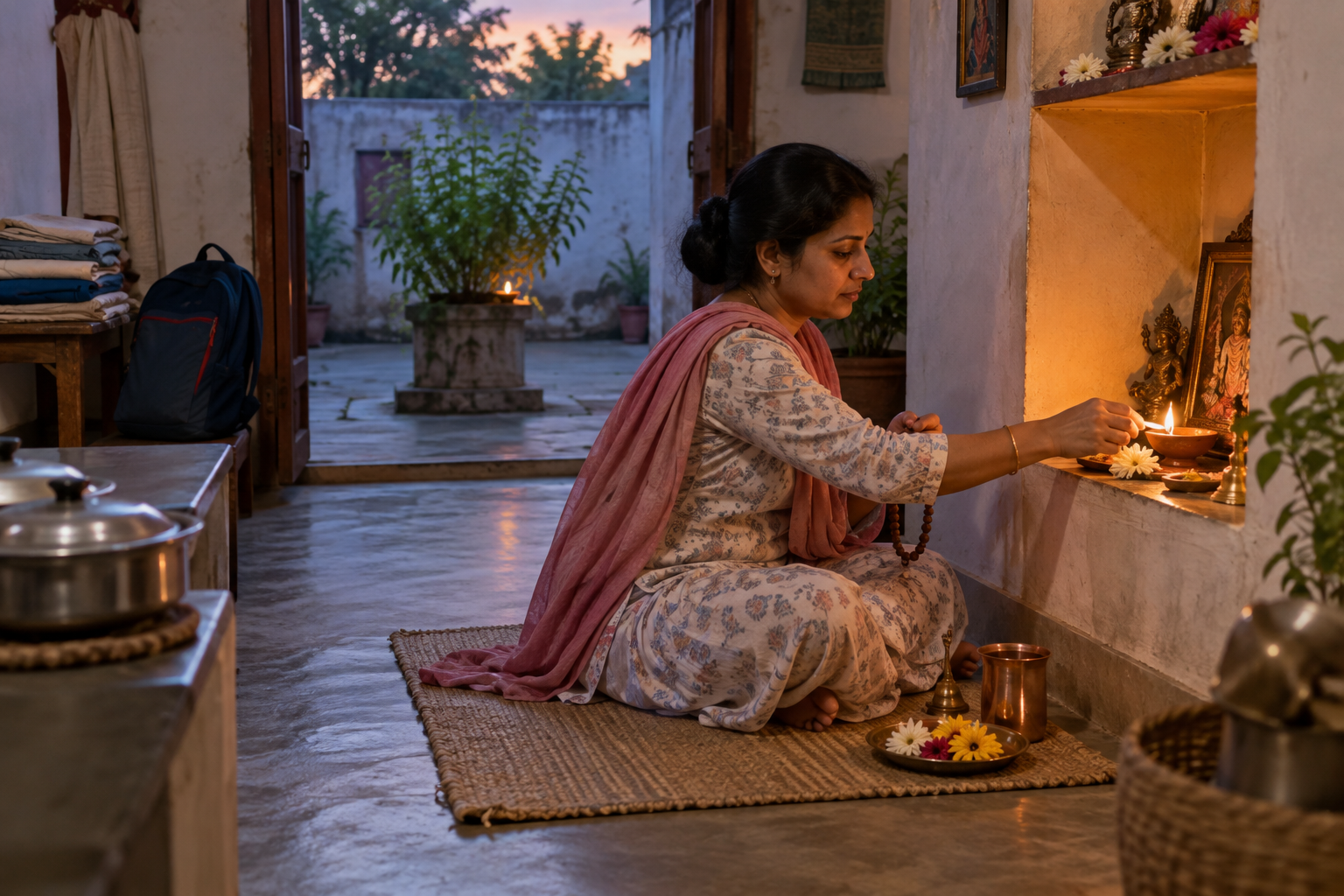
A devotional month is usually lost through an oversized promise, not through a lack of reverence. If your rule works only on holidays, it is not yet a daily rule. Start with what you can maintain on a workday, during travel or when the household is busy.
- Fix a daily base. Choose a regular sequence such as bathing, cleaning the worship space, lighting the lamp, offering prayer, and completing your chosen nama-japa, mantra or patha. Use the practice already authorised within your family or lineage rather than collecting unfamiliar observances for novelty.
- Add only one Kartik-specific discipline. This could be the snan customary in your tradition, additional japa, a regular lamp offering, a restraint you understand, or a defined act of seva. One sustained addition teaches more than a crowded list abandoned after the opening days.
- Decide what the household shares. A common lamp, prayer or evening worship can hold the family together even when individual members maintain different levels of practice.
- Create a return rule. If you miss an observance through circumstances, do not let embarrassment end the month. Resume at the next appropriate opportunity and seek tradition-specific guidance if your vrata has formal rules of expiation or completion.
- Protect the closing days now. Put the major dates into the family calendar before work and social commitments fill them.
Kartik Snan traditionally centres on an auspicious bath, especially in a sacred river. If such access is genuinely available, plan the journey, safe entry and worship rather than treating the trip as an improvised outing. Do not enter dangerous water, ignore local restrictions or force a cold-water austerity beyond your capacity. If pilgrimage is not possible, maintain bodily cleanliness and morning remembrance at home, but do not make inflated claims that every convenient substitute is identical to tirtha-snan. Devotion does not require careless language or unsafe conduct.
The bath should begin the day’s recollection, not become its only accomplishment. Connect it to prayer, restraint and conduct. Otherwise, a sacred action can shrink into a checked box while the rest of the day remains untouched.
Give the principal days distinct jobs

You do not need the same intensity every day. The more sustainable pattern is a modest daily foundation with deliberate deepening at the cycle’s major points.
Sharad Purnima: establish the sankalpa
On October 25, prepare the worship space before the desired puja period. Keep the items required by your family’s Lakshmi Puja paddhati ready, settle who will participate, and decide whether your observance will use Pradosh Kaala, Nishita Kaala or both where customary. Since Kojagari is closely associated with keeping vigil, Nishita Kaala carries particular importance for Lakshmi Pujan.
A jagran should contain worship, remembrance or sacred recitation; merely remaining awake while distracted misses its devotional purpose. If a complete vigil is not appropriate for your health, age or responsibilities, decide the safe form of participation with your family or spiritual guide. Do not turn wakefulness into a contest.
The Kartik mornings: protect continuity
Once the opening night is complete, reduce the friction around your daily rule. Keep the worship place clean, put necessary items where they can be reached, and agree on a regular household sequence. Preparation done once is more dependable than relying on fresh enthusiasm every morning.
Mark completion privately if that helps you remain attentive, but do not let tracking replace worship. The useful question is not whether the month looks impressive from outside. It is whether the repeated practice is making your attention, speech and conduct more disciplined.
Tulsi Vivah: follow one living tradition
Tulsi Vivah centres on the worship of Tulsi and Shaligram during Kartik. Because established customs place it on different tithis, confirm whether your tradition observes it at Prabodhini Ekadashi, the following Dwadashi, or Kartik Purnima. In the relevant 2026 sequence, those options fall on November 20, November 21 and November 24.
Once the date is settled, treat it as a household observance rather than a scheduling puzzle. Clean and prepare the Tulsi worship area, identify the puja procedure your family follows, assign practical responsibilities, and arrange the needed materials in advance. If you have no inherited paddhati, ask the temple or acharya whose calendar you are following instead of assembling a rite from unrelated fragments.
Bhishma Panchak: deepen the final stretch
Bhishma Panchak runs from November 20 through November 24 in 2026. The five-day vrata ordinarily begins with Utthana or Prabodhini Ekadashi and concludes on Kartik Purnima.
This is best understood as an intensification of the Kartik discipline already underway, not as an unrelated programme placed on top of it. Preserve your daily base, reserve more attention for worship, and reduce optional demands where you can. If your lineage prescribes detailed vrata rules, follow that guidance rather than inventing severity. The value of the final five days lies in concentrated faithfulness, not in performing the harshest-looking version available.
Kartik Purnima: complete the vow explicitly
November 24 closes both the North Indian Kartik Snan period and Bhishma Panchak in this 2026 calendar. Do not allow the vrata to disappear silently after the last morning. Complete the concluding worship prescribed by your tradition, acknowledge what you were able to maintain, and close the sankalpa with gratitude.
Then choose what should remain part of ordinary life. You may not continue the entire festival discipline, but one practice that became steady during Kartik can become your nitya foundation. That is a stronger outcome than finishing an elaborate month and dropping every element the next day.
Key takeaways for your 2026 observance
- Use Sharad Purnima on October 25 to state the intention that will guide the cycle.
- For the North Indian calendar, Kartik Snan begins October 26 and ends November 24; several western and southern regional calendars begin it on November 10.
- Choose one calendar through family, sampradaya or local-temple practice before fixing dates.
- Make the daily vow small enough to survive an ordinary workday, then deepen it on major observances.
- Confirm whether your Tulsi Vivah tradition uses November 20, November 21 or November 24.
- Keep November 20 through November 24 available if you intend to observe Bhishma Panchak.
- Close the vrata consciously on Kartik Purnima and retain one sustainable practice afterward.
Your next step is simple: identify the panchanga your household will follow, write down the opening and closing dates, and settle one daily discipline before Sharad Purnima arrives. Once those decisions are made, the sacred month no longer depends on last-minute enthusiasm.
References
- Hindu Pad — Kojagari Lakshmi Puja Muhurat 2026 | Time for Nishita Kaala Lakshmi Pujan, Pradosh Kaala Lakshmi Pujan
- Hindu Pad — Kartik Snan 2026 dates | Karthika Snanam, ritual bath in Kartik Month
- Hindu Pad — Bhishma Panchak 2026 | Bheeshma Panchaka Vratam during Kartik Month
- Hindu Pad — Tulsi Vivah 2026 | Tulsi Shaligram Puja during Kartik Month

Leave a Reply
You must be logged in to post a comment.