
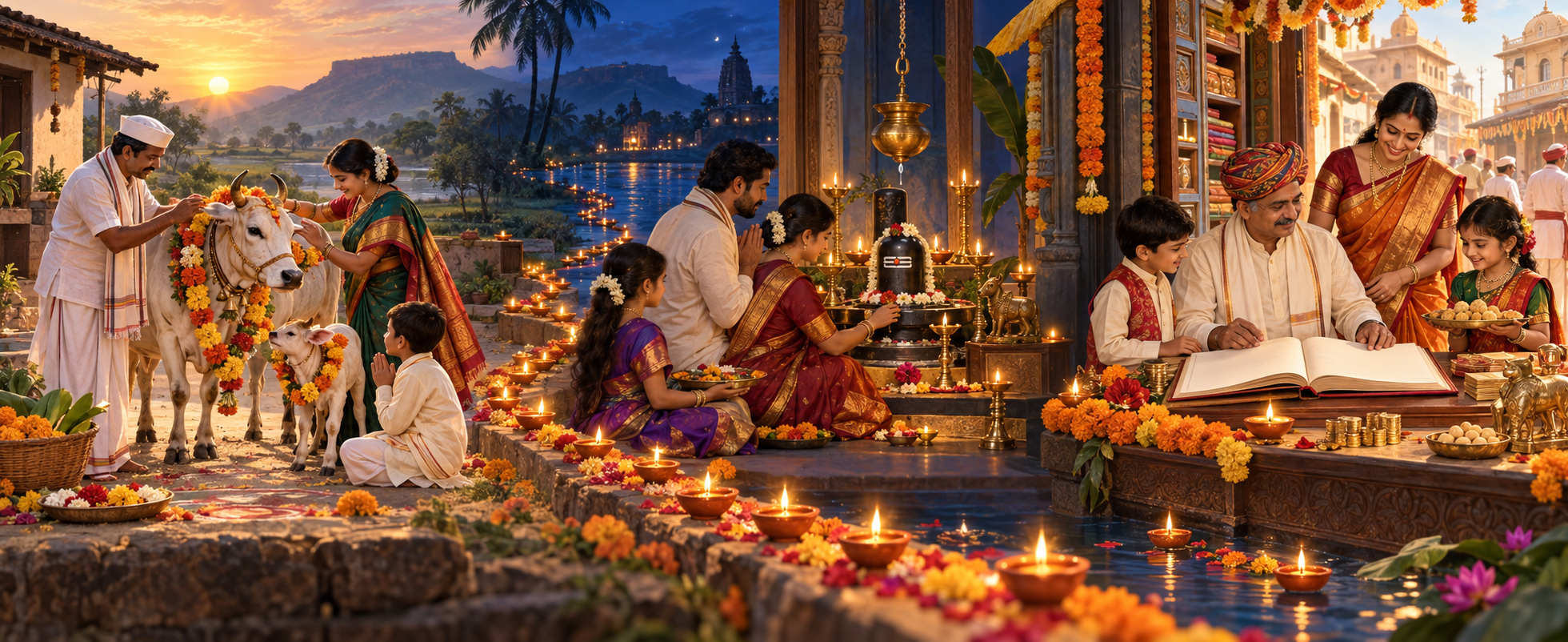
If one family calendar says Diwali begins on November 5, another centres it on November 8, and a business reopens ceremonially on November 14, the calendars are not necessarily contradicting one another. They may be marking different observances within the same festival season.
For 2026, the useful question is not simply, “When is Diwali?” Ask which regional or household observance you mean, who keeps it, and what its tithi requires. That distinction will help you plan without flattening Maharashtra’s Vasubaras, the Kedara Gauri vrata of Deepavali Amavasya, or Labh Pancham into one generic celebration.
The dates form a sequence, not competing answers
These three observances give Diwali a clear arc: reverence at the opening, worship on Amavasya, and an auspicious return to work at the close. They do not constitute an exhaustive Diwali calendar. Other household and regional rites may occupy the intervening days, so an apparent gap should not be read as an empty one.
| Observance | Regional or household setting | Tithi | 2026 date | What it marks |
|---|---|---|---|---|
| Vasubaras, Vasu Baaras or Govatsa Dwadashi | Maharashtra; called Vaag Baaras in Gujarat | Ashwin Krishna Paksha Dwadashi | November 5 | Honouring cows and, in Maharashtra, opening the Diwali season |
| Kedara Gauri Vratham or Kedareshwara Gowri Vratham | Households that maintain this Shaiva vrata, commonly involving a married woman or married couple | Deepavali Amavasya | November 8 | Worship of Kedareshwara, a name of Lord Shiva |
| Labh Pancham, Laakheni Panchami or Saubhagya Panchami | Families and business communities that observe the Diwali closing day | Kartik Panchami | November 14 | An auspicious resumption or beginning of business activity |
Because these observances are fixed by tithi rather than by a permanently fixed Gregorian date, use the dates above for advance planning and a location-appropriate panchang for the final worship window. A date tells you which civil day to reserve; your family parampara and local calendar settle the ritual details.
Vasubaras begins with reverence for the cow
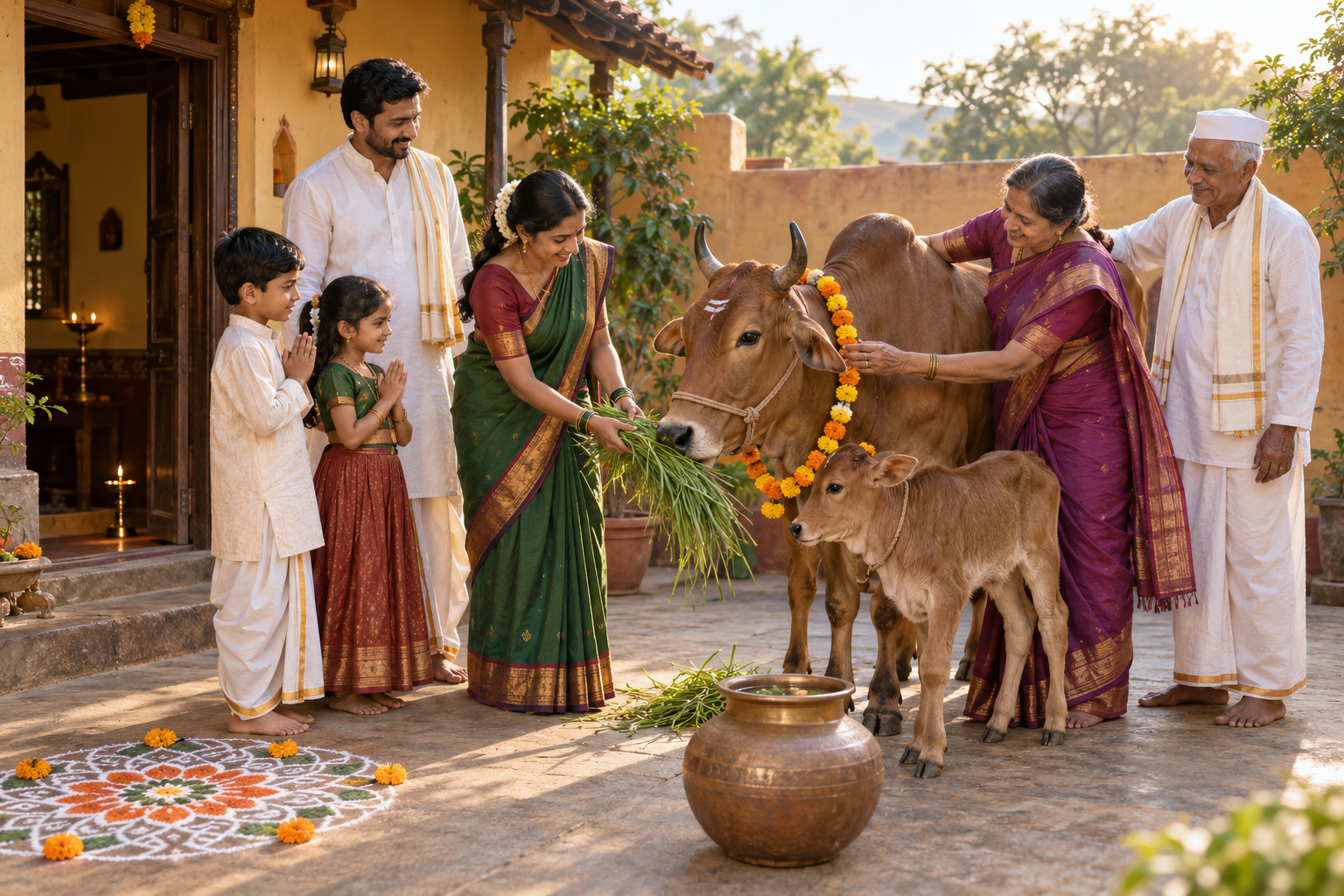
In Maharashtra, Vasubaras marks the beginning of Diwali and honours cows on Ashwin Krishna Paksha Dwadashi. The same observance is also known as Govatsa Dwadashi, while Vaag Baaras is the name used in Gujarat. Those names are not decorative synonyms. They tell you which regional vocabulary a household has inherited.
If your Maharashtrian family treats November 5 as the first Diwali day, put it into the family calendar as the opening observance rather than as an optional preliminary. Ask an elder which name the family uses and whether its practice has been maintained consistently. That one question often reveals more than a generic internet checklist because it identifies the living tradition you are actually trying to continue.
The dependable ritual centre is the honouring of cows. Do not manufacture certainty about offerings, mantras, fasting rules, or the order of worship when your household practice is unknown. Those details can differ. Record them from the family member, temple, or priest who guides your tradition, and distinguish inherited instruction from a newly adopted practice.
Its position at the beginning also offers a useful way to understand the festival’s moral movement. Before prosperity is celebrated or commerce resumes, attention is directed toward a life-sustaining relationship. You can treat that as a theme for reflection without pretending that a reflection is itself a mandatory ritual rule.
Deepavali Amavasya can include a distinctly Shaiva vrata
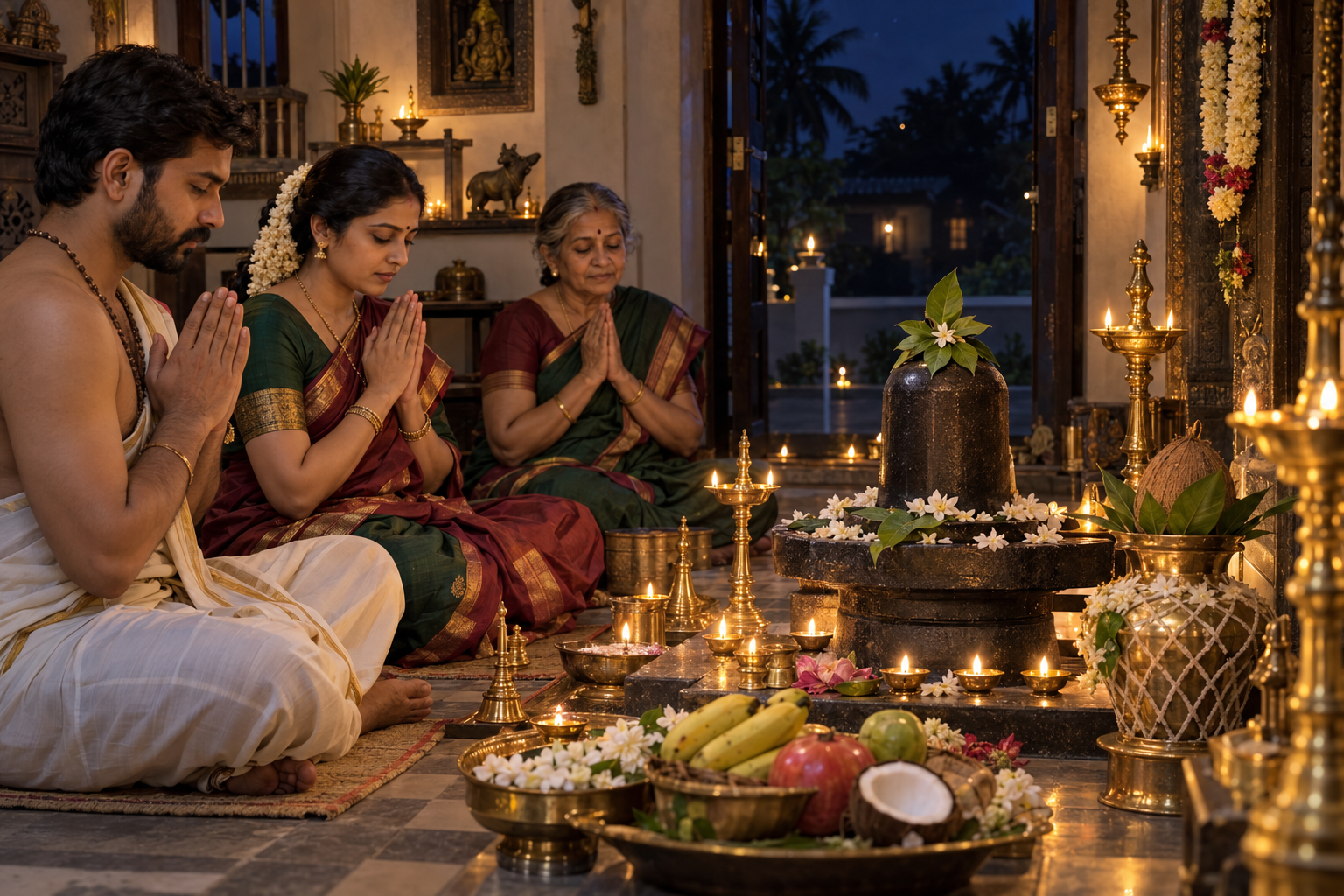
November 8 is not only a generic “main Diwali” date for every family. In households that keep Kedara Gauri Vratham, Deepavali Amavasya is devoted to the worship of Kedareshwara, another name of Lord Shiva. The observance is usually undertaken by a married woman or by a married couple.
This matters when two regional traditions meet in one home. One spouse may understand Amavasya principally through a familiar Diwali puja, while the other expects a specific vrata centred on Shiva. Treating one as “the real Diwali” and the other as an addition misses how Dharmic practice works: a shared sacred day can carry more than one legitimate ritual emphasis.
Before November 8, settle four practical questions with the person who knows the family custom:
- Does the household formally observe Kedara Gauri Vratham?
- Is the vrata undertaken by one married person or by the couple together?
- Which instructions concerning preparation, worship, or vrata discipline belong to this particular lineage?
- How will it be coordinated with the household’s other Deepavali Amavasya worship?
Do not infer from the customary role of married women or couples that every other member of the family is excluded from all Diwali worship. It identifies who usually undertakes this vrata; it does not define the entire family’s participation in the festival. That distinction prevents a specific discipline from being turned into an unnecessarily broad rule.
Labh Pancham carries Diwali back into working life
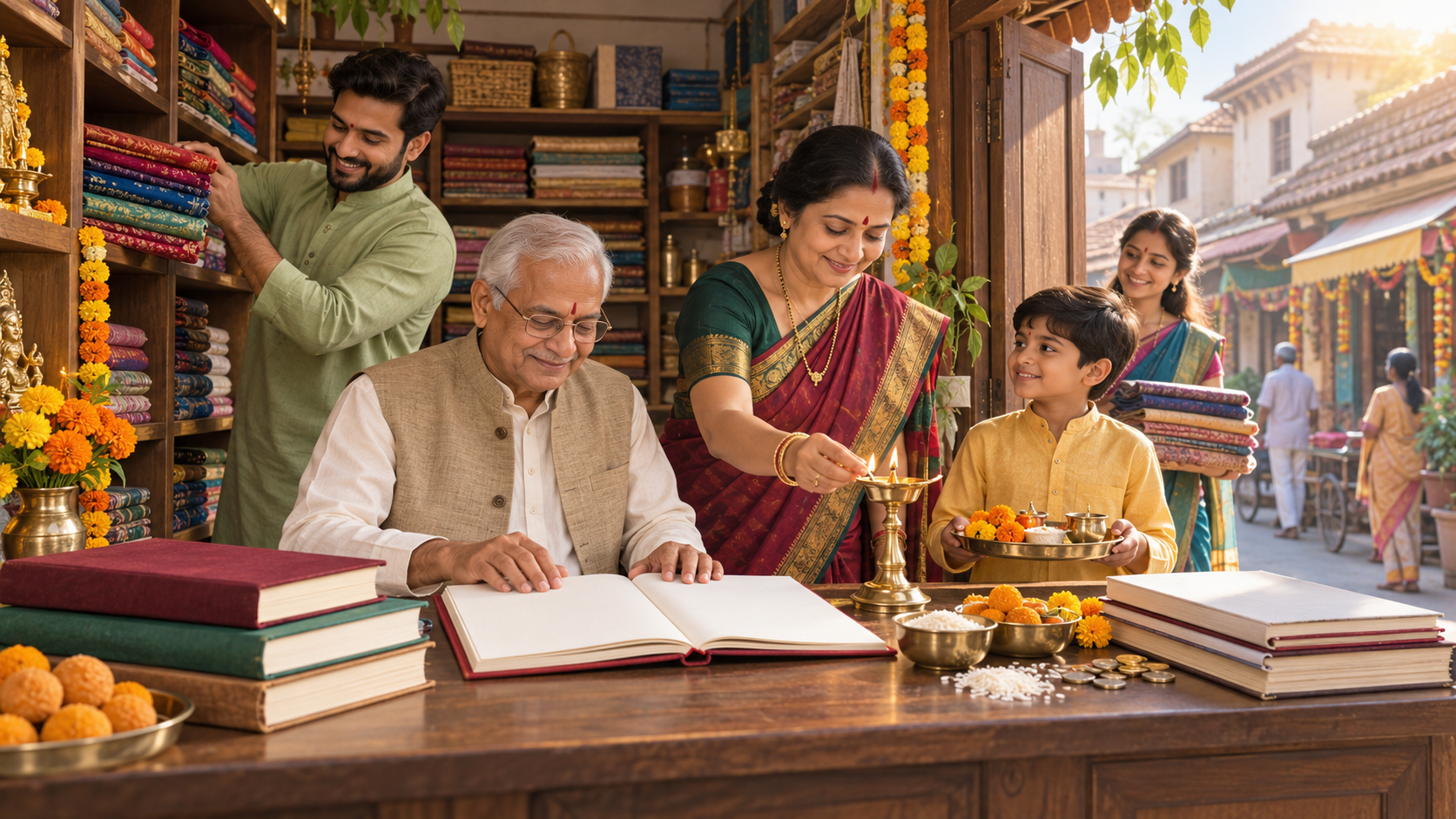
The festival sequence does not always end with Amavasya. Labh Pancham falls on Kartik Panchami, November 14 in 2026, and is regarded as Diwali’s final day. It is also called Laakheni Panchami and Saubhagya Panchami.
Its emphasis is practical. The day is considered auspicious for performing or beginning business activity, and businesspeople may reopen their accounts after Lakshmi worship. The movement is significant: prosperity is not left as a private wish made during a festival. It is connected to the disciplined resumption of work.
If you run a shop, office, or family enterprise, prepare two plans for November 14. The ritual plan should identify who will conduct or lead the Lakshmi worship and when the accounts will be opened. The operating plan should tell employees, customers, and suppliers when normal work actually resumes. Keeping the two plans together prevents a meaningful observance from becoming a vague reopening announcement.
An auspicious reopening does not replace ordinary business discipline. Continue to use the accounting, contractual, tax, and approval procedures that apply to your enterprise. The religious act gives the resumption a Dharmic orientation; it is not permission to bypass controls or treat every decision made that day as automatically sound.
Families without a business need not force the day into a commercial mould. If Labh Pancham belongs to your inherited practice, ask how your household observes it. If it does not, you can recognise its place in another community’s Diwali without inventing a ritual merely to make your calendar look complete.
Build a family calendar without flattening the traditions
A useful Diwali calendar does more than place “Diwali” across several days. It records why each day matters and who can answer questions about it. Use this five-step method:
- Enter November 5, November 8, and November 14 separately. Use the full observance names rather than labelling every entry simply “Diwali.”
- Add the governing tithi to each entry: Ashwin Krishna Paksha Dwadashi, Deepavali Amavasya, or Kartik Panchami. This keeps the lunar basis visible when you consult a local panchang.
- Write the regional or household name in parentheses. For example, note whether your family says Vasubaras, Vasu Baaras, Govatsa Dwadashi, or Vaag Baaras.
- Assign a person to confirm each custom. That may be a family elder, a knowledgeable priest, or the temple that actually serves your community. Ask about the specific vrata or puja, not “Diwali traditions” in general.
- Separate ritual commitments from logistics. Record worship preparation, family participation, travel, leave from work, and business reopening as distinct tasks.
In a household joining two regional backgrounds, do not settle the question by choosing whichever practice appears most familiar online. List both inheritances first. Then decide which rites will be shared, which will remain specific to one side of the family, and who will teach younger members what the names mean. Coexistence is easier when differences are named plainly.
Community organisers should be equally precise. Instead of announcing that Diwali has one universally sufficient date, name the observance attached to each programme. In 2026, a notice can say “Vasubaras – November 5,” “Deepavali Amavasya and Kedara Gauri Vratham – November 8,” or “Labh Pancham – November 14.” Participants can then recognise whether the event corresponds to their practice.
Key takeaways
- Vasubaras opens Diwali in Maharashtra on November 5, 2026; it honours cows and is known by regional names including Govatsa Dwadashi and Vaag Baaras.
- Kedara Gauri Vratham falls on Deepavali Amavasya, November 8, and centres on worship of Kedareshwara, or Lord Shiva, by a married woman or married couple.
- Labh Pancham falls on Kartik Panchami, November 14, closes the Diwali season, and is associated with auspicious business activity and reopening accounts after Lakshmi worship.
- The date and tithi establish the calendar framework. Your household parampara and local guidance establish the detailed practice.
Set aside ten minutes now to enter the three dates, add the name your family actually uses, and write beside each one the person who can confirm the custom. That small act turns a crowded festival calendar into a faithful map of the traditions you intend to preserve.
References
- Hindu Pad – Vasubaras 2026 | Vasu Baaras during Diwali in Maharashtra
- Hindu Pad – Kedara Gauri Vratham 2026 | Kedareshwara Gowri Vratham
- Hindu Pad – Labh Pancham 2026 | Laakheni Panchami | Saubhagya Panchami

Leave a Reply
You must be logged in to post a comment.