
You have May 1 marked for Sharabha Jayanti, but another calendar gives a regional month name, and the local temple may announce a different worship window. The date is not the difficult part. The real task is knowing which calendar detail governs your observance.
For 2026, begin with Vaishakh Purnima, confirm when that tithi operates in your location, and then fit your vrata, puja, temple visit, or family observances around it. A simple plan made from the correct local panchangam is more dependable than an elaborate ritual performed at a borrowed time.
Put May 1 on the calendar, then verify the local tithi

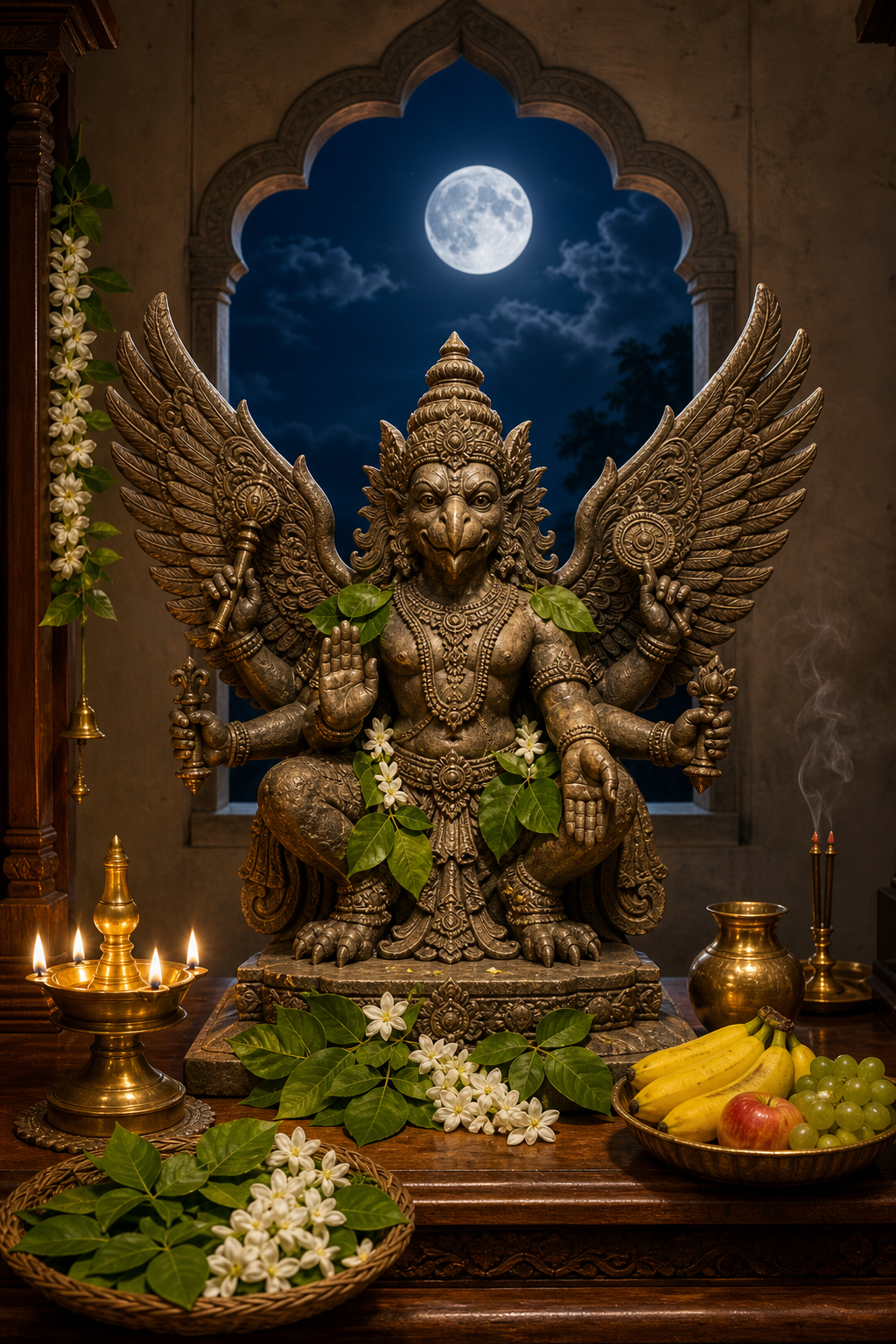
Sharabha Jayanti falls on May 1, 2026, corresponding to Vaishakh Purnima in most parts of India. The observance honours the appearance of Lord Sharabha, or Sharabheshwara Swamy, a protective and pacifying manifestation revered in Shaiva traditions.
The civil date tells you which day to reserve. The Purnima tithi tells you when to perform the religious observance. A tithi does not necessarily begin at midnight or last until the following midnight, so a calendar that lists only “May 1” is not enough for choosing your puja window.
- Select a panchangam calculated for the city where you will actually worship.
- Find the local beginning and ending times of Purnima tithi.
- Check whether your family or temple follows Purnima at sunrise, an evening or night observance, or a tradition-specific period such as pradosha.
- If you will join a temple celebration, use the temple’s announced schedule. Its priests will apply the rules followed by that sampradaya.
This location check matters especially if you live outside India. Do not merely convert an Indian worship time into your time zone. Tithi boundaries are calculated for place as well as time, so use a panchangam set to your own city.
You may also encounter different month labels. North Indian calendars place the observance in Vaishakh, while some 2026 regional almanacs relate the day to Vaigasi in Tamil usage and Edava in Malayalam usage. Lunar and solar month boundaries do not always move together, so those labels need not match word for word. Treat the locally calculated Purnima tithi and your established temple custom as the deciding factors.
Build the day around the Purnima window
Once you have the local times, arrange the day in a way you can actually sustain. You do not need to turn every part of Sharabha Jayanti into a separate ceremony.
- Before the observance: Save the local Purnima start and end times, decide whether you will worship at home or at a temple, and gather only the offerings you intend to use.
- At sunrise: Make your sankalpa if Purnima is already operating and that agrees with your custom. If the tithi begins later, wait for it rather than treating the civil date as the sole authority.
- During the day: Keep your chosen vrata, eat sattvic food if you are not fasting, restrain harsh speech, and reserve time for japa, sacred reading, dana, or seva.
- During the core puja window: Perform the main worship while Purnima prevails locally. Evening or night can support a contemplative Full Moon observance, but do not postpone the puja for moonlight if the tithi ends earlier.
- At moonrise: If you chose a sunrise-to-moonrise vrata, conclude it according to your household practice after worship and naivedya.
If Purnima spans two civil dates, the correct choice can depend on whether your tradition prioritizes the tithi present at sunrise, the evening, or pradosha. That is the point at which a family priest, temple priest, or locally trusted panchangam should settle the question. There is no responsible universal clock time for every devotee.
A complete home puja can remain simple
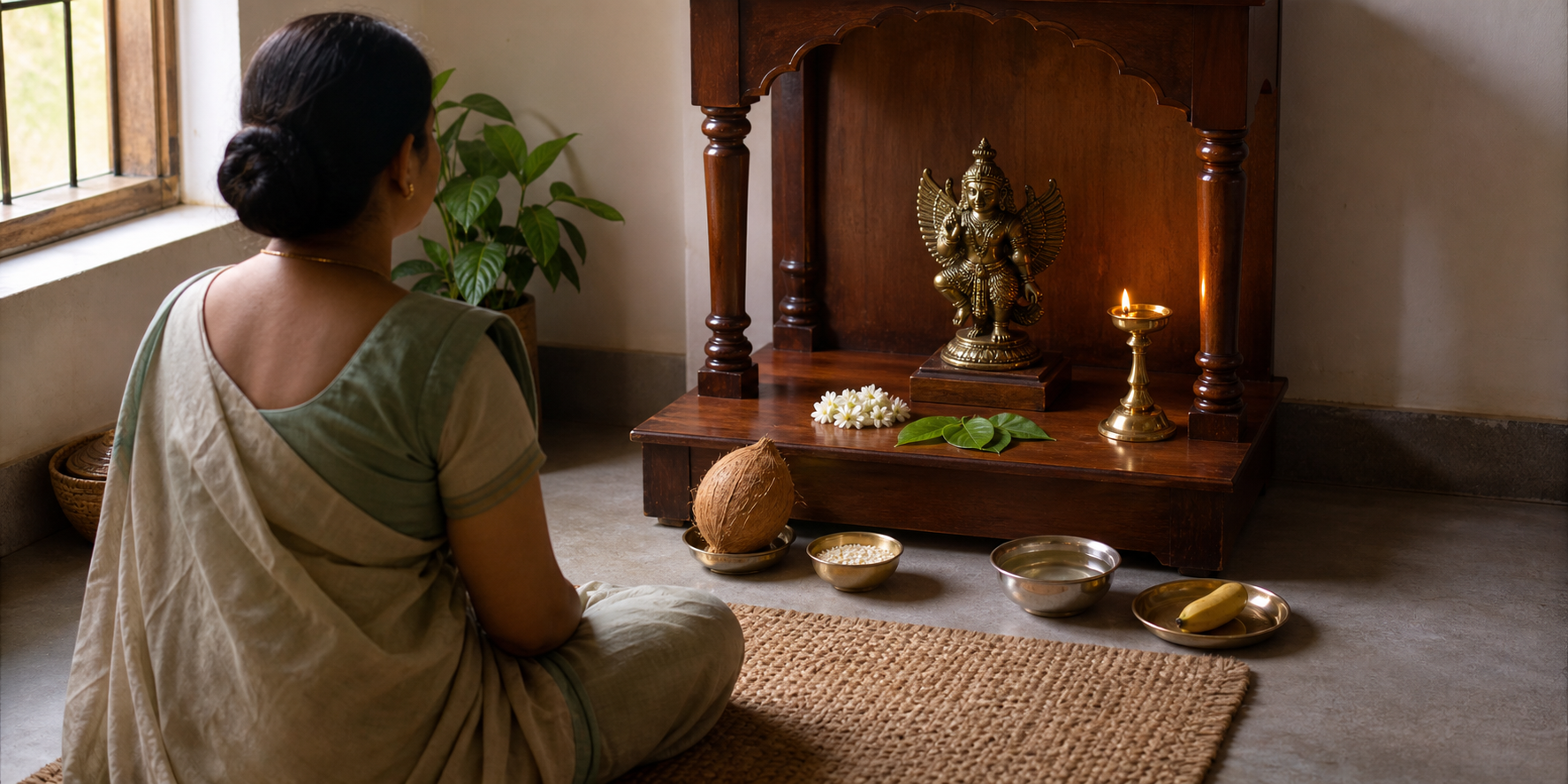
A Sharabha murti is not required for a sincere household observance. If you do not have one, place an image or murti of Lord Shiva on the cleaned altar. Use the shorter Panchopachara or fuller Shodashopachara form only if it belongs to your family practice; a focused sequence is preferable to unfamiliar ritual added for appearance.
- Clean and arrange the altar, then light a lamp with ghee or sesame oil.
- Seat the image or murti of Lord Sharabha. Use Lord Shiva when a Sharabha form is unavailable.
- State your sankalpa during the locally operative Purnima tithi. Keep it concrete: worship for steadiness, protection, right conduct, and the welfare of those for whom you carry responsibility.
- Invoke Ganesha before beginning the principal worship.
- Offer water, flowers, Bilva leaves, incense, lamp, and other upacharas used in your household.
- If appropriate to the murti and your custom, perform Abhishekam with water, milk, or Panchamrita. Abhishekam need not be added when it is not part of your practice.
- Sit for a short period of calm breathing, then recite “Om Sarabeshvaraya Namah”. A round of 108 repetitions gives the japa a clear beginning and end.
- If your Shaiva practice includes textual recitation, choose the Rudra portion of the Krishna Yajurveda, Shiva Sahasranama, or a locally transmitted Sharabheshwara stotra. Follow your kula-guru or family tradition when one has been given.
- Offer fruit, a jaggery-based sweet, payasam, or a rice preparation as naivedya, and conclude with quiet prayer rather than rushing immediately into ordinary activity.
The image of Sharabha gives the meditation its direction. The winged, leonine, multi-armed form bears signs of formidable power, yet its purpose is pacification and the restoration of balance. Trishula, damaru, pasa, and khadga are therefore better contemplated as instruments of disciplined protection than as emblems of uncontrolled aggression.
Bring that teaching into the sankalpa. Identify one force in yourself that needs to be governed: anger before speech, strength without restraint, fear turning into hostility, or the urge to win at another person’s expense. Sharabha worship becomes practical when you direct intensity toward the protection of dharma rather than the enlargement of conflict.
Let the vrata change conduct, not merely the menu
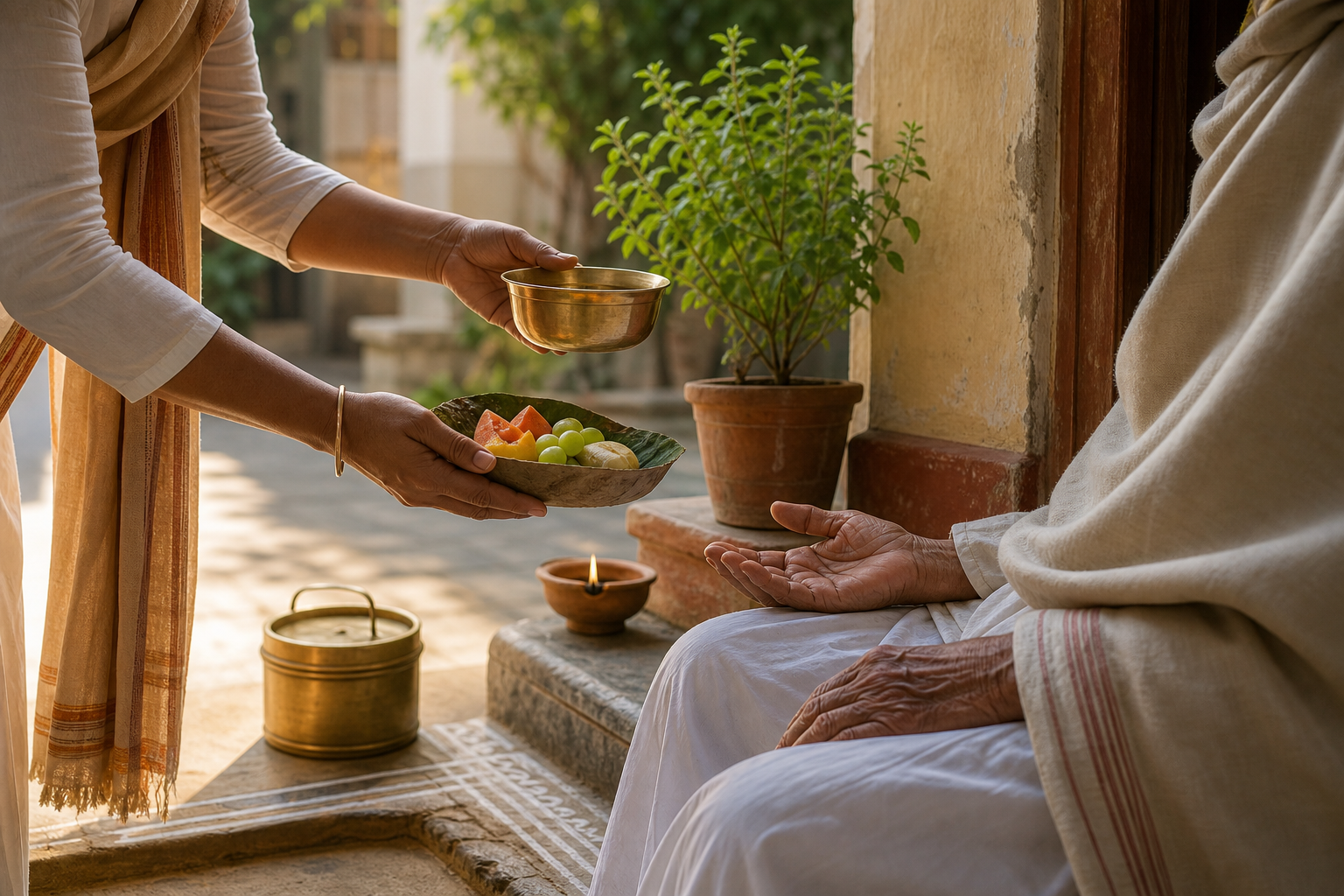
Sharabha Jayanti fasting has no single household form. Some devotees fast from sunrise until moonrise with water and fruit, while others take light sattvic food through the day. Choose the form you can keep with attention and without compromising your health. Physical severity is not a substitute for truthful speech, non-harm, or self-command.
Give the vrata one outward expression. Offer practical help to a person, feed or protect an animal, or care for the natural environment. Dana and seva prevent the observance from becoming private spiritual consumption: the protection invoked at the altar is carried into the world through your conduct.
When several Full Moon observances meet
Vaishakh Purnima also carries other sacred observances. If your household performs Satyanarayana Puja, the rites can be completed in sequence, giving each its own sankalpa and undivided attention. Follow the order established by your family or priest rather than merging distinct procedures into one improvised ritual.
Buddhist communities observe Buddha Purnima or Vesak on the same Full Moon, recalling the Buddha’s birth, enlightenment, and parinirvana. You can recognise this shared dharmic cadence without pretending that the rituals are identical: Sharabha’s protective pacification and the Buddhist cultivation of wisdom, karuna, and release from suffering meet ethically in restraint and compassionate action.
Retellings of Sharabha also differ across sampradayas. Honour the interpretation received in your lineage, but do not turn a form of pacification into a pretext for sectarian triumph. The devotional test is whether fierce energy is brought under dharmic discipline.
When a temple visit is the better choice
A temple is particularly useful when you want formal Abhishekam, alankara, archana, or guidance on a disputed calendar window. In Tamil Nadu, the Sharabeshwarar shrine at Thirubhuvanam near Kumbakonam is especially associated with this form. The Chola-era complex at Darasuram is also important for viewing Sharabha in South Indian sacred sculpture, although viewing iconography and attending a scheduled Jayanti service are not the same thing. Confirm current worship arrangements directly with the temple before travelling.
Key takeaways for Sharabha Jayanti 2026
- Reserve May 1, 2026, which corresponds to Vaishakh Purnima for the observance in most parts of India.
- Use a panchangam calculated for your location; do not rely only on the civil date or convert a timing published for another city.
- When Purnima crosses two dates, let your family or temple rule concerning sunrise, evening, or pradosha determine the worship window.
- A Shiva image, lamp, Bilva leaves, simple naivedya, and 108 repetitions of “Om Sarabeshvaraya Namah” are enough for a coherent home observance.
- Choose a sustainable fast and pair it with restraint in speech, ahimsa, dana, or seva.
- Keep Satyanarayana Puja or other Full Moon rites distinct and sequential, and respect the different sampradaya interpretations of Sharabha.
Your next step is straightforward: enter May 1 in your calendar, obtain the Purnima times for the place where you will be, and decide now whether the central act will be home japa, family puja, temple darshan, or seva. Once those three decisions are made, the observance no longer depends on last-minute calendar confusion.
References
