
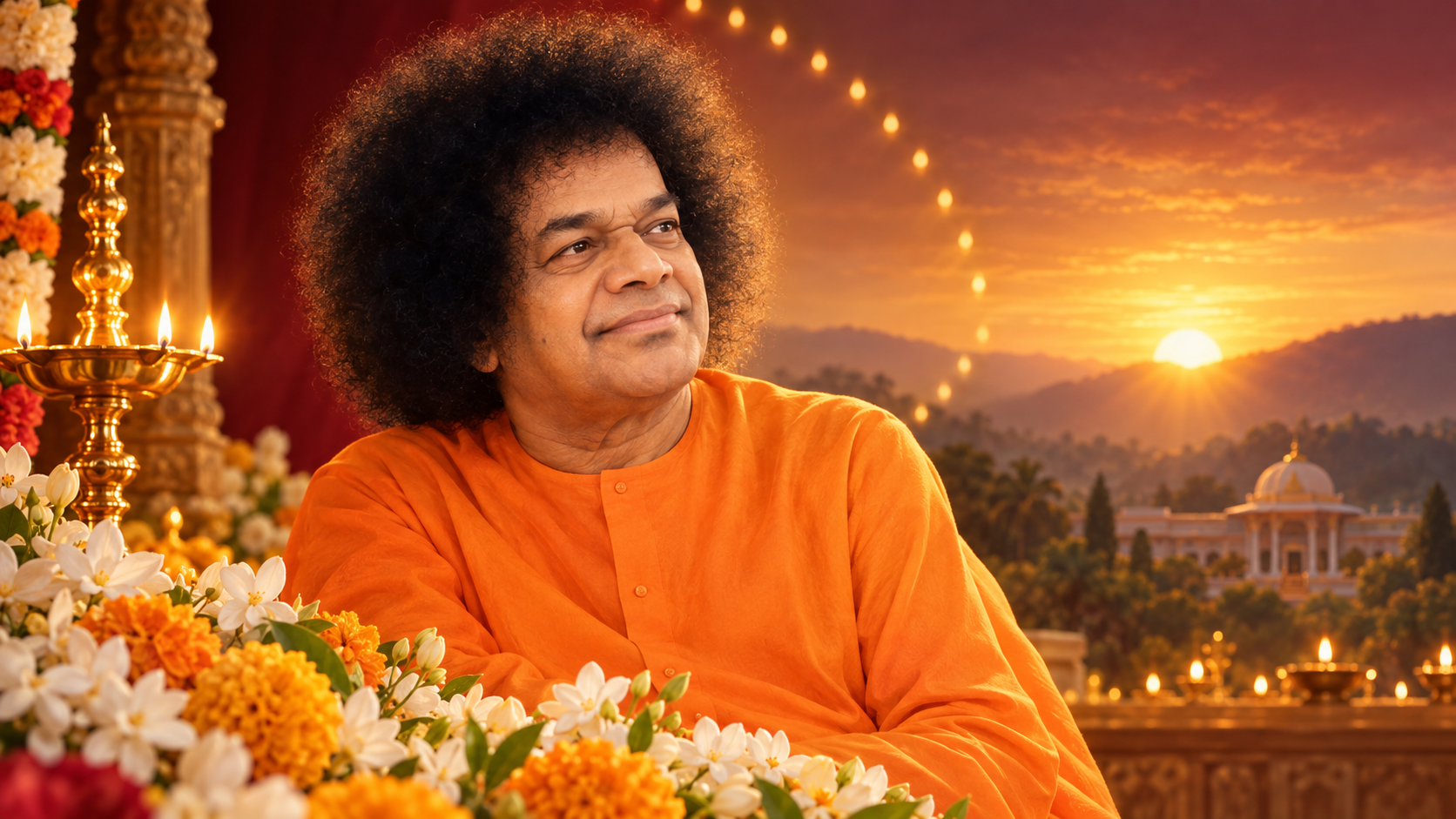
If you are arranging leave, planning a satsang or deciding how to observe Sathya Sai Baba Jayanti at home, set aside 23 November 2026. Then make the more important decision: will the day be centred on a journey, a community gathering or a quiet practice that your household can carry into daily conduct?
The year has unusual significance because it completes a century from Sathya Sai Baba’s birth. That can tempt organisers to measure the occasion by its size. A more useful measure is what remains after the flowers are cleared away: a verified commitment, an act of seva and a more truthful way of living.
The date and why the 2026 Jayanti is distinctive
Sathya Sai Baba Jayanti falls on 23 November 2026. He was born on 23 November 1926, so the 2026 observance marks one hundred years from his birth. It is also identified as the sixteenth Jayanti after his Maha Samadhi.
Keep those descriptions separate. A Jayanti commemorates birth; it is not a death anniversary. The centenary is counted from the 1926 birth date, while the post-Maha-Samadhi count places the observance within the devotional life that continued after his passing. Using the terms accurately prevents a tribute notice, invitation or social-media caption from becoming confused.
Puttaparthi in Andhra Pradesh is a central place of observance, where the Jayanti is marked with strong devotion. If you intend to travel there, use 23 November as the anchor for leave and transport planning, but do not infer programme times, entry arrangements or accommodation details from the date alone. Confirm each practical detail with the relevant organising institution before making a non-refundable booking.
Your 2026 observance checklist
- Reserve 23 November 2026 and decide whether you will observe at home, with a local community or in Puttaparthi.
- Treat the centenary as a reason for greater sincerity, not merely a larger programme.
- Choose one primary focus: worship, reflection or seva. Let the other elements support it.
- Verify attributed teachings before printing or sharing them, especially quotations copied from social media.
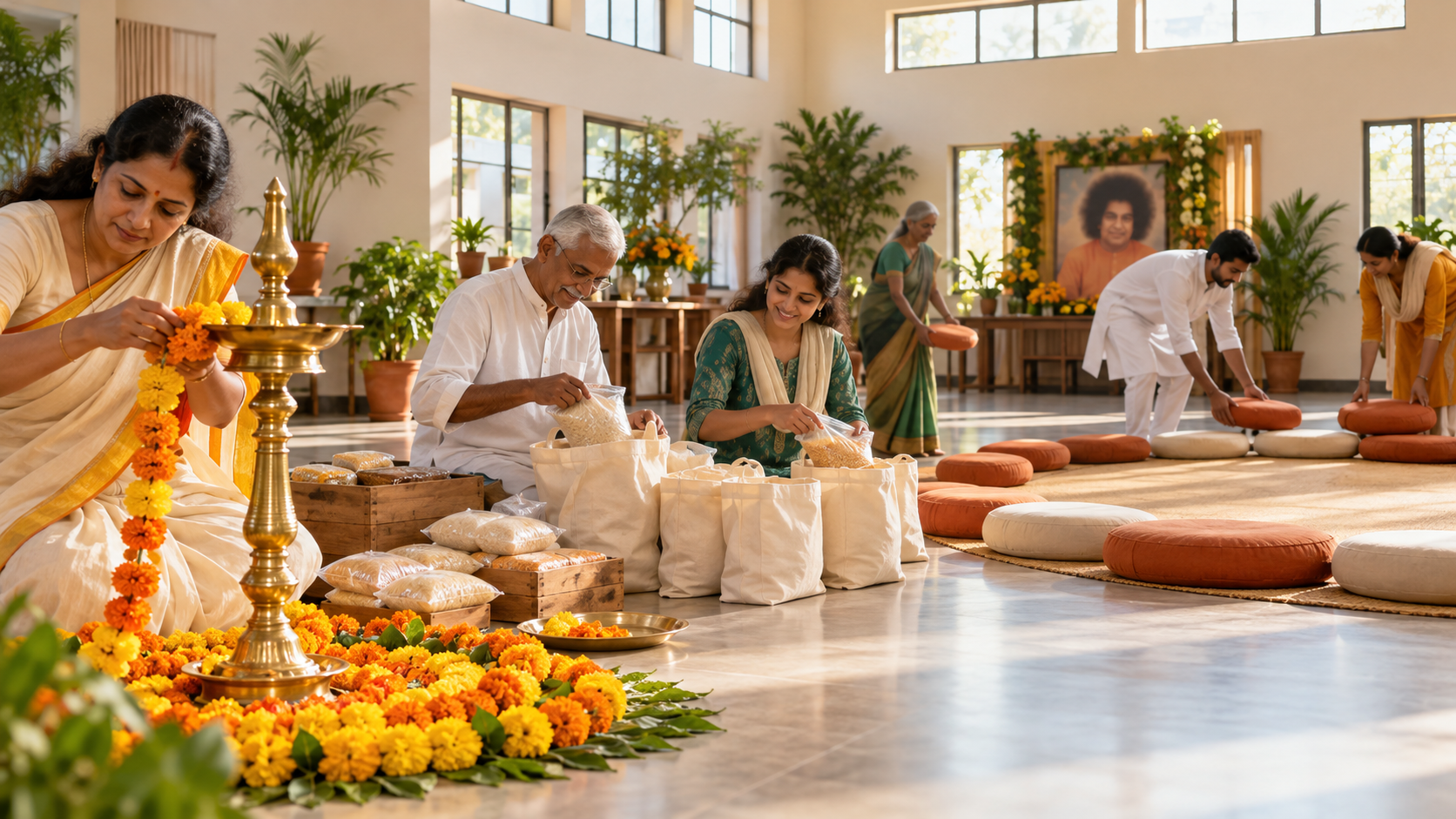
- Name one act of service that can actually be completed, then decide who will carry it out and when.
- Describe the reincarnation belief as a matter of faith when speaking to a mixed audience.
Let the centenary deepen the observance
A centenary naturally encourages special decorations, longer programmes and larger gatherings. None of those is wrong. The difficulty begins when scale takes the place of purpose. A crowded schedule can leave no room for prayer, silence or the uncomfortable self-examination that makes a spiritual commemoration consequential.
If you are organising a community event, decide its central purpose before inviting speakers or arranging performances. A devotional gathering can still include several elements, but each should answer a clear question: Does this help people remember, practise or serve?
- For worship: keep the bhajan, prayer and silence coherent rather than adding items simply to lengthen the programme.
- For reflection: distinguish documented biographical dates from devotional testimony and theological interpretation. Do not present all three as the same kind of claim.
- For seva: define a task with a responsible person and a completion point. A vague announcement of future service is not the same as service performed.
- For communication: publish the confirmed date and venue separately from programme details that may still change.
- For hospitality: make newcomers welcome without testing their beliefs or expecting them to imitate the most committed devotees.
Resist turning recipients of charity into scenery for a centenary photograph. Service preserves dignity when the benefit to the recipient matters more than the visibility of the giver. If public accountability is needed, record what was done without exposing people unnecessarily.
A simple observance you can follow at home
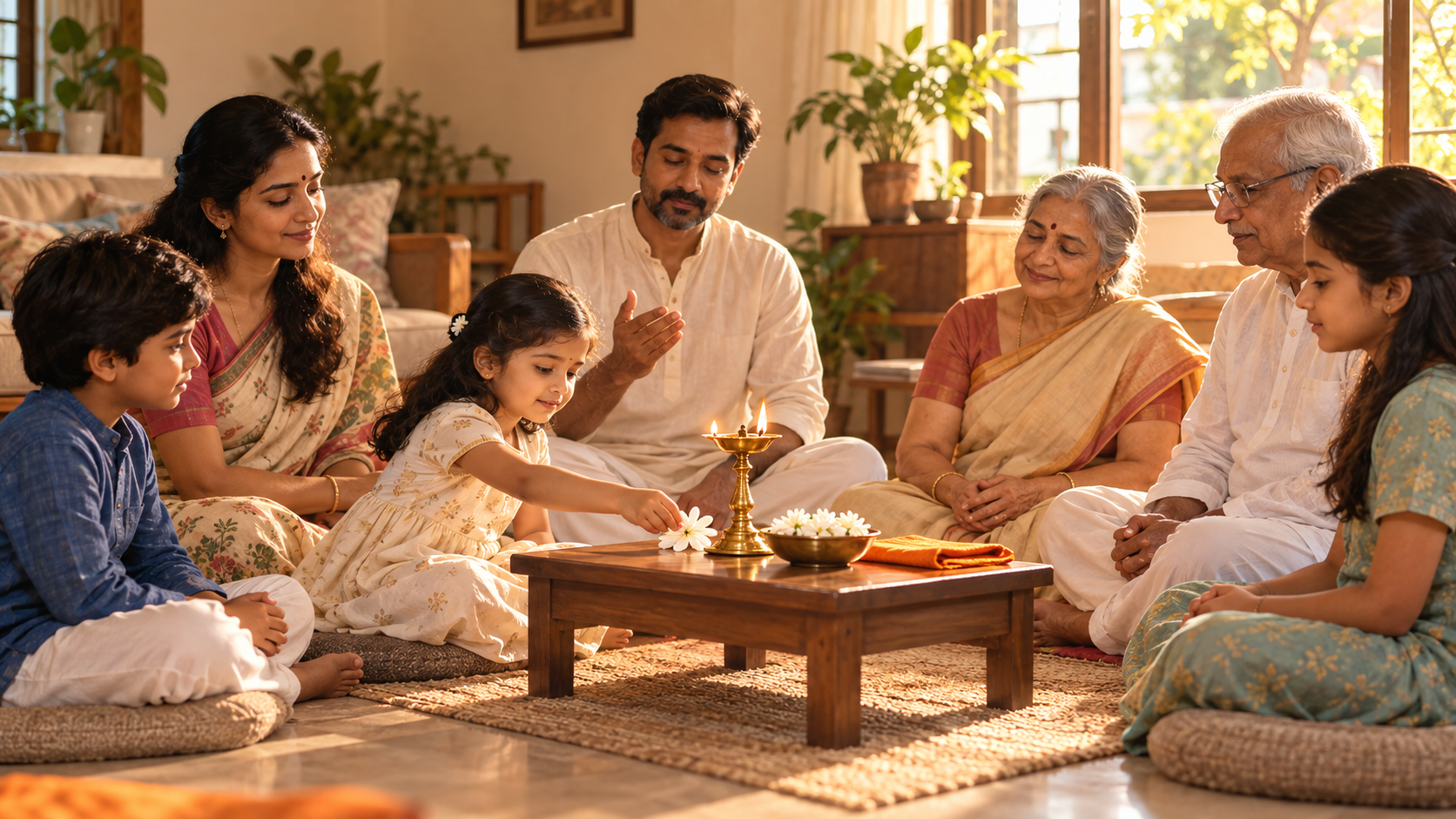
You do not need an elaborate domestic ritual to mark the day sincerely. Use practices already familiar to your household, and do not invent compulsory rules for others. The following sequence gives the observance a clear movement from remembrance to action.
- Prepare the place. Choose a clean, quiet part of the home and a time when participants will not be rushing. An image, flowers or a lamp may be used if they belong naturally to your practice; they are not a test of devotion.
- State the sankalpa. Name the purpose in plain words. You might dedicate the observance to greater truthfulness in speech, kindness in conduct and steadiness in service.
- Offer a familiar prayer or bhajan. Choose something your household can sing or recite attentively. If you plan to read an attributed teaching, verify its wording and attribution before presenting it as Sathya Sai Baba’s words.
- Sit with a practical question. Ask where your conduct has fallen behind your stated values. A promise left unfinished, an avoidable harshness or help repeatedly postponed gives you a concrete place to begin.
- Select one act of seva. Help someone without creating a spectacle around the help. You could complete a promised task, share food, contact a neglected person or give within your means. Choose an action you can finish rather than an impressive intention with no follow-through.
- Close with accountability. Write down the commitment, carry it out and check afterward whether it was completed. This final step turns a devotional mood into a durable practice.
If children or guests participate, explain what is happening without demanding a level of belief they have not chosen. Give them a real role, such as preparing the prayer space or helping with the service activity. Participation becomes meaningful when it carries responsibility rather than serving as decoration.
Speak carefully about the reincarnation claim

Sathya Sai Baba presented himself as the reincarnation of Shirdi Sai Baba. That claim belongs to the religious identity surrounding him, but it should be described with theological precision. Devotees may accept it as sacred truth; other Hindus, followers of different traditions and visitors may regard it as a claim of faith.
In a devotional setting, believers can express their conviction openly. In a public notice, classroom or mixed gathering, use wording such as: devotees understand Sathya Sai Baba as the reincarnation of Shirdi Sai Baba. That phrasing neither conceals the belief nor presents a contested theological position as a neutral historical fact.
This distinction also protects the Jayanti from an unnecessary argument. You can welcome a visitor who is drawn to prayer, service or reflection without requiring that person to settle every metaphysical question first. Respect does not require false agreement, and conviction does not require coercion.
Choose your mode of observance before November: reserve the day, confirm travel details if Puttaparthi is your destination, and identify the act of service that will follow the prayers. Let the centenary be visible not only in the programme you attend, but in the promise you actually keep.
References

Leave a Reply
You must be logged in to post a comment.