
You’re trying to do two different jobs when you plan a Dharmic month: mark the observance itself, and choose the right local time for what happens within it. Keep those jobs separate. The date may already be clear, while sunrise, moonrise, Tithi boundaries, and daily muhurat windows still depend on your location.
For January 2026, the firmest date to enter now is Sankashti Chaturthi on Tuesday, 6 January. You can also plan ordinary beginnings throughout the month, but a city-free list of clock times would create false precision. This practical framework shows you what to schedule now, what to verify locally, and when a general Shubh Muhurat is not enough.
Separate the fixed date from the local clock
Sankashti Chaturthi falls on Krishna Paksha Chaturthi, the fourth lunar day of the waning phase, and is dedicated to Bhagwan Ganesha. Its purpose is reflected in its name: deliverance from difficulty. The vrata turns that aspiration into discipline through fasting, worship, remembrance, and a deliberate conclusion after Chandrodaya, or moonrise.
The regional month name may differ even when families are observing the same Chaturthi. Amavasyant calendars followed in Maharashtra, Gujarat, Karnataka, Telangana, and Andhra Pradesh place it in Poush. Purnimant calendars used in many North Indian traditions place it in Magh. That difference is a calendar convention, not evidence that one household has chosen the wrong observance.
The parts you should not copy from a calendar prepared for another city are the operative clock times. Hindu Panchang calculations use local conditions, including sunrise, and Tithi, Nakshatra, Yoga, and Karana interact in selecting a timing. Moonrise also varies by place. If you live outside Bharat, converting an Indian time zone is not the same as calculating the event for your own location.
Before finalizing your January calendar, set the city in the Panchang you actually intend to use and record these items:
- Your city and time zone, especially if a family member has sent you timings from elsewhere.
- Local sunrise on 6 January, because the customary Sankashti fast begins at sunrise.
- The local Chaturthi Tithi details, so you are not relying on a date label alone.
- Local moonrise and any guidance your tradition follows concerning lunar visibility.
- For an ordinary new undertaking, that day’s local Abhijit Muhurat and the periods marked as Rahu Kalam, Yamaganda, and Gulika Kalam.
This gives you a clean division of responsibility: enter 6 January immediately, but add the clock times only after selecting the correct city.
Build the 6 January Sankashti observance in sequence
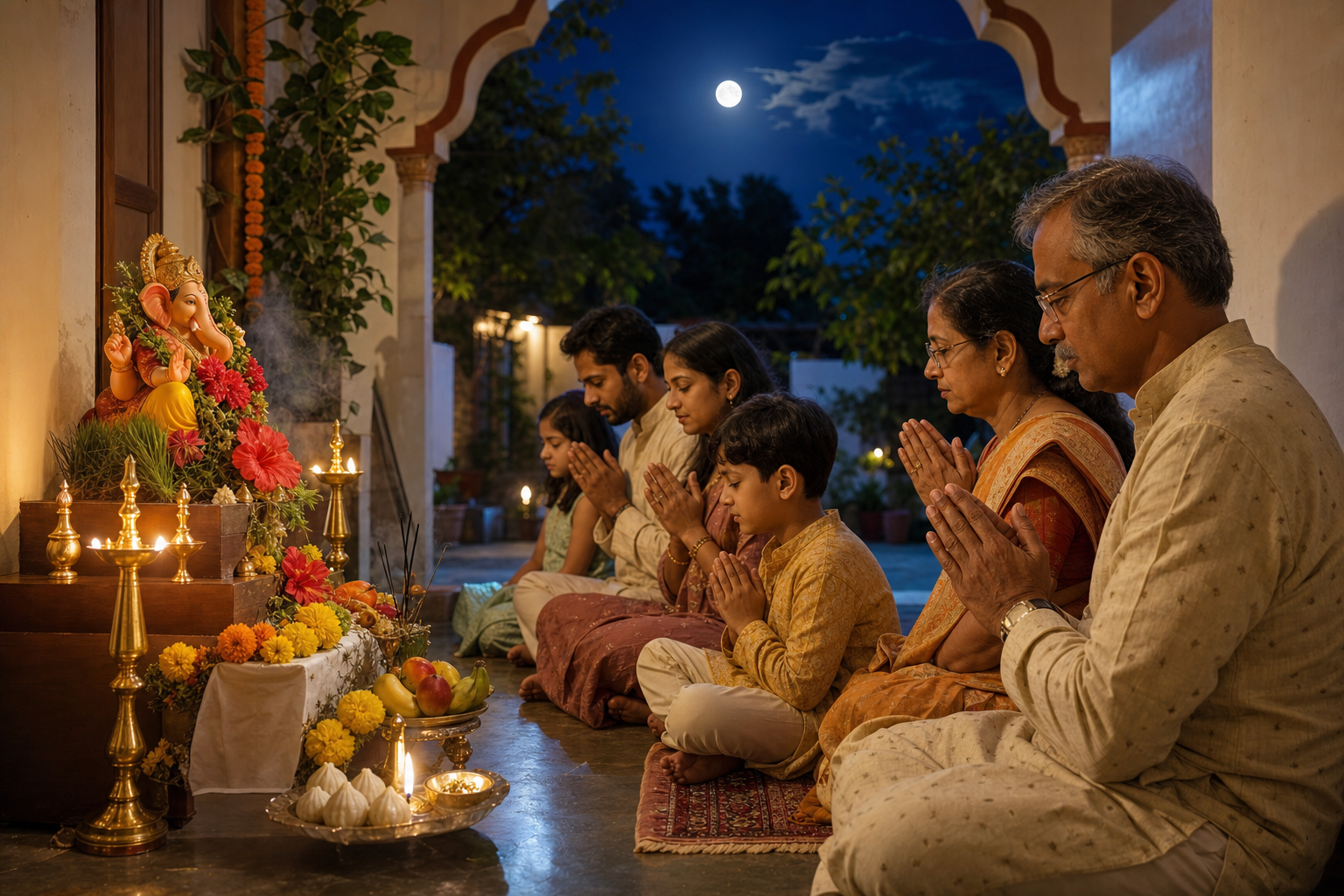
The day is easier to observe when you prepare it as a sequence rather than as one evening appointment. The customary rhythm is a fast from sunrise until moonrise, followed by Arghya and parana. Put the stages into your calendar so that work, travel, or household duties do not crowd out the conclusion of the vrata.
- Prepare before the day begins. Confirm local moonrise. Set aside durva grass, flowers, a lamp, and the naivedya your household will offer, such as modak. Decide whether you will recite the Ganapati Atharvashirsha, the Sankashta Nashana Ganapati Stotra, or both.
- Begin at local sunrise. Make a concise sankalpa and start the vrata according to your family tradition. The intention should be concrete: offer the discipline for clarity, removal of an obstacle, gratitude, or the welfare of others.
- Protect the quality of the day. Fasting is not the whole practice. Reduce needless distraction, harsh speech, and haste. Use the day for Ganesha smarana, prayer, study, or quiet seva where your responsibilities permit.
- Perform Ganesha Puja with the materials already prepared. Offer durva, flowers, the lamp, and naivedya. Recite the chosen prayer deliberately rather than turning the puja into a race against the expected moonrise.
- Observe Chandrodaya locally. After sighting the moon in accordance with your tradition, offer Arghya. Do not substitute a moonrise copied from another city merely because it is convenient.
- Complete the vrata. Conclude the fast after Chandrodaya, read or listen to the Sankashti Vrat Katha if that is your household practice, and take a simple sattvic meal.
If fasting poses a health concern, do not treat physical risk as a test of devotion. Decide on an appropriate adaptation with a knowledgeable family elder and, where health circumstances require it, a qualified healthcare professional. You can preserve the vrata’s core discipline through puja, restraint, remembrance, gratitude, and seva without presenting fasting as a substitute for medical guidance.
The most common planning error is to save only the puja time. That leaves the beginning of the fast, the local moonrise check, and the post-moonrise meal to chance. A better calendar entry starts at sunrise, includes an evening preparation reminder, and ends only after the locally observed conclusion.
Choose a daily Shubh Muhurat for the action that actually begins
A general Shubh Muhurat is useful for ordinary, non-ceremonial beginnings: opening a course of study, starting a new routine, sending an important proposal, initiating business correspondence, filing a form, making a considered purchase, or beginning travel. It does not need to contain the whole project. It needs to contain the act that meaningfully starts it.
Use this method for January 2026:
- Name the beginning precisely. “Work on the proposal” is vague. “Send the completed proposal” identifies the initiating action. For study, it may be the first focused lesson; for a routine, the first actual session.
- Open a Panchang set to your city and date. Do not rely on a screenshot without a visible location. Latitude and local sunrise affect the daily windows.
- Look first for a calm morning period after sunrise or the local Abhijit Muhurat. Abhijit Muhurat is centered near local midday and is commonly used for concise, everyday starts.
- Check the excluded periods. Rahu Kalam, Yamaganda, and Gulika Kalam are generally avoided for initiating a new undertaking. If your Panchang presents an overlap or you do not understand the local convention, ask a qualified practitioner instead of resolving it by guesswork.
- Finish the preparation before the window. Draft the email, review the form, gather the travel documents, or place the book on the desk beforehand. When the selected time arrives, perform the meaningful first action rather than spending the window getting organized.
- Anchor the beginning. Tidy the immediate space, make a brief sankalpa, and begin. Facing east or north is a traditional preference for steadiness and clarity when the activity allows it.
A muhurat disciplines the beginning; it does not guarantee the result. It cannot make an unsuitable contract sound, an unaffordable purchase wise, or an unsafe journey prudent. Complete the ordinary legal, financial, practical, and safety checks first. Then use auspicious timing to bring attention and order to an undertaking that already deserves to begin.
Use a different standard for festivals, daily starts, and major rites
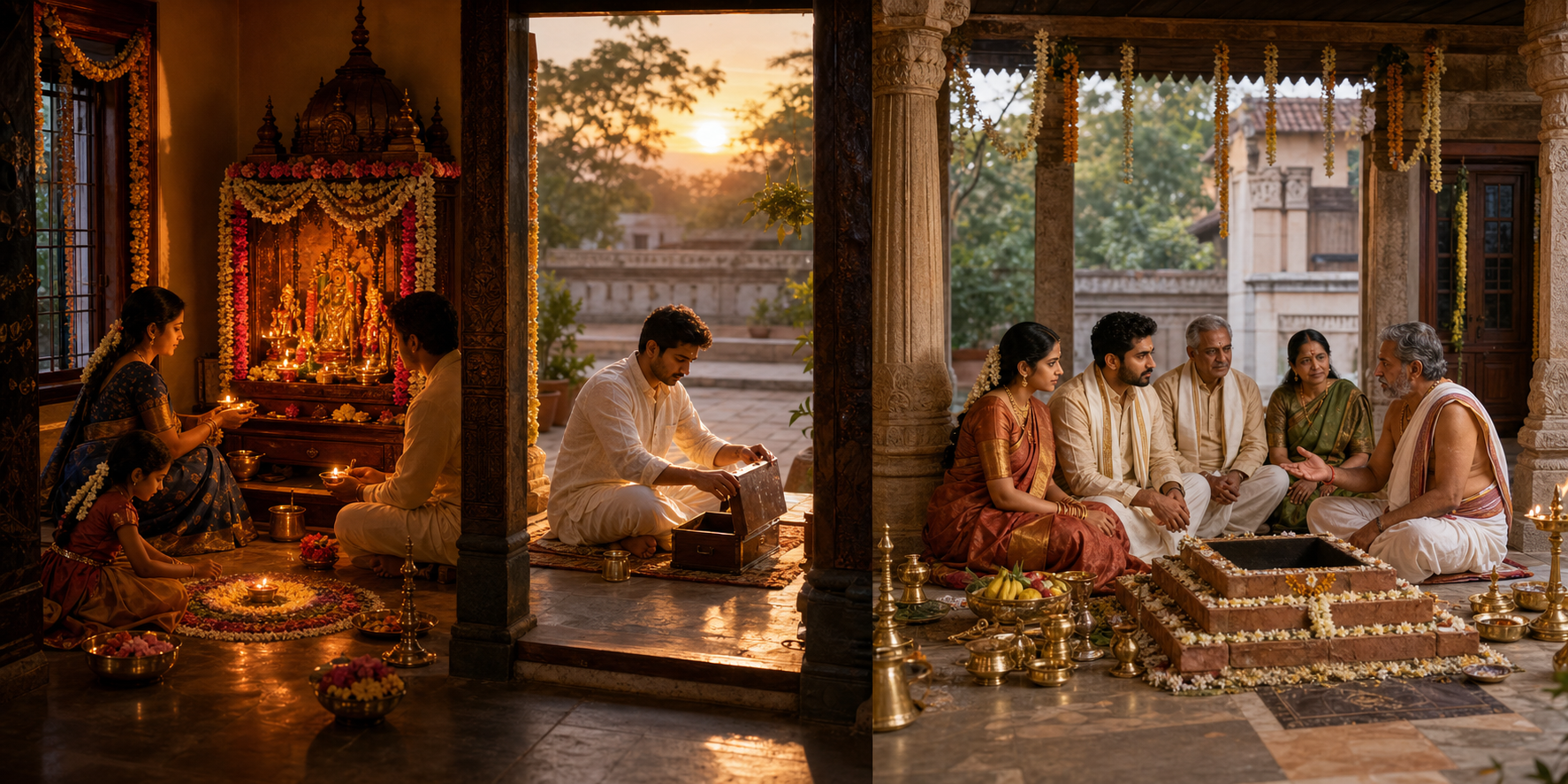
Not every January decision belongs in the same timing category. Use the lightest method that is adequate for the event, and do not extend a general-purpose muhurat into a personal samskara calculation.
| What you are planning | What to do |
|---|---|
| Sankashti Chaturthi on 6 January | Keep the fixed date, then obtain local sunrise, Chaturthi details, and moonrise for the vrata and parana. |
| Study, correspondence, travel, a purchase, or a new routine | Use a location-specific Panchang, identify a suitable morning or Abhijit window, and avoid the locally listed inauspicious periods. |
| Marriage, Gruhapravesh, or another significant samskara | Seek an individualized Shubh Muhurat from a qualified jyotisha who can consider personal charts, regional daylight, and relevant festival constraints. |
| Mid-month practice associated with Makara Sankranti | Reserve room for charity, learning, and renewed commitments, but confirm the exact festival reckoning and timing in your regional Panchang. |
This distinction prevents two opposite mistakes. One is treating every ordinary task as if it requires a full personal horoscope analysis. The other is choosing a marriage or Gruhapravesh time from a generic daily Abhijit listing. General timings are meant to make routine beginnings deliberate; major rites require a calculation proportionate to their significance.
A household that includes Hindu, Buddhist, Jain, or Sikh practice need not force every observance into one calendar system. Each tradition can retain its own reckoning while the family coordinates around shared Dharmic values such as ahimsa, self-discipline, mindfulness, charity, and seva. Unity here means mutual respect and practical cooperation, not calendar uniformity.
Key takeaways for your January calendar
- Enter Sankashti Chaturthi on Tuesday, 6 January 2026, but verify sunrise, Tithi details, and moonrise for your location.
- Poush in an Amavasyant calendar and Magh in a Purnimant calendar are regional month labels for this observance, not rival dates.
- Prepare the Sankashti sequence in advance: sunrise sankalpa, fasting and disciplined remembrance, Ganesha Puja, local Chandrodaya, Arghya, parana, and a sattvic meal.
- For an everyday beginning, schedule the exact initiating act within a local auspicious window; complete the preparation beforehand.
- Use general morning or Abhijit timings for ordinary activities, while avoiding Rahu Kalam, Yamaganda, and Gulika Kalam as locally calculated.
- Do not use a generic January muhurat for marriage, Gruhapravesh, or a major samskara; those need individualized guidance.
Open your calendar now and create the 6 January entry with blank fields for local sunrise and moonrise. Add one reminder to gather the puja materials and another before the evening worship. Then list the ordinary beginnings you expect in January and identify the single action that will count as the start of each one. Fill in the clock times only after checking a Panchang set to your city. That small discipline lets you plan ahead without pretending that one timetable can serve every place or every rite.
References
- DharmaRenaissance Blog – Sankashti Chaturthi January 2026: Auspicious Date, Ritual Guide, and Peaceful Blessings
- DharmaRenaissance Blog – Shubh Muhurat January 2026: Auspicious Days and Timings for Confident, Harmonious Starts
