
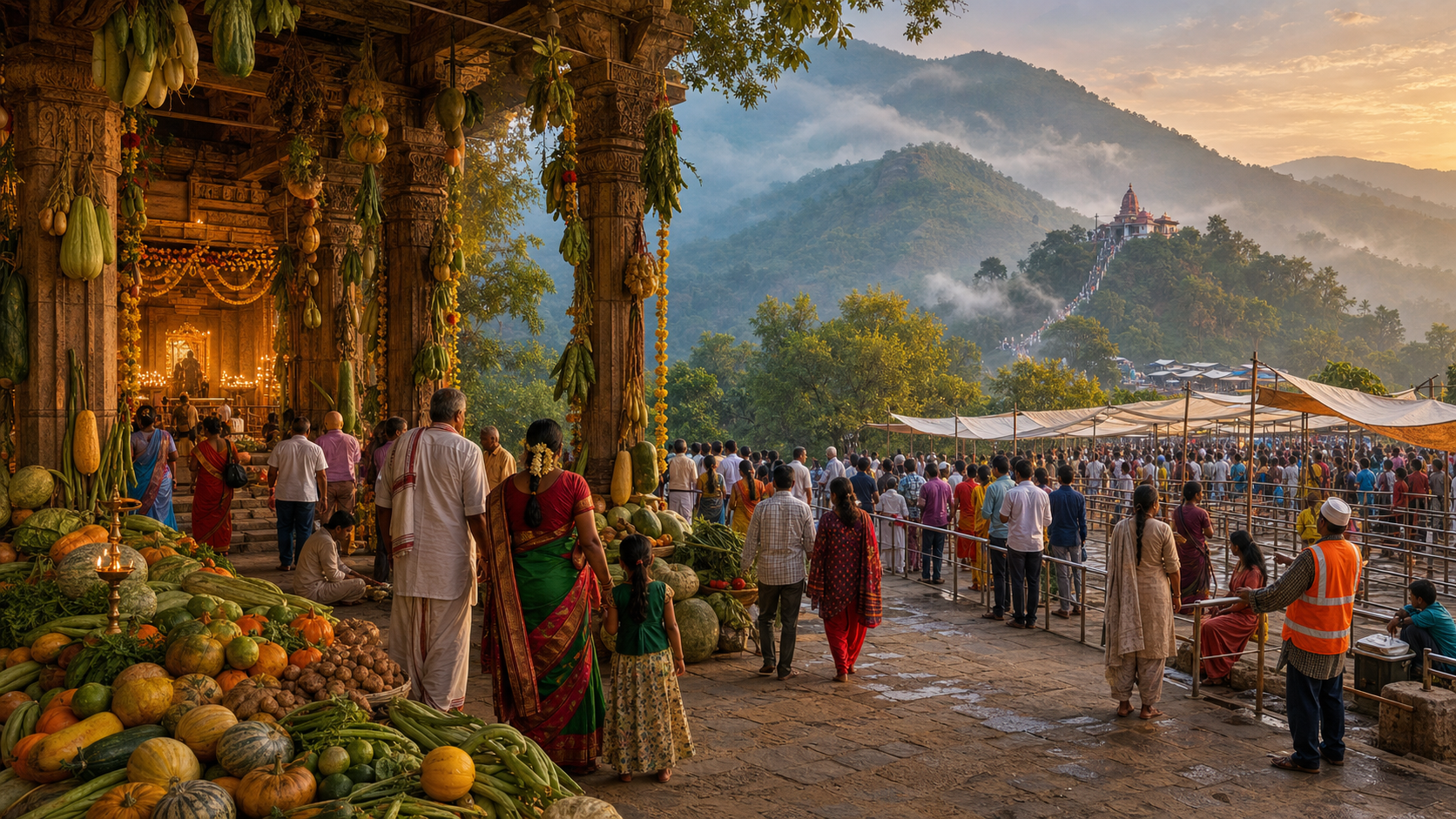
A sanctum adorned with vegetables in Warangal and a high-volume pilgrimage fair near the Shivalik foothills present two markedly different faces of Navaratri. One makes nourishment visible through seasonal produce; the other turns collective devotion into a carefully managed public gathering.
Read together, the supplied reports show why regional Navaratri festivals are best understood as local expressions of Shakti rather than copies of a single national template. Calendar, sacred geography, ritual materials, personal vows and temple administration all shape what devotees encounter.
One tradition, two regional calendars
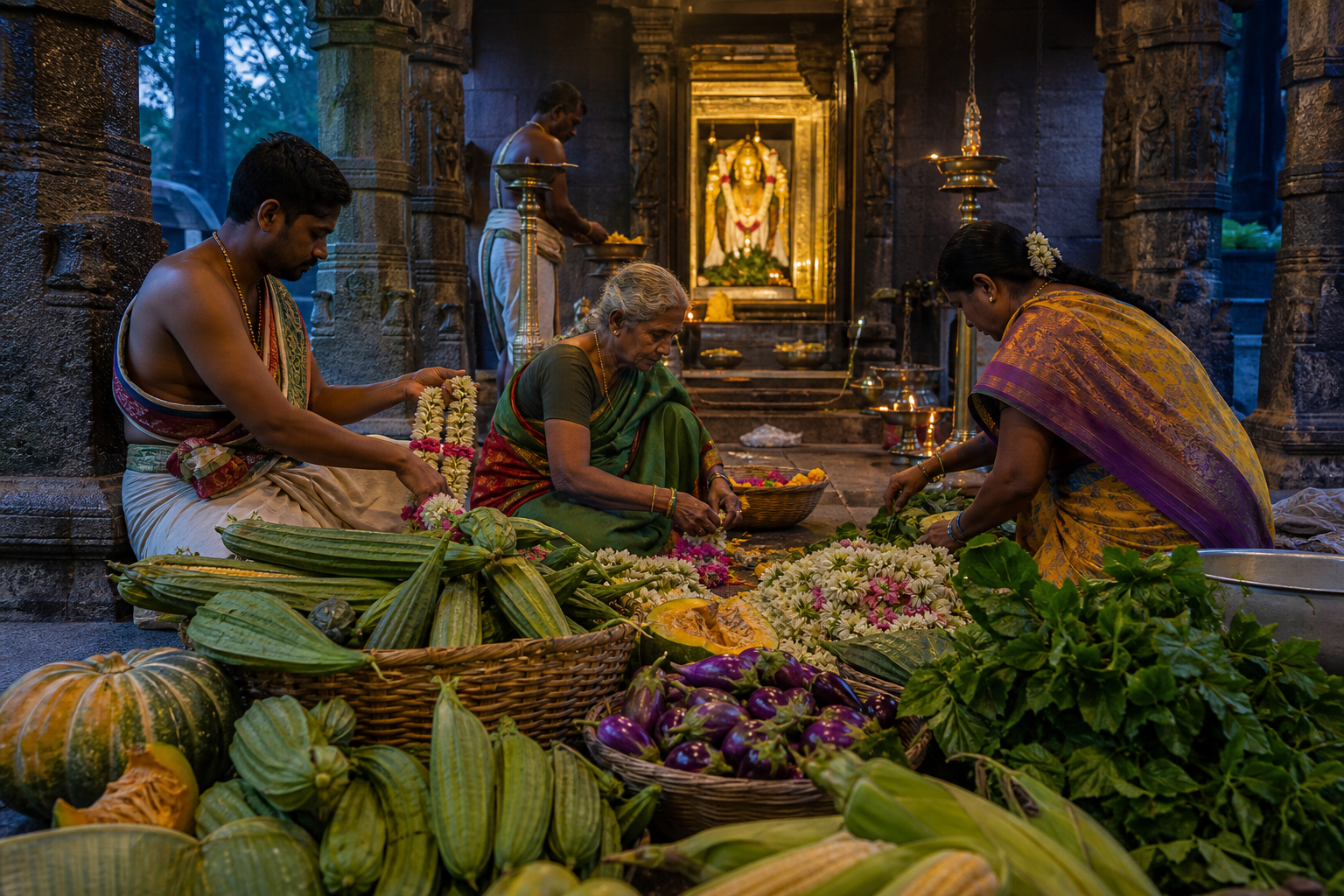
Both source articles describe temple-centred celebrations of the Divine Feminine, but they place those celebrations on different ritual clocks. The Bhadrakali Temple report situates Shakambari Utsavalu in Ashada masam and gives a 2026 festival window of July 15 to July 29. The Mansa Devi report covers the shrine’s recurring Chaitra and Ashwin melas, listing March 19 to March 27 for the 2026 Chaitra observance and October 11 to October 20 for the 2026 Ashwin mela, with Ashtami on October 19.
| Regional observance | Temple and region | Source-reported 2026 schedule | Primary emphasis in the report |
|---|---|---|---|
| Shakambari Utsavalu | Bhadrakali Temple, Hanamkonda-Warangal, Telangana | July 15-29, during Ashada masam | Seasonal nourishment, produce-based alankaram and monsoon-linked ecological meaning |
| Chaitra Navratri Mela | Shri Mata Mansa Devi Temple, Panchkula, Haryana | March 19-27, as cited from a Shrine Board notice | Spring devotion and a large public temple fair |
| Ashwin Navratri Mela | Shri Mata Mansa Devi Temple, Panchkula, Haryana | October 11-20; Ashtami listed for October 19 | Autumnal Navratri, vows, darshan and pilgrimage management |
These dates should be read as schedules reported by the source articles, not as independently verified temple announcements. The Mansa Devi article itself cautions that lunisolar calculations, regional Panchangs and shrine notices can produce variations.
The calendar difference is also a difference of religious setting. The Bhadrakali report associates Ashada with monsoon expectation, agricultural beginnings and prayers for rainfall and crop protection. The Mansa Devi report presents Chaitra as a season of renewal and notes that Ashwin Navratri belongs to a broader autumnal landscape that includes practices such as Durga Puja, Garba, Golu, Ramlila and Kanya Puja.
Regional history further distinguishes the shrines. The Bhadrakali article describes a temple embedded in Warangal’s sacred landscape and traditionally connected with Chalukya and Kakatiya history. The Mansa Devi article associates the present main shrine with Maharaja Gopal Singh of Manimajra and dates it approximately to 1811-1815; it also reports that the nearby Patiala Temple was built in 1840 under Maharaja Karam Singh of Patiala. In each account, patronage and place help explain why a shared theology acquired a distinctive regional form.
What the Goddess is asked to restore
At Bhadrakali Temple, the central form is Shakambari Devi, understood in the source as the Divine Mother who provides vegetables, fruits, roots, greens and other food-bearing plants. The report connects her with Puranic accounts of relief from drought and famine. Bhadrakali’s fierce, protective character is therefore expressed through another register of divine power: feeding, healing and sustaining life.
The produce used in Shakambari alankaram carries this theology into the visible temple space. Gourds, leafy greens, fruit, grains and other offerings are treated not as novelty decorations but as signs of soil, seed, rainfall, cultivation and the shared meal. Because these materials also belong to farms, markets and household kitchens, the ritual links the sanctum with ordinary systems of nourishment.
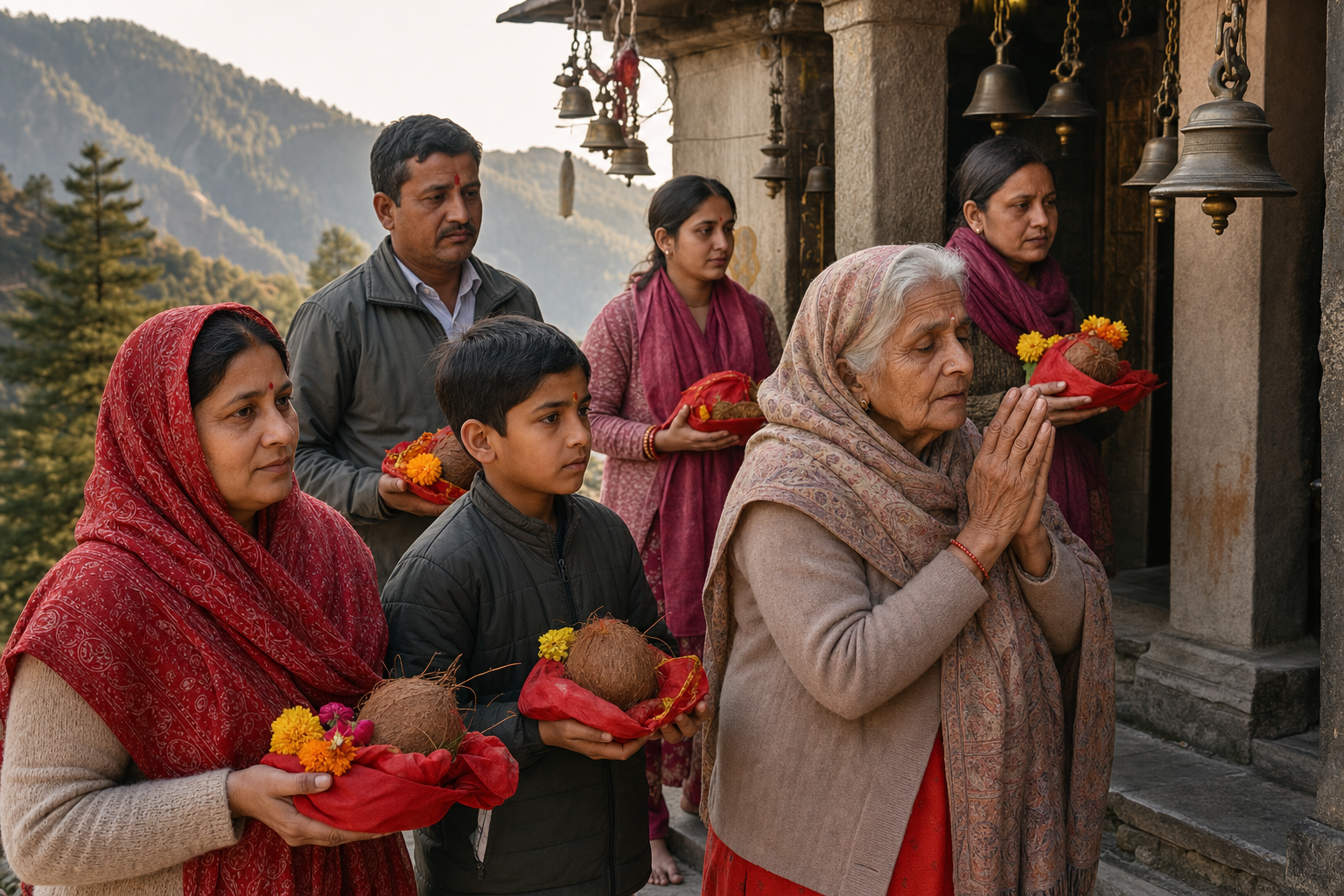
At Panchkula, the devotional focus described by the source is more closely tied to wishes, vows and personal renewal. Mata Mansa Devi is approached for concerns such as health, family welfare, relief from anxiety and gratitude after a prayer has been fulfilled. Fasting, mantra, seva, bhajans and darshan give those petitions a disciplined Navratri framework, while Ashtami becomes a particularly important point for intensified worship and the completion of vows.
The comparison suggests that both observances address vulnerability, but in different registers. Shakambari worship gives sacred form to hunger, rainfall and ecological dependence. Mansa Devi pilgrimage gives public form to hope, uncertainty and the desire for divine assistance. Neither is separate from protection: one portrays protection through nourishment, while the other places personal petitions within the larger energy of Shakti.
From ritual art to civic infrastructure
The sources devote attention to different kinds of festival work. The Bhadrakali article concentrates on alankaram, darshan, archana, abhishekam, lamps, offerings and the ecological implications of worshipping the Goddess through food-bearing plants. Its account makes farmers, vendors, cooks and families conceptually present in the ritual because each participates in the chain through which nourishment reaches the community.
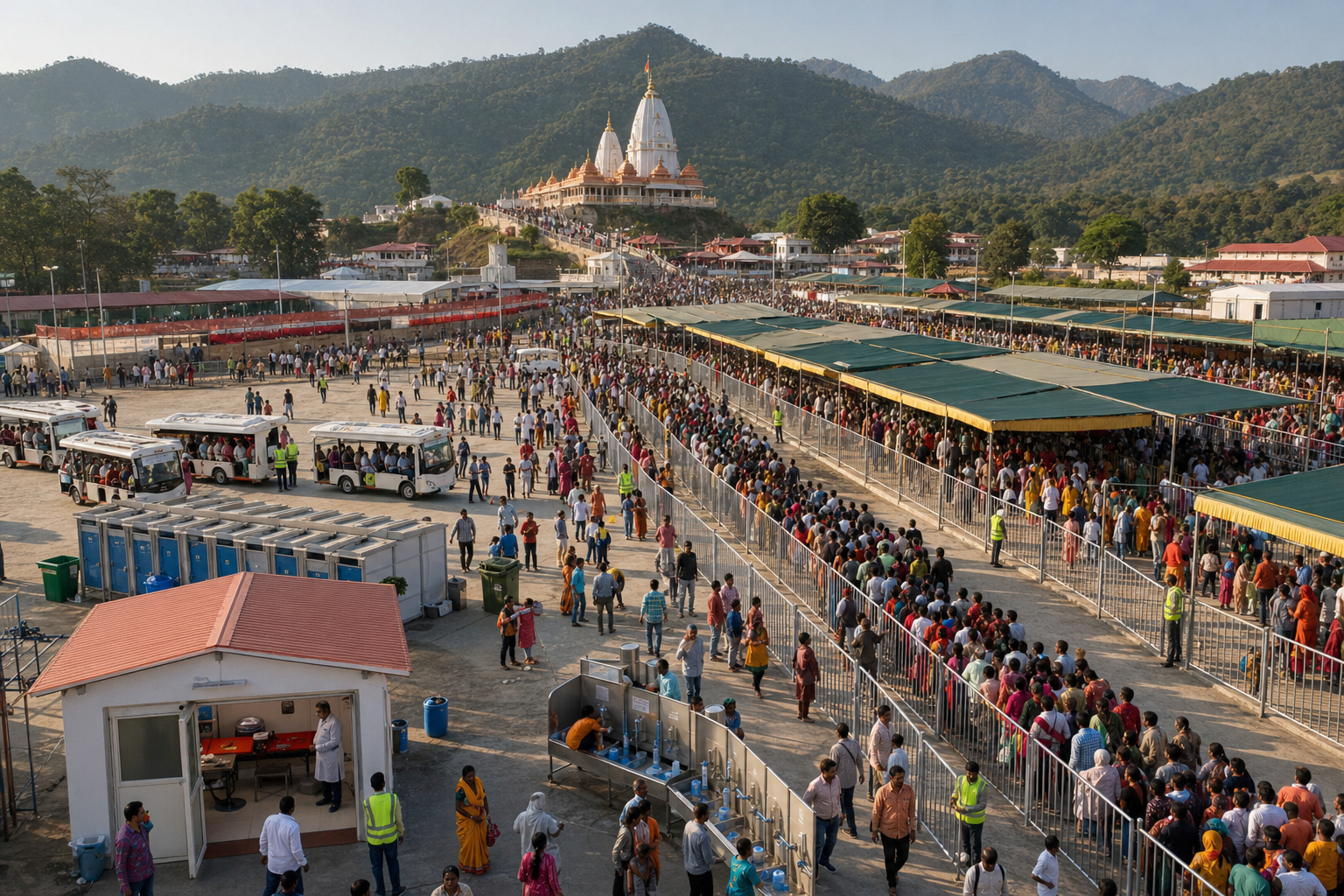
The Mansa Devi article, by contrast, gives substantial attention to the systems required to support a major mela. It reports arrangements including temporary accommodation, durries, blankets, toilets, dispensaries, police posts, regulated pilgrim movement, Duty Magistrates and nodal officers. It also describes online facilities associated with darshan tokens, chola booking, prasad and accommodation, alongside reported use of technology for monitoring footfall and managing crowds.
This difference in emphasis is informative but should not be overstated. The Bhadrakali source’s concentration on ritual ecology does not establish that administration is absent there, just as the Mansa Devi source’s logistical detail does not make its mela less devotional. Together, the reports reveal two inseparable dimensions of a temple festival: sacred meaning gives people a reason to gather, while competent public service makes dignified participation possible.
The term mela is especially important in the Panchkula account. It encompasses worship as well as movement, sanitation, security, food, commerce and accommodation. In that setting, queue design and cleanliness are not merely operational concerns. They affect whether children, older people and other pilgrims can approach the shrine safely and with a reasonable degree of dignity.
Key takeaways
- Regional Navaratri is a family of temple traditions shaped by local calendars, sacred histories and community needs, not a completely uniform observance.
- Ritual materials communicate theology: Shakambari’s produce-based alankaram turns nourishment and ecological dependence into visible forms of worship.
- Devotional priorities vary without becoming contradictory; prayers concerning food, rainfall, health, family welfare and fulfilled vows all operate within a wider understanding of Shakti.
- Festival infrastructure is part of the pilgrim experience. Sanitation, crowd regulation, accommodation and digital access can directly influence the accessibility of darshan.
- Published dates remain source-reported schedules. Temple notices and local calendar guidance should be checked before travel.
How to read and plan for a regional festival
A useful comparison begins by identifying three local layers: which manifestation of Devi is central, which seasonal or lunisolar context governs the observance, and how the temple translates worship into a public event. This approach preserves meaningful differences instead of treating every celebration labelled Navaratri as interchangeable.
For Panchkula, the Mansa Devi report advises visitors to anticipate heavier attendance around the opening day, Saptami, Ashtami and Navami. It recommends early arrival, minimal baggage, comfortable footwear, careful water use and attention to official queue directions. It also says that families travelling with children, senior citizens or persons with disabilities should consult current Shrine Board advisories. The article’s ordinary summer and winter opening hours should not be assumed to govern special mela arrangements.
For Hanamkonda, the supplied article concentrates on the sacred meaning of the Shakambari transformation rather than comparable operational guidance. Practical arrangements from the Panchkula mela therefore should not be projected onto Bhadrakali Temple. Visitors would need current information from the relevant temple authorities in addition to the reported festival dates.
Future coverage of regional Navaratri festivals will be most useful when it preserves local vocabulary and theology while also supplying clearly sourced calendars, accessibility information and environmental context. That combination can help devotees plan responsibly without flattening the traditions that make each shrine distinctive.
References
- DharmaRenaissance Blog — Sacred Shakambari Navaratri 2026 at Bhadrakali Temple: Dates, Rituals, Meaning
- DharmaRenaissance Blog — Mela Manasadevi 2026: Powerful Navratri Dates, Darshan Guide and Sacred Meaning