
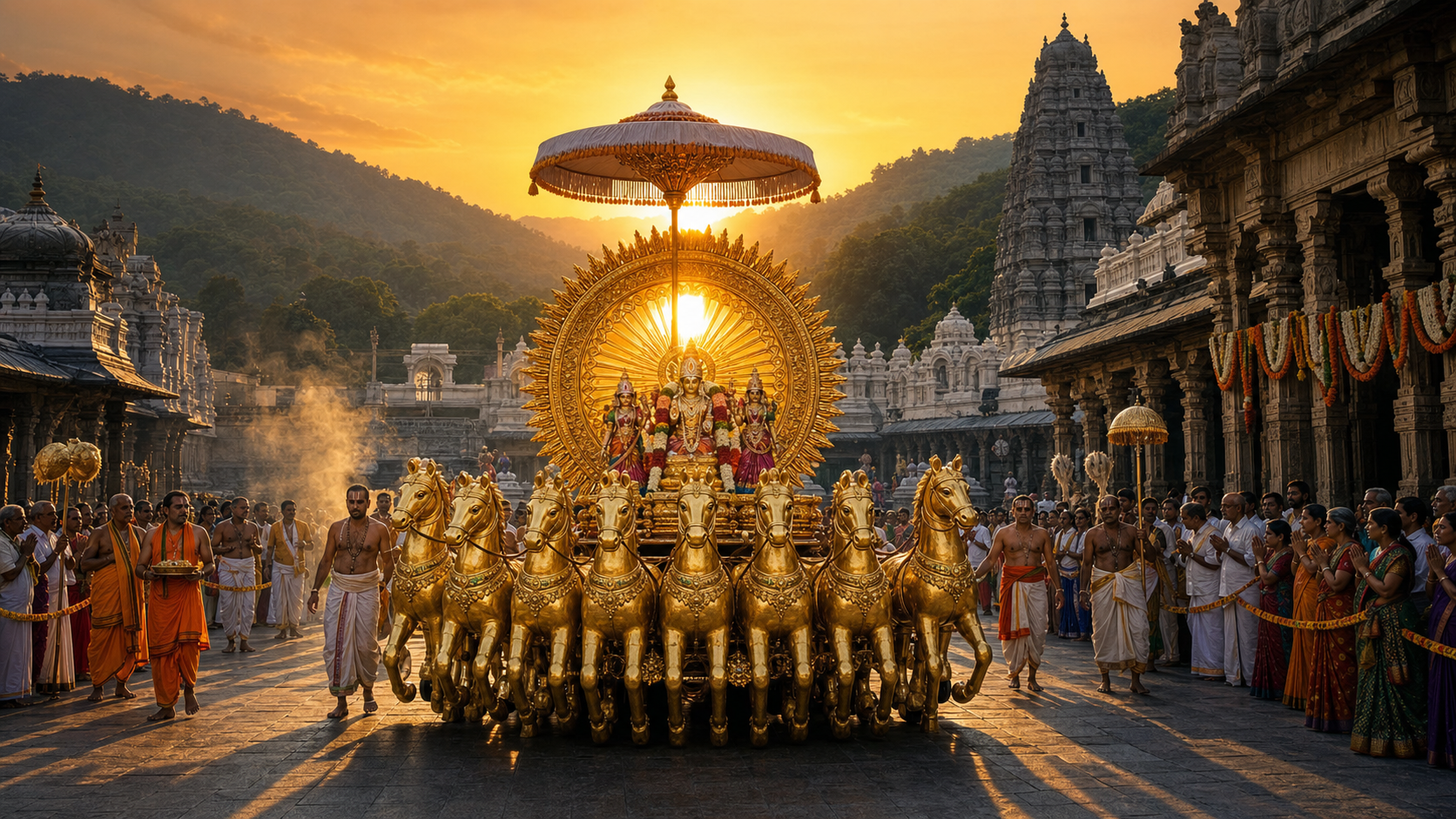
If you were deciding between sunrise worship at home and a temple procession, the choice did not have to become a test of devotion. Ratha Saptami gives both practices a clear place: begin with attention to Surya at dawn, then attend temple darshan if your circumstances and devotional tradition lead you there.
For 2026, Ratha Saptami fell on Sunday, January 25, corresponding to Magha Shukla Saptami. The practical question was not how many observances you could fit into one day. It was how to keep the solar focus of the festival intact while choosing a form of worship you could perform with care.
Set the observance around your local sunrise
Ratha Saptami is also known as Achala Saptami, Saur Saptami and Surya Jayanti. Its calendar identity comes from the seventh tithi of the bright fortnight of Magha, while its morning worship is closely connected with sunrise. That distinction matters: the festival date may be shared, but sunrise is local.
Do not copy a sunrise time or auspicious interval from a calendar prepared for another city. Consult the Panchang for the place where you will actually worship. If your family follows instructions from a temple, acharya or hereditary priest, keep that established method rather than replacing it with a generic online sequence.
Prepare the evening before so that the morning is not spent searching for ritual items. A practical arrangement can include:
- A clean vessel filled with water for Surya Arghya.
- Sesame seeds and red flowers, if these belong to your household practice.
- A lamp placed where it can be lit safely.
- Arka, or calotropis, leaves only if you follow the regional bathing custom and already know how your tradition uses them.
- The text of Aditya Hridayam or the Surya Gayatri if you plan to chant it.
- A modest charitable offering or a specific act of seva you can complete.
Arka leaves are used during the ritual bath in several regional traditions, but they are not a universal entrance requirement. If they are unavailable or not part of your custom, omit them. Missing sunrise while trying to assemble an elaborate display defeats the practical discipline of a dawn observance.
The festival follows the seasonal movement associated with Makara Sankranti and Uttarayana, when lengthening daylight becomes a natural image of renewal. You can honour that meaning without turning it into a claim that sunlight or ritual alone cures illness. Prayers for health express devotion and gratitude; they do not replace appropriate medical care.
A simple Ratha Saptami home worship sequence
If you need a workable household observance, keep the order coherent and the actions unhurried. The following sequence preserves the practices most closely associated with the day without pretending that every family must perform an identical puja.
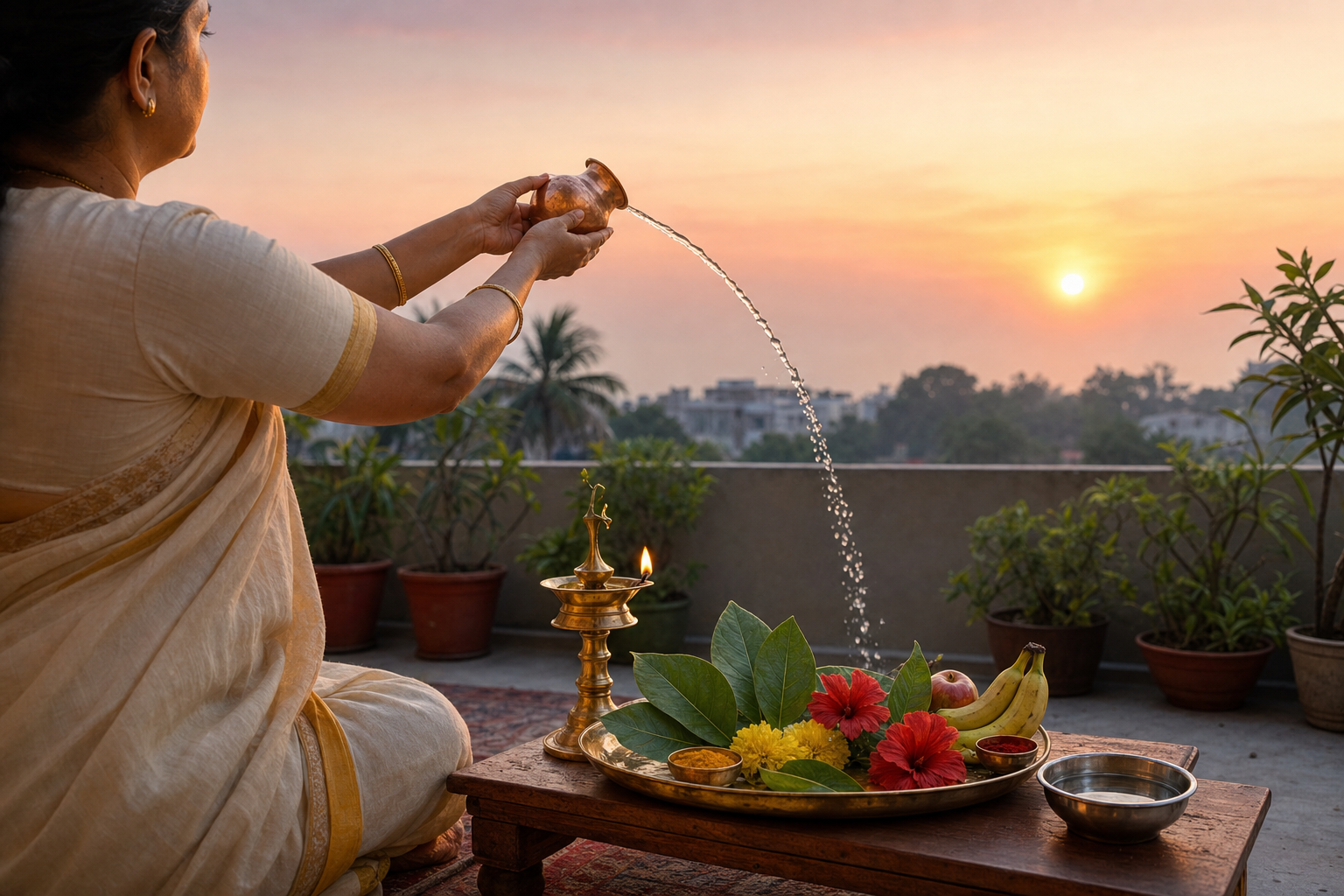
- Rise before or near local sunrise and bathe. Use arka leaves only where that custom is familiar to you.
- Clean the worship area and place the lamp securely. If possible, choose an east-facing position with enough room to offer water without creating a slippery surface.
- Make a short sankalpa. You may dedicate the worship to gratitude, health, clarity of purpose, steadiness in conduct and the welfare of your family and community.
- Face east and offer water to Surya in a controlled stream. Keep your attention on the prayer, but do not stare directly at the Sun. Religious observance does not remove the risk of eye injury.
- Chant Aditya Hridayam or the Surya Gayatri if you know it. If time or familiarity does not permit a longer recitation, offer a shorter prayer with full attention rather than rushing through unfamiliar verses.
- Light the lamp and sit quietly for a few moments. Let the symbolism of light become a concrete question: what confusion, delay or harmful habit are you prepared to address?
- Complete the observance with charity or seva suited to an actual local need. Use natural flowers where practical, conserve water and avoid leaving ritual waste in a public place.
A simple fast may accompany the worship, but fasting is a discipline, not a measure of spiritual worth. If it conflicts with a medical need or a prescribed eating schedule, do not impose it on yourself. Choose prayer, restraint, charity or another appropriate vrata instead, and seek professional guidance where your health requires it.
If children are participating, give them one meaningful role rather than making them stand through a long ritual they do not understand. They can hold a flower, help prepare the lamp under supervision or name one thing for which they are grateful. Then explain the central image plainly: Surya sustains life, the chariot represents purposeful movement, and light calls us toward clearer conduct.
The word achala evokes steadiness. Turn that idea into one commitment you can verify after the festival: keeping a neglected promise, restoring a regular prayer time, using daylight more deliberately or carrying out the charitable act named in your sankalpa. Without that follow-through, renewal remains decorative.
Choose the Tirupati-area celebration by devotional focus
The two prominent Tirupati-area observances in the 2026 calendar were not interchangeable versions of one procession. Sri Govindarajaswamy Temple centred the day on Sri Govindarajaswamy with His consorts, while Tiruchanur centred it on Sri Padmavati Devi. Choose by deity, seva and timing rather than trying to collect both events as spectacles.
| Setting | 2026 devotional focus | What it suited |
|---|---|---|
| Home worship | Bath, sunrise Arghya, Surya prayer, lamp and charity | A quiet observance organised around your local sunrise |
| Sri Govindarajaswamy Temple, Tirupati | Sri Govindarajaswamy with His consorts on seven distinct vahanams | Devotees seeking a Vishnu-centred sequence of processional darshans through the day |
| Tiruchanur | Sri Padmavati Devi on seven major vahanams, including the announced Surya Prabha Vahanam window from 7:00 am to 8:00 am IST | Devotees prioritising an early Surya Prabha darshan and worship of the Divine Feminine |
The 7:00 am to 8:00 am IST interval was a published 2026 schedule for Tiruchanur, not a permanent annual timing. Traditional practice there also includes other vahana sevas during the day, such as Hamsa Vahanam, before the observance culminates in special puja. Future visitors must check current Tirumala Tirupati Devasthanam communications rather than reusing the 2026 clock times.
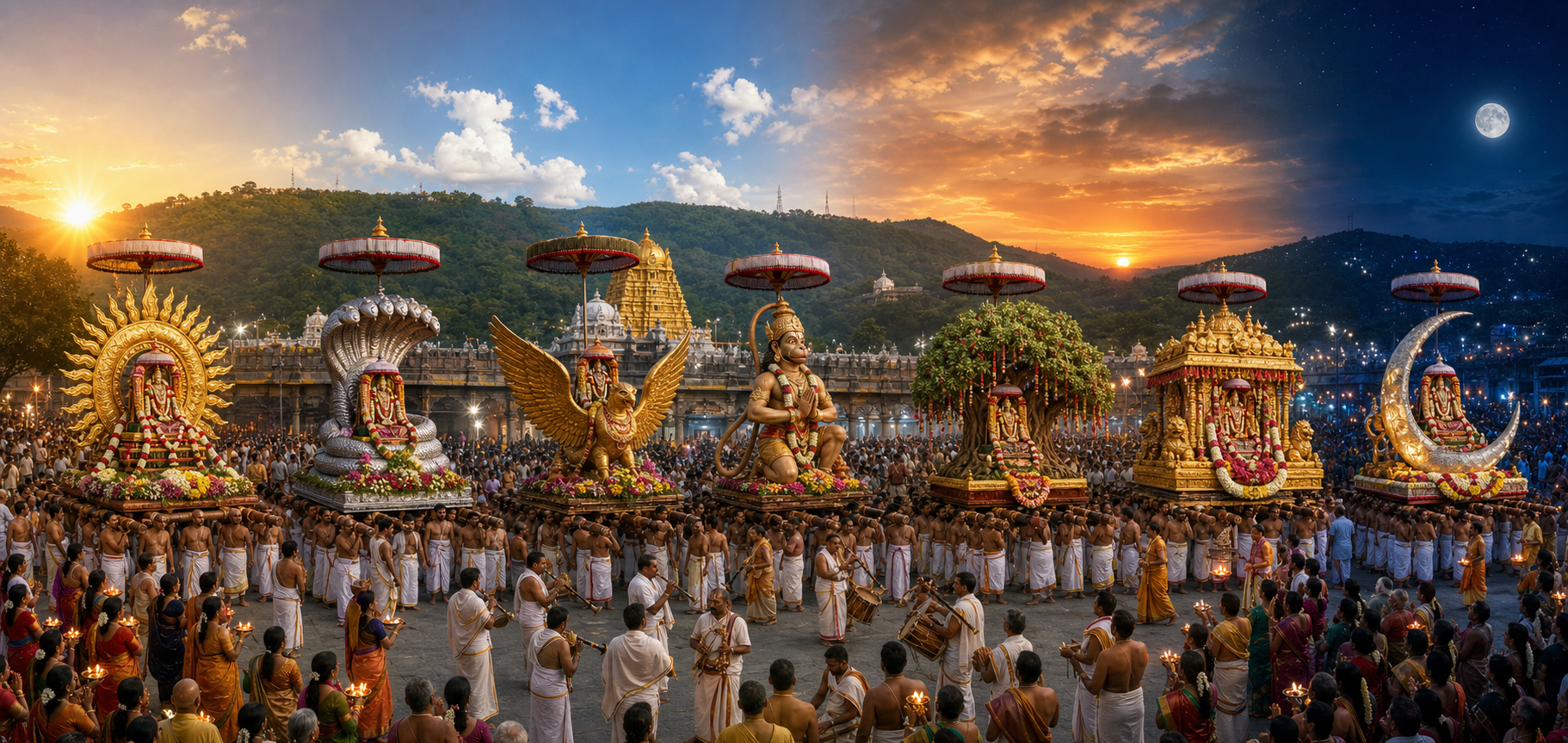
There is also an important symbolic distinction. Ratha Saptami imagery often portrays Surya riding a chariot drawn by seven horses. The seven vahanams at Govindarajaswamy Temple and Tiruchanur are successive processional vehicles bearing the respective temple deity. The two images participate in the same festival world, but they are not seven literal horses or an identical ceremonial sequence at both temples.
Surya Prabha presents the language of radiance directly. Hamsa traditionally brings purity and discernment into view. When you witness a vahanam, look beyond its decorative scale: identify the quality it places before the devotee, and carry that quality into the rest of the day. That is how visual theology becomes practice rather than scenery.
Attend vahana sevas without turning darshan into a race
A seven-vahanam celebration can tempt a visitor to treat the day as a checklist. That usually produces hurry at exactly the moment the ritual asks for attention. Decide in advance which seva is your priority and treat every additional darshan as grace, not entitlement.
- Check the latest TTD or temple communication before leaving. Processional timings and access arrangements can be refined, and an archived schedule is not an operational notice.
- Be inside the relevant temple area before the published start of your priority seva. A 7:00 am ceremonial start does not mean that arriving at the approach point at 7:00 am will place you in position for darshan.
- Wear modest clothing and carry only essentials permitted under temple rules. Do not assume that bags, cameras or other items will be accepted merely because they were allowed somewhere else.
- Carry drinking water where permitted, but keep the procession route and queue area free of discarded containers, flowers and food packaging.
- Follow queue instructions without pushing forward when the vahanam appears. The discipline of a sacred crowd is part of collective worship, not an inconvenience outside it.
- If you are attending with children, older relatives or anyone needing assistance, agree on a meeting point and decide beforehand who will remain with them if the group becomes separated.
- Keep phone use secondary. A partial view received with attention can be more meaningful than a recording obtained by blocking another devotee.
Temple bells, Vedic chanting, lamps and devotional music create a shared field of worship, but they also bring large numbers of people into a limited space. Courtesy therefore has ritual weight. Making room for another devotee, obeying the queue and keeping the precinct clean are not merely crowd-management duties; they are forms of seva.
The broader dharmic family recognises light as an image of wisdom, self-discipline and ethical clarity. Ratha Saptami expresses those values through a distinctly Hindu ritual grammar: Surya Arghya, mantra, temple deities and vahana seva. Respect for shared values becomes stronger when we name that specificity accurately rather than dissolving every tradition into a vague message about light.
Key takeaways for Ratha Saptami 2026
- Ratha Saptami 2026 fell on Sunday, January 25, during Magha Shukla Saptami.
- Use the Panchang for your own location because sunrise, not a borrowed clock time, should organise the morning observance.
- A complete but simple home practice can consist of bathing, offering Arghya, chanting, lighting a lamp and completing an act of charity or seva.
- Sri Govindarajaswamy Temple scheduled seven vahanams for Sri Govindarajaswamy with His consorts; Tiruchanur scheduled seven major vahanams for Sri Padmavati Devi.
- Tiruchanur’s announced 2026 Surya Prabha Vahanam interval was 7:00 am to 8:00 am IST. Do not carry that timing into another year without a current TTD notice.
- The seven horses in Surya’s chariot imagery and the seven temple vahanams are connected festival symbols, not the same ceremonial object.
If you are preserving the 2026 observance as a family record, write down the date, the prayer you used and the seva you completed. If you are adapting this outline for a future Ratha Saptami, retain the sequence but replace every date and temple timing with the current local Panchang and official temple schedule. Let preparation protect the dawn from confusion, and let one ethical commitment carry its light beyond the festival.
References
- DharmaRenaissance Blog – Achala Saptami 2026 (Saur/Rathsaptami): Sun Worship in North India for Health and Prosperity
- DharmaRenaissance Blog – 25 January 2026 Ratha Saptami at Sri Govindarajaswamy Temple, Tirupati: Seven Vahanams and Divine Grace
- DharmaRenaissance Blog – Tiruchanur Ratha Saptami 2026: Sacred Vahana Sevas, Surya Prabha Darshan Timings, and Blessings
