
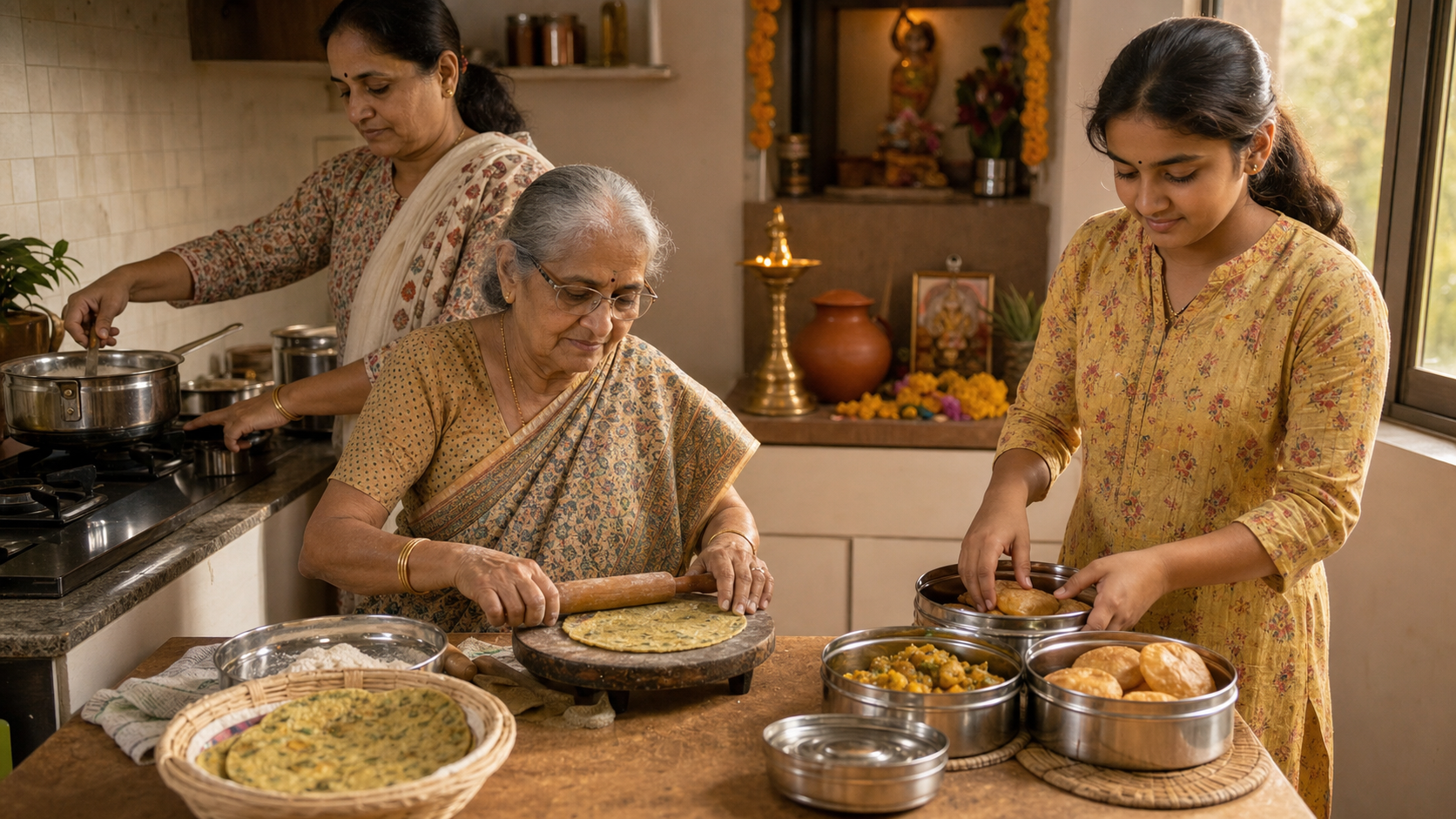
If your family observes Sheetala Satam, the easiest mistake is to treat Randhan Chhath as an extra festival to fit into an already crowded day. Its practical purpose is more focused: finish the preparations that will let you approach the next day’s vrat and puja without confusion.
In 2026, Randhan Chhath falls on 2 September, on Vad Sashti in the Gujarati month of Shravan. It is the day immediately before Sheetala Satam and is a preparation day, not a separate vrat. That distinction should shape your entire plan.
Put the correct day and purpose on the family calendar
Begin with a two-line schedule. Mark Wednesday, 2 September 2026, for Randhan Chhath preparations. Mark the following day for your family’s Sheetala Satam vrat and puja. Keeping the two functions separate prevents a common kind of confusion: restrictions or ritual duties associated with the vrat are sometimes casually transferred to the preparation day without anyone checking whether the family tradition actually requires them.
Do not invent a Randhan Chhath fast simply because Sheetala Satam is called a vrat. If someone in the household plans to fast, ask whether that is part of the family’s Sheetala Satam observance and when it begins. A preparation day and a fasting observance are not interchangeable.
If your household, community temple, or family priest follows a particular local panchang, confirm the date with that authority before inviting guests or promising food. The published 2026 date gives you the planning anchor; your established parampara tells you how the observance is carried out.
Confirm your family custom before choosing the menu
Randhan Chhath preparations are not the place to assemble a supposedly universal menu from scattered social-media posts. Families may preserve different rules about what is cooked, what is offered, what is reserved for the next day, and how the kitchen is left after the cooking is complete. A confident online instruction can still be wrong for your lineage.
Ask the person who normally guides the observance four concrete questions:
- Which dishes does our family traditionally prepare on Randhan Chhath?
- What portion, if any, must be kept separately for the Sheetala Satam puja?
- Are there ingredients or cooking methods our family avoids for this observance?
- Is there a customary order for completing the cooking, cleaning the kitchen, and beginning the next day’s worship?
Write the answers down. This small act matters when several generations are cooking together, because an unwritten rule remembered halfway through the evening can force unnecessary recooking.
Then divide the food plan into three clearly named portions: anything intended for puja, the household meal, and food for guests. Keep the puja portion separate from the beginning if that matches your custom. Do not wait until serving time and then try to reconstruct which vessel or serving spoon was used where.
Work backwards from the end of the cooking day
The most useful Randhan Chhath plan starts with the condition in which the kitchen must be left, then works backwards. Decide what has to be cooked, cooled, packed, labelled, cleaned, and placed for puja before anyone begins chopping. This turns a general intention to “prepare everything” into a sequence the household can actually follow.
- Confirm the date, family rules, guest count, menu, and puja requirements before shopping.
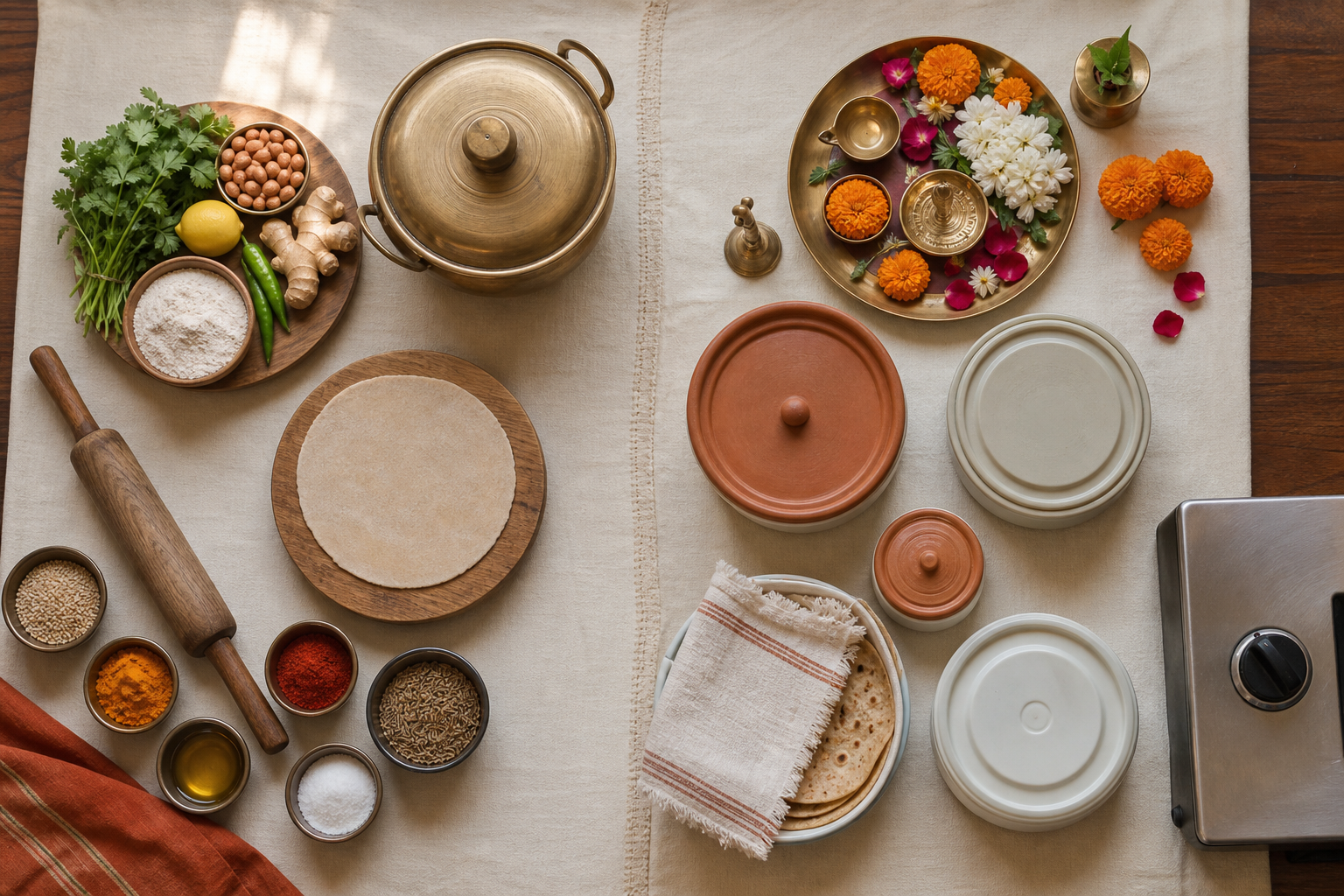
- Check the ingredients, cooking fuel, clean vessels, storage containers, and serving utensils already available at home.
- Shop from one written list, separating puja necessities from ordinary kitchen purchases.
- Choose the cooking order according to the time each dish needs and the way it will be stored.
- Set aside the designated puja portion as soon as the relevant preparation is complete, if this is part of your custom.
- Pack and identify the remaining food so that nobody has to open every vessel the next morning.
- Clean the cooking area and complete any customary kitchen-closing practice in the order preserved by your household.
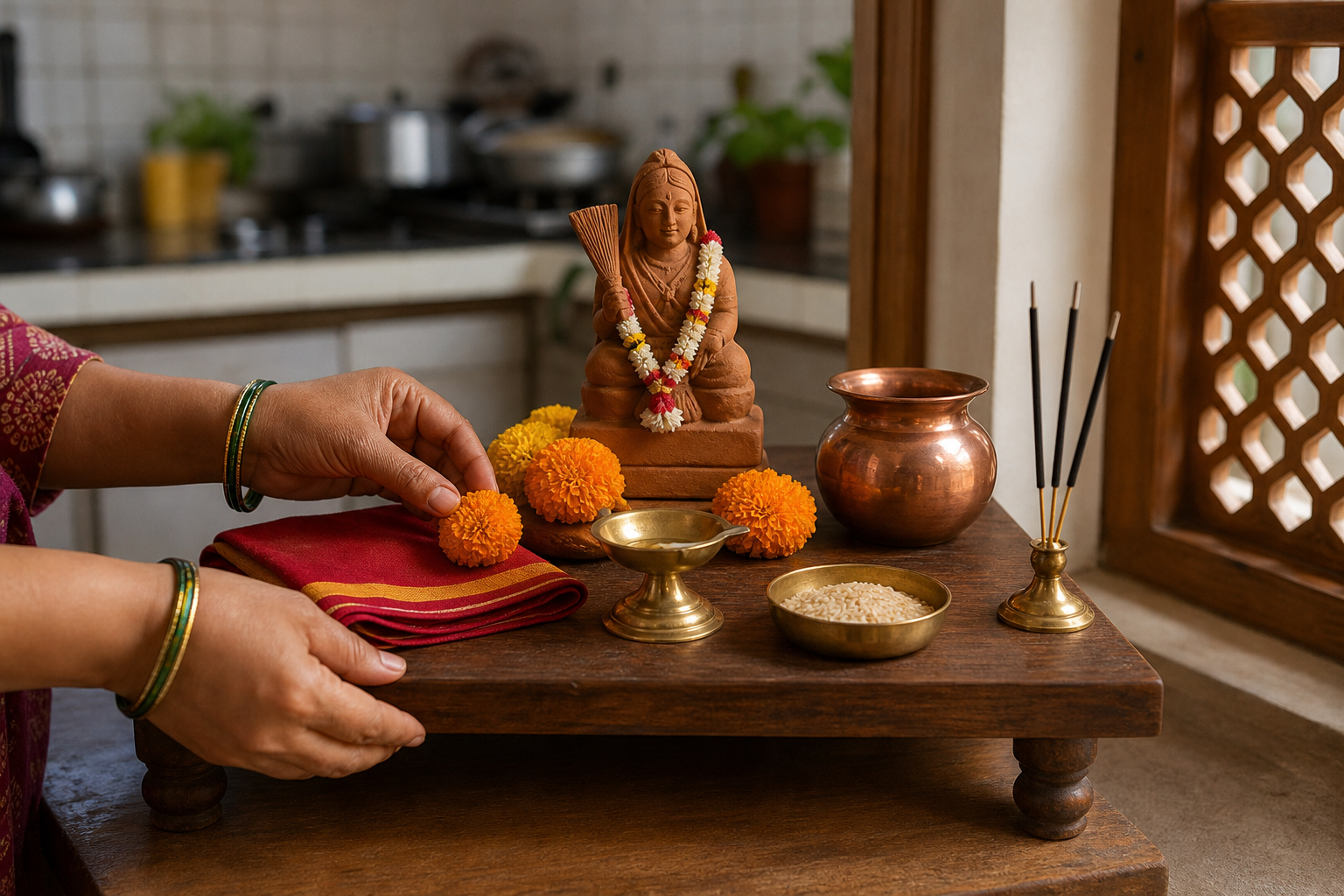
- Place the next day’s puja materials together and review the morning sequence with the people participating.
Assign ownership rather than asking everyone to “help.” One person can keep track of the family rules and puja portion. Another can lead the cooking sequence. Someone else can handle containers, cleaning, and the next-day setup. Children can place approved non-fragile items together or help label containers. Clear roles reduce repeated questions and make participation meaningful without putting the ritual sequence at risk.
Preserve the observance without neglecting food safety
If your family’s Sheetala Satam practice includes eating food cooked on the previous day, storage is part of the preparation. Religious significance does not prevent cooked food from spoiling. Choose preparations that can be stored safely in your climate, use clean covered containers, keep raw and cooked ingredients separate, and refrigerate foods that require refrigeration rather than leaving them out overnight.
Do not taste food that looks or smells spoiled merely because it was prepared for the observance. If a dish has not been stored safely, discard it and ask the person guiding your family practice how to proceed ritually. Protecting the household from avoidable illness does not require you to invent a substitute rite.
The same discipline applies to ritual details. If your family has a formal practice involving the stove or the conclusion of cooking, follow the inherited order and ordinary fire-safety precautions. Do not copy a dramatic version seen elsewhere and assume it belongs to every Gujarati household.
Key takeaways for Randhan Chhath 2026
- Use 2 September 2026 as the Randhan Chhath preparation date; it falls on Vad Sashti in Gujarati Shravan.
- Keep the distinction clear: Randhan Chhath prepares the household for Sheetala Satam Vrat Puja and is not itself a separate vrat.
- Confirm the menu, restricted ingredients, puja portion, and kitchen sequence from your own family or temple tradition.
- Plan backwards from the completed kitchen, including cooking, packing, cleaning, storage, and puja setup.
- Store next-day food safely. If its safety is doubtful, do not eat it merely because it was prepared for the observance.
- If you miss a step or discover conflicting instructions, consult the person who guides your parampara instead of creating a corrective ritual from guesswork.
Before 2 September arrives, make one short call to the elder, priest, or temple authority your household trusts and turn the answers into a written kitchen plan. Then Randhan Chhath can do what it is meant to do: leave you prepared to meet Sheetala Satam with attention rather than last-minute activity.

References
