
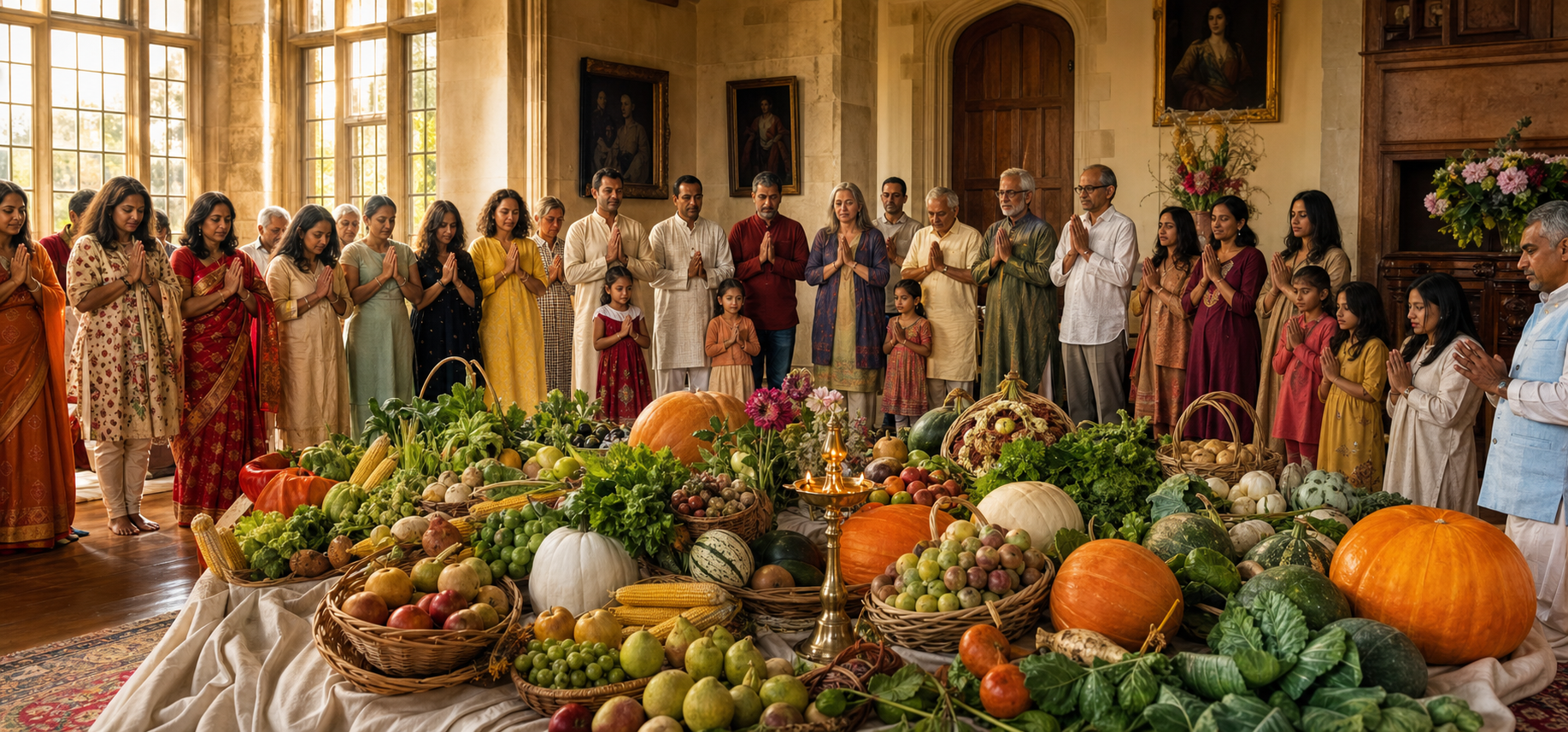
If you have seen images from Bhaktivedanta Manor’s Harvest Festival, the visible scene can seem self-explanatory: harvested produce, a devotional offering and a gathered community. The more useful question is what the gesture asks you to notice and do.
The answer is more demanding than simply feeling thankful. At Bhaktivedanta Manor, people gather to offer the season’s harvest with grateful hearts, continuing an observance that brings the community together year after year. Its discipline is to recognise what you received, remember that you did not produce it alone, and let that recognition shape your conduct.
The sequence matters: receive, remember, offer
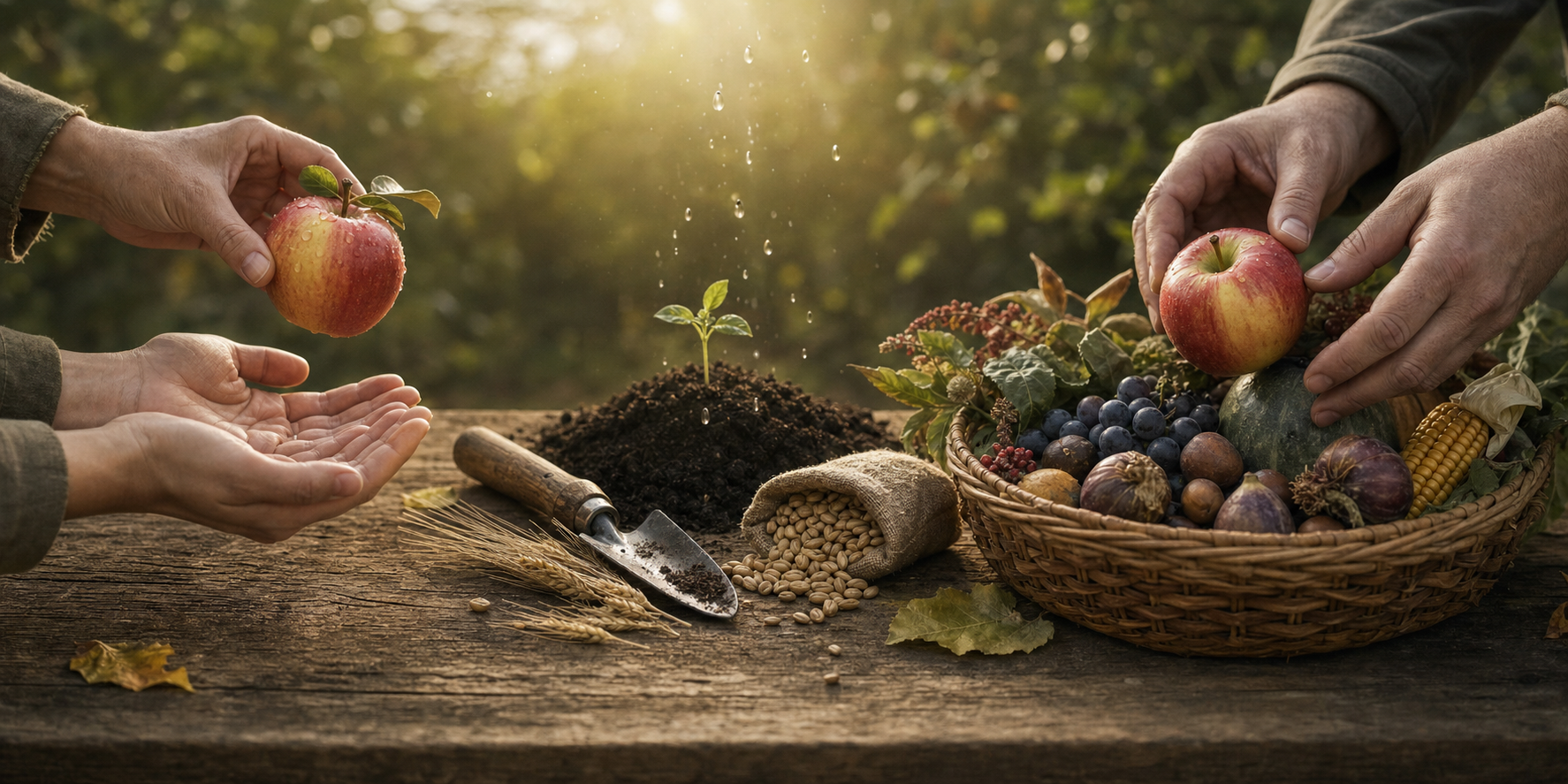
Most of us encounter food at the end of a long chain. It arrives washed, packed, priced and ready to carry home. That convenience can hide the conditions behind it: seed, soil, water, sunlight, time, cultivation, transport and cooking. By placing the harvest before the community as an offering, the festival reverses that forgetfulness. Food is seen first as something received through many forms of dependence, not merely as something acquired.
This distinction matters even if you have never worked on a farm. You may have paid for your food, but payment does not make you the sole cause of it. The harvest therefore becomes a practical correction to the illusion of self-sufficiency. It asks you to relocate some of the credit that the ego normally keeps for itself.
Use three questions to make that correction concrete:
- What have you received that you usually treat as automatic?
- Which people and natural conditions made it possible?
- What response would show gratitude more clearly than words alone?
Choose one ordinary thing rather than an abstract idea. A bowl of grain, a piece of fruit or the meal in front of you is enough. Trace its dependencies honestly. The point is not to produce a complete account; it is to interrupt the habit of receiving without remembering.
Read the offering as recognition, not decoration
A harvest display can be visually beautiful, but beauty is not the whole meaning. If you focus only on colour, arrangement or photography, the produce becomes scenery. In a devotional setting, its placement redirects attention from possession to offering.
The order is significant. Gratitude comes after receiving and before thoughtless consumption. That pause prevents abundance from being mistaken for entitlement. It also distinguishes an offering from a transaction. If you approach the act only as a request for future prosperity, you miss what the festival foregrounds: thankfulness for what has already arrived.
When you encounter the festival, notice four connected elements:
- The harvest: a visible result of processes no single person controls completely.
- The offering: an act that refuses to treat the result as an isolated personal achievement.
- The grateful disposition: the inward recognition that gives the outward gesture its meaning.
- The gathering: a community remembering together rather than leaving gratitude as a private sentiment.
This gives you a better way to look at festival photographs or to explain the observance to a child. Don’t stop at naming the vegetables or admiring the arrangement. Ask what the arrangement directs attention toward. The visible harvest is the doorway; remembrance is the practice.
Confirm the practical details before you visit
A retrospective view of a celebration cannot safely tell you how a future programme will operate. Before travelling, confirm the current arrangements directly with Bhaktivedanta Manor. In particular, check:
- the date and starting time of the festival programme;
- whether advance registration or an entry arrangement applies;
- transport, parking and accessibility details;
- whether visitors are invited to bring produce and, if so, what is suitable;
- the expectations around photography during worship or offerings.
Do not arrive with an offering based only on guesswork. Temples may have particular ways of receiving and presenting items, and an unrequested contribution can create practical difficulty even when the intention is generous. Ask first, then follow the guidance you receive.
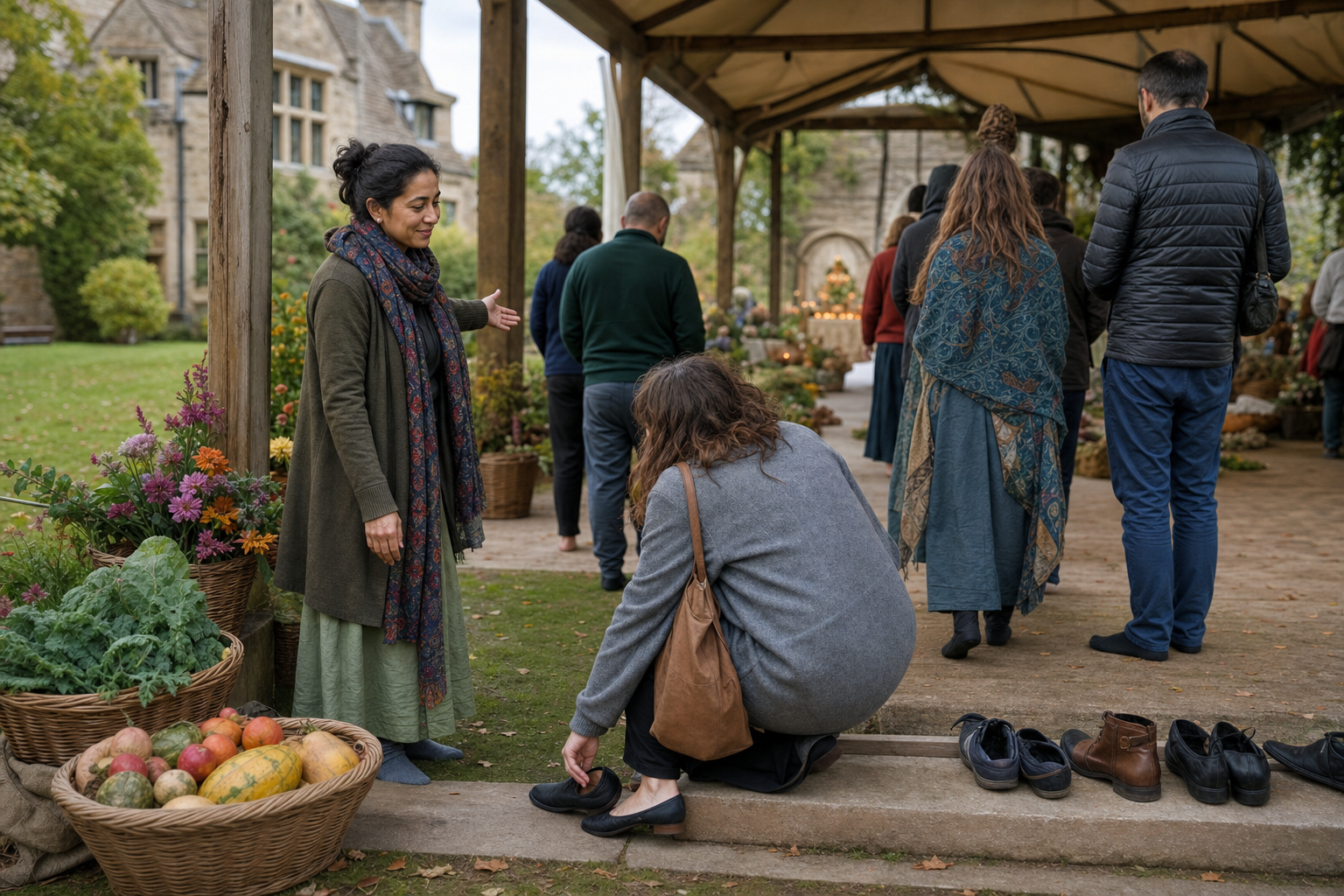
Once there, let the congregation set the pace. Observe where visitors stand, keep pathways clear, and ask a volunteer quietly if you are unsure when to move or participate. Treat photography as secondary. A useful rule is simple: understand the moment before trying to capture it.
Carry the festival’s principle into your next meal
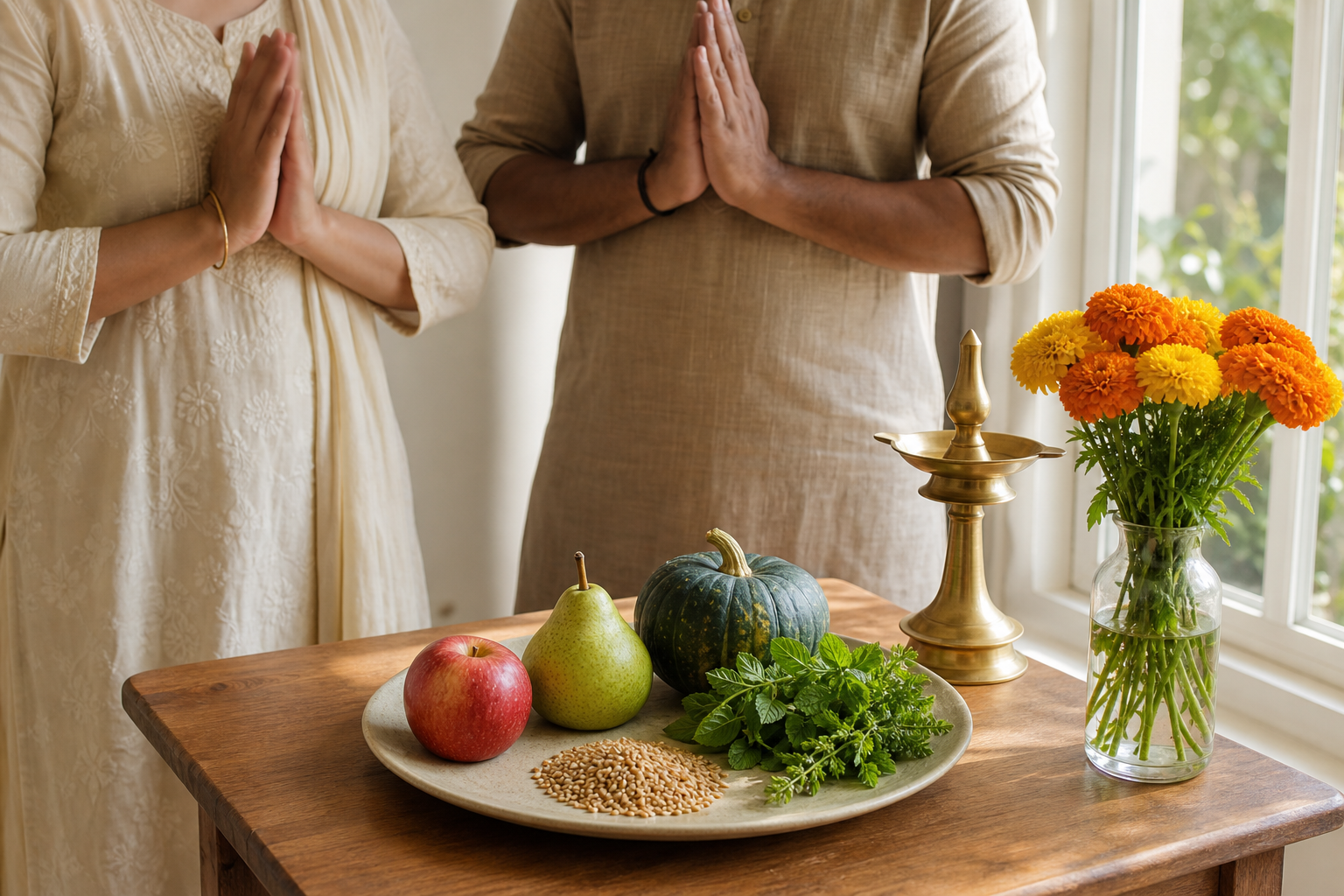
You do not need to imitate a temple ceremony to learn from it. If your family or sampradaya has an established practice for offering food, follow that practice rather than improvising a sacred rite. If you do not have such a practice, you can still cultivate remembrance without pretending that a household reflection is the same as the observance at Bhaktivedanta Manor.
Try this with one meal containing seasonal produce:
- Place the food where everyone can see it. Pause before serving or eating.
- Name its dependencies. Mention the land, water, weather, cultivator, transporter and cook where relevant. You do not need to know every name to acknowledge every kind of contribution.
- Express gratitude in the form you can mean. Use your customary prayer, a familiar mantra or a short period of silence.
- Choose one material response. Plan to use the leftovers, share safe surplus food, thank the person who cooked, or learn which produce is in season where you live.
- Repeat the pause. A single reflective meal is pleasant; a repeated practice is what begins to correct forgetfulness.
Keep this brief enough to sustain. One attentive minute before a regular meal is more valuable than an elaborate exercise that happens once and disappears. The purpose is not performance. It is to restore a relationship between receiving and responding.
Let gratitude become visible in your conduct
The easiest mistake is to admire a devotional offering while leaving everyday habits untouched. Gratitude that never affects consumption remains largely a feeling. The harvest gives you a simple test: does remembering the origin of food change how casually you waste, ignore or take it for granted?
Choose one observable discipline for the coming week:
- Plan one meal around food already in your home before buying more.
- Use a perishable item while it is still fresh instead of letting it become waste.
- Thank the person who prepared a meal, without treating their labour as automatic.
- Share usable surplus promptly and safely rather than waiting until it is no longer useful.
- Learn the growing season of one fruit, grain or vegetable you regularly eat.
- Keep your phone away during the first minute of one meal and use that attention for remembrance.
Choose only one if that makes it easier to follow through. A modest action completed repeatedly expresses more than a long list of virtuous intentions. This is where the festival’s meaning leaves the ceremonial space and enters daily life.
Key takeaways
- Bhaktivedanta Manor’s Harvest Festival centres on gathering, grateful remembrance and the offering of the season’s harvest.
- The harvest is not merely decoration; it makes dependence on nature, labour, time and community visible.
- Before attending, confirm the current programme, entry arrangements and guidance about offerings directly with the Manor.
- At home, follow your established devotional tradition if you have one; don’t claim that an improvised reflection reproduces a temple observance.
- Test gratitude through conduct: reduce waste, acknowledge labour, share responsibly or pay closer attention to what you receive.
At your next meal, pause before the first bite and name one condition or person without whom it would not be there. Then choose one action that honours that dependence. That small movement from receiving to remembering is the part of the harvest you can carry with you.
References
