
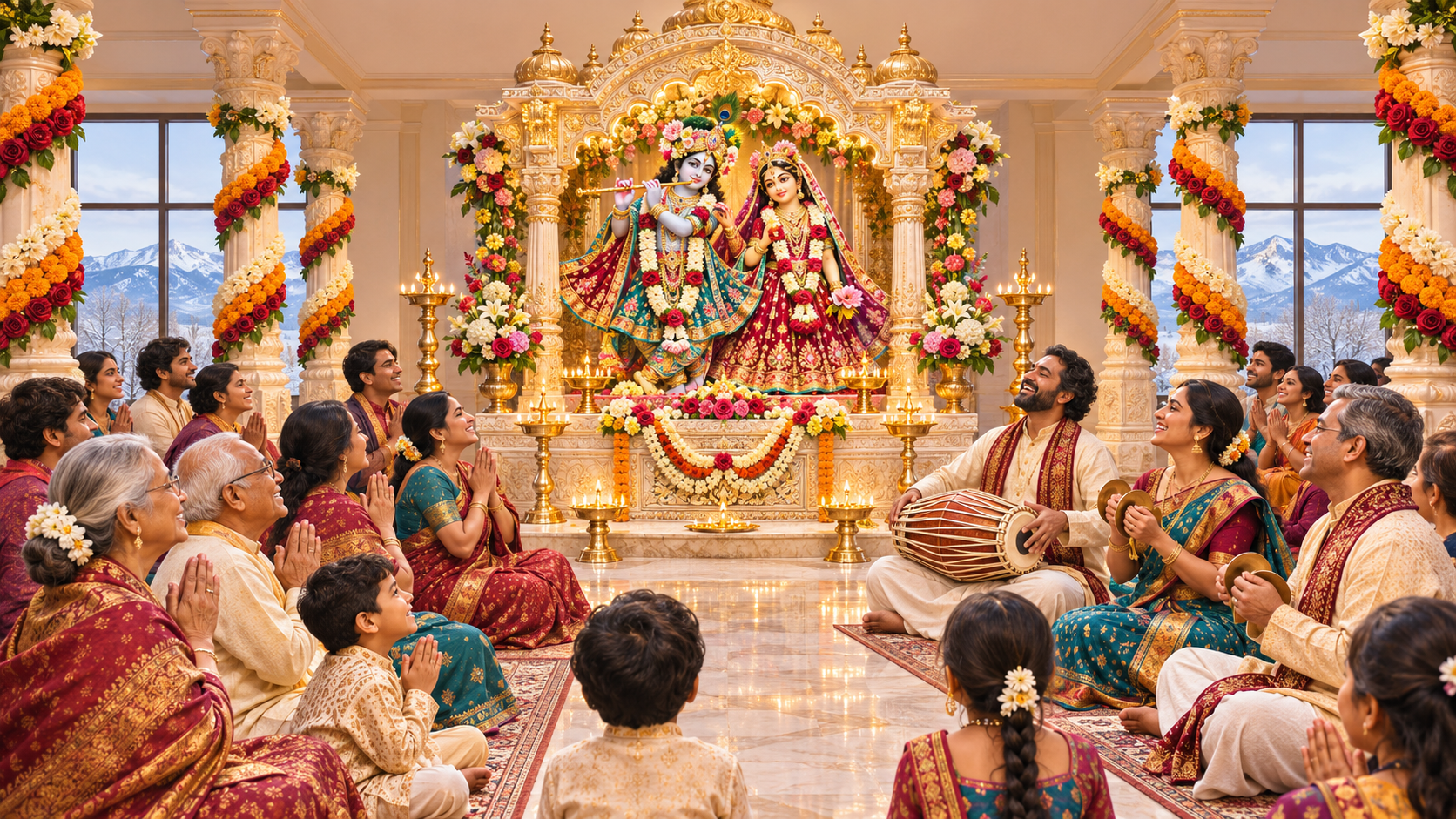
If you heard that Sri Sri Radha Govinda completed 50 years in Denver and wondered what the occasion actually marked, begin with the language devotees themselves use. This was not simply the jubilee of a building or organization. It was the 50th Appearance Anniversary of Their Lordships, observed through Sri Sri Radha Govinda Brahmotsavam.
If you missed the gathering, you can still approach it with care. Denver’s Day 2 Sunday program took place on November 22, 2026, from noon to 5 p.m. MST at the Hare Krishna temple in Denver, Colorado. The replay gives you a defined doorway into the celebration, provided you understand what it represents and what it does not.
What this 50th anniversary marks
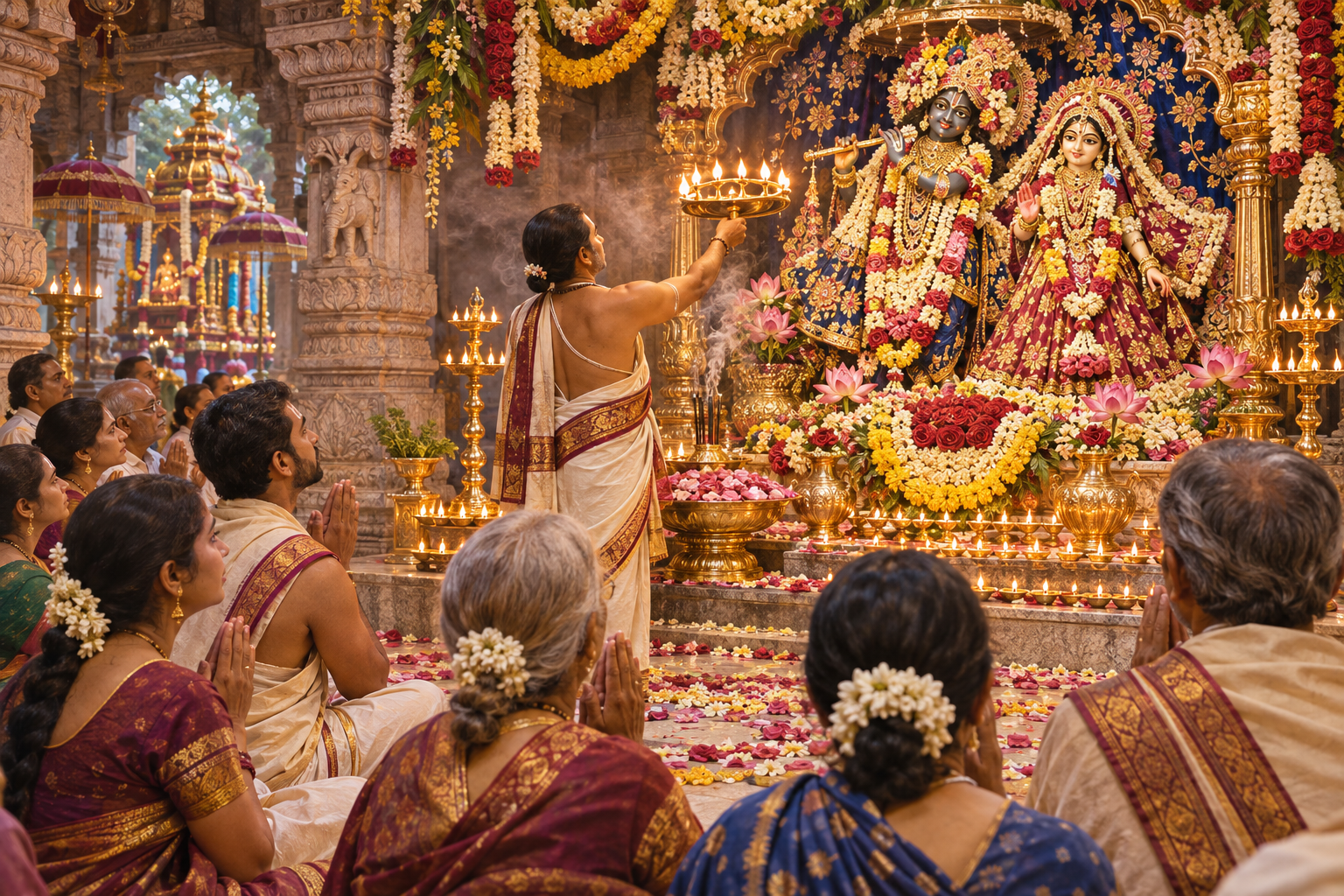
In Vaishnava murti-seva, the deity is addressed and served personally. That devotional relationship explains why the celebration is described as an appearance anniversary and why Sri Sri Radha Govinda are respectfully called Their Lordships. The sacred center is Radha and Govinda, not the institution congratulating itself for reaching a milestone.
This distinction changes how you understand Brahmotsavam. Its significance is not exhausted by speeches, decorations, attendance, or nostalgia. Those things can support the observance, but the festival’s inner logic is seva: worship offered to the Lord and shared by a community gathered around that worship.
If you describe the occasion to someone else, retain that deity-centered framing. Call it the 50th Appearance Anniversary of Sri Sri Radha Govinda. Avoid reducing it to a temple birthday, and do not replace the community’s chosen names with language that treats the deities as decorative objects. Accurate terminology is a simple form of respect.
How to approach the Day 2 Sunday replay
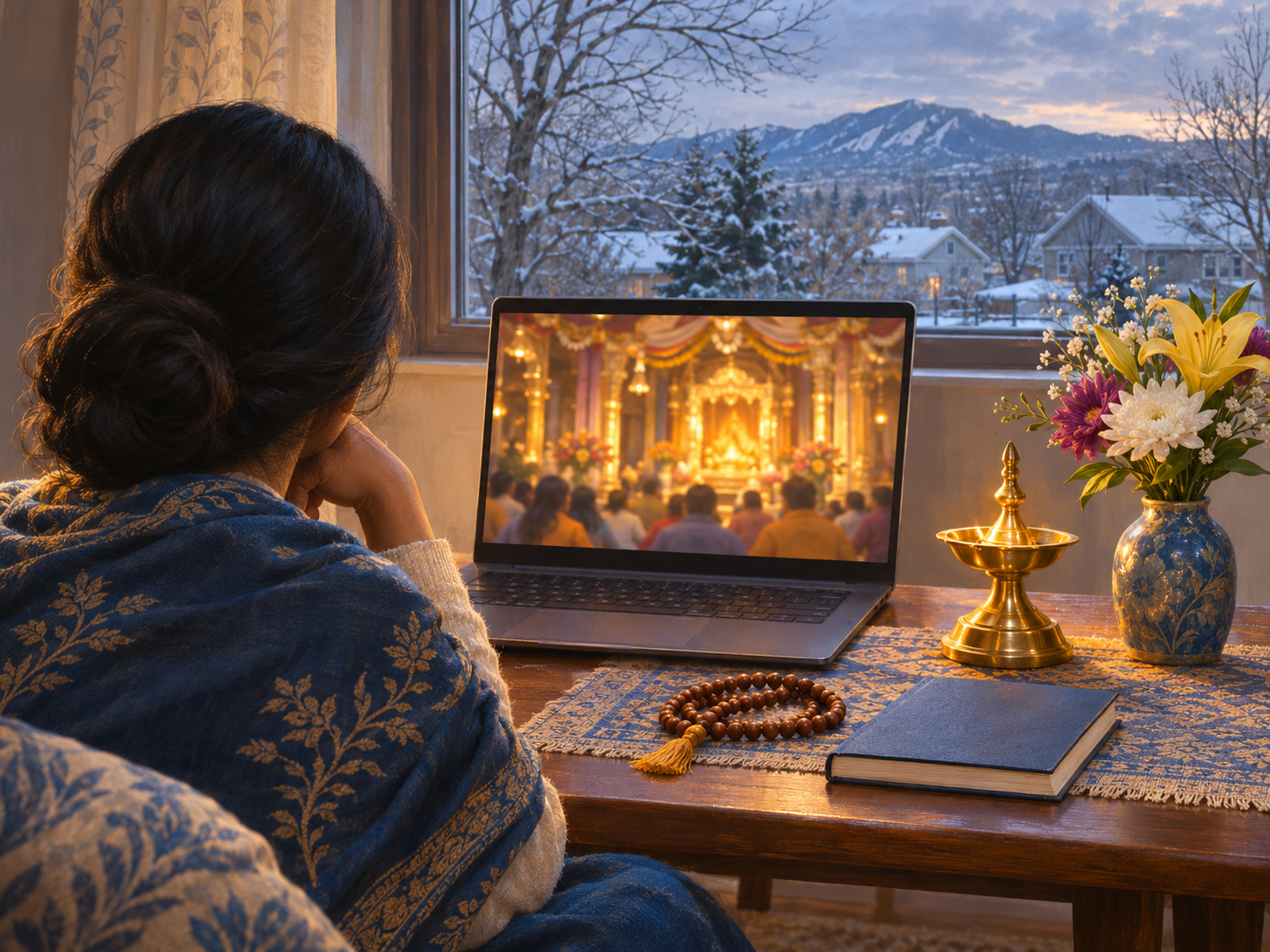
The listed Sunday program occupied a five-hour window. You do not have to consume that entire span as undifferentiated online content. Decide why you are watching, then let that purpose determine what you notice.
- For devotional participation: choose a clean, quiet place and give the program your attention. Follow prayers or responses you already know. When something is unfamiliar, listen without inventing an explanation.
- For family learning: pause at natural transitions to explain terms such as darshan, seva, kirtan, prasada, or Brahmotsavam when they arise. Ask younger viewers what makes the setting different from an ordinary stage event.
- For community history: note timestamps whenever a name, date, memory, or account of the temple is stated. Record what was actually said; do not fill gaps with assumptions.
- For writing or sharing: identify it precisely as the Day 2 Sunday program. A replay of one scheduled portion should not be presented as a complete record of every part of the anniversary celebration.
If you divide your viewing, stop at natural program changes and save the timestamp. Keep the original date, location, and time zone in your notes. MST may not matter to someone watching later, but it matters when the recording becomes part of a historical archive.
Online viewing also creates a temptation to multitask. Resist it if your purpose is devotional. If your purpose is documentation, keep a notebook or a simple timestamped index. In either case, deliberate attention will give you more than leaving the program running as background noise.
What Denver reveals about Dharmic continuity
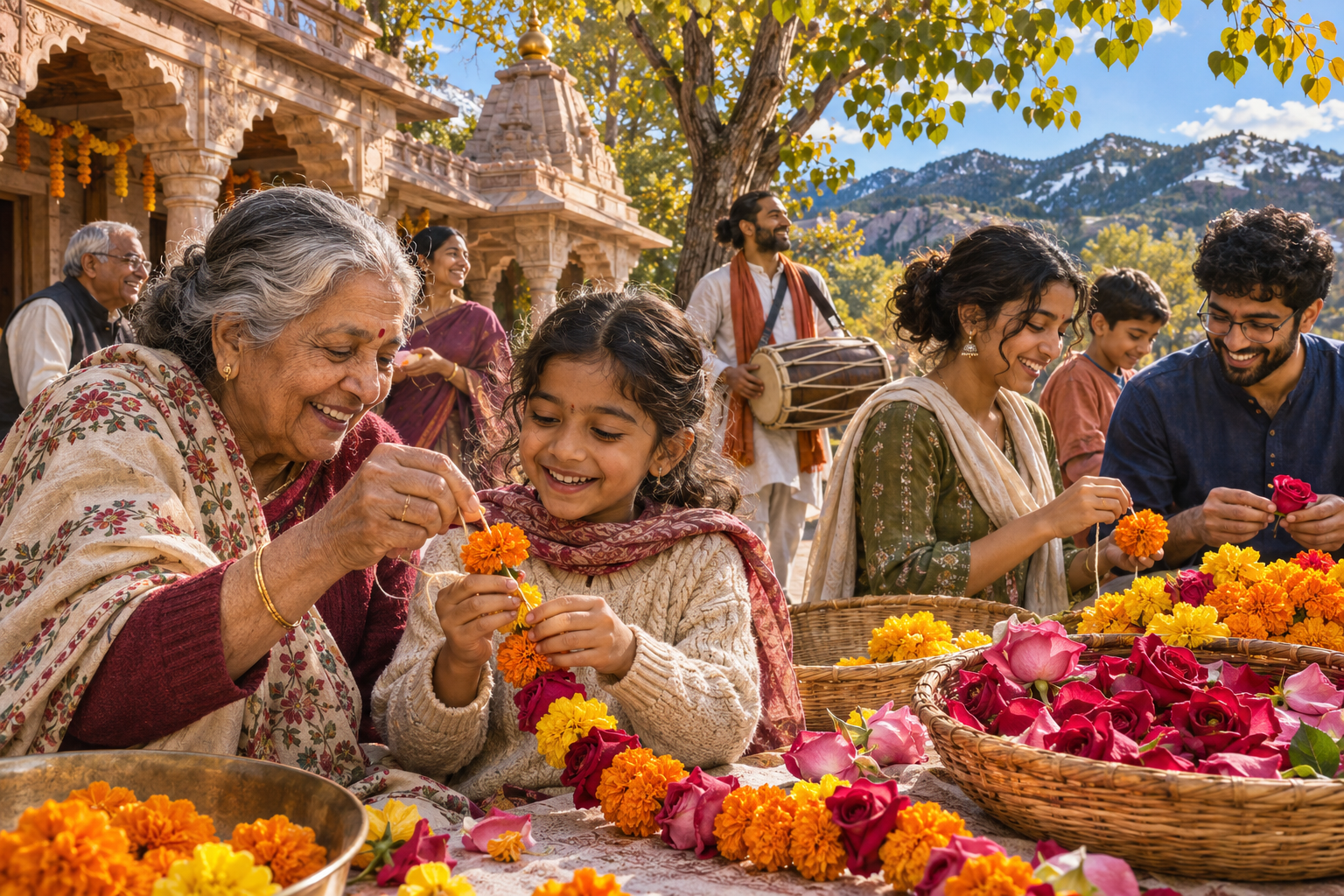
A Radha-Govinda Brahmotsavam in Denver places a devotional inheritance rooted in Bharat within the life of an American city. The important point is not that Hindu practice appears in an unexpected location. It is that a community can establish a sacred center, organize itself around worship, and carry a relationship of seva across geography.
Fifty years also asks you to think beyond a single gathering. Over such a span, newcomers can become experienced servants, children can inherit practices from elders, and memories can pass from personal recollection into community history. That transmission does not happen automatically. Names, dates, explanations, recordings, and the meaning of rituals must be preserved accurately.
As you watch, notice how continuity is maintained. Which sacred terms remain untranslated? Which parts are explained for newcomers? How is attention directed back to Sri Sri Radha Govinda? If volunteers, families, elders, or younger devotees are visible, observe how their roles support the worship rather than treating the gathering as a performance.
You can apply the same test to your own temple or Dharmic community. Preserve the exact names of observances. Attach dates and locations to photographs. Add context when sharing a video. Ask elders to identify people and practices while those memories are still available. A public link without metadata is easily detached from its meaning; a small, accurate record can remain useful to the next generation.
Key takeaways
- The occasion honored the 50th Appearance Anniversary of Their Lordships Sri Sri Radha Govinda through Brahmotsavam at ISKCON Denver.
- The available Day 2 Sunday program was recorded at the Hare Krishna temple in Denver on November 22, 2026, from noon to 5 p.m. MST.
- Use the replay according to a clear purpose: devotional participation, family learning, community history, or accurate reporting.
- Describe the replay according to its actual scope. It records the Day 2 Sunday program, not necessarily every part of the wider celebration.
- When preserving or sharing it, keep the title, date, location, time zone, public link, and any verified timestamps together.
Turn commemoration into service
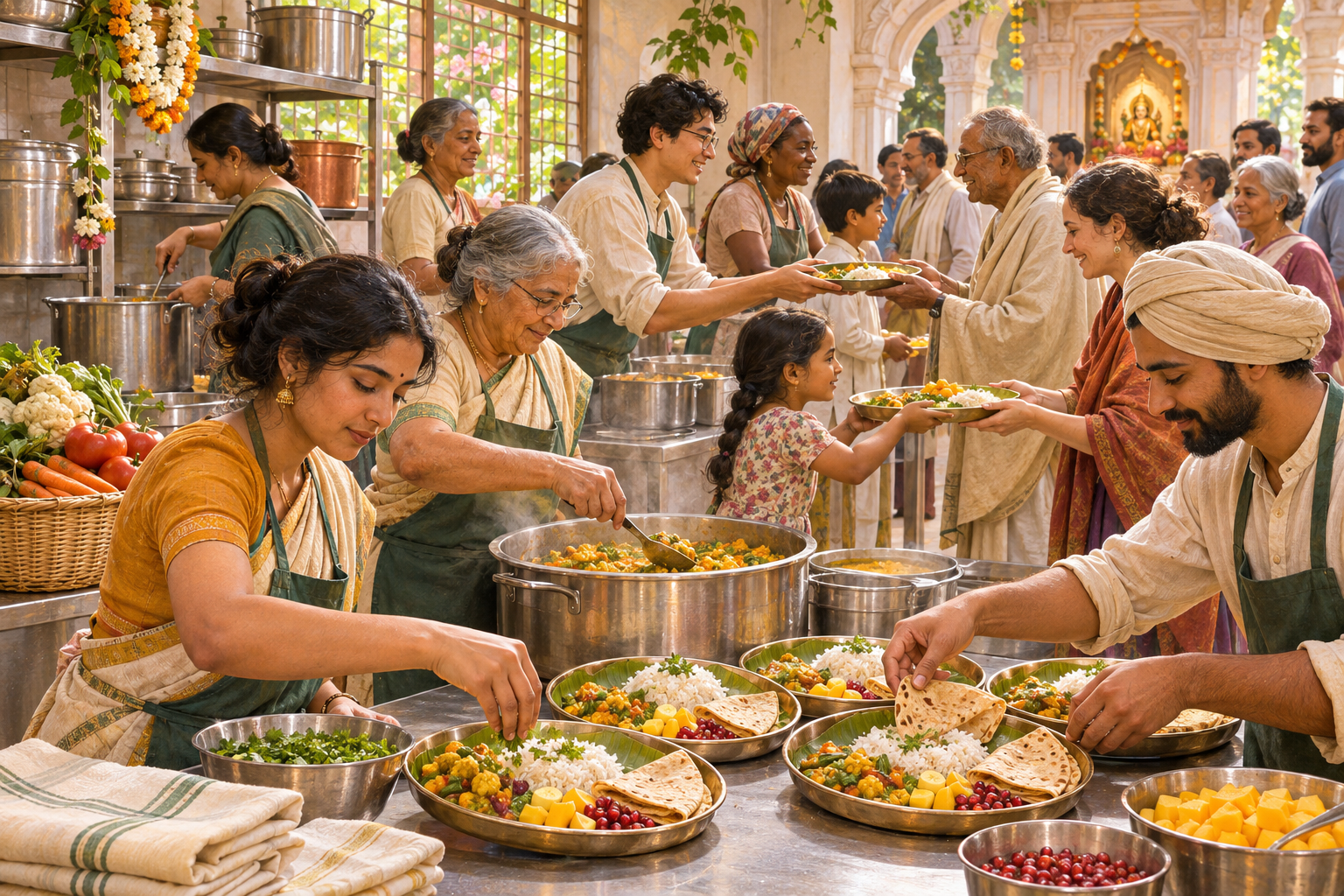
An anniversary can become a pleasant memory and then disappear. A better response is to let remembrance produce one concrete act of seva. Share the replay with its full context. Create a timestamped index for your family. Learn the correct meaning of one unfamiliar ritual term. Ask your local temple how you can participate in current worship or community service.
If you are introducing someone to the celebration, begin with Sri Sri Radha Govinda rather than with institutional history. Explain why devotees speak of appearance, worship, and service. Then watch part of the Sunday program together with enough attention to discuss what you actually observed.
You did not need to be physically present in Denver to receive something from the occasion. Approach the replay deliberately, preserve its context faithfully, and carry one practice of attention or service into your own community. That is how a 50th anniversary points toward the years still to come.
References

Leave a Reply
You must be logged in to post a comment.