
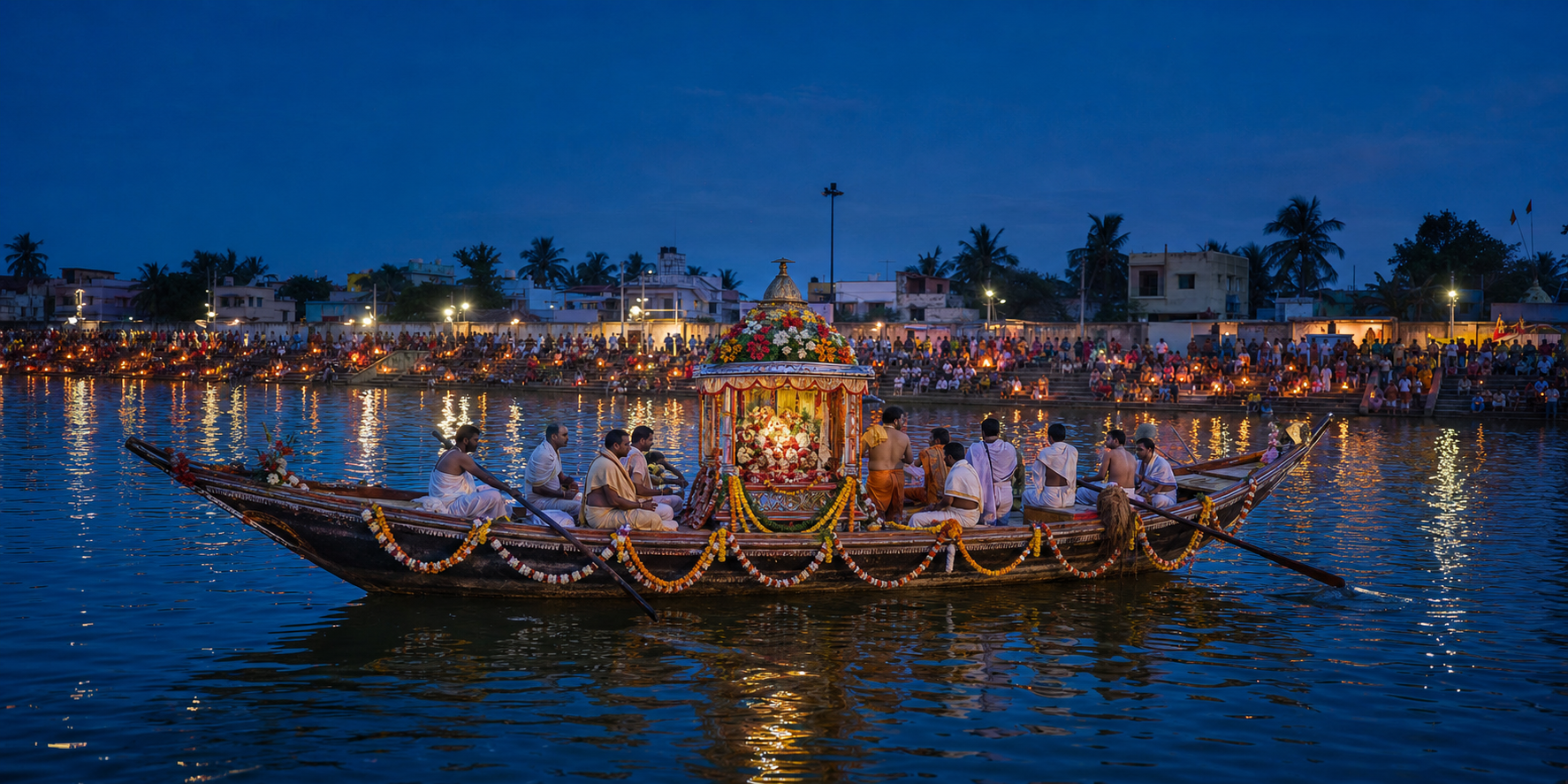
If you have only one evening in Puri, the choice that matters is not simply whether Chandan Yatra is under way. You need to know which half of the festival is being observed. The public boat processions belong to Bahara Chandana; the succeeding Bhitara Chandana rites continue inside the Srimandir and are not a comparable public-viewing opportunity.
That distinction can save you from building an itinerary around an event you cannot see. It also helps you understand why sandalwood, water, procession, temple seva and the beginning of Rath Yatra preparations all meet on the same sacred calendar.
Key takeaways
- The 2026 Chandan Yatra began on April 20, the date of Akshaya Tritiya.
- The full Puri observance follows a customary 42-day structure: 21 days of Bahara Chandana followed by 21 days of Bhitara Chandana.
- Choose the Bahara phase if your purpose is to witness the evening procession and boat ritual at Narendra Pokhari.
- The visible procession centers on Madanmohan, the mobile representative form of Sri Jagannath. Companion icons vary by day.
- Akshaya Tritiya also begins Ratha Anukula, the consecrated opening of chariot construction for Rath Yatra.
- Treat phase-end dates and evening timings as planning guides until they are confirmed through the applicable local panji and Srimandir notices.
Choose the phase that matches what you want to experience
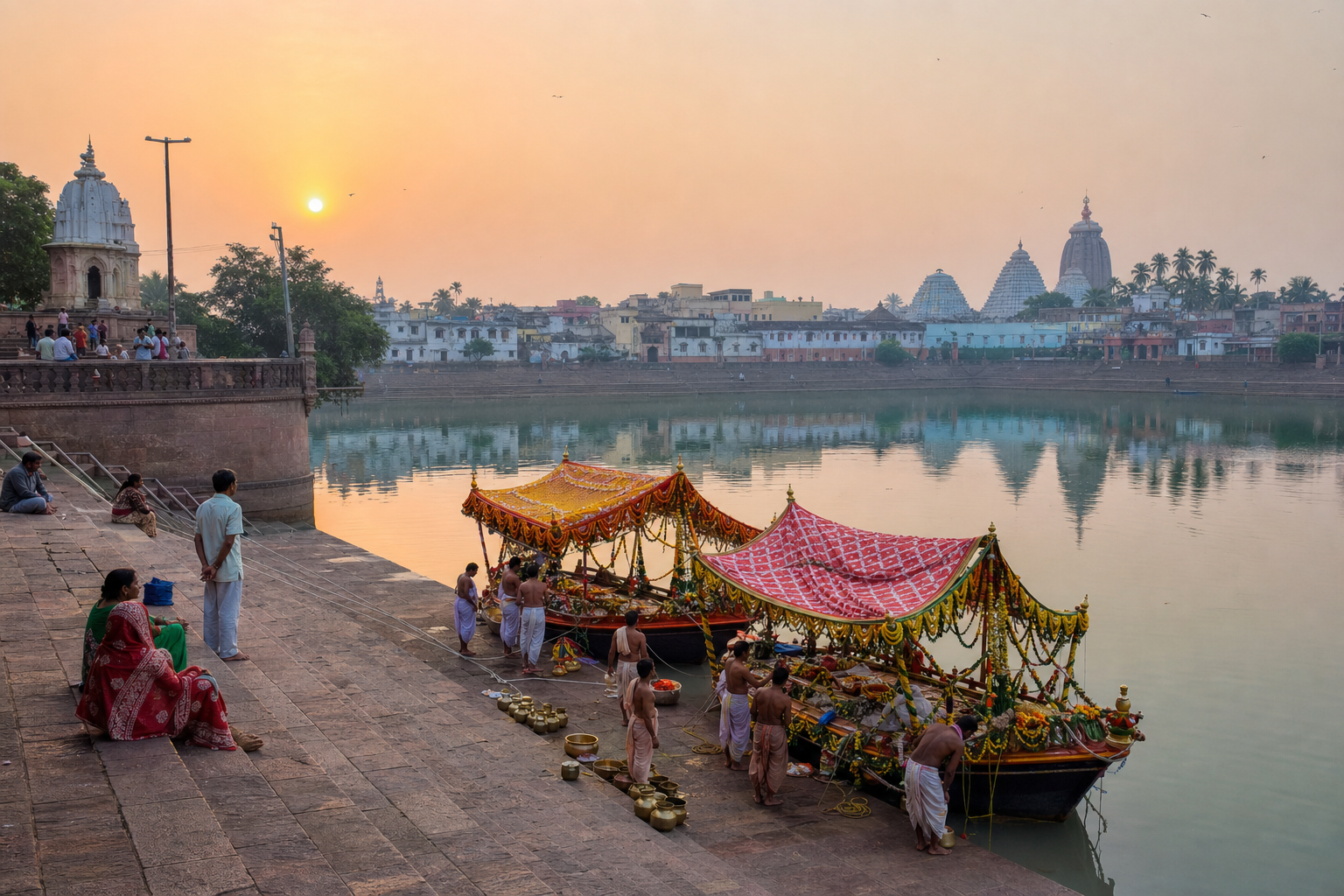
Chandan Yatra is one continuous summer cycle, but its two halves offer very different experiences. Bahara means outer: the utsava murtis leave the temple setting in procession and travel to Narendra Pokhari. Bhitara means inner: the cooling seva continues within the Srimandir.
| Phase | Customary 2026 dates | Where it occurs | What a visitor should expect |
|---|---|---|---|
| Bahara Chandana | April 20 to approximately May 10 | Processional route and Narendra Pokhari | Publicly visible evening processions, decorated boats and Nauka Vihara from viewing areas around the tank |
| Bhitara Chandana | Approximately May 11 to May 31 | Inside the Srimandir | Continuation of sandalwood anointing and cooling services, with restricted public access |
The word approximately matters. The 21-plus-21 structure tells you how the festival is organized, but it does not replace the daily temple program. Evening start times, the participation of companion icons and other operational details can vary. If a particular procession matters to you, confirm that date locally before committing your only available evening.
If you can attend only once, select an evening during Bahara Chandana and make Narendra Pokhari your primary destination. Do not assume that merely being in Puri during the broader 42-day period guarantees a boat procession. If your interest is liturgical rather than visual, remember that Bhitara Chandana is not an empty second half; it preserves the festival’s central cooling seva after the public movement ends.
Read the boat procession as seva, not merely spectacle
The scene at Narendra Pokhari is visually compelling: decorated boats move across the water at evening, lamps gather against the darkening tank, and conches, ghanta and mardala shape the soundscape. Yet the beauty is carrying a precise theological idea. Sri Jagannath is served as a living divine presence whose comfort matters during the heat of the Odisha summer.
Four details help you read what is happening:
- Madanmohan represents Sri Jagannath. The procession uses an utsava murti suited to ceremonial movement. Understanding this prevents the common mistake of waiting for the principal temple images themselves to appear at the tank.
- The boat ritual is Chapa Khela or Nauka Vihara. The two traditional decorated craft are identified as Nanda and Bhadra. Their movement on the water is part of the worship, not transportation between two unrelated ceremonies.
- The participating icons can change. Sridevi and Bhudevi accompany Madanmohan on specified days, while utsava icons such as Rama and Krishna may also participate. Do not promise yourself or another pilgrim a particular grouping without checking that day’s program.
- Shaiva presence belongs to the festival’s sacred grammar. On certain days, icons associated with allied Shaiva shrines, including the Pancha Pandava Shiva lingas, may join the aquatic observance. This is a concrete expression of Odisha’s Shaiva-Vaishnava confluence rather than a modern attempt to blur distinct traditions.
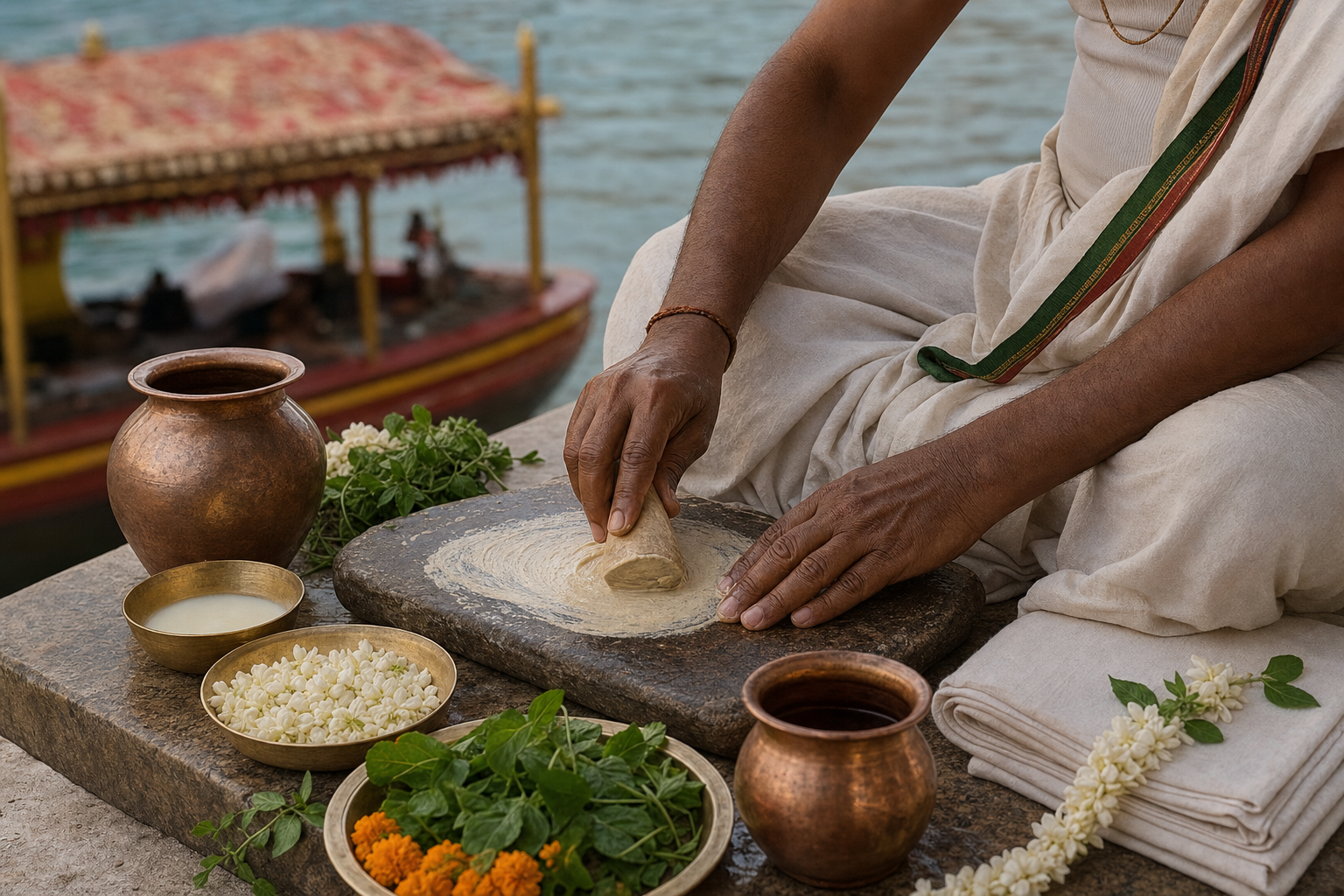
Chandana itself completes the meaning. Sandalwood paste is cooling, fragrant, sattvic and ritually purifying. It is traditionally ground on stone slabs until it reaches a fine, usable consistency. Camphor and saffron can be included, along with compliant plant-based alternatives where musk would once have been considered. The balance of fragrance, water and thickness matters because the paste must coat the utsava murtis evenly rather than dry into cracks.
During Bhitara Chandana, this logic continues through chandana-lagi, cooling seasonal offerings known as sitala bhoga, and water-based comforts beneath ritual canopies. The public boats have stopped, but the service has not. If you explain the festival to a child or a first-time visitor, the clearest description is simple: devotees respond to summer heat by offering the Lord cooling care.
That care also gives the observance wider Dharmic resonance. Seva is expressed through attention to season, material, place and the well-being of the divine presence. Ahimsa appears here not as a slogan but as a habit of minimizing discomfort. The rite asks you to notice heat, respond appropriately and make devotion tangible.
Akshaya Tritiya begins a second sacred journey
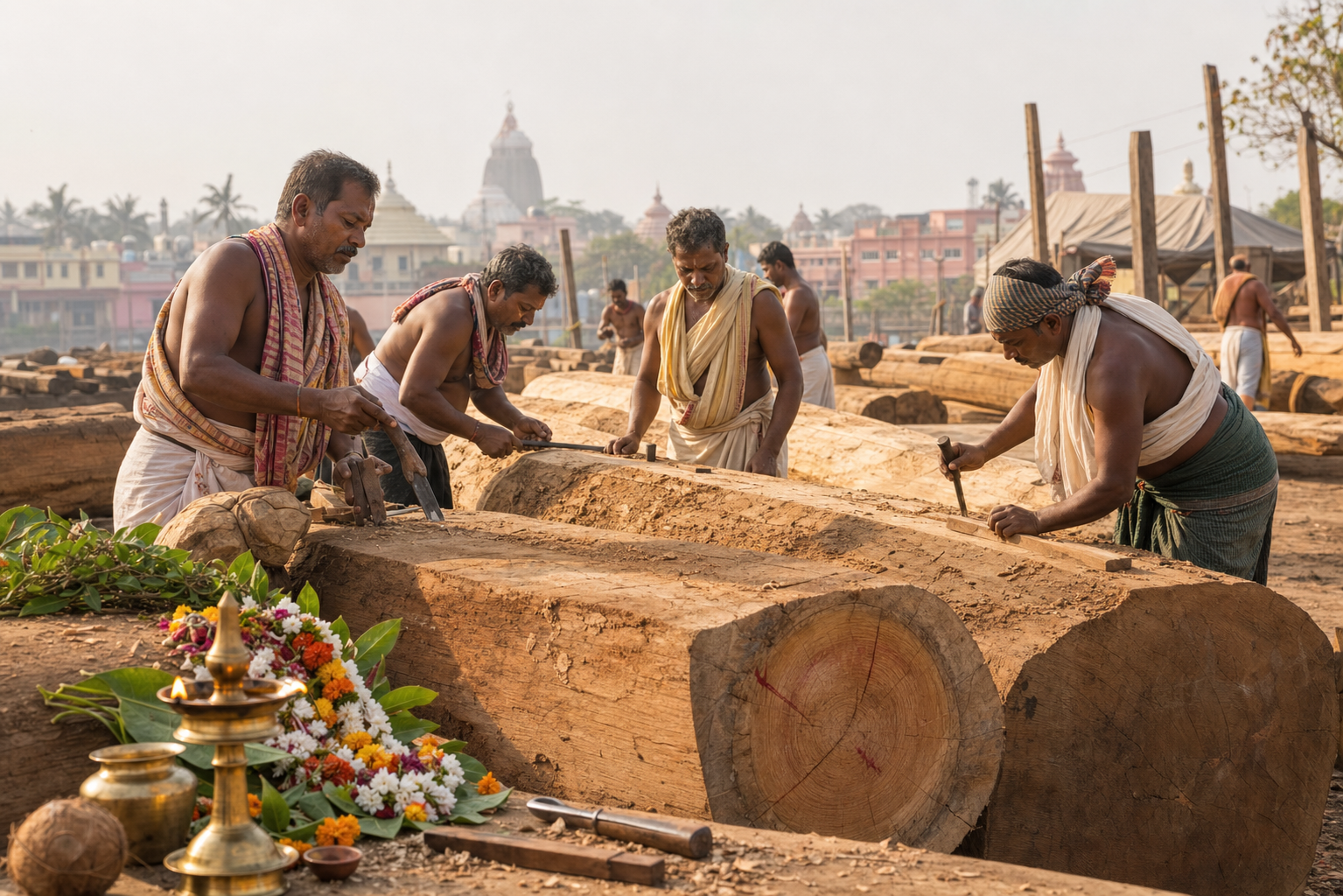
April 20 was more than the first date of Chandan Yatra in 2026. Akshaya Tritiya also inaugurated Ratha Anukula, the consecrated beginning of the work that leads to Puri’s Rath Yatra. This is why the day should not be understood as an isolated festival date.
Ratha Anukula traditionally includes the invocation of Vishvakarma, ceremonial first cuts on the chariot logs at the Ratha Khala and ankuraropana, the sowing of sacred seed. Each action turns preparation into ritual. Timber is not merely processed; chariot construction is placed within an auspicious order. Seed-sowing gives visible form to growth that will unfold through the coming festival cycle.
The connection changes how you read Akshaya Tritiya in Puri. Chandan Yatra begins the seasonal care of the deities during intense heat, while Ratha Anukula begins the material work required for their later public journey. One stream cools and comforts; the other measures, cuts and builds. Both are forms of seva, and both depend on beginning at the proper calendrical threshold.
If you follow the Jagannath calendar through the year, mark this relationship rather than treating Chandan Yatra as a decorative prelude to Rath Yatra. The first observance has its own complete theological purpose. Its place beside chariot construction reveals how Puri joins worship, skilled labor, natural materials and seasonal time.
Plan your Puri visit around access, heat and daily changes
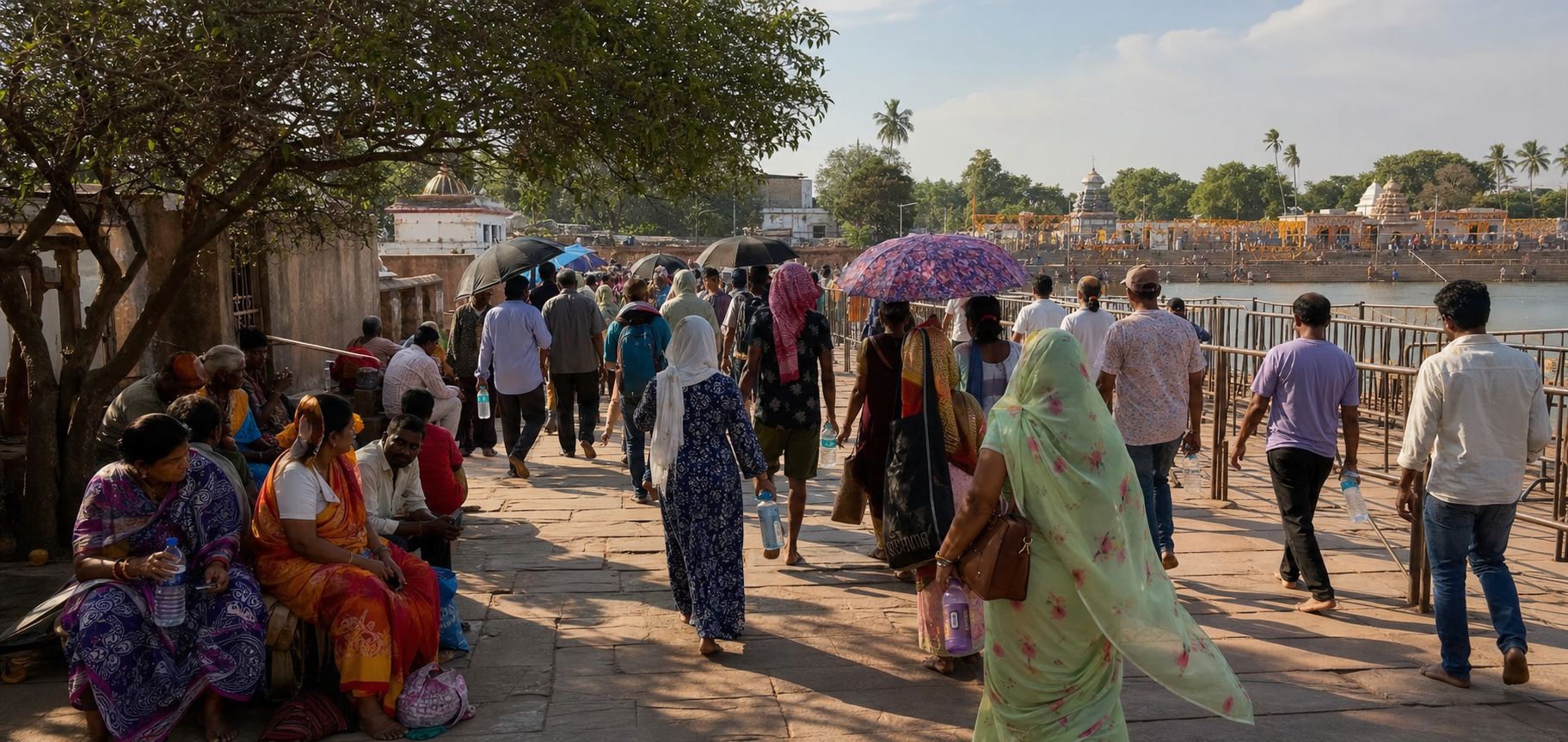
A workable visit plan needs fewer assumptions and more attention to the daily notice. Use this sequence:
- Confirm that your date falls in Bahara Chandana. For the 2026 cycle, the planning window ran from April 20 to approximately May 10. A date in the later Bhitara phase would not provide the same public boat experience.
- Check the date-specific program. Consult the applicable local panji and current Srimandir notification for the evening time and participating icons. If seeing a particular companion deity matters, keep a second possible evening in your itinerary.
- Go to Narendra Pokhari early. Viewing is available from the ghats and roadside areas around the tank, but crowds build as the procession approaches. Arriving ahead of the evening movement gives you time to understand the available sightlines without pushing through a settled crowd.
- Treat the tank and temple as separate access environments. The Bahara observance is publicly visible around Narendra Pokhari. The Srimandir maintains its own traditional entry norms, security procedures and restrictions, while the inner Bhitara rites are not an equivalent public event.
- Prepare for the day, not just the evening. Late April and May bring substantial heat and humidity to coastal Odisha. Wear modest, breathable clothing, carry water and use sun protection during daytime movement. The boat rite may occur after the worst daytime heat, but your travel, queues and temple-related movement can begin much earlier.
- Follow photography instructions where you stand. Photography is commonly possible around the tank, subject to local directions. Do not extend that assumption to the temple complex; follow every posted and announced restriction there.
- Arrange transport and accommodation around the festival evening. Tell your local host or driver that Narendra Pokhari, rather than only the Srimandir, is part of your plan. Avoid fixing a tight onward departure against an evening start time that still requires local confirmation.
Once the procession arrives, resist the urge to watch only through a phone. Identify Madanmohan, look for the two boats, listen for the change in sound as the water rite begins, and notice whether Shaiva or other companion icons are present that day. Those four observations will tell you more about Chandan Yatra than a large collection of disconnected photographs.
For a future Chandan Yatra, begin planning with three checks: find that year’s Akshaya Tritiya, identify the Bahara Chandana window, and verify the daily temple notice before travel. That is enough to place you at the public rite without mistaking a customary calendar for an exact evening timetable.
References
