
You may have several observances competing for the same family calendar: Chaitra Navratri, Ugadi or Gudi Padwa, Sri Rama Rajyotsavam, Durga Ashtami, and Ram Navami. In 2026, the simplest way to plan them is as one connected movement from Chaitra Shukla Pratipada on March 19 through Navami on March 27, subject to the tithi timings for your location.
You do not have to choose between devotion to Devi and devotion to Sri Rama. Chaitra Navratri gives you a coherent structure: invoke Shakti, establish a disciplined daily practice, remember Rama’s maryada, and turn the culmination into seva. What does require a decision is your household’s level of observance, its reading track, and which time-sensitive rites you will actually perform.
Start with the tithi, then write down the civil date
The dates below reflect prevalent Panchang reckoning for India. A tithi is determined by the changing angular relationship of the Sun and Moon, with each tithi representing approximately 12 degrees; it does not begin automatically at midnight. That is why local sunrise and tithi transitions can change the civil date used outside India.
If you live in the diaspora, do not simply convert an Indian muhurta into your time zone. Use a Panchang calculated for your city, or follow the published schedule of the temple where you will worship. Before the festival, confirm the local window for Ghatasthapana, the Ashtami-Navami Sandhi interval if you observe it, and Madhyahna while Navami prevails on Ram Navami.
| Date in the prevalent Indian calendar | Chaitra tithi | Navadurga | Practical focus |
|---|---|---|---|
| March 19 | Shukla Pratipada | Shailaputri | Make the sankalpa; perform Ghatasthapana if customary. Ugadi and Gudi Padwa are also observed in many regions. |
| March 20 | Dwitiya | Brahmacharini | Choose the discipline and scripture you can sustain through Navami. |
| March 21 | Tritiya | Chandraghanta | Practise courage without agitation; bring the bell into arati if it belongs to your custom. |
| March 22 | Chaturthi | Kushmanda | Offer gratitude for nourishment, creativity, and the abundance of the season. |
| March 23 | Panchami | Skandamata | Emphasise care and responsibility; observe Sri Rama Rajyotsavam on Panchami if this calendrical observance belongs to your tradition. |
| March 24 | Shashthi | Katyayani | Strengthen japa and act on an obstacle that requires ethical resolve. |
| March 25 | Saptami | Kalaratri | Offer a lamp and examine the fear or confusion disturbing right action. |
| March 26 | Ashtami | Mahagauri | Observe Kanya Puja or the Sandhi rite where customary and properly timed. |
| March 27 | Navami | Siddhidatri | Complete Navratri worship and celebrate Sri Rama’s birth during the local Madhyahna window. |
The table is a planning map, not a substitute for your local Panchang. If a temple assigns an observance differently because of the tithi prevailing at sunrise or during the required ritual period, follow its achara when participating there. This is especially important for diaspora communities and for rites tied to a precise part of the day.
Choose one sankalpa for Devi and Rama
The apparent choice between a Devi-centred Navratri and a Rama-centred Navratri is often unnecessary. Vasant Navratri venerates the Navadurga, while the same Chaitra Shukla sequence culminates in Ram Navami. Many households therefore honour Devi as the power by which dharma is upheld and contemplate Sri Rama as Maryada Purushottama, the supreme exemplar of responsible conduct.
Your family can organise that relationship in one of three clear ways:
- Devi-led observance: worship the day’s Navadurga as the daily centre, then add Ramayana recitation and Sri Rama worship as Navami approaches.
- Rama-led observance: keep the Ram Darbar as the principal focus, undertake Rama nama japa or Ramayana parayana, and honour Devi as Shakti throughout the nine days.
- Integrated observance: maintain one altar and one daily sequence, giving both currents a stable place without multiplying rituals beyond what your household can perform attentively.
Do not change an inherited family or sampradaya practice merely to make the arrangement look symmetrical. The useful question is not whether Devi and Rama receive identical ritual treatment. It is whether your sankalpa makes their relationship intelligible: spiritual power must serve dharma, while ethical intention needs steadiness and courage to become action.
A manageable household puja can follow this order:
- Clean the worship area and gather everything before the appointed time.
- Begin with achamana and a sankalpa naming the occasion, place, and intention.
- Invoke Devi and Sri Sita-Rama-Lakshmana-Hanuman according to your family tradition.
- Offer the Panchopachara or Shodashopachara items your household normally uses.
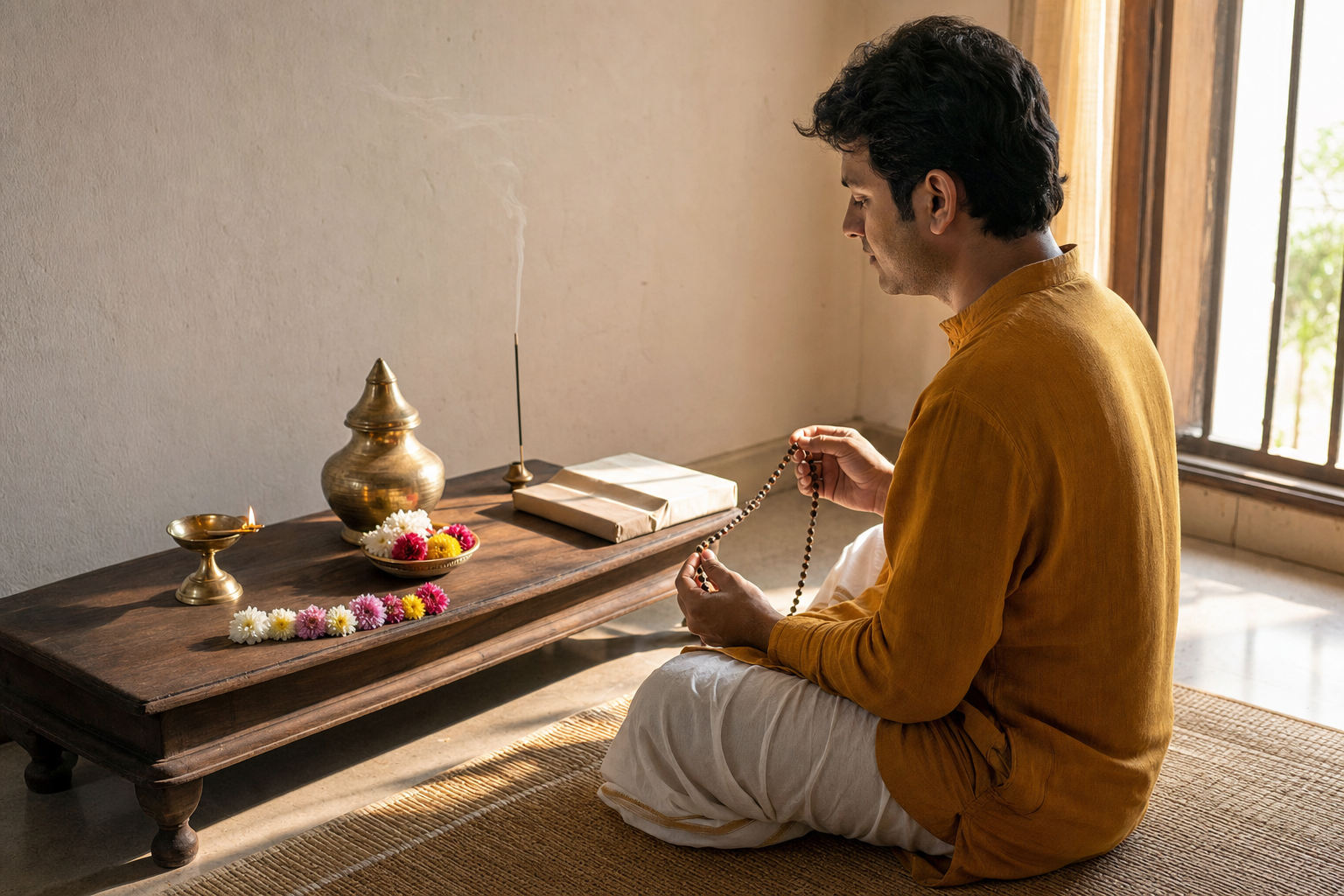
- Perform the chosen japa, stotra, or parayana without changing the reading plan every evening.
- Offer naivedya, complete arati, and close by remembering the day’s seva commitment.
This sequence reflects common Ram Navratri household practice, but simplicity is not spiritual inferiority. A lamp, a flower, attentive recitation, and food offered with care are better than an elaborate setup that becomes hurried or is abandoned halfway through the festival.
Turn the nine days into a practice you can sustain
Pratipada through Tritiya: establish direction
Use the opening days to remove ambiguity. On Pratipada, decide what you are asking Shakti to stabilise. On Dwitiya, name the discipline that will support that intention. On Tritiya, identify where composure must replace a habitual reaction. This turns Shailaputri’s grounding, Brahmacharini’s tapas, and Chandraghanta’s courage into a usable household sadhana rather than a list of divine names.
March 19 also brings the new-year atmosphere of Ugadi and Gudi Padwa for many Hindu communities. Let the new beginning sharpen the sankalpa. Choose something observable: a regular period of japa, the completion of a selected text, restraint in one damaging habit, or a specific form of service. A vague wish for improvement is difficult to carry through nine days.
Chaturthi through Shashthi: put responsibility into practice
The middle triad moves from intention to maintenance. Kushmanda invites gratitude for the conditions that sustain life. Skandamata directs attention toward care, education, and protection. Katyayani asks for the determination to confront an obstacle without abandoning ethical limits.
March 23 adds a civic dimension through Sri Rama Rajyotsavam. Before the Ram Darbar, ask where authority exists in your own life: within a family, workplace, institution, temple committee, or neighbourhood. Ram Rajya is not useful when reduced to praise for an ideal ruler. Its demand reaches anyone who allocates resources, settles disputes, sets rules, or speaks for others. Justice, compassion, restraint, accountability, and the welfare of all must be visible in those decisions.
Saptami through Navami: remove fear and complete the vow
The final triad should become quieter and more exact. Kalaratri turns attention toward fear and ignorance. Mahagauri calls for purification rather than display. Siddhidatri marks completion with gratitude. Ram Navami then gives the culmination a human and social form: courage governed by maryada, compassion joined to truth, and authority understood as responsibility.
Choose the reading track before March 19. Suitable options include the Rama Raksha Stotra with consecutive Ramayana passages, a planned Sundara Kanda recitation, selections from Valmiki Ramayana, Ramcharitmanas, Adhyatma Ramayana, or Kamba Ramayanam, or a Devi-centred course through the Devi Mahatmyam or Durga Saptashati. The range of established parayana traditions lets you choose a text your household already understands rather than selecting the longest option out of festival enthusiasm.
For a family observance, give everyone a real role. One person can maintain the altar, another can lead recitation, children can select the flower or retell the evening episode, and an elder can explain how the story was understood in the family. This is how ritual literacy survives: not through spectacle alone, but through repetition, responsibility, and remembered interpretation.
Choose the vrata with the same realism. Common approaches include phalahara, a sattvic single meal, abstention from grains and legumes in favour of foods accepted in the family’s fasting tradition, or upavasa as health and achara permit. Hydration, rest, age, and medical needs matter. If a medical condition could be affected, adapt the fast with appropriate professional guidance; vrata is a discipline of attention, not permission to harm the body.
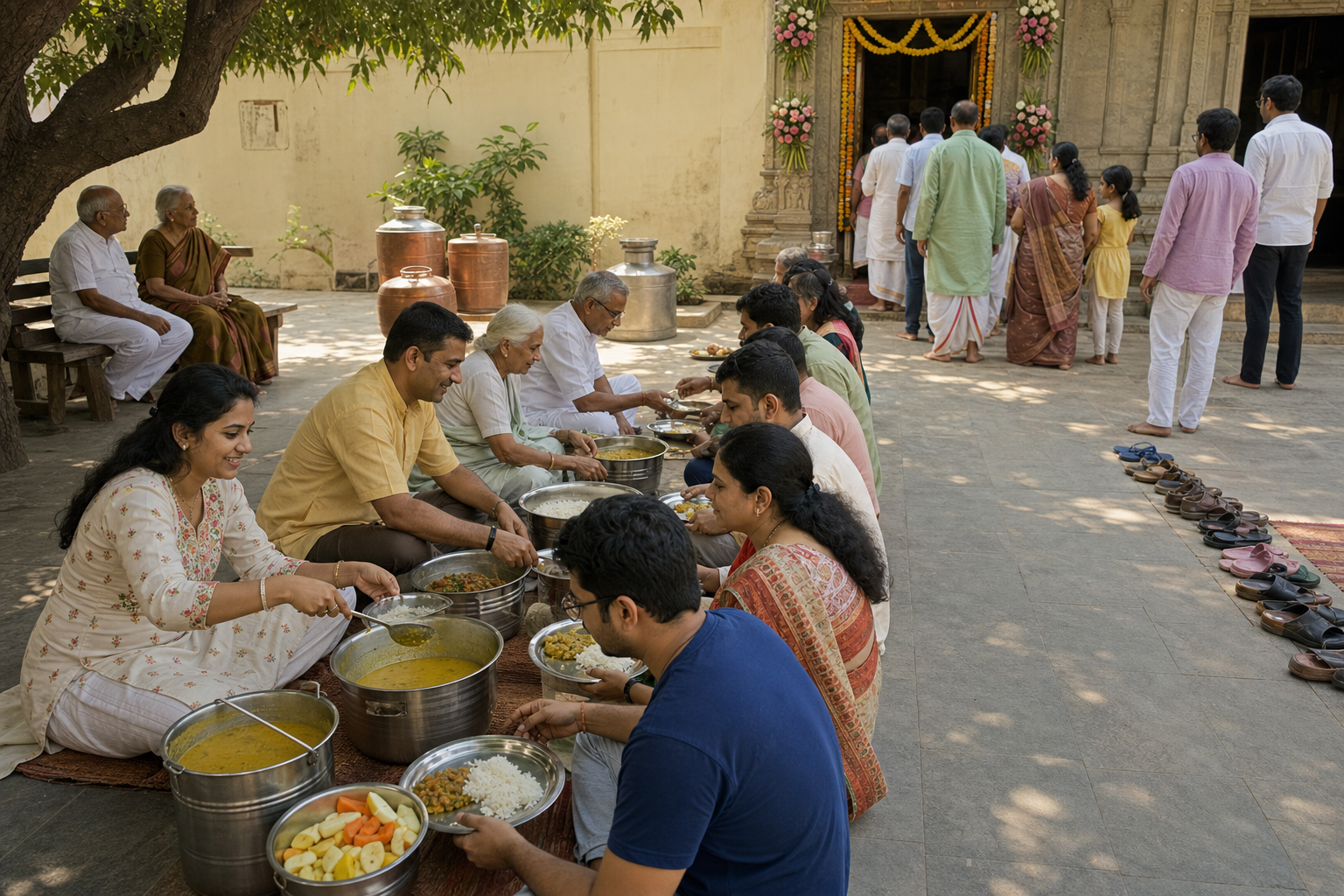
Pair the private vow with visible seva. You might support annadana, help with a community kitchen, make the temple seating more accessible, or assist an elder who cannot manage a crowded celebration. Use clay lamps, natural flowers, biodegradable materials, minimal plastic packaging, and water-conscious abhishekam where feasible. These are not decorative additions to worship. They make reverence for life concrete.
A multi-Dharmic family or community need not blur the Hindu identity of the festival to be welcoming. Katha, devotional music, food service, and reflection on ahimsa, satya, daya, mindfulness, remembrance, and seva offer honest points of participation. The wider Dharmic resonance of righteous rule and exemplary conduct can be discussed without pretending that Hindu, Buddhist, Jain, and Sikh practices are interchangeable.
Handle the time-sensitive rites and festival sequence carefully
Most calendrical confusion comes from treating every rite as an all-day event. Ghatasthapana, Sandhi Puja, Ram Navami janma puja, and Pattabhishekam do not follow the same scheduling rule.
Ghatasthapana on March 19
Ghatasthapana is performed on Pratipada, ordinarily in the first third of the day after sunrise while Pratipada prevails. Nighttime and periods treated as inauspicious are avoided. Where the preferred interval is impractical, Abhijit Muhurta may be used when it falls within Pratipada, according to the applicable tradition and Panchang.
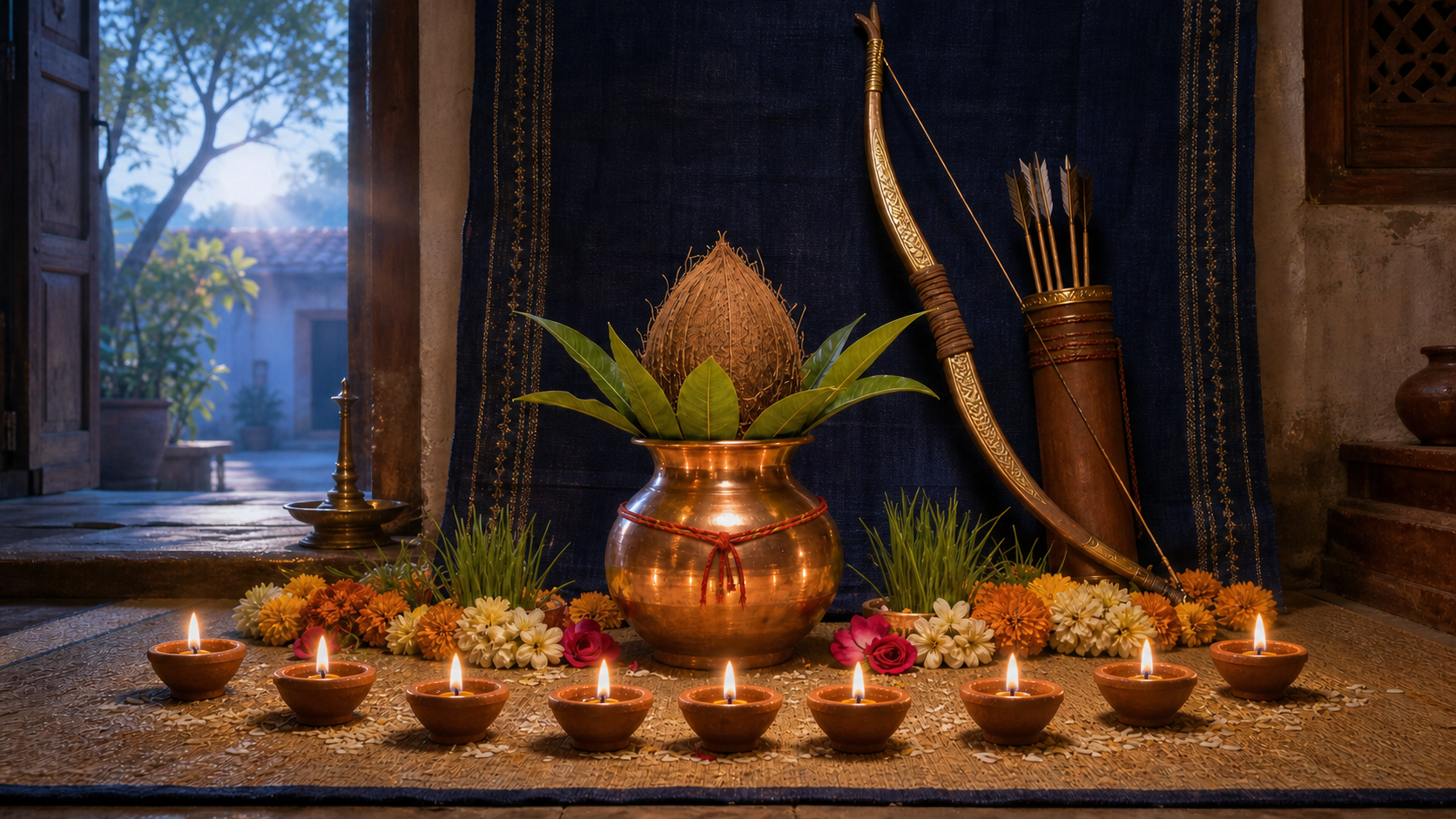
If your household performs Kalasha Sthapana, prepare the altar beforehand. A traditional arrangement may include a bed of barley or wheat, a copper or clay Kalasha containing sanctified water and customary auspicious items, a mauli tied around the vessel, mango leaves, and a coconut. Do not add unfamiliar substances merely because they appear on a generic checklist. Follow the materials accepted by your family or temple, especially when the Kalasha will remain installed throughout Navratri.
Ashtami and the Sandhi interval on March 26
Kanya Puja is widely associated with Ashtami and should be conducted respectfully, without ostentation. If your tradition performs Sandhi Puja, its defining period is the 48-minute junction between Ashtami and Navami. The relevant clock time depends on the local tithi transition. If you cannot establish that interval reliably, join a temple’s timed observance rather than guessing from the civil date.
Ram Navami Madhyahna on March 27
Sri Rama’s janma puja is associated with Madhyahna while Navami tithi prevails. Do not assume that the correct moment is simply 12:00 on the clock. Confirm the locally calculated Madhyahna period and ensure Navami covers the worship window. A temple may adjust its public programme around the tithi while keeping abhishekam, alankaram, archana, arati, and kirtan within its established liturgical sequence.
At home, invoke Sri Rama with Sita, Lakshmana, and Hanuman; offer the customary upacharas; recite the selected janma-katha, stotra, or Ramayana passage; and complete arati and naivedya. Panakam, kosambari, and other sattvic offerings appear in established regional practice. Conclude the vrata after the Navami puja when the tithi and your tradition permit, rather than ending it merely because the public programme has finished.
Why Rajyotsavam can appear on more than one date
Sri Rama Rajyotsavam is calendrically assigned to Chaitra Shukla Panchami, which falls on March 23 under the prevalent 2026 Indian reckoning. Temple festival sequences may instead place the enacted Pattabhishekam after Sita-Rama Kalyanam, on Dasami, within the following days, or elsewhere in the remaining bright fortnight.
Bhadrachalam provides the clearest practical example: Sita-Rama Kalyanam is celebrated on Ram Navami and Pattabhishekam follows the next day. A Panchami commemoration and a post-Kalyanam temple Pattabhishekam therefore belong to different scheduling logics. The first follows the lunar assignment of Rajyotsavam; the second stages the temple’s narrative utsava sequence. Follow the schedule of the institution whose worship you are joining.
This also resolves the apparent chronological puzzle of coronation being commemorated on Panchami before the Navami celebration of Rama’s birth. A festival tithi is a ritual assignment, not an attempt to compress the Ramayana into a literal biography enacted in civil-date order.
If you plan to visit Ayodhya, Bhadrachalam, or another renowned kshetra on March 27, expect the main celebration to draw exceptional crowds. Check local advisories, arrange any available darshan pass, and arrive early. If your priority is sustained participation rather than pilgrimage to a particular kshetra, a neighbourhood temple may offer a better opportunity to hear the katha, sing kirtan, help with annadana, and worship without placing an unnecessary burden on elders or children.
Key takeaways for your 2026 observance
- Use March 19 through March 27 as the prevalent Indian date framework, but let your local Panchang determine the actual tithi windows.
- Decide before Pratipada whether the household practice will be Devi-led, Rama-led, or integrated; do not improvise a new structure each day.
- Keep one sustainable daily core: deepa, invocation, selected recitation or japa, naivedya, arati, and a concrete act of seva.
- Confirm Ghatasthapana, Sandhi Puja, and Ram Navami Madhyahna separately because each depends on a different ritual interval.
- Distinguish the March 23 Panchami observance of Sri Rama Rajyotsavam from a temple Pattabhishekam scheduled after Ram Navami or Kalyanam.
- Choose a vrata that respects health, age, and household responsibilities; the discipline should increase attentiveness, not make worship unsafe or unsustainable.
Before March 19, put your local timings, reading track, fasting plan, temple commitments, and chosen seva on one sheet that the whole household can see. That small act prevents most last-minute confusion.
When Navami worship is complete, keep one maryada from the festival in force: a boundary you will honour, a responsibility you will carry more fairly, or a service you will continue. Then the Rama festival cycle will have done more than fill the calendar. It will have changed how dharma is practised after the lamps are put away.
References
- DharmaRenaissance Blog – Sri Ram Navratri 2026: Sacred Dates, Puja Vidhi, Regional Traditions, and Ram Navami
- DharmaRenaissance Blog – Chaitra Navratri 2026 Begins 19 March: Dates, Puja Vidhi, Muhurat, and Dharmic Significance
- DharmaRenaissance Blog – Sri Rama Rajyotsavam 2026: Definitive Guide to Pattabhishekam, Date, Puja Vidhi, Ram Rajya
