
If you are deciding when to visit Puri for Chandan Yatra, the most important distinction is not between the first day and the last. It is between the public 21-day celebration at Narendra Pokhari and the 21 days of inner observances that follow inside the Jagannath Temple. That distinction determines what you can witness, where you should go, and how you should plan your time.
For most pilgrims and visitors, the first phase is the practical choice. It brings the utsava murtis out in procession, places the evening boat ceremony within public view, and allows people who cannot enter the Srimandir to participate respectfully from the banks of the sacred tank.
Why Akshaya Tritiya sets Puri’s summer ritual calendar
Chandan Yatra is scheduled to begin on Akshaya Tritiya, which falls on 20 April 2026 under the stated Odia calendar calculation. Treat that as the intended festival date, not as a substitute for a final local check. Tithi observance can depend on the Odia Panji and local calendrical determination, so confirm the date shortly before committing to travel.
Akshaya carries the sense of that which does not diminish. It therefore provides an auspicious beginning for undertakings meant to endure. In Puri, that beginning works on two levels at once. The deities receive cooling sandalwood service as the summer intensifies, while the temple’s ritual calendar turns decisively toward the annual Rath Yatra.
The complete Chandan Yatra lasts 42 days in two successive 21-day phases. Bahara Chandan is the outer phase, centred on Narendra Pokhari and visible to the public. Bhitara Chandan is the inner phase, when the cooling observances continue within the Srimandir’s ritual precincts without the same large public gathering. If your purpose is to see the celebrated boat procession, you need the first phase.
Akshaya Tritiya is also the day of Ratha Anukula, the ceremonial beginning of chariot construction. Logs and tools are worshipped at the Ratha Khala, and the skilled craftsmen begin building the three chariots. This is not a symbolic gesture detached from the work: it starts a demanding, time-bound sequence of temple service leading through Snana Yatra, Anasara, Nava Jaubana Darshan and finally Rath Yatra.
Choose 20 April if you especially want to understand that moment of commencement. Choose another confirmed evening during Bahara Chandan if your priority is the water procession and a less date-dependent pilgrimage. Either way, do not treat Chandan Yatra as a detached boat festival. You are witnessing the opening movement of Puri’s larger summer ritual cycle.
Choose Bahara Chandan for the accessible public darshan
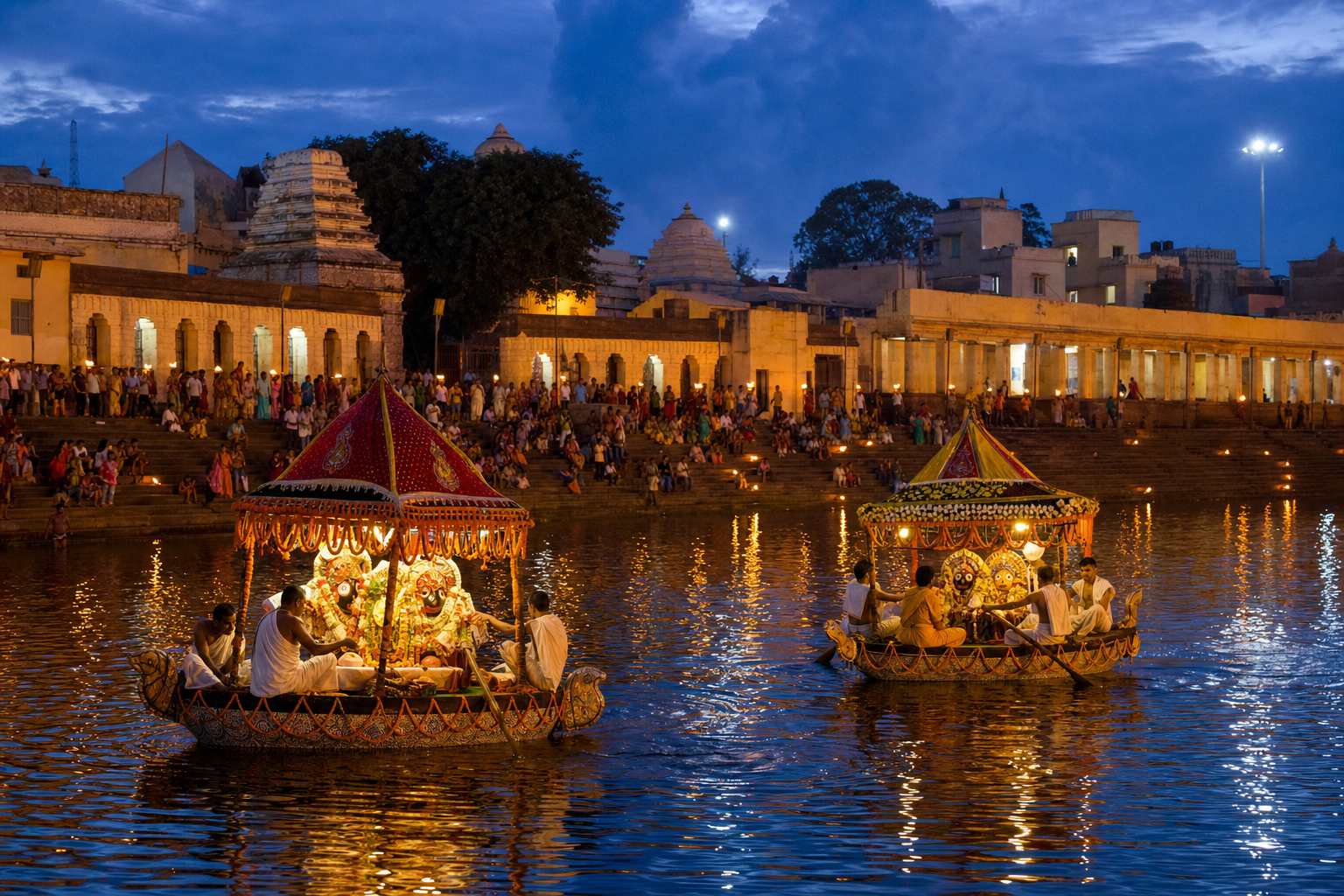
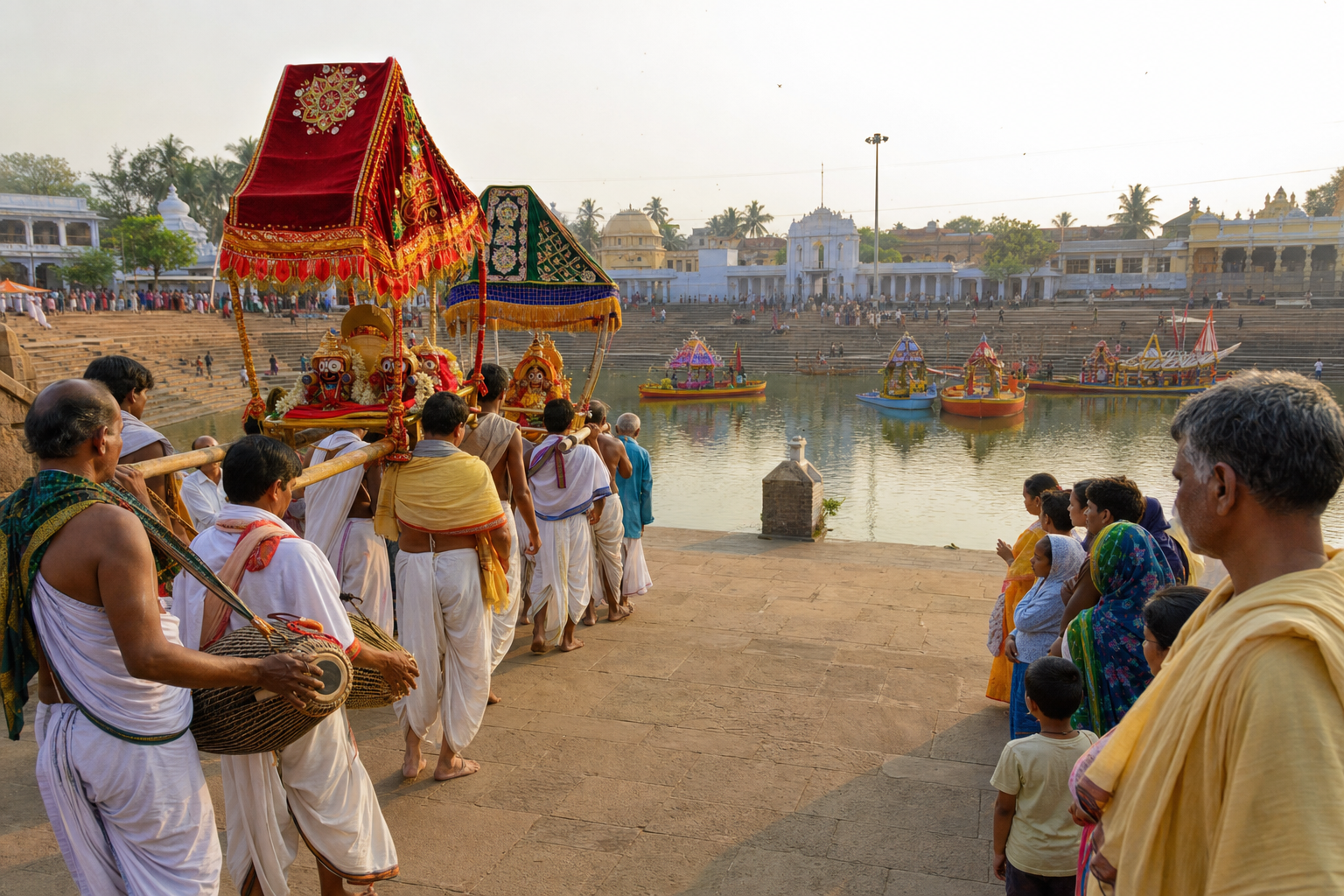
During Bahara Chandan, representative deities from the Jagannath Temple are carried to Narendra Pokhari in palanquins. Madan Mohan serves as the principal representative of Lord Jagannath, accompanied by other utsava murtis. The deities then board decorated boats traditionally called Nanda and Bhadra for the evening jalakrida, or water play. The circling boats, conch calls, music and mardala rhythms form the public ceremony commonly called chapa khela.
This makes Narendra Pokhari the clearest destination for a first-time visitor. You do not have to infer what is happening behind temple walls: the movement from palanquin to water, the presence of the utsava murtis and the collective response of devotees make the structure of the ritual visible.
The distinction matters especially if you are not eligible to enter the Puri Jagannath Temple under its Hindu-only entry rule. Visitors of all backgrounds can experience Bahara Chandan around Narendra Pokhari, subject to local access and crowd-control instructions. You can witness the palanquin movement, hear the accompanying music and see the boats without entering the Srimandir.
Do not assume that Bhitara Chandan offers a second version of the same public programme. Its purpose continues the cooling seva, but its ritual geography moves inward. If you arrive only after Bahara Chandan has concluded, you may be in Puri during Chandan Yatra without seeing the famous boating rites. Confirm both the civil date and the phase before booking around a particular expectation.
See the ceremony as seasonal seva, not merely spectacle
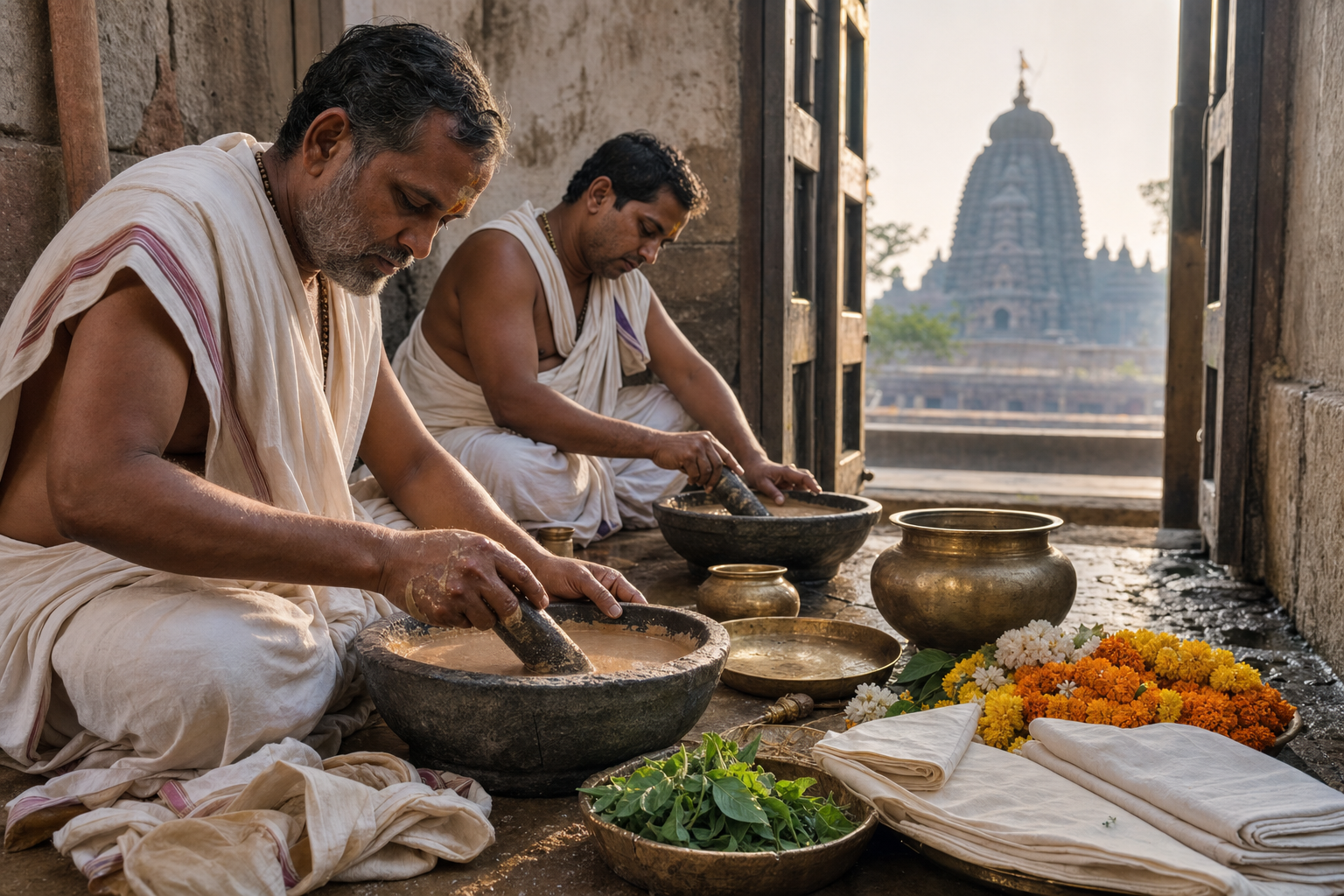
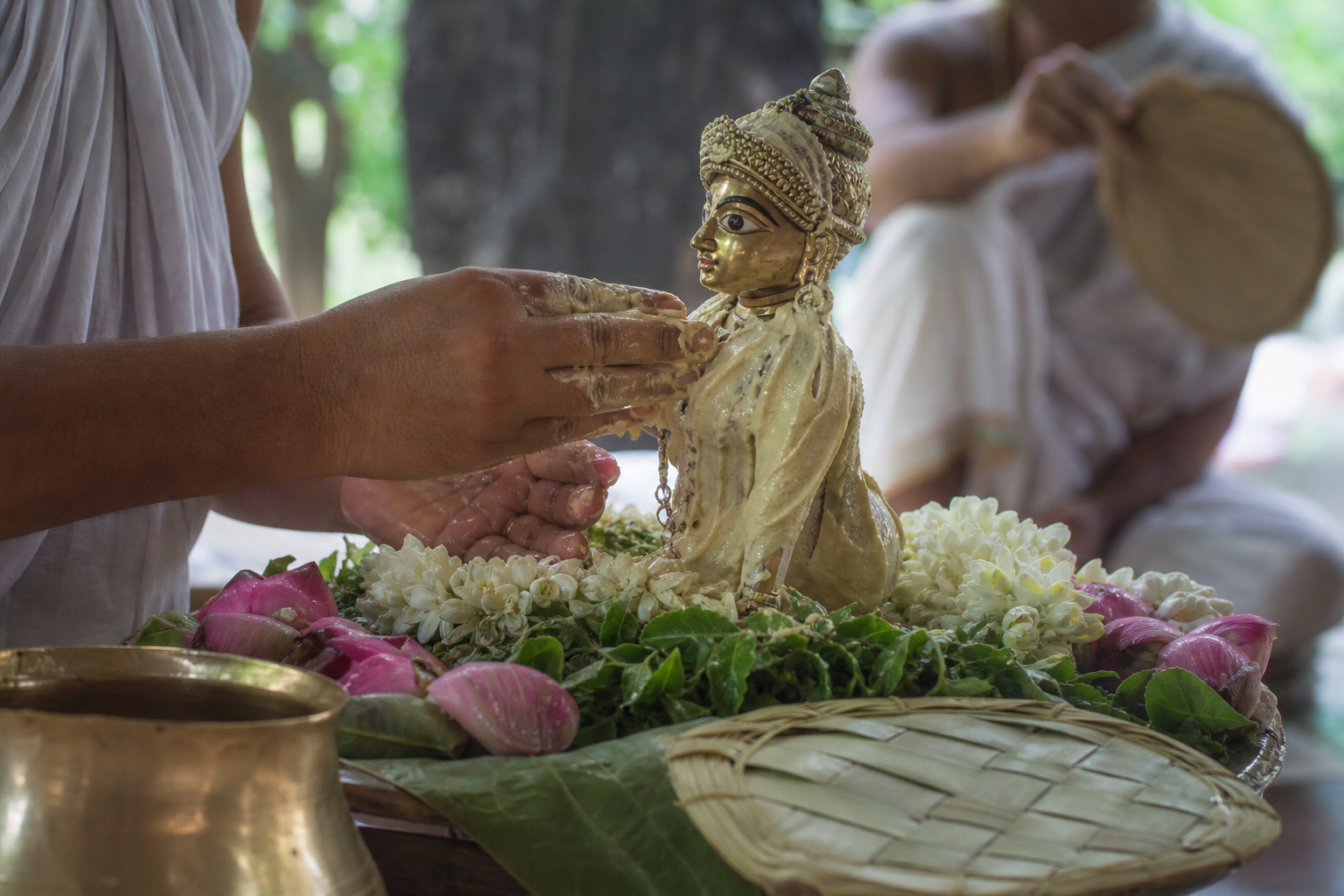
The defining act is chandan lagi niti, the anointment of the utsava murtis and selected ritual objects with sandalwood paste. The paste is typically prepared with cooling aromatics such as kewda or keora and camphor. At the most immediate level, this is summer care: a fragrant, cooling offering made as Odisha enters its hot season.
That practical quality is part of the theology, not an interruption of it. Seva here means attending to the divine with care appropriate to season, place and time. The devotee does not approach Jagannath only to ask for relief. The devotee also offers comfort. This reciprocity turns sandalwood from a decorative substance into an embodied lesson in bhakti.
The movement onto water adds another layer. Jalakrida expresses divine play and communal joy, while the boat can also be contemplated as passage across samsara under divine guidance. You do not need to force a single interpretation onto every detail. Notice instead how cooling paste, evening air, water, sound and procession work together. The festival teaches through a complete sensory environment.
Its setting carries historical weight as well. Narendra Pokhari is associated with the Gajapati period, broadly the 15th century, while the Madala Panji and longstanding local tradition preserve the antiquity of Puri’s summer observances. The tank is therefore not incidental scenery. It joins sacred architecture, water management, music and temple procedure in one inherited ritual landscape.
Chandan Yatra also reveals a wider Dharmic instinct without losing its specifically Jagannath character. Sandalwood offerings, reverence for seasonal rhythms and gentle forms of sacred service are recognizable across Hindu, Buddhist and Jain settings. The useful connection is a shared civilizational grammar of restraint, compassion and harmony with nature. It should not be used to erase the distinctive theology, deities and sevayat traditions that make Puri’s observance what it is.
As you watch, pay attention to the order of service as much as the decorated boats. Notice who must move first, how space is cleared for the palanquins, when music marks a transition and how the public celebration remains connected to procedures conducted by temple servitors. That is where Chandan Yatra’s combination of intimacy and precision becomes visible.
Plan for coastal heat, shifting timings and sacred space
Puri is hot during April and May, and much of your waiting may occur before the evening ceremony. Preparation is simple, but it directly affects whether you can remain attentive when the procession begins.
- Verify the festival day close to departure. Use a current Odia Panji or a reliable panchang, then check practical arrangements through a temple information counter or a trustworthy local contact. The stated 20 April 2026 opening remains subject to the local tithi determination.
- Make sure your visit falls within Bahara Chandan. The public boating rites belong to the first 21 days at Narendra Pokhari. Do not use the full 42-day duration as though every day offered the same public darshan.
- Keep the late afternoon and evening available. Avoid building a tight onward journey around an assumed finish time. Ritual schedules can move with tithi, weather and on-ground temple requirements.
- Dress lightly but modestly. Carry drinking water and suitable sun protection for the approach and waiting period. Heat discomfort can become a distraction well before the boats appear.
- Give the palanquin route priority. Do not step into the movement corridor for a closer photograph, block the servitors or compete for position as the deities pass. Follow crowd-control directions even if they temporarily change your view.
- Treat photography as conditional permission. It is generally possible around Narendra Pokhari, but current local instructions take precedence. Permission around the tank does not imply permission in every sacred area.
- Protect the tank as a sacred water body. Narendra Pokhari is not a place for recreational bathing or self-directed private rituals unless permission is expressly given. Minimize plastic waste and use the designated bins.
If your main interest is a particular chandan lagi observance, special offering or temple-specific seva, seek current guidance shortly before the visit. The broad festival structure can be planned in advance; a precise operational time should not be treated as fixed without local confirmation.
Sandalwood itself deserves thoughtful attention. It is a precious, slow-growing resource, and temple use follows regulated procurement practices. The appropriate response from a visitor is not to seek a material token from every sacred substance, but to support orderly, low-waste observance and leave the ritual materials to those responsible for the seva.
Key takeaways for your 2026 visit
- Chandan Yatra is scheduled to start on Akshaya Tritiya, 20 April 2026, subject to confirmation through the Odia Panji and local tithi observance.
- The festival lasts 42 days: 21 days of public-facing Bahara Chandan followed by 21 days of inner Bhitara Chandan.
- Narendra Pokhari is the destination for the accessible evening palanquin and boat ceremonies during Bahara Chandan.
- Madan Mohan represents Lord Jagannath in the aquatic procession, with the utsava murtis travelling on the decorated boats Nanda and Bhadra.
- Akshaya Tritiya also marks Ratha Anukula, when construction of the three Rath Yatra chariots ceremonially begins.
- Visitors of all backgrounds can experience the public festival around the tank, while entry to the Jagannath Temple itself is restricted to Hindus.
Before you reserve your final travel dates, confirm that your chosen evening belongs to Bahara Chandan and check the local programme again near departure. Then arrive prepared for the heat, keep your schedule flexible and let the procession’s ritual order determine where you stand and when you move. That small discipline will help you encounter Chandan Yatra as seva rather than consume it as an event.
References
