
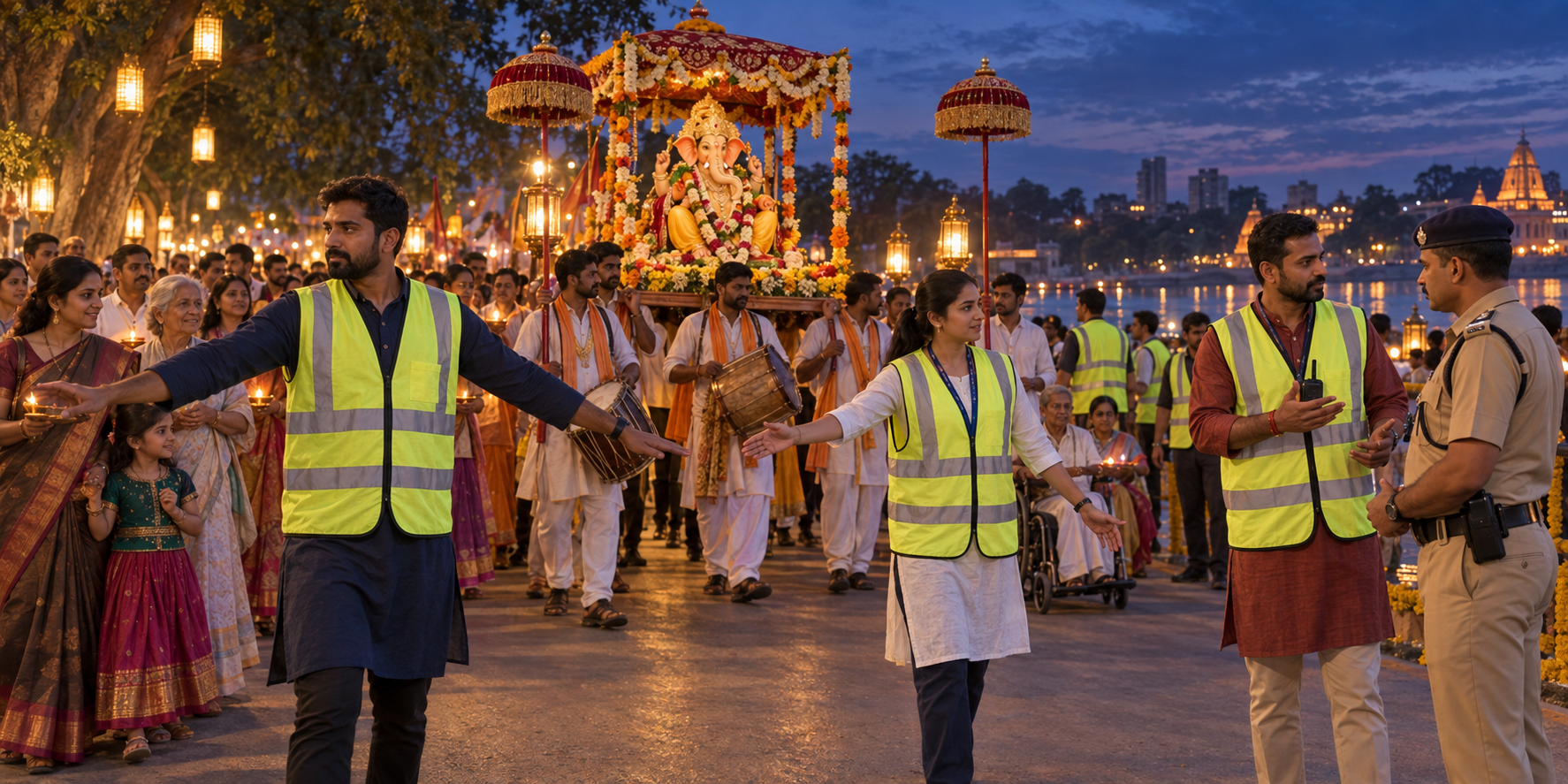
If you help organize a Hindu festival, your hardest moment may come without warning: a police officer stops part of the program, an instruction is described only as protocol, or someone breaches the mandap and approaches the murtis with a weapon. The committee then has minutes, not hours, to protect devotees, preserve the observance, and prevent confusion from becoming confrontation.
The strongest preparation combines written clarity, a defined dharmik core, controlled access, calm escalation, and a record that can withstand scrutiny. You should be able to defend the community’s freedom without turning every disagreement into a physical standoff or every alleged offender into a pretext for collective blame.
Name the threat before deciding how to respond
An administrative interruption and a physical attack can both obstruct festival observance, but they are not the same emergency. Treating every disputed instruction as an attack can produce avoidable escalation. Treating an armed intrusion as a discussion about permissions wastes the brief window in which people can be moved to safety.
During a Ganesha visarjan in Uppinangady, Karnataka, a sub-inspector reportedly stopped a recorded rendition of Vande Mataram after two stanzas. Devotees disputed the intervention and pressed for the remaining stanzas. The officer eventually permitted the complete rendition, after which the immersion proceeded with the prescribed pooja and ceremonies.
The difficulty was not merely disagreement over a song. It was uncertainty about which rule applied to which kind of event. Karnataka’s two-stanza direction reportedly concerned most state government programs, with stated exceptions for programs attended by certain senior constitutional officeholders. The Union Home Ministry’s 2026 protocol reportedly provides for all six stanzas when Vande Mataram and the national anthem are rendered together, while the state direction was being challenged in the Karnataka High Court. None of that automatically answers whether a community-organized religious procession falls within a particular government-program rule. That scope question should have been clarified before the procession reached its most sensitive stage.
A Durga Puja mandap in Balaganj, Bangladesh, faced a different danger. On the evening of 19 September, a man allegedly entered with a boti and struck several murtis before police arrested the accused. This was not a disagreement about the scope of an order. It was a physical breach requiring immediate protection of devotees and the sacred space.
Your festival plan should therefore distinguish among an unclear administrative direction, an intentional disruption, an immediate safety hazard, and an attack on a murti or devotee. It should also distinguish the accused individual from any wider religious or social community. A named allegation against one person does not establish collective guilt. Watching conduct, access, and dangerous objects is more useful than treating identity, clothing, or a person’s name as a security test.
Put permissions, protocol, and ritual priorities on paper
Do not let the first serious discussion about protocol happen beside the murti during visarjan. Before the festival, assign a committee liaison to obtain written answers from the relevant authorities. A verbal assurance can disappear when personnel change; a dated order, permission, or email gives the on-site team something definite to examine.
The committee’s preparation file should answer these questions:
- Who is the legal organizer: a temple, trust, festival committee, private association, or government body?
- Which permissions govern the route, venue, sound system, procession timing, immersion, and temporary structures?
- Does a cited protocol apply to government functions, public processions, private religious events, or all of them? Ask for the order number, issuing authority, relevant clause, and effective date.
- Who may issue directions at the venue, and which supervisor can review a disputed instruction?
- Which elements are essential to the pooja or sampradaya, as identified by the priest, acharya, or other appropriate dharmik authority?
- Which program elements are expressive choices that can be paused or reordered without interrupting the central ritual?
- Who speaks for the committee, who protects ritual continuity, and who contacts emergency services?
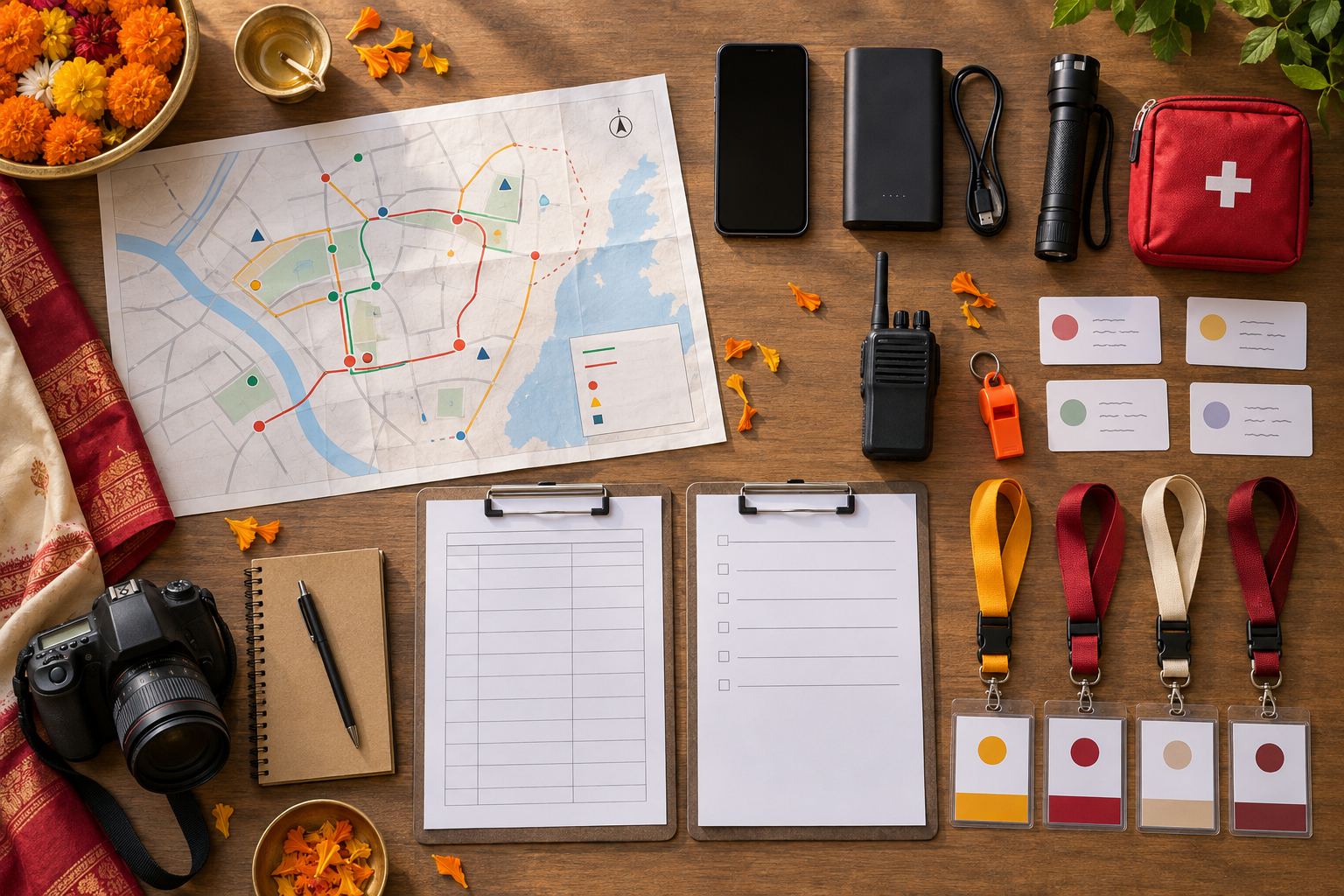
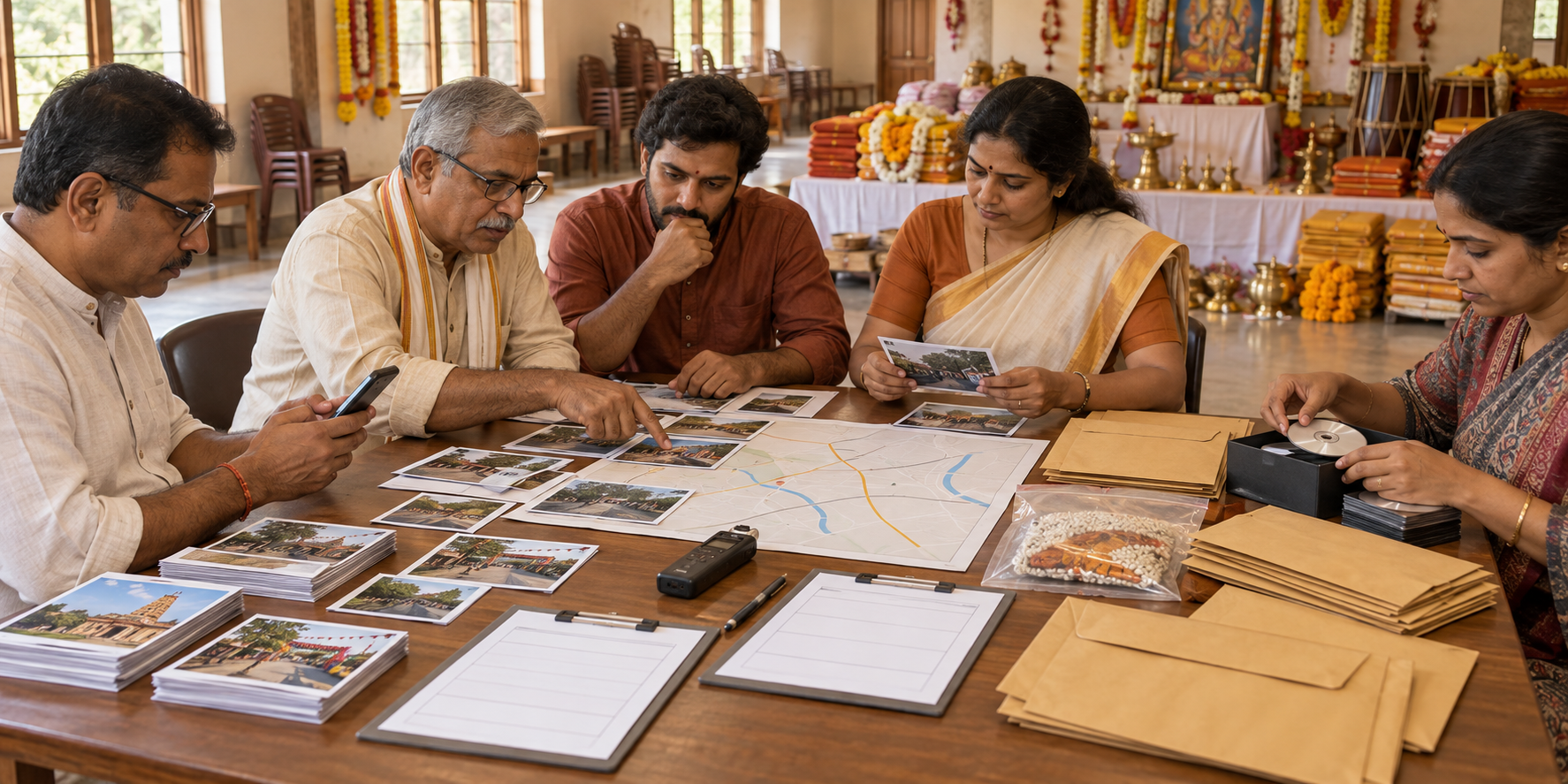
Keep the permissions, event sequence, route map, emergency access points, liaison contacts, volunteer roster, and blank incident form in the same physical and digital file. A printed copy matters when a phone battery fails or a network becomes congested. The people named in the file should know their roles; a document no volunteer has seen will not control a tense crowd.
Separate the festival’s sacred core from its adjustable logistics. The committee and relevant religious authority might classify murti sanctity, required pooja, and safe completion of visarjan as protected elements. The order of announcements, a temporary pause in amplification, or a change that does not violate the ritual may be adaptable. A weapon, fire, crowd crush risk, or blocked emergency route should trigger an immediate safety stop. This hierarchy helps the committee preserve what is dharmically essential while a secondary dispute is examined.
If you suspect selective enforcement against Hindu events, document it carefully. Compare like with like: the same issuing authority, similar event type, comparable location, and the same period. Obtain the actual permissions and enforcement records where possible. Do not repeat claims about another community’s procession from memory or social media. A dated comparison of written conditions and official actions is much harder to dismiss than a general accusation of double standards.
This preparation does not settle a legal dispute. Laws and police powers differ by jurisdiction. If a restriction affects religious practice, expressive rights, or the potential liability of officeholders, have local counsel review the applicable order rather than asking volunteers to improvise a legal interpretation at the venue.
Make mandap security visible, consistent, and unprovocative
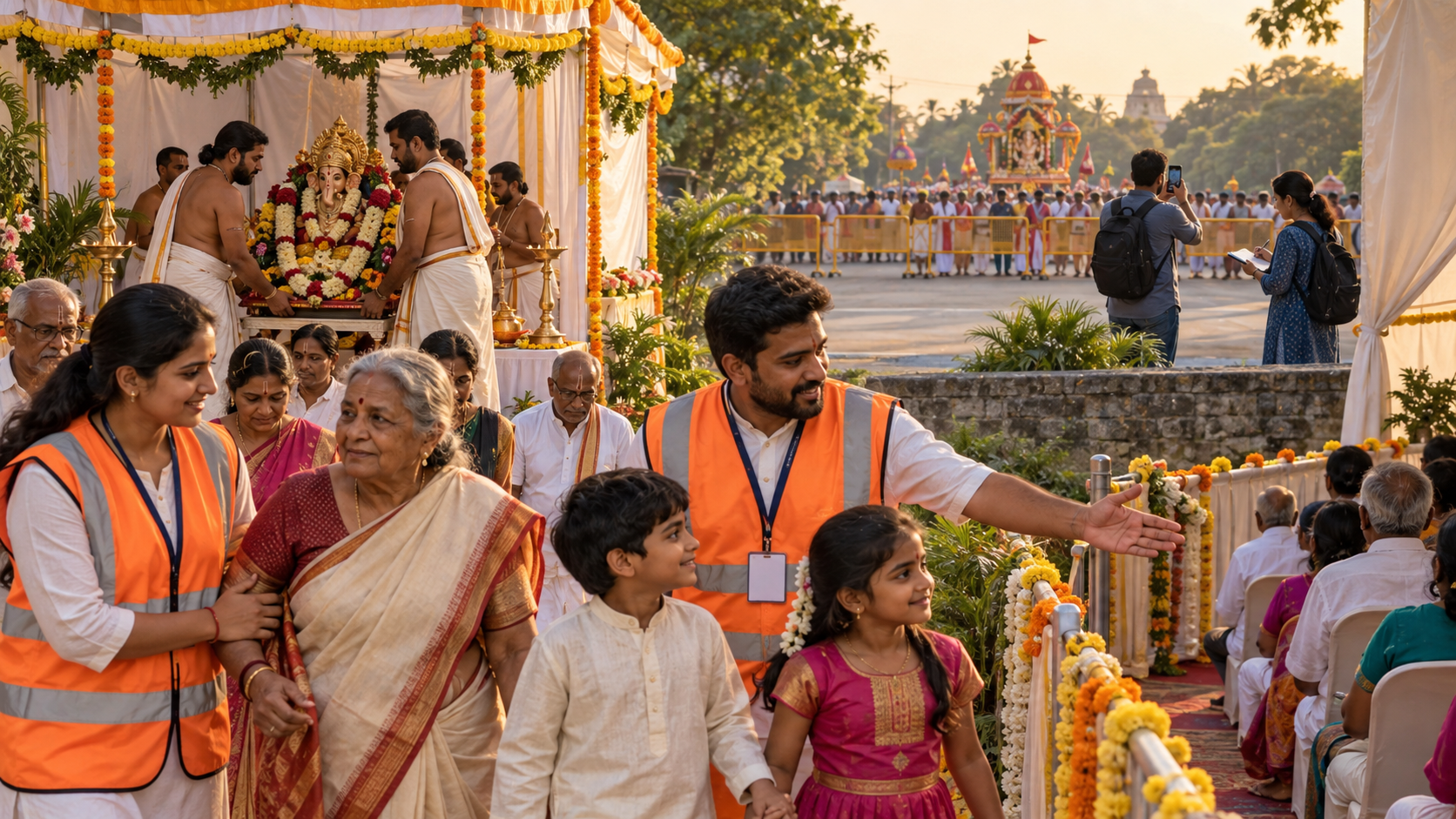
A mandap should still feel like a place of darshan, seva, and celebration. Security works best when it is orderly enough to deter a breach but calm enough that devotees are not treated as suspects.
- Map the entrance, exit, queue, murti approach, volunteer positions, and emergency access route. Keep the approaches well lit and observable.
- Assign named volunteers to shifts and require a clear handover. Volunteers should be distributed across the venue rather than clustered in conversation near one entrance.
- Designate an observer for the immediate murti area. That person’s attention should remain on unusual movement, prohibited access, unattended objects, and visible weapons.
- Secure kitchen blades, maintenance tools, ceremonial implements, and other potentially dangerous objects when they are not in authorized use.
- Use barriers or a managed queue where crowding could allow someone to reach the murtis unnoticed. Preserve dignified and practical access for elderly devotees and people with disabilities.
- If cameras are lawful at the venue, aim them at approaches and access points, post any required notice, control access to recordings, and set a retention practice. Cameras support attentive volunteers; they do not replace them.
- Give volunteers a simple communication method and a clear alarm phrase. Everyone should know who calls police, who opens the emergency route, who guides devotees away, and who safeguards recordings.
Screening must be consistent. If the venue uses a lawful bag policy, apply the same communicated rule to everyone. Do not assume volunteers possess police powers to search or detain. Any screening, refusal of entry, or restraint practice must comply with local law and venue rules.
Brief volunteers to observe behavior rather than identity. Relevant warning signs include an attempt to bypass the queue, forced entry into a restricted area, concealment or display of a weapon, fixation on an unguarded access point, or refusal to follow a neutral safety instruction. Religious affiliation is not a substitute for any of those observations. Misplaced profiling can alienate innocent visitors while leaving the actual dangerous behavior unwatched.
Control the first minutes, then build a verifiable record
If an official stops part of the program
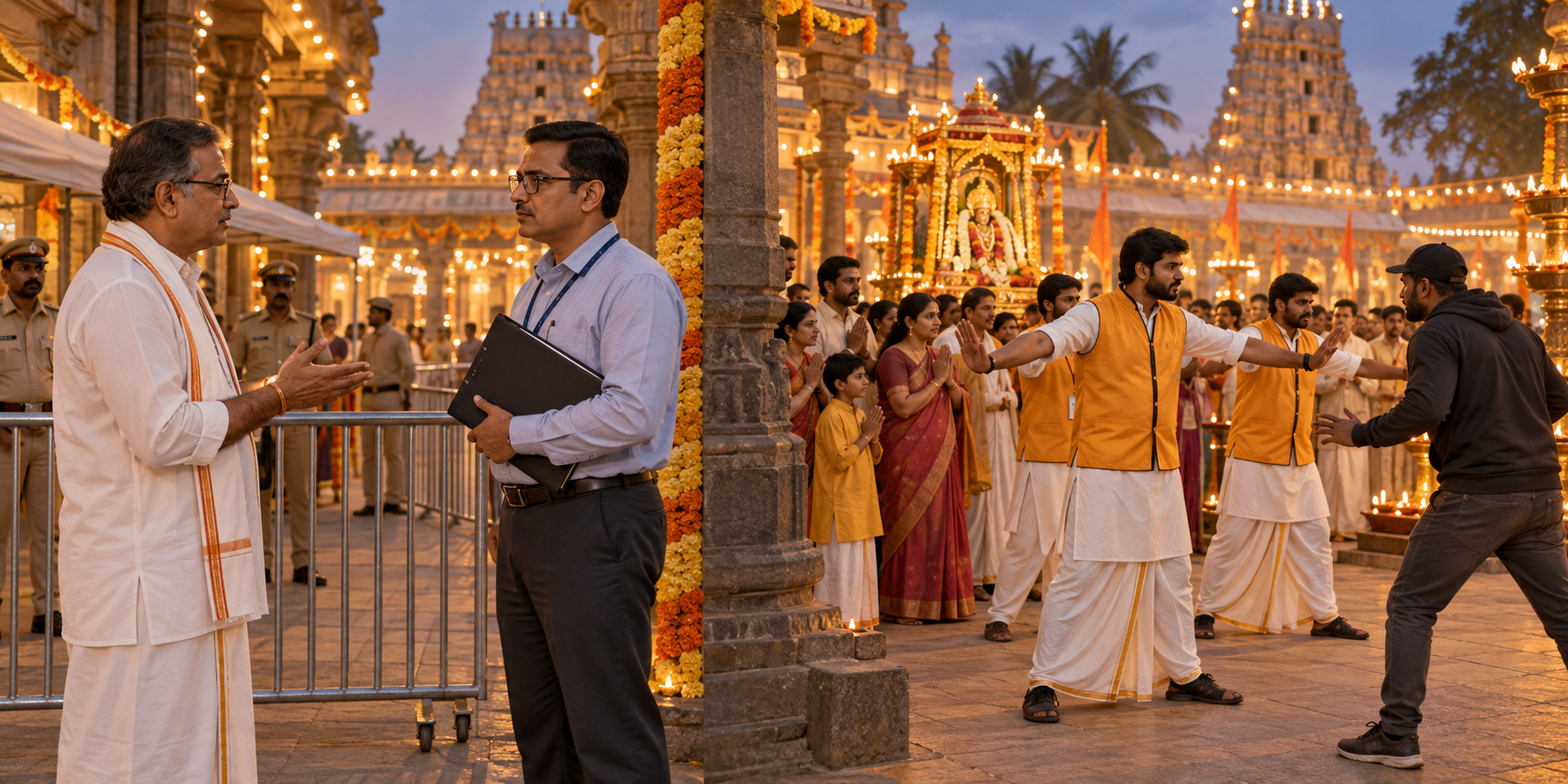
The designated liaison should step forward while other volunteers create space and keep the crowd from surrounding the officer. Ask a precise question: Is this an immediate safety instruction or a legal or administrative restriction? Then ask for the issuing authority, order, relevant clause, and scope.
- Record the time, location, officer’s name or identifying details, exact instruction, and stated reason.
- Show the relevant permission or protocol already held by the committee. Do not argue from a forwarded message when the actual order is available.
- If the issue is not an immediate danger, request review by the named supervisor and propose a narrow arrangement that allows the observance to continue safely.
- If immediate compliance is necessary to prevent injury or a physical confrontation, pause without treating that pause as final acceptance of the legal position.
- Have the religious lead and convener decide how the central ritual can continue while the disputed expressive or logistical element is addressed.
- After the event, seek a written explanation and pursue the appropriate administrative or legal channel.
In Uppinangady, collective insistence reportedly led to the complete rendition being allowed, but the situation also became tense. The useful lesson is not to reproduce the same crowd dynamics everywhere. Firm insistence can coexist with disciplined spacing, a single spokesperson, a request for the written basis, and a refusal to obstruct emergency directions. That protects the principle without giving a secondary confrontation control over the entire utsava.
If someone attacks a person, murti, or mandap
Immediate safety outranks documentation. Raise the alarm, move devotees away from the assailant and any weapon, open the emergency route, and contact police or local emergency services. Give the exact location, the nature of the weapon or danger, a description based on observed facts, and any known injuries. Do not encourage volunteers or devotees to form a ring around an armed person.
Once the danger is controlled, preserve the scene. Do not handle an abandoned weapon or rearrange damaged objects unless doing so is necessary to prevent further immediate harm. Photograph the wider scene before taking close views. Preserve original photo and video files rather than keeping only compressed social-media copies. Record witnesses separately, in their own words, along with their contact details and consent to be contacted.
Create an incident entry that includes the date and time, location, stage of the festival, sequence of observed events, damage by murti or area, police response, witness details, and the location of original recordings. Keep verified facts, witness accounts, and committee inferences in separate fields. That distinction prevents a reasonable suspicion from being repeated later as an established fact.
The priest or appropriate dharmik authority should guide the ritual response to a damaged or desecrated murti. That decision belongs beside, not inside, the police account: public safety and evidence preservation have one function, while purification, repair, replacement, or other sampradaya-specific requirements have another.
During the follow-through
- Submit the relevant written complaint or representation and obtain an acknowledgement or reference number where local procedure provides one.
- Preserve permissions, orders, correspondence, original recordings, damage records, and witness notes in a controlled archive with a backup.
- Ask local counsel to review disputed restrictions, serious damage, injuries, or uncertainty about the committee’s obligations.
- Issue a concise public timeline through an authorized spokesperson. State what is confirmed, what remains alleged, and which authority is handling the matter.
- Distinguish arrest from conviction. Use a person’s identity or status only when officially confirmed, and correct any inaccurate statement promptly.
- Debrief volunteers while memories are fresh. Record which access point, communication step, or decision failed, then assign the correction before the next event.
Responsible communication is part of protection. Graphic images, unverified names, and collective accusations may inflame the situation while weakening the credibility of a legitimate complaint. A restrained record does not minimize anti-Hindu hostility or desecration. It makes denial, distortion, and selective enforcement easier to challenge with evidence.
Key takeaways
- Prepare separate responses for an unclear official restriction and an immediate physical attack; they require different chains of action.
- Ask for the exact written authority, clause, scope, and event category before accepting a generic reference to protocol.
- Identify the dharmik core of the observance in advance so a secondary dispute does not derail pooja, darshan, or safe visarjan.
- Protect mandaps through observable access, named volunteer roles, secure tools, and behavior-based vigilance rather than communal profiling.
- During an incident, protect people first. Then preserve original evidence, separate facts from allegations, and use written administrative or legal channels.
Before your next festival, assemble the permission file, ritual-priority sheet, volunteer roster, emergency contacts, and incident form, then rehearse both an on-site official restriction and an intruder near the murtis. If the team knows who speaks, what pauses, what continues, and who calls for help, it will not have to invent its response under pressure. That discipline is a form of seva: it protects devotees and the freedom to observe Dharma with dignity.
References
- Hindu Post – SI stops ‘Vande Mataram’ during Ganesha visarjan, Hindu devotees protest: Uppinangady, KA
- Hindu Post – Bangladesh: Durga Puja Mandap Attacked in Sylhet, Murtis of Maa Durga, Maa Lakshmi, Maa Saraswati Vandalised; The Police Arrested Saiduzzaman

Leave a Reply
You must be logged in to post a comment.