
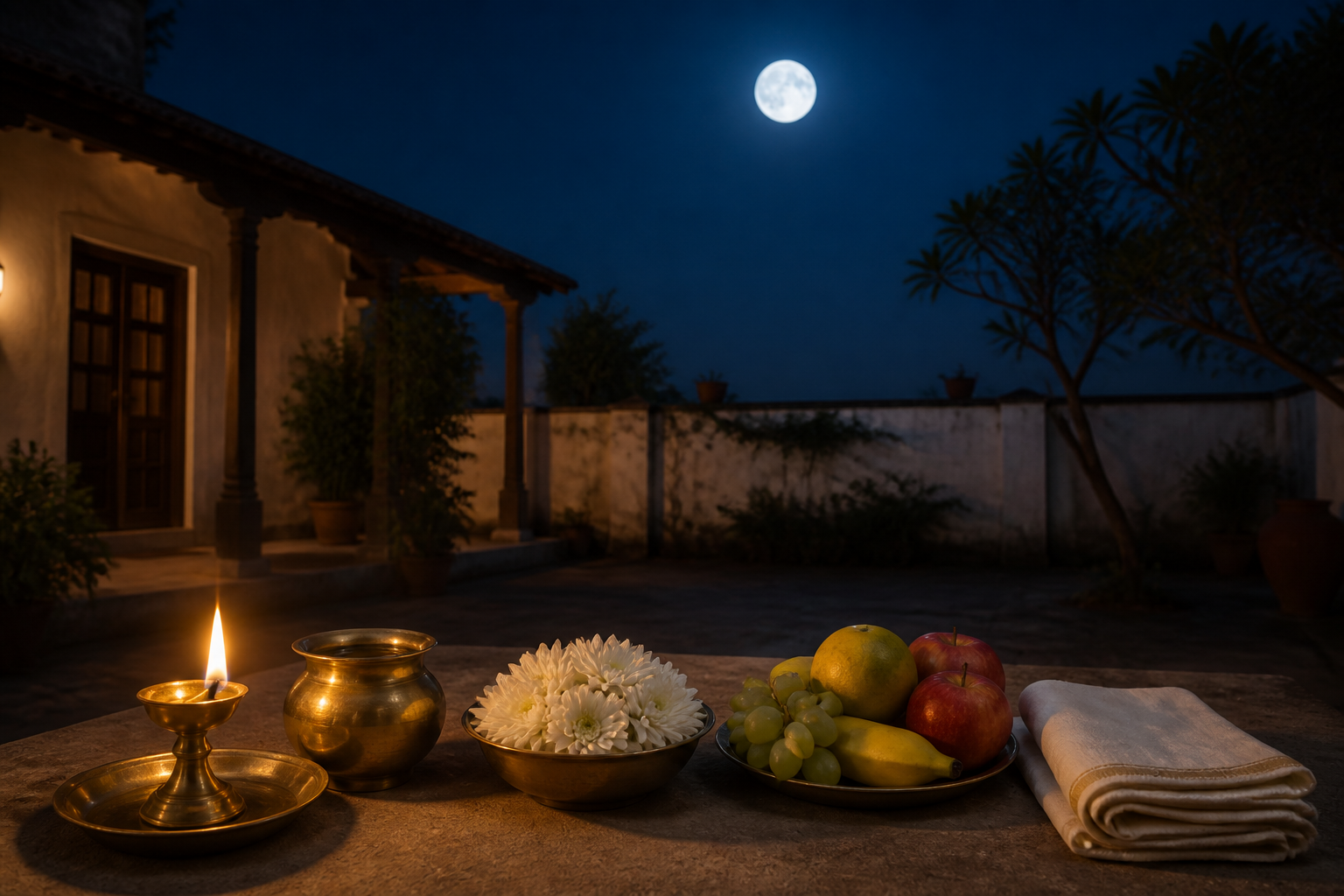
If you are deciding when to complete Purnima puja on Wednesday, November 5, the main planning point is straightforward: in most Indian regions, the full-moon tithi ends at 7:16 PM IST. Krishna Paksha Pratipada begins immediately afterward.
That does not mean you need an elaborate ceremony or a hurried evening. Give the time-sensitive part of your observance a comfortable place before the transition, then let the remainder of the evening become quieter and more reflective. Your family tradition and local Panchang should determine the details.
Key takeaways for November 5
- Purnima tithi continues until 7:16 PM IST on November 5 in the generally applicable Indian timing.
- Krishna Paksha Pratipada begins at 7:16 PM IST and continues until 4:55 PM IST on November 6.
- If your custom requires Purnima prayers, aarti, darshan, or another rite during the tithi, complete that core observance before 7:16 PM.
- In several regions, this full moon is observed as Kartika Purnima, with practices such as lamp-lighting, dana, and pilgrimage. These are regional traditions, not compulsory additions for every household.
- Use a regional Panchang or trusted temple almanac when your observance depends on a local muhurta, Nakshatra, Rashi, or festival convention.
Plan around the 7:16 PM tithi change
A tithi does not necessarily begin or end at midnight. That distinction matters on November 5: the civil date remains the same after 7:16 PM, but the lunar calendar has moved from Purnima to Krishna Paksha Pratipada. An evening ritual performed later is therefore not within Purnima tithi under the stated IST calculation.
Do not turn that fact into a judgement about another family’s observance. Regional calendars can show minor differences, and established customs may use sunrise, temple schedules, or specific festival rules when deciding the day of worship. The timing is a planning anchor, not a reason to declare an inherited practice invalid.
- Identify the part of your observance that is actually tied to Purnima. It may be puja, aarti, meditation, sacred reading, darshan, or a family vrata.
- Place that core practice before 7:16 PM IST. Leave enough room that a delayed meal, journey, or household duty does not push it against the final minute.
- Move flexible activities, such as a shared meal or informal conversation, outside the core window when necessary. This protects the devotional practice without making the household anxious.
- Keep the next transition in view. Pratipada lasts until 4:55 PM IST on November 6, giving you a defined opening period for the inward discipline associated with Krishna Paksha.
Build a simple observance without mixing every custom
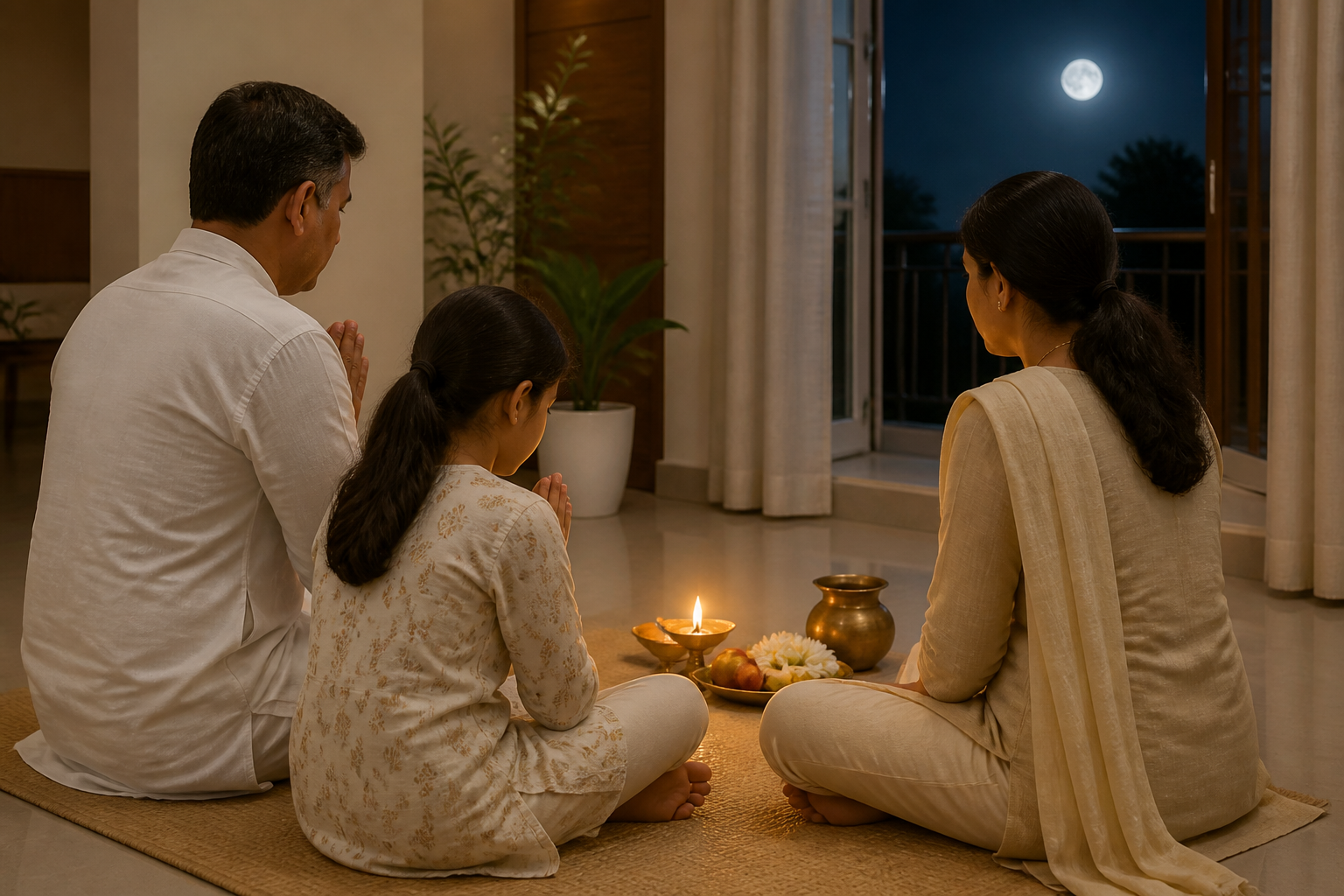
A useful home observance can be modest and complete. You do not need to collect every practice associated with Purnima across Bharat. Start with your own sampradaya, family practice, or temple guidance, and add only what you can perform with attention.
- Begin with a clear sankalpa. State whom or what you are worshipping and name the quality you intend to cultivate, such as clarity, compassion, restraint, gratitude, or service.
- Offer prayer, aarti, japa, or quiet meditation according to your tradition. If several family members participate, agree on the core practice beforehand so that the evening is not spent negotiating the order.
- Read a short passage from a sacred text you already honour. Read slowly enough to carry one teaching into conduct rather than treating the reading as another item to finish.
- Choose a concrete act of dana or seva. The value is not in display but in directing gratitude toward another person’s welfare or a legitimate community need.
- If Kartika Purnima lamp-lighting belongs to your regional or family custom, place the lamp securely and keep it attended. Treat it as an offering, not as a decorative requirement imposed on every Purnima observance.
- Close by naming the ethical action that will continue after the ritual. Prayer becomes more substantial when it changes how you speak, spend, serve, or restrain harm.
A gentle fast or simplified meal may accompany the vrata where that is customary, but fasting is not a test of recklessness. If your food timing is constrained by a medical need, keep the devotional intention through prayer, simplicity, charity, or another form of self-discipline rather than changing treatment or medication for the sake of the calendar.
Purnima also carries meaning across Hindu, Buddhist, Jain, and Sikh communities through different histories and disciplines. Shared values do not make their observances interchangeable. In a mixed Dharmic gathering, centre the common space on silence, compassion, self-restraint, study, and service while allowing each participant to retain the prayers and vocabulary of their own path. Unity is stronger when it does not erase distinction.
Let Krishna Paksha change what you do next
The transition at 7:16 PM can become part of the observance rather than merely its deadline. Purnima lends itself to gratitude, devotion, and community gathering. Krishna Paksha begins the receding phase of the lunar cycle, traditionally suited to introspection, simplification, and steadier contemplative practice.
When the Purnima practice is complete, pause and write brief answers to these questions:
- What blessing, support, or teaching am I grateful for?
- What habit, attachment, or unnecessary complication is making my conduct less clear?
- What single discipline will help me act with greater ahimsa, honesty, restraint, or service during the waning phase?
Choose one observable commitment rather than several ambitious vows. You might read a sacred passage before beginning the day’s distractions, speak more carefully during conflict, simplify an indulgence, or reserve part of your resources for dana. A narrow practice that enters daily conduct is more useful than a long list forgotten after the full moon.
Use Pratipada, which continues until 4:55 PM IST on November 6, to establish that practice. The movement from full light toward waning light then becomes a lived sequence: receive with gratitude, release what is excessive, and protect what supports dharma.
Verify the details your local tradition actually needs
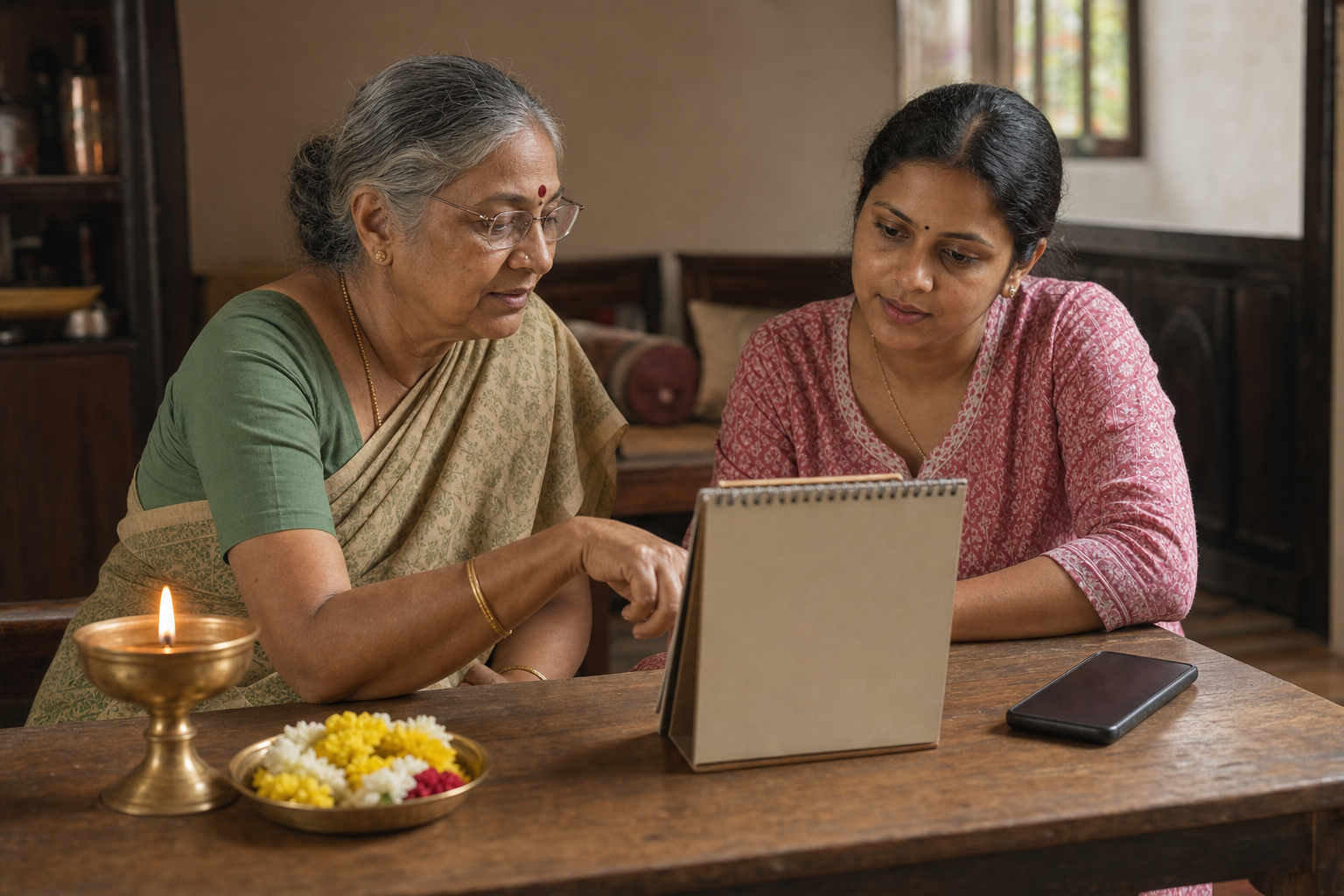
The stated timings are in Indian Standard Time and are broadly applicable across India, but small differences can appear in regional almanacs. Before arranging a temple visit, community satsang, or precise muhurta-based ritual, check four details:
- Your city or region in the Panchang calculation.
- Whether your family or temple attaches the observance to the tithi, sunrise convention, or a scheduled festival service.
- Whether you need Nakshatra, Rashi, or shubha muhurta information in addition to the Purnima ending time.
- Whether Kartika Purnima customs apply in your lineage or region, rather than assuming that every custom found elsewhere must be added at home.
If you are outside India, do not treat a mechanical conversion of 7:16 PM IST as a complete local observance decision. Consult a reliable city-specific Panchang, because the local civil date and the rule used to assign an observance can affect practical scheduling.
Put the tithi change in your calendar, confirm any local rule with your temple or almanac, and choose one core prayer and one act of dana. Complete them without haste before the applicable transition, then carry one clear discipline into November 6. That is enough to make the movement from Purnima to Krishna Paksha visible in your conduct.
References
