
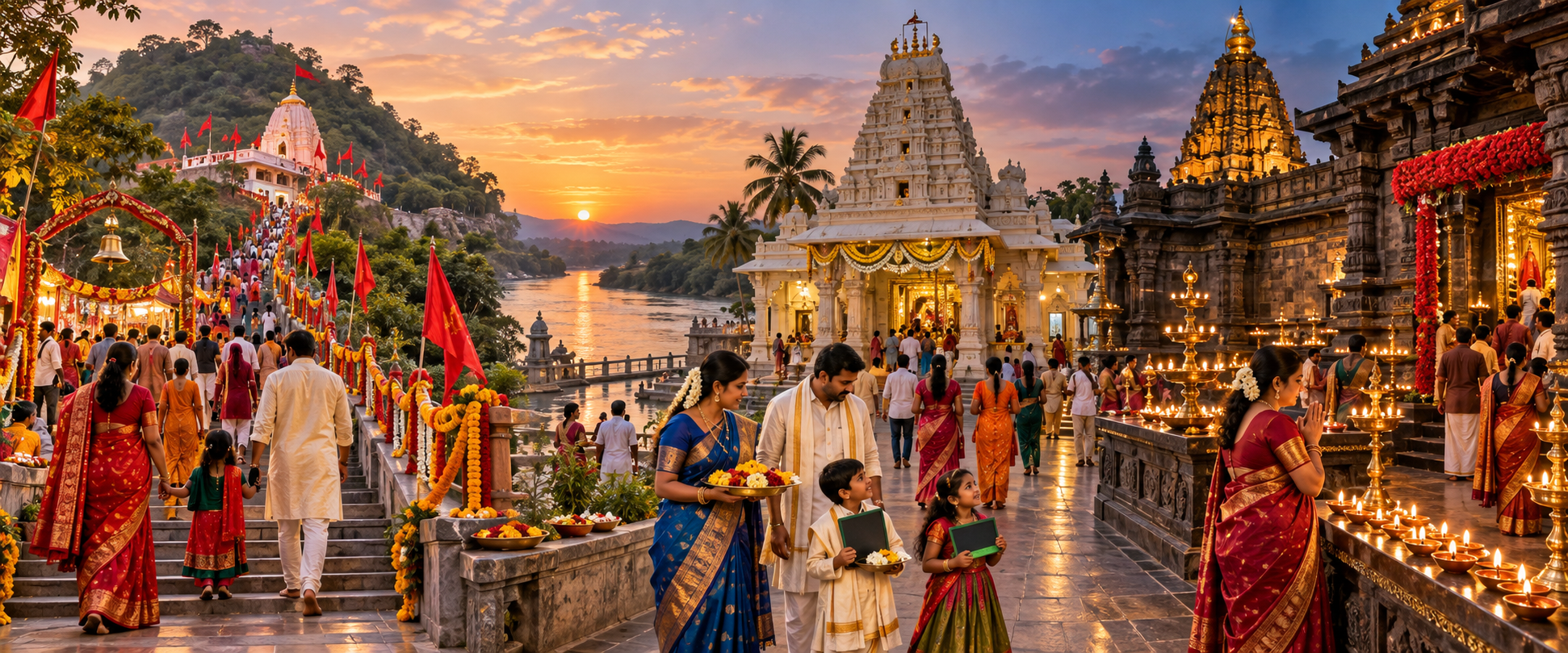
If you are choosing a temple for Navratri, asking which destination is greatest will not get you very far. Manasa Devi in Panchkula, Saraswati at Basar, and Mahalakshmi at Kolhapur offer three distinct ways to approach the Divine Mother: through a nine-day mela, through knowledge and learning, or through a Shakti Peetha observance centred on Lalita Panchami.
Your best choice depends on the observance you want to attend, not merely the temple name. For a 2026 visit, that distinction matters: Basar and Kolhapur begin their celebrations on the same civil date, yet their stated festival windows and principal occasions are different.
Choose the temple by your devotional purpose
Begin with a simple question: what do you want this pilgrimage to place at the centre of your Navratri? The answer gives you a more useful filter than reputation alone.
| Temple | Navratri emphasis | Calendar anchor | Choose it when |
|---|---|---|---|
| Manasa Devi Temple, Panchkula, Haryana | Nine-day Navratri mela at a Shakti temple | Held in both Ashwin and Chaitra, beginning on Kalasha Sthapana | You want the collective atmosphere of a temple mela or need a choice between two Navratri seasons |
| Basar Saraswati Temple, Telangana | Dasara Navaratri at the abode of the Goddess of education and knowledge | October 11 to October 20, 2026 | Your sankalpa is connected with knowledge, study, teaching, or the disciplined use of learning |
| Kolhapur Mahalakshmi Temple, Maharashtra | Navratri at a temple counted in the Astadasa Shaktipeetha tradition | Lalita Panchami on October 15, within an October 11-19 observance | You specifically want Lalita Panchami or a Navratri pilgrimage grounded in the Shakti Peetha tradition |
Use the final column as a decision aid, not as a verdict on the temples. A family may carry several intentions at once. Decide which one is primary before arranging transport and accommodation; otherwise, a spiritually meaningful journey can become an attempt to collect destinations.
Read each temple’s 2026 calendar on its own terms
Navratri is a shared sacred period, but it is not a single standardised temple programme. Each institution names its own opening rites, principal tithis, daily services, and concluding observances. Copying a date from one destination to another is therefore an easy planning mistake.
Basar: plan separately for the opening morning
At Basar, the 2026 Dasara Navaratri observance begins on October 11 and ends on October 20. The opening programme starts before sunrise: Mangala Vayidyams begin at 4 a.m., followed by Ammavari Suprabhatha Seva at 4:30 a.m.
If those opening rites are the reason for your journey, October 11 is not an ordinary arrival day. Reach Basar on October 10, keep the evening free, and confirm the reporting and entry arrangements before departure. A ceremony beginning at 4 a.m. does not by itself tell you when visitors may enter, where they should report, or whether a separate arrangement applies.
If you simply want darshan during the festival, do not assume that you must follow the predawn schedule. Choose a day within the stated window and check that day’s programme directly with the temple.
Kolhapur: distinguish Lalita Panchami from the full festival
Kolhapur’s 2026 Navratri begins with Ghatasthapana on October 11 and reaches Mahanavami on October 19. Lalita Panchami falls on October 15. Those are three different planning anchors: the inauguration, the specifically named Panchami observance, and the culmination at Mahanavami.
If Lalita Panchami is your non-negotiable occasion, write October 15 into the itinerary and plan to be in Kolhapur by October 14. Do not rely on a generic calculation of the festival’s fifth day when the temple-specific date is already available. If your purpose is the broader Navratri experience at Mahalakshmi, the October 11-19 window gives you more flexibility.
Panchkula: choose the season before the date
Manasa Devi Temple holds its Navratri mela twice each year: during Ashwin, generally in September or October, and during Chaitra, generally in March or April. The nine-day mela begins on Kalasha Sthapana, Ashwin Shukla Pratipada, in the autumn observance.
For Panchkula, make the seasonal decision first. Choose Ashwin if the Sharadiya observance is essential to you, or consider Chaitra if your calendar makes the second annual mela more practical. Then obtain the relevant year’s civil dates from the temple’s current calendar. The October dates for Basar or Kolhapur cannot be transferred to Manasa Devi merely because all three celebrations are called Navratri.
Notice the different forms of Shakti being honoured
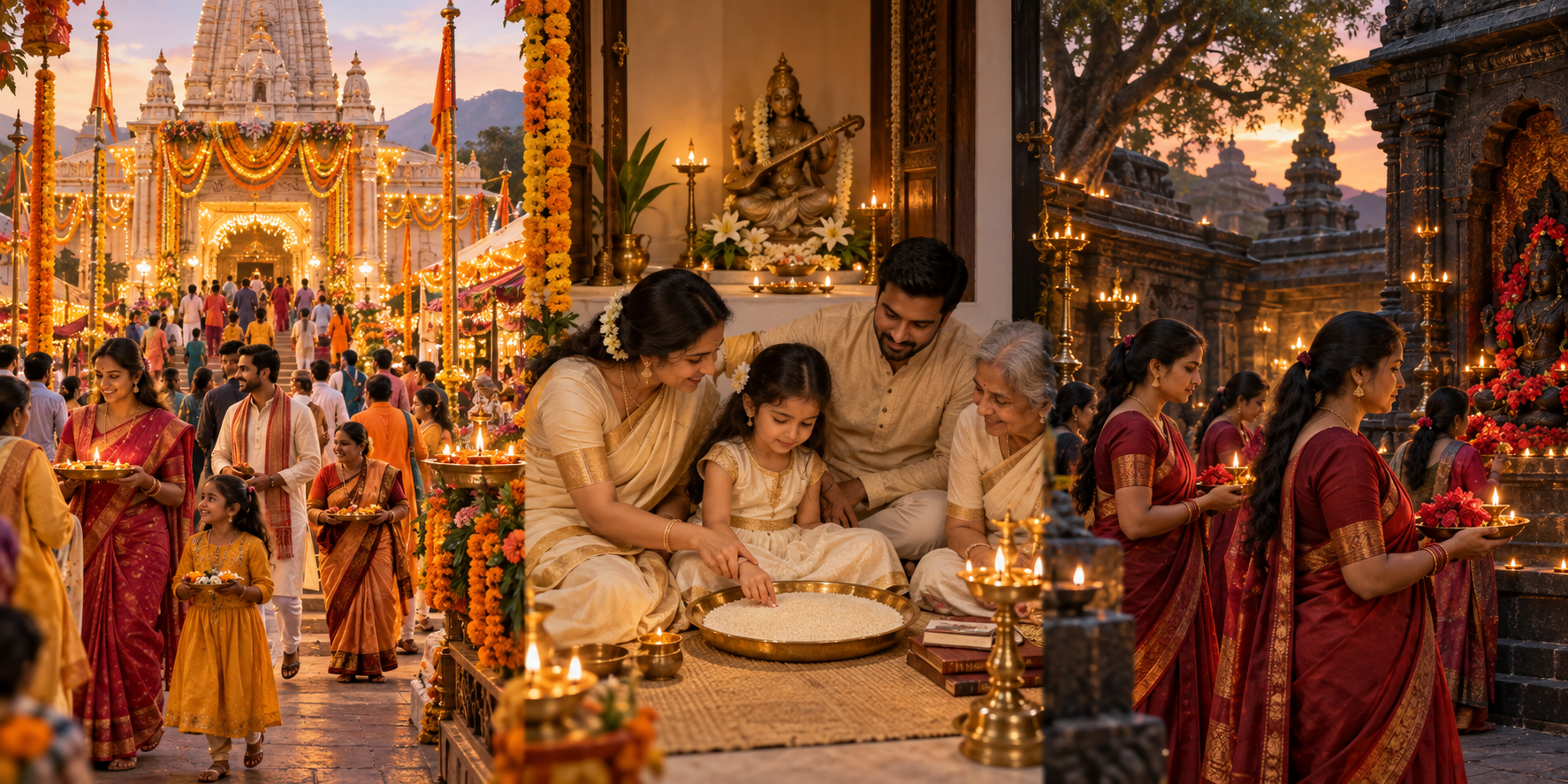
The three destinations do more than offer different schedules. They help you notice how Navratri can hold several devotional emphases without dissolving their differences.
Manasa Devi places worship within a mela
A nine-day mela places temple worship within a collective religious gathering. If you want to witness the formal beginning, Kalasha Sthapana is the relevant anchor. If your purpose is to participate at some point during the larger observance, the multi-day format gives you room to choose another day. Do not assume, however, that entry conditions and programmes remain identical throughout the mela; confirm the arrangements for the particular day you select.
Basar foregrounds knowledge as divine power
A Saraswati-centred Navratri brings learning into the heart of Shakti worship. This makes Basar a coherent choice when your prayer concerns education, intellectual discipline, responsible speech, teaching, or the right use of knowledge. You can make the visit more focused by deciding beforehand what you are asking for: not simply success, but clarity about how learning should be pursued and used.
That distinction matters. A pilgrimage connected with education need not become a request for marks or status alone. You might frame your sankalpa around steadiness in study, humility before knowledge, or the wisdom to apply what you learn for a worthy purpose.
Kolhapur gives one tithi a precise place within the whole
At Kolhapur, Lalita Panchami offers a sharply defined observance inside the wider Navratri sequence. Mahalakshmi’s place within the Astadasa Shaktipeetha tradition adds another layer: you are not merely attending a seasonal celebration, but approaching a temple understood within a larger sacred geography of Shakti.
This is why the phrase “sometime during Navratri” may be too vague for your purpose. If Lalita Panchami is what draws you, build around October 15. If the Shakti Peetha pilgrimage is primary, select the day that you can approach with sufficient time and attention rather than forcing a particular tithi into an exhausting schedule.
Build a pilgrimage you can actually complete
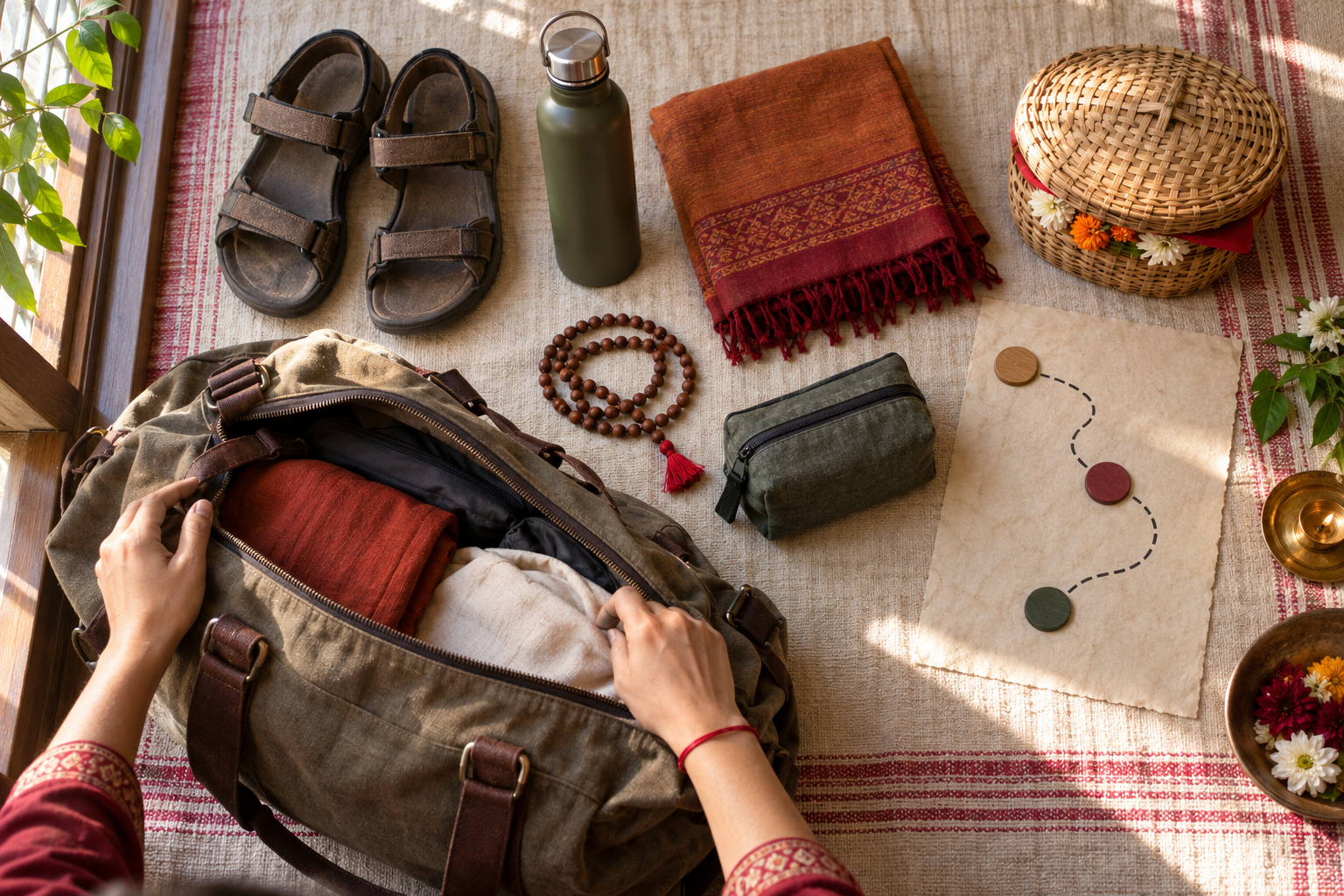
Choose one non-negotiable observance
Write down one event that would make the journey complete for you: Kalasha Sthapana at Manasa Devi, the opening morning at Basar, or Lalita Panchami at Kolhapur. Other darshans and programmes can remain flexible. This protects the central purpose of the pilgrimage when transport, fatigue, or changed local arrangements require you to adjust the rest.
Confirm what a festival calendar cannot tell you
A ritual date is not an entry instruction. Before paying for a journey, use the temple’s current communication channel to verify the day’s darshan hours, any registration or token requirement, the correct entrance, reporting cut-off, permitted offerings, rules for bags and phones, and provisions for visitors who need mobility assistance. Ask about the exact date you intend to attend, not merely about “Navratri timings.”
If you are travelling with children or elders, also decide where your group will meet if separated. Make that location specific enough to find without a phone. Festival-day conditions should not be assumed to match an ordinary temple day.
Do not turn three temples into a hurried checklist
Panchkula, Basar, and Kolhapur are in three different states and follow distinct programmes. Unless you have independently solved the transport, rest, and temple-entry details, choose one as the principal pilgrimage. A second destination should be added only when it does not put your non-negotiable observance at risk.
Carry a written note with the temple name, city, exact civil date, named observance, and intended arrival time. That small discipline prevents a common category error: treating a festival name, a tithi, and a temple’s operational schedule as though they were the same thing.
Key takeaways
- Choose Manasa Devi in Panchkula when a nine-day Shakti mela is central to your plan; it offers both Ashwin and Chaitra Navratri observances.
- Choose Basar when Saraswati and the power of knowledge match your sankalpa. Its 2026 Dasara Navaratri runs from October 11 through October 20, with opening music at 4 a.m. on the first day.
- Choose Kolhapur when Lalita Panchami or the Astadasa Shaktipeetha tradition is your focus. Lalita Panchami falls on October 15, 2026, within the temple’s October 11-19 Navratri period.
- Treat every date as temple-specific. Confirm current entry procedures, daily timings, and visitor rules directly before travelling.
Turn your devotional intention into one practical line now: temple, observance, and date. Once those three are fixed, arrange the journey around them and verify the local details close to departure. The result will be a pilgrimage shaped by purpose rather than by an overfilled itinerary.
References
- Hindu Pad – Sharadiya Navratra Mela at Manasa Devi Temple Panchkula in Haryana
- Hindu Pad – Dasara Navaratri 2026 at Basar Saraswati Temple
- Hindu Pad – Lalita Panchami 2026 in Kolhapur Temple

Leave a Reply
You must be logged in to post a comment.