
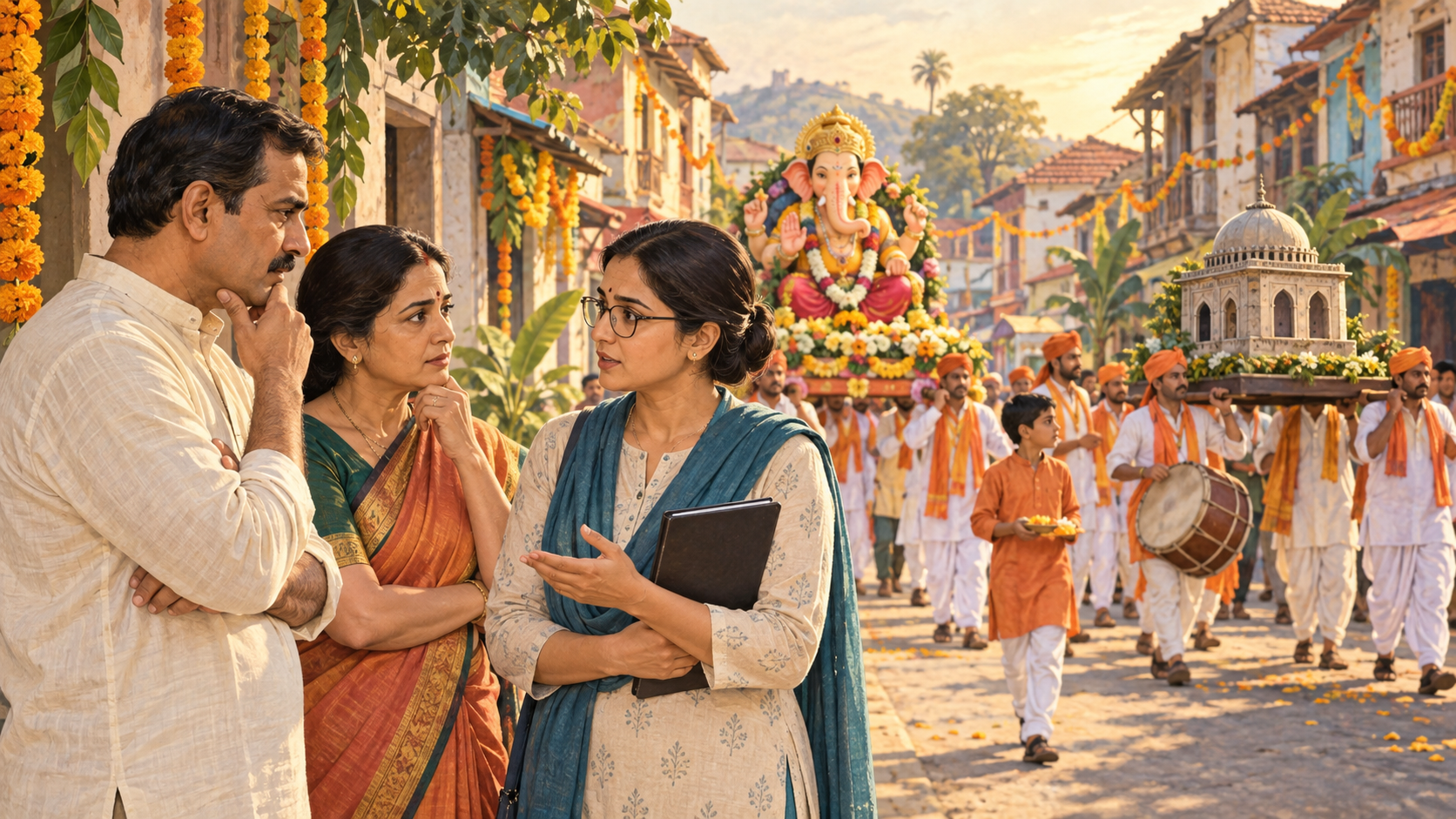
If the Taloda incident has left you wondering whether a school crossed a religious boundary, your concern deserves a serious answer. You do not have to choose between remaining silent and turning an unanswered question into communal hostility.
The strongest response begins with a narrow statement of what was reported, a direct request for the school’s explanation, and remedies tied to the facts. That approach protects the dignity of Ganesh Visarjan while keeping speculation, harassment, and children out of the dispute.
What is known, and what has not been established

The central allegation is limited but specific: Nemsushil Vidyalaya in Taloda organised a Shri Ganesh immersion procession in which a replica of a mazar, described as a Muslim shrine, was displayed and carried. Hindu organisations demanded a public apology from the school management, saying the display had hurt Hindu sentiments.
That is enough to justify questions. It is not enough to establish why the replica was included, who approved it, or whether an insult was intended. Several decisive points remain unanswered:
- Who proposed the mazar replica and who authorised it?
- What educational, cultural, or religious purpose was it supposed to serve?
- Why was it placed in a Ganesh Visarjan procession rather than in a separate cultural programme?
- Were parents, teachers, or the procession’s Hindu participants told about it beforehand?
- Has the school management confirmed the account or provided its own explanation?
Until direct evidence or a response from the school answers those questions, descriptions such as deliberate insult, proselytisation, or organised anti-Hindu activity remain allegations, not established conclusions. Repeating them as facts would weaken an otherwise legitimate demand for accountability.
Precision also matters in the other direction. What was reportedly carried was a replica, not an actual mazar. Calling it an actual shrine would exaggerate the incident. Calling it meaningless would minimise the religious symbolism. The accurate question is why a representation of one religious tradition was inserted into the devotional procession of another.
Why the setting matters more than the object alone
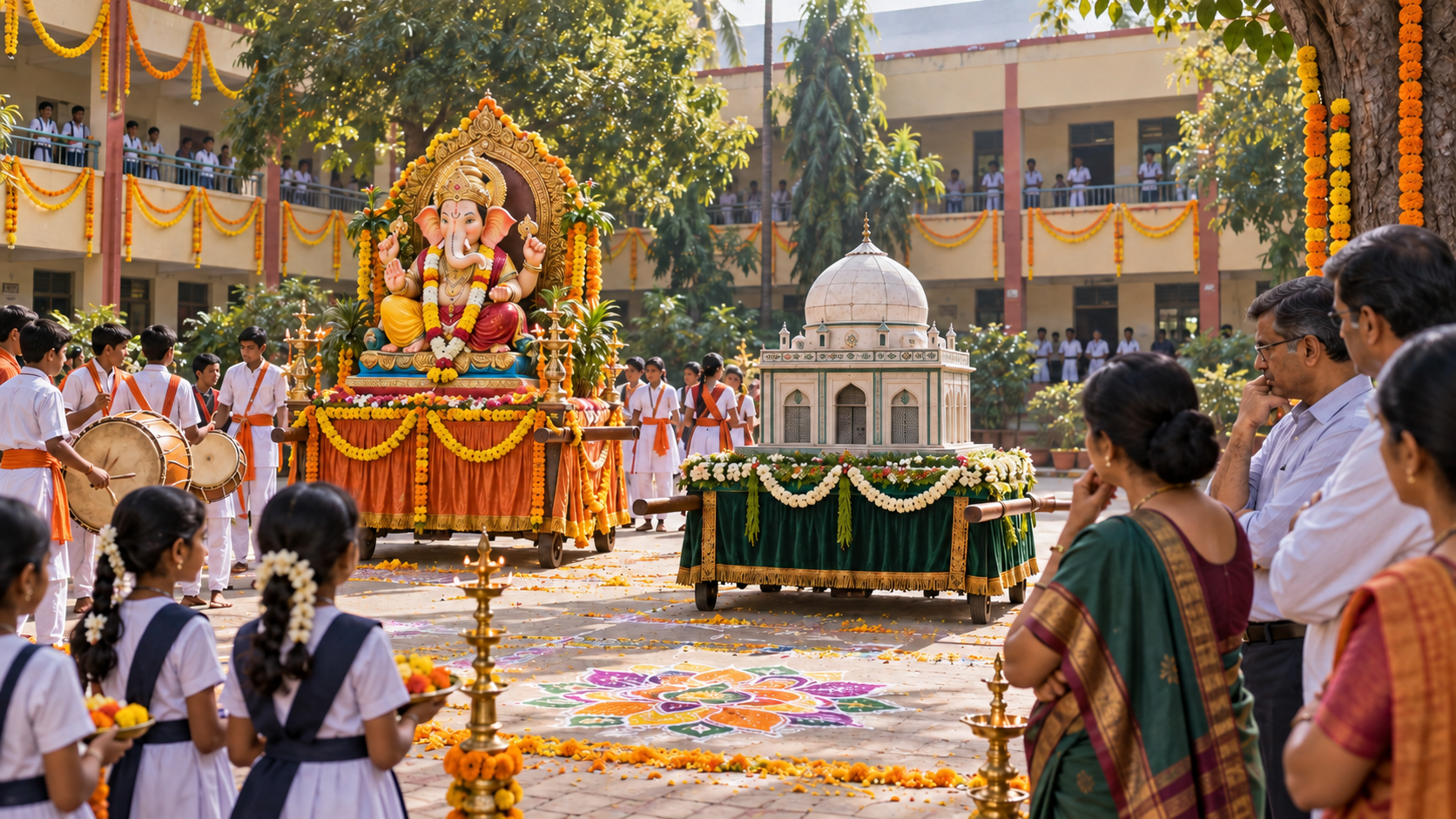
Ganesh Visarjan is not merely a school parade with a seasonal theme. For worshippers, it completes a cycle of puja and marks the ceremonial immersion of Shri Ganesha’s murti. A school that organises such a procession takes responsibility for respecting its devotional character, even if students also participate through music, decoration, or cultural tableaux.
A model of a religious structure can carry different meanings in different settings. It could be appropriate in a classroom lesson about architecture, a carefully explained exhibition about religious traditions, or a separately identified interfaith programme. Its placement inside a Ganesh procession raises a different question because the procession itself supplies the religious frame.
You can assess the school’s eventual explanation through three tests:
- Purpose: What clear educational or cultural objective did the replica serve? A vague appeal to harmony is not self-explanatory.
- Placement: Why did that objective require inclusion in Ganesh Visarjan? Could it have been served in a setting that did not alter the identity of a Hindu observance?
- Process: Who approved the choice, what guidance governed it, and how were participating families informed?
Religious harmony is not created simply by placing unrelated sacred symbols beside one another. It requires knowledge, context, and mutual regard. Without those elements, an intended message of inclusion can become a display of institutional carelessness.
Hindus can make that distinction without insulting Muslims or disparaging the mazar as a religious form. The objection can remain exact: a Muslim shrine replica appears out of place in a Ganesh immersion procession unless the organisers can give a convincing and previously communicated reason for including it. Defending a Hindu ritual’s integrity does not require hostility towards another community.
How a parent or concerned Hindu should respond

If you want an answer rather than a day of outrage, create a record that the school cannot dismiss as rumour or abusive pressure. Use this sequence:
- Separate what you witnessed from what you received. Preserve original photographs, video, notices, or messages without cropping them or adding captions that claim a motive. Write down which details you personally observed and which came from someone else.
- Approach the school in writing. Identify the procession, the reported display, and the exact concern. Ask who approved it, what purpose it served, and whether the school has a policy for content used in religious observances.
- Request an acknowledgement and a written reply. A verbal assurance can later be misunderstood by both sides. Keep the questions numbered so the management can answer each one directly.
- Make the remedy depend on the explanation. If the display was unauthorised, ask how it entered the procession. If it was approved, ask for the approval rationale. If management accepts that the decision was inappropriate, request an unambiguous apology and preventive changes.
- Escalate only after giving management a fair opportunity to answer. If the school remains silent or avoids the questions, send the same record to the next level of school governance or the relevant education authority. Keep the language factual, peaceful, and focused on institutional responsibility.
A short representation you can adapt
Subject: Request for clarification regarding the Ganesh Visarjan procession.
We request the management to confirm whether a mazar replica was included in the school’s Ganesh Visarjan procession and, if so, who authorised it. Please explain the educational or cultural purpose of the display, why it was considered appropriate within a Hindu devotional procession, and whether participating families were informed beforehand. If the management finds that the inclusion was an error of judgement, we request a clear apology and a review of the approval process for future religious events.
That wording does not prejudge intent. It places the burden where it belongs: on the institution to confirm the event, explain its decision, and state what it will do next.
Accountability should correct the decision, not widen the conflict
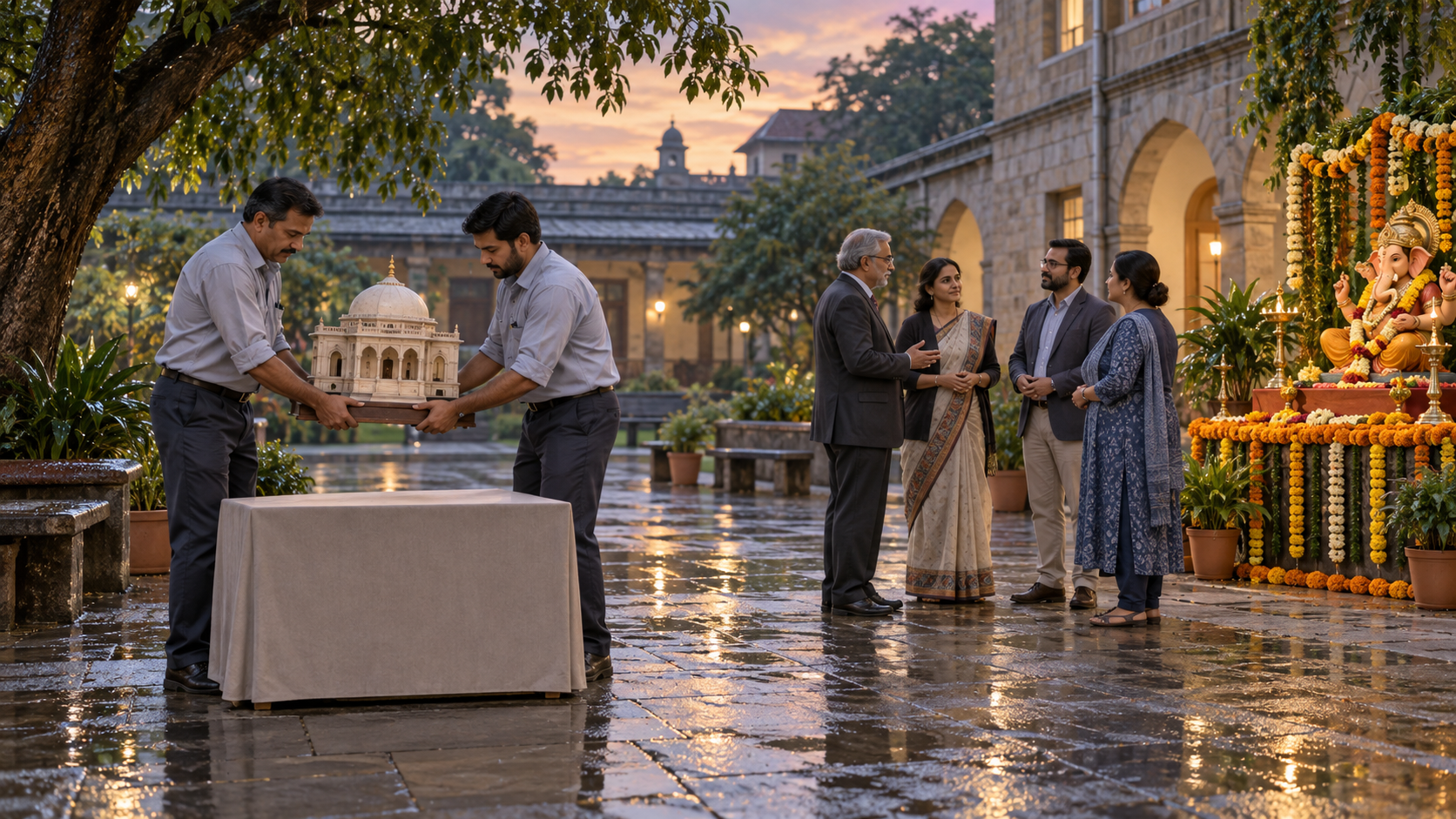
A demand for a public apology is understandable when a public religious procession is involved. But an apology alone can become a ceremonial sentence that leaves the decision-making process untouched. Useful accountability has four parts:
- Confirmation: State whether the replica was part of the school-organised procession.
- Explanation: Identify who approved it and what purpose was claimed.
- Correction: If the decision was inappropriate, acknowledge the specific lapse rather than offering a vague statement about anyone who may have felt hurt.
- Prevention: Establish a review process for religious symbols, tableaux, scripts, and procession material used at future school events.
Parents can reasonably ask the school to distinguish between two kinds of activity. Comparative education about religions belongs in a properly framed learning environment. Participation in a particular community’s devotional observance requires fidelity to that observance. Treating the two as interchangeable is what produces avoidable disputes.
Keep the responsible adults and the institutional process at the centre. Do not publish children’s names or images as targets. Do not direct anger at local Muslim families, a mosque, or unrelated religious leaders; they did not become responsible merely because the replica depicted a Muslim shrine. Do not circulate edited clips or claims you cannot substantiate. Each of those actions would move attention away from the school’s decision and could expose innocent people to harm.
The same discipline applies to public campaigning. State the reported act, disclose what remains unknown, publish the questions sent to management, and update the record if an answer arrives. A factual chronology is harder to evade than a collection of slogans, and it gives neutral observers a fair basis for judging the school’s conduct.
Key takeaways
- A mazar replica was reportedly carried in a Ganesh Visarjan procession organised by Nemsushil Vidyalaya in Taloda, prompting Hindu organisations to demand an apology.
- The reported display warrants an explanation, but the available facts do not establish who approved it or what motive lay behind it.
- The central issue is contextual: why was a Muslim shrine replica placed inside a Hindu devotional procession?
- Ask the school about purpose, placement, approval, advance communication, and safeguards for future events.
- Seek institutional accountability without targeting students, Muslims, or anyone whose involvement has not been established.
If this incident concerns you, send one precise written representation before forwarding another accusatory message. Ask for facts, insist on a clear answer, and judge the school’s conduct by both its explanation and the safeguards it adopts for the next Hindu observance.
References

Leave a Reply
You must be logged in to post a comment.