
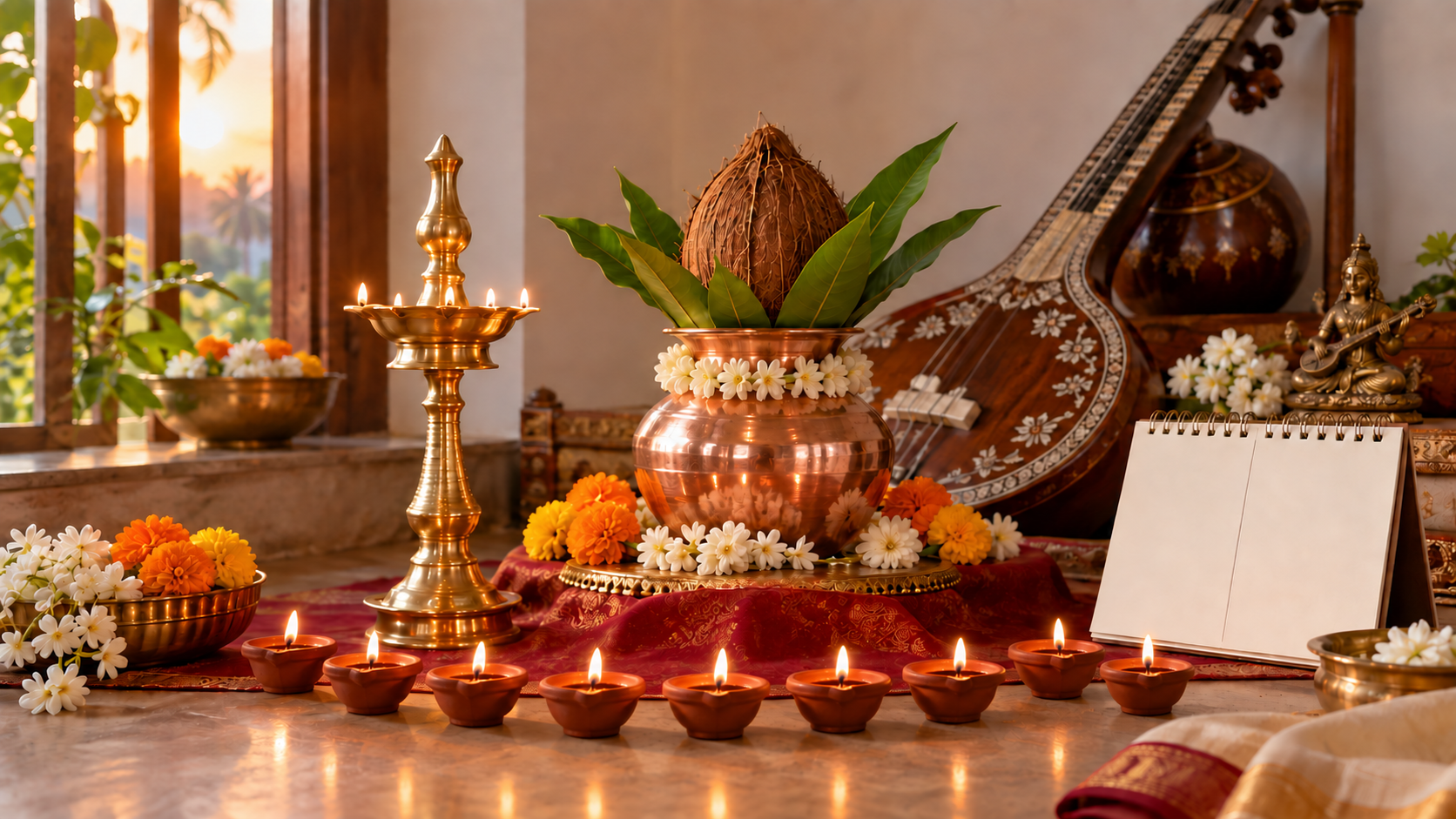
If you are coordinating temple visits, work or school, a household fast, and family puja, do not treat Navaratri 2026 as one undifferentiated block. Moola Nakshatra Saraswati Puja, Maha Saptami, Mahanavami, and Vijayadashami fall on distinct dates and serve different traditions.
Your first task is not to fit every regional custom into one schedule. It is to identify the observances your family or sampradaya follows, reserve the relevant dates, and then confirm local timings with the temple or panchang you actually use.
The 2026 dates to put in your calendar
| Observance | 2026 date | What to plan for |
|---|---|---|
| Moola Nakshatra Saraswati Puja | October 16 | A Saraswati-centred observance for families and temples that follow the Moola Nakshatra tradition. |
| Maha Saptami | October 17 | The seventh Navaratri day and the second day of Durga Puja in Bengal. Kalaratri is worshipped in the Navadurga sequence, while some South Indian temple traditions emphasize Saraswati Devi through Navadevi alankaram. |
| Mahanavami upvaas | October 19 | The principal Navami fasting date in the autumn cycle. Associated observances include Astra or Ayudha Puja and Saraswati Poojan. |
| Vijayadashami or Dasara | October 20 | The concluding day of Durga Navaratri. In Maharashtra, it is also the date of Simollanghan. |
If your household also keeps Chaitra Navaratri, record that cycle separately: its Mahanavami upvaas falls on March 27. That spring date should not be confused with the October 19 fast during Sharad Navaratri.
Choose your observance stream before building the schedule
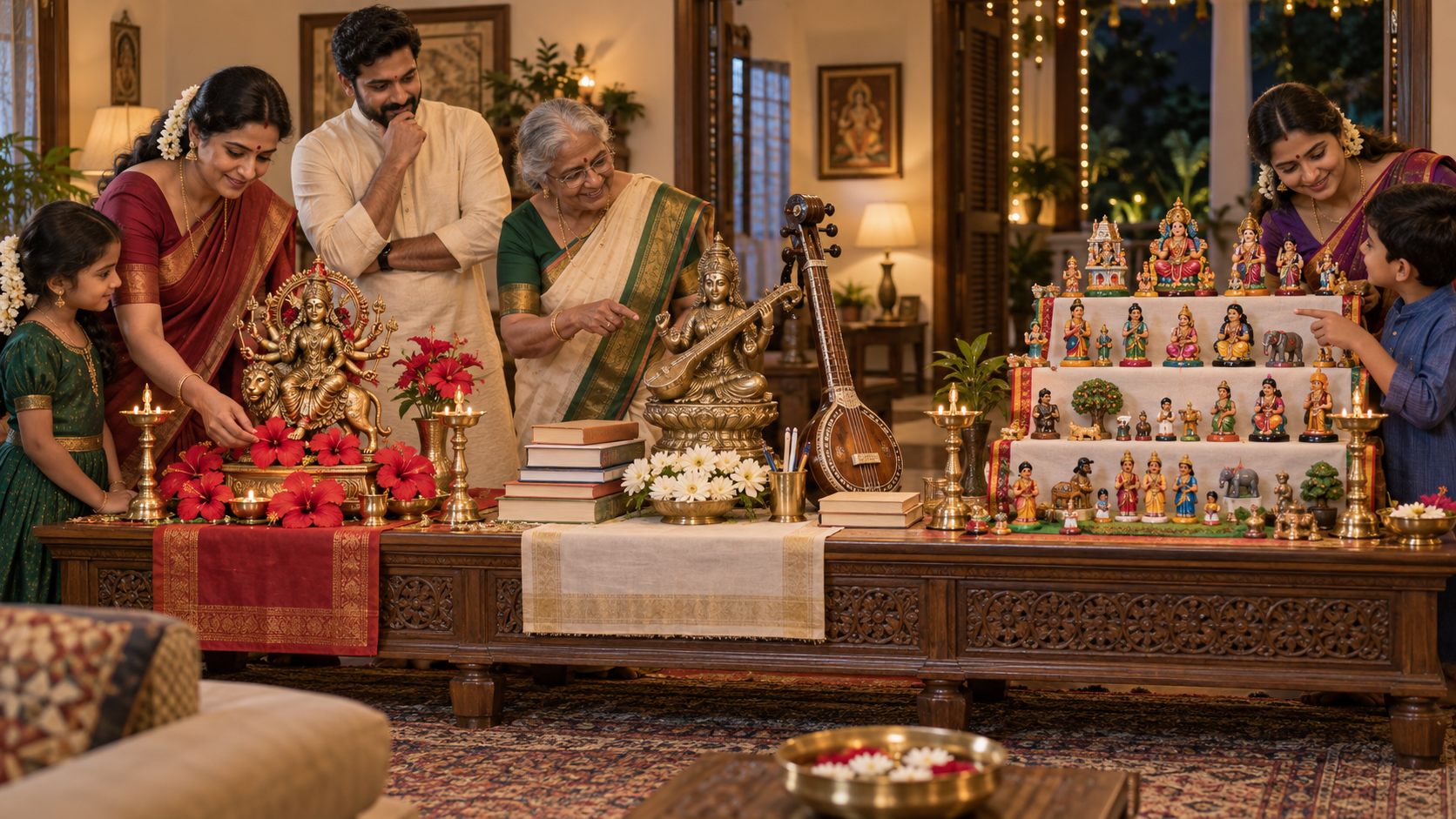
A festival calendar can tell you when an observance falls, but it cannot decide which inherited discipline belongs to your home. Navaratri is held through overlapping regional, temple, family, and sampradaya traditions. The overlap expresses the breadth of Shakti worship; it does not make every listed rite compulsory for every devotee.
- If Durga Puja anchors your celebration: treat October 17 as the Maha Saptami marker and arrange your participation around the programme announced by your local puja committee or temple.
- If you follow a Navadurga vrata: preserve the daily sequence taught in your household. For the 2026 Saptami observance, Kalaratri worship is associated with October 17.
- If Saraswati worship is central: ask whether your tradition follows the Moola Nakshatra observance on October 16, the Saraswati Poojan associated with Mahanavami on October 19, or both. They are different calendrical markers, not duplicate entries caused by an error.
- If Ayudha Puja belongs to your family practice: reserve October 19 and identify beforehand the tools, instruments, books, or implements your household custom includes.
- If your family keeps Maharashtrian Dasara: reserve October 20 for Vijayadashami and establish whether Simollanghan will be performed with your family, temple, or community.
This choice prevents a common planning mistake: collecting appealing customs from several regions and then feeling that the observance is incomplete because the household cannot perform all of them. A disciplined observance can be simple. What matters is that it remains coherent with the tradition you have undertaken.
A household plan that works around ordinary obligations
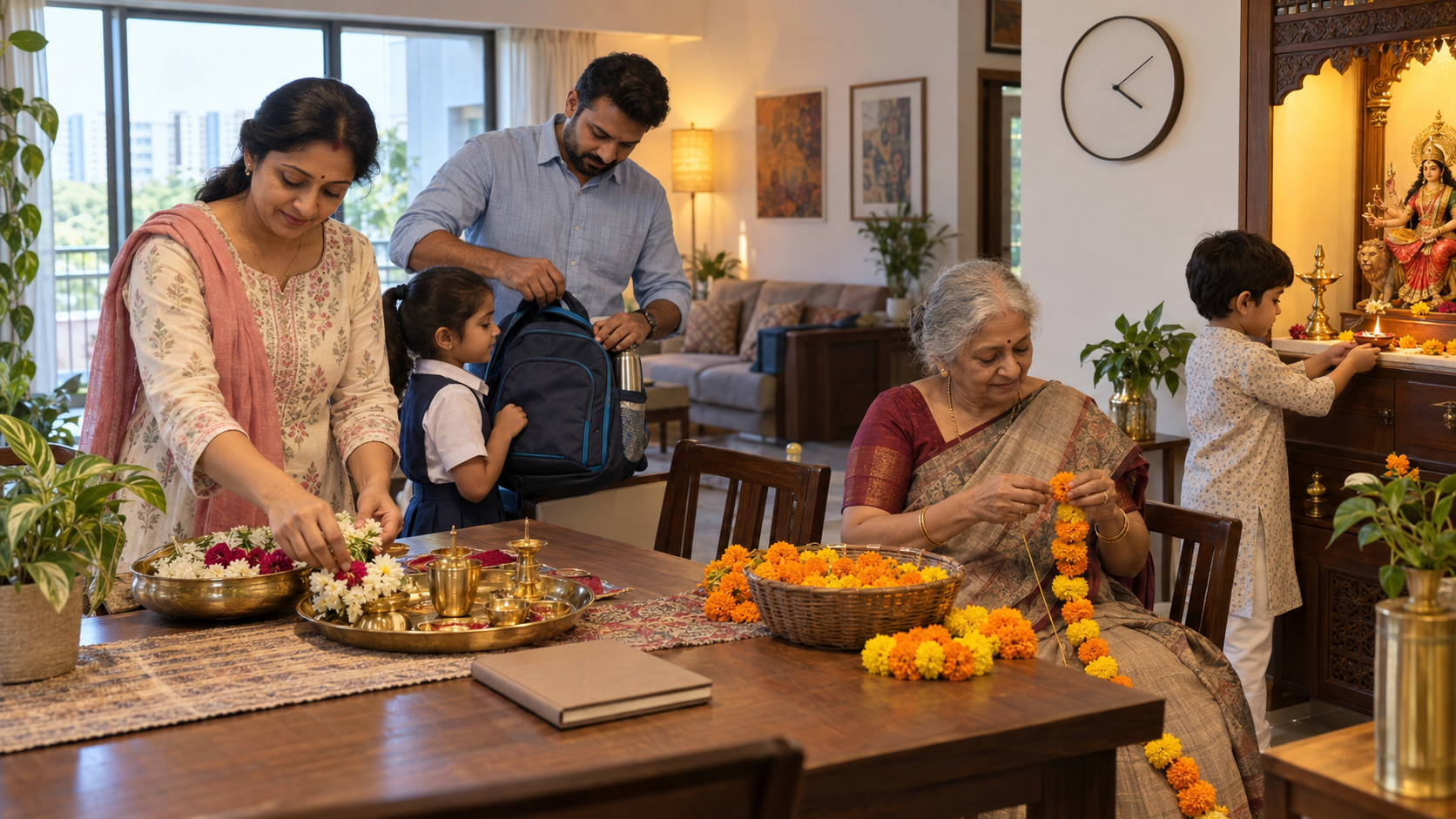
The demanding part is usually not remembering Vijayadashami. It is preparing for the observances immediately before it while work, school, meals, travel, and temple programmes continue. Settle those practical questions before the festival sequence begins.
- Mark only your non-negotiable dates first. Decide whether those are October 16, October 17, October 19, October 20, or a combination. Request leave and resolve travel around that smaller set before adding optional events.
- Separate home puja from public attendance. Write down which observances will happen at home and which depend on a temple or community programme. This exposes timing conflicts early.
- Prepare Saraswati or Ayudha items in advance. If your custom includes books, musical instruments, professional tools, or other implements, choose and clean them before October 19. Do not discover on the puja day that something required for work or study has been made unavailable.
- Plan the Mahanavami fast deliberately. Confirm the form of upvaas followed in your family rather than improvising restrictions. Anyone for whom fasting conflicts with medication, pregnancy, illness, age-related needs, or clinical advice should place health requirements first and seek appropriate medical guidance.
- Make the final day a real commitment. Vijayadashami on October 20 should not become merely the day decorations are removed. Decide what conclusion your tradition calls for and protect time for it.
For a family with children, give each person one clear role rather than a vague instruction to help. One person can prepare the puja place, another can gather the selected books or tools, and another can check the temple schedule. Specific ownership is more reliable than hurried coordination on Navami morning.
Understand Simollanghan before adding it to Dasara
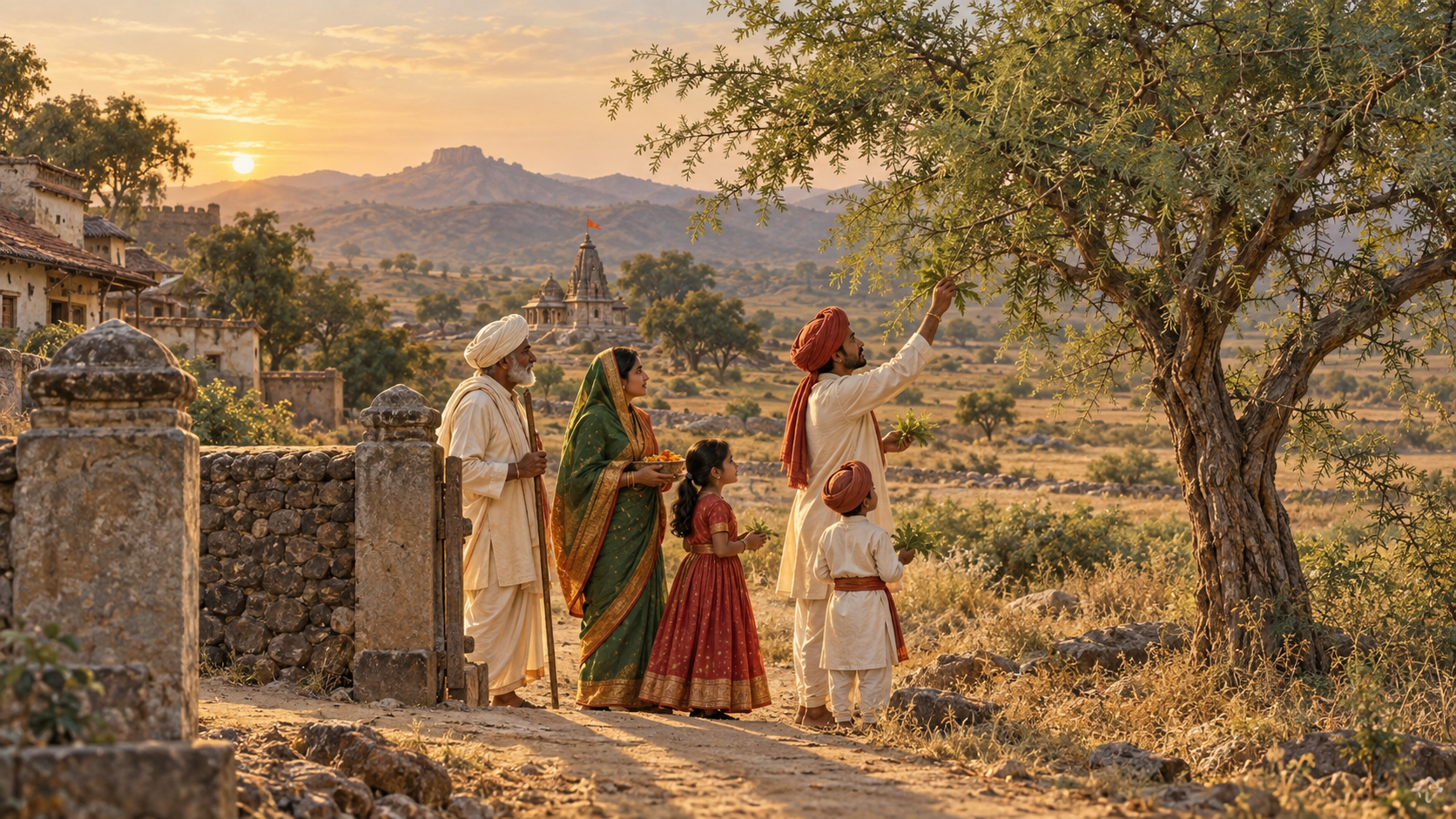
Simollanghan is a Maharashtrian Dasara observance whose name refers to crossing the boundary or frontier of a village or place. Its historical frame recalls rulers crossing the boundary of their kingdom for a campaign. That background gives the act a more definite cultural meaning than a generic festival outing.
If Simollanghan belongs to your family practice, ask an elder or community organizer where the boundary-crossing is customarily performed and whether the observance is collective. Do not manufacture a route from the literal meaning alone. A locality may preserve a particular place, sequence, or inherited convention that a general calendar cannot supply.
If it is not part of your inherited practice, you can still understand it as one regional expression of Vijayadashami without presenting it as a universal requirement. That distinction lets us appreciate the civilizational range of Dasara while respecting the integrity of local customs.
Confirm local timings instead of guessing a muhurta
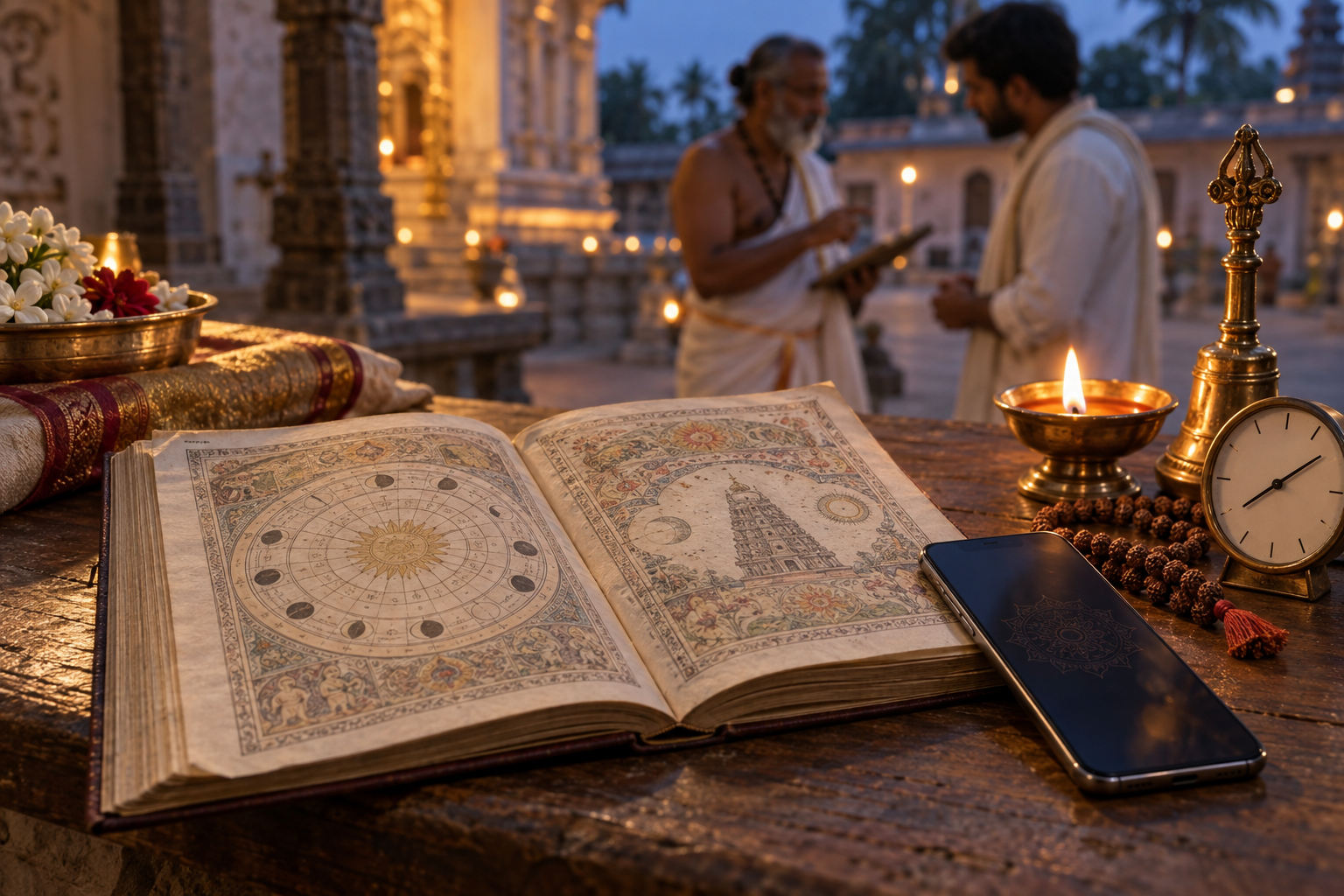
The dates above are planning dates. They are not a substitute for a location-specific panchang. Tithi and nakshatra boundaries do not necessarily begin and end at midnight, and a schedule prepared for one city should not automatically be transferred to another time zone.
This matters especially if you live outside Bharat or must choose between a home observance and a weekend temple programme. Before committing the family, ask your temple or priest four precise questions:
- Which local civil date and time will the temple use for the relevant tithi or nakshatra?
- Will Moola Nakshatra Saraswati Puja be observed on October 16 in this location?
- What is the local schedule for Mahanavami fasting, Saraswati Poojan, or Ayudha Puja on October 19?
- Will Vijayadashami and any community Simollanghan observance take place on October 20?
If a local calendar differs, ask which panchang convention or location calculation is being followed. The existence of a difference does not by itself prove that either calendar is careless. What you need is one consistent authority for the household, not a collection of screenshots selected after the fact.
Key takeaways for Navaratri 2026
- Reserve October 16 for Moola Nakshatra Saraswati Puja if your tradition follows it.
- Mark October 17 for Maha Saptami, including Bengali Durga Puja and relevant Navadurga observances.
- Plan the Sharad Navaratri Mahanavami fast, Ayudha Puja, or Saraswati Poojan for October 19.
- Keep October 20 for Vijayadashami or Dasara; this is also the Simollanghan date in Maharashtra.
- Use these dates to plan leave and travel, but obtain exact local timings from the panchang, temple, or priest your household follows.
Put the relevant dates into the family calendar now, then make one call to the temple or knowledgeable family elder before arranging the details. Once the tradition and local timing are settled, the rest of your Navaratri preparation becomes much clearer.
References
- Hindu Pad — Simollanghan 2026 | Dasara ritual in Maharashtra
- Hindu Pad — Maha Saptami 2026 | Durga Saptami
- Hindu Pad — Mahanavami Upvaas 2026
- Hindu Pad — Moola Nakshatra Saraswati Puja in Navaratri 2026

Leave a Reply
You must be logged in to post a comment.