
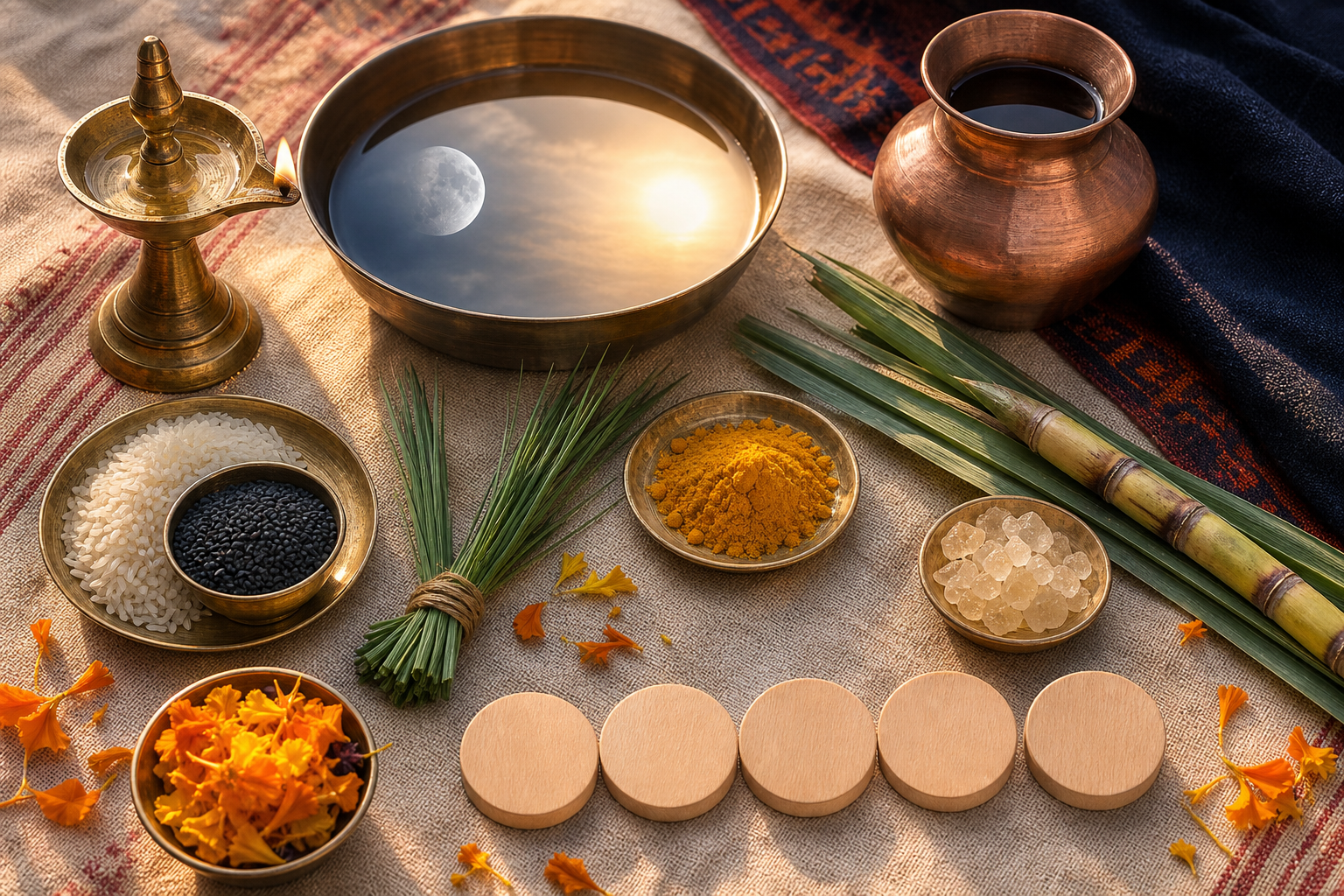
January 2026 can become crowded quickly if you are coordinating a household, temple group, or diaspora community. The difficult part is not merely remembering four observances. It is knowing which preparations belong to the full moon, the harvest transition, the new moon for ancestors, and the river-and-sun observance at the month’s close.
Put the civil dates on your calendar now, then verify the ritual window for your location before fixing puja times. That simple distinction will help you preserve both the seasonal rhythm and the integrity of each tradition.
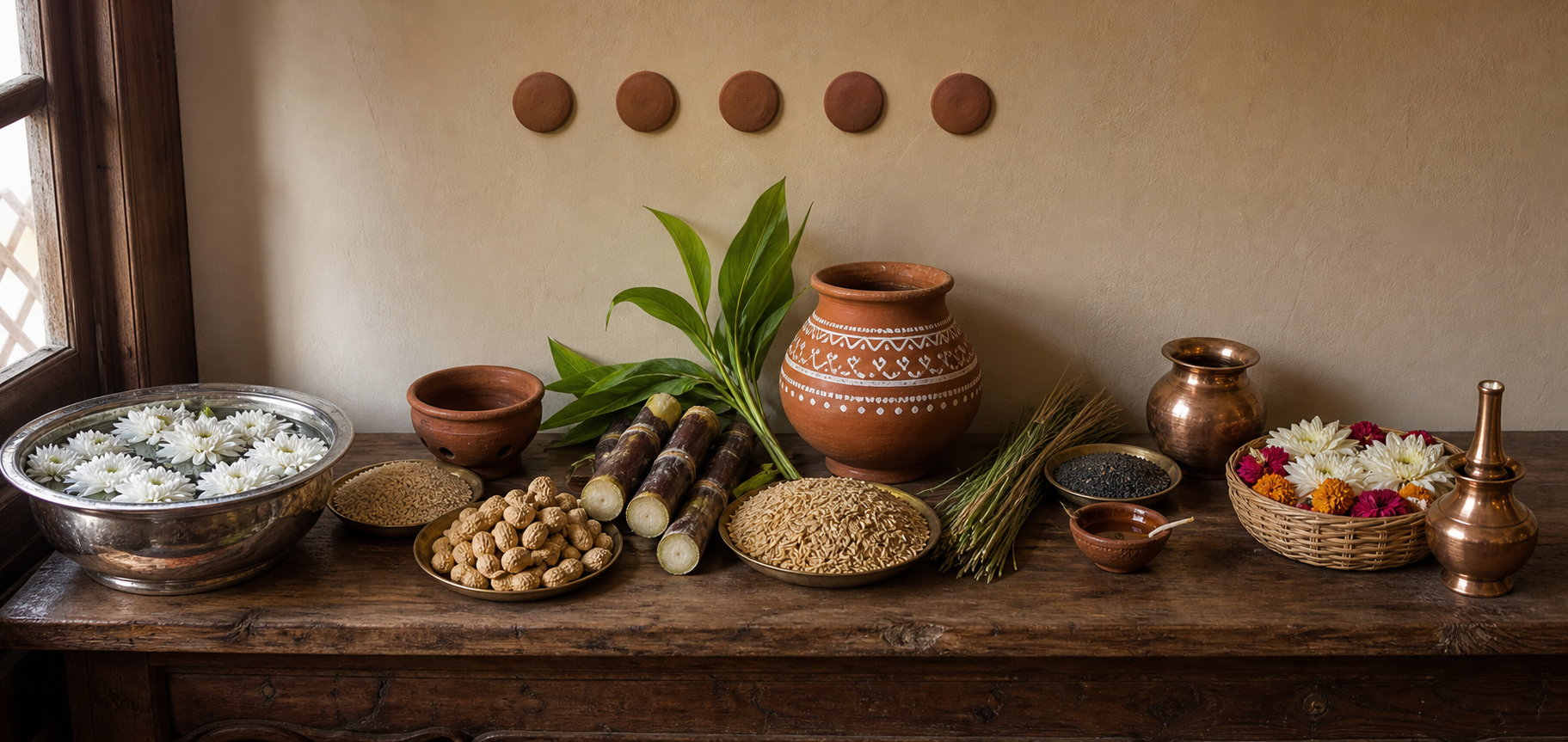
Put these five dates on the family calendar
| Date | Observance | What to plan |
|---|---|---|
| January 3 | Poush Purnima and Shakambari Jayanti | Early snan, prayer, daan, and the beginning of Magh Snan |
| January 13 | Uruka, the eve of Magh Bihu | Communal cooking, a shared evening meal, and preparations for the Meji |
| January 14 | Magh Bihu, also called Bhogali Bihu | Dawn bonfire rites, offerings, seasonal food, visits, and community activities |
| January 18 | Thai Amavasya | Ancestor remembrance, Tharpanam according to family tradition, and quiet service |
| January 25 | Narmada Jayanti and Ratha Saptami | River and Surya worship, aarti, lamp offering, recitation, daan, or ecological seva |
The sequence matters. The month opens on Poush Purnima on January 3, when gratitude for nourishment leads into the discipline of Magh Snan. It then turns toward the harvest abundance of Uruka on January 13 and Magh Bihu on January 14. The mood becomes quieter with Thai Amavasya on January 18, before expanding again through Narmada Jayanti and Ratha Saptami on January 25.
Do not compress that progression into one generic festival program. Each date asks you to notice a different relationship: food received from the earth, harvest shared with neighbors, life inherited from ancestors, and water sustained through sacred geography.
Give each observance its own character
January 3: Begin with nourishment and a sustainable discipline
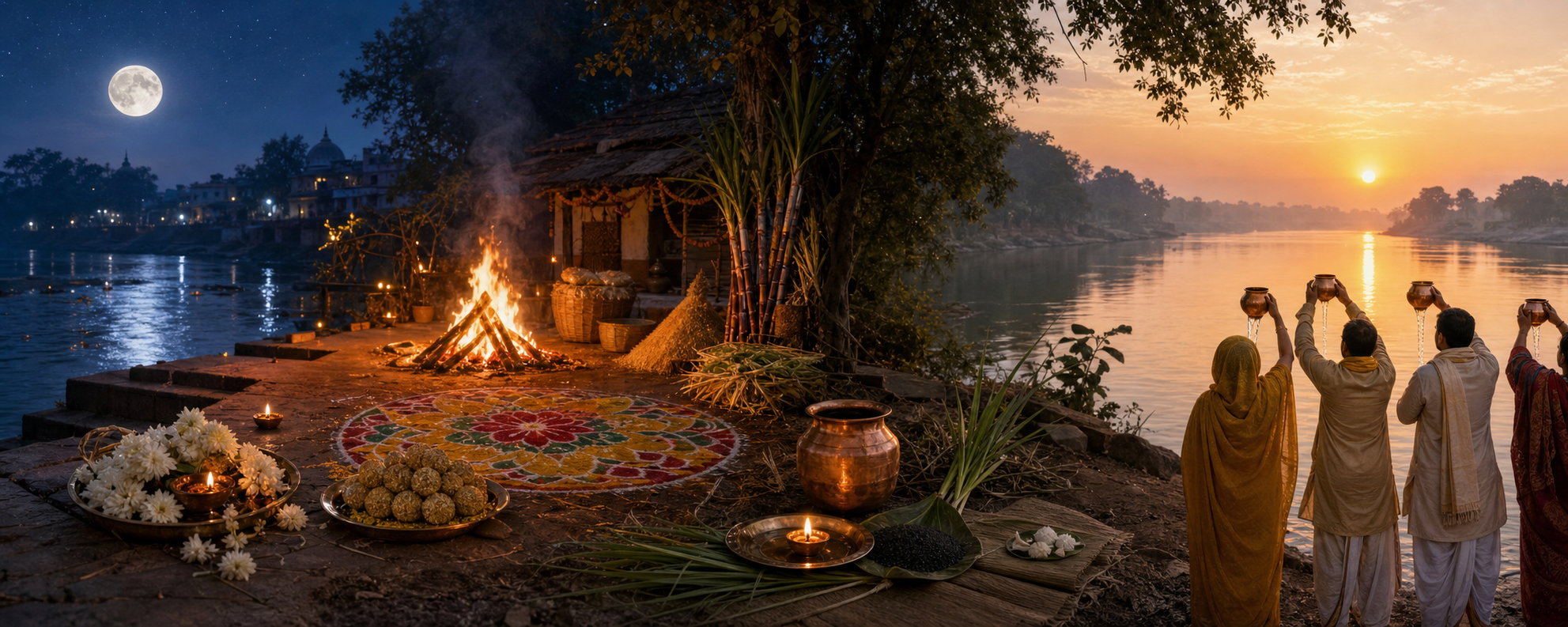
Poush Purnima is also observed as Shakambari Purnima or Shakambari Jayanti. Shakambari Devi’s association with vegetation, grains, and greens gives you a clear devotional focus: receive food as grace, reduce waste, and help someone else eat. If you are arranging daan, a contribution of useful seasonal food is more faithful to that focus than an elaborate display that no one needs.
Prepare the previous evening so the morning does not become a scramble. Decide whether you will bathe at home or visit a suitable river, lake, or temple tank. Set aside clean clothing, prayer materials, and anything intended for charity. Common household practices include snan, japa, dhyana, lamp-lighting at twilight, a fast or light sattvic food, and, in families that follow it, Satyanarayan Puja. These are customary possibilities, not a checklist that every household must reproduce.
The day also opens the Magh Snan period in North India. If you intend to undertake that vrata, settle the practical form with your family tradition or spiritual guide before January 3. A modest discipline you can maintain is better than a demanding promise abandoned after the first morning. The aim is a rhythm of purification, prayer, charity, and restraint through the Magha period, not a single impressive bath.
January 13-14: Protect the communal heart of Magh Bihu
Magh Bihu is not only a date on which a bonfire is lit. Its social center begins on January 13 with Uruka. Communities cook together, share a generous meal, and gather in temporary bamboo-and-thatch structures called bhelaghar. If you are organizing the observance, assign real space and time to that shared labor. A catered meal served to passive guests misses part of what makes Uruka meaningful.
At dawn on January 14, the Meji is lit and offerings such as newly harvested grain and sesame are placed in the fire with prayers for well-being and prosperity. Seasonal foods continue the harvest language of the rite: til pitha, sunga pitha, sesame or coconut laru, and chira with curd and jaggery are among the characteristic preparations. Ask different households to bring foods they actually know how to make, and invite an elder to explain their place in Assamese memory. That turns a potluck into transmission.
For a diaspora gathering, do not let the desire for visual authenticity outrun local fire rules. A Meji or bhelaghar made from bamboo and thatch requires a permitted site, competent supervision, and a plan for containing the fire. Where an open flame cannot be conducted safely and lawfully, keep the communal feast, prayer, gratitude, and food exchange rather than staging a hazardous imitation.
The main dates are January 13-14, but local games, visits, and food exchanges can continue through the week. Plan those activities as extensions of fellowship, not as compulsory additions. Use responsibly sourced materials and avoid needless excess so gratitude for the harvest does not create a new burden for the land.
January 18: Let Thai Amavasya remain quiet and lineage-centered
Thai Amavasya is the first Amavasya of Utharayanam in the Tamil calendar. Its place soon after Makara Sankranti and Pongal creates a distinct change in tone: public harvest joy gives way to gratitude toward those through whom family life was received.
The central practice is Tharpanam, or Pitru Tarpanam, with water and sesame according to inherited custom. This is precisely where a generic online ritual sequence is least helpful. If you have not learned the procedure followed by your family, speak with a knowledgeable elder, priest, or temple before the date. Confirm who will perform the rite, where it will be conducted, and which local tithi window applies. Do not blend instructions from unrelated regional traditions merely because they share the name Amavasya.
You can support the day by keeping the home and ritual space orderly, simplifying food, moderating speech, and setting aside time without social distraction. The observance may also be joined to service through a community kitchen, food donation, or another useful act dedicated to the welfare of others. Such service should deepen remembrance, not turn a solemn family observance into a public performance.
January 25: Join river reverence to ecological responsibility
Narmada Jayanti commemorates the sacred appearance of the Narmada. The river rises at Amarkantak in Madhya Pradesh and flows west through Maharashtra and Gujarat before reaching the Arabian Sea. Amarkantak, Omkareshwar, Maheshwar, Narmadapuram, and Bharuch are among the major places where devotion, pilgrimage, and community observance gather around the river.
Traditional practices include early snan, collective aarti, lamp offering, flowers, prayer, and recitation of the Narmada Ashtakam. The 2026 observance coincides with Ratha Saptami, bringing Surya worship into the day. Some devotees offer Arghya to Surya with Narmada water and make gifts of food, sesame, or clothing.
If you travel to a ghat, treat the riverbank as a sacred place rather than a backdrop. Carry offerings that will not leave plastic or other persistent waste behind. Support local communities, follow site instructions, and join a cleanliness effort where one is responsibly organized. If you are far from the Narmada, do not manufacture a substitute pilgrimage. Recitation, daan, study of the river’s sacred geography, and practical care for water in your own community can keep reverence connected to conduct.
Use the civil date to plan, not to guess the ritual hour

The dates above tell you when to reserve time, coordinate relatives, arrange travel, or book a community space. They do not supply a universal ritual hour. Purnima, Amavasya, and Shukla Paksha Saptami are lunar tithis with precise beginning and ending times. Sunrise and the presence of the relevant tithi can affect when a local community performs a rite.
Use a Panchang calculated for the city where you will actually observe the day. An Indian Panchang cannot automatically settle the ritual window for a family in Toronto, London, Singapore, or another location. Do not average two cities’ timings, and do not copy a social-media graphic that omits its location.
When calendars appear to conflict, first check whether they are using different locations, sunrise conventions, regional month names, or sampradaya rules. Then follow the established authority for your own observance: your family parampara for lineage rites, your temple for a temple program, or a trusted regional Panchang for a local household vrata. Confirm the timing before publishing invitations, especially for Thai Amavasya Tharpanam and the combined Narmada Jayanti-Ratha Saptami observance.
Regional names also need care. Magh Bihu shares the seasonal field of Makara Sankranti, Pongal, Maghi, and Lohri, but those festivals are not interchangeable labels for one standardized ritual. Thai Amavasya can align with the Magha new moon elsewhere while retaining its Tamil name and inherited practices. Unity becomes clearer when these distinctions are preserved.
Keep civilizational unity without erasing local tradition
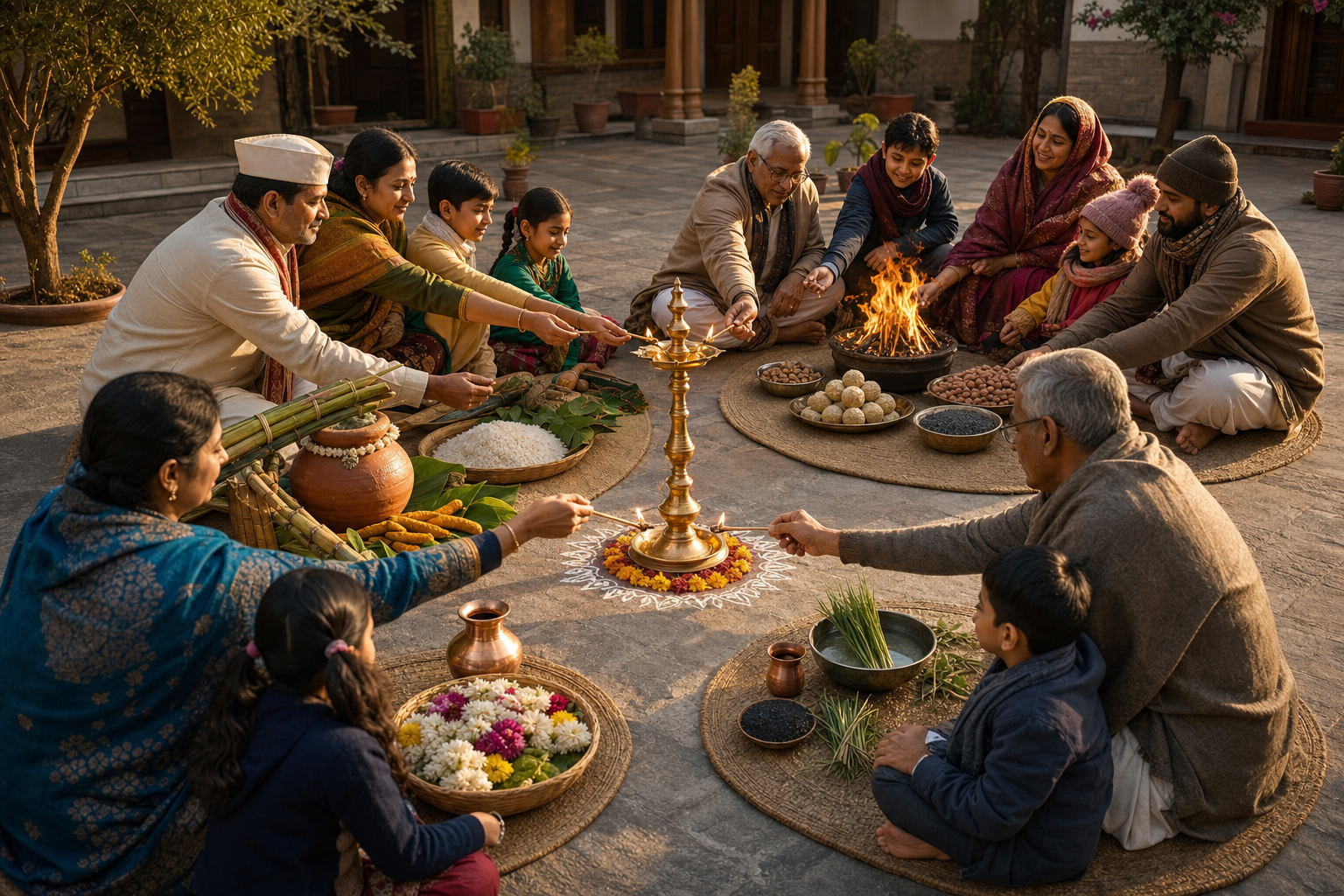
These January observances disclose a recognizably Dharmic moral world. Food is received with gratitude. Fire marks seasonal renewal. Ancestors remain part of the family’s ethical memory. Rivers are approached as life-giving presences, and worship is joined to daan or seva.
That shared ground does not mean Hindus, Buddhists, Jains, and Sikhs perform the same January rites. The connection lies in resonant commitments such as disciplined practice, ahimsa, generosity, remembrance, service, and community responsibility. When you host a mixed gathering, name the particular tradition accurately. Explain which practices are open to respectful participation and which belong to a family’s or sampradaya’s ritual discipline.
This is especially important for children and visitors. Tell them why sesame, grain, water, fire, greens, or lamps are present instead of presenting the observance as colorful folklore. Give them a suitable task: helping prepare food, serving elders, keeping a ghat clean, arranging a donation, or listening to a family account. Participation becomes meaningful when action is connected to memory and obligation.
Key takeaways
- Reserve January 3 for Poush Purnima and the opening of Magh Snan; January 13-14 for Uruka and Magh Bihu; January 18 for Thai Amavasya; and January 25 for Narmada Jayanti with Ratha Saptami.
- Use the listed civil dates for logistics, but verify tithi and sunrise-based timing in a trusted Panchang calculated for your location.
- Keep the month’s progression intact: nourishment and discipline, harvest fellowship, ancestor remembrance, then river and Surya reverence.
- Follow family and regional tradition for lineage rites instead of assembling a procedure from unrelated customs.
- Join worship to a concrete responsibility: useful food donation, careful fire practice, community service, or protection of water and sacred spaces.
Place the five dates on your calendar now. Beside each one, write the city of observance, the person responsible for checking the Panchang, and the single act of daan or seva your household will undertake. By January, you will have more than a schedule: you will have a practicable rhythm linking devotion, family memory, community, and care for the living world.
References
- DharmaRenaissance Blog – Magh Bihu 2026 in Assam: Date, Uruka Feasts and Meji Bonfires that Unite Communities
- DharmaRenaissance Blog – Poush Purnima (Shakambari Jayanti) on 3 Jan 2026: Auspicious Date, Significance, and Magh Snan Guide
- DharmaRenaissance Blog – Narmada Jayanti 2026: Date, Ratha Saptami Tithi, Significance, Rituals, and Sacred Journey
- DharmaRenaissance Blog – Thai Amavasya 2026 (January 18): Auspicious Utharayanam New Moon for Ancestor Rites
