
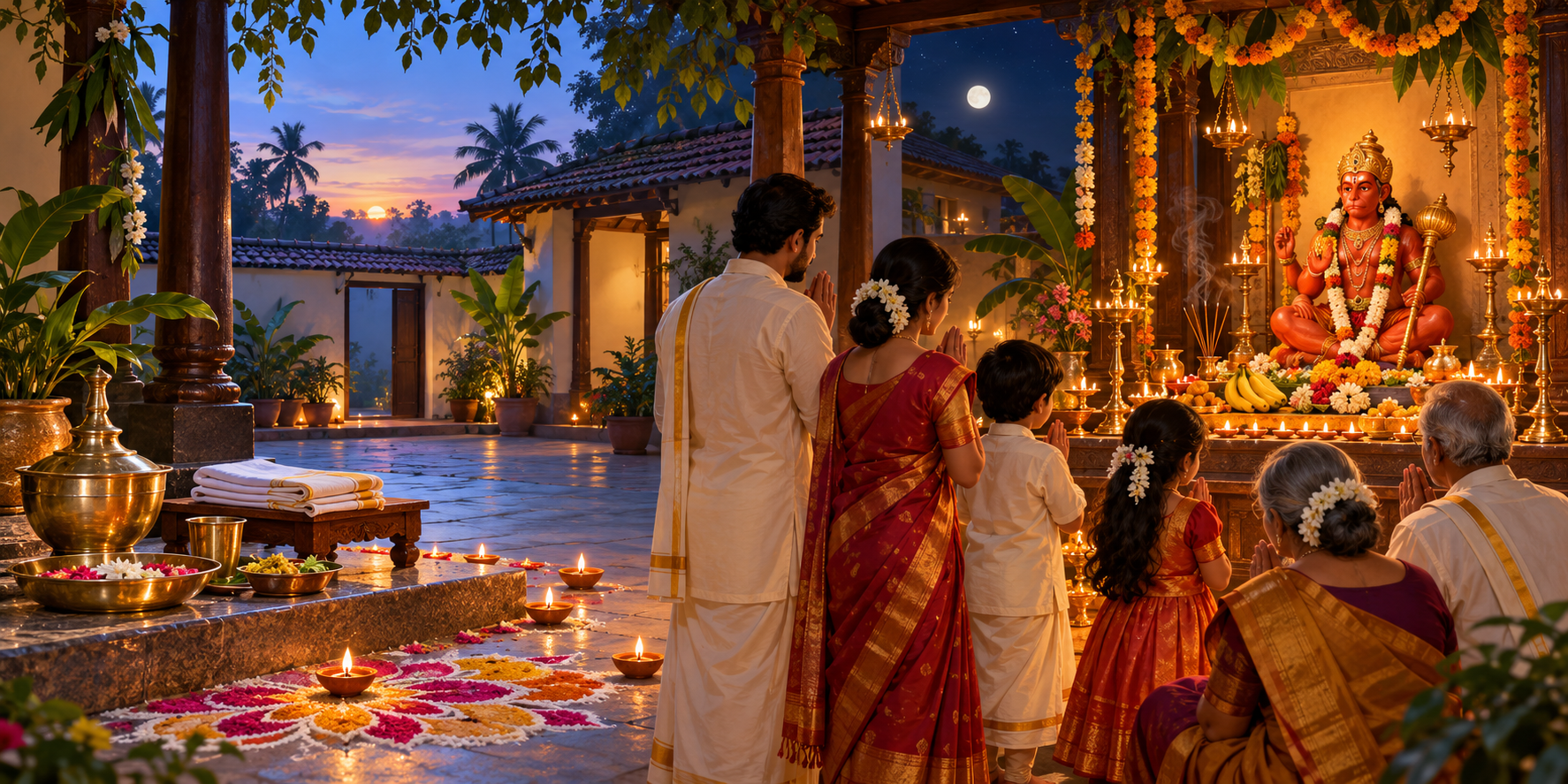
If you are trying to plan Narak Chaturdashi in 2026, you may already have found the awkward part: Choti Diwali and Diwali Hanuman Puja are associated with the same festival period, yet the published dates do not align. Before you send invitations or prepare an elaborate ritual, you need to know which observance your family actually keeps.
The practical answer is to separate three decisions: the date assigned locally to Narak Chaturdashi, whether Hanuman Puja belongs to your community’s custom, and how much ritual detail you can perform with understanding. Once those are clear, the observance becomes simpler and more meaningful.
Start with your tradition, not a generic festival checklist
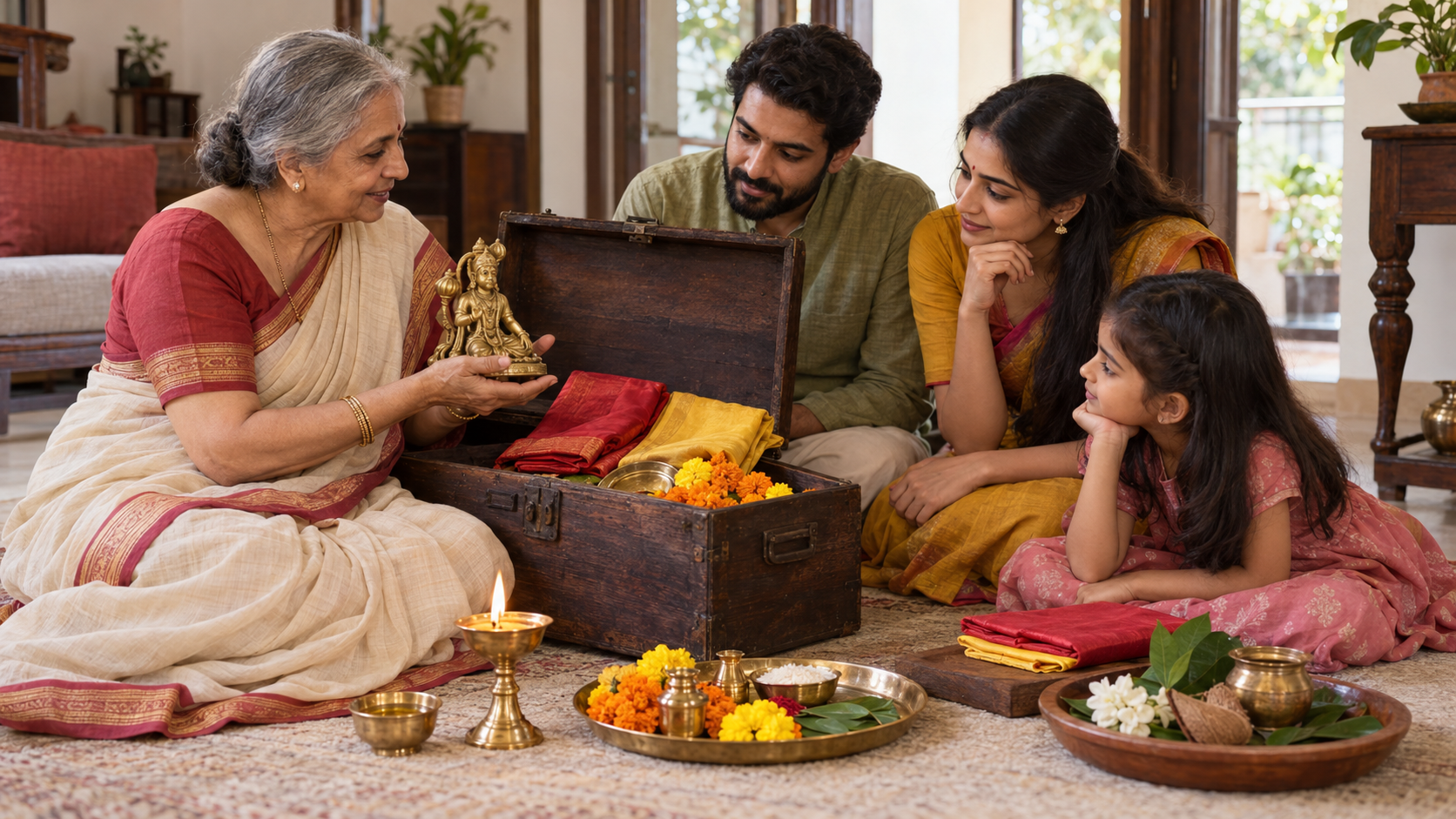
Choti Diwali is another name used for Narak Chaturdashi, the observance immediately before the principal Diwali celebration. It is commonly a day for completing household preparations, cleaning the home and making rangoli.
Diwali Hanuman Puja has a narrower setting. It is an auspicious observance kept by some communities in Gujarat, Maharashtra and parts of North India on Kali Choudas, which is identified with Narak Chaturdashi in that tradition. The word “some” matters. A regional practice can be deeply rooted without being compulsory for every Hindu household.
Begin with the custom that has an actual claim on you. If your parents, grandparents, sampradaya or local mandir have an established Hanuman Puja, follow that procedure and vocabulary. If your family has never observed it, you do not need to construct an elaborate ceremony from unrelated instructions found online. You may keep a simple devotion to Hanuman without presenting it as a universal Narak Chaturdashi requirement.
Kali Puja, Kali Yantra Puja and Narak Chaturdashi Tarpan Puja may also be performed on Kali Choudas. Their occurrence within the same festival period does not turn them into steps of Hanuman Puja. Treat each as a distinct practice with its own purpose and inherited method.
Resolve the conflicting 2026 dates before fixing a muhurat
For 2026, Choti Diwali or Narak Chaturdashi is dated November 8. Meanwhile, Diwali Hanuman Puja is dated November 7 and associated with Kali Choudas or Narak Chaturdashi. Those dates should not be quietly merged into a single answer.
Hindu lunar observances must be mapped onto civil dates for a particular location. The correct household decision can also depend on the convention followed by a family, temple or regional community. Without local tithi timings and the rule used by your tradition, choosing one universal date would create false certainty.
Use this short verification process:
- Identify the city where the puja will physically take place. Do not automatically use a calendar prepared for a different city or country.
- Check a city-specific panchang that displays the relevant tithi timing rather than relying only on a festival-name list.
- Ask your family priest, mandir or community organiser whether the local Hanuman Puja is scheduled separately from the household Narak Chaturdashi preparations.
- Record the two observances separately until you have confirmation: “Narak Chaturdashi preparations” and “Hanuman Puja.” This prevents a label from deciding the date by accident.
- On any invitation, write the verified civil date, local time, place and full name of the observance. “Kali Choudas Puja” is clearer than “Diwali event” when different customs are operating.
If your family follows a communal mandir programme, use the mandir’s announced schedule for attendance. If you are keeping a private household observance, use the date selected by your family’s customary panchang or trusted ritual guide. The important point is not to pretend the November 7 and November 8 difference does not exist.
Plan the household preparation and the puja as two layers
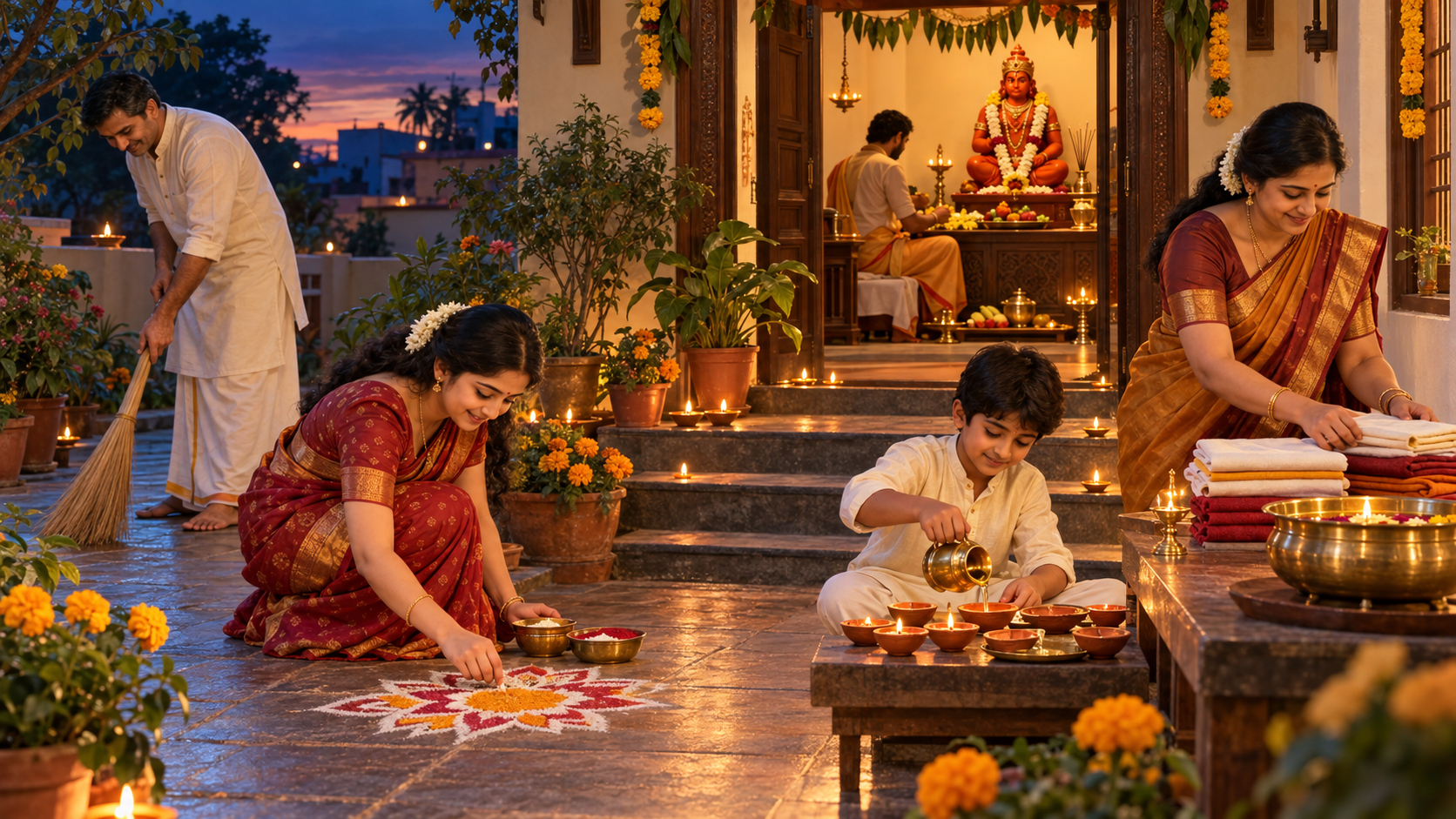
Narak Chaturdashi preparation and Hanuman worship can support each other without becoming one indistinct activity. The first prepares the home for Diwali. The second creates a focused period of devotion. Giving each layer a clear purpose prevents cleaning, shopping and decoration from consuming the time meant for worship.
| Layer | Practical focus | Boundary to keep |
|---|---|---|
| Narak Chaturdashi preparation | Clean the home, prepare the puja area, make rangoli and finish essential Diwali arrangements. | Do not let last-minute decorating push the puja into a rushed afterthought. |
| Hanuman Puja | Follow the prayers, offerings and aarti already used by your household or community. | Do not describe a regional observance as mandatory for every Hindu. |
| Other Kali Choudas rites | Perform them only when they belong to your inherited practice or are being guided by someone qualified in that tradition. | Do not add Kali Puja, yantra worship or tarpan merely because they share the date. |
If you do not have a detailed family vidhi, the following is a modest devotional outline rather than a claim of one authoritative procedure:
- Confirm the date and scope. Decide whether you are keeping Narak Chaturdashi alone or also holding a distinct Hanuman Puja.
- Complete the noisy work first. Clean the worship area and finish the rangoli before the puja begins. Put away cleaning supplies and silence avoidable distractions.
- Prepare only familiar items. Arrange the image or murti your household normally uses, a safely placed lamp and the simple offerings customary in your home. There is no need to buy specialised ritual objects merely to make the setup look complete.
- Use a prayer you understand. Recite the Hanuman prayer or aarti familiar to your family. If no inherited liturgy is available, a short, direct prayer offered with attention is more honest than an elaborate sequence copied without context.
- Close deliberately. Complete the household’s customary closing prayer, distribute prasad if offered, and only then return to the remaining Diwali preparations.
A lineage-specific or temple-led vidhi may require additional steps. In that case, the inherited procedure takes precedence over this minimal household outline. Write the sequence down beforehand so that the person conducting the puja is not searching for instructions halfway through it.
Avoid four common mistakes around Kali Choudas
Do not turn regional diversity into contradiction. One household may centre Hanuman, another may keep a Kali-related practice, and another may focus on cleaning, rangoli and preparation for Diwali. Difference does not automatically mean that one family is observing the day incorrectly.
Do not combine rites merely because their names appear together. Hanuman Puja, Kali Puja, Kali Yantra Puja and tarpan are not interchangeable components. If a practice involving a yantra or tarpan is unfamiliar to you, seek guidance from the tradition that actually maintains it rather than improvising.
Do not mistake scale for devotion. A clean space, an understood prayer and unhurried attention form a more coherent household observance than a crowded altar assembled for appearance. The amount purchased for the puja is not a measure of its sincerity.
Do not treat fireworks as a ritual requirement. Small-scale fireworks are associated with Choti Diwali in some celebrations, but they need not define your observance. If your household uses them, follow local law and the manufacturer’s safety instructions, keep them away from the worship area and open flames, and ensure children have direct adult supervision.
Quick answers before you make the family plan
Is Choti Diwali the same as Narak Chaturdashi?
Yes, Choti Diwali is a commonly used name for Narak Chaturdashi, the observance before the principal Diwali festival. Household cleaning, rangoli and completion of Diwali preparations are associated with the day.
Must every Hindu perform Hanuman Puja on Narak Chaturdashi?
No. Diwali Hanuman Puja is identified with particular communities, including some in Gujarat, Maharashtra and North India. Follow it when it belongs to your family, sampradaya, mandir or regional custom; do not impose it as a universal rule.
Is the 2026 observance on November 7 or November 8?
November 8 is given for Choti Diwali or Narak Chaturdashi, while November 7 is given for Diwali Hanuman Puja on Kali Choudas. Because the labels overlap but the civil dates differ, confirm the decision with a city-specific panchang and the convention followed by your family or mandir.
Does Hanuman Puja require Kali Yantra Puja or tarpan?
No such conclusion follows merely because these rites can occur on Kali Choudas. They are distinct practices. Include them only when they belong to your tradition and you have appropriate guidance.
Your next step is concrete: verify the local 2026 date, write down the exact observance your household will keep, and finish the cleaning and rangoli before worship begins. That one decision will remove most of the confusion while leaving room for your family’s living tradition.
References

Leave a Reply
You must be logged in to post a comment.