
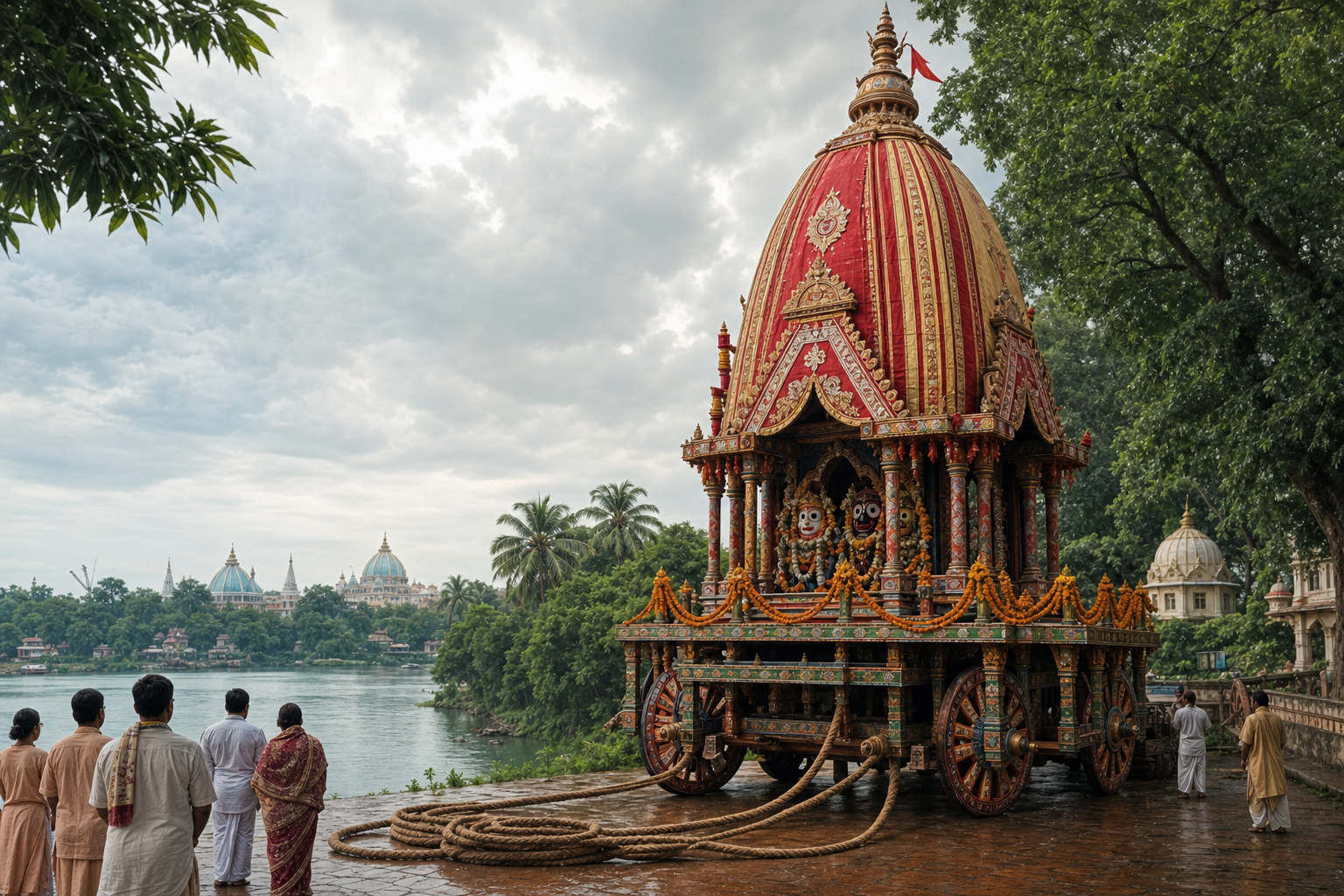
The Dandavats item identifies its subject as Mayapur Rath Yatra 2026. The supplied material, however, consists only of that title and a single image thumbnail; it contains no written account of the procession.
This guide separates that limited report from established background about Ratha Yatra, helping readers understand the devotional setting without turning an image-only source into an unsupported event narrative.
What Dandavats actually confirms
According to the title published by Dandavats, the featured subject is a Rath Yatra connected with Mayapur and identified with 2026. The thumbnail indicates that visual material accompanies the item, but the source text provides no schedule, route, attendance figure, organizer, sequence of rituals, or eyewitness description.
Those omissions matter. A photograph or video thumbnail may introduce an event, but it cannot by itself establish when each scene was recorded, who appears in it, or how the observance unfolded. Any detailed claim about this particular yatra would therefore require information beyond the supplied source.
How Ratha Yatra expresses public bhakti
In general Hindu usage, Ratha Yatra is a ceremonial chariot journey in which divine presence moves beyond the usual temple setting and becomes accessible in shared public space. The form is especially associated with devotion to Lord Jagannath, although local observances may differ in scale, liturgy, music, and community practice.
The procession gives movement a spiritual purpose. Pulling a chariot, singing sacred names, offering service, or simply receiving darshan can turn a public gathering into collective sadhana. The emphasis is not merely spectacle; it is participation shaped by bhakti, humility, and seva.
A Dharmic language of movement and service
Ratha Yatra belongs to a distinctly Hindu devotional world, yet its wider grammar is recognizable across the Dharmic family. Hindu yatras, Buddhist pilgrimages, Jain processional traditions, and Sikh Nagar Kirtans each bring sacred memory, disciplined practice, and community service into shared space. Their teachings and rituals remain different, but all demonstrate that dharma can be lived collectively rather than confined to private belief.
Recognizing that common thread does not flatten the traditions. It strengthens mutual respect by allowing each sampradaya to retain its own sacred forms while affirming a civilizational commitment to devotion, ethical conduct, hospitality, and service.
Key takeaways
- Dandavats identifies the subject as Mayapur Rath Yatra 2026.
- The supplied source contains a thumbnail but no substantive written report.
- No event-specific schedule, route, crowd estimate, or ritual details can be confirmed from the material provided.
- Ratha Yatra generally represents public bhakti through procession, darshan, sacred singing, and seva.
- Its collective spirit can encourage respectful solidarity across Hindu, Buddhist, Jain, and Sikh communities without erasing their distinctions.
A fuller account of the 2026 observance should be built only when reliable descriptions, captions, or program details become available. Until then, the responsible approach is to honor the devotional subject while keeping the boundary between confirmed reporting and general context clear.
Inspired by this post on Dandavats.
