
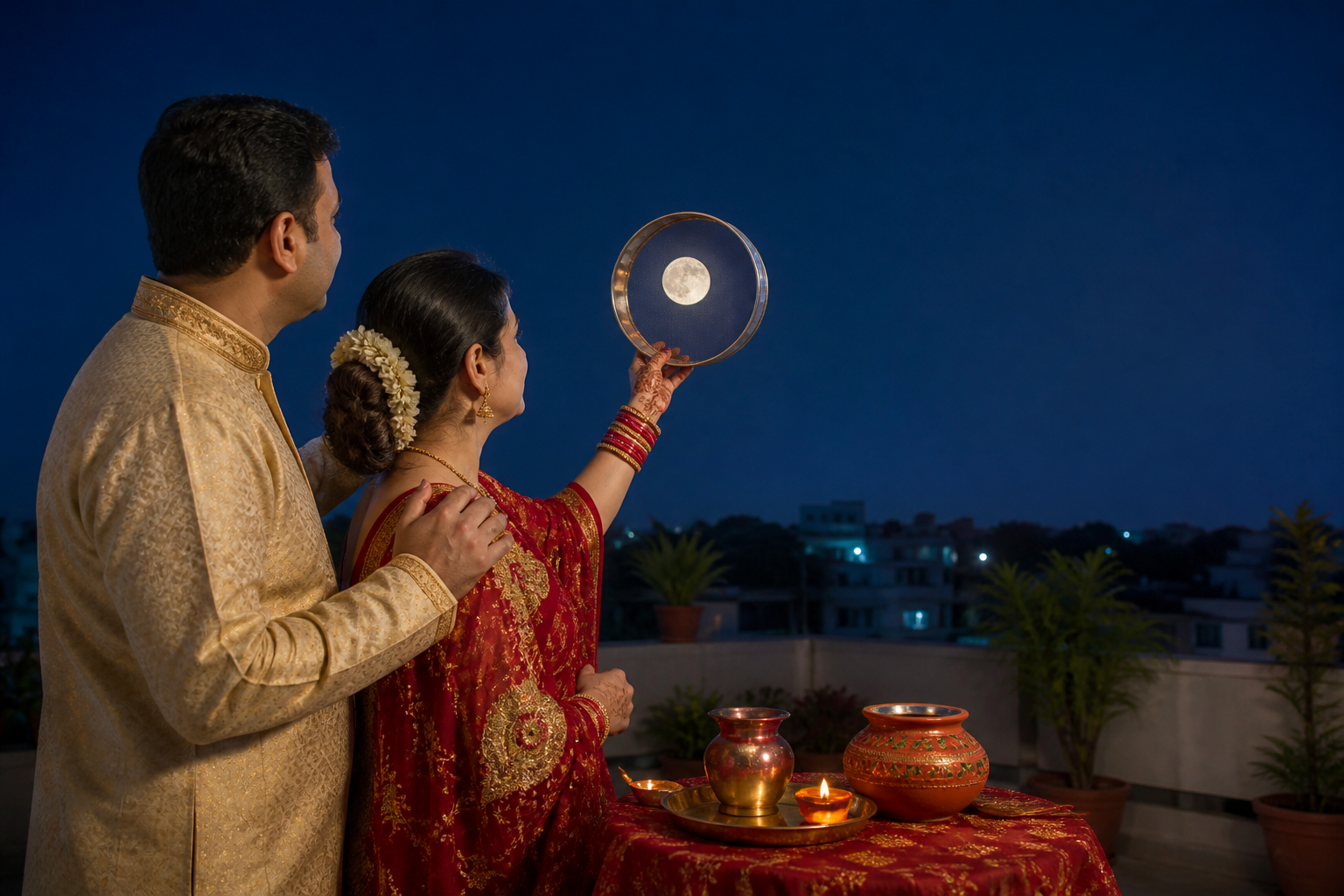
If you are observing Karva Chauth for the first time, the difficult part is rarely devotion. It is knowing what must be ready before sunrise, which customs can vary, and exactly what to do when the moon appears.
You can prevent most confusion by making four decisions the previous evening: the form of fast you will keep, the local moonrise time you will follow, the puja sequence used in your family, and what you will eat after the vrata. This plan takes you through the day without treating every regional custom as a universal rule.
Key takeaways
- Confirm the festival date and moonrise for your present city through a current, trusted Panchang or local temple notice. Do not reuse another city’s time.
- Decide before dawn whether you are keeping the traditional nirjala vrata, a partial fast, or a prayer-centred adaptation. Health needs should determine what is safe.
- Build sargi around fluids, fruit, dry fruit, a whole-grain food, and a moderate protein source rather than relying mainly on sweets and salty snacks.
- Prepare the channi, diya, puja thali, water for arghya, katha, fast-breaking drink, and evening meal before the puja begins.
- At moonrise, perform chandra darshan, offer arghya, pray, receive the first drink according to family custom, and then eat calmly.
- Keep participation voluntary. A spouse may fast too, take over practical duties, join the puja, or support the observer in another meaningful way.
Settle the important choices the night before
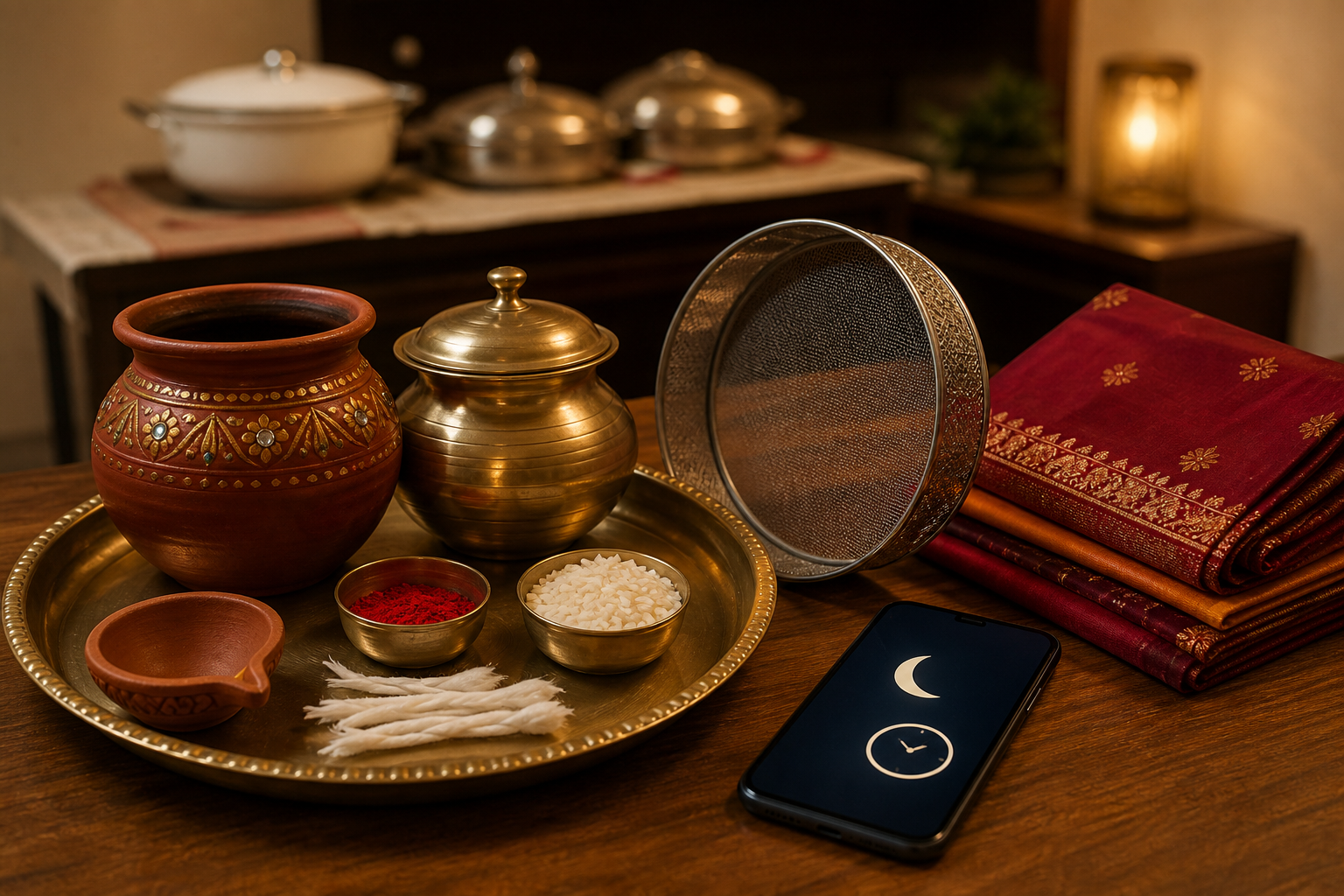
Karva Chauth falls on Krishna Paksha Chaturthi of Kartik in the North Indian lunar calendar. Its central sequence runs from the pre-dawn sargi through fasting, evening puja, chandra darshan, arghya, and fast-breaking. The details surrounding that sequence differ across regions and households.
Ask an elder or the person leading the puja which katha, songs, thali arrangement, and order your family follows. Customs in Punjab, Delhi, Rajasthan, Uttar Pradesh, Haryana, and Himachal Pradesh share a devotional centre but need not look identical. Following your household’s established achara is more coherent than assembling unrelated steps from several online videos on the day itself.
Next, decide the form of vrata. Traditionally, sargi is eaten before sunrise and followed by a nirjala fast – no food or water – until moonrise. Contemporary families also use partial fasts, prayer-led observance, or a shared fast kept by both spouses. These are decisions to make openly, not changes to hide after the fast has begun. Fasting and practical support can both express care; coercion does not deepen a sankalpa.
Confirm two separate times: local sunrise, before which sargi must be completed, and local moonrise, around which the evening conclusion is planned. Use a current Panchang for the city where you will actually be. This matters especially if you are travelling or living outside Bharat. A time shared by relatives in Delhi, Mumbai, or Chandigarh does not automatically apply to another city or time zone.
Put the following items in two groups so that the morning meal and evening ritual do not compete for attention:
- For sargi: drinking water and any family-approved hydrating drink, fruit, dry fruit, a whole-grain preparation, a protein or dairy item, and a modest festive sweet.
- For the puja: a clean thali, diya and safe place for it, channi, clean water and vessel for arghya, the katha or prayer text your family uses, and any family-specific offerings.
- For fast-breaking: water or milk, a small sweet if customary, and a ready meal that will not require the fasting person to cook after moonrise.
- For moon sighting: access to a terrace, courtyard, balcony, or open space with a low eastern horizon. Check in advance whether buildings or trees block the view.
Use sargi to support the vrata, not to overload the body
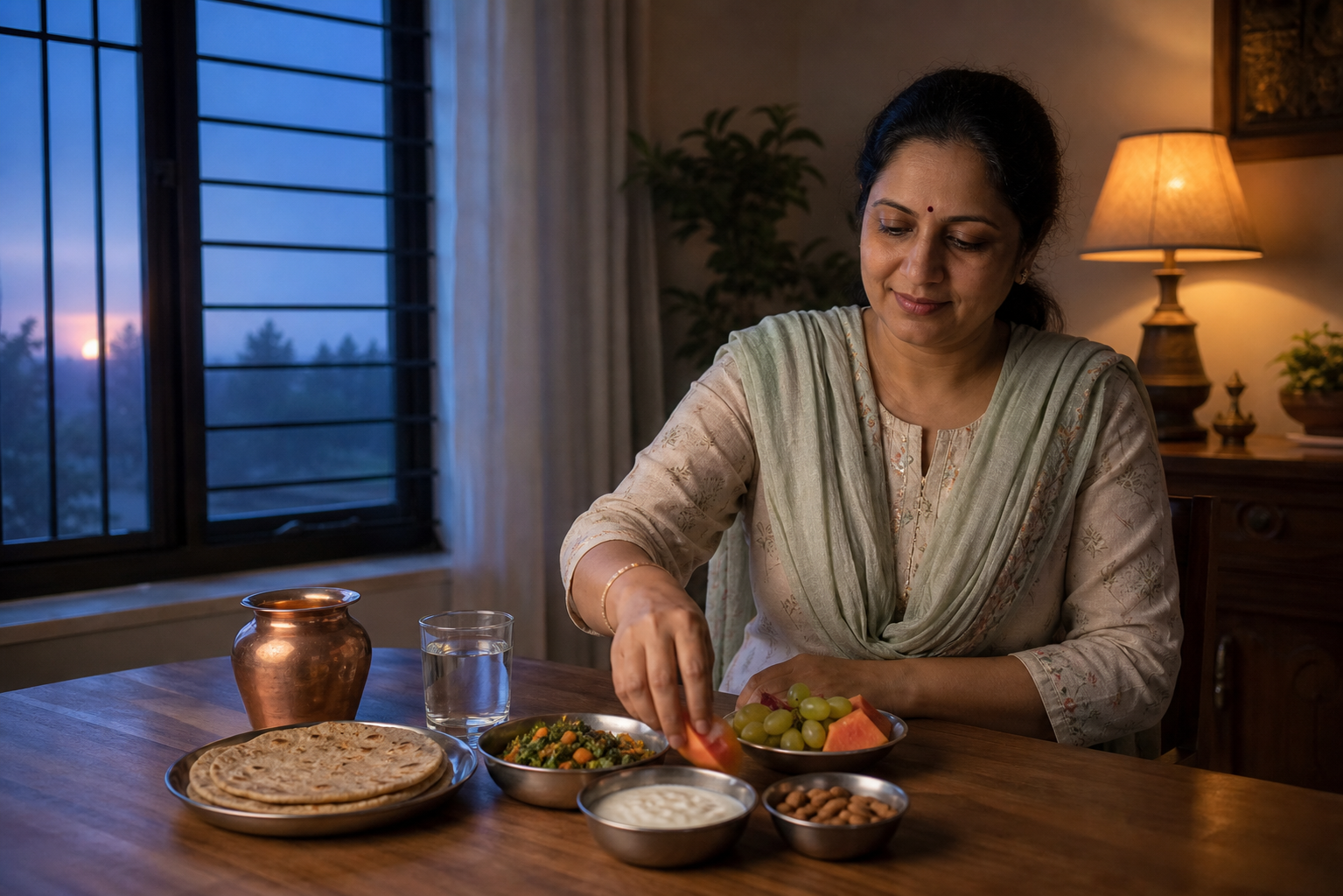
Sargi is both nourishment and blessing. It is traditionally offered by the mother-in-law, linking the observer to the affection and continuity of the family. If distance or family circumstances make that exchange impossible, you can still receive blessings by phone and prepare the meal locally. The relationship is the point; elaborate presentation is secondary.
A workable sargi does not need dozens of dishes. Build one calm plate from five parts:
<!– wp:list {