
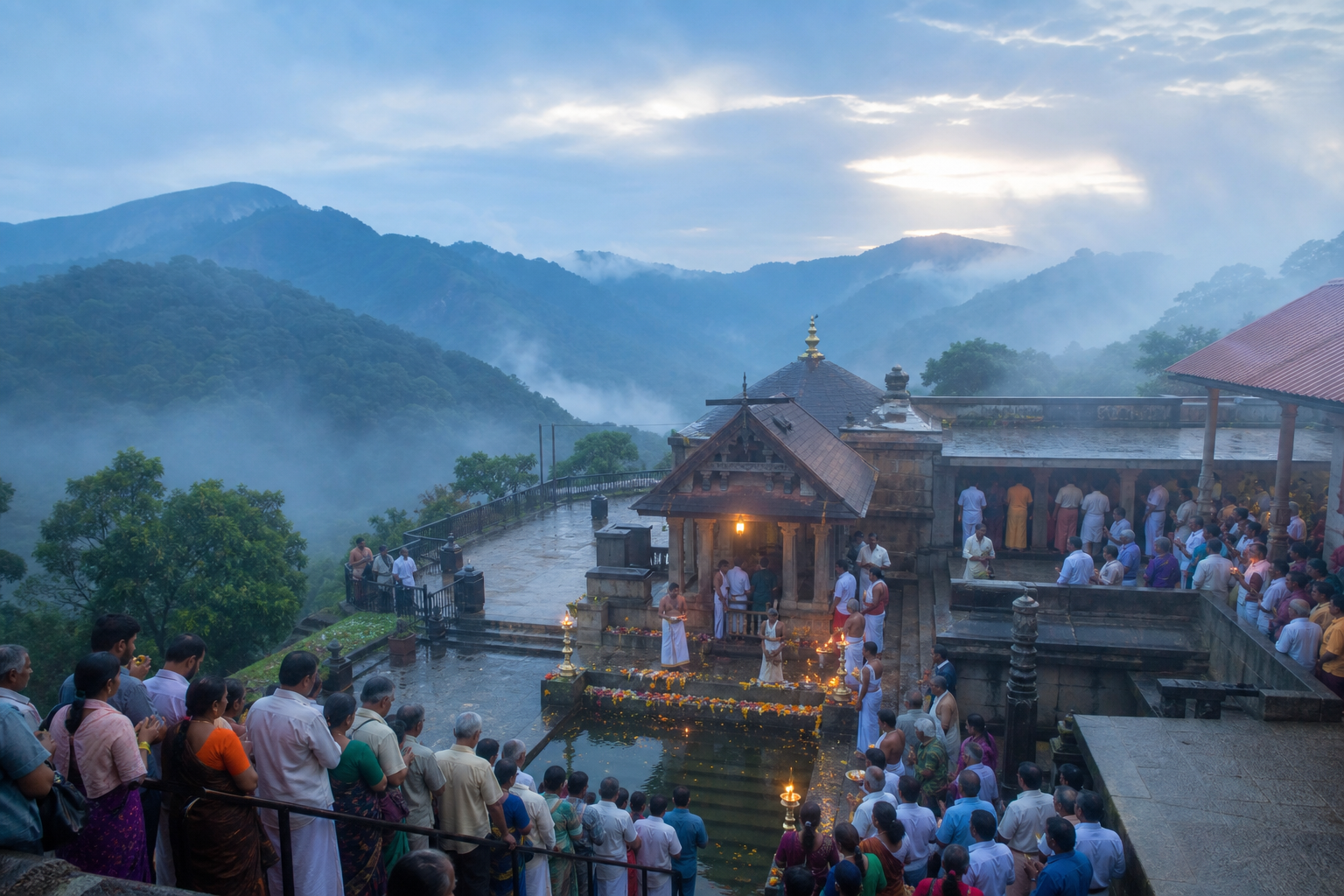
If you are preparing for Kaveri Sankramana at Talakaveri, the most important question is not simply when to leave home. You need to know which timing is authoritative, how the snana fits into the wider pilgrimage, and how to take part without turning a sacred visit into a hurried checklist.
A sound plan has three anchors: confirm the locally announced muhurta, leave enough time for the gathering at Talakaveri, and approach the river as a tirtha rather than a tourist stop. Once those decisions are settled, the rest of the yatra becomes much clearer.
Confirm the muhurta before you plan the journey
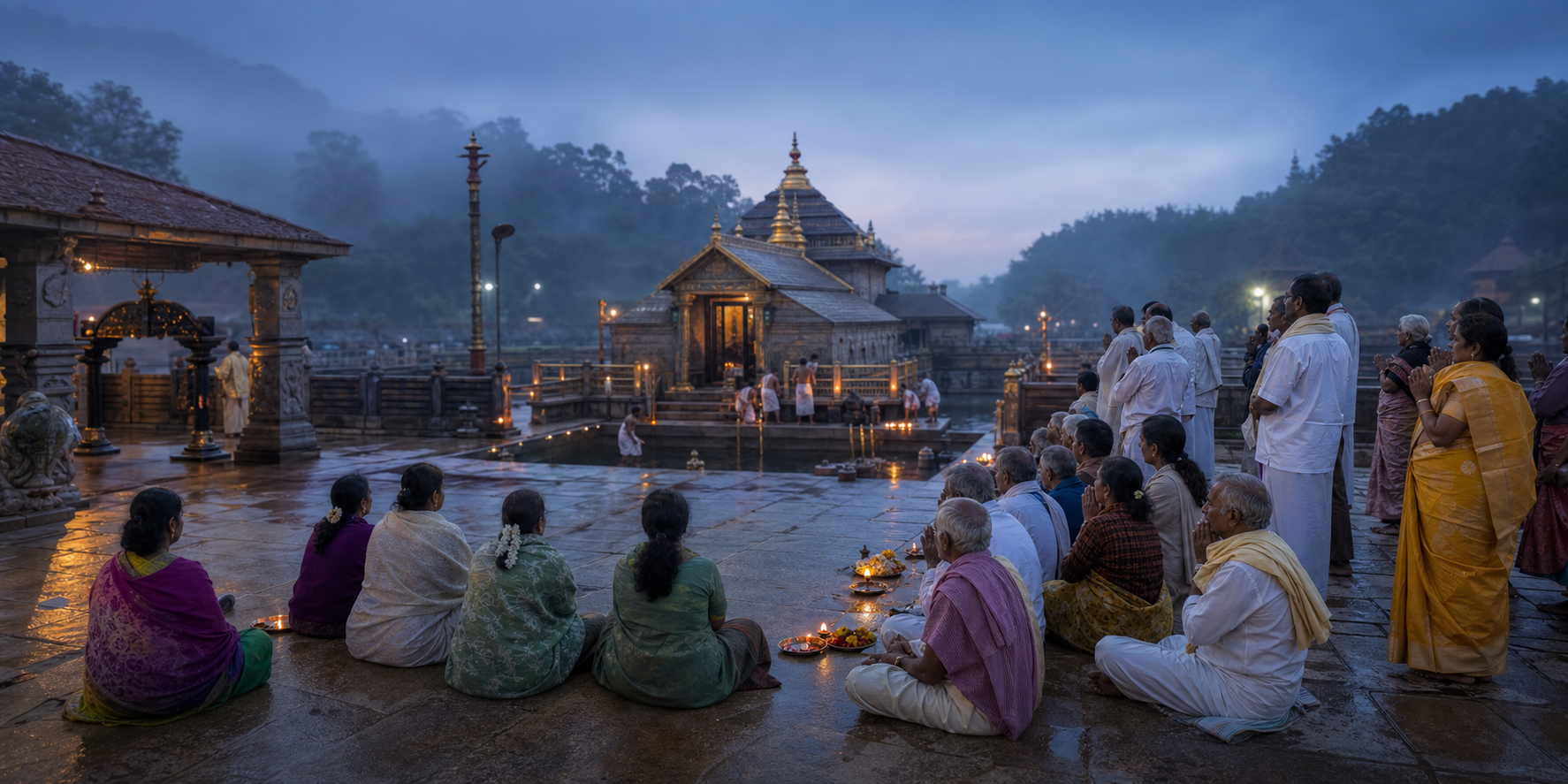
Kaveri Sankramana coincides with Tula Sankramana, the solar transition into Tula Rashi. The observance is therefore tied to a particular astronomical moment, not merely to a convenient festival date. At Talakaveri, the auspicious time for snana and associated worship is traditionally announced by the temple authorities.
This distinction matters when you are making travel arrangements. A general calendar may help you identify the day, but it should not replace the official local announcement. The 2025 observance, for example, fell on October 17. That date should not be carried forward into another year without verification, and the previous year’s muhurta should never be assumed to remain valid.
Check the announcement from the Talakaveri temple authorities or the local administration for the year in which you intend to travel. Do this before fixing a rigid arrival schedule. Then check again close to departure, because the locally communicated arrangements will determine how pilgrims are admitted, queued, and directed around the sacred moment.
Key takeaways
- Kaveri Sankramana is observed with Tula Sankramana, when the Sun enters Tula Rashi.
- The temple’s locally announced muhurta, not an old festival listing, should govern your plan.
- Arrive with a substantial margin rather than trying to reach the snana area at the exact auspicious moment.
- Treat Talakaveri and Bhagamandala as parts of a possible pilgrimage circuit, but let temple instructions determine the order on the day.
- Carry little, dress modestly, minimize plastic, and expect to participate through an orderly queue.
Build the yatra around Talakaveri, not around a tight timetable
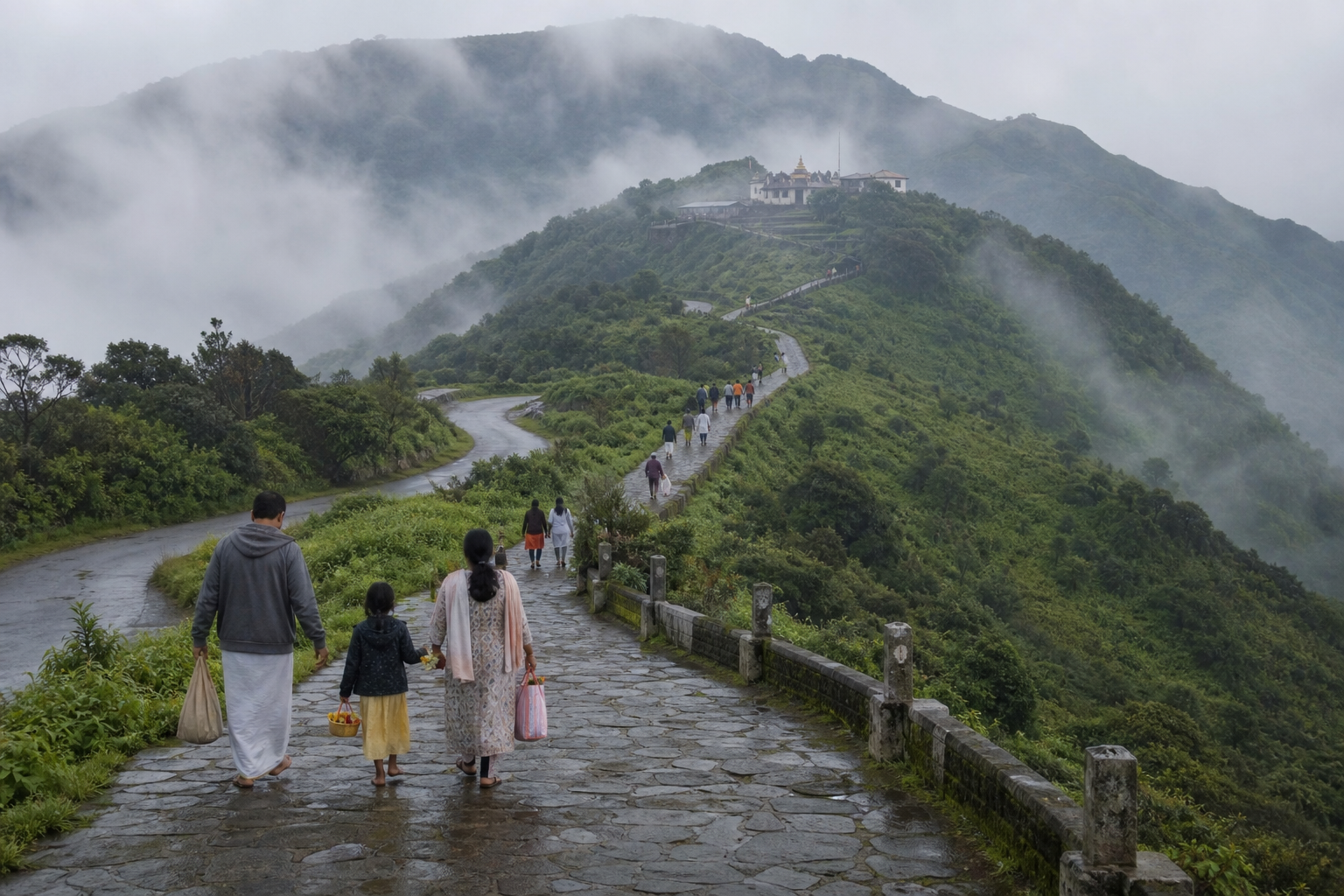
Talakaveri is revered as the source of the Kaveri and lies in the Brahmagiri Hills near Bhagamandala. Madikeri, the district headquarters of Kodagu, is the usual access point identified for pilgrims travelling toward the shrine. The hill setting and the large festival gathering make an over-precise itinerary a poor fit for the day.
Your goal should be to reach the pilgrimage area early enough to receive current instructions without anxiety. If you arrive only moments before the muhurta, a queue or access restriction can turn devotion into frustration. Early arrival gives you time to understand where snana is being conducted, which line to join, and how the temple is sequencing worship.
A practical pilgrimage sequence can look like this, subject to whatever the temple authorities direct:
- Confirm the day’s muhurta and crowd instructions after reaching the area.
- Join the designated queue for snana rather than moving independently toward the water.
- Undertake the ritual bath with attention and without delaying those behind you.
- Proceed for puja to Goddess Kaveramma according to the temple’s arrangement.
- Light a lamp where this is permitted and receive prasada reverently.
- Visit Bhagamandala if it forms part of your intended yatra and local conditions allow it.
Many pilgrims include the confluence at Bhagamandala in the same journey. This can deepen the sense of moving through a sacred landscape rather than visiting a single building. It is still better to regard Bhagamandala as a meaningful extension of the yatra, not as a test of whether your pilgrimage was complete. If crowd management or personal limitations require you to shorten the visit, perform what you can with steadiness.
Keep the day flexible. The annual gathering brings thousands of devotees to Talakaveri, so the most reliable plan is one that allows local guidance to take precedence over your private schedule.
Approach the snana as worship, not as access to water
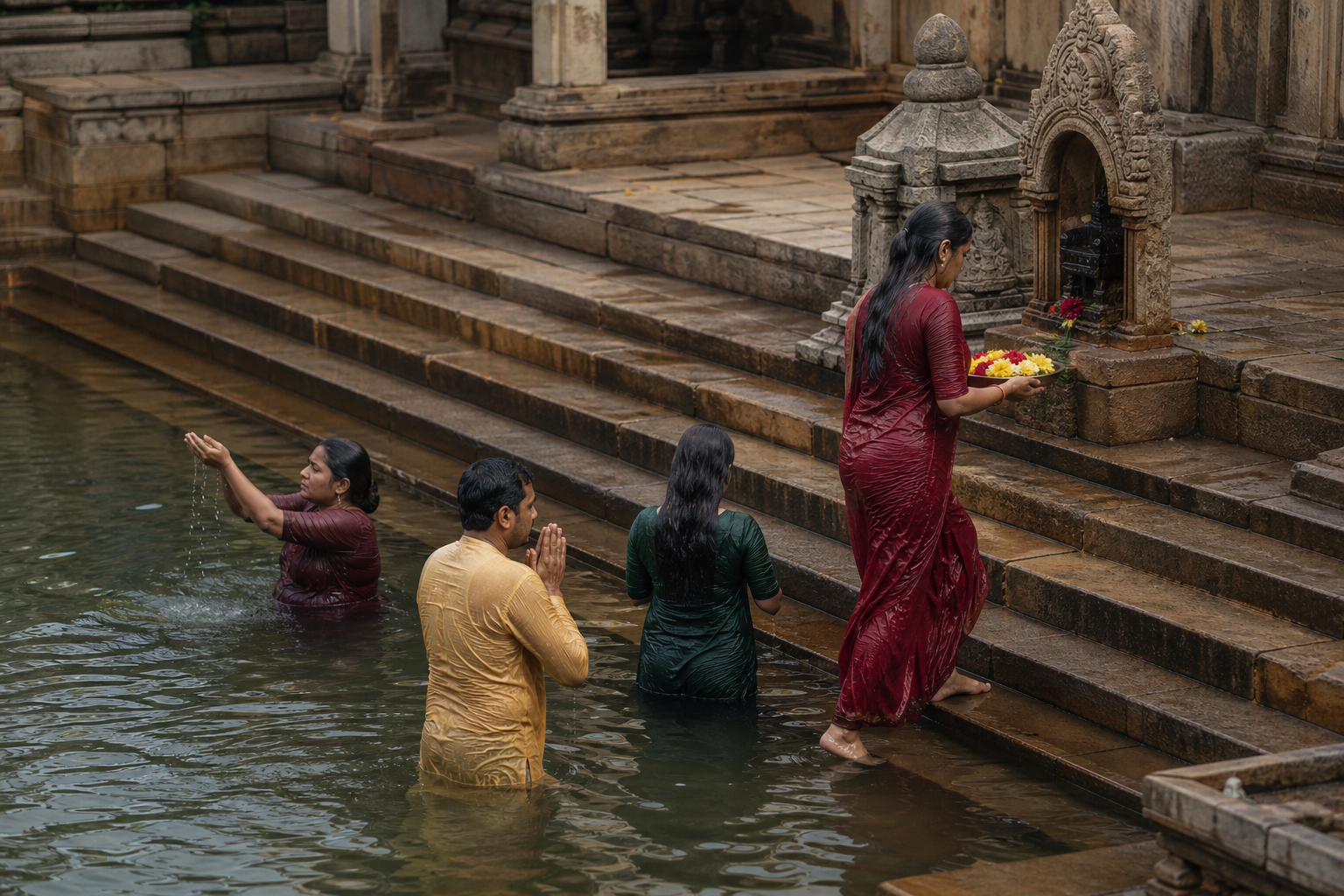
The Kaveri Sankramana snana is understood as an act of purification, gratitude, and spiritual renewal. Devotees associate it with punya, or religious merit, but its meaning is not reducible to getting wet at an auspicious time. The outward bath points toward inward cleansing: leaving behind carelessness, correcting one’s conduct, and renewing gratitude toward the river that sustains life.
That understanding should shape your behaviour before, during, and after the bath. Modest clothing is part of temple etiquette, not an optional refinement. Choose attire suitable for a sacred gathering and bring only what you can manage without obstructing the queue. If you need a change of clothing, keep it compact and secure. Do not arrive with elaborate offerings unless you have first confirmed what is accepted and where it should be placed.
At the snana area, follow the designated route. Do not push forward because the muhurta is approaching, create a separate bathing point, or remain in place longer than necessary while others wait. Families should decide beforehand who will assist children, elders, or anyone with limited mobility. Trying to make these decisions at the water’s edge creates avoidable confusion.
If a full ritual bath is unsafe or physically impractical for you, do not force it for the sake of appearance. Ask a priest or temple official how you may participate appropriately under the local tradition. A reverent limitation is better than an unsafe improvisation. The spiritual purpose of the observance is not served by endangering yourself or another pilgrim.
After snana, carry the same attention into the temple. The customary pattern includes puja to Goddess Kaveramma, the lighting of lamps, and the receiving of prasada. Let each act have its own place. If you rush through worship merely to say that every item was completed, the itinerary has displaced the yatra.
Let your conduct honour Kaveri beyond the ritual moment
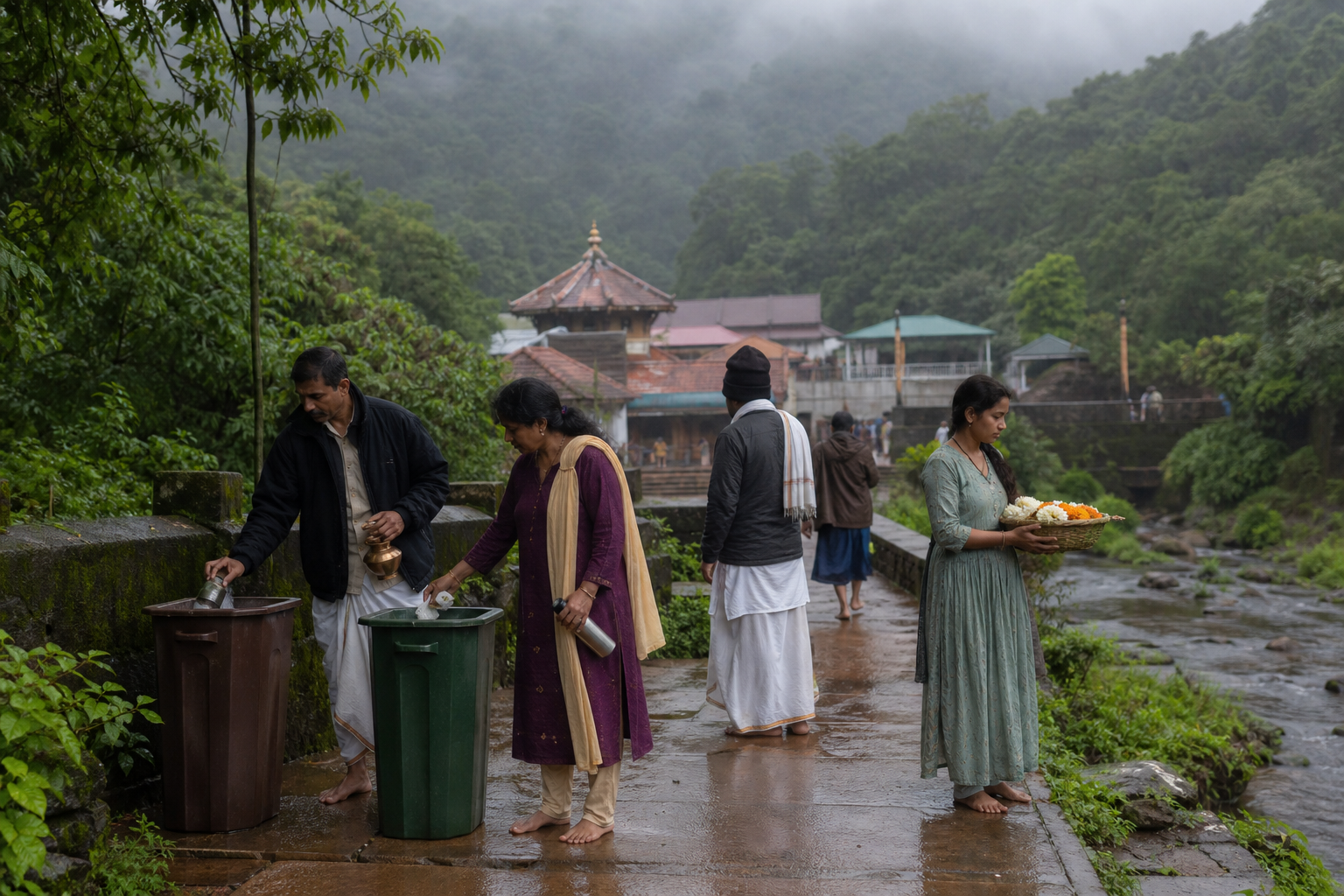
Talakaveri’s location in the Brahmagiri Hills makes ecological care part of pilgrimage discipline. The simplest rule is to leave less behind than a crowded festival normally produces. Avoid unnecessary plastic before you set out. Keep any packaging with you until it can be disposed of properly, and use only the routes and facilities designated by the local authorities.
Orderly participation is also a form of seva. Respecting queues protects the elderly and families, reduces pressure around the shrine, and allows temple workers to manage the gathering. Following local norms is not a bureaucratic interruption to devotion. It is how thousands of individual pilgrims become a functioning religious community.
Kaveri Sankramana brings together three dimensions of dharmic life that are too often separated: cosmic time, sacred geography, and ethical conduct. Tula Sankramana provides the temporal anchor. Talakaveri and Bhagamandala provide the sacred landscape. Restraint, cleanliness, gratitude, and cooperation determine how you move through that landscape.
This is also where the observance speaks beyond one regional festival. Hindu, Buddhist, Jain, and Sikh traditions do not perform one identical river ritual, and their differences should not be erased. Yet reverence for life, self-discipline, compassion, and responsible use of the natural world remain recognizably dharmic concerns. At Talakaveri, those values become practical: do not pollute what you call sacred, do not injure others in pursuit of merit, and do not let personal urgency overwhelm collective order.
Before you leave home, make three decisions. Save the official date and muhurta announcement for the correct year. Decide whether your yatra will include Bhagamandala without making that second visit inflexible. Pack for modest, low-waste participation rather than convenience at any cost. Then arrive early enough to listen. At Kaveri Sankramana, attention to time, place, and conduct is itself part of the offering.
References
