

You may have found one 2025 date labelled Kartik and another, weeks later, labelled Karthigai. Before you rearrange travel, fasting, or temple plans, know this: the difference is usually calendrical, not a contradiction.
In 2025, Tamil Karthigai runs from November 17 through December 15. A North Indian Kartik observance such as Shani Trayodashi falls on October 18, while several other regional calendars place that day in Ashwayujam. Your task is not to force every calendar into one sequence. Follow the calendar used by your family, sampradaya, or temple; confirm local timings; and choose a practice you can sustain.
Fix the calendar before you fix the ritual
Kartik and Karthigai belong to a related civilizational season, but they are not interchangeable date labels. Karthigai is the eighth month of the Tamil calendar, takes its name from the Krithiga star, and lasts 29 days in 2025. Kartik in a North Indian lunar calendar begins and ends according to a different regional reckoning.
The distinction matters because a vrata may depend on a tithi, a nakshatra, the Pradosh period around sunset, or a temple’s inherited calendar. A civil date copied from another region may therefore point you to the wrong local ritual window even when the festival name looks familiar.
| 2025 marker | What to record | What you should do |
|---|---|---|
| Shani Trayodashi | Saturday, October 18; Kartik in North Indian and Bengali calendars, but Ashwayujam in Marathi, Kannada, Telugu, and Gujarati calendars | Confirm the local Pradosh period before planning the puja. |
| Tamil Karthigai masam | November 17 through December 15, inclusive | Use this 29-day window for your daily lamp, temple, or vrata plan. |
| Karthigai Deepam | Observed during Karthigai masam | Use the date announced by your temple or a reliable Panchang for your location. |
| Kartik Purnima | A major point for renewing a spiritual commitment | Confirm the local date, then decide in advance which practice will continue after the observance. |
If you live outside Bharat, do not rely blindly on a date prepared for an Indian city. Your local sunset changes the Pradosh window, and your temple may follow a specific regional tradition. Put three details beside every observance in your calendar: the civil date, the ritual basis such as tithi or nakshatra, and the local time window.
Build the month around one dependable observance spine
A sacred month can easily become a crowded list of auspicious days. That usually produces preparation without continuity. A more useful plan has one daily anchor, one ethical restraint, one communal expression, and a clear closing commitment.
- Choose your devotional centre. In a Hindu Kartik or Karthigai observance, that may be worship of Shiva, Muruga, Vishnu, or the chosen form honoured in your home and lineage. Depth is more valuable than changing the focus every few days.
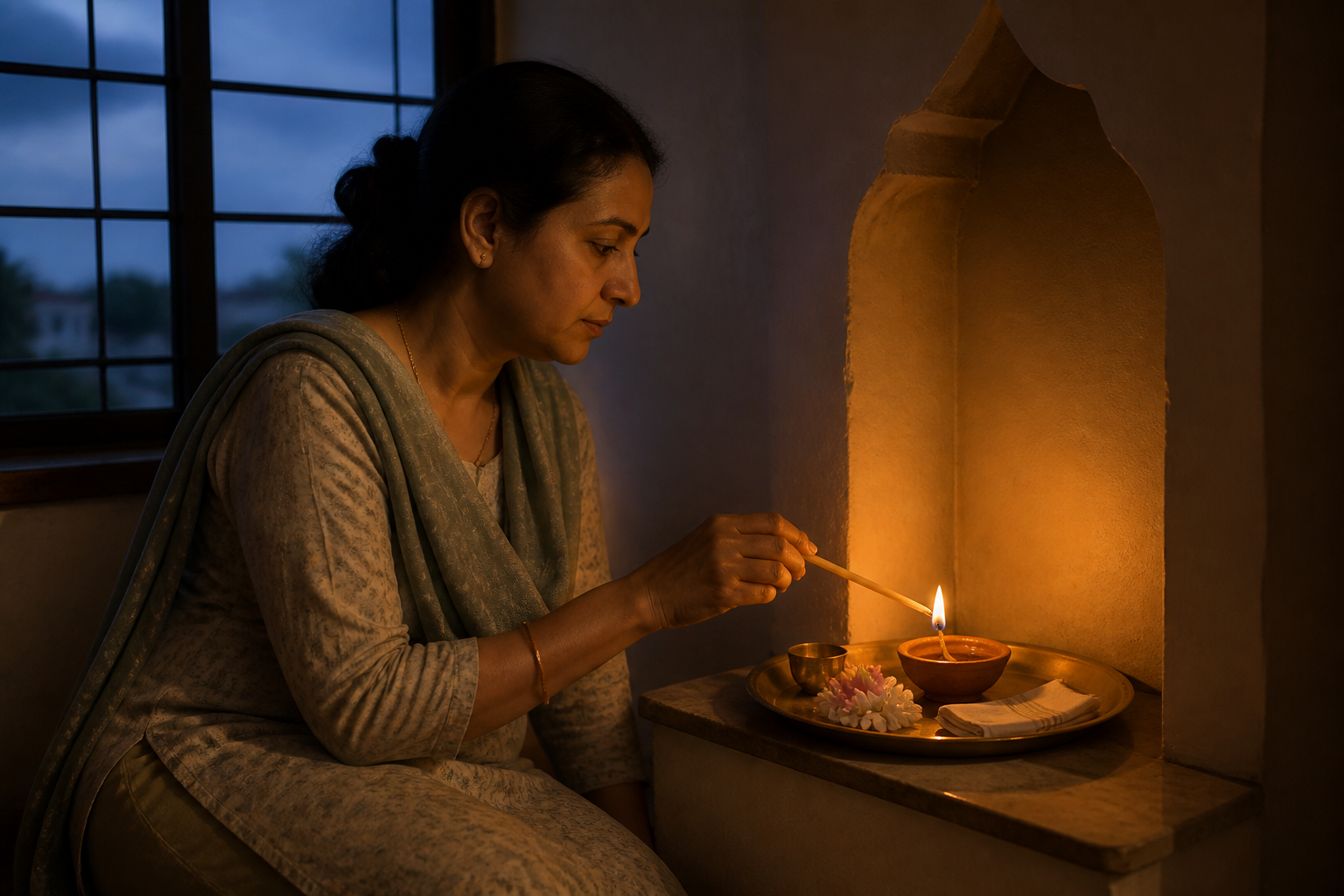
- Fix one daily act. Light a lamp at dusk, perform japa, sing or listen to kirtan, recite an appropriate hymn, or sit in silent meditation. Attach it to the same part of your day so that it does not depend on mood.
- Add one restraint. A vrata can include a simple sattvic fast, mindful dietary restraint, self-control in speech, or deliberate patience. If fasting is unsuitable for your health, choose a non-food discipline rather than turning the observance into a physical test.
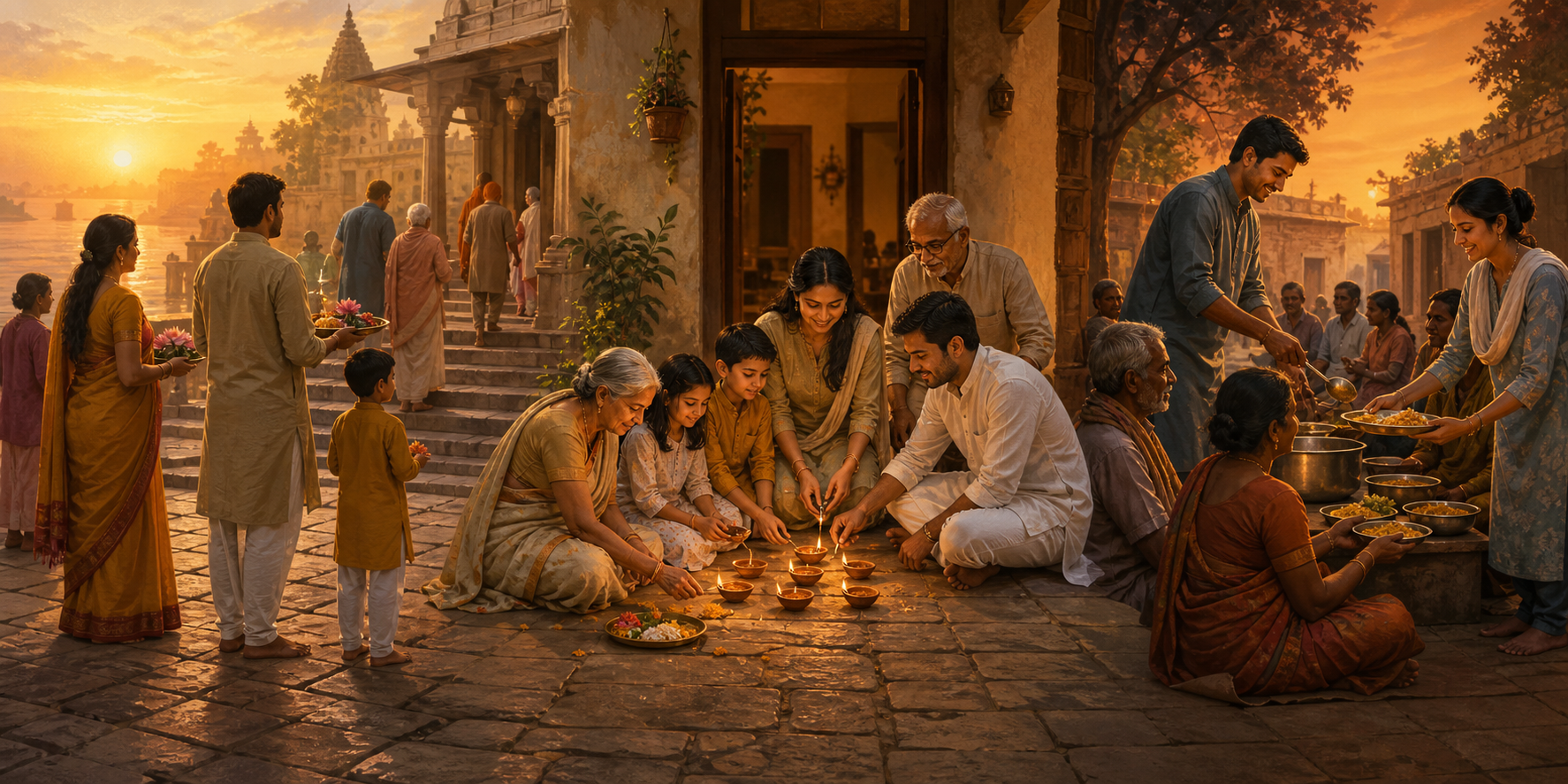
- Make compassion visible. Pair worship with dana or seva. Give essentials, assist an elder, support someone under pressure, or perform an unadvertised act of service.
- Close the day consciously. Spend a few moments reviewing your conduct, offer gratitude, and identify one correction for the next day. This keeps the lamp connected to the way you actually live.
This pattern can be modest. The point is consistency. A daily rhythm of mantra or mindfulness, concise study, service, reflection, and lamp-lighting turns seasonal devotion into something more durable than a festival-day burst of activity.
Use the major observances as anchors, not isolated events
Shani Trayodashi on October 18
Shani Trayodashi, also called Shani Pradosham, falls on Shanivar in 2025. The practical emphasis is steadiness: examine duty, consequences, patience, and the responsibilities you have been postponing. This is more demanding than treating Shani worship as a transaction for avoiding difficulty.
For a traditional home observance, first confirm the local Pradosh period around sunset. You may then light a sesame-oil lamp, offer black sesame seeds, chant Om Sham Shanicharaya Namah, and pay respects to Shiva or Hanuman according to your tradition. Keep any flame on a stable, fire-resistant surface and never leave it unattended.
Give the vrata an ethical form as well. Practise restraint in speech, offer quiet charity, help an elder, or provide an essential item to someone who needs it. These acts express responsibility directly; they should not be treated as payment for a guaranteed result.
Karthigai lamps from November 17 to December 15
Karthigai is especially associated with Shiva, Muruga, and Vishnu worship. Many households light lamps throughout the month, visit temples, recite hymns, and undertake a viratham. You do not need to reproduce a large temple celebration at home. Prepare a repeatable dusk sequence instead.
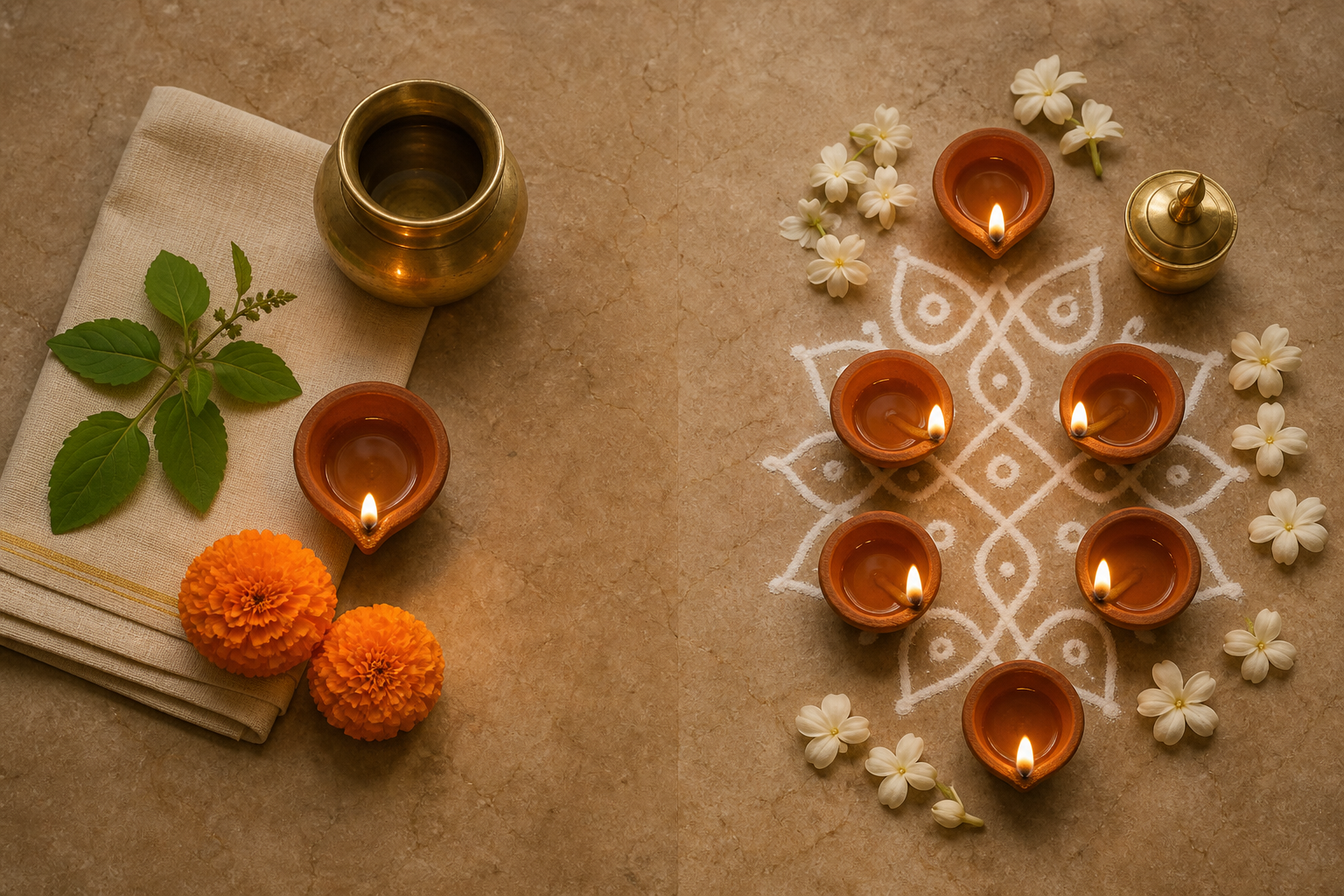
- Clean the agal vilakku and prepare natural wicks before dusk.
- Place the lamps securely, then draw a kolam at the threshold if that belongs to your household custom.
- Light the deepam and offer the prayer, hymn, or silent remembrance taught in your family or sampradaya.
- Let younger family members take safe, age-appropriate roles such as arranging unlit lamps, preparing the prayer space, or learning the meaning of the observance.
- Use traditional, locally sourced materials where practical, and extinguish or supervise every flame safely.
On Karthigai Deepam, the public image many devotees hold is the sacred beacon associated with Tiruvannamalai, expressing Shiva’s radiance as the light of knowledge. At home, resist making the number of lamps the measure of devotion. Let the visible light correspond to a concrete act of clarity: repair a strained relationship, complete a neglected duty, stop a harmful habit, or make a promised gift.
Kartik Purnima as a point of continuation
Use Kartik Purnima to decide what survives the festival calendar. Choose one commitment rather than preserving the entire seasonal routine: a daily mantra, a regular passage of study, a weekly lamp, or a recurring act of compassion. Record the next occasion on which you will do it. Without that decision, the practice often ends when the decorations are put away.
Honour shared Dharma without erasing distinct paths
Kartik and Karthigai are Hindu observances with their own deities, calendars, vows, and temple traditions. Their wider Dharmic resonance does not make every practice interchangeable. What can be shared honestly is the movement from distraction toward refuge, from impulse toward discipline, and from private devotion toward ethical action.
- Hindu practice: centre the season on bhakti through japa, kirtan, deepam, temple worship, study, vrata, and seva.
- Buddhist practice: renew refuge in the Buddha, Dharma, and Sangha through mindfulness and meditation without relabelling those practices as a Hindu vrata.
- Jain practice: deepen Ahimsa and self-restraint through Samayik or Pratikraman, allowing the season’s call to reflection to strengthen an authentically Jain discipline.
- Sikh practice: practise Naam Simran, seek Sadh Sangat, serve others, and meet uncertainty through trust in Hukam.
A mixed Dharmic family or community does not need a blended ritual that obscures these differences. Each person can practise within their own path and join in an act everyone can recognise: dana, seva, non-harm, care for elders, or disciplined speech. The common ground is ethical and spiritual; the ritual forms remain worthy of respect in their own right.
If the month is also helping you manage anxiety or uncertainty, let spiritual refuge accompany practical responsibility. Prayer, meditation, community, and service may steady attention, but they do not replace help from trusted people or qualified professionals when such help is needed.
Key takeaways for your 2025 plan
- Treat October 18 Shani Trayodashi and the November 17 to December 15 Tamil Karthigai month as parts of different regional calendar systems, not as competing dates.
- Confirm tithi, nakshatra, sunset, and Pradosh timings with a reliable local Panchang or the temple whose tradition you follow.
- Build the month around one daily practice, one restraint, one form of service, and one closing reflection.
- Prepare Karthigai lamps safely and give children meaningful roles that transmit both ritual skill and spiritual meaning.
- Use Kartik Purnima to carry one chosen discipline beyond the festival season.
- Recognise shared Dharmic values without presenting Hindu, Buddhist, Jain, and Sikh practices as identical.
Start by asking your family or temple which calendar governs your observance. Then enter the confirmed dates and local times now. When Kartik or Karthigai arrives, you will be free to practise instead of spending the sacred window sorting out the schedule.
References
- Dandavats – Master Inner Calm: The Complete Kartik 2025 Guide to Proven Dharmic Refuge and Peace
- Hindu Pad – Discover Karthigai Masam 2025: Complete Guide to Dates and Karthigai Deepam in Tamil Nadu
- Hindu Pad – Shani Trayodashi (Shani Pradosham) on 18 Oct 2025: Complete Guide to Puja, Timing, and Meaning
