
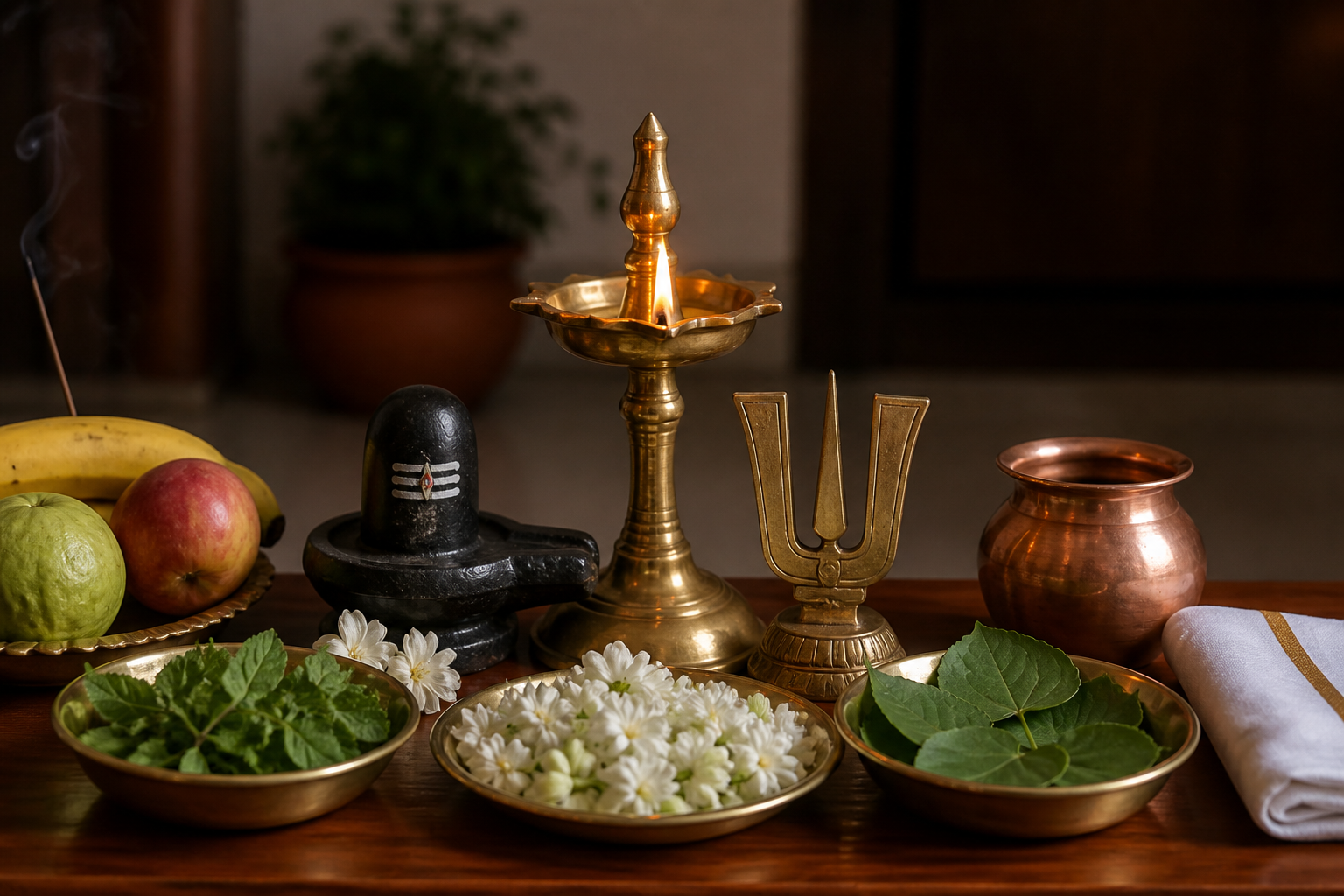
You want to observe Karthika Masam sincerely, but you may not have the time, materials, or family guidance for an elaborate ritual every day. The workable answer is to make a clear vow, keep a short daily practice, and reserve fuller pujas for the tithis your household observes.
That approach protects the heart of the vrata: regularity, restraint, devotion, charity, and care for living beings. It also prevents a common mistake—attempting an unsustainable routine for a few days and then abandoning the month altogether.
Key takeaways
- Check a location-specific panchang before fixing special observances; Karthika dates and tithi boundaries vary by calendar tradition and place.
- Choose a vrata you can state plainly and keep consistently: daily deepa, a defined food discipline, japa or stotra, and dana.
- Use the same short puja sequence each day so that lack of time or elaborate materials does not interrupt the practice.
- Adapt fasting to your health and capacity. A simple sattvika regimen is a valid discipline when a stricter fast would be unsafe.
- For Nāga worship, use a murti or image at home or visit a temple. Do not disturb anthills, approach wildlife, or pour milk into outdoor habitats.
First decide what you are actually vowing to do
A vrata is more than a festival-day puja. It is a chosen discipline sustained through thought, food, speech, worship, and conduct. Before Karthika begins for your tradition, decide which commitments will form your vrata. Do not leave the decision to each morning.
A manageable household observance may include four commitments: lighting a deepa each day, following a sattvika food rule, completing a fixed amount of mantra-japa or stotra recitation, and setting aside something for dana. If your family has an established sampradaya, let that determine the deity, mantras, fasting rules, and method of concluding the vrata.
You can use a plain-language sankalpa when you do not know a formal Sanskrit formulation: “During Karthika Masam, within my capacity, I undertake this vrata for purity of conduct, clarity, family well-being, and the welfare of all beings.” This is an intention, not a replacement for the liturgical sankalpa taught by your priest or family elders.
Write your commitment down in one sentence. “I will do more puja” is too vague to guide you. “I will light the evening deepa, complete my chosen japa, eat sattvika food, and perform fuller puja on our family’s Karthika tithis” gives you something concrete to keep.
Then verify the calendar. Regional practice may follow Amanta or Purnimanta reckoning, and the relevant tithi must be checked against local sunrise and panchang conventions. Do not copy a civil date from an old calendar. The familiar Karthika rhythm of deepa lighting, temple worship, sattvika living, fasting, and charity remains steady even when Gregorian dates change.
Use one repeatable home-puja sequence
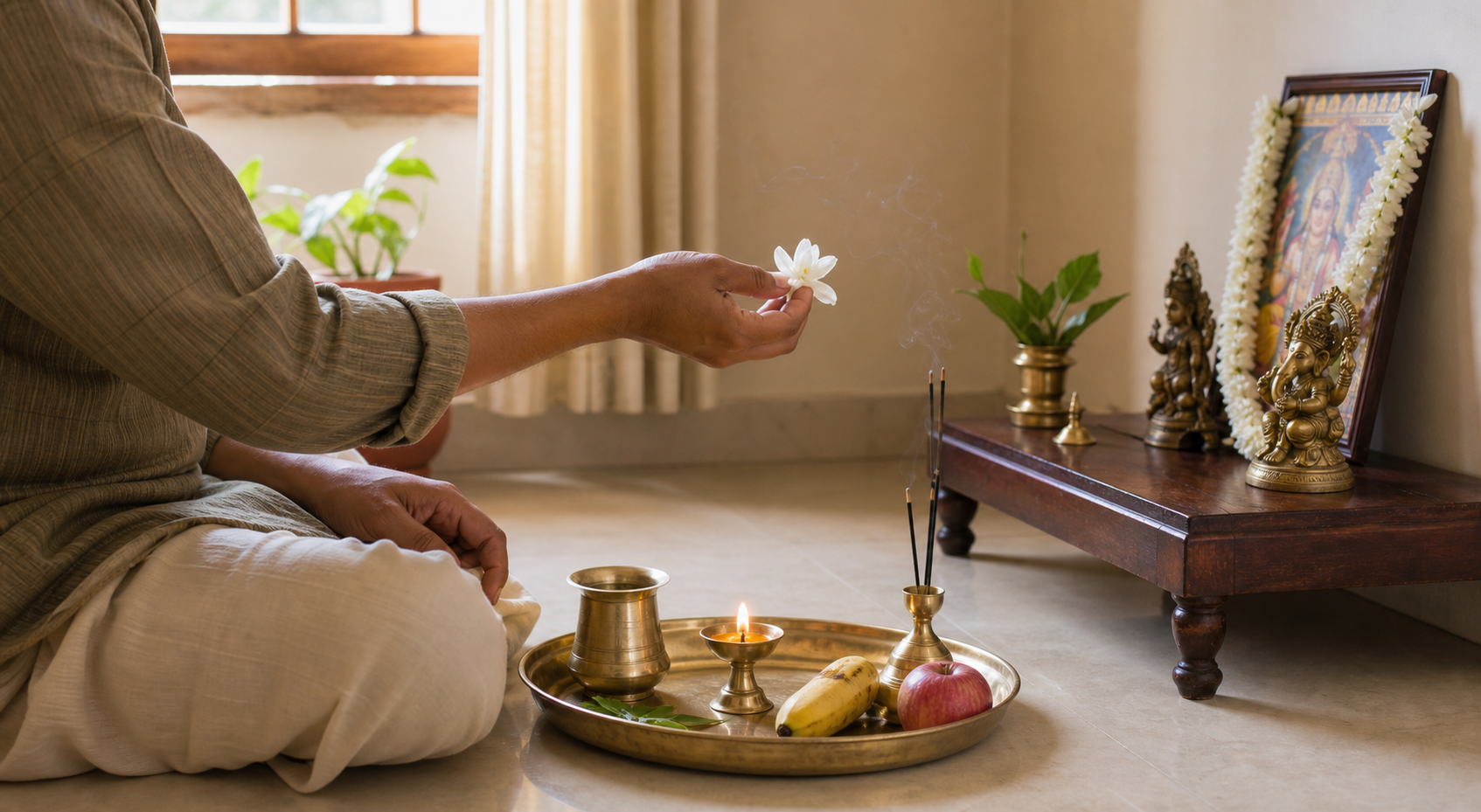
Your daily puja does not need to imitate a temple ceremony. It needs a clean place, a stable order, and your full attention. Keep the required materials together so preparation does not become an excuse to skip the practice.
- A picture or murti of the deity worshipped in your tradition
- A deepa, with a safe holder and appropriate fuel
- Clean water for achamana and offering
- Turmeric, kumkuma, and akshata where customary
- Fresh flowers or another simple, biodegradable offering
- Fruit or a modest sattvika preparation for naivedya
- Your chosen mantra, stotra, or nama-japa text
Place the lamp on a steady surface, away from loose cloth and anything that can catch fire. Do not leave it unattended. Ritual care includes responsibility for the home in which the ritual is performed.
- Prepare yourself and the space. Bathe or wash, wear clean clothes, clean the altar, and arrange every item before beginning. Silence notifications if possible.
- Settle the mind. Sit quietly, perform achamana according to your practice, and take a few unhurried breaths. The transition matters: you are moving from routine activity into worship.
- State the sankalpa. Name Karthika Masam, the practice you have undertaken, and the righteous purpose for which you offer it.
- Light the deepa. Offer a brief dhyana or invocation. If your household follows a particular direction, time, or lamp tradition, retain it.
- Offer simple upacharas. Present water, turmeric, kumkuma, akshata, and flowers as appropriate to the deity. A kalasha may be established for a fuller special-tithi puja, but it need not be added to a short daily routine unless your tradition requires it.
- Complete the fixed recitation. Chant your chosen mantra, nama-japa, or stotra at a steady pace. A smaller fixed practice performed attentively each day is more useful than an ambitious count you cannot maintain.
- Offer naivedya and aarti. Place the food before the deity, pause in prayer, and conclude with aarti. Perform pradakshina if space, ability, and custom permit.
- Close deliberately. Offer gratitude, distribute prasada, and record that day’s observance if a simple checklist helps you remain consistent.
On a crowded day, retain the structural core: clean presence, sankalpa, deepa, a genuine offering, recitation, and closing prayer. Do not turn speed into carelessness, but do not conclude that worship is impossible merely because elaborate alankara or cooking is impossible.
Choose a fast your body can safely sustain
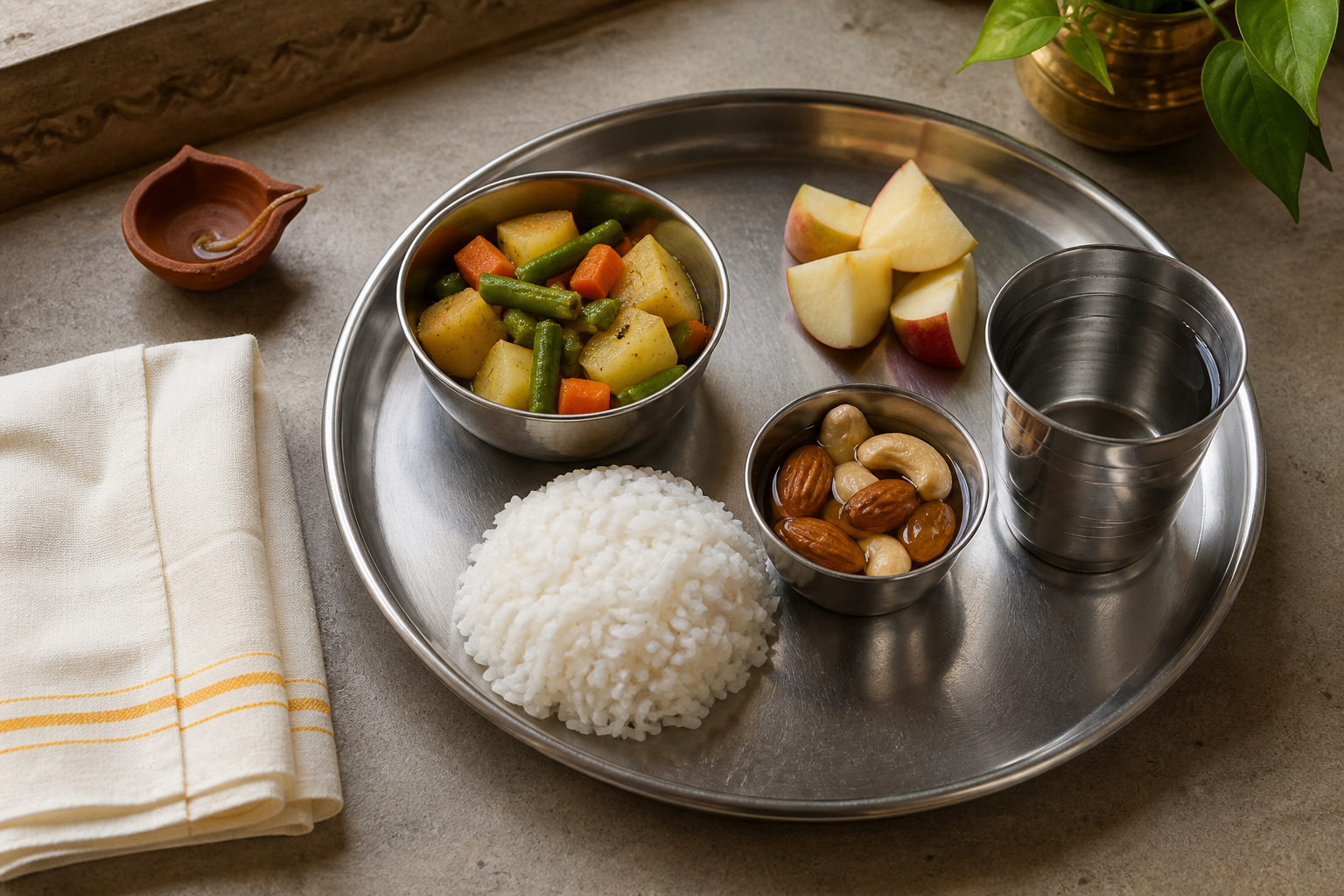
Karthika discipline is not measured by how much distress you can endure. The relevant question is whether the restraint makes you more attentive, truthful, compassionate, and steady. If it instead produces preventable illness or makes you incapable of your duties, the form needs adjustment.
Traditional options described for Karthika vratas include nirjala fasting, phalahara, and a simple sattvika regimen. They are not interchangeable in difficulty:
- Nirjala is the most demanding form because it excludes water. Do not adopt it casually or merely to match another person’s austerity.
- Phalahara limits the fast to permitted fruit or similarly simple foods according to household custom.
- A sattvika regimen retains simple food while excluding the items restricted by your vrata or sampradaya. It can support a month-long discipline when a complete fast is not appropriate.
If fasting conflicts with a health condition, treatment plan, or medication requirement, follow qualified medical advice and choose a safer devotional discipline. You can simplify the food, reduce indulgence, guard your speech, add japa, or increase dana without treating bodily harm as spiritual success.
Decide the parana rule before the fast begins. Note whether your custom concludes after the puja, in the evening, or at another family-prescribed point. Preparing the permitted food in advance helps you end the fast calmly rather than turning parana into an impulsive meal.
Give special Karthika tithis their own form
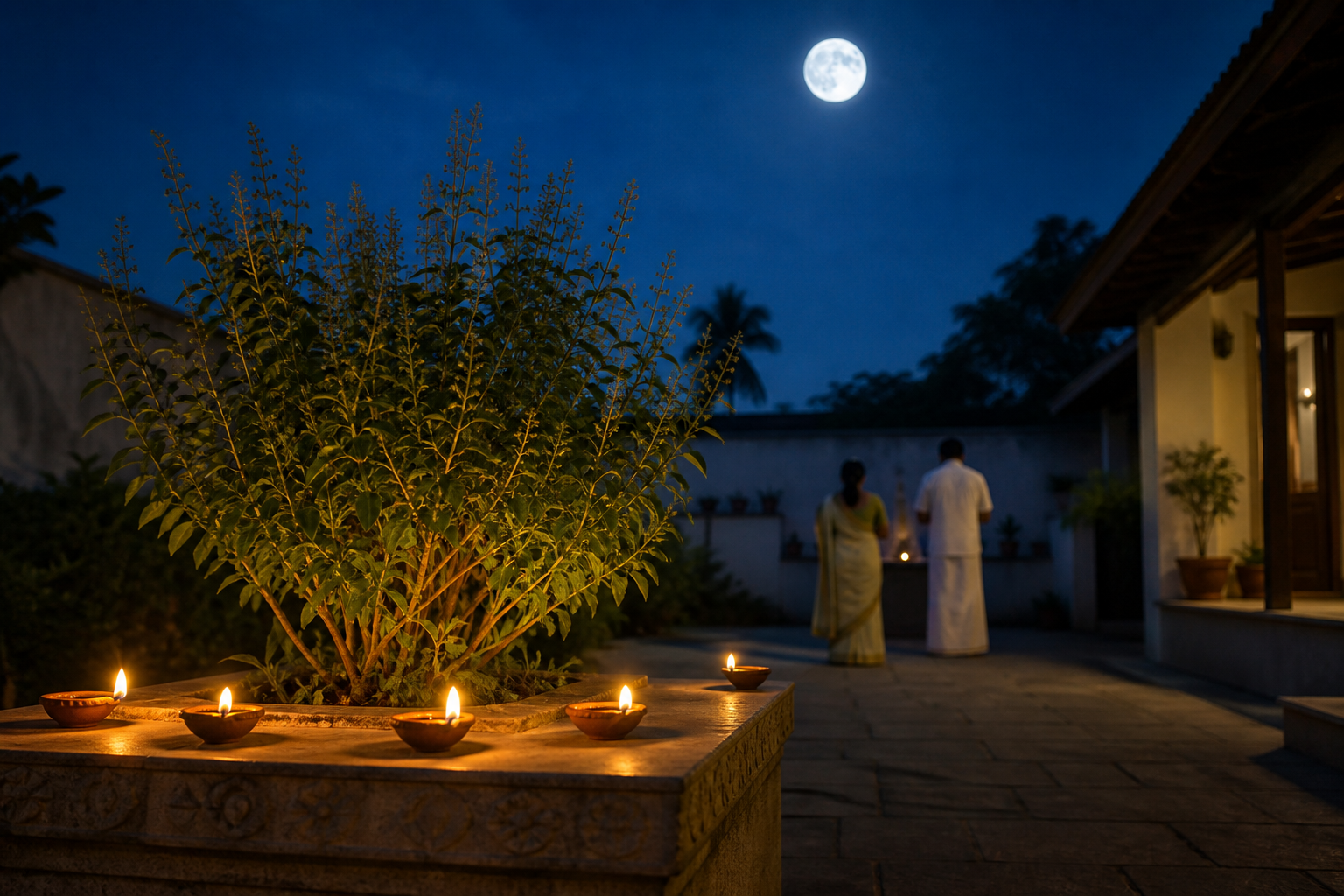
A stable daily routine supplies continuity. Special-tithi pujas then deepen the month without forcing every day to carry the same ritual weight. Two such observances illustrate how to build on the daily foundation while preserving the character of the deity and vrata.
Trilochana Gauri Vratam on Shukla Tritiya
Trilochana Gauri Vratam is dedicated to Goddess Gauri and is also known in some traditions as Vishnu Tritiya Vratham. “Trilochana” points to the three-eyed form of the Divine Mother, making clear sight, balanced awareness, and transformative discipline fitting themes for the day. The observance is associated with Karthika Shukla Tritiya, Gauri worship, fasting, deepa lighting, stotra, naivedya, and dana.
For a home observance, begin with a bath, achamana, and sankalpa. Place an image or murti of Gauri on the altar. Light the deepa and offer turmeric, kumkuma, flowers, and akshata. Recite the Gauri stotra or mantra received in your tradition. Where the Vishnu Tritiya name belongs to your family practice, include the customary Vishnu hymn rather than constructing a new combination of mantras.
Offer sattvika naivedya, perform aarti, and sit quietly before ending the puja. If you are fasting, complete parana at the time followed by your household. Let the three-eyed symbolism shape one practical reflection: notice what you see clearly, what emotion is distorting, and what habit must be transformed through disciplined action.
Nagula Chavithi on Shukla Chavithi
Nagula Chavithi is observed on Karthika Shukla Chavithi, especially in Andhra Pradesh and Telangana, in reverence of the Nāga Devatas. Its domestic form joins prayer for family welfare with gratitude toward the life-sustaining natural world. Serpent imagery carries themes of guardianship, renewal, fertility, and transformative energy.
Set a Nāga image or murti on the altar. A serpent motif made with rice flour may be added if that belongs to your regional practice. After sankalpa, perform avahana and a gentle abhisheka with clean water. Use a small amount of panchamrita only when customary and only when you can collect and dispose of it responsibly. Apply turmeric and kumkuma, offer flowers and akshata, and continue with archana.
The traditional names used in Nāga archana may include Ananta, Vasuki, Shesha, Karkotaka, Takshaka, Shankhapala, Kulika, Padmanabha, and Ashvatara. Follow your family’s pronunciation and sequence when one has been handed down.
If you need a short invocation, use one established in the observance:
- Nāga Gayatri: Om Sarpaya Vidmahe, Bhujangaya Dhimahi, Tanno Nāga Prachodayat.
- General salutation: Om Sarpa Devatābhyo Namah.
- Nama-stuti: Ananta Vasuki Shesha Karkotaka Takshaka, Shankhapala Kulika Padmanabha Ashvatara namo namah.
Conclude with fruit or simple sattvika naivedya, aarti, prayer, pradakshina according to custom, and dana. Temple support, annadanam, or support for responsible conservation can carry the vrata’s intention into visible service.
Let ahimsa decide what belongs in the ritual
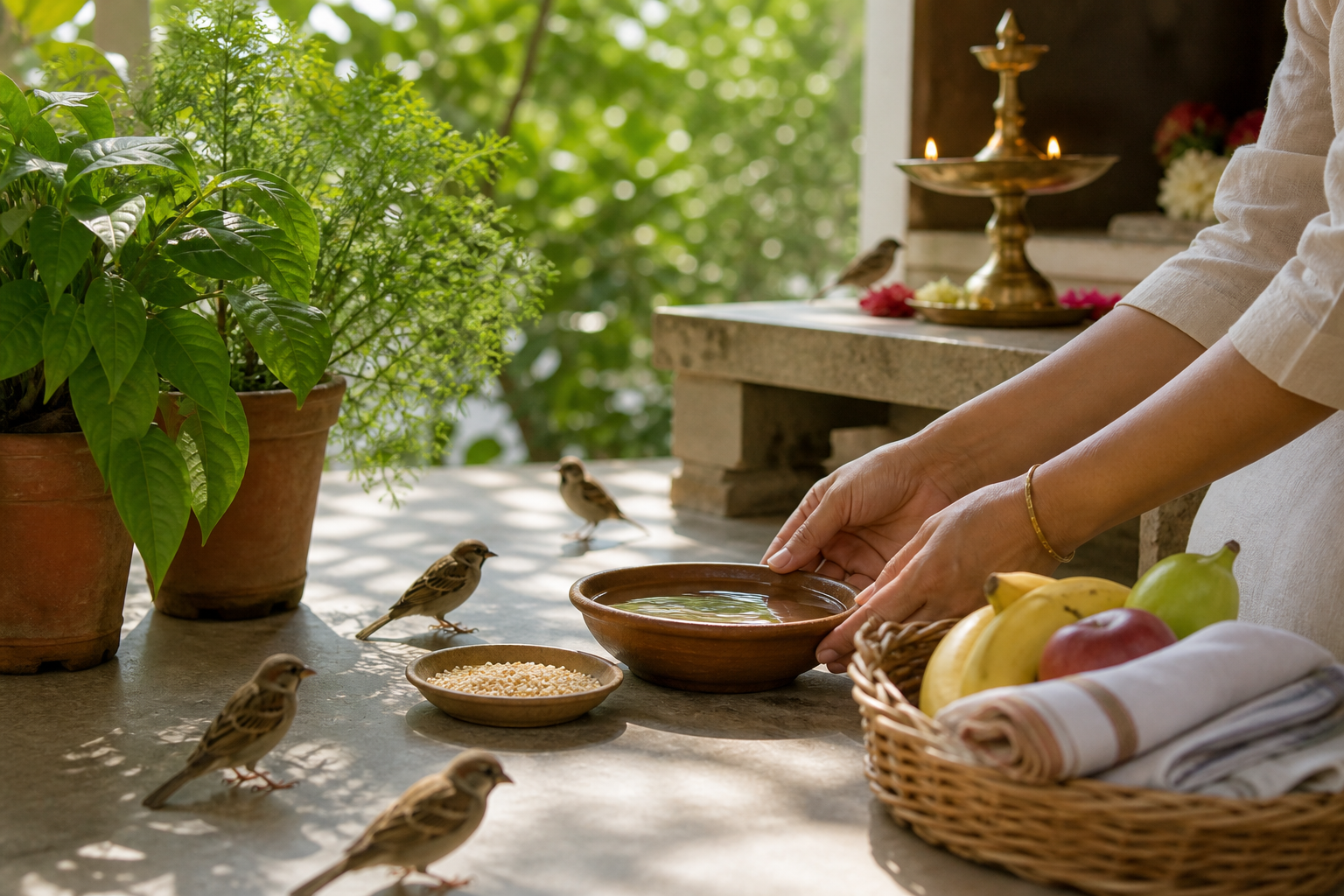
Nāga worship is where symbolism and treatment of living creatures can come into direct conflict. Do not disturb an anthill, handle a wild snake, or leave food and liquids in an animal habitat. Pouring milk outdoors is neither necessary for a symbolic home puja nor consistent with an observance centred on reverence for life. Use a Nāga murti or picture, or seek darshan at a temple.
The same principle applies to every Karthika offering. Use only what you need. Keep abhisheka liquids contained. Do not leave plastic, cloth, oil cups, incense packaging, or food waste at a tree, water body, anthill, or roadside shrine. Flowers and rice are biodegradable, but that does not make every place an appropriate disposal site.
Ahimsa also extends beyond materials. A month of deepa and japa loses coherence if it is accompanied by harsh speech, needless conflict, or indifference to someone who needs help. Choose one behavioural restraint alongside the ritual—such as refusing gossip, pausing before angry speech, or protecting a regular act of service—and examine it each evening.
This is also where the wider dharmic kinship becomes visible without pretending that all traditions perform the same rites. Hindu vrata, Buddhist uposatha, Jain poshadha and vrata disciplines, and the Sikh emphasis on simran and seva retain their own identities. Their resonance lies in restraint, remembrance, compassion, and service—not in erasing their differences.
Before your next Karthika observance, take three concrete steps: check the local panchang, write a one-sentence sankalpa, and place the daily puja materials together. Begin with a routine you can keep. When the special tithi arrives, deepen the worship without abandoning the discipline that carries the rest of the month.
References
- DharmaRenaissance Blog — Complete Nagula Chavithi Pooja Vidhanam: Master the 2025 Vrat with Proven Steps and Mantras
- DharmaRenaissance Blog — Complete Guide to Trilochana Gauri Vratam 2025: Date, Rituals, Proven Spiritual Benefits
