
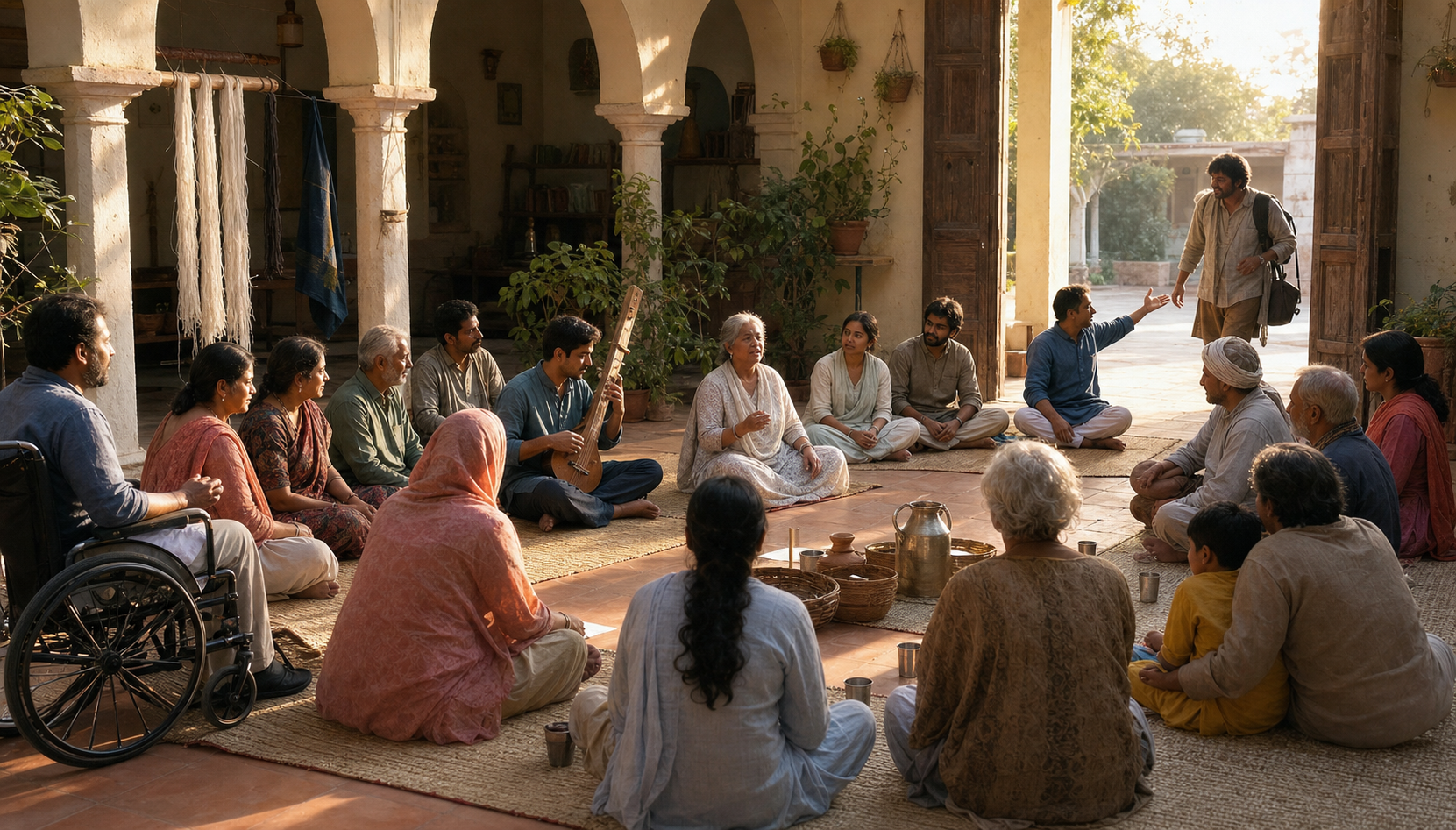
If you are planning a Kabir Jayanti observance, the central question is not how many ceremonial items you can fit into the programme. It is whether someone who usually remains at the edge can enter, speak, be heard, participate in seva, and be treated as spiritually worthy.
In 2026, Kabir Jayanti falls on June 29, on Jyeshtha Purnima. Local observance can vary with the panchang and lunar timing, so confirm the date used in your region before announcing an event. Once the date is settled, the harder work begins: turning spiritual equality from a theme on the banner into the conduct of the gathering.
Spiritual equality begins where status stops deciding worth
The Bhakti ideal of equality begins with a demanding insight: outward standing cannot substitute for inward realization. The teachings honored on Kabir Jayanti place truth, compassion, humility, discernment, and ethical living at the center of spiritual life. A family name, formal title, sectarian label, or prominent place on a stage proves none of those qualities by itself.
This does not require you to claim that every belief is identical or every role is interchangeable. A teacher may carry responsibilities that a new student does not. An organizer may need to make decisions for the safety and order of an event. Spiritual equality means that these functional differences must not become excuses for treating some people as less deserving of dignity, attention, or access to devotion.
Three distinctions help keep the ideal clear:
- Equal spiritual dignity is not the same as doctrinal sameness. You can respect a person without pretending that all teachings make the same claims.
- Humility is not the abandonment of discernment. Kabir’s emphasis on inner truth asks you to examine appearances more carefully, not to stop thinking.
- Welcome is not token inclusion. Inviting people has little meaning if the same small circle controls every respected role while everyone else watches or performs invisible labor.
Before the observance, look at the programme through the eyes of the least influential attendee. Who is expected to remain silent? Who is noticed only when work needs to be done? Whose questions are dismissed because of age, education, community, or social position? These questions reveal whether equality is present in the room or merely printed on the invitation.
Turn the public programme into an equality audit
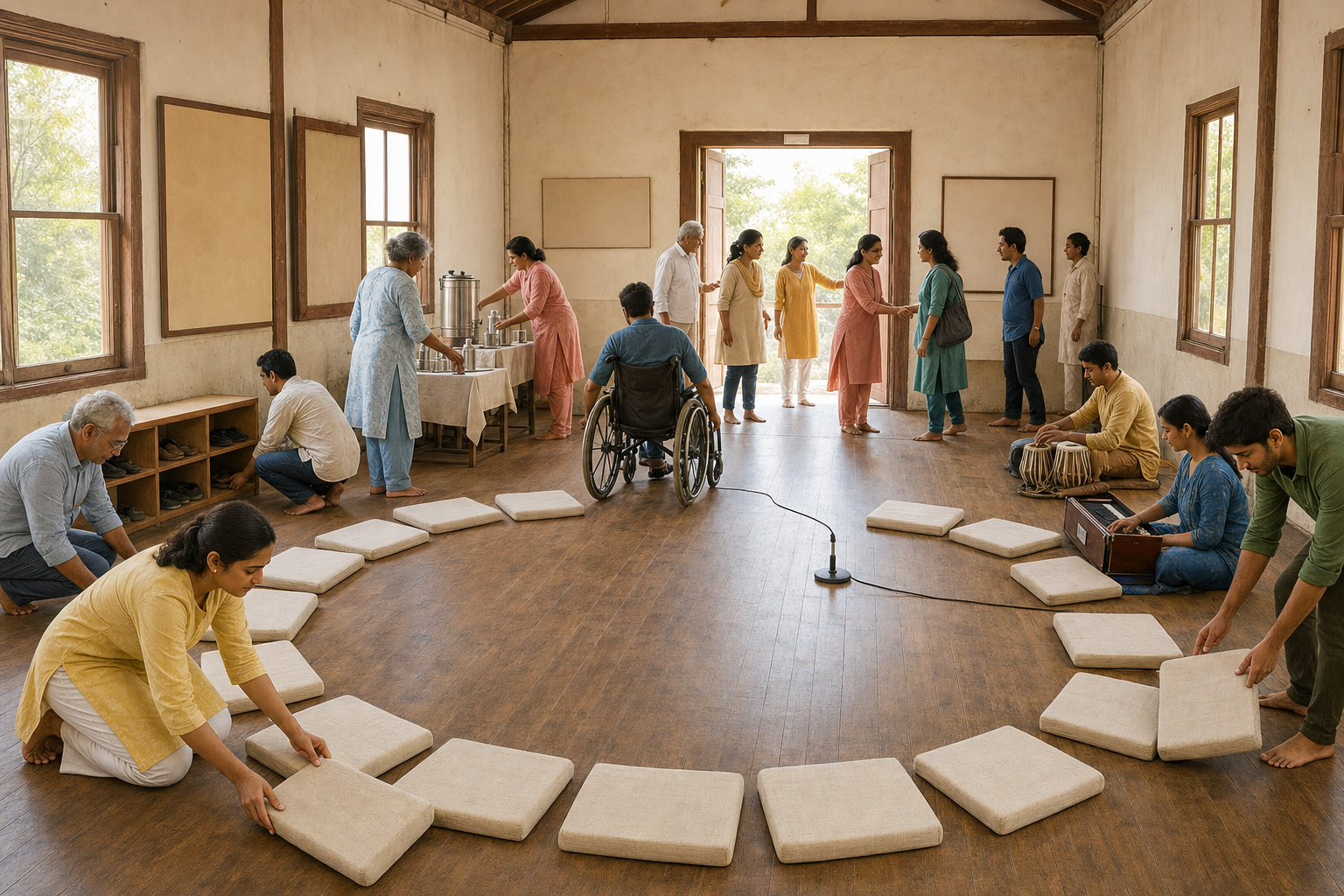
Processions, satsang, doha recitation, bhajans, kirtan, dialogue, and seva are familiar ways to mark Kabir Jayanti. Each can either embody equality or quietly reproduce the habits the celebration is supposed to challenge. Review the event in this order:
- Examine the invitation. If it circulates only within the usual network, the gathering will reproduce the usual boundaries. Invite neighboring dharmic communities, local families, volunteers, students, and people who may not already belong to the organizing circle.
- Examine access and seating. Reserve legitimate roles for teachers and elders where appropriate, but avoid turning physical proximity to the stage into a public ranking of human worth. Make directions clear and ensure newcomers know where they may sit and how they may participate.
- Examine the recitation. Do not use Kabir’s dohas as decorative transitions between speeches. Read a selected couplet slowly, explain unfamiliar words, and ask what habit of pride, exclusion, or empty display it places under scrutiny.
- Examine who speaks. A gathering about equality should not give every reflective role to the most prominent guests. Create room for participants with different levels of formal learning to read, ask a question, or describe how a teaching applies to ordinary conduct.
- Examine the seva. Do not leave hospitality, distribution, and cleanup entirely to people with the least influence. When organizers and honored participants share practical service, humility becomes visible rather than merely praised.
- Examine the follow-through. End with a named commitment, a responsible person, and a clear follow-up point. A community meal, assistance to a family, shared neighborhood work, or another suitable act of service gives the gathering a consequence beyond the stage.
Attendance, applause, and the length of a procession cannot tell you whether the observance succeeded. Ask instead who participated rather than merely watched, whether the service reached beyond the organizers, and whether anyone can name a change in conduct that will continue after the gathering.
Make a household observance change one ordinary action
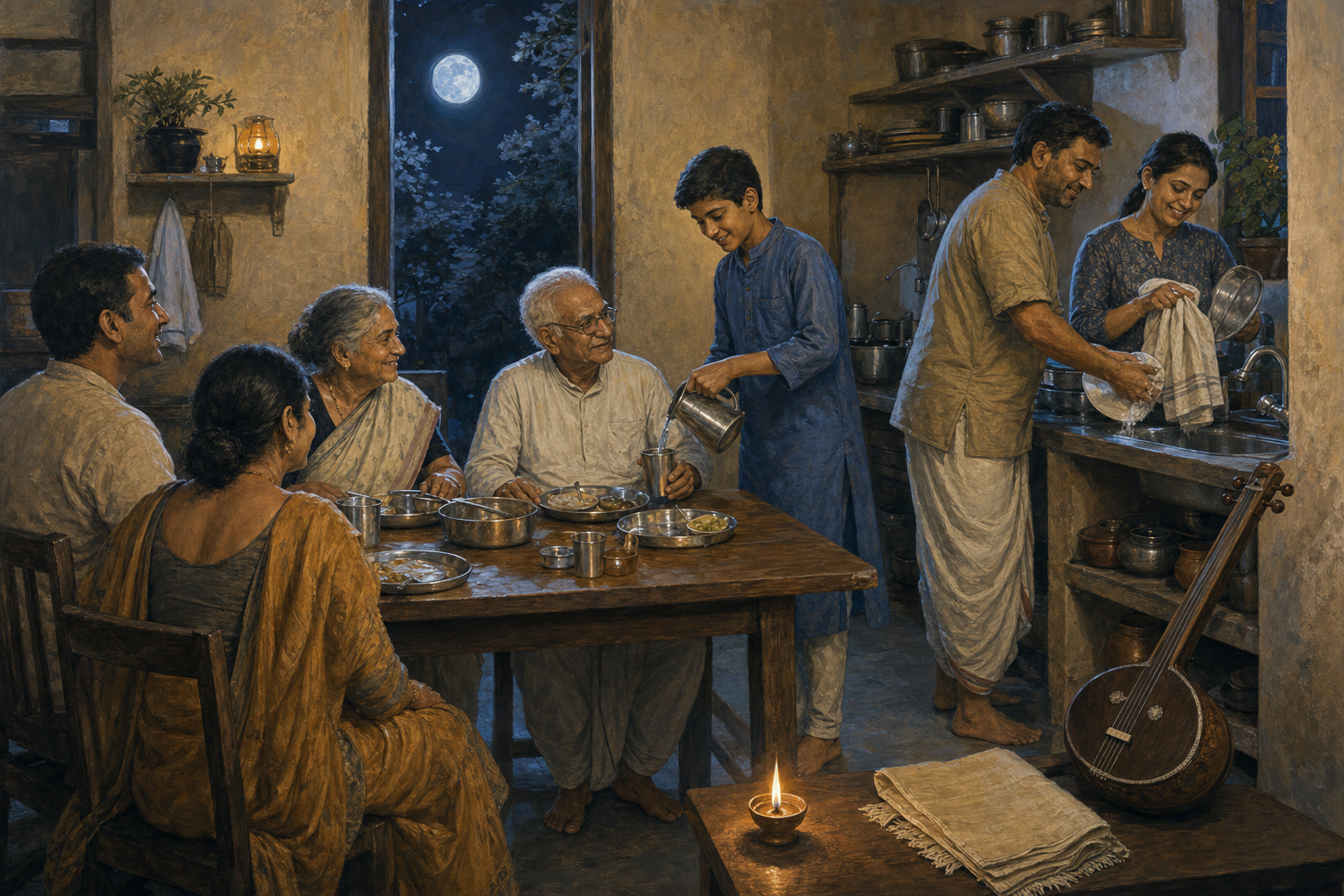
You do not need a public event to observe the day meaningfully. A household can light a diya, read a doha, contemplate its meaning, and undertake seva. The important step is to connect the symbol to a decision.
- Light the diya as the beginning of attention, not as the completion of duty.
- Select a doha from a trusted text used in Kabir Panth study or from another carefully identified collection associated with Kabir.
- Read it aloud without rushing. Restate its challenge in your own words so that everyone in the household understands what is being examined.
- Ask where that challenge appears in your own conduct. Keep the question personal: where do you seek superiority, judge by appearance, refuse to listen, or perform virtue for recognition?
- Choose one corrective act. It might be sharing work you normally leave to someone else, listening without using status to end the discussion, correcting a demeaning remark, giving credit fairly, or serving without publicity.
- Close with quiet reflection on whether the chosen action expresses truth, compassion, humility, and discernment together.
This keeps the observance from becoming a weapon against other people. Kabir’s teaching is easily weakened when a person uses it to catalogue everyone else’s hypocrisy. Begin with the place where you have agency: your speech, your household habits, your treatment of workers and guests, and your willingness to learn from someone you do not consider important.
Seva also needs scrutiny. A visible donation does not cancel contemptuous daily behavior. Material help matters, but so do fair treatment, shared responsibility, careful listening, and the refusal to humiliate. Choose the form of service that addresses a real need, then carry the same respect into the relationship surrounding it.
Build harmony without flattening dharmic traditions
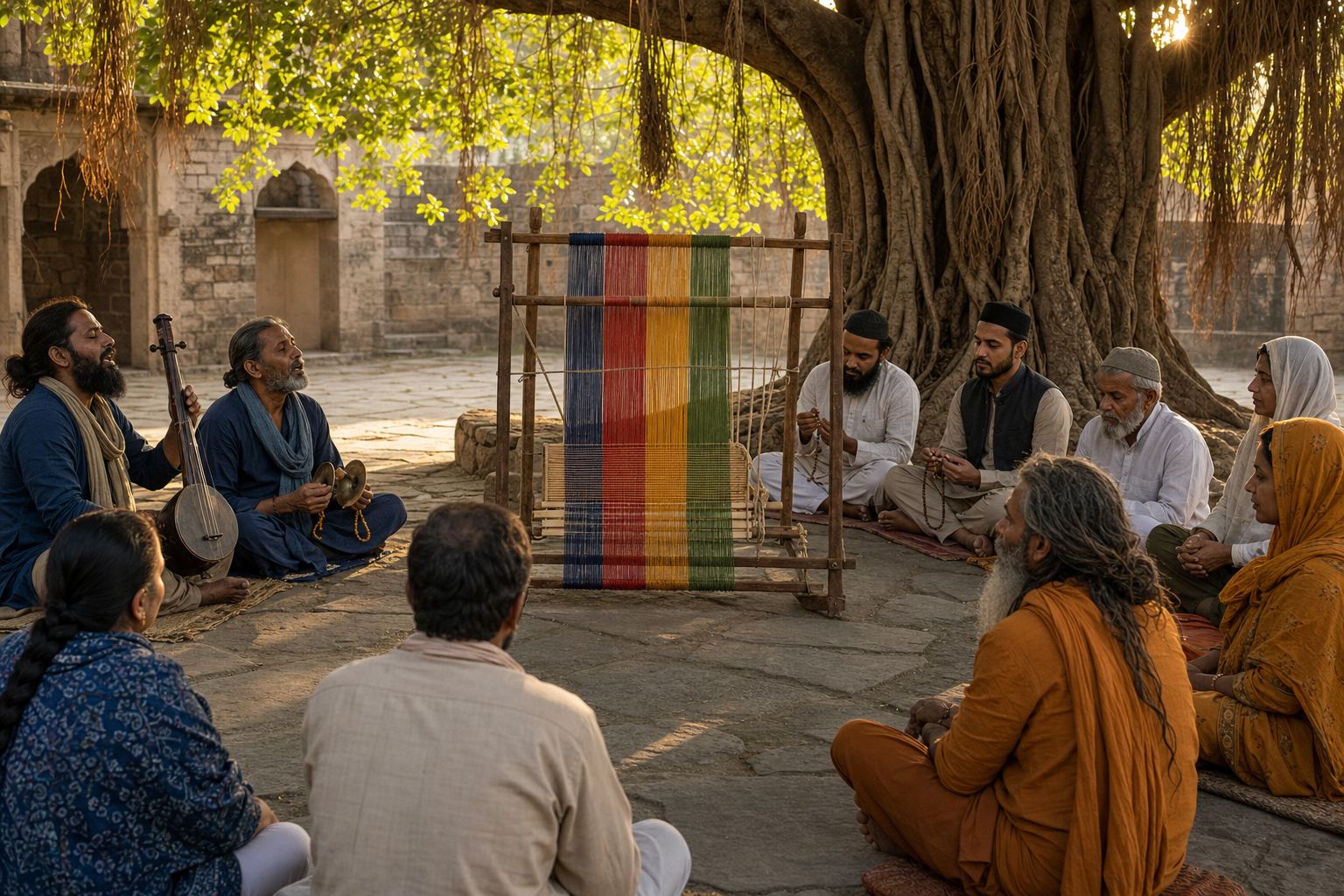
Kabir’s vision is valued beyond a single sectarian boundary and resonates across Hindu, Buddhist, Jain, and Sikh communities. That makes Kabir Jayanti a natural occasion for encounter. It does not make the traditions interchangeable.
Religious harmony becomes more credible when nobody is asked to dilute a conviction or accept a blended creed. The host can state plainly that Kabir Jayanti is anchored in Jyeshtha Purnima in the Hindu lunar calendar, that it holds particular importance for Kabir Panth followers, and that guests from other traditions are welcome to engage with its ethical and spiritual questions.
For a useful intertradition discussion, ask participants to speak from within their own paths rather than defining someone else’s:
- Which practice in your tradition trains a person to see through pride and outward display?
- How does your tradition connect inner discipline with compassionate action?
- Where can neighboring communities undertake seva together without pretending their teachings are identical?
- What form of speech or conduct would make disagreement more truthful and less demeaning?
These questions produce something more durable than a ceremonial photograph. They let difference remain visible while making dignity, disciplined listening, and practical cooperation visible as well. That is a stronger form of unity than vague agreement because it can survive an honest disagreement.
Key takeaways for a meaningful Kabir Jayanti
- Confirm the local panchang before publicizing the observance; the 2026 date is June 29, with regional lunar timing still worth checking.
- Treat spiritual equality as a test of access, voice, dignity, service, and conduct, not as a slogan or a claim that all doctrines are the same.
- Give each doha enough attention to produce a question about daily behavior rather than using recitation as ceremonial decoration.
- Share visible and invisible event work so that seva is not assigned only to those with the least status.
- Welcome Hindu, Buddhist, Jain, Sikh, and other guests without concealing the observance’s Hindu-calendar and Kabir Panth context.
- Leave the celebration with one named action and a way to check whether it actually happened.
Before you finalize the programme, place one question at the top of the organizer’s sheet: who will experience greater dignity because this Kabir Jayanti took place? Let the invitations, seating, recitation, seva, and follow-through provide the answer.
References
