
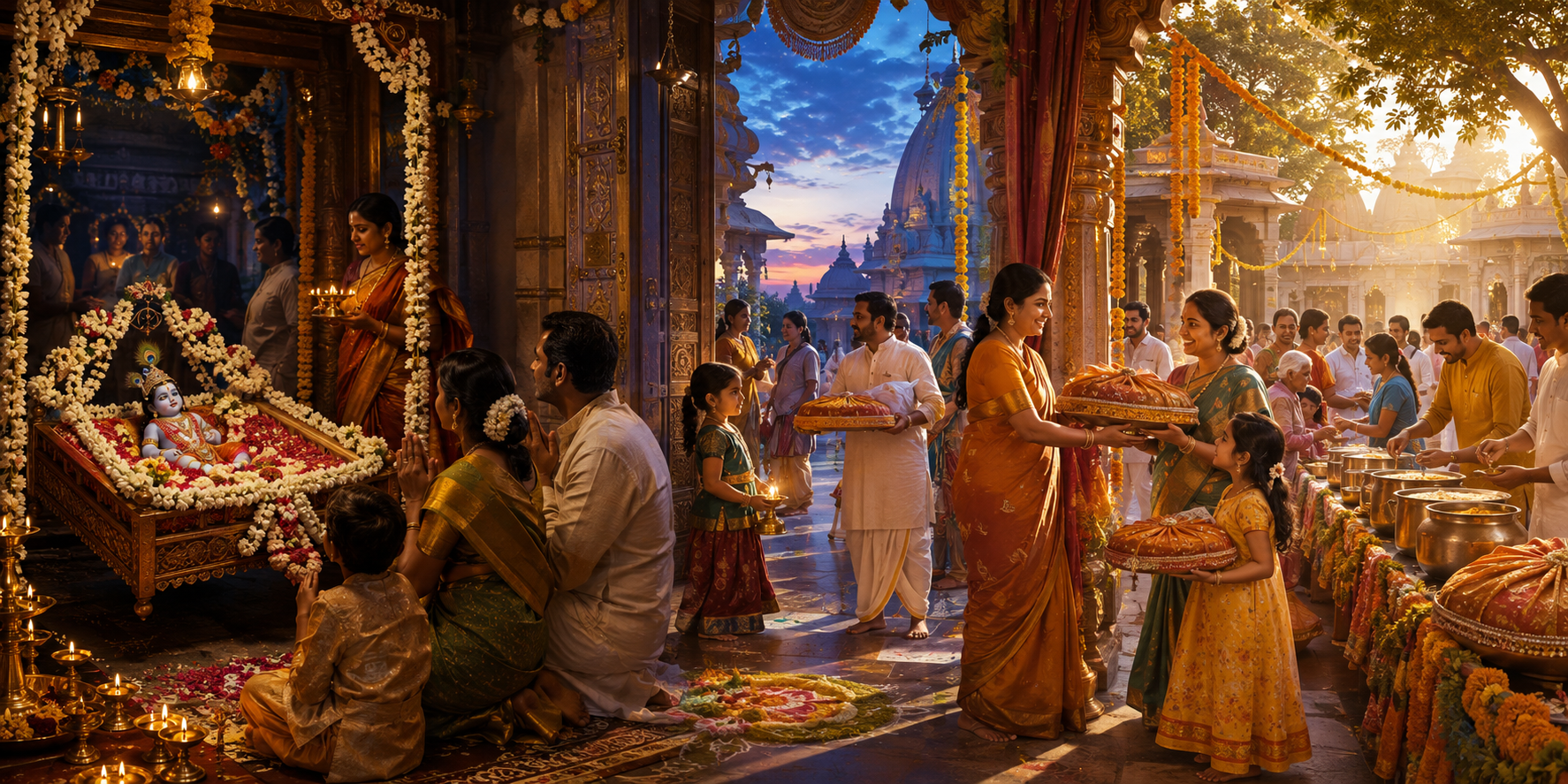
If you joined Janmashtami’s late-night worship and then wondered why the celebration continued the next day, the distinction matters. Nandotsava is not an encore. It completes a devotional movement: first you receive Krishna’s appearance through remembrance and worship; then you express that joy through welcome, prasada and seva.
Nandotsava in the 2026 sequence was observed on 5 September 2026. Even after the festival has passed, you can use its two-day structure to assess a family observance, conduct a temple volunteer debrief or prepare a clearer celebration for the future.
One festival, two devotional movements
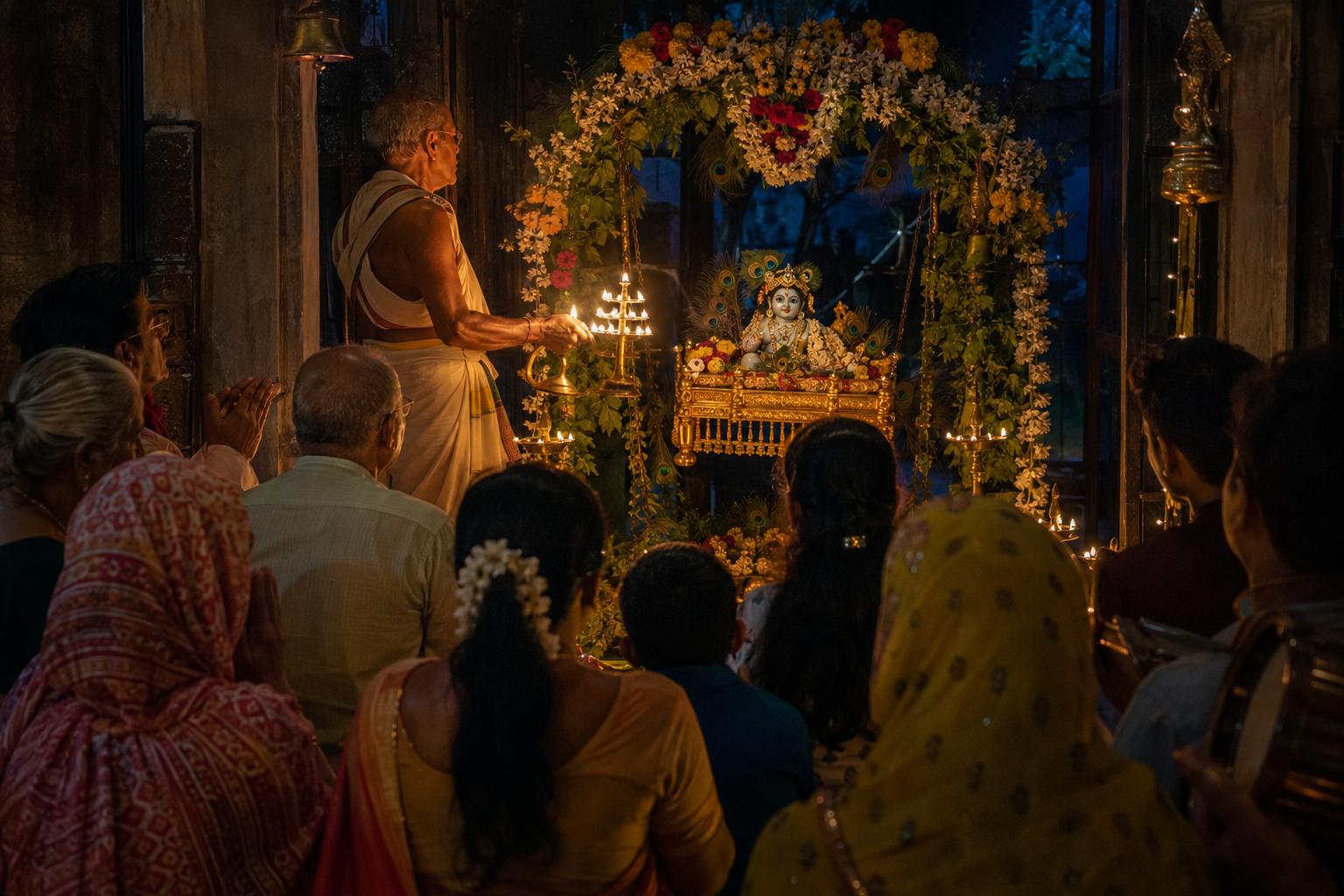
Janmashtami directs attention toward Bhagavan Krishna’s appearance. Many communities mark it through vrata, Krishna-katha, kirtan, puja, darshan and worship that reaches its culmination late at night. The atmosphere asks for attentiveness. Decorations and crowds may surround the worship, but remembrance of Krishna is its centre.
Nandotsava changes the direction of that devotion. It recalls the rejoicing associated with the household of Nanda and Yashoda after Krishna’s appearance. The joy that was contemplated during Janmashtami becomes shared celebration. Hospitality, prasada, generosity and participation therefore belong naturally to the day.
A useful distinction is this: Janmashtami asks what you are remembering; Nandotsava asks whom that remembrance reaches. If the first observance remains only a spectacle, attention has drifted away from Krishna. If the second remains only a private feeling, the welcome at the heart of Nandotsava has not yet become action.
This distinction is a framework, not a universal ritual manual. Vaishnava sampradayas, mandirs and families differ in their mantras, fasting disciplines, forms of puja, permitted offerings and the point at which a vrata concludes. Follow the established authority of your tradition rather than assembling a ceremony from unrelated customs.
Build the observance around what changes on the second day
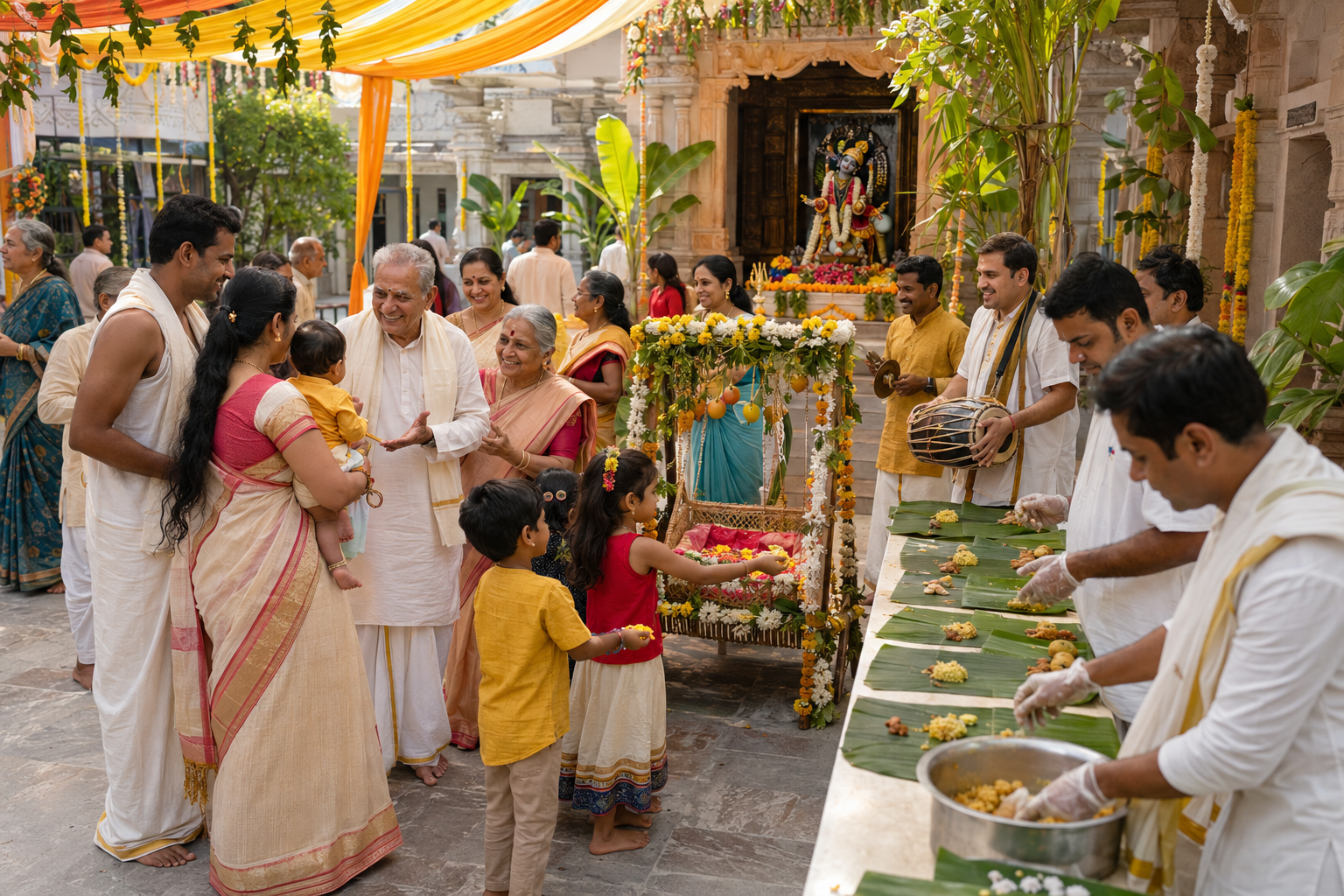
A strong celebration is not necessarily the longest or most elaborate one. It gives each day a clear devotional centre and preserves enough energy for the movement from worship to shared joy. Use the following sequence when planning at home or reviewing a community programme:
- Confirm the local sequence, not merely the festival label. Record when the Janmashtami programme begins, when its principal worship occurs, when prasada is distributed and when Nandotsava starts. A civil-date listing by itself may not explain a programme that continues late into the night.
- Choose one anchor practice for each observance. Krishna-katha, kirtan or focused darshan can anchor Janmashtami. Welcoming guests, distributing prasada or completing a shared seva can anchor Nandotsava. Additional activities should support those choices.
- Set the vrata conditions before the programme. Decide what your household or sampradaya observes, who will participate and how the vrata concludes. If fasting could conflict with medication, pregnancy, age or a medical condition, follow appropriate clinical guidance as well as the counsel of your tradition; do not copy another person’s austerity.
- Make prasada a plan rather than a last-minute transaction. A temple volunteer should confirm what offerings are accepted, where they are received and whether containers need labels. At home, prepare a manageable offering that follows your custom and can be shared without avoidable waste.
- Give each person one concrete seva. Someone can prepare the worship space, lead a bhajan, welcome newcomers, help an elder, supervise children, distribute prasada or clean afterward. Named responsibilities prevent seva from falling silently onto the same few people.
- Protect capacity for Nandotsava. An overloaded Janmashtami schedule often leaves the following day feeling residual. Decide in advance which late-night tasks can wait and which volunteers need relief before the next gathering.
On Janmashtami, prepare for attention
At home, gather puja items and prepare the worship space before the devotional programme begins. Choose one Krishna-lila narration that everyone can follow instead of stacking several readings that no one absorbs. Let kirtan, mantra, puja and aarti proceed according to your lineage, and offer food or conclude the vrata at the time prescribed by that practice.
If you attend a mandir, settle practical questions before leaving: whether offerings are accepted, where prasada will be served, what arrangements exist for children or elders and which part of the programme carries the principal darshan. Once you arrive, allow the central worship to command your attention. A crowded programme can tempt you to experience the occasion mainly through a phone screen or a queue; neither should become the memory that displaces Krishna.
On Nandotsava, make joy visible to someone else
Nandotsava should alter what you do, not merely extend what you watched. Four outward acts give the celebration a practical shape:
- Welcome someone. Help a newcomer understand why the celebration continues after Janmashtami, using a simple explanation rather than an unsolicited lecture.
- Feed someone. Share prasada with guests, relatives or members of the congregation in a manner consistent with your household or temple custom.
- Serve someone. Offer transport, seating, setup, cleaning or assistance to a person who would otherwise struggle to participate.
- Transmit something. Give children a real role, such as helping with flowers, singing a response in kirtan, carrying an approved offering or retelling part of Krishna’s lila.
A small household does not need to imitate a large mandir festival. One attentive guest, one carefully prepared offering and one act of service can express the Nandotsava principle more honestly than a crowded event in which no one is truly welcomed.
Let contemporary presentation serve Krishna’s lila
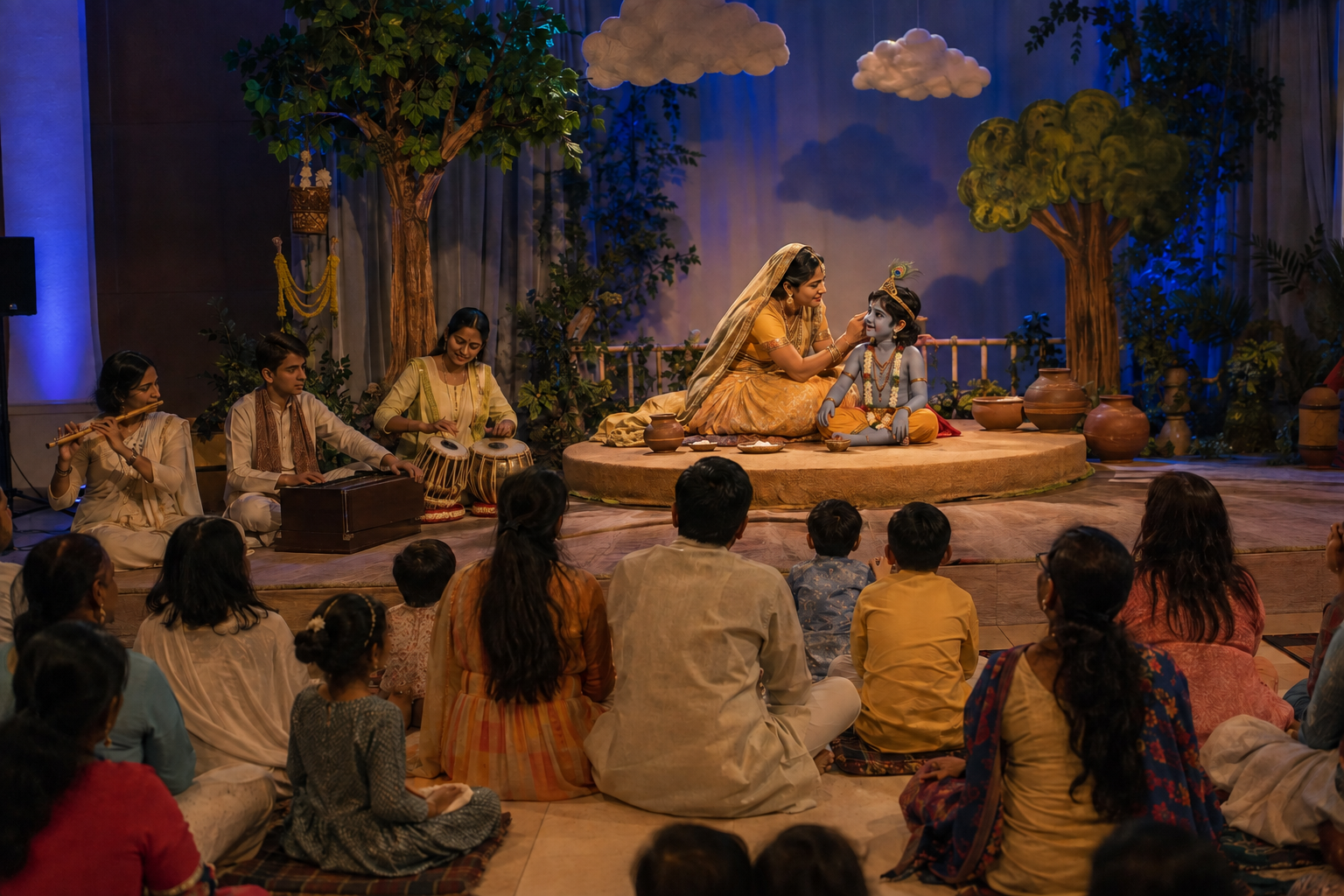
The 2026 Janmashtami and Kirtan Fest at ISKCON of Houston included a drone show centred on Krishna’s appearance. The format raises a useful question for organisers: can a contemporary medium carry a Dharmic narrative without turning the sacred occasion into entertainment alone?
The answer depends less on whether the medium is old or new than on what it makes the audience remember. Technology can assist visual storytelling and help a large gathering follow a narrative. It becomes a distraction when production scale, novelty or promotional imagery becomes more memorable than Krishna, kirtan and seva.
Before approving a major visual feature, an organising committee should apply four tests:
- Can a newcomer understand which part of Krishna’s lila the presentation communicates?
- Does the feature return attention to kirtan, darshan, Krishna-katha or another devotional practice when it ends?
- Will its cost and volunteer burden weaken prasada service, hospitality, accessibility or the principal worship?
- Does the programme remain meaningful for people who cannot see, hear or physically reach the feature easily?
The lesson is not that every temple needs a drone show. A household may use a lamp, a short narration, a child’s drawing and a familiar bhajan. A large congregation may use sophisticated staging. In both settings, the same standard applies: the medium is successful when it carries attention toward Krishna and leaves the community readier to serve.
Key takeaways
- Janmashtami and Nandotsava form one connected movement, but they do different devotional work.
- The 2026 Nandotsava observance fell on 5 September; preserve the exact local temple schedule alongside the calendar date.
- Decide the vrata, principal worship, prasada arrangements and volunteer roles before the programme begins.
- Keep enough capacity after late-night worship to make Nandotsava a genuine day of hospitality and seva.
- Judge every contemporary presentation by what it helps people remember, not by its technical scale.
Before the 2026 celebration recedes into a collection of photographs, make a one-page record. Note the schedule that worked, the practice that held people’s attention, the group that was least well served and one responsibility that needs a named volunteer next time. Share that record with your family or temple committee. Memory becomes useful when it improves the next act of devotion.
Then keep one Nandotsava practice alive now. Share prasada, help someone reach a mandir, learn a Krishna bhajan with a child or take up an unglamorous seva. The festival has done its work when darshan continues as service.
References
- Dandavats — ISKCON of Houston Janmashtami and Kirtan Fest 2026 Drone Show
- Dandavats — Nandotsava Sept 5 2026
