
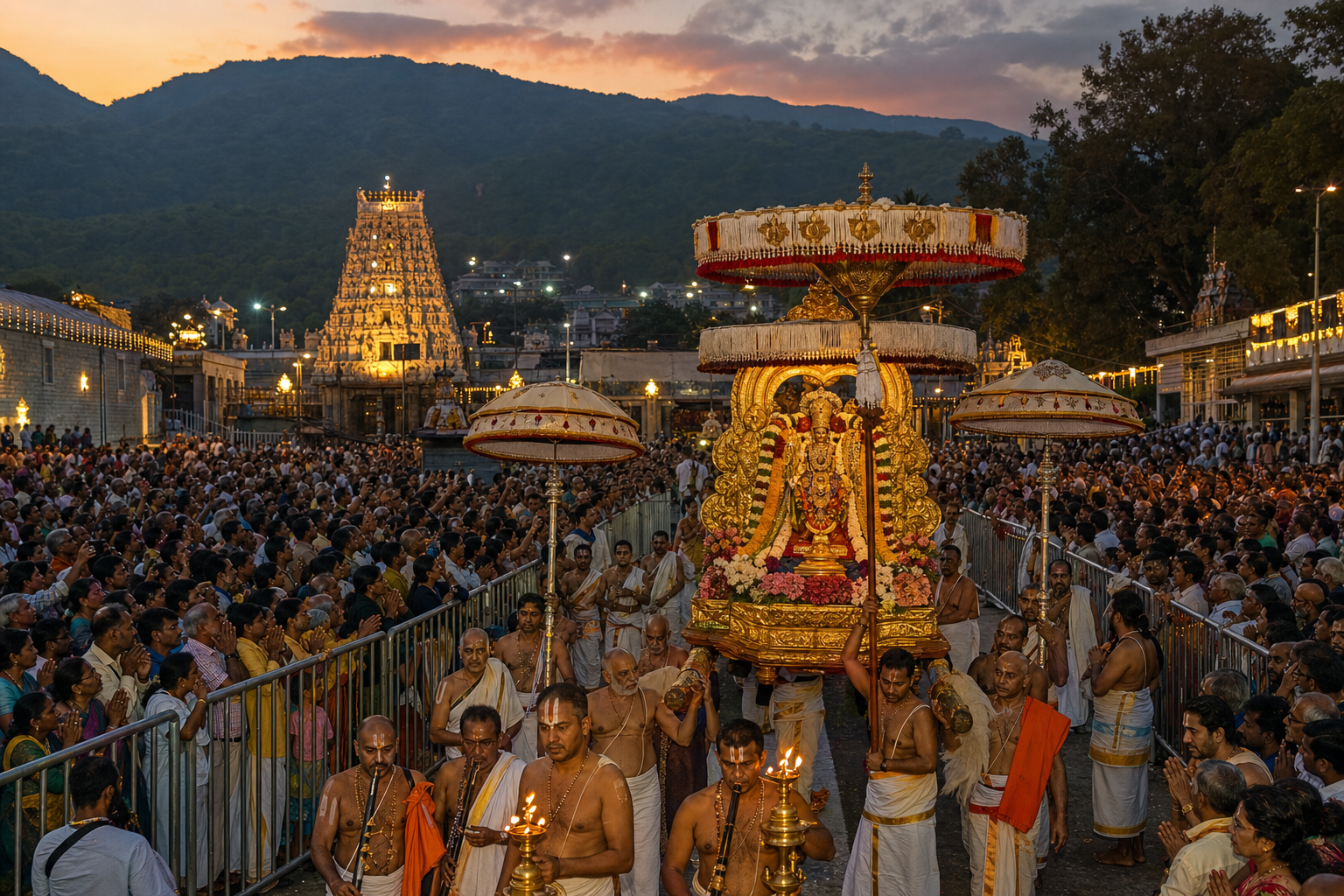
You have a day or two around Tirupati, and several festival names are competing for that time. A garden procession in Tirupati city, a Brahmotsavam at Narayanavanam, and a full-moon Garuda Seva on Tirumala may belong to the same sacred region, but they offer very different forms of darshan.
Make one decision before booking transport or accommodation: do you want a close, contemplative encounter; a multi-day ritual sequence; or a large public procession? Once you answer that, the calendar and logistics become much easier to read.
Choose the procession by its devotional rhythm
The word “Tirupati” can conceal three separate pilgrimage plans. Tirumala is the hill temple precinct, Tirupati city has important temples and processional streets of its own, and Narayanavanam is a distinct destination near Puttur for which Tirupati serves as the main transit hub. Do not treat the three locations as interchangeable entries on one urban itinerary.
| Festival experience | Place and ritual form | Best suited to you if… |
|---|---|---|
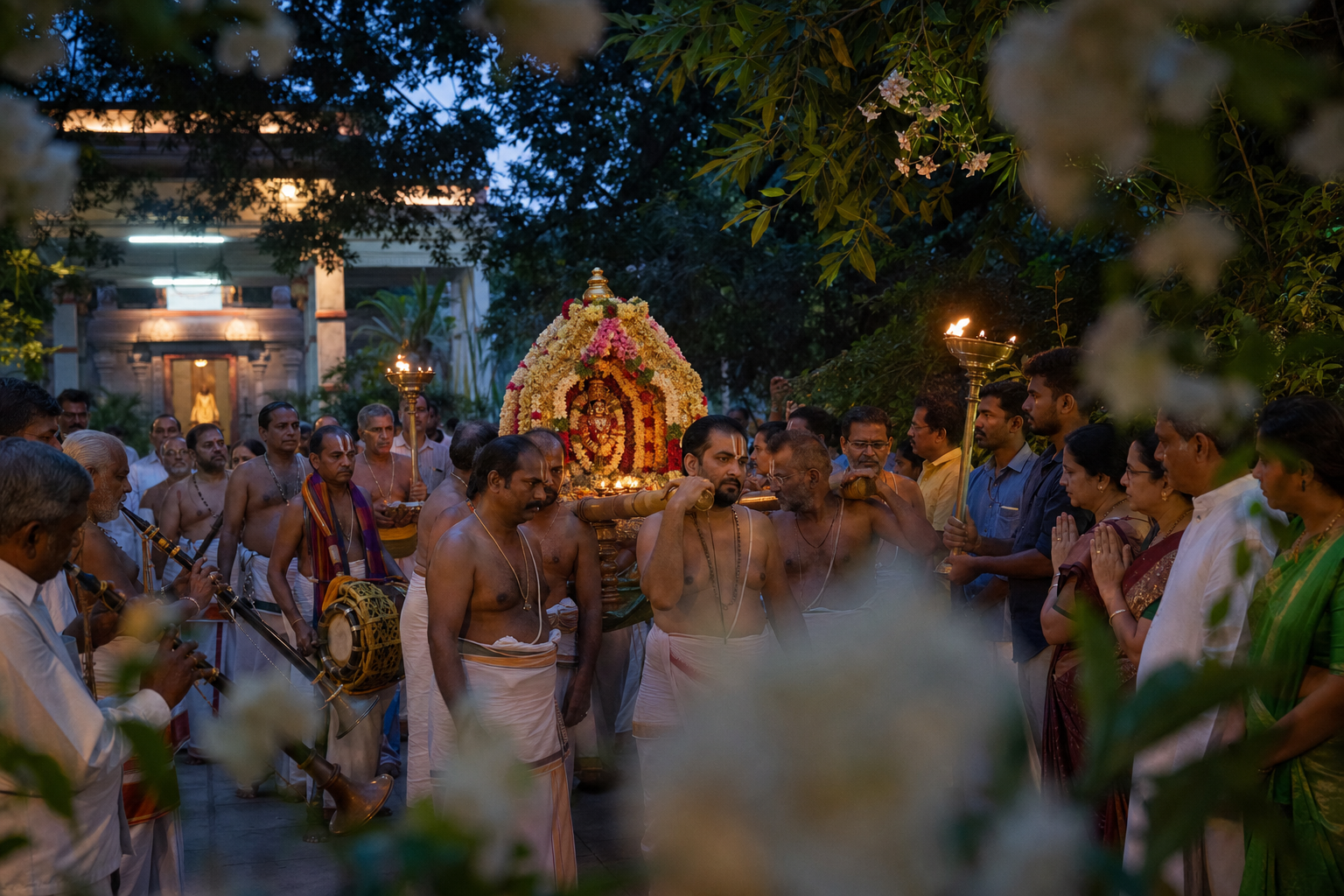
| Thota utsavam | At Sri Kodandarama Swamy Temple in Tirupati, the movable forms of Sita, Rama, and Lakshmana travel in procession to a sacred garden setting. The 4 April 2026 observance began at 9:30 AM. | You want Rama-bhakti expressed through flowers, music, a measured palanquin procession, and the symbolism of nature as sacred space. |
| Agastheeswara Swamy Brahmotsavam | At Narayanavanam, Sri Agastheeswara Swamy and Goddess Maragadavalli are worshipped through an extended festival cycle. In the 2026 programme, Ganapati Puja and Ankurarpanam preceded ten festival days. | You want to enter an Agama-shaped sequence rather than attend only one headline procession, especially within a Shaiva-Shakta setting. |
| Srivari Pournami Garuda Seva | At Tirumala, Sri Venkateswara Swamy proceeds on Garuda Vahanam around the four Mada streets on designated full-moon evenings. It is a public, post-sunset processional darshan with concentrated crowds along the route. | You want the grandeur of a major Vaishnava procession and are prepared to arrive early, wait patiently, and follow controlled crowd movement. |
The choice is not a ranking. A thota utsavam can be spiritually richer for someone seeking quiet Rama-nama than a larger event. A devotee who wants to understand how a temple festival unfolds may gain more by attending Ankurarpanam and a later vahana seva at Narayanavanam. Someone whose sankalpa centres on Sri Venkateswara may accept the greater logistical demands of Garuda Seva without hesitation.
If your party includes elders or young children, weigh the form of the event as seriously as the deity and date. A large evening procession requires extended waiting and careful exits. A morning garden procession changes the heat, meal, and transport plan. A multi-day Brahmotsavam lets you choose a less compressed part of the ritual cycle instead of forcing everyone into its busiest moment.
Read the festival clock before you trust the civil date
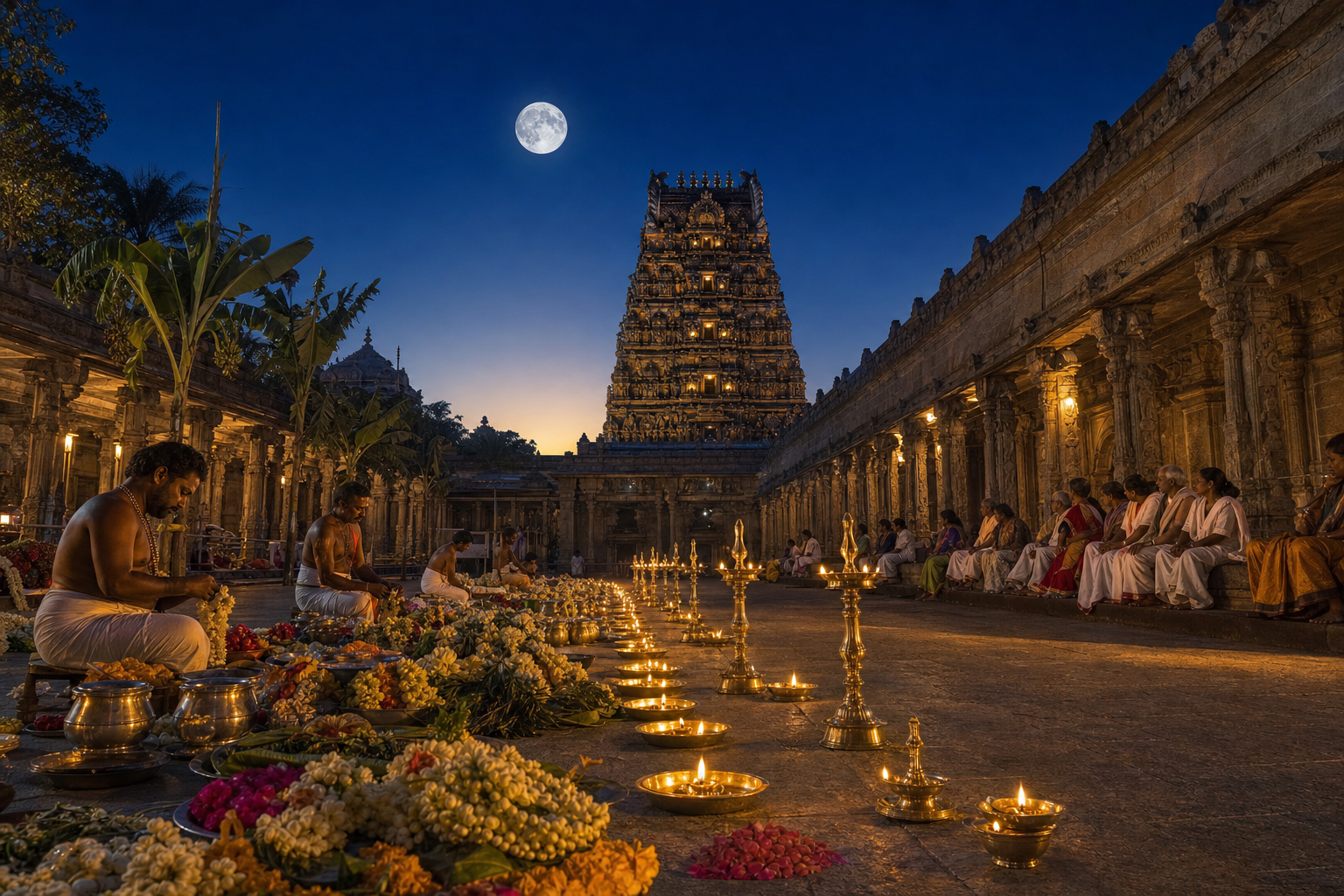
A temple festival runs on more than one clock. The panchang determines the relevant tithi and muhurta. The temple’s Agama and local sampradaya determine the order of rites. Civil schedules, security arrangements, weather, and other major observances determine what a pilgrim can actually attend. A date copied into your calendar is therefore a planning marker, not the final authority.
Pournami Garuda Seva shows why this matters. Purnima is a lunar tithi rather than a midnight-to-midnight civil day. When it overlaps two dates, the procession is ordinarily associated with the evening on which the tithi meaningfully prevails at Tirumala. Coinciding events or operational requirements can still lead to an adjustment. The published working dates from late July through December 2026 are 29 July, 28 August, 26 September, 26 October, 24 November, and 24 December, but the monthly TTD calendar and current notification must decide your final travel plan.
Never carry a civil date from one year into the next merely because the festival name is unchanged. Tithis move against the Gregorian calendar. Even within the same year, check the timing rather than assuming every procession is an evening event: the Repakula Subbamma Thota Utsavam of 2026 began at 9:30 AM, while Pournami Garuda Seva is associated with the evening.
For a Brahmotsavam, distinguish inauguration from the days advertised as the main festival. At Narayanavanam in 2026, Ganapati Puja and Ankurarpanam were scheduled for 20 April from 6:00 PM to 8:30 PM, before the Brahmotsavam period of 21 to 30 April. Ganapati Puja invokes the removal of obstacles. Ankurarpanam places seeds in sanctified soil, marking fertility, renewal, and the auspicious beginning of the festival cycle.
That preliminary evening is not merely a rehearsal. If you want to understand the festival’s inner architecture, it may be the right session to attend. The subsequent sequence commonly includes Dhwajarohanam, daily worship and adornment, morning or evening vahana processions, abhishekam, and eventual rites of completion such as Poornahuti and Dhwajavarohanam. Confirm which of these are actually announced for the year in question; a typical sequence is not a substitute for a temple-specific programme.
Build your day around movement, weather, and the exit
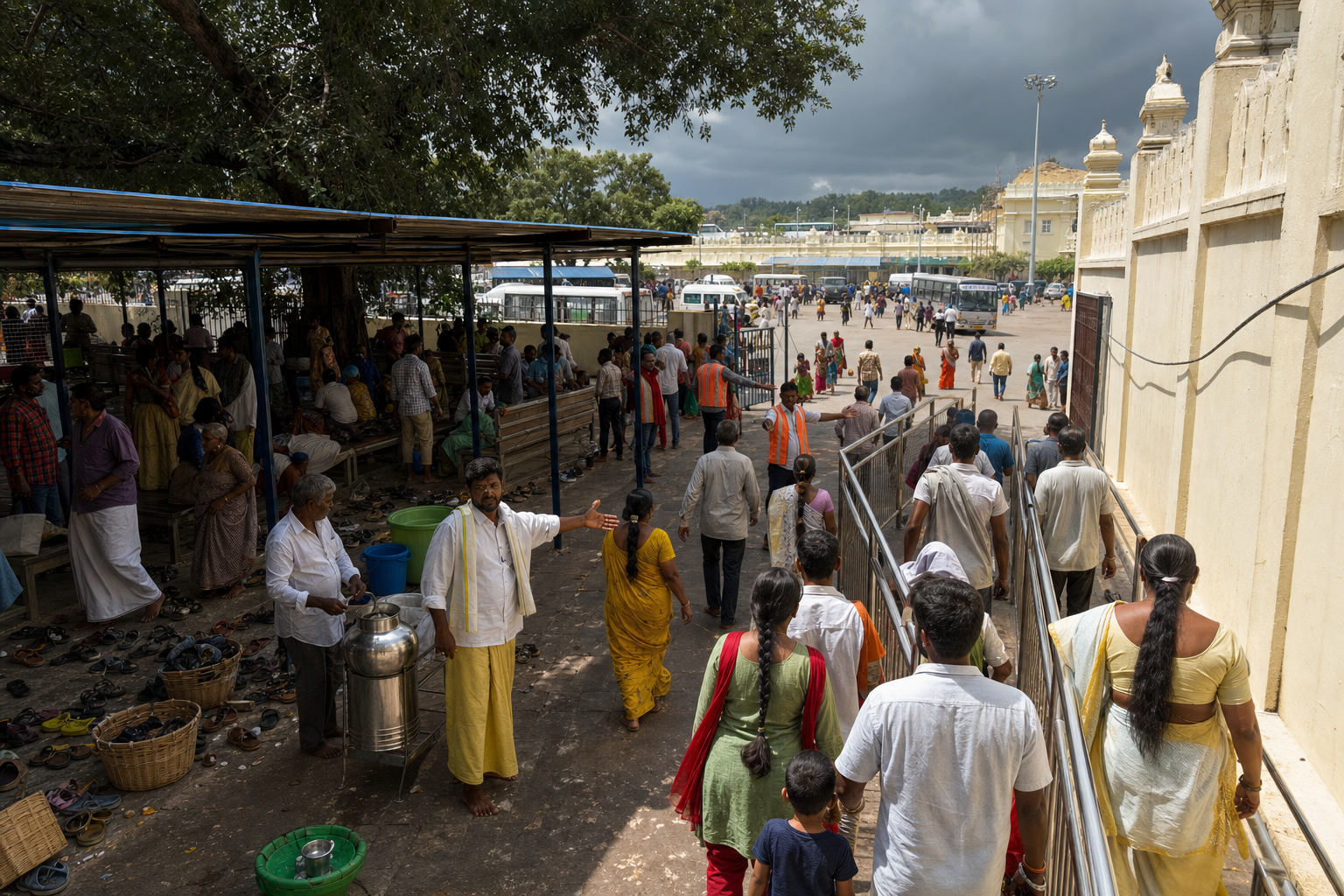
The most common planning mistake is to think only about reaching the deity. A procession also requires you to reach the correct route, hold a suitable place without obstructing others, and leave safely after crowd controls change. Build the day backwards from those three movements.
- Write down the exact venue. “Garuda Seva” means the four Mada streets at Tirumala in this context. The garden procession belongs to Sri Kodandarama Swamy Temple in Tirupati city. Agastheeswara Swamy Brahmotsavam requires travel to Narayanavanam. A taxi driver, family member, or hotel desk should be able to see the temple and locality in your note, not only the festival name.
- Verify twice. Check the relevant temple or TTD schedule before committing to the journey, then check again in the days immediately before the event. On arrival, let current notices, police controls, and volunteer instructions override an older screenshot.
- Reserve the scarce part first. Accommodation on Tirumala can be tight on Pournami dates, so secure it through official channels before designing the rest of the itinerary. If you stay in Tirupati instead, treat the ascent to Tirumala as a separate journey rather than an ordinary transfer across town.
- Choose both a viewing area and a retreat route. Garuda Seva crowds concentrate along the four Mada streets. Less congested stretches away from the most sought-after junctions can be more manageable for families, but conditions on the ground decide what is open. Identify a family meeting point before entering the denser area and do not resist a cordon change to preserve a preferred view.
- Pack for the season without burdening yourself. Late June through September overlaps the monsoon period, so a light rain layer and footwear suitable for wet approaches can matter. Keep carried items to essentials, remain hydrated, and use designated footwear facilities where required. Modest temple-appropriate clothing remains the baseline in every season.
- Plan for the least mobile person. Keep elders and children away from the densest crossings, allow them a place to pause, and make sure one adult is responsible for each vulnerable member of the group. A slightly less dramatic vantage point is often the better darshan when it prevents strain and confusion.
For Narayanavanam, Tirupati railway station and the airport at Renigunta provide the main regional access, while local buses and cabs connect pilgrims onward. Because the temple is near Puttur rather than within the Tirumala precinct, confirm the return arrangement before committing to an evening rite.
Photography should never be the foundation of your plan. Rules and cordons can limit where or when a device may be used, and the permitted position may not be the one you imagined. Follow the current instruction immediately. Holding up a phone, blocking a moving line, or stepping across a controlled boundary turns another devotee’s darshan into the cost of your photograph.
Take part as a devotee, not only as a spectator
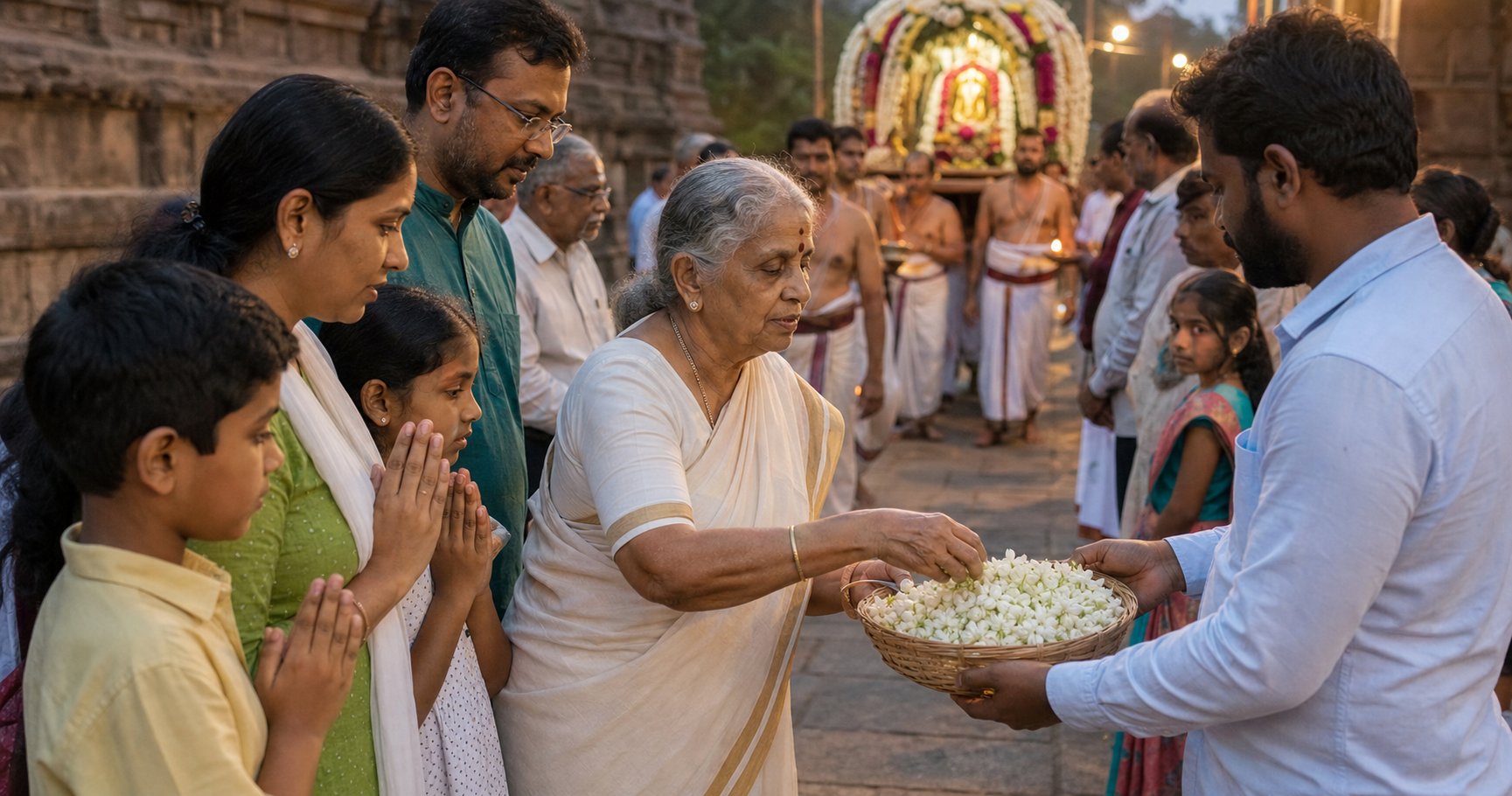
A temple procession is possible because the utsava-murti is a ritually consecrated movable form, distinct from the principal immovable deity in the sanctum. This allows divine darshan to move beyond the garbhagriha and enter the community’s streets, gardens, and public spaces. When you understand that distinction, the procession stops looking like a ceremonial parade and becomes an extension of temple worship.
Choose one devotional anchor before the event. It keeps the mind steady when waiting, noise, rain, or crowd movement begins to dominate your attention.
- For the Sita-Rama garden procession: use Rama-nama or a familiar Rama stotra. Notice how the garden evokes the forest setting of Rama-katha while flowers, leaves, fragrance, and orderly movement turn cultivated nature into sacred space. If a swing service, floral alankara, ablution, or offering is announced, treat it as worship rather than an opportunity to press closer for a photograph.
- For Srivari Garuda Seva: use Govinda nama-smarana or Vishnu Sahasranama according to your practice. Garuda represents steadfast devotion, strength, and service to Vishnu. Let that symbolism govern your conduct: remain attentive, follow instructions quickly, and make room rather than competing for it.
- For Agastheeswara Swamy Brahmotsavam: attend either the preliminary rites or one complete daily sequence if time permits. Watch how worship of Shiva and Goddess Maragadavalli expresses the complementarity of Shiva and Shakti, while vahana processions carry that temple-centred worship into public view.
The music is part of the ritual field, not background entertainment. Nadaswaram and tavil accompany movement; Veda parayanam gives the occasion its recitational discipline; Rama-nama, Govinda-nama, or other collective chanting gives devotees a direct way to participate. You do not need to reproduce every mantra you hear. Listen carefully, join what you know, and avoid turning private practice into an obstacle in a moving public space.
Seva continues after the vahana or palanquin has passed. Keep prasadam queues orderly, take only what you will consume, leave water and distribution areas clean, and reduce disposable material where possible. Garden observances make this duty especially visible: reverence for leaves, flowers, and sacred space loses credibility if the route is left covered in waste.
Narayanavanam also helps you notice the region’s denominational breadth without flattening it. The Shaiva sanctity of Agastheeswara Swamy and Maragadavalli exists near the Vaishnava heritage of Sri Kalyana Venkateswara Swamy. Dharmic harmony here does not require rites to become identical. It asks devotees to honour each temple’s Agama, deity, and sampradaya while recognizing shared disciplines such as seva, dana, ahimsa, truthfulness, and care for the common space.
Key takeaways for your Tirupati festival plan
- Choose the devotional form first: an intimate garden yatra, a multi-day Brahmotsavam sequence, or a large Pournami procession.
- Confirm the locality as well as the temple name. Tirupati city, Tirumala, and Narayanavanam require different transport plans.
- Treat lunar and almanac-based dates as provisional until the current temple or TTD notification confirms them.
- Consider preliminary rites such as Ganapati Puja and Ankurarpanam when you want to understand how a Brahmotsavam begins, not only how its largest procession looks.
- Plan the exit and the needs of elders and children before choosing a viewing point. Follow current cordons even if they alter your preferred position.
- Carry one simple sadhana into the event, then express it through patience, cleanliness, restrained photography, and space given to other devotees.
Before you book, write three lines: the exact temple and locality, the rite you most want to witness, and the official channel you will check again before departure. Let the confirmed calendar determine when you travel, and let your sankalpa determine which procession deserves your time.
References
- DharmaRenaissance Blog – Repakula Subbamma Thota Utsavam 2026: Sacred Garden Procession of Sita-Rama in Tirupati
- DharmaRenaissance Blog – Agastheeswara Swamy Brahmotsavam at Narayanavanam: Sacred Dates, Deep Rituals, Pilgrim Guide
- DharmaRenaissance Blog – Srivari Pournami Garuda Seva 2026: Full-Moon Dates, Ritual Significance & Planning Tips