

You may feel close to Krishna during kirtan, drawn to another sacred form at home, and still wonder whether choosing one means rejecting the rest. Or you may be stuck at an earlier question: if the Divine transcends gender and material limitation, why worship a particular form at all? These are not one problem. They are different questions tangled together.
The way forward is to separate identity, theology, and practice. Understand who you are beyond the body, learn what your tradition actually teaches about the Divine, and then choose a devotional center you can serve consistently. This allows your bhakti to become one-pointed without becoming narrow.
Settle the identity question before choosing a deity

The first distinction is between the conscious self and the body through which the self presently acts. Within Hindu accounts of rebirth, bodily conditions can change while spiritual identity endures. Male and female therefore describe embodied conditions; they do not exhaust the nature or worth of the atman.
This distinction changes how you approach divine form. If the Divine is not a material organism, calling a deity male or female cannot mean exactly what those words mean on a medical form. A masculine or feminine sacred form carries relationship, power, beauty, mood, and theological meaning. It is not a claim that the Divine is confined by material biology.
Nor does transcendence automatically mean that every personal form is merely decorative. Hindu schools do not resolve the relation between the formless Absolute and divine personality in identical ways. A nondual Vedantic account may emphasize Brahman beyond material attributes. A bhakti lineage may affirm a Supreme Person whose form and relationships are transcendental rather than material. Before deciding that an image is literal in a bodily sense, or dismissing it as “only a symbol,” ask what that form means within its own lineage.
- Ask, “Who am I?” This is the question of atman, consciousness, embodiment, and temporary designation.
- Ask, “What is the Divine?” This is a theological question about the Absolute, divine personality, form, attributes, and relationship.
- Ask, “How should I approach the Divine?” This is the practical question of Ishta, mantra, worship, service, and daily discipline.
Keeping these questions separate prevents two common mistakes. Biological literalism reduces the deity to a larger version of an embodied creature. Empty equivalence goes in the other direction and declares every sacred form interchangeable before learning what any tradition claims. Neither approach gives you a sound basis for devotion.
The distinction also helps in conversations across the wider dharmic family. Buddhist teachings concerning Nirvana and Dharmakaya, the Jain understanding of the liberated jiva, and the Sikh description of Waheguru as nirankar all resist reducing ultimate spiritual reality to bodily gender. These are meaningful parallels, but they are not identical doctrines. Let the parallel deepen respect; do not use it to avoid careful study.
Remembrance matters because spiritual understanding is not merely an idea you assent to once. Bhagavad-gita 8.5 places decisive weight on the consciousness present at life’s end. Your daily attention is therefore formative. The name, form, values, and relationship you repeatedly remember are shaping the consciousness with which you meet both ordinary duties and life’s final transition.
One Ishta gives devotion a center, not a boundary
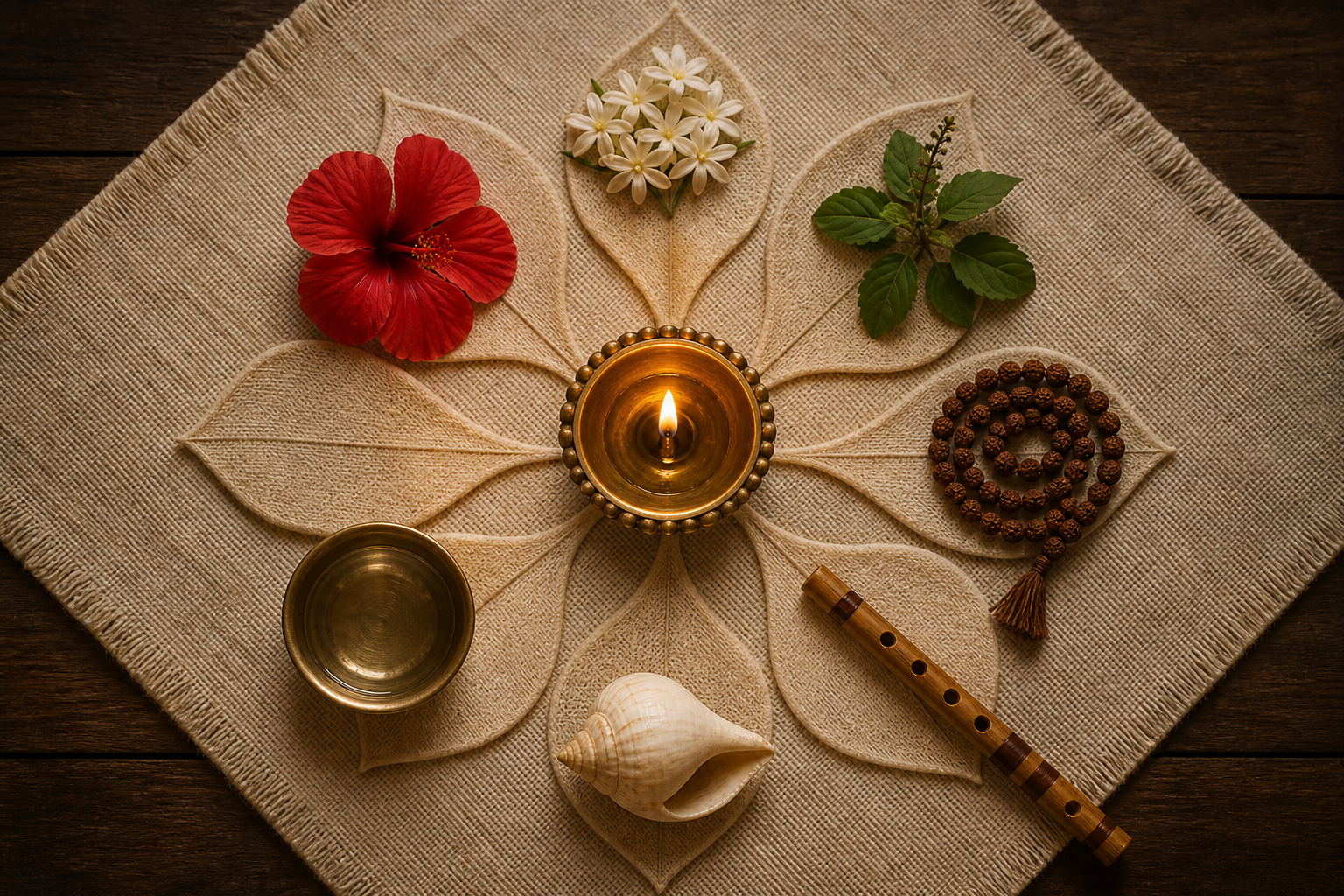
An Ishta is the chosen or cherished form of the Divine around whom your personal sadhana becomes steady. “Chosen” need not mean selecting a deity as if comparing products. The relationship may arise through family worship, scriptural study, a guru-shishya lineage, or a durable attraction that becomes clearer through practice. What matters is that the relationship acquires knowledge, commitment, and service.
A household altar can honor several sacred forms while daily worship has one clear center. You might bow respectfully before all of them, observe festivals connected with more than one deity, and still direct your principal japa, study, and meditation toward your Ishta. The distinction is between breadth of reverence and focus of practice.
This focus is not necessarily a verdict that every other form is false. It is a decision about where you will stand long enough for a relationship to deepen. Constantly changing the object, mantra, theology, and mood of worship can leave you with many impressions but little formation. A stable center allows remembrance to survive beyond festivals, novelty, and temporary emotion.
Focused devotion also does not require pretending that every Hindu lineage makes the same claim. Within Gaudiya bhakti and Krishna-centered communities such as ISKCON, Krishna is worshipped as the Supreme object of love. That conviction gives the practice its shape. Another lineage may describe divine identity and hierarchy differently. Respect does not require erasing that difference; it requires representing the other path accurately and refusing contempt.
If your altar already contains many forms, you do not need to remove them merely to prove concentration. Give your primary devotional relationship a visible and practical center. Let the other forms retain their honored place. In a family, explain the distinction plainly: “This is the form around whom our daily practice is organized, and these are sacred forms we also revere.” That is more intelligible to children than either sectarian dismissal or the vague statement that everything is exactly the same.
How to choose an Ishta without manufacturing certainty
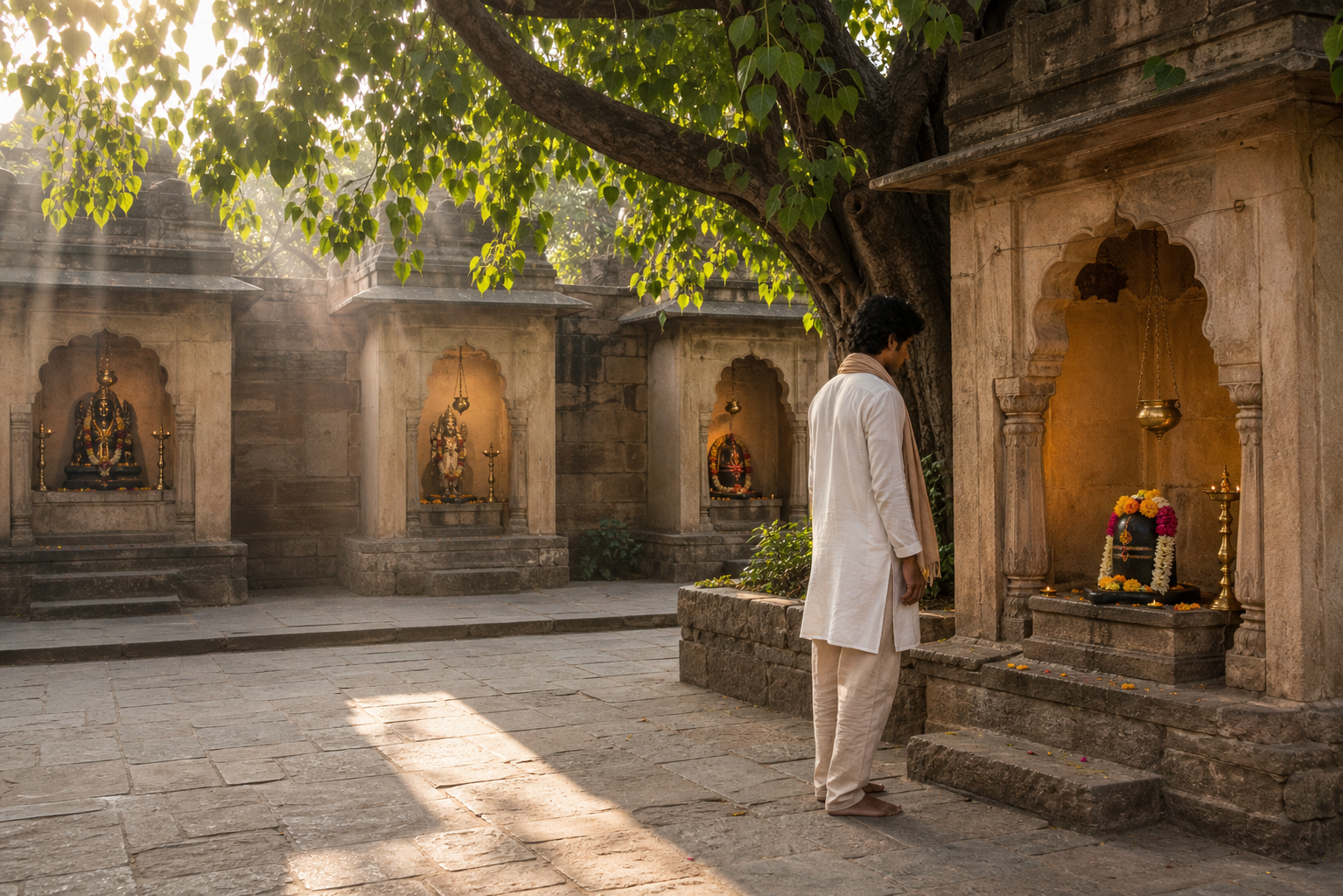
If a trusted lineage has already established your devotional center, do not reopen the question simply because another form is temporarily fashionable or emotionally striking. If you remain genuinely unsettled, use a disciplined process instead of waiting for an extraordinary sign.
- Name the influences already present. Write down the deity honored in your home, the teaching you have actually studied, the mantra or name you already repeat, and any guidance received through a guru-shishya relationship. If these influences point in different directions, acknowledge the difference before trying to combine them.
- Notice the attraction that produces responsibility. A durable devotional pull does more than create aesthetic fascination. It makes you want to remember, learn, offer service, correct your conduct, and return after distraction. Ask which relationship calls you toward seva rather than merely promising relief from difficulty.
- Learn the theological claim behind the form. Find out whether your tradition understands the deity as the Supreme, a manifestation of the Supreme, an empowered divine being, or a sacred support for contemplation. Do not guess from iconography alone. Study texts such as the Bhagavad-gita and Srimad-Bhagavatam where they are central to your path, and read them with the interpretive context of the lineage rather than as isolated quotations.
- Choose a modest, repeatable core. Center your altar attention on one form, use the name or mantra appropriate to your path, keep a stable stream of study, and connect the practice to an act of service. A practice you can sustain through an ordinary working day is more revealing than an elaborate observance performed only when enthusiasm is high.
- Take unresolved contradictions to a qualified teacher. Ask direct questions: What relationship does this practice cultivate? What commitments accompany it? How should other deities be regarded? A trustworthy explanation should be able to establish focus without requiring casual disrespect for your family or other sincere practitioners.
- Examine the fruit after novelty has faded. Look for steadier remembrance, greater truthfulness, less domination by status, more willingness to serve, and quicker recovery after distraction. Strong emotion can accompany devotion, but emotion alone cannot tell you whether the practice is transforming your life.
You may still feel affection for more than one form. That is not a spiritual emergency. Distinguish your primary axis of daily sadhana from secondary festival observances, family customs, pilgrimage, or respectful temple worship. Clarity about function is often enough to end the inner conflict.
Do not switch your Ishta every time worship feels dry. A relationship that exists only while it produces a strong sensation has not yet become devotion. At the same time, constancy does not require submitting to manipulation or conduct opposed to dharma. If a teacher demands dishonesty, exploitation, or hatred as proof of loyalty, the problem is not your lack of surrender. Seek sound guidance before making deeper commitments.
The power of devotion is reciprocity, not spiritual leverage

Srimad-Bhagavatam expresses a striking bhakti principle through the phrase aham bhakta-paradhino: the Supreme willingly responds to the love of the devotee. The language of Krishna being “controlled” by devotion describes voluntary reciprocity. It does not turn bhakti into a technique for forcing the Divine to provide success, protection, wealth, or a preferred outcome.
Maharaja Ambarisha gives this principle practical shape. Although an emperor surrounded by opulence, he treated material privilege as temporary and directed his mind and senses toward Krishna’s service. His devotion was not an escape from responsibility. It reordered attention within responsibility. That is the pattern available to you even when your duties leave little room for elaborate ritual.
A daily pattern that gives every faculty a role
- At waking, remember your Ishta before allowing the day’s demands to claim your attention. A pranam, divine name, or familiar prayer is enough to establish the direction.
- At the altar, keep the sequence stable. Look at the same sacred form, recite the name or mantra proper to your path, make a simple offering, and read from the teaching that explains the relationship.
- During work, designate a real responsibility as seva. Complete it carefully for the welfare of those affected, not merely for praise. This prevents worship and conduct from becoming separate compartments.
- At a moment of friction, pause before reacting. Ask which response is truthful, non-harming, responsible, and consistent with the character of a devotee. Devotion gains force when remembrance changes the next action.
- Before sleep, review where remembrance held and where it disappeared. Return without theatrical self-condemnation. The purpose is to train attention, not to make the ego the center of another story.
Japa, kirtan, seva, study, and ethical conduct work together because they engage different parts of life. Japa gathers attention. Kirtan gives remembrance voice and community. Study protects devotion from vague sentiment. Seva tests whether love has become action. Ethical conduct reveals whether worship remains present when desire or anger applies pressure.
How to tell whether bhakti is maturing
The most reliable signs are usually less dramatic than the signs people advertise. Your mind returns to the Divine sooner after distraction. Possessions and recognition lose some of their authority over your decisions. Service becomes more concrete. You can state your own conviction without needing to humiliate another tradition. Failure prompts correction instead of concealment.
By contrast, ritual volume does not compensate for worsening conduct. A striking experience, an unusually emotional kirtan, or a feeling of being specially favored may be meaningful to you, but none gives permission for pride or cruelty. The power of devotion is visible when love governs attention, senses, choices, and relationships.
The protection associated with Ambarisha should also not be converted into a promise that devotees will never experience loss, conflict, or pain. The sacred narrative presents steadfast devotion as the ground of divine guidance and protection; it does not authorize a transactional formula. Bhakti asks, “How can this life be offered faithfully?” Bargaining asks, “What must I perform so that the Divine owes me my preferred result?” Those two attitudes may use the same ritual while moving in opposite directions.
Key takeaways
- Separate the enduring self from bodily identity before interpreting the gender or form of a deity.
- Learn what a sacred form means within its own tradition; neither biological literalism nor “all forms are identical” is adequate.
- Let one Ishta organize your principal japa, study, worship, and seva while maintaining informed respect for other sacred paths.
- Choose through lineage, study, durable attraction, and the ethical fruit of practice rather than novelty, fear, or social pressure.
- Treat divine reciprocity as a relationship of love, not as leverage for controlling outcomes.
- Measure devotional growth by remembrance, conduct, service, humility, and steadiness under pressure.
Before your next worship, complete this sentence in plain language: “My primary devotional center is ___, and I will remember and serve through ___.” If you cannot fill the first blank honestly, your next step is study and qualified counsel, not another impulsive choice. If you can fill it, begin with the smallest faithful practice you can repeat tomorrow. Let clarity grow through informed constancy.
References
- Dandavats – Beyond Male and Female: Dharmic Wisdom on God, the Soul, and Transcending Gender
- Dandavats – Whom to Worship? A Clear, Compassionate Guide to Ishta within Dharmic Unity
- Dandavats – When Devotion Leads and Divinity Follows: Maharaja Ambarisha and Krishna’s Grace
