
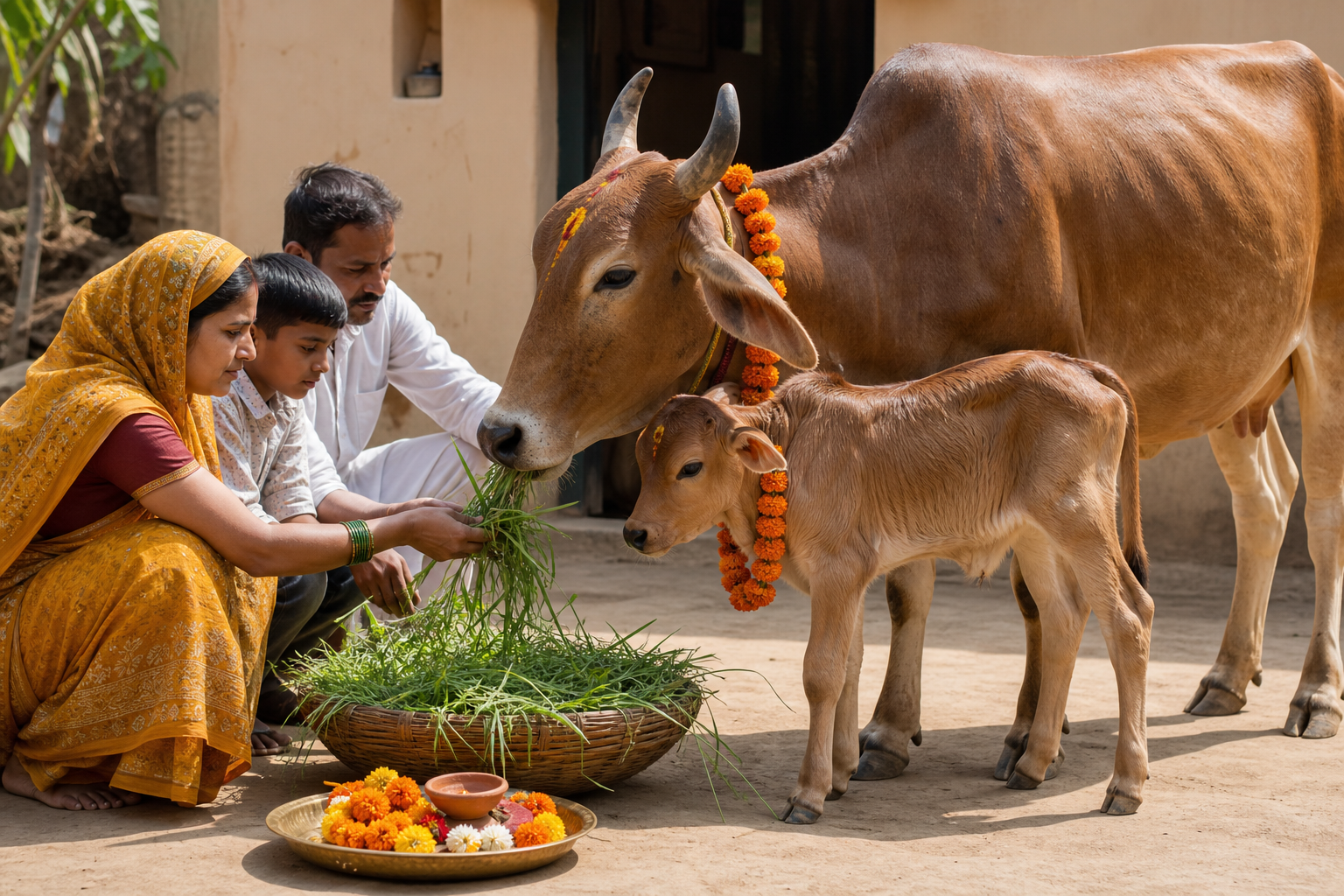
If you have found Govatsa Dwadashi under Kartik in one calendar and Nandini Vrat under Ashwin in another, you do not need to choose which name is “real.” You need two things: the civil date to reserve and the local calendar tradition to follow.
For 2026 planning, set aside November 6. Then confirm the local Dwadashi interval and household procedure before the day arrives. That two-stage check resolves the calendar question without flattening a living family tradition into a generic checklist.
Key takeaways for the 2026 observance
- Govatsa Dwadashi and Nandini Vrat are two names used for the same observance.
- The date given for Govatsa Dwadashi in 2026 is November 6.
- North Indian calendars place it on Kartik Krishna Paksha Dwadashi; other calendars may list it as Ashwin Krishna Dwadashi.
- The traditional intention is the longer life of sons, with the vrata observed by women.
- The date and intention do not establish one universal fasting rule, mantra, material list, or puja sequence. Confirm those details within your own sampradaya, family, or temple tradition.
Why Kartik and Ashwin can both appear

The important calendar marker is Krishna Paksha Dwadashi, the twelfth tithi of the waning lunar fortnight. The month name attached to that tithi can differ between calendar conventions. In North Indian reckoning, the observance is placed in Kartik. Another regional calendar may place the corresponding Krishna Dwadashi in Ashwin.
This is not a reason to move the vrata casually between dates. It is a reason to read a calendar as a complete system. Do not take the month name from one system, the tithi timing from another, and the ritual procedure from a third merely because each is available online.
A tithi is a lunar-calendar division, so its local interval does not have to coincide neatly with a midnight-to-midnight civil day. Use November 6 as your 2026 planning date, but check a panchang prepared for your location if the exact worship or fasting interval matters in your tradition. If your family follows a temple calendar, ask the temple which local interval it will observe.
Your practical decision rule is simple: keep the calendar convention your family already follows, locate Krishna Dwadashi within it, and use local guidance for timing. The different month labels need not represent different festivals.
What the traditional purpose does and does not establish
Nandini Vrat is traditionally observed by women for the longer life of their sons. That gives the vrata a clear family intention. It does not, by itself, tell you whether your lineage requires a complete fast, permits a modified fast, uses a particular mantra, or completes the observance in a particular way.
Keep the distinction clear. The transmitted purpose should not be rewritten merely to make the observance sound more contemporary. At the same time, a brief calendar description should not be expanded into universal ritual law. If your household includes a broader prayer for the welfare of all children, describe that honestly as your family’s devotional practice rather than claiming that every tradition defines the vrata identically.
The prayer for longevity should also remain a sacred intention, not a promise of control. A vrata is not a medical guarantee, and its observance does not replace healthcare for a child. This distinction protects both faith and family: you can undertake the discipline sincerely without suggesting that illness reflects an imperfect ritual.
When explaining the vrata to a child, avoid placing its emotional burden on the child. You can say that the family is observing a sacred discipline with a prayer for long life. Do not imply that the child’s safety depends on whether every step was performed without error.
A preparation plan that respects local tradition
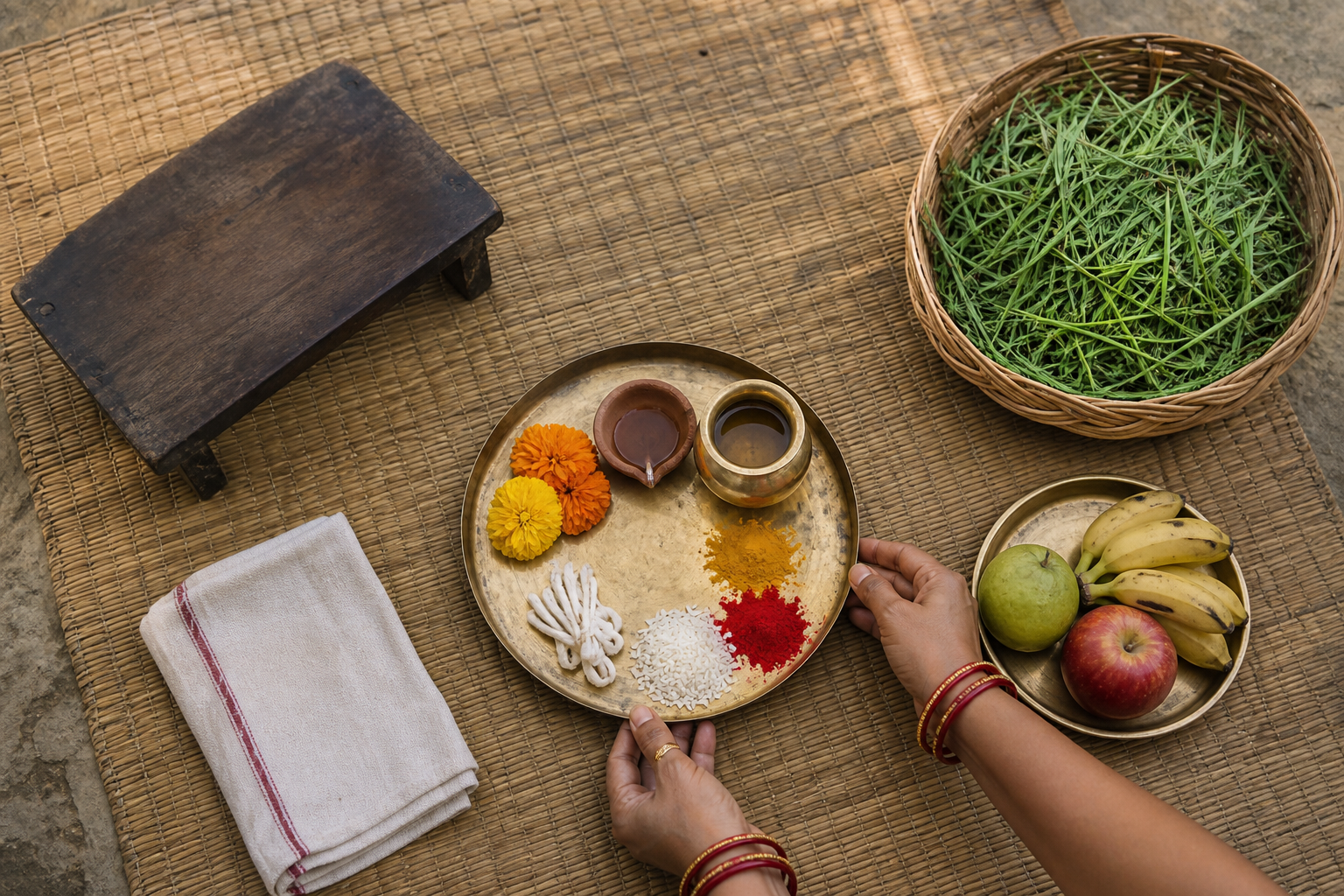
- Enter “Govatsa Dwadashi / Nandini Vrat” on November 6, 2026, in the family calendar. Recording both names makes it easier to recognize the observance in calendars that use different terminology.
- Check the local panchang rather than relying only on the printed civil date. Note when Krishna Dwadashi applies locally and whether your temple has announced a specific observance time.
- Choose the authority for procedural questions before collecting materials. In most households, that will be an established family practice, a trusted elder, a priest, a guru, or the temple whose calendar the family follows.
- Ask precise questions: What form of fasting is followed? When does it begin and end? What materials are actually required? Is there an inherited mantra or sankalpa? What action completes the vrata? Clear questions produce more reliable guidance than asking simply, “How do we do it?”
- Write the answers down in one place. Mark which details come from family custom and which come from the local calendar. This prevents an unfamiliar internet ritual list from silently replacing the tradition you intended to preserve.
- Plan food, work, travel, and caregiving around the confirmed form of the vrata. Do not wait until the morning of November 6 to discover that the local tithi interval or family rule affects the previous evening.
- Address health constraints before undertaking a food or water restriction. A person who is pregnant, unwell, elderly, taking prescribed medicine, living with an eating disorder, or managing a condition affected by fasting should seek qualified medical guidance. Do not stop medication or deny necessary hydration because of a generic instruction. Ask a trusted religious authority how your tradition handles a necessary accommodation.
- After the observance, record the procedure actually followed, the calendar convention used, and the person who clarified doubtful points. That small family note will be more valuable next year than trying to reconstruct the practice from memory.
Avoid the mistakes that create needless confusion
The first mistake is treating Kartik and Ashwin as competing dates. Month names without their calendar systems are incomplete information. Start with Krishna Dwadashi and the convention your household follows.
The second is assembling a hybrid ritual from several regional customs. A longer list is not necessarily a more authentic observance. If two instructions conflict, pause and ask which one belongs to your lineage or local temple rather than performing both “just in case.”
The third is measuring devotion by the severity of the fast. The available calendar facts establish that a fast is observed, but they do not establish one identical level of restriction for every person and every community. Follow the form you have responsibly confirmed, with legitimate health accommodations where needed.
The fourth is turning the vrata into a prediction about a son’s lifespan. Hold the traditional intention with shraddha, but continue every ordinary responsibility for health, safety, and care. Dharma is not served by presenting devotional observance as a substitute for those duties.
Put November 6 on the family calendar now. Before purchasing materials or committing to a fasting rule, contact the elder, priest, guru, or temple whose practice you actually follow. That one conversation will let you observe Nandini Vrat with clarity instead of anxiety about conflicting instructions.
References
