
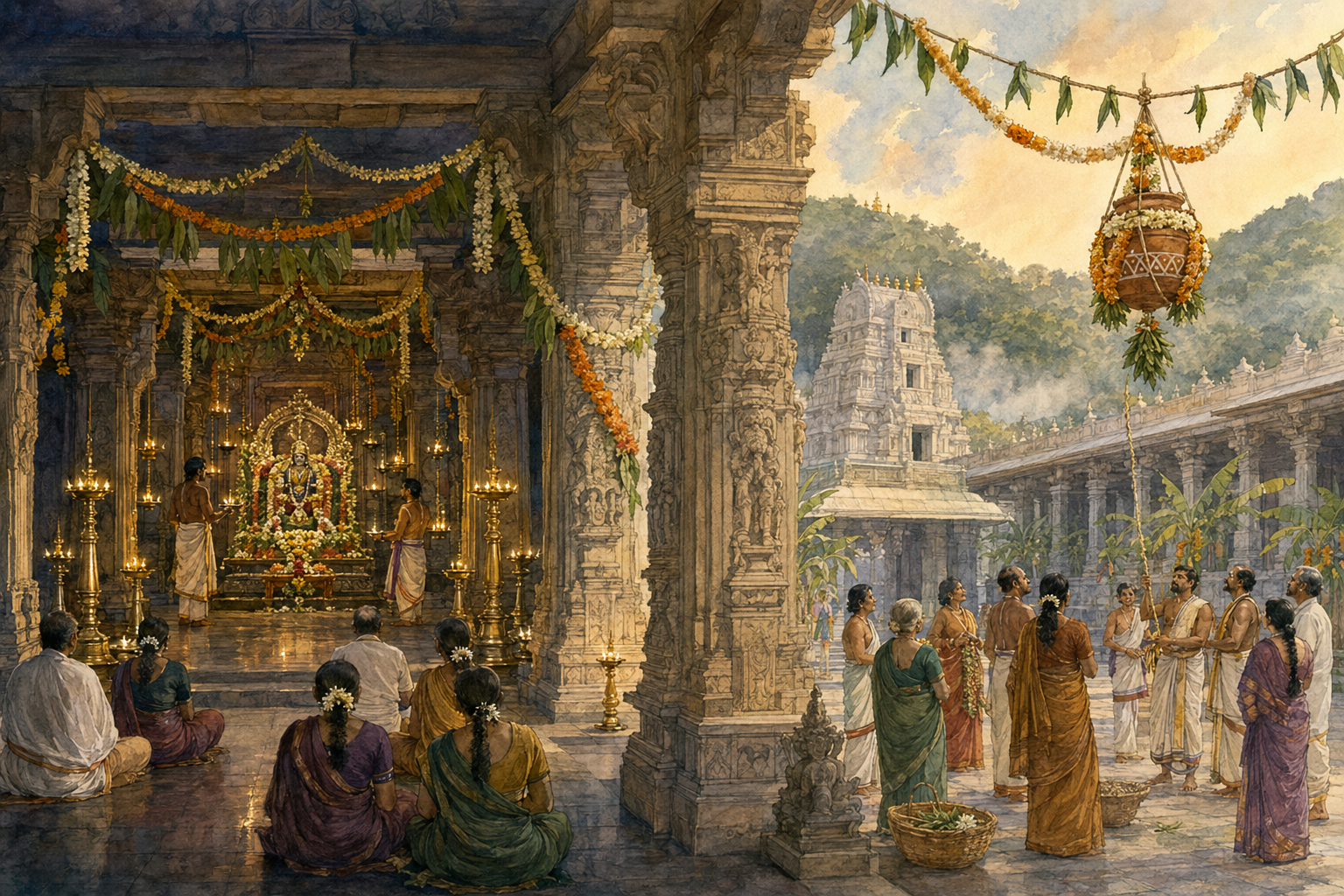
If you are arranging a Tirumala visit for Krishna Janmashtami in 2026, do not place everything under a single festival label. Tirumala observes Gokulashtami Asthanam on September 4 and follows it with Utlotsavam on September 5. That distinction determines whether you need one evening at the temple or a two-day plan.
Your firm planning anchor is the Asthanam: 8 PM to 10 PM at the Bangaru Vakili Mukha Mandapam. September 5 is confirmed for Utlotsavam, but you should verify its time, location and access arrangements before building the rest of your itinerary around it.
Why Tirumala continues the celebration on the next day
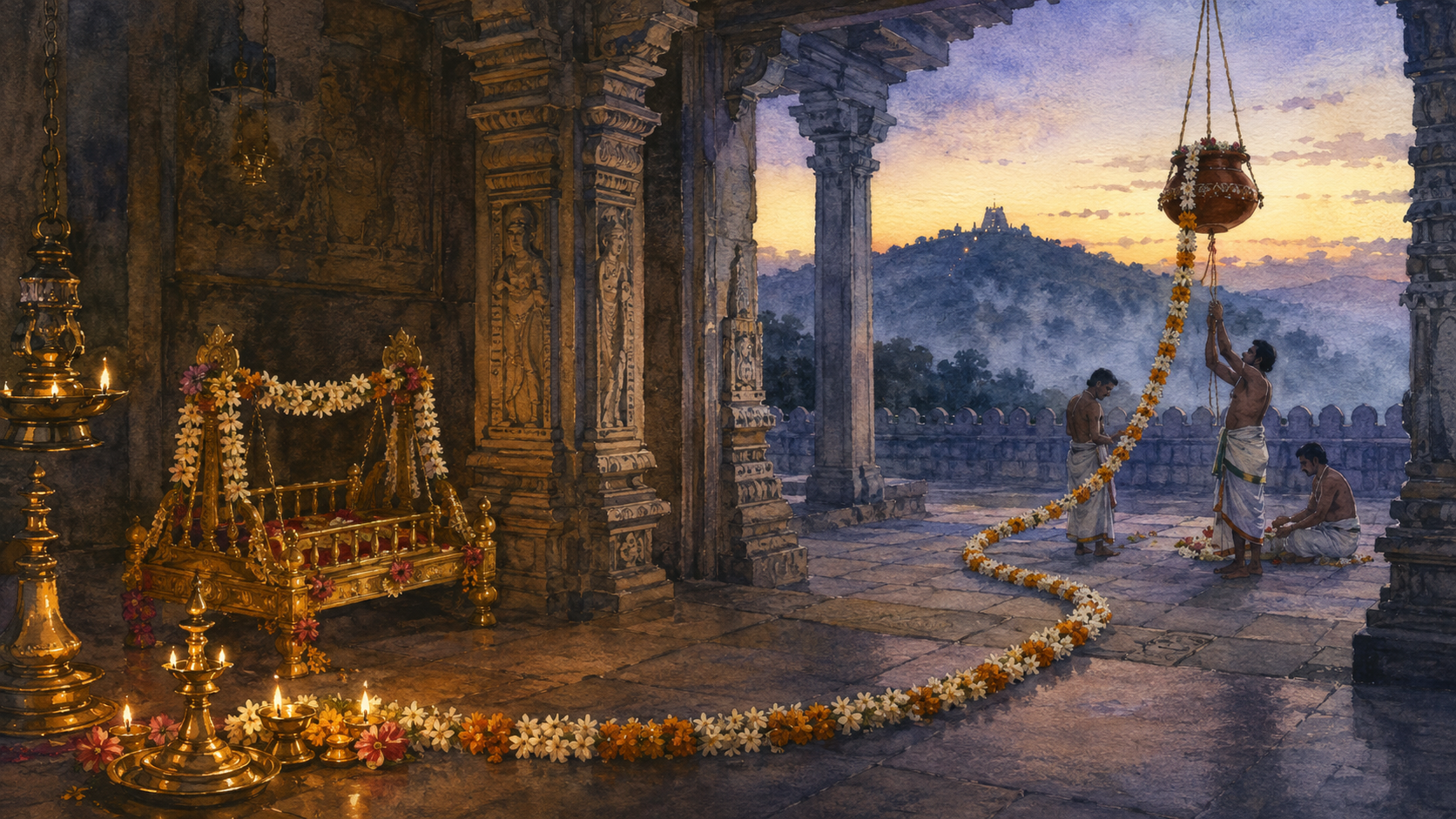
At Tirumala, Gokulashtami is not treated as an isolated date that ends when the Asthanam concludes. Utlotsavam is customarily observed on the day after Krishna Janmashtami. The two observances therefore belong to one devotional sequence, even though they have different forms.
The Asthanam gives the festival a formal temple setting. Utlotsavam gives the succeeding day a more participatory character: local youth join in large numbers, and the occasion is described as both religious and fun-filled. Lord Malayappa Swamy remains part of this celebration, so its public energy should not be mistaken for entertainment detached from worship.
This sequence expresses something central to Krishna bhakti. Reverence and joy do not have to compete. You can receive the sacred occasion through the ordered ceremony of the first evening and then see that devotion carried into community participation on the following day. If you attend both, approach them as complementary experiences rather than duplicate programmes.
The confirmed 2026 schedule and what still needs checking
The announced 2026 programme places Gokulashtami Asthanam on September 4 and Utlotsavam on September 5. The Asthanam has a stated time and venue; the available details for Utlotsavam establish its date but not those additional logistics.
| Date | Observance | Confirmed time | Confirmed venue | What you should verify |
|---|---|---|---|---|
| September 4, 2026 | Gokulashtami Asthanam | 8 PM to 10 PM | Bangaru Vakili Mukha Mandapam | Where general pilgrims may view the ceremony and whether any particular access arrangement applies |
| September 5, 2026 | Utlotsavam | Not specified in the available programme details | Not specified in the available programme details | Starting time, location and arrangements for devotees |
Do not carry the September 4 details into September 5 by assumption. The fact that the observances are consecutive does not mean they begin at the same hour or use the same space. When asking for updated information, use the word “Utlotsavam” and the date September 5. A general question about Janmashtami can easily produce the Asthanam timing instead of the detail you actually need.
The named Asthanam venue also tells you where the ceremony is held, not necessarily where every pilgrim will be able to stand or what every attendee will be able to see. Before making promises to family members, ask specifically about general-devotee viewing, queue movement and any instructions in force for the occasion.
Choose one day or keep both according to your purpose
If your schedule allows only one observance, decide by devotional purpose rather than treating the dates as interchangeable.
- Choose September 4 if your priority is the Gokulashtami Asthanam and you can remain at Tirumala for its confirmed 8 PM to 10 PM window.
- Choose September 5 if your interest is the communal side of the celebration, including the prominent participation of local youth, and you can wait for confirmed Utlotsavam logistics before finalising your movements.
- Keep both dates if you want to encounter the full Tirumala sequence: formal observance on Gokulashtami followed by participatory festivity the next day.
For families, the 10 PM conclusion on September 4 is not a minor detail. Settle your return transport or overnight arrangement before the ceremony begins, especially when travelling with children, elders or anyone who finds a late and crowded evening difficult. The fixed event window should shape your travel plan; your travel plan should not force you to abandon the observance halfway through.
Also separate three intentions that visitors often bundle together: having darshan, being present for an Asthanam and witnessing Utlotsavam. They may be part of the same pilgrimage, but one plan should not silently be assumed to guarantee all three. Ask about each intention in plain terms when confirming arrangements.
Prepare for the festival without turning it into a spectacle
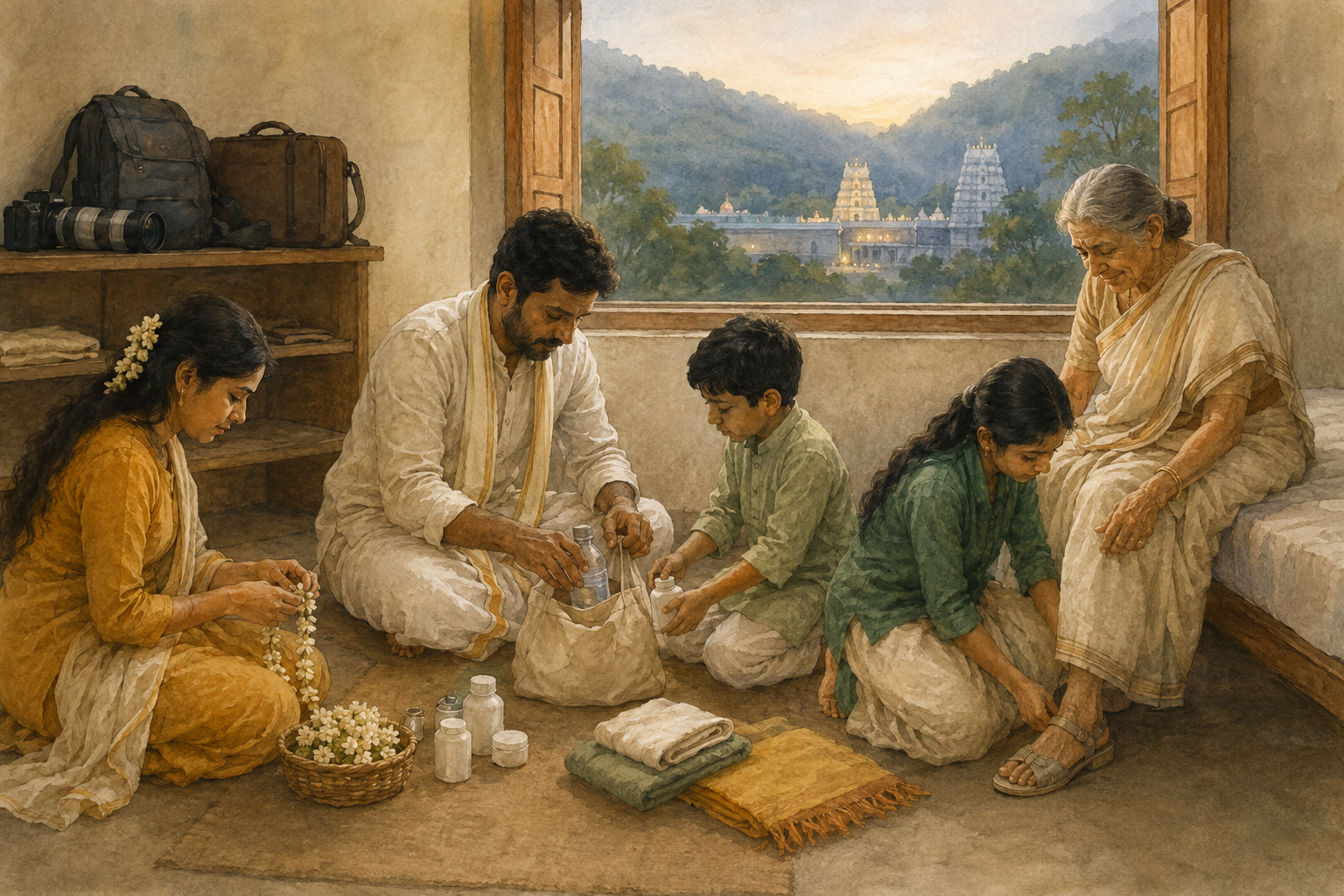
A useful pilgrimage plan begins with the details that are fixed and leaves room around those that are not. Work through the following steps before you travel:
- Reserve the evening of September 4 around the complete 8 PM to 10 PM Asthanam window, including whatever travel and rest arrangements your party needs afterward.
- Confirm the September 5 Utlotsavam time and location through current TTD information shortly before travel, and check again after reaching Tirumala.
- Ask precise access questions: where may general pilgrims stand, whether a separate queue or pass applies, when devotees should be in position, and whether photography is permitted in the relevant area.
- Make a fallback plan. If you cannot obtain a clear view or enter the intended area, remain within the permitted devotee flow rather than pressing through a boundary or obstructing others.
- Explain the nature of Utlotsavam to younger family members beforehand. Its liveliness belongs within a religious observance; the participating local youth are members of a living tradition, not performers arranged for spectators.
On site, let temple instructions settle any conflict between your expectations and the actual arrangement. Keep pathways open, give the participating youth the space required for their role, and do not assume that a phone may be used merely because the celebration is public-facing. Restraint is not separate from participation; it is how a pilgrim protects the dignity of the occasion.
The most helpful inner preparation is equally simple. Attend the Asthanam without treating it merely as a timed attraction, and attend Utlotsavam without reducing its joy to a spectacle. Malayappa Swamy and the act of worship remain the centre of both days. The crowd, movement and youthful participation make sense in relation to that centre.
Key takeaways for your Tirumala plan
- Gokulashtami Asthanam is scheduled for September 4, 2026, from 8 PM to 10 PM at the Bangaru Vakili Mukha Mandapam.
- Utlotsavam follows on September 5 and is a customary next-day celebration with substantial participation by local youth.
- Do not assume the Asthanam time or venue applies to Utlotsavam; verify the September 5 details separately.
- If you must choose one day, select the formal Asthanam or the more participatory Utlotsavam according to the experience you are seeking.
- If you can attend both, preserve the order. The movement from ceremony to shared festivity is part of the meaning of Tirumala’s observance.
Fix September 4 around the confirmed evening ceremony, keep September 5 flexible until Utlotsavam logistics are verified, and arrive prepared to follow the temple’s instructions. That small amount of discipline will let you experience the two days as a pilgrimage rather than a race between calendar entries.
References
- Hindu Pad — Importance of Utlotsavam after Gokulashtami | Janmashtami
- Hindu Pad — Gokulashtami 2026 — September 4, Utlotsavam — September 5 in Tirumala Tirupati Temple | Krishna Janmashtami
